Introduction to Astronomy
The Eternal Gaze: An Introduction to Astronomy and Its Profound Impact on Humanity
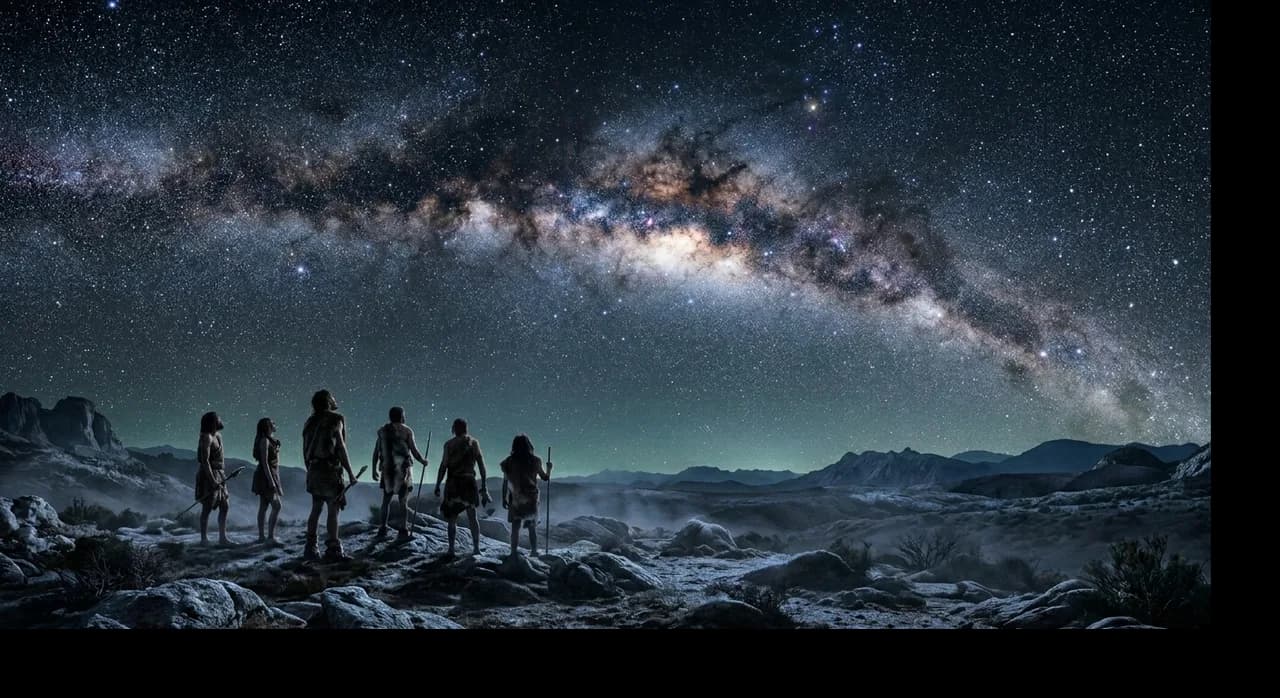
Long before the first written word, humans gazed upward at the star-studded dome overhead, finding in its patterns the rhythms that governed their lives. The rising of Sirius marked the flooding of the Nile, the position of Polaris guided ships across trackless seas, and the phases of the Moon measured the passage of time itself. This ancient dialogue between Earth and sky gave birth to astronomy—humanity’s oldest science and perhaps its most profound intellectual endeavor.
Astronomy stands apart from other sciences not merely for its antiquity, but for its unique capacity to inspire wonder while demanding rigorous precision. It is simultaneously the most practical of sciences—navigation, calendars, and timekeeping all spring from astronomical observations—and the most philosophical, confronting us with questions about our cosmic origins, our place in the universe, and the possibility that we are not alone. Unlike laboratory sciences that probe the microscopic or manipulate controlled conditions, astronomy observes a universe that operates on scales of space and time that dwarf human comprehension, yet somehow remains accessible to careful observation and mathematical description.
The Vast Scope of Modern Astronomy
Today’s astronomy encompasses a breathtaking range of phenomena, from the quantum processes occurring in stellar cores to the large-scale structure of the observable universe itself. Modern astronomers study objects spanning more than 40 orders of magnitude in size—from asteroids measuring mere kilometers across to galaxy clusters stretching hundreds of millions of light-years. They investigate processes occurring over timescales from microseconds in pulsar emissions to the 13.8-billion-year history of cosmic evolution.
The field has evolved far beyond its classical boundaries of planetary motion and stellar positions. Contemporary astronomy intersects with physics, chemistry, geology, biology, and even computer science. Astrobiology searches for life beyond Earth, while astrochemistry reveals complex organic molecules forming in interstellar space. Planetary science combines geology with atmospheric physics to understand worlds both familiar and alien. Archaeological astronomy uncovers how ancient civilizations understood the cosmos, while astroengineering contemplates humanity’s future expansion into space.
This expansion of scope reflects astronomy’s fundamental character as an observational science constrained only by the limits of technology and imagination. Each new wavelength of electromagnetic radiation opened to observation—radio, infrared, ultraviolet, X-ray, gamma-ray—has revealed previously hidden aspects of the universe. The recent addition of gravitational wave astronomy and neutrino astronomy promises to continue this tradition of discovery, offering entirely new ways of perceiving cosmic phenomena.
Cultural Foundations and Historical Resonance
No science is more deeply woven into the fabric of human culture than astronomy. Every civilization that has left written records demonstrates sophisticated astronomical knowledge, often embedded within religious, agricultural, and navigational practices that sustained entire societies. The Babylonians developed mathematical models of planetary motion that influenced Greek natural philosophy. The Maya created calendars of extraordinary precision while constructing temples aligned to celestial events. Islamic astronomers preserved and extended Greek knowledge while developing new observational techniques and instruments.
The Antikythera mechanism, that remarkable bronze computer from ancient Greece, exemplifies astronomy’s early technological sophistication. This device could predict eclipses, track planetary positions, and model the Moon’s irregular orbit with mechanical precision that would not be matched again for over a millennium. Its existence demonstrates that ancient astronomy was not merely observational but deeply computational, requiring mathematical models and mechanical implementations of considerable complexity.
The Renaissance witnessed astronomy’s transformation from a primarily practical craft into modern science. Nicolaus Copernicus’s heliocentric model challenged not only astronomical orthodoxy but humanity’s perceived position at the center of creation. Galileo Galilei’s telescopic observations—lunar mountains, Jupiter’s moons, Venus’s phases—provided visual proof that the heavens were not immutable perfection but worlds subject to physical processes. Johannes Kepler’s discovery that planets follow elliptical orbits established that mathematical laws, not philosophical ideals, governed celestial motion.
The Tools of Discovery
Contemporary astronomy depends on instruments of extraordinary sophistication operating across the electromagnetic spectrum and beyond. Ground-based telescopes with mirrors exceeding 8 meters in diameter use adaptive optics to correct for atmospheric turbulence in real time. Space telescopes like Hubble and the James Webb Space Telescope escape the atmosphere entirely, observing wavelengths from ultraviolet through infrared that never reach the ground. Radio arrays like ALMA peer through cosmic dust to observe star formation and molecular chemistry. And entirely new channels, gravitational waves detected by LIGO and neutrinos captured by IceCube, have opened windows on phenomena invisible to any form of light.
The most ambitious projects in development, including the 39-meter Extremely Large Telescope, the Square Kilometre Array, and the space-based LISA gravitational wave observatory, will push observational capability by another order of magnitude within the next decade. Each generation of instruments has revealed a universe more complex than its predecessor imagined. There is no reason to expect this pattern will end.
Astronomy’s Philosophical and Scientific Impact
Perhaps no scientific discipline has more profoundly influenced humanity’s philosophical worldview than astronomy. The Copernican revolution displaced Earth from the center of the universe, while Darwin’s theory of evolution removed humanity from a special biological pedestal. The discovery of the expanding universe revealed that even the cosmos itself has a history, with a definite beginning and an uncertain future.
Modern astronomical discoveries continue to challenge anthropocentric assumptions. The detection of thousands of exoplanets suggests that planetary systems are common, possibly ubiquitous, throughout the galaxy. Some of these worlds orbit within their stars’ habitable zones, where liquid water might exist on their surfaces. The Drake equation, formulated by astronomer Frank Drake, attempts to estimate the number of communicating civilizations in our galaxy, while SETI projects actively search for signals from technological species.
The cosmic perspective that astronomy provides has practical implications beyond academic philosophy. Carl Sagan’s concept of the “pale blue dot”—Earth as seen from the edge of the solar system—emphasizes our planet’s fragility and the interconnectedness of all terrestrial life. This astronomical viewpoint increasingly influences environmental thinking, space policy, and international cooperation in addressing global challenges.
Education, Innovation, and the Gateway Effect
Astronomy is the gateway drug of science. Its visual beauty, accessible concepts, and existential questions make it the most effective entry point to STEM education that exists. Many professional scientists trace their career origins to a childhood experience with a telescope, a planetarium show, or a photograph of a nebula. Citizen science projects like Galaxy Zoo have engaged millions of volunteers in real research, demonstrating that the boundary between professional and amateur astronomy is more permeable than in any other science.
The practical returns are substantial. Technologies developed for astronomical observation have yielded CCD cameras (now in every smartphone), medical imaging advances, GPS corrections based on relativistic effects, water purification systems, and the computational infrastructure that underpins modern data science. The space industry, a direct descendant of astronomical research, represents a trillion-dollar global economy. But the deepest return on investment is harder to quantify: the cosmic perspective that reminds us our planet is finite, our problems are shared, and the universe is vastly larger than our daily concerns.
The Open Questions
Astronomy confronts us with the deepest questions about existence, and it has the rare honesty to admit how much remains unknown. Dark matter and dark energy, comprising 95% of the universe, remain unexplained at a fundamental level. The origin of life is understood in broad strokes but not in mechanistic detail. Whether we are alone in the cosmos is an empirical question that may be answered within a generation, as JWST and its successors characterize exoplanet atmospheres for biosignatures. And the ultimate fate of the universe, whether it ends in heat death, a Big Rip, or something no one has yet conceived, depends on the nature of dark energy, which we have measured but do not understand.
These are not abstract philosophical puzzles. They are research programs with funded missions, active observatories, and testable predictions. Astronomy's great achievement is not that it has answered all the questions. It is that it has turned the biggest questions imaginable into science.
Where to Go from Here
This wiki explores astronomy across every dimension: the objects that populate the cosmos, the physics that governs them, the instruments we've built to observe them, the people who made the breakthroughs, and the open questions that drive the field forward. Start anywhere. Every page connects to the others, because everything in astronomy does.