100 Years of Music / Chapter 1 of 11
1920s: Wax and Wire
The microphone switches on, the record business finds the blues, and America hears itself for the first time.
Opening
New York, August 10, 1920. A vaudeville singer from Cincinnati named Mamie Smith leans into a brass horn in an Okeh studio and sings a song about a man who left. There is no microphone. The horn feeds a needle that scratches her voice into a spinning wax disc. Nobody in the room knows that this is the first blues record by a Black singer, or that it will sell by the tens of thousands, or that a whole industry is about to be built on what it proves.
This is the decade the record catches things it never meant to catch. Record companies went looking for money and found the blues, the fiddle tune, the sermon, the jug band, the son from Santiago de Cuba. They sent engineers with portable rigs to hotel rooms in Bristol and warehouses in Memphis and came back with the raw material of everything that follows in this project.
Two machines change the rules halfway through. In 1925 the microphone replaces the horn, and singers no longer have to shout. In 1920 a station in Pittsburgh starts broadcasting, and by the end of the decade a network can put one band into millions of living rooms at once. Records and radio spend the whole decade fighting over the same ears.
The music itself is on the move. New Orleans musicians ride the train to Chicago and then to New York. Farm families in Virginia and Mississippi ride the train to a studio. Cuban trios and an Argentine tango singer ride ships to Paris and Manhattan. The Great Migration is not a footnote here. It is the plot.
Then, in October 1929, the money stops. The record business nearly dies. But the discs were already pressed, and the people in the next chapters grew up with them on the shelf. Drop the needle.
The World
Prohibition
The Eighteenth Amendment took effect on January 17, 1920, and made the sale of alcohol a crime for the next thirteen years. It did not stop anyone drinking. It moved the drinking into hidden rooms, and hidden rooms needed bands. The speakeasy, the cabaret and the mob-owned nightclub became the steadiest paycheck a jazz musician could find, and Chicago and New York became the cities where the money was.
The Great Migration
Between the First World War and 1930, well over a million Black Southerners left for Chicago, Detroit, New York and the other Northern cities, pushed by Jim Crow and pulled by factory wages and newspapers like the Chicago Defender. They brought the blues and the church with them. Nearly every Chicago recording in this chapter, from King Oliver to Thomas Dorsey, exists because of that train ride.
Radio
KDKA in Pittsburgh broadcast the Harding-Cox election returns on November 2, 1920. Within a few years there were hundreds of stations, and in November 1926 NBC linked two dozen of them into the first national network. Radio was free once you owned a set, and record sales fell as it spread. It also gave country music its first stage: a barn dance out of Nashville that became the Grand Ole Opry.
The New Negro
In 1925 the philosopher Alain Locke edited an anthology called The New Negro and put a name on what was already happening in Harlem: poets, painters, dancers and bandleaders making Black art on their own terms. Langston Hughes wrote poems in blues stanzas. Duke Ellington wrote for the Cotton Club. The Harlem Renaissance was a literary movement with a house band.
Talking pictures
The Jazz Singer opened in New York on October 6, 1927, with Al Jolson singing on a synchronized soundtrack. Within two years silent film was finished. Hollywood became a new employer for songwriters, a new outlet for records, and a new reason a song could be heard from coast to coast in a single week.
High water
In the spring of 1927 the Mississippi River broke its levees from Illinois to the Gulf and put hundreds of thousands of people, most of them Black sharecroppers, into refugee camps. Bessie Smith had recorded "Backwater Blues" in February, about a Nashville flood the previous Christmas, and the record became the anthem of the bigger disaster. Floods, boll weevils and bad landlords are all over the blues of this decade because they were all over the Delta.
The Crash
On October 29, 1929, the New York stock market lost a quarter of its value in four days and the Great Depression began. Record companies, already bleeding to radio, were hit first and hardest. Sales that had been counted in the tens of millions of discs fell to a few million within three years. Labels folded, field trips stopped, and hundreds of the artists in this chapter never recorded again.
The Sounds
From the parade to the solo
In 1920 jazz was a band sound: cornet, clarinet and trombone weaving three lines at once, the way New Orleans marching bands had done it. King Oliver brought that sound to Chicago and recorded it in 1923 with a second cornet player named Louis Armstrong standing next to him. Listen to "Dippermouth Blues" and you hear the ensemble rule: nobody stands out for long.
Armstrong broke the rule. On the Hot Five and Hot Seven records he made for Okeh between 1925 and 1928, the band backs off and one man improvises. Improvising means making up the melody as you go, on the spot, over a set of chords. Everyone in the band had always done a little of it. Armstrong did it for a whole chorus, then for a whole record. "West End Blues" in 1928 opens with twelve seconds of unaccompanied trumpet that musicians are still studying.
Jazz split into several things at once. Jelly Roll Morton composed it, planning every chorus of "Black Bottom Stomp" like an architect. Fletcher Henderson and his arranger Don Redman wrote it for a big band with sections, which is the blueprint for swing. Bix Beiderbecke played it cool and lyrical, a whole other emotional temperature. Paul Whiteman dressed it in strings and sold it to people who would never have entered a South Side cabaret, and commissioned "Rhapsody in Blue" to prove it belonged in a concert hall.
Duke Ellington ended the decade at the Cotton Club in Harlem, writing music for a floor show and a radio wire that carried it across the country. The band he built there is the seed of the orchestra he led for the next forty-five years. Jazz went into the 1920s as a dance craze. It came out as a music with composers, soloists and a canon.
The blues gets a catalog number
W. C. Handy had published blues sheet music since 1912, and Black singers had been singing it in tent shows for longer than that. What the 1920s added was the record. After "Crazy Blues" sold in 1920, every label wanted a woman who could sing the blues with a jazz band behind her. Bessie Smith, Ma Rainey, Ida Cox, Alberta Hunter, Ethel Waters and dozens more filled the "race record" catalogs Okeh, Columbia and Paramount created for Black buyers. These are the classic blues singers, and Bessie Smith is the one whose records still sound like a storm.
The second wave came from the country. In 1926 Paramount released records by a blind Texas street singer named Lemon Jefferson, alone with his guitar, and they sold. Suddenly the companies wanted men with guitars from the South: Blind Blake, Lonnie Johnson, Tommy Johnson, Mississippi John Hurt, Blind Willie McTell, and in June 1929 Charley Patton, the Dockery Farms entertainer who had taught half the Delta. Patton is where the line runs to Son House, Robert Johnson, Muddy Waters and Howlin' Wolf.
A third thing was happening on the piano. Leroy Carr in Indianapolis sang the blues softly over an easy piano and guitar and became the most popular male blues singer of his time. Pine Top Smith in Chicago cut a record in December 1928 that put a name on a rolling left-hand style: boogie-woogie. Both point at the city blues of the next two decades, and boogie-woogie is a direct ancestor of rock and roll.
The blues also learned to be funny and dirty on record. Tampa Red and Georgia Tom's "It's Tight Like That" in 1928 started a craze for hokum, sly party songs with a two-guitar bounce. Georgia Tom was Thomas A. Dorsey, and within four years he would be the father of gospel music. Hold on to that.
Hillbilly music learns it has an audience
In 1922 two Texas fiddlers walked into Victor's New York office in cowboy clothes and asked to make a record. In 1923 an Atlanta fiddler named John Carson cut two sides for Okeh that a producer called awful and that sold out in days. In 1924 a light-opera tenor called Vernon Dalhart recorded "The Prisoner's Song" and it became the first country record to sell a million. The companies had not planned any of this. They now knew there was a market for rural white Southern music and no name for it. They settled on "hillbilly."
Radio found the same audience the same year. On November 28, 1925, a 77-year-old fiddler played an hour on WSM in Nashville, and George D. Hay's barn dance never stopped. By December 1927 it was called the Grand Ole Opry.
The decade's big bang came in a hat warehouse in Bristol, on the Tennessee-Virginia line, in the summer of 1927. Ralph Peer set up Victor's new microphones, advertised in the paper, and in two weeks recorded 76 sides by 19 acts. Two of them were the Carter Family, who sang the old songs in three-part harmony over Maybelle Carter's thumb-and-finger guitar, and Jimmie Rodgers, a railroad brakeman who sang the blues and yodeled at the end of every verse. The Carters are the root of the harmony tradition and bluegrass. Rodgers is the root of the country singing star. "Blue Yodel," recorded that November, borrowed its opening line from Black Memphis blues singers, and Howlin' Wolf later said his howl was a yodel he could not manage. Country and blues were never separate rivers.
Tin Pan Alley meets the microphone
Pop in 1920 meant sheet music. Publishers on West 28th Street in Manhattan, the block nicknamed Tin Pan Alley, hired pianists to plug new songs to performers, and a hit was a song that sold in the parlor. Paul Whiteman changed the unit of measurement. His Victor record of "Whispering," cut in August 1920, sold in the millions and made the dance-band arrangement, not the sheet, the thing people bought.
Most of the songwriters were the children of Jewish immigrants writing in a Black rhythmic idiom, and singers have been recording their songs ever since. George Gershwin went from "Swanee" to "Rhapsody in Blue" to "Fascinating Rhythm" in five years. Irving Berlin wrote "Always" and "Blue Skies." Jerome Kern and Oscar Hammerstein II wrote Show Boat in 1927, the first Broadway musical whose songs carried a serious story, and put "Ol' Man River" in the mouth of a Black dockworker. Hoagy Carmichael, a law student in Indiana, recorded a tune called "Star Dust" in 1927 that has been put on record more than 1,500 times since.
The microphone remade the singer. Before 1925 a pop vocalist had to fill a theater or shout into a horn. After it, Gene Austin, Rudy Vallee and a young Bing Crosby could sing quietly, close, as if to one person, and the record and the radio carried it. They called it crooning. Every intimate pop vocal since, from Sinatra to Billie Eilish, descends from that change in the room.
Al Jolson stood on the other side of the line. He was the biggest star on Broadway, a belter who sang in blackface, and when The Jazz Singer put him on film in October 1927 he became the face of the talkies. The stage tradition he came from was dying in that same moment, and the film is where you can watch it happen.
The church learns to swing
Black sacred music came into the decade in two shapes. The Fisk Jubilee Singers had been touring the spirituals in concert arrangements since 1871, and Paul Robeson, with pianist Lawrence Brown, gave the first full recital of spirituals in New York in April 1925 and made them concert music for a mixed audience. The other shape lived in the Pentecostal storefront church, where the Church of God in Christ sang with tambourines, hand claps and a piano played like a barrelhouse.
Arizona Dranes carried that second sound into an Okeh studio in Chicago on June 17, 1926. Blind, classically trained, and the first star of her denomination, she made the first gospel records with piano, and the piano is doing boogie-woogie ten years early. Blind Willie Johnson, a street evangelist from Texas, recorded "Dark Was the Night, Cold Was the Ground" in December 1927 with a slide guitar and no words, and it is on the Voyager spacecraft now. Preachers sold records too. Rev. J. M. Gates of Atlanta cut a sermon called "Death's Black Train Is Coming" in 1926 and it outsold most blues singers.
White Southern gospel got its own record in 1927 when the Stamps Quartet recorded "Give the World a Smile" for Victor, the sound of the shape-note singing schools and songbook companies that were about to boom. And in Chicago a blues pianist called Georgia Tom, who had been writing sacred songs on the side since 1921, was about to change his name back to Thomas A. Dorsey. Gospel as we know it starts with him, in the next chapter.
Songs nobody wrote
Folk in the 1920s was not yet a genre you could buy. It was a field of study. John Lomax had published Cowboy Songs and Other Frontier Ballads in 1910 after collecting them on horseback, and spent the 1920s working in a Dallas bank before the Library of Congress work that made him famous. Carl Sandburg, the poet, published The American Songbag in 1927: 280 songs, a hundred never printed before, gathered from hoboes, union men and college students, with piano arrangements so families could sing them. It stayed in print for seventy years.
The irony is that the record companies were doing the same work by accident. Every "hillbilly" and "race" field session captured ballads, hymns and dance tunes that had lived only in memory. When Harry Smith assembled his Anthology of American Folk Music in 1952, almost everything on it was a commercial 78 from 1927 to 1932. The folk revival of the 1960s was built on records this decade made to sell, and singers this decade forgot.
Son, tango and the rumba that is coming
In Cuba the son came down from the eastern hills into Havana in the early 1920s and became the island's pop music: guitar, tres, bongo, maracas, claves, a bass, and a singer trading lines with a chorus. Victor was recording Havana's sextets by the middle of the decade. The Trio Matamoros formed in Santiago in 1925 and recorded "Son de la loma" for Victor in New York in 1928. Rita Montaner recorded "El Manisero," the peanut vendor's street cry, for Columbia around 1927. Two years after this chapter ends, Don Azpiazu's band would play it on Broadway and set off the rumba craze. The seed is here.
In Buenos Aires the tango had been a dance. Carlos Gardel made it a song. From "Mi Noche Triste" in 1917 he turned the tango-cancion into a form for a solo singer with a story, recorded hundreds of them for Odeon, and in September 1928 conquered Paris. He is the first Latin American recording star with a global audience, and the model for every singer-idol who followed.
Music out of thin air
In October 1920, in a physics laboratory in Petrograd, Lev Termen noticed that a radio circuit he had built for measuring gases changed pitch when he moved his hand near it. He built a cabinet with two antennas and played it without touching anything. He demonstrated the theremin to Lenin in 1922, toured Europe, and arrived in New York in December 1927 to play Carnegie Hall. RCA licensed it for mass production in 1929. It is the first electronic instrument anyone had heard of, and its wail runs from 1950s science fiction to "Good Vibrations."
In Paris in April 1928, Maurice Martenot, a cellist and wartime radio operator, presented the ondes Martenot: a keyboard, a ring on a wire, and a tone you could bend like a voice. Messiaen and later Radiohead wrote for it. Electrical recording, radio and these first instruments all arrive in the same five years because they are the same technology, the vacuum tube, pointed at music from different sides. The synthesizer is forty years off, but the door is open.
Timeline
Prohibition begins
The Volstead Act took effect on January 17. Bars closed and speakeasies opened, and the ones that could afford it hired bands. For the next thirteen years the underground nightclub, often mob-owned, was the best-paying room in American music, and it is where Chicago and Harlem jazz grew up.
Mamie Smith records "Crazy Blues"
On August 10 in New York, Mamie Smith and a Black band cut Perry Bradford's "Crazy Blues" for Okeh, after a February session had shown the label she could sell. Released in November, it reportedly moved 75,000 copies in two months. It was the first blues record by a Black singer, and its sales convinced every label that Black buyers were a market. The "race record" catalogs, the classic blues singers and the whole recorded blues tradition start here.
Paul Whiteman cuts "Whispering"
Recorded in Camden on August 23 with Ferde Grofe's arrangement, "Whispering" sold in the millions and set the pattern for the decade's dance bands: a written arrangement, a smooth ensemble, a hint of jazz phrasing with none of the risk. Whiteman would be the most famous bandleader in America for ten years and would hire Bix Beiderbecke and Bing Crosby along the way.
The theremin
In Petrograd, physicist Lev Termen built an instrument played by moving the hands near two antennas, with no strings, keys or contact. He played it for Lenin in 1922, reached New York in December 1927, and signed a production deal with RCA in March 1929. It was the first electronic instrument to reach the public, and the first sound that belonged to no acoustic object at all.
KDKA goes on the air
On November 2, Westinghouse's station in Pittsburgh broadcast the Harding-Cox election returns under a commercial license, the event usually counted as the start of broadcast radio in America. Stations multiplied by the hundreds within a few years. For the record business, radio was free music in every living room, and a rival it never fully beat.
Black Swan Records and "Down Home Blues"
Harry Pace, W. C. Handy's former publishing partner, founded Black Swan in Harlem, the first significant Black-owned record label. Its hit was Ethel Waters' "Down Home Blues," with a young Fletcher Henderson running the music. The label lasted only until 1923 and was sold to Paramount, but it proved a Black company could make and sell Black records.
Shuffle Along opens on Broadway
Noble Sissle and Eubie Blake's musical opened on May 23 at the 63rd Street Music Hall, a multipurpose room well north of the theatre district, and ran 504 performances, the first Black-written, Black-performed hit on Broadway in a generation. Josephine Baker and Florence Mills came out of its chorus. Langston Hughes said it was the show that started the Harlem Renaissance.
James P. Johnson records "Carolina Shout"
Johnson's Okeh recording of his own piano piece is the founding document of Harlem stride: a left hand leaping between bass notes and chords while the right hand plays rings around it. Duke Ellington and Fats Waller both learned it note for note from his piano roll. Johnson would write "Charleston" two years later.
Okeh names the "race record"
Okeh's Ralph Peer, following the Black press's own use of "the Race," gave its 8000 series of records for Black buyers the name "race records." Paramount, Columbia and Vocalion followed with series of their own. The term sorted Black music into a separate catalog for thirty years, and it is the reason the blues, jazz and gospel of this decade survived on disc at all.
Eck Robertson makes the first country records
Texas fiddler Eck Robertson and Civil War veteran Henry Gilliland, both in cowboy dress, talked their way into Victor's New York office. On June 30 the pair cut "Arkansaw Traveler" and three other tunes; Robertson came back alone the next day for "Sallie Gooden." The two are usually counted as the first commercial country recordings, and Victor issued them on September 1, 1922, a reluctant company's first step into country music.
Bessie Smith signs with Columbia
Smith cut her first sides in New York in mid-February. "Downhearted Blues," written by Alberta Hunter and Lovie Austin, sold by the hundreds of thousands within months and helped pull Columbia back from bankruptcy. Nobody on record had sung with that much weight before. For the next decade she was the Empress of the Blues, and her 160 or so Columbia sides are the core of the classic blues.
King Oliver's Creole Jazz Band records in Richmond, Indiana
On April 5 and 6 the band drove from Chicago to the Gennett studio beside a piano factory and cut the first substantial body of New Orleans jazz by Black musicians, including "Dippermouth Blues," with Oliver's muted cornet solo and 21-year-old Louis Armstrong on second cornet. Musicians across the country learned the style from these discs.
Fiddlin' John Carson and the first country hit
On June 14, in a temporary Okeh studio on Nassau Street in Atlanta, the 55-year-old fiddler recorded "The Little Old Log Cabin in the Lane" and "The Old Hen Cackled." Ralph Peer thought it was terrible and pressed 500 copies. They sold out in days and orders kept coming. This is the record that told the industry rural white Southerners would buy their own music.
Sidney Bechet on "Wild Cat Blues"
On July 30 Clarence Williams' Blue Five recorded a tune by a teenage Fats Waller, his first, with Sidney Bechet on soprano saxophone. It is Bechet's first issued record and the first great jazz saxophone performance. The small, drumless Blue Five was the model for Armstrong's Hot Five two years later.
The Charleston
James P. Johnson's song "Charleston" opened in the Black revue Runnin' Wild on Broadway on October 29. The dance that went with it, knees knocking and heels kicking, became the decade's signature step and the picture people still have of the Jazz Age. Its rhythm came from Black dockworkers in South Carolina.
Ma Rainey records for Paramount
Gertrude "Ma" Rainey had been singing the blues in tent shows since before Bessie Smith joined her troupe. In December, at 37, she made her first records in Chicago, including "Bo-Weavil Blues" and "Moonshine Blues" with Lovie Austin. She cut about a hundred sides in five years, rougher and more Southern than Smith, the bridge between the minstrel tent and the studio.
"Rhapsody in Blue" at Aeolian Hall
Paul Whiteman billed February 12 as "An Experiment in Modern Music." George Gershwin, who had forgotten the commission until he read about it in the paper, wrote the piece in five weeks and played the piano part himself; Ferde Grofe orchestrated it page by page. Ross Gorman turned the opening clarinet run into a smear in rehearsal as a joke, and Gershwin kept it. The first recording followed on June 10, acoustically, cut down to fit two sides.
Vernon Dalhart sells a million
On August 13, Marion Try Slaughter, a Texas-born light-opera tenor who had renamed himself after two Texas towns, recorded "The Wreck of the Old 97" and "The Prisoner's Song" for Victor. The coupling became the first country record to sell a million copies. Dalhart was not a hillbilly, and that was the point: he showed the songs could sell far beyond the South.
Louis Armstrong joins Fletcher Henderson in New York
Henderson led the top Black dance band in New York at the Roseland Ballroom and hired Armstrong out of Chicago in the fall of 1924. Over thirteen months his solos taught the band, and its arranger Don Redman, how to make a written arrangement swing. That lesson became the big-band language of the 1930s. Armstrong also recorded with Bessie Smith and Ma Rainey while he was in town.
Ma Rainey, "See See Rider Blues"
Rainey's New York recording of the old song about a faithless lover, with Armstrong on cornet, fixed the version everyone since has sung. It has been re-recorded as "C.C. Rider" by everyone from Chuck Willis to Elvis Presley, which makes this one of the longest straight lines in the whole century.
Alain Locke publishes The New Negro
Locke's anthology gathered the poets, essayists and artists of Harlem and declared a cultural coming of age. Langston Hughes, whose first book The Weary Blues followed in 1926, wrote poems in twelve-bar form. The Harlem Renaissance treated jazz and blues as art worth arguing about, which most of America did not yet.
Bessie Smith and Louis Armstrong, "St. Louis Blues"
On January 14 in New York, Smith sang W. C. Handy's song with only Armstrong's cornet and Fred Longshaw's wheezing harmonium behind her. The two of them trade phrases like a sermon and its amen. It is the most admired recording either of them made in the classic blues style, and it was still acoustic: the horn, not the microphone.
Paul Robeson sings the spirituals
On April 19, at the Greenwich Village Theatre, Robeson and pianist Lawrence Brown gave what is counted as the first concert made entirely of spirituals. A mostly white audience demanded sixteen encores. Robeson, an athlete and lawyer turned actor, made the sorrow songs concert music without the concert-hall polish, and became the voice white America associated with Black dignity for thirty years.
The microphone replaces the horn
Bell Labs engineers Joseph Maxfield and Henry Harrison built a recording chain of condenser microphone, vacuum-tube amplifier and electromagnetic cutter, and Western Electric licensed it to Victor and Columbia for $50,000 plus royalties. The first electrical records went on sale in the spring of 1925 without announcement; the frequency range roughly tripled, bass and sibilants appeared, and a singer could whisper. On November 2, Victor launched the Orthophonic Victrola to play the new discs. Bristol, "West End Blues," the crooners and everything after depend on this.
The Hot Five
On November 12 in Chicago, Armstrong, his wife Lil Hardin Armstrong, Kid Ory, Johnny Dodds and Johnny St. Cyr cut their first sides for Okeh. The band existed only on record. They kept at it until December 1927, adding a bass and a drummer in May 1927 for a run of sides as the Hot Seven, and turned jazz from a group music into a soloist's art. "Heebie Jeebies," released in March 1926, made scat singing a craze.
The WSM Barn Dance
National Life and Accident Insurance had put WSM on the air in Nashville that October. On November 28, announcer George D. Hay put 77-year-old fiddler Uncle Jimmy Thompson in front of the microphone for an hour, and the mail came in. In December 1927, following a network program of grand opera, Hay renamed the show the Grand Ole Opry. It has not gone off the air since.
Blind Lemon Jefferson and the country blues on record
Paramount had brought the blind Dallas street singer to Chicago in late 1925 to cut two hymns under a false name. In March 1926 he recorded blues under his own: "Got the Blues," "Long Lonesome Blues," "Booster Blues," "Dry Southern Blues." Just a man, a guitar and a two-octave holler, and the records sold by mail order across the rural South. Every label went hunting for solo bluesmen after this. He cut about a hundred sides before he died in Chicago in December 1929.
"Heebie Jeebies"
Released in March, the Hot Five's novelty tune became a national hit on the strength of Armstrong's scat chorus, nonsense syllables sung like a horn. The story that he dropped the lyric sheet is probably a story. What matters is that it made the human voice an instrument on record, and put the Hot Five in every Black household with a Victrola.
The Savoy Ballroom opens
On March 12 a block-long dance hall opened on Lenox Avenue in Harlem with two bandstands and room for thousands. Unlike the Cotton Club a few blocks south, it admitted Black and white dancers together. Fletcher Henderson played opening night. The Lindy hop was invented on its floor, and for thirty years it was the room every big band had to win.
Rev. J. M. Gates records a sermon
Columbia recorded the Atlanta Baptist preacher in April, and "Death's Black Train Is Coming," a chanted sermon with a congregation answering, sold tens of thousands of copies by autumn. Gates recorded more than eighty sides that year alone for whoever would pay. Preaching on record was a business now, and its call and response is in every gospel and soul record that follows.
Arizona Dranes brings the piano into gospel
On June 17 in Chicago, a blind Pentecostal pianist from Texas cut six sides for Okeh, the first gospel records built on piano. Her left hand rolls like a barrelhouse player and her right hand rings like a church bell, and the singing is straight from a Church of God in Christ service. Thomas Dorsey heard it. So, decades later, did the rock and roll pianists who never knew her name.
Jelly Roll Morton's Red Hot Peppers, "Black Bottom Stomp"
On September 15 in Chicago, Morton took seven New Orleans musicians into Victor's studio with parts written out and every break planned. The result is three minutes with more ideas than most albums: stop-time, a banjo solo, a minor-key trumpet turn, the "Spanish tinge" he always insisted jazz needed. It is the first proof that jazz could be composed without losing its heat.
NBC, the first network
On November 15 the National Broadcasting Company opened with a four-hour gala from the Waldorf-Astoria carried by about two dozen stations. One orchestra, heard from New York to Kansas City at the same instant. Within three years a Cotton Club broadcast could make a band famous in towns that had no record shop.
Carl Sandburg, The American Songbag
The poet published 280 folk songs, a hundred of them never printed before, with piano parts and notes on where he got each one. Sandburg had collected them on lecture tours and in hobo camps and sang them himself with a guitar in two keys. It was the first folk anthology that ordinary families bought, and it stayed in print for seventy years.
Bix and Tram, "Singin' the Blues"
On February 4 in New York, Frankie Trumbauer's C-melody saxophone and Bix Beiderbecke's cornet, with Eddie Lang's guitar under them, took a forgotten 1920 pop tune and played it slow, cool and almost without vibrato, never stating the melody until the end. Released in April, it was copied note for note by Fletcher Henderson's saxophone section. Lester Young learned from it. It is the first jazz ballad, and the first jazz that sounds like thinking out loud.
Bessie Smith, "Backwater Blues"
Recorded February 17 with James P. Johnson on piano, and written about a Cumberland River flood that had swamped Nashville at Christmas. Two months later the Mississippi broke its levees, and the record became the song of the great flood of 1927. Musicologist David Evans traced the real story; the record's meaning had already moved on without it.
The Hot Seven, "Potato Head Blues"
Armstrong added bass and drums to the Hot Five for eleven sides in May 1927. On "Potato Head Blues," recorded May 10, his stop-time solo, the band hitting one chord a bar while he flies over the gaps, is the moment jazz historians point to when they say improvisation became composition in real time. Hoagy Carmichael quoted it in "Star Dust" five months later.
The Bristol sessions
Ralph Peer set up Victor's microphones on the Tennessee side of State Street on July 22 and recorded from July 25 to August 5: 76 sides by 19 acts. The Carter Family came down from Maces Spring, Virginia, on August 1 and 2 and cut six songs, including "Single Girl, Married Girl," with Sara singing lead and eighteen-year-old Maybelle's guitar carrying the melody. Jimmie Rodgers recorded alone on August 4 after his band quit on him. The label did not know it, but it had just found the two founding acts of country music in the same week.
The Jazz Singer
Warner Bros. opened it in New York on October 6 with Vitaphone sound on disc. Only a quarter of it talks, but when Al Jolson says "You ain't heard nothin' yet" and sings "Blue Skies," the silent era is over. Within two years the film industry would be the biggest buyer of songs in America and the fastest way to make one famous.
Hoagy Carmichael records "Star Dust"
On October 31 at the Gennett studio in Richmond, Indiana, a young Indiana lawyer and hot pianist recorded his own tune as a medium-tempo instrumental with a borrowed band. Mitchell Parish added words in 1929 and everyone slowed it down. It has since been recorded more than 1,500 times. The melody's third and fourth bars come straight out of Armstrong's "Potato Head Blues."
The Stamps Quartet, "Give the World a Smile"
Frank Stamps sang bass on it when his Texas quartet cut the song for Victor in Atlanta on October 20, 1927, with Ralph Peer supervising and Dwight Brock at the piano. It made them the first white Southern gospel quartet on a major label and gave the style its first hit. Bass lead, close harmony, a bouncing afterbeat: the sound of the shape-note singing conventions, and the ancestor of the quartets that raised Elvis Presley.
Jimmie Rodgers, "Blue Yodel"
On November 30, in the old church Victor used as a studio in Camden, New Jersey, Rodgers recorded four songs. One was a string of blues verses about a cheating woman with a yodel at the end of each, and Victor called it "Blue Yodel." It sold in the hundreds of thousands, made him the first country star, and its first line came from Black Memphis singers Frank Stokes and Jim Jackson. Twelve more Blue Yodels followed before tuberculosis killed him in 1933.
Blind Willie Johnson, "Dark Was the Night, Cold Was the Ground"
On December 3 in Dallas, a Columbia field unit recorded a blind Texas street preacher humming an eighteenth-century hymn about the night before the Crucifixion while his slide guitar sang the melody. There are no words. It is three minutes long. In 1977 NASA put it on the Voyager record as one of Earth's messages to whoever is out there.
Duke Ellington opens at the Cotton Club
On December 4, Ellington opened at the whites-only Harlem nightclub run by gangster Owney Madden. The Victor ledgers that autumn list ten men in the band; the count on opening night is still argued. They stayed until 1931. A radio wire from the club carried Ellington's "jungle" sound, Bubber Miley's growling plunger trumpet over dark minor harmonies, across the country, and "Black and Tan Fantasy" and "East St. Louis Toodle-Oo" made him the first jazz composer with a national audience.
Show Boat
Jerome Kern and Oscar Hammerstein II's musical opened at the Ziegfeld Theatre on December 27 and ran 572 performances. For the first time a Broadway musical's songs carried a serious plot, about race, marriage and time on the Mississippi. "Ol' Man River" was written for a Black dockworker, and Paul Robeson's 1928 recording of it is the one people still mean.
The Trio Matamoros record "Son de la loma"
Formed in Santiago de Cuba in 1925, Miguel Matamoros' trio of two guitars and a maracas player was recorded by Victor in 1928, including "Son de la loma," a song Matamoros had written in 1922 about where the singers come from. Their records sold across Latin America and set the template for the Cuban trio sound that fed the bolero and, much later, the Buena Vista Social Club.
Tommy Johnson in Memphis
In the first days of February, Victor recorded the Crystal Springs, Mississippi, bluesman who had learned alongside Charley Patton at Dockery. "Canned Heat Blues," about drinking cooking fuel, "Big Road Blues" and "Cool Drink of Water Blues," with its falsetto leaps, are the first Delta blues on record. Johnson also told people he had sold his soul at a crossroads, years before anyone said it about Robert Johnson.
The ondes Martenot
On April 20 in Paris, Maurice Martenot demonstrated his electronic instrument in Dimitrios Levidis's Poeme symphonique, the first concert work written for it. Played with a keyboard and a ring sliding along a wire, it could bend a note like a voice. Messiaen wrote for it in the 1940s; Radiohead's Jonny Greenwood plays one now.
The Carter Family, "Wildwood Flower"
Victor called the Carters to Camden after their Bristol sides sold. On May 10, 1928, Maybelle's nineteenth birthday, Sara sang a parlor song whose words had first been printed as a poem in 1860 and worn strange by decades of memory since, and Maybelle picked the melody on the bass strings while strumming the rhythm above. The "Carter scratch" is the root of country and folk guitar. Victor released it in January 1929.
Louis Armstrong, "West End Blues"
On June 28 in Chicago, with Earl Hines on piano and Zutty Singleton on drums, Armstrong opened a slow King Oliver blues with an unaccompanied trumpet cadenza that runs up two octaves and falls back down in about twelve seconds, then sang a wordless chorus against the clarinet and finished on a high note held for four bars. Okeh now had microphones, so you can hear all of it. Most jazz musicians of the next generation named this as the record that decided them.
Leroy Carr, "How Long, How Long Blues"
Recorded June 19 in Indianapolis for Vocalion: Carr's soft voice and rolling piano with Scrapper Blackwell's single-string guitar answering. It sold in the hundreds of thousands and became a song every blues pianist had to know. This is the first city blues, urbane where Patton was rough, and the model for Nat King Cole, Charles Brown and Ray Charles.
Carlos Gardel conquers Paris
After three years shuttling between Buenos Aires and Spain, the tango singer opened in Paris in September 1928 and sold tens of thousands of records there in a few months. The tango had been a scandalous dance in Paris since before the war; Gardel made it a song with a face. He was the first Latin American recording star with a global public.
Tampa Red and Georgia Tom, "It's Tight Like That"
A dirty joke with a bounce, cut in Chicago on October 24, 1928 and issued as Vocalion 1216, sold so fast it created a genre called hokum. Georgia Tom was Thomas A. Dorsey, a Georgia preacher's son who had been writing sacred songs on the side since 1921. Within four years he would leave the blues and invent modern gospel, carrying this rhythm into the church with him.
Pine Top Smith names boogie-woogie
On December 29 in Chicago, a 24-year-old pianist from Alabama recorded "Pine Top's Boogie Woogie" for Vocalion, talking dancers through the steps over a rolling eight-to-the-bar left hand. It was the first record with "boogie" in the title. Smith was killed by a stray bullet in a Chicago dance hall in March 1929, before he could see the craze he started.
Bessie Smith, "Nobody Knows You When You're Down and Out"
Recorded May 15, 1929, five months before the Crash, Jimmy Cox's song about losing everything and every friend with it. Smith's own career was already sliding as tastes changed, and Columbia dropped her in 1931. It is the decade's epitaph, sung before the decade knew it needed one.
Charley Patton, "Pony Blues"
Talent scout H. C. Speir sent Patton a train ticket from the Delta to Richmond, Indiana, where Paramount was borrowing Gennett's studio. On June 14 he cut fourteen sides. "Pony Blues," released with "Banty Rooster Blues" on Paramount 12792, was a hit, and the rest of the session is the foundation of Delta blues on record: Son House, Robert Johnson and Howlin' Wolf all learned from the man on these discs.
Bessie Smith on film
Dudley Murphy shot the two-reel St. Louis Blues in Astoria, Queens, in June 1929, with Smith, James P. Johnson and members of Fletcher Henderson's band. It is the only footage of her that exists. Released that September, it is also one of the first sound films built around Black music, stereotypes and all.
Fats Waller, "Ain't Misbehavin'"
On August 2 in Camden, Victor let Waller record a full session of his own piano solos for the first time. He opened with the song he had written for the revue Hot Chocolates, which had opened in June. The solo is stride piano at its peak, and the song became one of the most recorded of the century. Louis Armstrong sang it in the show's pit and made it his own.
The Crash
Between October 24 and 29 the stock market lost a quarter of its value. The record industry, already shrunk by radio and consolidating (RCA had bought Victor early in the year), collapsed with it: by most estimates sales fell from around a hundred million discs a year to a few million by 1932. Paramount and Gennett would be gone within a few years. Blind Willie Johnson, Charley Patton and hundreds of others made their last records in the shadow of this week.
Blind Lemon Jefferson dies in Chicago
He was found dead in a Chicago snowstorm in December 1929, aged about 36; the cause is still argued, a heart attack or exposure or both. Paramount shipped his body home to Wortham, Texas. He was the most popular bluesman of the decade, and the first solo singer-guitarist the record business ever made a star of.
Artists
Louis Armstrong
Armstrong is the reason jazz has soloists. He learned in Oliver's band that the ensemble came first, then spent 1925 to 1928 on the Hot Five and Hot Seven records showing what one horn could do alone: invent a new melody over the chords, swing it, and tell a story with a beginning and an end. He also sang, and his gravel voice and scat made him the first pop star to come out of jazz. If you play one record from this decade, play "West End Blues."
- Heebie Jeebies
- Potato Head Blues
- West End Blues
- Weather Bird
Bessie Smith
The Empress of the Blues sang like she was pushing a wall over. She came up busking on Chattanooga streets and touring in Ma Rainey's tent show, and signed with Columbia in 1923, where her first record sold in the hundreds of thousands. Her records with Armstrong, James P. Johnson and Fletcher Henderson's men are the classic blues at full power, and the phrasing, the pauses, the way she leans on a word, went straight into Billie Holiday, Mahalia Jackson and Janis Joplin. She died after a car crash in Mississippi in 1937.
- Downhearted Blues
- St. Louis Blues
- Backwater Blues
- Nobody Knows You When You're Down and Out
Mamie Smith
A cabaret and vaudeville singer, not a Southern blueswoman, which is exactly why she got into an Okeh studio in 1920 when nobody else Black could. "Crazy Blues" was a theater song with blues choruses inside it, but its sales opened the door, and she toured the country with her Jazz Hounds for years afterward. She matters less for how she sang than for what her record proved.
- Crazy Blues
- That Thing Called Love
Ma Rainey
Gertrude Rainey had been singing the blues in minstrel and tent shows since around 1902, which makes her the oldest link on record between the blues as folk music and the blues as show business. Paramount recorded her from 1923 to 1928, often with the best Chicago and New York jazz players. She sang lower and heavier than Bessie Smith and her songs are full of the rural South, moonshine, boll weevils, trains. "See See Rider Blues" is hers first.
- Bo-Weavil Blues
- See See Rider Blues
- Black Bottom
Ethel Waters
Waters was the first Black singer to move from race records to the pop mainstream. Her 1921 "Down Home Blues" carried Black Swan; by 1925 she was recording "Dinah" for Columbia, and in 1929 "Am I Blue?" from a Hollywood film. She sang cleaner and cooler than the blues queens, with a diction the microphone loved, and she is the bridge to the jazz singers of the 1930s. She ended her life singing for Billy Graham.
- Down Home Blues
- Dinah
- Am I Blue?
Alberta Hunter
Hunter wrote "Downhearted Blues" with Lovie Austin and recorded it for Paramount in 1922, a year before Bessie Smith turned it into a hit. She sang in Chicago cabarets, then London and Paris, and played Queenie in the London Show Boat opposite Paul Robeson. She quit music for nursing in the 1950s and came back at 82. Her story is what a Black woman songwriter could and could not collect on in this decade.
- Downhearted Blues
- Sugar
Blind Lemon Jefferson
Jefferson was the first solo bluesman the record business made famous, and the reason it went looking for more. He sang in a high, piercing voice that carried over street noise and played guitar in a way nobody has quite copied, stopping the beat to run off a flourish and starting it again. His Paramount records, sold by mail to the rural South, reached everyone: B. B. King, Lead Belly, T-Bone Walker and Jimmie Rodgers all named him. He died in a Chicago snowstorm in 1929.
- Long Lonesome Blues
- Match Box Blues
- Black Snake Moan
- See That My Grave Is Kept Clean
Charley Patton
Born in the hill country west of Jackson, between Bolton and Edwards by his family's account, and on Dockery Farms from about 1902, Patton was the Delta's first star, a small man with a huge voice who played guitar behind his head and beat time on its body while singing about floods, jail, ponies and women. He performed on plantations and in barrelhouses for twenty years before Paramount recorded him in June 1929. Tommy Johnson, Son House, Howlin' Wolf and Robert Johnson all learned in his shadow. His records are hard to hear through the surface noise and worth every second of effort.
- Pony Blues
- High Water Everywhere
- Screamin' and Hollerin' the Blues
Blind Willie Johnson
A street evangelist blinded as a child, Johnson sang in a false bass growl that sounds like it comes from under the floor and played slide guitar so precisely the guitar carries the sermon. Columbia recorded thirty sides between 1927 and 1930, all sacred, and they sold well until the Depression. "Dark Was the Night" is on the Voyager spacecraft; "It's Nobody's Fault but Mine" and "John the Revelator" went into Led Zeppelin, Son House and every blues-rock band since.
- Dark Was the Night, Cold Was the Ground
- It's Nobody's Fault but Mine
- John the Revelator
Lonnie Johnson
Johnson won a blues contest in St. Louis in 1925 whose prize was an Okeh contract, and then recorded more than anyone else in the catalog. He was the first great blues guitar soloist, clean single-string lines where others strummed, and he could play jazz too: he sat in with the Hot Five in December 1927 and cut a series of two-guitar duets with the white guitarist Eddie Lang in 1928 and 1929, issued under a fake name to hide that the pair were integrated. Robert Johnson and B. B. King both studied him.
- Mr. Johnson's Blues
- A Handful of Riffs
- Hot Fingers
Leroy Carr
Carr grew up in Indianapolis, taught himself piano, and with guitarist Scrapper Blackwell made the blues sound like a city at night: quiet, smooth, a little tired. "How Long, How Long Blues" in 1928 sold in the hundreds of thousands and made him the most popular male blues singer of his day. He drank himself to death at thirty. His easy voice is the direct ancestor of Charles Brown, Nat King Cole and Ray Charles.
- How Long, How Long Blues
- Prison Bound Blues
- Blues Before Sunrise
Tommy Johnson
Johnson learned beside Charley Patton at Dockery, then cut a small body of records for Victor in Memphis in 1928 and Paramount in 1930 that define early Delta blues: a hummed falsetto, a rolling bass figure, and lyrics about drinking anything that burned. The crossroads bargain with the devil was his story before it was Robert Johnson's. The Coen brothers borrowed his name for a character in O Brother, Where Art Thou?
- Canned Heat Blues
- Big Road Blues
- Cool Drink of Water Blues
Mississippi John Hurt
A farmer who played for local dances, Hurt recorded thirteen songs for Okeh in 1928, in Memphis and New York, and went home when they did not sell. His gentle fingerpicking and soft voice were nothing like the Delta shouters. Two of the songs went onto Harry Smith's Anthology in 1952, and in 1963 a fan found him still in Avalon by following the lyrics of "Avalon Blues." He spent his last three years as a star of the folk revival.
- Avalon Blues
- Frankie
- Spike Driver Blues
Blind Blake
Almost nothing is known about Arthur Blake except the eighty-odd sides he made for Paramount from 1926, which move ragtime off the piano and onto six strings. His right thumb plays a walking bass that sounds like a stride pianist's left hand while his fingers dance the tune above it. Every East Coast fingerpicker, from Reverend Gary Davis to Ry Cooder, has spent time trying to work out how.
- West Coast Blues
- Diddie Wa Diddie
Jimmie Rodgers
A railroad brakeman with tuberculosis who sang the blues he had learned from Black track crews and added a yodel from the vaudeville stage. Ralph Peer recorded him at Bristol in August 1927, and "Blue Yodel" that November made him the first country singing star. In six years he cut 110 songs about trains, rambling, jail and dying, recorded with Louis Armstrong and Hawaiian steel guitarists, and set the template every country singer since has followed. He died two days after his last session in 1933.
- Blue Yodel (T for Texas)
- Waiting for a Train
- In the Jailhouse Now
- Blue Yodel No. 9
The Carter Family
A. P. Carter collected the songs, walking the Virginia hills with a Black guitarist named Lesley Riddle to remember the tunes. His wife Sara sang them in a flat, clear alto that never begged for attention. Her cousin Maybelle played guitar so the melody and the rhythm came from the same hand. From Bristol in 1927 they recorded some 300 sides of hymns, ballads and parlor songs that became the shared songbook of country, bluegrass and the folk revival. Johnny Cash married into the family.
- Single Girl, Married Girl
- Keep on the Sunny Side
- Wildwood Flower
- Can the Circle Be Unbroken
Fiddlin' John Carson
A mill worker, moonshiner and champion fiddler in his fifties when Okeh recorded him in Atlanta in June 1923. He sang in a rough, high voice over his own fiddle, and the record sold half a million by his label's count. He had been on Atlanta radio since 1922, played campaign rallies for Georgia politicians, and recorded for another decade. He is the proof that the hillbilly record market existed before anyone thought to sell to it.
- The Little Old Log Cabin in the Lane
- The Old Hen Cackled and the Rooster's Going to Crow
Vernon Dalhart
A conservatory-trained tenor who sang operetta in New York, Dalhart took up "hillbilly" material in 1924 because it sold, and "The Prisoner's Song" became the first country record to pass a million copies. He recorded under dozens of names for dozens of labels, mostly disaster ballads and sentimental songs, and was a one-man country industry until the Depression ended it. Purists sneer; the numbers do not.
- The Prisoner's Song
- The Wreck of the Old 97
Eck Robertson
A medicine-show and contest fiddler from the Texas Panhandle who walked into Victor's New York office in 1922 in full cowboy dress and made the first commercial country records. His "Sallie Gooden" is a single fiddle, unaccompanied, running through a dozen variations of one tune, and it is still the standard Texas fiddlers measure themselves against. He was rediscovered by the folk revival and played the Newport Folk Festival in 1965.
- Sallie Gooden
- Arkansaw Traveler
King Oliver
Joe Oliver was the best cornet player in New Orleans, the man who taught Louis Armstrong and then sent for him in Chicago in 1922. His Creole Jazz Band at the Lincoln Gardens was the city's finest, and the records they made in 1923 are the founding documents of New Orleans ensemble jazz on disc. He used mutes to make the horn talk and cry, which Bubber Miley carried to Ellington. He lost his teeth, his band and his money, and died running a pool hall in Savannah.
- Dippermouth Blues
- Canal Street Blues
- Snake Rag
Jelly Roll Morton
Ferdinand LaMothe, a Creole pianist, pool hustler and boaster who claimed to have invented jazz in 1902, was in fact its first real composer. He was born in New Orleans in 1890 by one Library of Congress account and 1885 by another, and he lied about enough else that nobody has settled it. He wrote his pieces out, planned the solos, and mixed ragtime, blues and the Caribbean rhythms he called the Spanish tinge. His Red Hot Peppers records for Victor in 1926 and 1927 are perfect small-band jazz. He fell out of fashion by 1930 and spent 1938 telling his life to Alan Lomax at the Library of Congress.
- Black Bottom Stomp
- Grandpa's Spells
- The Chant
Bix Beiderbecke
A self-taught cornetist from a German-American family who learned jazz from Original Dixieland Jazz Band records and riverboat bands on the Mississippi. He played with a bell-like tone and a cool, thoughtful line, the opposite of Armstrong's fire, and his 1927 records with Frankie Trumbauer are the first jazz that seems to be listening to itself. He also wrote "In a Mist," a piano piece that owes as much to Debussy as to Harlem. Paul Whiteman hired him; drink killed him at 28.
- Singin' the Blues
- I'm Coming Virginia
- In a Mist
Fletcher Henderson
A chemistry graduate who drifted into music through Black Swan Records, Henderson led the top Black dance band in New York for a decade. With arranger Don Redman he worked out how a big band could swing: brass against reeds, riffs, a written chart with room for a soloist. Armstrong's year in the band in 1924 and 1925 taught them the rest. The charts Henderson wrote later for Benny Goodman started the swing era; the method was invented here.
- Sugar Foot Stomp
- The Stampede
- King Porter Stomp
Duke Ellington
Ellington came to New York in 1923 with a small band of Washington friends and by 1927 had the Cotton Club, a radio wire and a sound nobody else had: growling muted brass, unusual chords, a blues feeling dressed for a floor show. He wrote for the specific men in his band rather than for instruments, and kept doing it for forty-seven years. The 1920s records are the start of the longest-running body of work in American music.
- East St. Louis Toodle-Oo
- Black and Tan Fantasy
- Creole Love Call
- The Mooche
Paul Whiteman
A classically trained violist who built the most popular dance orchestra in America and was billed, to the lasting irritation of jazz historians, as the King of Jazz. What he actually did was make the written arrangement the center of pop music and pay the best musicians in the country, Bix, Trumbauer, Bing Crosby, to play them. He commissioned "Rhapsody in Blue" and sold millions of records. The big band as a business starts with him.
- Whispering
- Rhapsody in Blue
- Mississippi Mud
Sidney Bechet
A clarinet prodigy who switched to soprano saxophone in London in 1920 and played it with a vibrato so wide it sounds like the horn is shaking. He was the first great jazz soloist on record, on "Wild Cat Blues" in July 1923, two years before the Hot Five. He was too proud and too restless to stay anywhere, spent much of the decade in Europe, and ended up a national hero in France. John Coltrane's soprano sound goes back to him.
- Wild Cat Blues
- Kansas City Man Blues
- Cake Walking Babies from Home
James P. Johnson
The father of stride piano, the Harlem style that turned ragtime's left hand into a swinging engine. "Carolina Shout" was the test piece every young pianist had to pass; Ellington and Fats Waller passed it by slowing down his piano roll. He wrote "Charleston," accompanied Bessie Smith on "Backwater Blues," and spent his later years writing symphonies nobody would perform. Every jazz pianist's left hand still owes him.
- Carolina Shout
- Charleston
- Snowy Morning Blues
Fats Waller
Thomas Waller learned stride from James P. Johnson and organ from the Harlem theater pit, wrote his first published tune at nineteen for Sidney Bechet, and by 1929 was writing Broadway revues with Andy Razaf. "Ain't Misbehavin'" and "Honeysuckle Rose" are his. In the 1930s his clowning vocals made him a star; the 1929 piano solos show the musician underneath, a left hand keeping perfect stride time while the right rewrites the tune bar by bar.
- Ain't Misbehavin'
- Handful of Keys
George Gershwin
A Tin Pan Alley song plugger who wrote "Swanee" at twenty, "Rhapsody in Blue" at twenty-five and, with his brother Ira, the best pop songs of the decade: "Fascinating Rhythm," "Someone to Watch Over Me," "'S Wonderful." He heard jazz and the blues as American classical music and wrote as if there were no wall between the Broadway pit and the concert hall. He died of a brain tumor at 38, two years after Porgy and Bess.
- Swanee
- Rhapsody in Blue
- Fascinating Rhythm
- An American in Paris
Irving Berlin
Berlin could not read music and played piano in one key, and wrote around 1,500 songs, including the ones that define the decade's pop: "Always," "Blue Skies," "Puttin' on the Ritz." He had his own theater, his own publishing house and a sense of what ordinary people wanted to hum that no one has matched. "Blue Skies" was in The Jazz Singer within a year of being written. He would go on to "White Christmas."
- Always
- Blue Skies
- Puttin' on the Ritz
Jerome Kern
Kern had been writing graceful musical comedy for twenty years when he and Oscar Hammerstein II turned Edna Ferber's novel into Show Boat in 1927 and gave the American musical a spine: songs that told the story instead of stopping it. "Ol' Man River," "Can't Help Lovin' Dat Man" and "Make Believe" are still sung. Every musical from Oklahoma! to Hamilton stands on this one.
- Ol' Man River
- Can't Help Lovin' Dat Man
Al Jolson
The biggest star on Broadway for two decades, a cantor's son who sang in blackface and on one knee and called himself the world's greatest entertainer. His records of "Swanee" and "April Showers" were huge; his performance in The Jazz Singer in 1927 was the sound film's first hit. The style he came from, the minstrel belt, was dying as he sang, and the film is where you can watch it hand off to the microphone.
- Swanee
- April Showers
- Blue Skies
Bing Crosby
Crosby joined Paul Whiteman's orchestra in late 1926 as one of the Rhythm Boys, a jazzy vocal trio, and learned from Bix and the microphone at the same time. By the end of the decade he had worked out how to sing softly into the mic with a jazz musician's timing, and in the 1930s that made him the most popular singer in the world. The crooner as we know him starts in Whiteman's band.
- Mississippi Mud
- Ol' Man River
Hoagy Carmichael
An Indiana University law student who played hot piano, booked Bix Beiderbecke's Wolverines for campus dances and started writing tunes with Bix's melodic curve in them. "Star Dust," recorded at Gennett in 1927 as a medium-tempo instrumental, has been recorded more than 1,500 times since Mitchell Parish added words in 1929 and everybody slowed it down. "Georgia on My Mind" and "Skylark" followed. He is the Midwest's Tin Pan Alley.
- Star Dust
- Georgia on My Mind
Thomas A. Dorsey
In this decade he is Georgia Tom, Ma Rainey's pianist and bandleader and Tampa Red's partner on "It's Tight Like That," the best-selling hokum record of 1928. But he had been writing sacred songs since hearing a singer at the 1921 National Baptist Convention, and "If You See My Savior," written in 1926, would be his first gospel hit in 1930. He put the blues chord and the blues feeling into the church song and called it gospel. Mahalia Jackson was his singer. "Precious Lord" is his.
- It's Tight Like That
- If You See My Savior
- Take My Hand, Precious Lord
Arizona Dranes
Blind from birth, trained in classical piano at a Texas school for the blind, and the first musical star of the Church of God in Christ, Dranes made sixteen sides for Okeh between 1926 and 1928 and then disappeared into church work. They are the first gospel records with piano, and the piano is doing boogie-woogie and ragtime under a sanctified shout. Dorsey, Rosetta Tharpe and, at a distance, Little Richard and Jerry Lee Lewis all stand downstream.
- I Shall Wear a Crown
- My Soul Is a Witness for the Lord
- God's Got a Crown
Paul Robeson
A Rutgers football All-American and Columbia law graduate with a bass voice like a cathedral, Robeson gave the first all-spirituals concert in 1925 and became the singer who carried the sorrow songs to white audiences on both sides of the Atlantic. He sang "Ol' Man River" in the London Show Boat in 1928 and recorded it that year; later he rewrote its lyrics into a protest song. His politics got him blacklisted in the 1950s. His voice did not go away.
- Go Down, Moses
- Ol' Man River
Carlos Gardel
Gardel turned the tango from a dance into a song. Beginning with "Mi Noche Triste" in 1917, he sang tango-canciones, stories of lost women and lost neighborhoods, in a warm baritone that recorded beautifully, and cut hundreds of them for Odeon. He conquered Spain and then Paris in 1928, then Hollywood. He died in a plane crash in Colombia in 1935 and Argentina has never quite finished mourning. He is the first Latin American singer the whole world knew.
- Mi Noche Triste
- Caminito
- Mi Buenos Aires querido
Trio Matamoros
Miguel Matamoros on guitar and lead vocal, Rafael Cueto on second guitar and Siro Rodriguez on maracas: the classic Cuban trio. Victor recorded them in 1928 and their sones and boleros, "Son de la loma," "El que siembra su maiz," "Lagrimas negras," became standards across Latin America. Their sound, two voices in thirds over a rocking guitar bass, is what people mean when they picture old Cuba, and it is where Buena Vista Social Club went looking sixty years later.
- Son de la loma
- El que siembra su maiz
- Lagrimas negras
Pine Top Smith
A vaudeville pianist and dancer who settled in Chicago and, on December 29, 1928, recorded a dance instruction over a rolling eight-to-the-bar bass and called it a boogie woogie. He was shot dead in a dance hall brawl three months later. The record outlived him by a century: Meade Lux Lewis and Albert Ammons copied it, the big bands of the 1930s orchestrated it, and rock and roll pianists never stopped playing it.
- Pine Top's Boogie Woogie
- Pine Top's Blues
Records
Mamie Smith and Her Jazz Hounds
Crazy Blues / It's Right Here for You
A 78 rpm single, Okeh 4169, recorded August 10, 1920. Play it and you hear a theater singer with a small hot band behind her, working through sixteen-bar verses and twelve-bar blues choruses. It is not the rawest blues of the decade. It is the one that sold, and everything in the race catalogs follows from that.
Paul Whiteman and His Orchestra
Whispering / The Japanese Sandman
A 78 recorded in Camden in August 1920. Two smooth, sweetly arranged dance tunes with a whisper of jazz phrasing, and one of the best-selling records of the acoustic era. It is what most white Americans meant by jazz in 1920, and the model for the dance-band pop that fills the decade's charts.
Ethel Waters
Down Home Blues / Oh Daddy
Black Swan 2010, the first hit from the first Black-owned label of consequence, with Fletcher Henderson in charge of the music. Waters sings lighter and clearer than the tent-show queens, and the record sold over 100,000 copies. It is the start of a career that would run to Broadway, Hollywood and Billy Graham.
Eck Robertson
Sallie Gooden / Arkansaw Traveler
A 78 cut in New York over two days. "Arkansaw Traveler" is a duet with the Civil War veteran Henry Gilliland, recorded June 30, 1922; "Sallie Gooden" is Robertson alone the next morning, taking an old hoedown through a dozen variations. These are generally counted as the first commercial country recordings, and "Sallie Gooden" is still the measuring stick for Texas fiddle.
King Oliver's Creole Jazz Band
The Complete 1923 Recordings
A later compilation of the 37 sides the band cut for four labels between April and October 1923, available under several titles from Off the Record, Retrieval and others. Put it on and you hear how New Orleans jazz worked before the solo took over: two cornets, clarinet and trombone braided together, everyone improvising and nobody in charge. Listen for the second cornet. That is Armstrong at 21.
Bessie Smith
Downhearted Blues / Gulf Coast Blues
Her first release, Columbia A3844, from the February 1923 sessions, with Clarence Williams alone on piano. It sold by the hundreds of thousands within months. There is no band to hide behind and she does not need one; the voice fills the whole horn.

Bessie Smith
The Essential Bessie Smith
A two-disc compilation issued in 1997 covering her Columbia sides from 1923 to 1933. It has "St. Louis Blues" with Armstrong, "Backwater Blues" with James P. Johnson, "Nobody Knows You When You're Down and Out" and thirty more. If you want one set of the classic blues, this is the one, and the transfers are clean enough to hear the room.
Fiddlin' John Carson
The Little Old Log Cabin in the Lane / The Old Hen Cackled and the Rooster's Going to Crow
Okeh 4890, recorded in Atlanta on June 14, 1923. An old man singing a sentimental minstrel-era song in a cracked voice over his own fiddle, then imitating a chicken. Ralph Peer thought it was awful. It sold out its first pressing in days and launched the hillbilly record market, which is the country industry.
Clarence Williams' Blue Five
Wild Cat Blues / Kansas City Man Blues
Okeh 4925, from July 1923. Sidney Bechet's soprano saxophone tears through a Fats Waller tune while the rest of the band gets out of the way. It is the first great jazz solo record, made two years before the Hot Five, and it shows what a small group with one dominant voice could do.

Paul Whiteman and His Concert Orchestra with George Gershwin
Rhapsody in Blue
A twelve-inch 78, two sides, recorded acoustically on June 10, 1924, with about a third of the score cut to fit. Gershwin plays the piano part faster and more nervously than anyone has since, and Ross Gorman's clarinet smear opens it. Victor remade it electrically in 1927; the 1924 disc is the one with the premiere still in its bones.
Vernon Dalhart
The Wreck of the Old 97 / The Prisoner's Song
Victor 19427, recorded August 13, 1924, with Carson Robison's guitar and a viola. A train-wreck ballad on one side and a prisoner's lament on the other, sung by a trained tenor pretending to be a mountaineer. It became country music's first million-seller and told the industry the audience was national.
Ma Rainey
See See Rider Blues / Jealous Hearted Blues
Recorded in New York in mid-October 1924 with Louis Armstrong on cornet, Charlie Green on trombone, Buster Bailey on clarinet and Fletcher Henderson on piano. Rainey's heavy contralto against Armstrong's answering horn is the tent show meeting the new jazz, and "See See Rider" has been rerecorded by everyone from Lead Belly to Elvis.
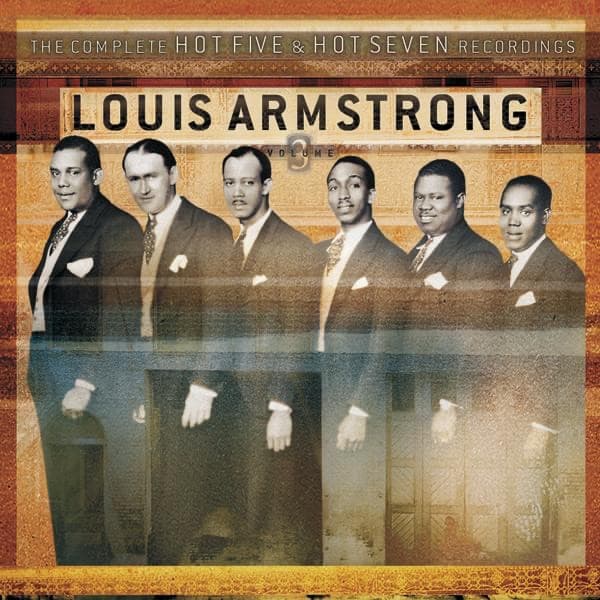
Louis Armstrong
The Complete Hot Five and Hot Seven Recordings
A four-disc box issued by Columbia/Legacy in 2000, collecting everything Armstrong cut for Okeh with the Hot Five, Hot Seven and their 1928 successors between November 1925 and December 1928. "Heebie Jeebies," "Potato Head Blues," "Struttin' with Some Barbecue," "West End Blues," "Weather Bird." This is the box where jazz turns into a soloist's art, and it is the most important set of records in this chapter.
Sexteto Habanero
Las raices del son
Tumbao's 1992 compilation of the Havana sextet's records from 1925 to 1931. Guitar, tres, bongo, bass, maracas and claves, and singers trading with a chorus: the urban son as it sounded when it was new. This is the ground the Trio Matamoros, the rumba craze and, decades on, salsa were built on.
Arizona Dranes
Complete Recorded Works 1926–1929
A 1993 compilation of the sixteen Okeh sides cut between June 1926 and 1928. Sanctified shouting, a small choir, and a piano rolling boogie-woogie bass under hymns. It is the loudest, happiest church music on record before Rosetta Tharpe, and the first gospel built on a piano.
Rev. J. M. Gates
Death's Black Train Is Coming / Need of Prayer
A 78 from Gates's first Columbia session in April 1926. A chanted sermon that rises from speech into song while his congregation moans and answers, and it sold tens of thousands. Preachers on record were a real market in the late 1920s, and this is the record that showed it.
Jelly Roll Morton's Red Hot Peppers
Black Bottom Stomp / The Chant
A 78 from the September 15, 1926, Chicago session. Two composed three-minute pieces for a seven-piece New Orleans band, arranged so that every chorus has a new texture and every break is planned. It is the argument that jazz could be written and still be hot, and Morton won it.
Blind Lemon Jefferson
Black Snake Moan / Match Box Blues
Okeh 8455, recorded in Atlanta in March 1927 while Jefferson was moonlighting from Paramount, and better recorded than anything he made for them. Two of his best songs, one lascivious and one desperate, with guitar breaks that stop the rhythm dead and start it again. "Match Box Blues" turned up in Carl Perkins and then the Beatles.
Frankie Trumbauer and His Orchestra
Singin' the Blues / Clarinet Marmalade
Okeh 40772, recorded February 4, 1927. The A side is Trumbauer's floating C-melody saxophone chorus, then Bix's cornet, over Eddie Lang's guitar, and it is the first jazz ballad. The B side is a hot Dixieland tune played with the same precision. Bix and Tram fans have argued about which side is better for a century.
Various Artists
The Bristol Sessions, 1927–1928: The Big Bang of Country Music
A five-disc box issued in 2011 with every side Ralph Peer recorded in Bristol in 1927 and on his return trip in 1928: the Carter Family, Jimmie Rodgers, Ernest Stoneman, Blind Alfred Reed, the Tenneva Ramblers, gospel singers and string bands. Play it start to finish and you hear a region stepping up to a microphone for the first time. The Country Music Foundation's 1987 single-disc selection is the shorter route.
Hoagy Carmichael and His Pals
Star Dust / One Night in Havana
Gennett 6311, cut in Richmond, Indiana, on the label's new electric equipment: "One Night in Havana" on October 28, 1927, "Star Dust" three days later. "Star Dust" here is a bouncy instrumental with a long piano solo, nothing like the ballad it became. Hearing the future standard in its original shape is the whole point.
Jimmie Rodgers
Blue Yodel / Away Out on the Mountain
Victor 21142, recorded November 30, 1927, in Camden and released in February 1928. A man, a guitar, blues verses and a yodel, and it sold hundreds of thousands of copies. Country music had its first star and its first hit, and both were half blues.
Blind Willie Johnson
Dark Was the Night, Cold Was the Ground / It's Nobody's Fault but Mine
A 78 from the December 3, 1927, Dallas session. One side is a wordless slide-guitar meditation on the Crucifixion that NASA later sent into space; the other is a driving confession of sin that Led Zeppelin took to arenas. Together they are the whole range of one man with a guitar and a pocketknife slide.

Duke Ellington
Early Ellington: The Complete Brunswick and Vocalion Recordings, 1926–1931
A three-disc set issued in 1994 that collects the Cotton Club years on the two labels that recorded most of them. "East St. Louis Toodle-Oo," "Black and Tan Fantasy," "The Mooche," "Mood Indigo" at the end. The jungle sound, the growl trumpet, and the first signs of a composer who would work for half a century.
Paul Robeson with Paul Whiteman and His Concert Orchestra
Ol' Man River
A twelve-inch 78 recorded in March 1928, months before Robeson sang the part in London. Whiteman's orchestra takes it at dance tempo, which is strange, and Robeson's bass rolls over it anyway. It is the recording that fixed the song to the singer.
The Carter Family
Wildwood Flower / Forsaken Love
Victor V-40000, recorded May 10, 1928, in Camden and released in January 1929. Sara sings a mangled 1860 parlor poem while Maybelle's guitar plays melody and rhythm at once. That guitar part has been learned by more people than any other in country music.
Louis Armstrong and His Hot Five
West End Blues / Fireworks
Okeh 8597. "West End Blues" was cut in Chicago on June 28, 1928, "Fireworks" the day before, both electrically. The opening cadenza, the wordless vocal, Earl Hines's piano and the long held note at the end. Every jazz musician of the next generation owned this 78 and wore it out.
Leroy Carr
How Long, How Long Blues / My Own Lonesome Blues
Vocalion 1191, recorded June 19, 1928, in Indianapolis. Piano and guitar, no drums, a voice that never strains. It sold in the hundreds of thousands and turned the male blues singer from a shouter into a crooner, which is the road to R&B.
Trio Matamoros
Son de la loma / El que siembra su maiz
The trio's first Victor sides from 1928, later gathered on countless compilations. Two guitars, maracas, two voices in harmony, and two songs that every Cuban can still sing. If you want to know what Cuba sounded like before the rumba craze sold it to New York, start here.
Tampa Red and Georgia Tom
It's Tight Like That
Vocalion 1216, recorded in Chicago on October 24, 1928, with Tampa Red's slide guitar and Georgia Tom Dorsey's piano bouncing under a run of double entendres. It sold enough to launch a genre called hokum and to keep both men in the studio for years. Dorsey took the bounce with him into gospel.
Pine Top Smith
Pine Top's Boogie Woogie / Pine Top's Blues
Vocalion 1245, recorded December 29, 1928, in Chicago and released in March 1929, the month Smith was killed. Eight beats to the bar in the left hand, a spoken dance lesson over the top, and the first record with "boogie" in the title. Rock and roll piano begins on this side.
Charley Patton
Pony Blues / Banty Rooster Blues
Paramount 12792, from the June 14, 1929, session in Richmond, Indiana. An upbeat dance blues on one side, a slow drag with bottleneck slide on the other, both driven by a guitar Patton slaps and chokes like a drum. It was a regional hit and it is the root of the Delta blues on record.

Fats Waller
Ain't Misbehavin' (piano solo)
A 78 from August 2, 1929, the first session Victor gave over entirely to Waller's piano. No vocal, no clowning, just stride at its most inventive on a song he had written weeks earlier for a Harlem revue. It is less famous than his later vocal version, and it is the one that shows the playing.
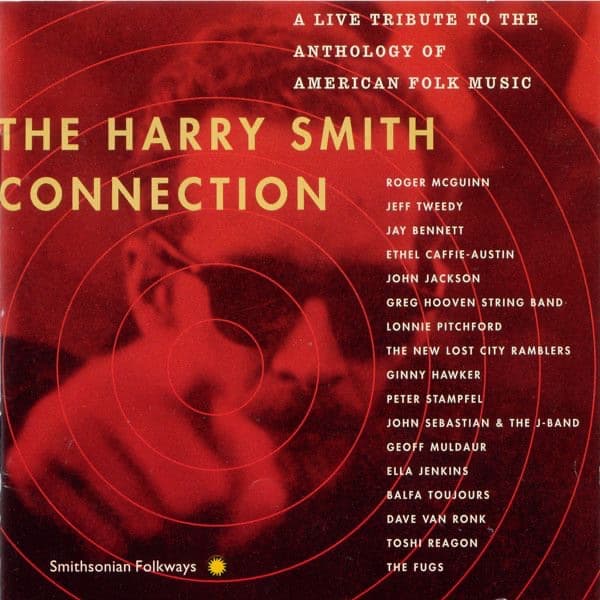
Various Artists
Anthology of American Folk Music
Harry Smith's six-LP compilation, issued in 1952, of 84 commercial 78s recorded between 1927 and 1932: the Carter Family, Blind Lemon Jefferson, Mississippi John Hurt, Blind Willie Johnson, Uncle Dave Macon, Cajun fiddlers, sermons, murder ballads. It is this decade's music as the 1960s heard it, and the reason the folk revival had anything to revive. Dylan, Baez and the whole folk revival learned their songs from it.
The Mixtape
The decade in tracks, in the order that tells its story. Press Listen on any of them.
Whispering
Paul Whiteman and His OrchestraStart with what the decade thought pop music was: a sweet, arranged dance tune with a hint of jazz. Everything else on this list is a reaction to it or an escape from it.
Crazy Blues
Mamie Smith and Her Jazz HoundsRecorded through a horn three months after "Whispering," and the record that told the industry Black buyers existed. Listen for the band tumbling around her in the choruses.
Down Home Blues
Ethel WatersThe first hit for the first Black-owned label, and a lighter, cooler way to sing the blues that points at the jazz singers to come.
Carolina Shout
James P. JohnsonStride piano, the Harlem engine. Count the left hand: bass note, chord, bass note, chord, faster than seems possible, while the right hand parties.
Sallie Gooden
Eck RobertsonOne fiddle, no accompaniment, a dozen variations on one tune. This is what country music sounded like before it knew it was country music.
Dippermouth Blues
King Oliver's Creole Jazz BandNew Orleans ensemble jazz at its peak: nobody solos for long, everybody talks at once, and it works. Oliver's wah-wah cornet chorus was copied by every band in the country.
Downhearted Blues
Bessie SmithVoice and piano only. Notice how she leans on the word "trouble." Nobody had sung with this much weight on a record before.
The Little Old Log Cabin in the Lane
Fiddlin' John CarsonThe record a producer called awful and a region bought by the thousand. The roughness is the point: this is the porch, not the parlor.
Rhapsody in Blue
Paul Whiteman and His Concert Orchestra with George GershwinThe premiere recording, Gershwin at the piano, cut down to fit two sides of a 78. The clarinet smear at the start was a rehearsal joke that stuck.
See See Rider Blues
Ma RaineyThe tent show meets the new jazz: Rainey's heavy voice answered by a young Louis Armstrong. Elvis sang this forty years later and did not change much.
St. Louis Blues
Bessie Smith with Louis ArmstrongA voice, a cornet and a wheezing pump organ. Smith sings a line, Armstrong comments on it. This is call and response, the oldest conversation in Black music, caught on a disc.
I Shall Wear a Crown
Arizona DranesA Pentecostal church service on record, with the piano playing boogie-woogie a decade before the name. Feel the pull between the choir and the left hand.
Black Bottom Stomp
Jelly Roll Morton's Red Hot PeppersComposed jazz. Every chorus changes texture: stop-time, banjo solo, clarinet in the low register, trumpet in the minor. Three minutes with more ideas than most albums.
Singin' the Blues
Frankie Trumbauer and His Orchestra with Bix BeiderbeckeThe first jazz ballad. The melody is never played until the end; the solos float above the beat. This is jazz as thought, not shout.
Potato Head Blues
Louis Armstrong and His Hot SevenThe stop-time chorus near the end is the moment the jazz solo became an art form. The band plays one chord a bar and Armstrong flies over the gaps.
Blue Yodel (T for Texas)
Jimmie RodgersBlues verses, a guitar, a yodel. The first country hit borrowed its first line from Black Memphis singers, and Howlin' Wolf borrowed it back.
Dark Was the Night, Cold Was the Ground
Blind Willie JohnsonNo words, just a hum and a slide guitar carrying an old hymn. It is on the Voyager spacecraft. Play it in the dark.
Black and Tan Fantasy
Duke Ellington and His OrchestraBubber Miley's growling plunger trumpet over minor chords, and a quote from Chopin's funeral march at the end. The Cotton Club jungle sound, and the first Ellington that sounds like Ellington.
Wildwood Flower
The Carter FamilySara's flat, unhurried voice and Maybelle's guitar playing melody and rhythm at once. The guitar part every country and folk picker learns first.
Son de la loma
Trio MatamorosTwo guitars, maracas, two voices in harmony, and a question about where the singers come from. The Cuban son before it was sold as rumba.
How Long, How Long Blues
Leroy Carr and Scrapper BlackwellThe blues moves to the city and lowers its voice. Piano and guitar, no strain, and a melody every blues player had to know by 1930.
Pine Top's Boogie Woogie
Pine Top SmithEight to the bar in the left hand and a dance lesson on top. The name boogie-woogie starts here, and so does rock and roll piano.
Ain't Misbehavin'
Fats WallerThe stride pianist as composer, taking his own hit apart and rebuilding it in three minutes. Compare it with "Carolina Shout" and hear eight years of Harlem.
Pony Blues
Charley PattonThe Delta on record at last. Listen through the surface noise for the guitar being slapped like a drum and the voice dropping syllables to fit the dance.
Nobody Knows You When You're Down and Out
Bessie SmithRecorded in May 1929 about losing everything. Five months later the whole country did. End the decade here.
What Came Next
The Depression did what Prohibition and radio could not: it nearly killed the record. Sales collapsed, Paramount and Gennett died, Okeh and Columbia and Victor were swallowed by bigger companies, and the field trips that had found Patton and the Carters stopped. Bessie Smith lost her contract. Jimmie Rodgers died in 1933 with his last session two days old. Bix was already gone.
But the music did not stop, it moved. Fletcher Henderson's arrangements went to Benny Goodman and became swing, the sound of the 1930s dance floor. Thomas Dorsey walked out of the blues in 1932 and into the church with "Precious Lord," and gospel was born. Robert Johnson sat down with Patton's records and Leroy Carr's and made his own in 1936. John Lomax and his son Alan took a recording machine into Southern prisons and came back with Lead Belly. Carlos Gardel went to Hollywood. Don Azpiazu took "El Manisero" to Broadway in 1930 and the rumba craze began.
The 1930s chapter opens in the Dust Bowl and the breadline, with the blues, gospel and folk that told the country the truth about itself. Every one of those voices learned to sing from a 78 pressed in this decade.