100 Years of Music / Genre
Folk
Songs nobody owned, collected from porches and prisons, then picked up by city singers with something to say. Folk became a commercial music around 1940 and gave rock its conscience and its singer-songwriter.
The lineage
Folk music in the strict sense is older than any recording: the ballads Francis James Child catalogued between 1882 and 1898, the songs Cecil Sharp found in the Appalachians in 1916, the cowboy songs John Lomax printed in 1910. What this history calls folk is what happened when that material met the microphone and the city. From 1933 John and Alan Lomax drove the South with a recording machine for the Library of Congress, and at the Angola prison farm in Louisiana they recorded Lead Belly. Harry Smith’s Anthology of American Folk Music (1952), the revival’s bible, was made entirely of commercial hillbilly and race records from 1927 to 1932. Folk, as a genre, grew out of country and blues records, not the other way round.
The year it took shape as a commercial and political music was 1940. Woody Guthrie recorded Dust Bowl Ballads for Victor that year and wrote "This Land Is Your Land" in a New York hotel in February. Pete Seeger, Lee Hays and Millard Lampell formed the Almanac Singers in 1940, Guthrie joined them in 1941, and for three years they sang union songs in halls and on picket lines. Moses Asch founded Folkways Records in 1948 and recorded all of them. The Weavers, Seeger’s next group, took Lead Belly’s "Goodnight, Irene" to number one in 1950, and were blacklisted within two years. The idea that a song could be an argument was in place before the decade ended.
The boom came a decade later. The Kingston Trio’s "Tom Dooley", a North Carolina murder ballad in a college sweater, went to number one in 1958 and sold three million. The Newport Folk Festival began in 1959. Joan Baez released her first album in 1960, Bob Dylan his in 1962, and "Blowin’ in the Wind", a hit for Peter, Paul and Mary in 1963, was sung at the March on Washington that August. Greenwich Village clubs were the scene; Phil Ochs, Odetta, Dave Van Ronk and Tom Paxton were the cast. Then Dylan plugged in at Newport in July 1965, the Byrds put "Mr. Tambourine Man" on a twelve-string Rickenbacker over a rock drummer the same summer, and folk rock was born. In Britain, Fairport Convention’s Liege & Lief (1969) did the same thing with English ballads.
The 1970s turned the protest song inward. James Taylor’s Sweet Baby James (1970), Carole King’s Tapestry (1971) and Joni Mitchell’s Blue (1971) made the singer-songwriter the dominant figure of the decade: one person, an acoustic guitar or piano, and a song about their own life, which is the blues’ founding idea returned. Leonard Cohen, Neil Young, John Prine, Townes Van Zandt and Kris Kristofferson wrote the words the era is remembered by. Bruce Springsteen’s Nebraska (1982), recorded on a four-track in a bedroom, and Tracy Chapman’s 1988 debut kept the tradition’s conscience when the charts had moved on.
Since then folk has lived mostly inside other genres. Gillian Welch’s Revival (1996) and the O Brother, Where Art Thou? soundtrack (2000) reopened the old songbook; Sufjan Stevens’s Illinois (2005), Bon Iver’s For Emma, Forever Ago (2008) and Fleet Foxes made indie folk the 2000s’ art-rock; Mumford & Sons stamped it into stadiums in 2009. Phoebe Bridgers, Adrianne Lenker and Zach Bryan are the current line. The instrument is still the acoustic guitar, and the standard is still the one Guthrie set: does the song tell the truth about a real place and a real person.
Branches
Field recordings
The Lomaxes’ Library of Congress trips from 1933 recorded work songs, ballads and blues where they were sung. Lead Belly, Muddy Waters (1941) and Vera Hall came to the world this way. The revival built on these tapes.
Topical folk
Union songs and Dust Bowl ballads sung by Woody Guthrie, the Almanac Singers and Pete Seeger from 1940. Folk as a political tool, with a blacklist to prove it mattered.
The folk boom
Clean-cut trios and college concerts after "Tom Dooley" (1958). The Kingston Trio, the Limeliters, the Chad Mitchell Trio and Peter, Paul and Mary made folk the biggest thing on campus before the Beatles.
Protest folk
The Greenwich Village generation: Dylan, Baez, Ochs, Odetta. "Blowin’ in the Wind" and "We Shall Overcome" as the soundtrack to the civil rights movement, with Newport as the gathering point.
Folk rock
Folk songs with electric guitars and a drummer. The Byrds’ "Mr. Tambourine Man" (June 1965) and Dylan at Newport (July 1965). Simon & Garfunkel, the Mamas & the Papas and Buffalo Springfield followed within a year.
British folk rock
Fairport Convention’s Liege & Lief (1969) played Child ballads with a rhythm section; Pentangle, Steeleye Span, Nick Drake and Bert Jansch mapped the rest. The acoustic side of British rock starts here.
Singer-songwriter
Confessional songs by the person who wrote them, usually alone at a guitar or piano. Sweet Baby James (1970), Tapestry and Blue (1971). The template for Elliott Smith, Taylor Swift and Phoebe Bridgers alike.
How to listen
Listen for the story and the singer’s distance from it. A traditional ballad is told from outside: "Tom Dooley" reports a hanging. Guthrie stands closer, inside the Dust Bowl. Dylan by 1963 is pointing a finger. By Blue in 1971 the singer is the subject. Folk’s whole history is that camera moving in.
Then listen for what is missing. No drums, no electric guitar, no studio tricks: folk asks the voice and one instrument to carry everything, so pay attention to the guitar’s rhythm hand and to how the singer breathes. When the drums arrive, in 1965 with the Byrds, you can hear exactly what the music gained and what it gave up.
Play the chain. Lead Belly’s "Goodnight, Irene" (1933), the Weavers’ (1950), then Dylan’s "Blowin’ in the Wind" (1963), then Bon Iver’s "Skinny Love" (2008). Four decades, one idea: a person with a guitar can be enough.
Across the decades
Songs nobody wrote
Folk in the 1920s was not yet a genre you could buy. It was a field of study. John Lomax had published Cowboy Songs and Other Frontier Ballads in 1910 after collecting them on horseback, and spent the 1920s working in a Dallas bank before the Library of Congress work that made him famous. Carl Sandburg, the poet, published The American Songbag in 1927: 280 songs, a hundred never printed before, gathered from hoboes, union men and college students, with piano arrangements so families could sing them. It stayed in print for seventy years.
The irony is that the record companies were doing the same work by accident. Every "hillbilly" and "race" field session captured ballads, hymns and dance tunes that had lived only in memory. When Harry Smith assembled his Anthology of American Folk Music in 1952, almost everything on it was a commercial 78 from 1927 to 1932. The folk revival of the 1960s was built on records this decade made to sell, and singers this decade forgot.
The Lomaxes, Lead Belly, and the Dust Bowl balladeer
Folk music in the 1930s was less a market than a mission. In 1933 John Lomax, a Texas folklorist in his sixties, and his teenage son Alan drove through the South with a disc recorder for the Library of Congress, looking for songs in the places commercial labels ignored: prisons, levee camps, church suppers. At the Louisiana State Penitentiary at Angola in July they recorded a twelve-string guitarist named Huddie Ledbetter, called Lead Belly, singing a waltz called "Irene." It was the first time the song had been recorded. Within two years he was performing in New York and the Lomaxes had a book about him.
Alan Lomax became the Archive of American Folk Song's assistant in charge in 1937, and in May 1938 he sat Jelly Roll Morton down at a piano in the Library's Coolidge Auditorium and recorded nine hours of him talking and playing through the birth of jazz. It was the first long oral history of a musician ever put on disc, and it set the pattern for how the century would document itself.
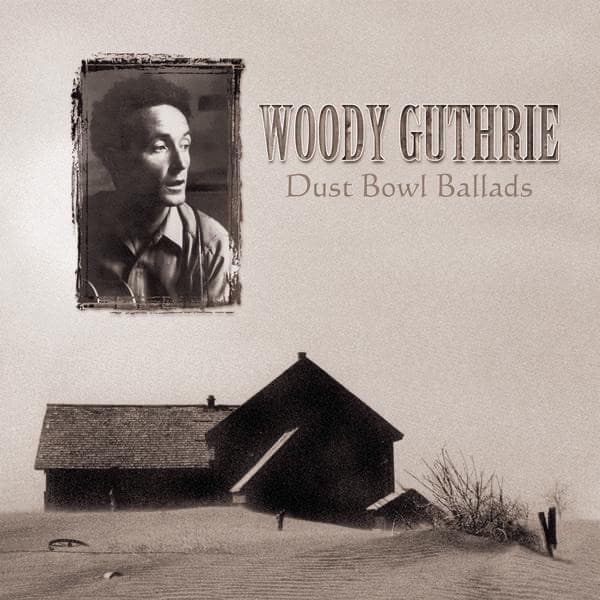
The other folk story was on the road. Woody Guthrie left the dust of Pampa, Texas, for California in 1937 and landed a daily show on KFVD in Los Angeles, singing old songs and new ones to the migrant camps. He did not record commercially until 1940, when "Dust Bowl Ballads" put the whole decade on two 78 albums. But the songs were written in the 1930s, and so was the idea that a singer with a guitar could be a reporter.
This land, this union, this machine
Woody Guthrie wrote "This Land Is Your Land" in a cheap New York hotel in February 1940, sick of hearing Kate Smith sing "God Bless America" on the radio. He did not record it until April 1944, in a marathon of sessions for Moses Asch, the engineer whose Folkways label would become the folk revival's library. The verse about the private property sign and the verse about the relief office were left off the famous version; they are the point of the song.
In 1941 Guthrie joined Pete Seeger, Lee Hays and Millard Lampell in the Almanac Singers, a loose group living in a Greenwich Village house and singing union songs at strikes and rallies. Seeger's banjo had "This machine surrounds hate and forces it to surrender" written around the head; Guthrie's guitar said "This machine kills fascists". The Almanacs broke up when the war came. Lead Belly, the Louisiana twelve-string player Alan Lomax had recorded in prison in the 1930s, spent the decade in New York on radio and on Asch's label, and died in December 1949 of Lou Gehrig's disease, a few months before the Weavers' version of his "Goodnight, Irene" became the biggest record in America.
The Weavers were Seeger and Hays again, with Ronnie Gilbert and Fred Hellerman, formed in 1948 and struggling until Seeger got them a booking at the Village Vanguard in December 1949. Their success in 1950 and the blacklist that ended it in 1952 are the next chapter. But the folk revival that Bob Dylan walked into in 1961 was built by these people in this decade: Asch's label, Lomax's field recordings, Guthrie's songs and Seeger's insistence that a crowd could sing.
The folk revival begins
The decade opened with the Weavers at number one. Their 1950 recording of Lead Belly’s "Goodnight, Irene," six months after his death, sold two million copies and put a leftist folk quartet on the pop charts. Then the blacklist caught up with them. Pete Seeger was called before the House Un-American Activities Committee in 1955 and refused to answer. For most of the decade, folk music in America was something you did quietly.
Two records kept the flame. Harry Smith’s "Anthology of American Folk Music" (1952) gathered eighty-four commercial 78s from 1927 to 1932 into three double LPs on Folkways, and a generation of city kids learned the old songs from it. Harry Belafonte’s "Calypso" (1956) took Caribbean folk song to the top of the album chart for thirty-one weeks and became the first LP by a single artist to sell a million copies. Odetta’s big voice and Alan Lomax’s field recordings did the rest of the teaching.
The commercial break came in 1958. Three clean-cut college boys from California called the Kingston Trio recorded a two-chord North Carolina murder ballad, "Tom Dooley," as filler for their first album. It went to number one, sold millions and won the first Grammy for Best Country & Western Recording. Every coffeehouse in America suddenly had a banjo. In Britain, Lonnie Donegan’s skiffle version of Lead Belly’s "Rock Island Line" had done the same thing two years earlier, and the teenagers who bought cheap guitars because of it would matter very much in the next chapter.
The voice of protest, then the sound of an electric guitar at Newport
Folk was not new, but the 1960s politicized it. The revival that had started in Greenwich Village coffeehouses and at the Newport Folk Festival took Woody Guthrie, Pete Seeger and the Anthology of American Folk Music as scripture. Joan Baez, Peter, Paul and Mary, Phil Ochs and Odetta sang at rallies and on the Mall in Washington in August 1963. That same summer Peter, Paul and Mary took "Blowin' in the Wind" into the Top 5 and made a twenty-two-year-old from Minnesota the most important songwriter in America.
Bob Dylan changed songwriting and then changed it again. "The Freewheelin' Bob Dylan" in 1963 had the protest songs. "Bringing It All Back Home" in early 1965 had an electric side. Then on July 25, 1965, at Newport, he walked out with a Stratocaster and a Chicago blues band and played three songs, and part of the audience booed. "Like a Rolling Stone", released five days earlier, was six minutes long and went to number two. "Highway 61 Revisited" and "Blonde on Blonde" followed within a year. Poet, prophet, provocateur: he had decided the folk song could be anything.
Folk rock was the fallout. The Byrds took "Mr. Tambourine Man", added a twelve-string Rickenbacker and Beatles harmonies, and had a number one in June 1965. Simon and Garfunkel's producer overdubbed drums and electric guitar onto "The Sound of Silence" without telling them and made it number one in January 1966. Buffalo Springfield wrote "For What It's Worth" about a curfew riot on Sunset Strip. By 1969 Crosby, Stills and Nash were singing three-part harmony about peace, and the singer-songwriters of the next decade, Joni Mitchell, Leonard Cohen, James Taylor, were already making their first records.
The personal became powerful
Folk in the sixties had been about causes. In the seventies it turned inward, and the singer-songwriter became a genre of its own: one voice, one instrument, one life. Carole King had written a decade of hits for other people from a cubicle in the Brill Building. "Tapestry" (February 1971) was her own voice on her own songs, recorded plainly, and it stayed at number one for fifteen weeks and on the chart for six years. It told a whole generation of women, and men, that a confession could be a hit.
Joni Mitchell's "Blue" (June 1971) is the record everyone else in this room measured themselves against. She wrote in open tunings nobody else used, sang about her own affairs and her own given-up child, and left the arrangements almost bare: dulcimer, piano, guitar. James Taylor, who played on it, had already made "Sweet Baby James" (1970), a record about heroin and hospitals delivered so gently it sounded like comfort. Neil Young's "Harvest" (1972) went to number one and he spent the rest of the decade running from it, into the ditch, as he put it, with "Tonight's the Night" and "On the Beach". Jackson Browne wrote "These Days" at sixteen and "Late for the Sky" at twenty-five. Cat Stevens sold millions of songs about searching and then, in 1977, found what he was looking for in Islam and stopped. Paul Simon, on his own, went to Jamaica to cut "Mother and Child Reunion" and to Muscle Shoals for "Kodachrome".
In Britain the folk revival went electric and strange: Fairport Convention, Pentangle, Nick Drake's three quiet albums nobody bought until he was dead, Richard Thompson, John Martyn's echoplexed guitar. And in Latin America a different folk was being murdered for its politics: Víctor Jara, the voice of Chile's Nueva canción, was tortured and shot in a stadium days after the September 1973 coup. The personal and the political had not separated everywhere.
Folk after the fall: singer-songwriters and the Pogues
Folk had been out of fashion for a decade when Suzanne Vega's "Luka" (1987), a first-person song about child abuse sung quietly over an acoustic guitar, reached the American top five. The next spring Tracy Chapman, a Cleveland singer discovered at Tufts, released "Fast Car", played it at Nelson Mandela's seventieth-birthday concert at Wembley and sold ten million records. Radio called it "new folk". It was the old thing, done well, at the right moment.
Britain's version was angrier. Billy Bragg toured the miners' strike with an electric guitar and a small amplifier and wrote love songs and union songs with equal seriousness. The Pogues, London Irish, played traditional tunes at punk speed; "Rum Sodomy and the Lash" (1985), produced by Elvis Costello, made Shane MacGowan's writing impossible to ignore. Nanci Griffith, Michelle Shocked, Lucinda Williams and the Indigo Girls, whose debut arrived in 1989, filled out an American circuit of coffeehouses and college towns. By 1989 the singer-songwriter was back on the cover of Rolling Stone, and the 1990s would take it further.
Lilith Fair, Righteous Babe and the whisper
The folk revival of the 1990s was mostly women and mostly done without permission. Ani DiFranco started Righteous Babe Records in Buffalo in 1990, sold her tapes from the trunk of her car and turned down every major label; by 1996 she was selling hundreds of thousands. Tracy Chapman, whose first album had made her famous in 1988, came back in 1995 with "Give Me One Reason", a twelve-bar blues that became her biggest hit. The Indigo Girls sang "Galileo" in harmony. Jewel's "Pieces of You", recorded partly in a coffee shop, took two years to sell twelve million copies. Sarah McLachlan, told that radio would not play two women in a row, put a tour together to prove it wrong: Lilith Fair, in the summer of 1997, was the highest-grossing festival tour in America that year. Dar Williams, Fiona Apple, Iris DeMent and Gillian Welch, whose "Revival" sounded like a 1930s field recording made in 1996, wrote the songs under the noise.
The men whispered. Elliott Smith, from Portland, made "Either/Or" on a four-track and found himself in a white suit at the Oscars in March 1998 singing "Miss Misery" between Celine Dion and Trisha Yearwood. Nick Drake, dead since 1974, was rediscovered when "Pink Moon" scored a Volkswagen advert at the decade's end, and a generation of bedroom songwriters heard him for the first time. Beck put the electronics away for "Mutations" and reached back to the folk and tropicália records his grandfather might have owned. Uncle Tupelo and Wilco kept the Woody Guthrie line alive; Billy Bragg and Wilco set Guthrie's unpublished lyrics to music on "Mermaid Avenue" in 1998. Folk in the 1990s was not a movement. It was a voice and a guitar, and it was everywhere.
Freak folk, cabin records and the new singer-songwriters
Folk came back through the side door. A Volkswagen ad in 2000 put Nick Drake's Pink Moon under a car full of kids driving at night, and a record that had sold almost nothing in 1972 sold more that year than in Drake's lifetime. Vashti Bunyan, whose 1970 album had been a similar ghost, came back in 2005. Devendra Banhart, Joanna Newsom, whose Ys in 2006 was five long songs with Van Dyke Parks orchestrations, and CocoRosie were called freak folk and hated the name. Sufjan Stevens' Illinois, in July 2005, was a fifty-state project that stopped at two, with Chicago as its anthem. Iron and Wine, Bright Eyes' I'm Wide Awake, It's Morning, the Decemberists, Andrew Bird, the Mountain Goats' The Sunset Tree, Okkervil River and Neutral Milk Hotel's ever-growing afterlife were the indie-folk canon the blogs built.
The end of the decade produced its own myths. Justin Vernon went to his father's hunting cabin in Wisconsin with mono and a broken heart and came back with For Emma, Forever Ago, which Bon Iver self-released in 2007 and Jagjaguwar issued in February 2008. Fleet Foxes' harmonies came out of Seattle the same year. Feist's 1234 sold the iPod nano in 2007 and The Reminder with it. Antony and the Johnsons' I Am a Bird Now won the Mercury Prize in 2005. Jack Johnson, John Mayer's Continuum, Norah Jones, Ray LaMontagne, Amos Lee, Josh Ritter, Damien Rice's O, Regina Spektor, Cat Power's The Greatest and José González's cover of Heartbeats filled coffee shops and film soundtracks.
Britain built a nu-folk scene in a Bosun's Locker basement in London, where Laura Marling, Noah and the Whale, Johnny Flynn and, from 2007, Mumford and Sons played. And the tradition itself was honored: Gillian Welch's Time (The Revelator) in 2001, Bert Jansch's late records, and Robert Plant and Alison Krauss' Raising Sand, produced by T Bone Burnett in 2007, which won Album of the Year in February 2009 for a Led Zeppelin singer and a bluegrass fiddler harmonizing on Everly Brothers and Townes Van Zandt songs.
Banjos on the radio, and then something more honest
The decade opened with the nu-folk boom, which was in some ways a hangover from the 2000s. Mumford and Sons played waistcoats and kick drums to stadiums and won Album of the Year for Babel in 2013. The Lumineers, the Avett Brothers and First Aid Kit filled the same space. Advertising loved it. By 2015 the banjos had mostly gone back in their cases.
What survived was better and quieter. Bon Iver kept moving, from the choral warmth of his self-titled record in 2011 to the digitally shredded 22, A Million in 2016. Sufjan Stevens made Carrie and Lowell in 2015 about his mother's death, and it is one of the most direct records anyone made in the decade. Gillian Welch, Laura Marling, Bill Callahan, Sarah Jarosz and the Punch Brothers kept the craft alive.
The tradition got re-examined too. Rhiannon Giddens spent the decade proving that the banjo is an African instrument and that American folk music is Black music, on her own records and with Our Native Daughters in 2019, and she won a MacArthur Fellowship for it in 2017. Hurray for the Riff Raff, Valerie June and Yola widened the picture further.
And the elders got their due. Bob Dylan won the Nobel Prize in Literature in October 2016, which caused a global argument about whether songs are literature. John Prine made The Tree of Forgiveness in 2018 at seventy-one and had the biggest chart week of his life. Bruce Springsteen sat on a Broadway stage for over a year telling the story behind his own songs. Pete Seeger died in January 2014, which felt like the end of something that had started in 1940.
Quiet records for a loud decade
Folk in the 2020s was where people went to be still. Taylor Swift went there first, in July 2020, with a record made over email with Aaron Dessner of the National, and it changed what a global pop star was allowed to sound like. Noah Kahan turned New England winters into stadium singalongs. Hozier wrote a song about being loved too gently and it went to number one. Sufjan Stevens made "Javelin" after the death of his partner, and Bon Iver made a record in 2025 that was, for the first time in his career, mostly happy.
The elders came back to the campfire. Joni Mitchell, who had a brain aneurysm in 2015 and had to relearn the guitar, walked onto the stage at the Newport Folk Festival in July 2022 and sang for two hours. Tracy Chapman, who had not performed on television in years, sat down at the Grammys in February 2024 and played "Fast Car" with a country star who had grown up on it. Both moments went round the world in a day, which is the one thing this decade is genuinely good at.
Timeline
Eck Robertson makes the first country records
Texas fiddler Eck Robertson and Civil War veteran Henry Gilliland, both in cowboy dress, talked their way into Victor's New York office. On June 30 the pair cut "Arkansaw Traveler" and three other tunes; Robertson came back alone the next day for "Sallie Gooden." The two are usually counted as the first commercial country recordings, and Victor issued them on September 1, 1922, a reluctant company's first step into country music.
Fiddlin' John Carson and the first country hit
On June 14, in a temporary Okeh studio on Nassau Street in Atlanta, the 55-year-old fiddler recorded "The Little Old Log Cabin in the Lane" and "The Old Hen Cackled." Ralph Peer thought it was terrible and pressed 500 copies. They sold out in days and orders kept coming. This is the record that told the industry rural white Southerners would buy their own music.
Paul Robeson sings the spirituals
On April 19, at the Greenwich Village Theatre, Robeson and pianist Lawrence Brown gave what is counted as the first concert made entirely of spirituals. A mostly white audience demanded sixteen encores. Robeson, an athlete and lawyer turned actor, made the sorrow songs concert music without the concert-hall polish, and became the voice white America associated with Black dignity for thirty years.
Carl Sandburg, The American Songbag
The poet published 280 folk songs, a hundred of them never printed before, with piano parts and notes on where he got each one. Sandburg had collected them on lecture tours and in hobo camps and sang them himself with a guitar in two keys. It was the first folk anthology that ordinary families bought, and it stayed in print for seventy years.
The Bristol sessions
Ralph Peer set up Victor's microphones on the Tennessee side of State Street on July 22 and recorded from July 25 to August 5: 76 sides by 19 acts. The Carter Family came down from Maces Spring, Virginia, on August 1 and 2 and cut six songs, including "Single Girl, Married Girl," with Sara singing lead and eighteen-year-old Maybelle's guitar carrying the melody. Jimmie Rodgers recorded alone on August 4 after his band quit on him. The label did not know it, but it had just found the two founding acts of country music in the same week.
The Carter Family, "Wildwood Flower"
Victor called the Carters to Camden after their Bristol sides sold. On May 10, 1928, Maybelle's nineteenth birthday, Sara sang a parlor song whose words had first been printed as a poem in 1860 and worn strange by decades of memory since, and Maybelle picked the melody on the bass strings while strumming the rhythm above. The "Carter scratch" is the root of country and folk guitar. Victor released it in January 1929.
"Lamento Borincano" gives the Depression a Puerto Rican voice
Rafael Hernández wrote it in New York about a farmer who takes his produce to town and finds nobody with money to buy. Canario y su Grupo recorded it in 1930 with an eighteen-year-old singer named Davilita, and it became an anthem far beyond Puerto Rico. The Library of Congress added the original to the National Recording Registry in 2018.
The Lomaxes record Lead Belly at Angola
John and Alan Lomax, recording for the Library of Congress with a disc machine in their car, reached the Louisiana State Penitentiary in July 1933 and recorded Huddie Ledbetter singing "Irene," "Angola Blues," and other songs. "Irene" had never been recorded before. Within eighteen months Lead Belly was out of prison and singing for audiences in New York, and the American folk revival had its first star.
Lydia Mendoza records "Mal Hombre"
The Mendoza family had sung for coins on the streets of San Antonio and recorded as a group since the 1920s. In 1934 Lydia, seventeen, made her first solo record: a bitter tango-flavored song in a woman's voice about the man who ruined her, accompanied by her own twelve-string guitar. It made her the Lark of the Border, and audiences along the migrant routes requested it for the next fifty years.
Woody Guthrie reaches Los Angeles
Guthrie left his wife and children in Pampa, Texas, in May 1937 and rode west with the Dust Bowl migrants. By summer he had a daily fifteen-minute show on KFVD, and that fall he and Maxine Crissman, whom he called Lefty Lou, were the station's highest-rated act, with hundreds of fan letters from the migrant camps. The songs he wrote there became Dust Bowl Ballads.
Alan Lomax records Jelly Roll Morton's life story
Beginning May 21, 1938, in the Coolidge Auditorium of the Library of Congress, Lomax recorded the fifty-two-year-old pianist talking and playing through the birth of jazz in New Orleans: nine hours on fifty-four twelve-inch discs. It was the first extended oral history of a musician ever recorded, and the source of Lomax's 1950 book Mister Jelly Roll. Morton, broke and forgotten, died three years later.
The Carter Family go on border radio
In the fall of 1938 A.P., Sara, and Maybelle Carter moved to Del Rio, Texas, to broadcast twice a day on XERA, a 500,000-watt station just across the river in Mexico that was ten times as powerful as the law allowed in the United States. Their records had stopped selling; now the whole continent could hear them for free. Maybelle's daughters Helen, June, and Anita joined the act the next season.
Marian Anderson sings at the Lincoln Memorial
Refused Constitution Hall by the Daughters of the American Revolution, and then a white high school auditorium by the D.C. school board, Anderson sang a free concert on the steps of the Lincoln Memorial on Easter Sunday, April 9, 1939, with Eleanor Roosevelt and Interior Secretary Harold Ickes behind the plan. Seventy-five thousand people came and NBC carried it live. She opened with "America" and changed the words to "to thee we sing."
Billie Holiday records "Strange Fruit"
Abel Meeropol, a Bronx schoolteacher, wrote the poem after seeing a photograph of a lynching and set it to music himself. In April 1939 he brought it to Café Society, the integrated Greenwich Village club where Holiday was singing, and she performed it that night. Columbia would not record it, so on April 20 she cut it for Milt Gabler's small Commodore label with "Fine and Mellow" on the flip. It reached the top twenty and she sang it, at cost to herself, for the rest of her life.
Woody Guthrie writes "This Land Is Your Land"
In a room at the Hanover House hotel on West 43rd Street, Guthrie wrote six verses to the tune of a Carter Family hymn as an answer to Irving Berlin's "God Bless America", which he was tired of hearing on the radio. The original refrain was "God blessed America for me". He would not record it for four years, and the verses about the "No Trespassing" sign and the relief office would mostly be left out of the version schoolchildren learned.
The Almanac Singers
Pete Seeger, Lee Hays and Millard Lampell formed a loose singing group in New York to perform union and peace songs at strikes and rallies; Woody Guthrie joined them in 1941 and they recorded the "Talking Union" album for Keynote. They lived communally in Greenwich Village and broke up when the war came, but the idea that a folk group could be a political act was born here, and it would return as the Weavers.
Alan Lomax records Muddy Waters at Stovall
Working for the Library of Congress and Fisk University on a study of Black life in Coahoma County, Mississippi, Alan Lomax and John Work set up a portable disc recorder in a sharecropper's cabin on the Stovall plantation and recorded a field hand named McKinley Morganfield singing "Country Blues" and "I Be's Troubled". Lomax had come looking for Robert Johnson, who was dead; he had also recorded Son House nearby that summer. When Muddy heard his own voice played back he decided he could make a living at this. Two years later he was in Chicago.
Guthrie records for Moses Asch
In April 1944, in a studio on West 46th Street, Woody Guthrie sat down for Asch and recorded well over a hundred songs in a few weeks, among them the first recording of "This Land Is Your Land". Asch was an engineer who believed everything should be recorded and nothing deleted; his Folkways label became the folk revival's library, and this batch of songs is its cornerstone.
The Weavers form
Pete Seeger and Lee Hays of the old Almanac Singers recruited Ronnie Gilbert and Fred Hellerman and began singing as a quartet in New York in 1948, mixing union songs, Lead Belly, Guthrie and folk songs from around the world. They struggled for a year. Their 1950 breakthrough, the blacklist that stopped it and the 1955 Carnegie Hall comeback that started the folk revival are all in the next chapter; the group is this decade's.
The Empire Windrush docks at Tilbury
On 22 June 1948 a troopship carrying several hundred passengers from Jamaica and Trinidad arrived in England, the beginning of large-scale Caribbean migration to Britain. Among them was the Trinidadian calypsonian Aldwyn Roberts, Lord Kitchener, who sang a song he had written on the voyage, "London Is the Place for Me", for the Pathé newsreel cameras on the dock. Caribbean music in Britain, the line that runs through ska and reggae and lovers rock to grime, starts on this gangway.
Lead Belly dies
Huddie Ledbetter, the Louisiana twelve-string guitarist whom John and Alan Lomax had recorded in Angola prison in 1933, died in New York on 6 December 1949 of amyotrophic lateral sclerosis, months after a first European tour. Six months later the Weavers' version of his "Goodnight, Irene" was the best-selling record in America. He never had a hit in his life; the folk revival, skiffle in Britain and half of the 1960s owe him their repertoire.
The Weavers open at the Village Vanguard
Seeger talked Max Gordon into booking the struggling quartet into his Greenwich Village basement club in December 1949 for the fee Seeger could have earned alone. The run stretched to six months, bandleader Gordon Jenkins heard them and signed them to Decca, and "Goodnight, Irene" followed in 1950. The commercial folk revival begins here, in the same year the Cold War blacklist that would try to end it was gathering.
The Weavers take Lead Belly’s "Goodnight, Irene" to number one
Huddie Ledbetter had sung "Goodnight, Irene" since before the First World War and died in December 1949 without a hit. Eight months later the Weavers, a Greenwich Village folk quartet with Pete Seeger on banjo, took a smoothed-out version with Gordon Jenkins’s orchestra to the top of the pop chart, where it stayed for thirteen weeks. It was the first time a folk group had sold like that, and it lasted until the blacklist reached them in 1952.
Harry Smith’s "Anthology of American Folk Music"
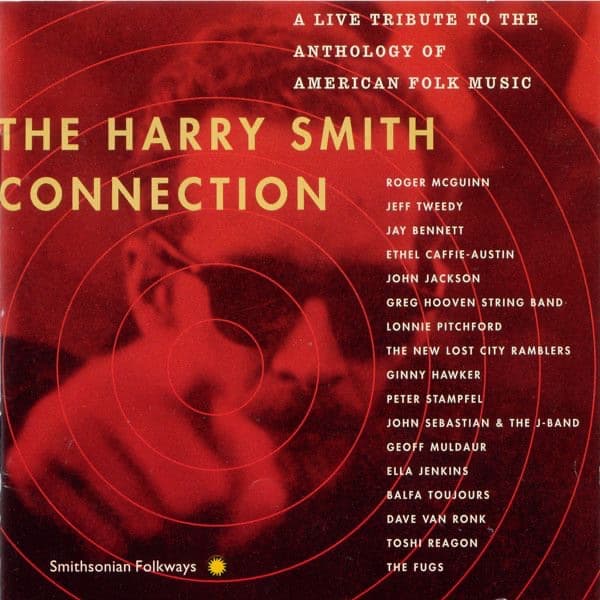
A record collector, filmmaker and occultist named Harry Smith persuaded Moses Asch of Folkways to issue eighty-four commercial 78s from 1927 to 1932 as three two-LP boxes: ballads, social music, songs. Blues, hillbilly, Cajun and gospel sat side by side with no note of who was Black and who was white. It sold poorly and never went out of print, and Bob Dylan, Joan Baez and the whole 1960s revival learned their repertoire from it.
Emmett Till
On August 28, 1955, a fourteen-year-old Chicago boy visiting relatives in Mississippi was kidnapped and murdered for supposedly whistling at a white woman. His mother insisted on an open casket, Jet magazine printed the photographs, and an all-white jury acquitted the killers in sixty-seven minutes. The music of the next ten years, from Bob Dylan’s early song about Till to Mingus’s "Fables of Faubus," is written in the shadow of that photograph.
The Montgomery bus boycott begins
Rosa Parks was arrested on December 1, 1955, and Black Montgomery stopped riding the buses on December 5. The boycott ran 381 days, until the Supreme Court ruled the city’s bus segregation unconstitutional. In March 1956 its young leader, Martin Luther King Jr., asked Harry Belafonte for help; Belafonte’s "Calypso" was about to become the biggest album in America. The pattern of musicians funding and fronting the movement starts here.
Harry Belafonte’s "Calypso" sells a million
RCA doubted that a whole album of Caribbean songs would sell. Released at the end of May 1956, "Calypso" knocked Elvis’s first album off the top of the album chart and stayed there thirty-one weeks. It was the first LP by a single performer to sell a million copies. "Day-O," a Jamaican dock-workers’ song, became a schoolyard chant. Belafonte, a Harlem-born son of Jamaican immigrants who wanted to be an actor, was now the most popular Black performer in America and was already sending money to Montgomery.
The Quarrymen: Lennon meets McCartney
Skiffle, a British do-it-yourself craze set off by Lonnie Donegan’s 1956 hit "Rock Island Line," put washboards and cheap guitars in the hands of thousands of teenagers. One of them, sixteen-year-old John Lennon, led a group called the Quarrymen. On July 6, 1957, at a church fete in Woolton, Liverpool, a fifteen-year-old named Paul McCartney watched them play, then showed Lennon he could tune a guitar and knew all the words to "Twenty Flight Rock." Lennon asked him to join.
The Kingston Trio, "Tom Dooley"
Three college boys from the San Francisco club scene recorded a nineteenth-century North Carolina murder ballad as album filler for Capitol in early 1958. A Salt Lake City disc jockey started playing it, and by November it was number one. It sold millions, won the first Grammy for Best Country & Western Recording the following May, and started the commercial folk boom that would carry Joan Baez and Bob Dylan into the next decade.
"The Freewheelin' Bob Dylan" turns a folk singer into a songwriter
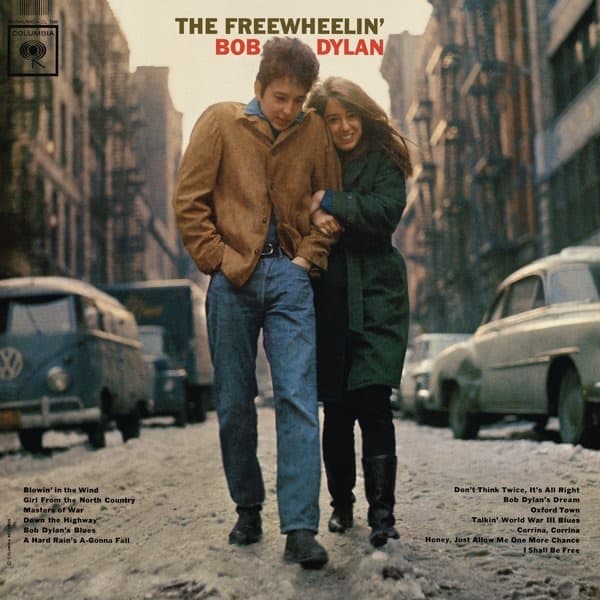
Dylan's first album had two originals. His second, released May 27, 1963, had eleven, including "Blowin' in the Wind", "Masters of War", "A Hard Rain's a-Gonna Fall" and "Don't Think Twice, It's All Right". He was twenty-two. The record made the topical song a form for poets and made a Columbia contract worth having; within two years everybody with a guitar was writing their own material because he had.
The March on Washington puts the movement's music on television
On August 28, 1963, Mahalia Jackson sang "How I Got Over" on the steps of the Lincoln Memorial, Marian Anderson sang, and Joan Baez, Odetta, Peter, Paul and Mary, and Bob Dylan performed before Martin Luther King Jr. spoke. Peter, Paul and Mary's version of "Blowin' in the Wind" was at number two on the pop chart that week. Sam Cooke watched on a hotel television and decided that a Black man should write a song like that too.
Nina Simone releases "Mississippi Goddam"
Simone wrote it in under an hour in September 1963, after the Birmingham church bombing killed four girls and Medgar Evers was murdered in Mississippi. She called it a show tune for a show that had not been written yet. Recorded live at Carnegie Hall in front of a mostly white audience and released on "Nina Simone in Concert" in 1964, it was banned in several Southern states, and Simone changed the second line at every march she played for the rest of the decade.
The Byrds invent folk rock with "Mr. Tambourine Man"
Roger McGuinn played a twelve-string Rickenbacker he had bought after seeing "A Hard Day's Night", the Wrecking Crew played everything else, and the Byrds sang a Dylan song in Beatles harmony. It was number one on June 26, 1965, the first Dylan composition to top the American chart. Dylan came to hear them at Ciro's on the Sunset Strip and saw where his songs could go with a drummer.
Dylan goes electric at Newport
"Like a Rolling Stone" came out on July 20, 1965: six minutes long, an organ part played by a guitarist who had never played organ, and a chorus that was a question. Five days later at the Newport Folk Festival Dylan walked out with the Paul Butterfield Blues Band, played three electric songs, and part of the crowd booed. Sources still argue about whether it was the sound, the volume or the short set. What is not in dispute is that the folk revival's biggest star had just left it.
"Highway 61 Revisited" makes the rock album a literary form
Released August 30, 1965, five weeks after Newport, and named for the road that runs from Dylan's Minnesota to the Mississippi Delta. Mike Bloomfield's guitar, Al Kooper's organ, a police whistle, and nine songs that read like Beat poetry set to Chicago blues, ending with the eleven-minute "Desolation Row". The Beatles heard it and started writing differently. So did everyone else.
"Rubber Soul" starts the album race
Released December 3, 1965, and made in about a month, "Rubber Soul" had a sitar on "Norwegian Wood", a fuzz bass on "Think for Yourself", a harmonium, and no filler. Capitol issued it in America with no singles pulled from it, so people had to buy the whole record. Brian Wilson heard it, decided the Beach Boys had to answer it, and made "Pet Sounds". The Beatles heard "Pet Sounds" and made "Sgt. Pepper". The album, not the single, was now the unit of ambition.
The Monterey International Pop Festival
June 16 to 18, 1967, at the county fairgrounds, organized by Lou Adler and John Phillips of the Mamas and the Papas with the acts playing for free. Otis Redding won over the hippies with the Stax band behind him. Janis Joplin with Big Brother stopped the show. The Who smashed their gear, and then Jimi Hendrix, unknown in America, set his Stratocaster on fire. Ravi Shankar played a four-hour set. D.A. Pennebaker filmed it, and the first great rock festival became the template for Woodstock.
Woodstock
August 15 to 18, 1969, on Max Yasgur's dairy farm in Bethel, New York. The organizers expected fifty thousand; more than four hundred thousand came, the fences came down, and it became a free festival in the rain. Richie Havens opened, Santana's "Soul Sacrifice" on the Saturday made an unknown band famous, Sly played at three in the morning, and Jimi Hendrix closed on Monday morning to a thinned crowd with a "Star-Spangled Banner" full of feedback bombs and sirens. The film made it a myth. For three days the counterculture looked like a country.
Carole King, "Tapestry"
Released 10 February 1971. King had spent the sixties writing hits for other people from a cubicle in the Brill Building. Now she sings them herself, plainly, at a piano, with Joni Mitchell and James Taylor in the room: "It's Too Late", "I Feel the Earth Move", "You've Got a Friend", and her own "(You Make Me Feel Like) A Natural Woman". It spends fifteen weeks at number one and six years on the chart, and it makes the confessional singer-songwriter a commercial fact.
Joni Mitchell, "Blue"
Released 22 June 1971. Mitchell, twenty-seven, had ended a relationship with Graham Nash and gone travelling, and she came back with songs about wanting and leaving that were more direct than any pop record had dared to be. Dulcimer, piano, guitar and almost nothing else. "A Case of You", "River", "California". It did not sell like "Tapestry". It became the record every songwriter for fifty years measured their honesty against.
Led Zeppelin IV
Released 8 November 1971 with no title and no band name on the sleeve, only four symbols. "Black Dog", "Rock and Roll", "When the Levee Breaks" with John Bonham's drums recorded in a stairwell at Headley Grange, and "Stairway to Heaven", a folk ballad that climbs into a hard-rock climax over eight minutes. Never released as a single, "Stairway" becomes the most-requested song on American FM radio. The album sells more than twenty million copies in the United States alone.
Neil Young, "Harvest"
Released in February 1972, cut partly in Nashville with session players Young called the Stray Gators, partly in a barn. "Heart of Gold" goes to number one, the only chart-topping single he will ever have. Young later writes that it put him in the middle of the road, so he headed for the ditch. The next three years give us "Tonight's the Night" and "On the Beach", and the singer-songwriter has a model for refusing success.
Gram Parsons and Emmylou Harris, "Grievous Angel"
Parsons died of an overdose at the Joshua Tree Inn on 19 September 1973, aged twenty-six; his road manager stole the body and burned it in the desert. "Grievous Angel", released in January 1974, is what he left: country songs sung with Emmylou Harris, a folk singer he had found in a Washington bar, with James Burton on guitar. Their two voices on "Love Hurts" are the hinge between the Byrds and everything later called Americana.
Willie Nelson, "Red Headed Stranger"
Nelson's new contract with Columbia gives him full creative control, and he uses it on a concept album about a preacher who kills his wife and rides west: mostly his guitar, Bobbie Nelson's piano and almost nothing else, cut in a few days in Garland, Texas. The label thinks it is a demo. Released in May 1975, "Blue Eyes Crying in the Rain", a Fred Rose song from 1945, becomes his first number one, and the album goes double platinum.
Springsteen releases "Nebraska"
Demos recorded alone at home on a four-track cassette machine, meant as guides for the E Street Band, released as they were. Ten songs about killers, debt and closed factories in Reagan's first recession. The songs he wrote alongside them would become "Born in the U.S.A.".
Tracy Chapman, "Fast Car", and the new folk
A Cleveland singer with an acoustic guitar and a story about a car and a way out. Her debut and Suzanne Vega's "Luka" (1987) put the singer-songwriter back on pop radio, and her set at the Mandela birthday concert at Wembley in June 1988 sold the album worldwide. Rolling Stone's end-of-decade list put her beside U2 and Prince.
Sinéad O'Connor, "Nothing Compares 2 U"
A Prince song nobody had noticed, sung by a shaven-headed Irish woman in a single close-up with one real tear. It went to number one almost everywhere. Two years later she tore up a photograph of the Pope on "Saturday Night Live" and American radio dropped her. Both events belong to the same person and the same decade: the one that rewarded honesty and then punished it.
Uncle Tupelo, "No Depression"
Three kids from Belleville, Illinois, named their debut after a Carter Family song from 1936 and played it like the Minutemen. Jay Farrar and Jeff Tweedy would split in 1994 into Son Volt and Wilco, and a fan magazine would take the album's name for the whole alt-country movement. The record itself is the sound of punk discovering it had grandparents.
Liz Phair, "Exile in Guyville"
Released 22 June 1993 on Matador. A bedroom songwriter from Chicago answered the Rolling Stones' "Exile on Main St." track for track, in a flat voice, with the frankest lyrics about sex that had been on an indie record. It was the year's most argued-about album and the beginning of a run of women, PJ Harvey, Björk, Hole, Alanis, who made the decade's bluntest rock.
Nirvana tapes "MTV Unplugged in New York"
On 18 November 1993 Nirvana sat down at Sony Studios among lilies and candles, played almost no hits, covered the Meat Puppets with the Meat Puppets, and ended with Lead Belly's "Where Did You Sleep Last Night". Cobain's scream at the end of it is the sound of the decade. The album came out in November 1994, after his death, and went to number one. The set was a funeral nobody in the room knew they were at.
Johnny Cash, "American Recordings"
Dropped by Columbia, ignored by Nashville, Cash sat in Rick Rubin's living room in 1993 with one guitar and sang whatever he wanted: his own murder ballads, Nick Lowe, Tom Waits, Leonard Cohen. Released 26 April 1994 on Rubin's American label, with a cover shot in black between two dogs. It won the Grammy for Best Contemporary Folk Album and started the last, best act of his career, six albums that ended with "Hurt".
Jeff Buckley, "Grace"
Released 23 August 1994 on Columbia. The son of the folk singer Tim Buckley, a Sin-é coffee-house regular in New York with a four-octave voice, sang Leonard Cohen's "Hallelujah" the way everyone has sung it since, along with Benjamin Britten and his own songs. It sold slowly. He drowned in the Wolf River in Memphis on 29 May 1997 with the second album unfinished, and "Grace" became the one record every singer of the next decade cited.
Lilith Fair
Sarah McLachlan had been told promoters would not book two women on the same bill. So she booked thirty. Lilith Fair, opening 5 July 1997, was Jewel, Tracy Chapman, Fiona Apple, Sheryl Crow, the Indigo Girls, Erykah Badu and a rotating cast, and it out-grossed every other festival tour in America that summer. It ran three years and a dollar of every ticket went to women's charities. The singer-songwriter had a festival and radio ran out of excuses.
O Brother, Where Art Thou? starts a bluegrass revival
T Bone Burnett's soundtrack for the Coen brothers' film came out on 5 December 2000: Ralph Stanley singing O Death alone, Alison Krauss and Gillian Welch on Didn't Leave Nobody but the Baby, Dan Tyminski as George Clooney's voice on Man of Constant Sorrow. Country radio ignored it. It won Album of the Year at the Grammys on 27 February 2002 and sent a generation of kids to the banjo.
Norah Jones' Come Away with Me
Released 26 February 2002 on Blue Note, the debut by Ravi Shankar's twenty-two-year-old daughter was a quiet record of jazz-tinged folk and country that sold more than twenty million copies. Don't Know Why, written by Jesse Harris, was the song. In February 2003 she won five Grammys herself and the album eight in total, including Album, Record and Song of the Year. Blue Note had not seen money like it since the sixties.
Johnny Cash records Hurt
American IV: The Man Comes Around, released 5 November 2002, was the fourth of Cash's records with Rick Rubin, and it closed on a cover of Nine Inch Nails' Hurt. Mark Romanek shot the video in February 2003 in the closed House of Cash museum, Cash at seventy-one with his hands shaking and June watching from the stairs. It won six MTV Video Music Award nominations that summer. Trent Reznor said the song was not his anymore.
Johnny Cash dies
Cash died in Nashville on 12 September 2003, of complications from diabetes, four months after June Carter Cash. He had spent the nineties and 2000s recording with Rick Rubin for American Recordings, an acoustic run that won Grammys and, with Hurt, a new generation. The posthumous American V and VI kept the voice going until 2010. The Country Music Hall of Fame calls him a cultural hero; the black clothes did the rest.
Elliott Smith dies
Smith died in Los Angeles on 21 October 2003 of two stab wounds to the chest; the coroner could not rule out that someone else had held the knife. He was thirty-four. The Oscars had put him on stage in a white suit in 1998; the 2000s had given him Figure 8 and a long fight with drugs. From a Basement on the Hill came out the next year. The whisper-and-double-track style of every sad indie record since is his.
Antony and the Johnsons' I Am a Bird Now
Released 1 February 2005 on Secretly Canadian, with Candy Darling on the cover and Lou Reed, Boy George and Rufus Wainwright as guests, I Am a Bird Now was ten songs about being in the wrong body sung in a tremolo that sounded like Nina Simone. It won the Mercury Prize that September and jumped from 135 to 16 on the British chart the next week, the biggest leap in the prize's history.
Sufjan Stevens' Illinois
Released 5 July 2005 on his own Asthmatic Kitty label, Illinois was the second of a promised fifty state albums and the last. Twenty-two tracks with titles longer than most songs, a serial killer, Superman, and Chicago, which became the anthem of the indie-folk decade. Stevens later admitted the fifty-state plan was a joke. The record was not: Rolling Stone put it among the best of the 2000s.
Fleet Foxes and Vampire Weekend
Vampire Weekend's debut, released 29 January 2008 on XL, was four Columbia graduates playing Afropop guitars over harpsichord and singing about Oxford commas; the Guardian's review that month said it was the year's most talked-about record before the year had started. Fleet Foxes' debut, on Sub Pop in June, was Seattle harmonies that sounded like a church in the woods, and NPR had them in session by the summer. The indie decade's last two great debuts, and both were about the past.
Bon Iver's For Emma, Forever Ago
Justin Vernon made it alone in his father's hunting cabin in Wisconsin in the winter of 2006 to 2007, sick and heartbroken, on an old computer with a borrowed drum kit. He self-released it in July 2007; Jagjaguwar issued it on 19 February 2008. Skinny Love and the cabin story went around the blogs faster than the record did. Kanye West would put him on My Beautiful Dark Twisted Fantasy two years later. The Guardian ranked it among the century's best.
Animal Collective's Merriweather Post Pavilion
Released in January 2009 on Domino, the Baltimore band's ninth album turned a decade of noise and freak-folk into electronic pop: My Girls was a song about wanting a house for your family built on one arpeggio. The Guardian's review that month called it a triumph. It was the year's most acclaimed record, and the indie decade's last statement before the genre dissolved into the electronic pop it had been circling.
Bon Iver goes wide
Justin Vernon followed a famous cabin-in-the-woods debut with a self-titled record full of saxophones, drum machines and eighties soft-rock guitar, named its songs after places, and won Best New Artist and Best Alternative Music Album at the 2012 Grammys. Holocene is the one to play: it takes two minutes to arrive and then does not stop.
The nu-folk wave peaks and breaks
Mumford and Sons won Album of the Year in February 2013 for Babel, the high point of a boom that had put banjos and waistcoats into stadiums and advertising. Within two years the band had put the banjos away and the wave had passed, leaving behind a quieter, better set of folk records by Sufjan Stevens, Gillian Welch and Rhiannon Giddens.
Beck wins Album of the Year over Beyoncé
Morning Phase, a quiet acoustic record, beat Beyoncé at the 2015 Grammys, and Kanye West nearly walked on stage about it. It became a shorthand for the Recording Academy's problem: an awards body whose voters were older, whiter and more guitar-inclined than the audience it claimed to represent, in a decade when the audience had moved.
Sufjan Stevens releases Carrie and Lowell
An album about his mother, who had left when he was a child and had just died. It is almost entirely acoustic guitar and whisper, and it does not resolve into comfort at any point. It is the plainest, hardest record on this list, and people play it when someone dies.
Bob Dylan wins the Nobel Prize in Literature
The Swedish Academy gave the prize for literature to a songwriter for the first time, in October 2016, for creating new poetic expressions within the American song tradition. Dylan said nothing for five days, then let his website mention it. In November he told the committee he would not travel to Stockholm, and he stayed away from the ceremony. The argument it started, about whether lyrics are literature, is still going.
Lana Del Rey releases Norman Fucking Rockwell!
Working with Jack Antonoff, she made a long, slow, funny record about California, disappointment and the end of an American story, and the critics who had spent seven years doubting her all changed their minds at once. It was nominated for Album of the Year at the 2020 Grammys.
Ken Burns' Country Music airs
An eight-part, sixteen-hour documentary series ran on American public television in September 2019, tracing the music from the Bristol sessions to Garth Brooks. It arrived in the same year Old Town Road was removed from the country chart, which gave its long argument about who country music has always belonged to an unexpectedly sharp edge.
Taylor Swift disappears into the woods: Folklore
Announced in the morning and released at midnight on 24 July 2020, Folklore was made remotely with Aaron Dessner of the National and Jack Antonoff. It is quiet, wooden and full of invented people. It debuted at number one on the Billboard 200 while "cardigan" debuted at number one on the Hot 100, the first time any artist had opened at the top of both charts in the same week, and it won Album of the Year in March 2021. The biggest pop star on earth had just proved she could sell an indie record.
Kalush Orchestra win Eurovision for Ukraine
Three months after Russia invaded, a Ukrainian group mixing rap with traditional flute and folk singing won Eurovision on 14 May 2022, carried by an enormous public vote across Europe. Their song was written for the singer's mother. It is the clearest example in the decade of a song contest doing something other than being a song contest.
Joni Mitchell sings at Newport
On 24 July 2022 Joni Mitchell, who had a brain aneurysm in 2015 and had to teach herself the guitar again, walked onto the stage at the Newport Folk Festival for a surprise set arranged by Brandi Carlile. She sat in a chair, held court for two hours and played a guitar solo. Newport is where Dylan went electric in 1965. It has a habit of hosting the moment.
Tracy Chapman goes to number one on country radio
Luke Combs' cover of "Fast Car" topped Country Airplay in July 2023, making Tracy Chapman the first Black woman ever to write a solo number one on that chart, thirty-five years after she released the original. In February 2024 she came out of a long retreat from television to play it with Combs at the Grammys. The song is about escaping a small life. Its second act became a lesson about who country radio had been leaving out.
Zach Bryan and Oliver Anthony arrive from nowhere
Within three weeks in August 2023 two men with no radio support went to number one. Zach Bryan's self-titled album had the biggest streaming week any rock album had recorded, and "I Remember Everything" with Kacey Musgraves topped four separate Billboard charts at once, a first. Then Oliver Anthony, an unknown from Virginia filmed in a field, debuted at number one on the Hot 100 with "Rich Men North of Richmond", the first artist ever to do that with no prior chart history of any kind.
Beyoncé finally wins Album of the Year
At the Grammys on 2 February 2025, Cowboy Carter won Album of the Year and Best Country Album. Beyoncé was the first Black artist to win the country category, and the first Black woman to win Album of the Year since Lauryn Hill in 1999. Doechii won Best Rap Album for a mixtape, only the third woman ever to take that award. Chappell Roan won Best New Artist and Sierra Ferrell swept the roots categories with four wins.
Artists
Everyone in the century tagged Folk, in the order they arrived. Each name opens its full entry in the chapter that carries it.
Eck Robertson
- Sallie Gooden
- Arkansaw Traveler
Fiddlin' John Carson
- The Little Old Log Cabin in the Lane
- The Old Hen Cackled and the Rooster's Going to Crow
Paul Robeson
- Go Down, Moses
- Ol' Man River
The Carter Family
- Single Girl, Married Girl
- Keep on the Sunny Side
- Wildwood Flower
- Can the Circle Be Unbroken
Mississippi John Hurt
- Avalon Blues
- Frankie
- Spike Driver Blues
The Carter Family
- Can the Circle Be Unbroken
- Wildwood Flower
- Worried Man Blues
Lead Belly
- Goodnight Irene
- Midnight Special
- The Bourgeois Blues
John and Alan Lomax
- Lead Belly at Angola (field recordings)
- Jelly Roll Morton: The Library of Congress Recordings
Lydia Mendoza
- Mal Hombre
- Mujer Paseada
Marian Anderson
- My Country, 'Tis of Thee (Lincoln Memorial)
- Nobody Knows the Trouble I've Seen
Woody Guthrie
- Do Re Mi
- Dust Bowl Refugee
- This Land Is Your Land
Édith Piaf
- La Vie en rose
- Hymne à l'amour
- L'Accordéoniste
Bill Monroe
- Blue Moon of Kentucky
- Molly and Tenbrooks
- Kentucky Waltz
- Mule Skinner Blues
Lead Belly
- Goodnight, Irene
- Midnight Special
- Rock Island Line
Big Bill Broonzy
- Key to the Highway
- All by Myself
- When I Been Drinking
Woody Guthrie
- This Land Is Your Land
- Pastures of Plenty
- Pretty Boy Floyd
- Grand Coulee Dam
Pete Seeger
- Talking Union (Almanac Singers)
- Goodnight, Irene (The Weavers)
- If I Had a Hammer
The Weavers
- Goodnight, Irene
- Tzena, Tzena, Tzena
- The Weavers at Carnegie Hall
The Staple Singers
- Uncloudy Day
- Will the Circle Be Unbroken
- I’ll Take You There
Harry Belafonte
- Day-O (The Banana Boat Song)
- Jamaica Farewell
- Belafonte at Carnegie Hall
Lonnie Donegan
- Rock Island Line
- Cumberland Gap
- Gamblin’ Man
The Kingston Trio
- Tom Dooley
- The Kingston Trio
- M.T.A.
The Staple Singers
- Uncloudy Day
- Why (Am I Treated So Bad)
- Soul Folk in Action
Joan Baez
- Joan Baez
- Joan Baez in Concert
- Farewell, Angelina
Bob Dylan
- The Freewheelin' Bob Dylan
- Highway 61 Revisited
- Blonde on Blonde
- John Wesley Harding
- Nashville Skyline
Johnny Cash
- Ring of Fire
- At Folsom Prison
- At San Quentin
The Beatles
- A Hard Day's Night
- Rubber Soul
- Revolver
- Sgt. Pepper's Lonely Hearts Club Band
- Abbey Road
The Animals
- The House of the Rising Sun
- We Gotta Get Out of This Place
- Don't Let Me Be Misunderstood
Nina Simone
- Nina Simone in Concert
- I Put a Spell on You
- Wild Is the Wind
The Byrds
- Mr. Tambourine Man
- Eight Miles High
- Sweetheart of the Rodeo
Simon & Garfunkel
- Sounds of Silence
- Parsley, Sage, Rosemary and Thyme
- Bookends
Jefferson Airplane
- Surrealistic Pillow
- After Bathing at Baxter's
- Volunteers
Grateful Dead
- Anthem of the Sun
- Live/Dead
Led Zeppelin
- Led Zeppelin
- Led Zeppelin II
Neil Young
- After the Gold Rush
- Harvest
- Rust Never Sleeps
Led Zeppelin
- Led Zeppelin IV
- Physical Graffiti
- Houses of the Holy
Joni Mitchell
- Blue
- Court and Spark
- Hejira
Carole King
- Tapestry
- Music
Willie Nelson
- Shotgun Willie
- Red Headed Stranger
- Stardust
Bruce Springsteen
- Born to Run
- Darkness on the Edge of Town
Emmylou Harris
- Pieces of the Sky
- Elite Hotel
- Luxury Liner
Bruce Springsteen
- Atlantic City
- Born in the U.S.A.
- Dancing in the Dark
- Brilliant Disguise
Tracy Chapman
- Fast Car
- Talkin' 'bout a Revolution
- Baby Can I Hold You
Tracy Chapman
- Tracy Chapman
- New Beginning
PJ Harvey
- Rid of Me
- To Bring You My Love
Cassandra Wilson
- Blue Light 'til Dawn
- New Moon Daughter
Beck
- Mellow Gold
- Odelay
- Mutations
Jeff Buckley
- Grace
Johnny Cash
- American Recordings
- Unchained
Ani DiFranco
- Not a Pretty Girl
- Dilate
Wilco
- Being There
- Mermaid Avenue
- Summerteeth
Elliott Smith
- Either/Or
- XO
Dixie Chicks
- Wide Open Spaces
- Fly
Lucinda Williams
- Car Wheels on a Gravel Road
Johnny Cash
- American III: Solitary Man
- American IV: The Man Comes Around
- Hurt
Alison Krauss
- New Favorite
- Raising Sand
- Lonely Runs Both Ways
Dixie Chicks
- Home
- Taking the Long Way
- Not Ready to Make Nice
Norah Jones
- Come Away with Me
- Don't Know Why
- Feels Like Home
Sufjan Stevens
- Michigan
- Illinois
- Chicago
Bon Iver
- For Emma, Forever Ago
- Skinny Love
- Blood Bank
Lana Del Rey
- Born to Die
- Norman Fucking Rockwell!
- Video Games
Bon Iver
- Bon Iver
- 22, A Million
- Holocene
Taylor Swift
- Red
- 1989
- Lover
Jason Isbell
- Southeastern
- The Nashville Sound
Ed Sheeran
- x
- ÷
- Shape of You
Rhiannon Giddens
- Tomorrow Is My Turn
- Songs of Our Native Daughters
Sufjan Stevens
- Carrie and Lowell
- Should Have Known Better
Phoebe Bridgers
- Stranger in the Alps
- boygenius
- Motion Sickness
Brandi Carlile
- By the Way, I Forgive You
- The Joke
Taylor Swift
- Folklore
- Midnights
- The Tortured Poets Department
Phoebe Bridgers
- Punisher
- Kyoto
- The Record
Sierra Ferrell
- Long Time Coming
- Trail of Flowers
- American Dreaming
Zach Bryan
- American Heartbreak
- Zach Bryan
- I Remember Everything
Noah Kahan
- Stick Season
- Stick Season (We'll All Be Here Forever)
- Dial Drunk
boygenius
- The Record
- Not Strong Enough
- The Film
Records
Every record in the century tagged Folk, oldest first. Each title opens its write-up in its own decade.
Eck Robertson
Sallie Gooden / Arkansaw Traveler
Fiddlin' John Carson
The Little Old Log Cabin in the Lane / The Old Hen Cackled and the Rooster's Going to Crow
Various Artists
The Bristol Sessions, 1927–1928: The Big Bang of Country Music
The Carter Family
Wildwood Flower / Forsaken Love
Canario y su Grupo
Lamento Borincano

Lead Belly
The Library of Congress Recordings

Lydia Mendoza
Mal Hombre
Jelly Roll Morton
The Complete Library of Congress Recordings by Alan Lomax
Billie Holiday
Strange Fruit / Fine and Mellow
The Carter Family
On Border Radio, 1939
Marian Anderson
The Lincoln Memorial Concert
Woody Guthrie
Dust Bowl Ballads

Muddy Waters
The Complete Plantation Recordings
Woody Guthrie
This Land Is Your Land: The Asch Recordings, Volume 1
Various Artists
Anthology of American Folk Music
Various artists, edited by Harry Smith
Anthology of American Folk Music

Harry Belafonte
Calypso
Odetta
Odetta Sings Ballads and Blues
Lonnie Donegan
Lonnie Donegan Showcase

The Kingston Trio
The Kingston Trio
Marty Robbins
Gunfighter Ballads and Trail Songs
Bob Dylan
The Freewheelin' Bob Dylan

Nina Simone
Nina Simone in Concert

Bob Dylan
Highway 61 Revisited

The Beatles
Rubber Soul

Bob Dylan
Blonde on Blonde

Jefferson Airplane
Surrealistic Pillow

Love
Forever Changes

Johnny Cash
At Folsom Prison

The Byrds
Sweetheart of the Rodeo

The Band
Music from Big Pink

Van Morrison
Astral Weeks

Led Zeppelin
Led Zeppelin

Bob Dylan
Nashville Skyline

Grateful Dead
Live/Dead

Carole King
Tapestry

Joni Mitchell
Blue

Led Zeppelin
Led Zeppelin IV

Gram Parsons
Grievous Angel

Willie Nelson
Red Headed Stranger

Bruce Springsteen
Nebraska

Paul Simon
Graceland

Tracy Chapman
Tracy Chapman

Uncle Tupelo
No Depression
Liz Phair
Exile in Guyville

Cassandra Wilson
Blue Light 'til Dawn

Jeff Buckley
Grace

Johnny Cash
American Recordings

Beck
Odelay

Neutral Milk Hotel
In the Aeroplane Over the Sea
Dixie Chicks
Wide Open Spaces

Lucinda Williams
Car Wheels on a Gravel Road

Norah Jones
Come Away with Me

Johnny Cash
American IV: The Man Comes Around

Sufjan Stevens
Illinois
Robert Plant and Alison Krauss
Raising Sand

Fleet Foxes
Fleet Foxes
Bon Iver
For Emma, Forever Ago

Animal Collective
Merriweather Post Pavilion
Bon Iver
Bon Iver
Sufjan Stevens
Carrie and Lowell
Phoebe Bridgers
Stranger in the Alps
Jason Isbell and the 400 Unit
The Nashville Sound
Ed Sheeran
÷
Brandi Carlile
By the Way, I Forgive You
Lana Del Rey
Norman Fucking Rockwell!
Big Thief
U.F.O.F.
Taylor Swift
Folklore
Phoebe Bridgers
Punisher
Bob Dylan
Rough and Rowdy Ways
Big Thief
Dragon New Warm Mountain I Believe in You
Noah Kahan
Stick Season
Ethel Cain
Preacher's Daughter
boygenius
The Record
Zach Bryan
Zach Bryan
Beyoncé
Cowboy Carter
Bon Iver
SABLE, fABLE
The Mixtape
Do Re Mi
Woody GuthrieRecorded in April 1940, so it closes the mixtape from the next decade's doorstep. A Dust Bowl migrant warns you that California is a garden of Eden only if you have the do re mi. The 1930s, summarized by someone who drove through them.
This Land Is Your Land
Woody GuthrieThe first recording, from the Asch sessions. Listen for the verses the schoolbooks left out; they are the reason he wrote it.
Day-O (The Banana Boat Song)
Harry BelafonteA Jamaican work song that became a schoolyard chant. The call and response is the same device as in the church and on the plantation; here it sold a million albums.
Rock Island Line
Lonnie DoneganA Lead Belly song played by an English banjo player at twice the speed. This one record put guitars in the hands of the Beatles, the Stones and the Who.
Tom Dooley
The Kingston TrioTwo chords and a hanging. It sold millions and put a banjo in every coffeehouse; the 1960s folk boom, Baez and Dylan included, starts with this unlikely number one.
Blowin' in the Wind
Peter, Paul and MaryThe version that made Dylan's song a hit and the one the crowd at the March on Washington heard. Three voices, two guitars, and the question the decade kept asking.
For What It's Worth
Buffalo SpringfieldStephen Stills wrote it about a curfew riot on the Sunset Strip, not the war, but the war took it anyway. Two harmonics on a guitar and the sound of a generation looking over its shoulder.
I Feel the Earth Move
Carole KingA piano riff and a woman in her late twenties singing about desire in plain words. The first track on "Tapestry" and the moment the singer-songwriter became a commercial fact.
Fast Car
Tracy ChapmanAn acoustic guitar and a story about a way out, in the year of hair metal. Ten million people bought it. Folk was never gone, only waiting.
Where Did You Sleep Last Night (MTV Unplugged)
NirvanaLead Belly's song, Cobain's scream at the end, and a room full of candles that turned out to be a wake. Recorded in November 1993, released after his death.
White Winter Hymnal
Fleet FoxesA round for four voices about children in the snow. The indie-folk wave at its prettiest, and proof the blog era could also be quiet.
Holocene
Bon IverIt takes two minutes to arrive and then it opens like weather clearing. The line about not being magnificent is the whole decade's mood in five words.
cardigan
Taylor SwiftThe biggest pop star alive going quiet in a cabin, and debuting at number one on both charts in the same week for the first time in history.