100 Years of Music / Genre
Gospel
Thomas A. Dorsey brought blues piano into the Black church in 1930 and named what came out gospel. The choir, the shout and the call and response trained nearly every great voice in soul, rock and pop.
The lineage
The Black church was singing long before there was a word for gospel. The spirituals came out of slavery; the Fisk Jubilee Singers took them on tour in 1871 and made them concert music. The Holiness and Pentecostal churches that grew after the Azusa Street revival of 1906 brought tambourines, drums, guitars and shouting into worship, and taught congregations to answer the preacher line for line. Call and response, the leader singing a phrase and the room singing it back, is the oldest structure in this history and the one that never went away. In the white South, the shape-note singing schools and James D. Vaughan’s first professional quartet, put on the road in 1910 to sell songbooks, founded what became Southern gospel.
Thomas Andrew Dorsey named the Black tradition. Born in Georgia in 1899, he had played piano for Ma Rainey and recorded bawdy blues as Georgia Tom with Tampa Red. In 1930 a singer named Willie Mae Ford Smith performed his "If You See My Savior" at the National Baptist Convention in Chicago, and the response convinced him the church would take his songs. In 1932, after his wife and infant son died within days of each other, he wrote "Take My Hand, Precious Lord". That year he and Sallie Martin founded the National Convention of Gospel Choirs and Choruses, and from Pilgrim Baptist Church on Chicago’s South Side he sent out the songs and the singers. Dorsey called it gospel music, and the name stuck.
The golden age ran from the mid-1940s to about 1960. Mahalia Jackson, who had sung Dorsey’s songs door to door, recorded "Move On Up a Little Higher" for Apollo in 1947 and sold it by the million. Sister Rosetta Tharpe played electric guitar in front of a swing band and put "Strange Things Happening Every Day" on the R&B chart in 1945. The quartets, the Golden Gate Quartet (formed 1934), the Dixie Hummingbirds, the Soul Stirrers, the Blind Boys of Alabama, developed the hard, pleading lead-singer style over close harmony that soul would borrow whole. Clara Ward’s singers wore the robes and sold the drama. Gospel was the largest Black music industry outside the secular charts, with its own labels, radio shows and touring circuit.
Then the church walked out the door. Ray Charles took a gospel song, changed the words and cut "I Got a Woman" in 1954; the outrage was immediate and the record was the start of soul. Sam Cooke left the Soul Stirrers and had a pop number one with "You Send Me" in 1957. Aretha Franklin grew up singing in her father’s New Bethel Baptist Church in Detroit. Little Richard, James Brown, Elvis Presley, Jerry Lee Lewis and Johnny Cash all learned the shout in church. Mahalia Jackson sang before Dr. King’s speech at the March on Washington in 1963. The Edwin Hawkins Singers’ "Oh Happy Day" reached the pop top five in 1969 and opened the door for contemporary gospel: Andraé Crouch in the 1970s, the Winans and the Clark Sisters in the 1980s, and Kirk Franklin, whose 1993 debut and 1997 "Stomp" put gospel choirs over hip-hop beats.
The influence never reversed. Whitney Houston, Beyoncé, Jennifer Hudson and Chance the Rapper (Coloring Book, 2016) all started in the choir, and Kanye West’s Sunday Service (2019) turned a rap career into a gospel one. Country music keeps its own line to Vaughan’s quartets through the Louvin Brothers, the Statler Brothers and the hymn on every Johnny Cash album. Listen for the church whenever a singer holds a note past where the melody needs it, whenever a crowd answers a line, and whenever a song builds by repeating itself louder. That is gospel, whatever the record is called.
Branches
Southern gospel
White quartet singing from the shape-note tradition, four voices and a piano. James D. Vaughan’s first professional quartet went out in 1910 to sell his songbooks. The Blackwood Brothers, the Statesmen and the Oak Ridge Boys carried it forward.
Guitar evangelists
Street preachers with a guitar who recorded sacred songs during the race-records boom. Blind Willie Johnson’s "Dark Was the Night, Cold Was the Ground" (1927) is the best known; it is on the Voyager record leaving the solar system.
Black gospel
Dorsey’s synthesis: blues harmony, jazz piano and a Baptist text, sung by choirs and soloists with improvised ornament. Named and organised from Chicago between 1930 and 1932, and the root of everything below.
Jubilee and hard quartets
Male vocal groups moving from the smooth jubilee style of the Golden Gate Quartet (1934) to the hard, shouting lead of the Soul Stirrers and the Dixie Hummingbirds in the 1940s. Doo-wop and soul learned their harmony here.
Golden age gospel
The years when Mahalia Jackson, Clara Ward, Sister Rosetta Tharpe and the quartets sold records by the million and toured like stars. Mahalia’s "Move On Up a Little Higher" (1947) is the landmark.
Contemporary gospel
Gospel that borrowed soul, funk and pop production. "Oh Happy Day" (1969) crossed to the pop chart; Andraé Crouch, the Hawkins family and later the Winans made it the church’s modern sound.
Urban contemporary gospel
Choirs over hip-hop and R&B beats. Kirk Franklin & the Family (1993) and "Stomp" (1997) set the model; Yolanda Adams, Mary Mary and Tye Tribbett followed, and Chance the Rapper and Kanye West took it back into rap.
How to listen
Listen for the answer. Gospel is built on call and response: a lead singer or preacher offers a line and the choir or congregation gives it back. On a Mahalia Jackson record the answer is the piano; on a Soul Stirrers record it is the four voices behind Sam Cooke; on a Kirk Franklin record it is a hundred people and a drum machine. Find the answer and you have found the shape of the song.
Then listen for the build. A gospel performance rarely goes anywhere new; it goes to the same place harder. The verse repeats, the key rises, the singer leaves the melody to testify over the top. That same structure is the last minute of "Hey Jude", the end of every Whitney Houston ballad and the outro of Kanye’s "Ultralight Beam".
Play the pairs. Put the Soul Stirrers’ "Jesus Gave Me Water" (1951) next to Sam Cooke’s "You Send Me" (1957), or the gospel standard "It Must Be Jesus" next to Ray Charles’s "I Got a Woman" (1954). Same singer, same phrasing, different words. That is the hinge between the church and the chart.
Across the decades
The church learns to swing
Black sacred music came into the decade in two shapes. The Fisk Jubilee Singers had been touring the spirituals in concert arrangements since 1871, and Paul Robeson, with pianist Lawrence Brown, gave the first full recital of spirituals in New York in April 1925 and made them concert music for a mixed audience. The other shape lived in the Pentecostal storefront church, where the Church of God in Christ sang with tambourines, hand claps and a piano played like a barrelhouse.
Arizona Dranes carried that second sound into an Okeh studio in Chicago on June 17, 1926. Blind, classically trained, and the first star of her denomination, she made the first gospel records with piano, and the piano is doing boogie-woogie ten years early. Blind Willie Johnson, a street evangelist from Texas, recorded "Dark Was the Night, Cold Was the Ground" in December 1927 with a slide guitar and no words, and it is on the Voyager spacecraft now. Preachers sold records too. Rev. J. M. Gates of Atlanta cut a sermon called "Death's Black Train Is Coming" in 1926 and it outsold most blues singers.
White Southern gospel got its own record in 1927 when the Stamps Quartet recorded "Give the World a Smile" for Victor, the sound of the shape-note singing schools and songbook companies that were about to boom. And in Chicago a blues pianist called Georgia Tom, who had been writing sacred songs on the side since 1921, was about to change his name back to Thomas A. Dorsey. Gospel as we know it starts with him, in the next chapter.
Black gospel gets a name, a publisher, and a voice
Spirituals were centuries old and jubilee quartets had been on record since the 1900s. What the 1930s added was gospel as a modern, composed, commercial music with its own circuit. The man who did it was Thomas A. Dorsey, a Chicago pianist who had made his living as Georgia Tom, the hokum blues partner of Tampa Red. In August 1932 his wife Nettie died in childbirth and the baby followed her. Within days Dorsey wrote "Take My Hand, Precious Lord." He spent the rest of the decade organizing choirs, founding a convention for them, and printing sheet music that he sold out of his own storefront, because the established church publishers would not touch songs that sounded like the blues.
Dorsey's chosen singer was a New Orleans transplant named Mahalia Jackson, who demonstrated his songs from church to church and made her first records for Decca in May 1937. They did not sell. That did not matter yet; the audience was in the pews, not the record shop. On the quartet side, the Golden Gate Quartet from Norfolk, Virginia, recorded fourteen songs in two hours in a Charlotte hotel room in August 1937 and turned jubilee singing into something close to swing, with a bass singer imitating a locomotive.
Then there is Sister Rosetta Tharpe. In the fall of 1938 she walked out of the Pentecostal church and onto the stage of the Cotton Club, and on October 31 she recorded "Rock Me" for Decca with nothing behind her but her own guitar. Church people were scandalized. Everyone else heard the future. Elvis Presley, Little Richard, and Chuck Berry all named her, and the title is not a coincidence.
The holy fire
Gospel was the emotional powerhouse of the decade. In storefront churches and Baptist conventions, singers were taught to soar, shout, moan and shake in ways secular music had not yet dared. Thomas A. Dorsey, a former blues pianist who had written "Take My Hand, Precious Lord", had spent the 1930s building the gospel song into an industry out of Chicago. The 1940s were when its singers became stars, and when their style crossed over.
Sister Rosetta Tharpe is the blueprint. An Arkansas-born guitarist who played electric in church and in nightclubs, she recorded "Strange Things Happening Every Day" for Decca in September 1944 with pianist Sammy Price, and in the spring of 1945 it reached number two on the race chart, the first gospel record to climb that high. Listen to the guitar breaks: the bends, the drive, the swagger. Chuck Berry, Little Richard, Johnny Cash and Elvis all heard this, and the Rock and Roll Hall of Fame finally inducted her in 2018 as an early influence. Her 1947 duets with Marie Knight, "Up Above My Head" among them, are just as electric.
Mahalia Jackson is the voice. Born poor in New Orleans, she followed the railroad to Chicago and sang Dorsey's songs on the church circuit for a decade before a last-chance session for the tiny Apollo label in 1947. "Move On Up a Little Higher" sold in the millions and made her the first gospel singer white America knew by name. Aretha Franklin grew up with her in the house.
And the quartets: the Golden Gate Quartet's jubilee harmonies, the Dixie Hummingbirds' hard-driving lead swapping, and the Soul Stirrers, whose R. H. Harris invented the ad-lib lead over a repeating chorus. In 1950 the Soul Stirrers would hire a nineteen-year-old named Sam Cooke. Soul music is what happens when this decade's gospel singers walk out of the church door. Ray Charles was already trying it by 1949.
Spirit in motion
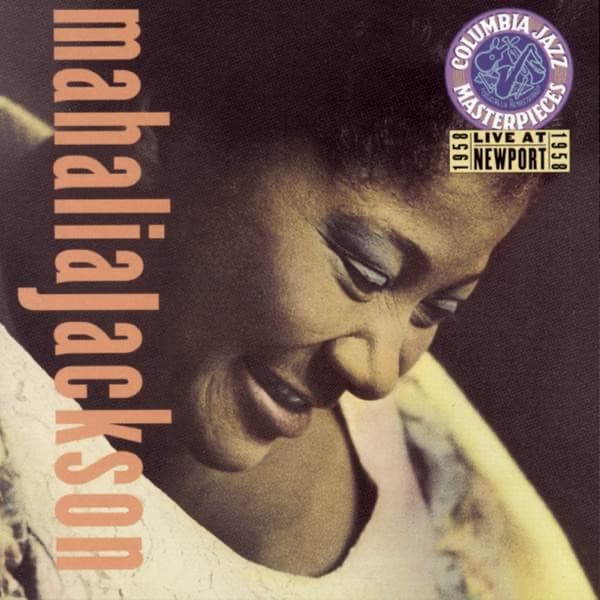
Gospel’s golden age ran straight through this decade. Mahalia Jackson, whose "Move On Up a Little Higher" had sold in the millions in the late 1940s, signed to Columbia in 1954, sang at the Newport Jazz Festival in 1958 and became the first gospel singer most white Americans had heard. The quartets were at their peak: the Soul Stirrers with a young Sam Cooke on lead, the Five Blind Boys of Mississippi with Archie Brownlee screaming, the Swan Silvertones, the Dixie Hummingbirds. Clara Ward’s Ward Singers put on robes and drew crowds like a revival. Sister Rosetta Tharpe, who had been playing electric guitar in church since the 1930s, toured Britain in 1957 and left a mark on every skiffle kid who saw her.
And gospel broke out. Every trick of the soul singer, the melisma, the shout, the call and response, the sermon in the middle of the song, was learned in church and carried across the street. Ray Charles did it first and most openly. Sam Cooke did it most successfully, leaving the Soul Stirrers in 1957. James Brown did it most violently. The Staple Singers, a Chicago family with Pops on a tremolo guitar and teenage Mavis on lead, made "Uncloudy Day" (1956) sound like the blues and got on the R&B chart with a hymn. Gospel did not lose these singers. It sent them.
The church lends the movement its voice, and a youth choir crosses over
Gospel was the sound of the civil rights movement before it was anything else. The freedom songs sung in Albany, Birmingham and Selma were church songs with the words changed. Mahalia Jackson sang "How I Got Over" at the March on Washington in 1963 and, by the accounts of people who were there, called out to King during his speech to tell them about the dream. The Staple Singers, Pops and his children out of Chicago, sang "Why (Am I Treated So Bad)" for the movement and by 1968 had signed to Stax.
And gospel kept sending its children into soul. Sam Cooke came out of the Soul Stirrers. Aretha Franklin grew up in her father's New Bethel Baptist Church in Detroit and never really left it; the "sock it to me" on "Respect" is a church move. Every Motown and Stax singer had learned to phrase on a Sunday morning.
Then in 1968 a youth choir in Oakland recorded an old hymn to raise money for a trip. Edwin Hawkins rearranged "Oh Happy Day" on a two-track machine at the Ephesians Church of God in Christ, Dorothy Combs Morrison sang the lead, and a rock disc jockey at KSAN started playing it in early 1969. It went to number four on the pop chart. Contemporary gospel starts there, and George Harrison said "My Sweet Lord" was his attempt to write another one.
Contemporary gospel finds the charts
Gospel in the 1980s learned the same machines as everyone else. The Clark Sisters' "You Brought the Sunshine" (1981), Twinkie Clark's arrangement with a walking synth bass, crossed from church to disco to Black radio. Tramaine Hawkins' "Fall Down (Spirit of Love)" (1985) was a gospel record produced like a house record, and dance floors treated it as one. Andraé Crouch, who had modernised the form in the 1970s, arranged the choir on Michael Jackson's "Man in the Mirror" and Madonna's "Like a Prayer".
The Winans, four brothers from Detroit, and then BeBe and CeCe Winans, brought Quincy Jones-grade production to gospel and put it on the R&B chart. Commissioned did the same from the same city. Al Green, by now the Reverend Al Green, spent the decade recording gospel for Myrrh and A&M and won eight Grammys doing it. Shirley Caesar remained the standard for traditional gospel and kept touring.
Then six students from Oakwood College in Huntsville, Alabama, an Adventist school, made an a cappella record. Take 6's self-titled debut (1988) on Reprise put jazz harmony on gospel texts with no instruments at all, reached the jazz and Christian charts and won two Grammys. Stevie Wonder and Quincy Jones called. Gospel had not sounded that modern since the Edwin Hawkins Singers, and the church quartet tradition of the 1940s was suddenly on MTV.
Kirk Franklin stomps into MTV
Gospel had been feeding pop for a century and in the 1990s it took some of it back. Kirk Franklin, a choir director from Fort Worth, made "Kirk Franklin and the Family" in 1993 and it became the first gospel debut to go platinum. Then, in 1997, "Stomp" with God's Property put a Funkadelic sample and a Salt-N-Pepa rap under a church choir, went into rotation on MTV and to number one on the R&B airplay chart, and then won Best Gospel Choir or Chorus Album at the 1998 Grammys. Purists hated it. The kids in the choir loved it. Franklin's "Nu Nation Project" the next year put Bono, Mary J. Blige and R. Kelly on the same gospel track. The fusion of hip-hop and church was now a market.
Around him the tradition stayed strong and got louder. Yolanda Adams's "Mountain High... Valley Low" in 1999 was a gospel record produced like R&B and it crossed over. Fred Hammond and Radical for Christ, Donnie McClurkin, whose "Stand" became a standard, Richard Smallwood's "Total Praise" and the Clark Sisters kept the choir sound alive. Take 6 sang six-part a cappella that won Grammys in both gospel and jazz. BeBe and CeCe Winans, with Mavis Staples on "I'll Take You There", topped the R&B chart. Mary Mary's "Shackles" was months away. Gospel taught the 1990s R&B singers how to sing; in the 1990s it took the beats back in return.
Shackles on the pop chart, and the church inside hip-hop
Mary Mary's Shackles (Praise You), released in February 2000, was a gospel record on pop radio in Britain and Australia and on MTV in America, two sisters from Inglewood singing praise over a Warryn Campbell beat that could have been a Destiny's Child track. It opened a door that Kirk Franklin walked through for the rest of the decade: Hero, in October 2005, went platinum and won two Grammys, and The Fight of My Life followed in 2007. Yolanda Adams, Donnie McClurkin's We Fall Down, Smokie Norful, Fred Hammond, Israel Houghton and New Breed, Tye Tribbett and Kierra Sheard made urban contemporary gospel a genre with its own charts, tours and awards. Marvin Sapp's Never Would Have Made It, in 2007, was a sermon that became a radio hit. The Clark Sisters came back, CeCe Winans stayed, and Take 6 kept the a cappella tradition alive.
The older tradition had its own revival. The Blind Boys of Alabama, founded in 1939, won four straight Grammys from 2002 with records that mixed Tom Waits and Ben Harper into Southern quartet gospel. Mavis Staples' We'll Never Turn Back, produced by Ry Cooder in 2007, sang the freedom songs of the civil rights movement to the Bush years. Aretha Franklin's So Damn Happy won her another Grammy in 2004. And the church was inside hip-hop and R&B more openly than ever: Kanye West's Jesus Walks, in 2004, built on the ARC Choir, and every Beyoncé record ended on a run she learned at St. John's in Houston.
Contemporary Christian music had its own mainstream moment. MercyMe's I Can Only Imagine, from 2001, crossed to pop radio; Switchfoot, Relient K and Underoath sold to kids who did not know they were Christian bands; and Hillsong's worship songs from Sydney, Shout to the Lord and the ones that followed, became the music most American churches sang on Sunday, which is the largest audience any genre in this chapter has.
The church is in the charts again
Gospel had one of its most visible decades since the 1970s, largely because hip-hop kept walking through the church door. Chance the Rapper's Coloring Book in 2016 is a gospel record with rappers on it, full of choirs and thank-yous, and it won Best Rap Album at the Grammys as the first streaming-only release ever to win one. Kanye West's Ultralight Beam opened The Life of Pablo the same year with Kirk Franklin, Chance and a four-year-old preaching, and by 2019 West was running weekly Sunday Service gatherings and released Jesus Is King.
In gospel proper, Kirk Franklin remained the genre's most reliable hitmaker, winning Best Gospel Album at both ends of the decade. Tamela Mann's Take Me to the King in 2012 and Tasha Cobbs' Break Every Chain in 2013 became standards in Black churches nationwide. Tye Tribbett, Travis Greene, Jonathan McReynolds and Koryn Hawthorne carried it forward, and Tori Kelly, a pop singer, made a full gospel album and won a Grammy for it in 2019.
Contemporary Christian music got its biggest crossover in years with Lauren Daigle's Look Up Child in 2018 and the single You Say, which sat on the pop chart for years. Hillsong United's Oceans became the most-sung worship song of the decade. Lecrae put a Christian hip-hop album at number one on the Billboard 200 in 2014. And in November 2018 the long-shelved film of Aretha Franklin's 1972 Amazing Grace sessions was finally released, three months after she died, which sent people back to the greatest gospel recording ever made.
The praise break goes to number one
Contemporary worship became one of the most-streamed genres in America without most of the music press noticing. Maverick City Music, a deliberately multiracial collective out of Atlanta, put out "Jireh" with Elevation Worship in 2021: eight minutes long, one repeated line about being enough, and hundreds of millions of plays. They took home Grammys in 2022 and again after. CeCe Winans, who has been doing this since the 1980s, made "Believe for It" and won for it too. Kirk Franklin kept producing everyone.
The strangest gospel story of the decade belongs to Kanye West, who spent 2019 and 2020 running Sunday Service, a travelling choir performance, and then made "Donda" in 2021, a gospel-adjacent album launched with stadium listening events. What he did afterward is a different and much uglier story, and it does not undo the fact that a generation of choir arrangers got work out of it.
Timeline
Okeh names the "race record"
Okeh's Ralph Peer, following the Black press's own use of "the Race," gave its 8000 series of records for Black buyers the name "race records." Paramount, Columbia and Vocalion followed with series of their own. The term sorted Black music into a separate catalog for thirty years, and it is the reason the blues, jazz and gospel of this decade survived on disc at all.
Alain Locke publishes The New Negro
Locke's anthology gathered the poets, essayists and artists of Harlem and declared a cultural coming of age. Langston Hughes, whose first book The Weary Blues followed in 1926, wrote poems in twelve-bar form. The Harlem Renaissance treated jazz and blues as art worth arguing about, which most of America did not yet.
Paul Robeson sings the spirituals
On April 19, at the Greenwich Village Theatre, Robeson and pianist Lawrence Brown gave what is counted as the first concert made entirely of spirituals. A mostly white audience demanded sixteen encores. Robeson, an athlete and lawyer turned actor, made the sorrow songs concert music without the concert-hall polish, and became the voice white America associated with Black dignity for thirty years.
The microphone replaces the horn
Bell Labs engineers Joseph Maxfield and Henry Harrison built a recording chain of condenser microphone, vacuum-tube amplifier and electromagnetic cutter, and Western Electric licensed it to Victor and Columbia for $50,000 plus royalties. The first electrical records went on sale in the spring of 1925 without announcement; the frequency range roughly tripled, bass and sibilants appeared, and a singer could whisper. On November 2, Victor launched the Orthophonic Victrola to play the new discs. Bristol, "West End Blues," the crooners and everything after depend on this.
Rev. J. M. Gates records a sermon
Columbia recorded the Atlanta Baptist preacher in April, and "Death's Black Train Is Coming," a chanted sermon with a congregation answering, sold tens of thousands of copies by autumn. Gates recorded more than eighty sides that year alone for whoever would pay. Preaching on record was a business now, and its call and response is in every gospel and soul record that follows.
Arizona Dranes brings the piano into gospel
On June 17 in Chicago, a blind Pentecostal pianist from Texas cut six sides for Okeh, the first gospel records built on piano. Her left hand rolls like a barrelhouse player and her right hand rings like a church bell, and the singing is straight from a Church of God in Christ service. Thomas Dorsey heard it. So, decades later, did the rock and roll pianists who never knew her name.
The Bristol sessions
Ralph Peer set up Victor's microphones on the Tennessee side of State Street on July 22 and recorded from July 25 to August 5: 76 sides by 19 acts. The Carter Family came down from Maces Spring, Virginia, on August 1 and 2 and cut six songs, including "Single Girl, Married Girl," with Sara singing lead and eighteen-year-old Maybelle's guitar carrying the melody. Jimmie Rodgers recorded alone on August 4 after his band quit on him. The label did not know it, but it had just found the two founding acts of country music in the same week.
The Stamps Quartet, "Give the World a Smile"
Frank Stamps sang bass on it when his Texas quartet cut the song for Victor in Atlanta on October 20, 1927, with Ralph Peer supervising and Dwight Brock at the piano. It made them the first white Southern gospel quartet on a major label and gave the style its first hit. Bass lead, close harmony, a bouncing afterbeat: the sound of the shape-note singing conventions, and the ancestor of the quartets that raised Elvis Presley.
Blind Willie Johnson, "Dark Was the Night, Cold Was the Ground"
On December 3 in Dallas, a Columbia field unit recorded a blind Texas street preacher humming an eighteenth-century hymn about the night before the Crucifixion while his slide guitar sang the melody. There are no words. It is three minutes long. In 1977 NASA put it on the Voyager record as one of Earth's messages to whoever is out there.
The Crash
Between October 24 and 29 the stock market lost a quarter of its value. The record industry, already shrunk by radio and consolidating (RCA had bought Victor early in the year), collapsed with it: by most estimates sales fell from around a hundred million discs a year to a few million by 1932. Paramount and Gennett would be gone within a few years. Blind Willie Johnson, Charley Patton and hundreds of others made their last records in the shadow of this week.
Thomas Dorsey writes "Take My Hand, Precious Lord"
Dorsey was on the road in St. Louis when a telegram told him his wife Nettie had died giving birth; the baby died the next day. Within days he had written new words to an old hymn tune, and the song became the foundation of Black gospel as a composed music. It was first recorded by the Heavenly Gospel Singers in 1937 and sung by Mahalia Jackson at Martin Luther King Jr.'s funeral in 1968.
The Hammond organ goes on sale
Laurens Hammond, a Chicago clockmaker, filed his patent for an electric organ in April 1934 and shipped the Model A in 1935. It used spinning tonewheels and an amplifier to imitate a pipe organ at a fraction of the price, and its first customers were churches. Black congregations took to it fastest, and through gospel it reached jazz, blues, soul, and rock. It is the first electronic instrument to become an everyday one.
Roy Acuff records "The Great Speckled Bird"
Radio fame in Knoxville got Acuff a trip to Chicago in 1936 to cut his first twenty sides for ARC. Among them was his version of a mountain hymn that treats the church as a strange bird the world despises. Sung in his high, straining tenor over a dobro, it became his signature and the song that got him onto the Opry two years later.
The Monroe Brothers make their first records
Bill and Charlie Monroe, working out of Charlotte's 50,000-watt WBT, were recorded by Bluebird's Eli Oberstein in February 1936. "What Would You Give in Exchange for Your Soul" sold well and their hard-driving tempos and Bill's lightning mandolin set them apart from the other brother duos. They broke up in 1938, and Bill named his new band after the state of Kentucky.
Mahalia Jackson makes her first record
On May 21, 1937, Jackson recorded four sides for Decca in Chicago with Estelle Allen at the piano, the first records she ever made, and a year and a half before the label got to Sister Rosetta Tharpe. "God's Gonna Separate the Wheat from the Tares" went nowhere in the shops. She went back to Chicago, kept her beauty shop, and kept singing Dorsey's songs in churches for another decade before "Move On Up a Little Higher" made her the most famous gospel singer in the world.
The Golden Gate Quartet records fourteen songs in two hours
On August 4, 1937, Bluebird's Eli Oberstein set up in a Charlotte hotel and the four young men from Norfolk, Virginia, recorded fourteen sides in a single sitting. "Golden Gate Gospel Train" turned the jubilee quartet into a rhythm machine, with the bass singer as the locomotive. Within eighteen months they were on the stage of Carnegie Hall and on network radio, and the whole gospel quartet tradition had a new tempo.
Sister Rosetta Tharpe records "Rock Me"
Tharpe stepped out of the Pentecostal church and onto the stage of the Cotton Club that fall, and on October 31, 1938, she cut four sides for Decca alone: one voice, one guitar, no band. "Rock Me" opens with the guitar and swings like a dance record. Church people were scandalized, and Elvis Presley, Little Richard, and Chuck Berry were listening.
From Spirituals to Swing at Carnegie Hall
John Hammond's December 23, 1938, concert traced Black American music from spirituals to the Basie band in one evening: the Golden Gate Quartet, Sister Rosetta Tharpe, Big Bill Broonzy, Sonny Terry, the boogie-woogie pianists Ammons, Lewis, and Johnson, and Big Joe Turner. No sponsor would touch an integrated show; the Marxist magazine New Masses paid for it. It sold out, and a second concert followed on Christmas Eve 1939.
Marian Anderson sings at the Lincoln Memorial
Refused Constitution Hall by the Daughters of the American Revolution, and then a white high school auditorium by the D.C. school board, Anderson sang a free concert on the steps of the Lincoln Memorial on Easter Sunday, April 9, 1939, with Eleanor Roosevelt and Interior Secretary Harold Ickes behind the plan. Seventy-five thousand people came and NBC carried it live. She opened with "America" and changed the words to "to thee we sing."
Sister Rosetta Tharpe: "Strange Things Happening Every Day"
Recorded for Decca in September 1944 with pianist Sammy Price's trio, Tharpe's gospel song about hypocrites and miracles reached number two on the race chart in the spring of 1945, the first gospel record to cross over. Her electric guitar breaks, bent and driving, are the reason it keeps turning up on lists of the first rock and roll record. Chuck Berry, Little Richard and Elvis all said they had heard her.
Mahalia Jackson: "Move On Up a Little Higher"
Apollo Records, a small New York label, was about to drop Jackson when producer Art Freeman asked her to record a song by Memphis preacher W. Herbert Brewster that she used to warm up with. Cut in late 1947 with pianist Mildred Falls and organist Ralph Jones and spread over two sides of a 78, it sold, by the label's count, two million copies and made Jackson the first gospel singer white America knew by name. Her improvised second side is one of the great vocal performances on record in any genre.
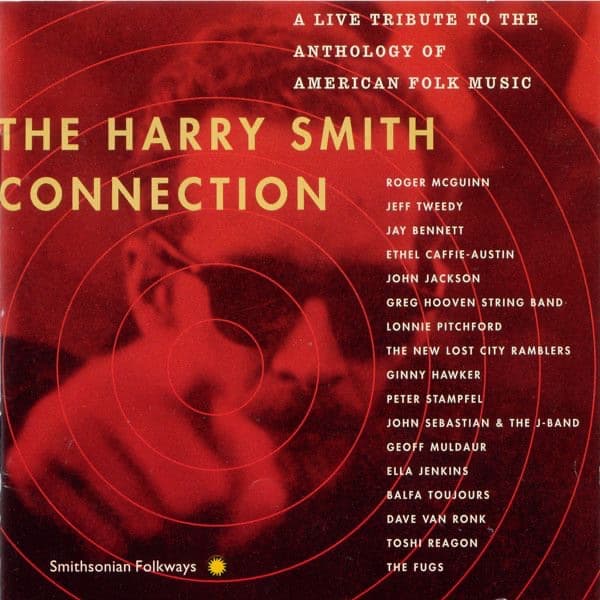
Harry Smith’s "Anthology of American Folk Music"
A record collector, filmmaker and occultist named Harry Smith persuaded Moses Asch of Folkways to issue eighty-four commercial 78s from 1927 to 1932 as three two-LP boxes: ballads, social music, songs. Blues, hillbilly, Cajun and gospel sat side by side with no note of who was Black and who was white. It sold poorly and never went out of print, and Bob Dylan, Joan Baez and the whole 1960s revival learned their repertoire from it.
Brown v. Board of Education
On May 17, 1954, the Supreme Court ruled unanimously that separate schools for Black and white children were unconstitutional. Nothing about the record business changed that day. But the music of this decade crossed the same line the court had just drawn, on jukeboxes and transistor radios, in Alan Freed’s ballrooms and on Ed Sullivan’s stage, years before most schools did.
Ray Charles records "I Got a Woman"
Ray Charles had spent four years imitating Nat King Cole and Charles Brown. Late in 1954, in an Atlanta radio station with his own road band, he cut for Atlantic a song built on a gospel tune with the words turned from heaven to a woman, sung in a church shout over a jump-blues groove. Churchgoers called it blasphemy. It went to number one on the R&B chart in early 1955 and Elvis cut it within the year. This is the record where soul music starts.
Emmett Till
On August 28, 1955, a fourteen-year-old Chicago boy visiting relatives in Mississippi was kidnapped and murdered for supposedly whistling at a white woman. His mother insisted on an open casket, Jet magazine printed the photographs, and an all-white jury acquitted the killers in sixty-seven minutes. The music of the next ten years, from Bob Dylan’s early song about Till to Mingus’s "Fables of Faubus," is written in the shadow of that photograph.
The Montgomery bus boycott begins
Rosa Parks was arrested on December 1, 1955, and Black Montgomery stopped riding the buses on December 5. The boycott ran 381 days, until the Supreme Court ruled the city’s bus segregation unconstitutional. In March 1956 its young leader, Martin Luther King Jr., asked Harry Belafonte for help; Belafonte’s "Calypso" was about to become the biggest album in America. The pattern of musicians funding and fronting the movement starts here.
James Brown records "Please, Please, Please"
In Cincinnati in 1956, a twenty-two-year-old South Carolina ex-convict raised in Augusta and his gospel-trained Famous Flames cut a song that was mostly one word, begged over and over until the begging was the point. Syd Nathan of King Records thought it was garbage and released it on his Federal subsidiary anyway. It was Brown’s first hit. Everything in funk, from the drop-to-the-knees to the one-chord vamp, is already in these two minutes and forty seconds.
The Million Dollar Quartet
On December 4, 1956, Carl Perkins was cutting a session at Sun with a new piano player named Jerry Lee Lewis when Elvis dropped by with a girlfriend. Johnny Cash came in. Sam Phillips let the tape roll while the four of them sang gospel songs around the piano for an afternoon, and called the newspaper. The photograph became the studio’s icon. The tape, mostly hymns, is the sound of where all four of them came from.
Little Rock
In September 1957 Governor Orval Faubus called out the Arkansas National Guard to keep nine Black students out of Central High School, and President Eisenhower sent the 101st Airborne to walk them in. Charles Mingus wrote "Fables of Faubus" about it; Columbia would not let him record the lyrics in 1959, so the version on "Mingus Ah Um" is instrumental. The words came out on another label a year later.
Sam Cooke, "You Send Me"
Cooke had been the Soul Stirrers’ lead singer for six years, and in 1956 he tried a pop record under the name Dale Cook so as not to scandalize his church audience. Nobody was fooled. He left the group in 1957, and his first release on the tiny Keen label, a song of his own with a chorus of "whoa-oh," went to number one on both the pop and R&B charts by December. The prettiest voice in gospel was now the prettiest voice in pop, and he would spend the rest of his short life proving the two were the same thing.
Little Richard quits for God
On tour in Australia in October 1957, Little Richard saw a fireball in the sky, decided it was a sign, threw his rings into Sydney Harbour and announced he was leaving rock and roll for the ministry. He enrolled in a Bible college in Alabama. Specialty kept releasing records from the vault for two years. The wildest man in the music was gone at the peak of it, and he would not come back to it until the Beatles asked him to tour with them.
Ray Charles records "What’d I Say"
It started in January 1959 as a way to fill the last twenty minutes of a dance in Brownsville, Pennsylvania, when Ray ran out of songs: a low riff on the electric piano, the drummer on his big cymbal, and the Raelettes told to repeat whatever he sang. People came off the floor asking where they could buy the record. There was no record. A few weeks later the tour reached New York and he cut it, in one long take that Atlantic split across two sides of a single. Stations banned it for the grunting. It sold a million anyway, and every soul record of the 1960s learned from it how a groove could be the whole song.
The March on Washington puts the movement's music on television
On August 28, 1963, Mahalia Jackson sang "How I Got Over" on the steps of the Lincoln Memorial, Marian Anderson sang, and Joan Baez, Odetta, Peter, Paul and Mary, and Bob Dylan performed before Martin Luther King Jr. spoke. Peter, Paul and Mary's version of "Blowin' in the Wind" was at number two on the pop chart that week. Sam Cooke watched on a hotel television and decided that a Black man should write a song like that too.
John Coltrane records "A Love Supreme" in one evening
On December 9, 1964, at Rudy Van Gelder's studio in Englewood Cliffs, New Jersey, Coltrane, McCoy Tyner, Jimmy Garrison and Elvin Jones cut a four-part suite in a single session. The opening bass figure turns out, at the end of the first movement, to be the words of the title, which Coltrane chants. In the last movement he plays the poem printed on the sleeve, one note per syllable. Released early in 1965, it is the record that made a jazz album a spiritual object for people who did not otherwise listen to jazz.
"A Change Is Gonna Come" comes out eleven days after Sam Cooke is shot
Cooke wrote it after hearing "Blowin' in the Wind" and after being turned away from a whites-only motel in Shreveport, Louisiana. He recorded it on January 30, 1964 with a full orchestra, and it appeared on an album that spring. On December 11, 1964 he was shot dead by a motel manager in Los Angeles. The single, released December 22, became the civil rights movement's hymn and the song every soul singer since has had to measure themselves against.
Aretha Franklin sits down at the piano in Muscle Shoals
Columbia had spent six years and nine albums trying to make Franklin a jazz-pop singer. Jerry Wexler signed her to Atlantic and on January 24, 1967 took her to Rick Hall's FAME studio in Muscle Shoals, Alabama, where the plan was to let her play piano and lead the white Southern rhythm section herself. They cut "I Never Loved a Man (The Way I Love You)" in an afternoon before the session collapsed in a fight. The single was out within weeks. She was twenty-four and she had found her sound.
An Oakland youth choir takes "Oh Happy Day" into the Top 5
Edwin Hawkins rearranged an eighteenth-century hymn for the Northern California State Youth Choir and recorded it on two tracks at the Ephesians Church of God in Christ in Oakland to raise money for a trip. Five hundred copies were pressed. A rock disc jockey at KSAN started playing it early in 1969, Buddah Records won a bidding war, and with Dorothy Combs Morrison's lead it went to number four on the pop chart and number two in Britain. Contemporary gospel dates from this record.
The Harlem Cultural Festival
Six free Sunday concerts in Mount Morris Park from June 29 to August 24, 1969, drew close to three hundred thousand people. Stevie Wonder, Sly and the Family Stone, Nina Simone, B.B. King, Mahalia Jackson, the Staple Singers, Gladys Knight and the Pips, Mongo Santamaría and the 5th Dimension played; the Black Panthers handled security after the police declined. Forty hours of film sat in a basement for fifty years until Questlove cut it into "Summer of Soul" in 2021. It was Woodstock's equal and hardly anyone outside Harlem knew.
Aretha Franklin records "Amazing Grace" in church
On 13 and 14 January 1972 Franklin sings two nights at New Temple Missionary Baptist Church in Watts, Los Angeles, with James Cleveland's Southern California Community Choir behind her and her father C.L. Franklin in the pews. Atlantic records it and Sydney Pollack films it. Released in June, the double album sells two million copies and becomes the best-selling gospel record ever made. The film sat unfinished for forty-six years because nobody had used a clapperboard.
Wattstax: a hundred thousand people for a dollar
On 20 August 1972 Stax Records fills the Los Angeles Memorial Coliseum for a concert marking seven years since the Watts uprising. Tickets are a dollar. Jesse Jackson leads the crowd in "I am somebody", the Staple Singers, Isaac Hayes, Albert King, Rufus Thomas and the Bar-Kays play, and Mel Stuart films it. It is the largest gathering of Black Americans outside a civil rights event to that date, and the film is now in the National Film Registry.
Sylvester, "You Make Me Feel (Mighty Real)"
A gospel-trained falsetto from Los Angeles, out and flamboyant, records in San Francisco with Harvey Fuqua producing and makes the decade's most joyful disco record: a synthesizer pulse borrowed from "I Feel Love" and a voice that testifies. It is a top-forty hit and a number-one club record, and it puts the queer Black church that disco came out of on the radio without apology. Patrick Cowley, who heard a rehearsal and asked to remix it, points the sound toward hi-NRG and house.
Whitney Houston's debut
Cissy Houston's daughter and Dionne Warwick's cousin, signed by Clive Davis to Arista in 1983, released "Whitney Houston" in February 1985. "Saving All My Love for You", "How Will I Know" and "Greatest Love of All" all went to number one, and Billboard's year-end chart made it the best-selling album in America of 1986, ahead of everything by anyone. Pop had a new definition of a voice.
Take 6 make gospel a cappella modern
Six singers who met at Oakwood College in Huntsville, Alabama, signed to Reprise in 1987 and released a self-titled album in 1988 with no instruments at all: jazz chords, gospel words. It reached the top ten of the contemporary jazz and Christian charts and won two Grammys. Quincy Jones and Stevie Wonder came calling.
Janet Jackson's "Rhythm Nation 1814"; Madonna's "Like a Prayer"
Janet, Jam and Lewis made a concept album about racism, poverty and illiteracy with an industrial drum sound and a black-and-white video full of military drills; it produced seven top-five singles across three years. Madonna's "Like a Prayer" (March 1989), with a gospel choir and a video that lost her a Pepsi contract, argued pop could be both confession and provocation. Pop entered the 1990s grown up.
Kirk Franklin and the Family
A twenty-three-year-old choir director from Fort Worth released a live album on a small label, GospoCentric, in June 1993. It stayed at number one on the gospel chart for most of two years and became the first gospel debut to go platinum. Franklin wrote and arranged like an R&B producer and led the choir like a rapper. Gospel had a new front man and, four years later, an MTV hit.
Kirk Franklin and God's Property, "Stomp"
A choir from Dallas, a Funkadelic sample ("One Nation Under a Groove"), a rap from Salt-N-Pepa's Cheryl James, and a video that MTV played like it was a rap hit, which it was. "Stomp" went to number one on the R&B airplay chart in the summer of 1997 and its album entered the Billboard 200 at number three. It won Best Gospel Choir or Chorus Album at the 1998 Grammys, and it did it with a record that radio played like R&B. The church had come to the club and the club stood up.
Lauryn Hill, "The Miseducation of Lauryn Hill"
Released 25 August 1998 and recorded partly at Bob Marley's Tuff Gong studio in Kingston. The Library of Congress essay counts what it did: the biggest first week for a woman in history, ten Grammy nominations, and "Doo Wop (That Thing)" entering the Hot 100 at number one. Reggae, hip-hop, soul and a schoolroom skit, made by a pregnant twenty-three-year-old whose group had just fallen apart. It is still her only solo studio album. It is still enough.
Moby, "Play"
Released 17 May 1999. A vegan New York DJ who had already been through techno and punk put Alan Lomax's 1959 field recordings of Southern singers, Vera Hall's "Trouble So Hard", Bessie Jones, Boy Blue, over house pianos and breakbeats, and then licensed every one of the eighteen tracks to a film, a television show or an advert. It sold ten million copies to people who had never set foot in a club. Electronic music had found a way into American living rooms, and the licensing model had found the internet age.
O Brother, Where Art Thou? starts a bluegrass revival
T Bone Burnett's soundtrack for the Coen brothers' film came out on 5 December 2000: Ralph Stanley singing O Death alone, Alison Krauss and Gillian Welch on Didn't Leave Nobody but the Baby, Dan Tyminski as George Clooney's voice on Man of Constant Sorrow. Country radio ignored it. It won Album of the Year at the Grammys on 27 February 2002 and sent a generation of kids to the banjo.
Kanye West's The College Dropout
Released 10 February 2004 after Roc-A-Fella spent years treating him as a producer who should not rap, The College Dropout was recorded partly with his jaw wired shut after a car crash; Through the Wire was cut that way. Pink polos, sped-up soul samples, a gospel single in Jesus Walks, jokes about working at the Gap. It won Best Rap Album at the Grammys in February 2005. The next fifteen years of rap, from Drake to Chance, argue with this record.
Kirk Franklin's Hero
Released 4 October 2005 on GospoCentric, Hero went platinum, a rare thing for a gospel record, and Looking for You, built on a Patrice Rushen sample, was on R&B radio for months. It won two Grammys in February 2007, including Best Gospel Song for Imagine Me. Franklin had been mixing choirs with hip-hop since 1993; this was the record where the mainstream stopped treating that as a novelty.
Whitney Houston dies
She drowned in a bathtub at the Beverly Hilton on 11 February 2012, the night before the Grammys, aged forty-eight. The ceremony the next evening turned into a memorial. She had the most imitated voice in pop for thirty years, and she was inducted into the Rock and Roll Hall of Fame in 2020.
Chance the Rapper's Acid Rap
A nineteen-year-old from Chicago gave away a mixtape with gospel choirs, juke rhythms, jazz horns and a voice that squeaked when it got excited. He never signed a record deal. Three years later he took the same approach to the Grammys and won. Acid Rap is where the idea of an independent streaming-era star stops being theoretical.
The Life of Pablo and Ultralight Beam
Kanye West released an album that was still being edited after it came out, changing mixes on streaming services for weeks. It opened with Ultralight Beam, a gospel record with Kirk Franklin, Chance the Rapper and a child preaching over a Rhodes piano. The album as a finished, fixed object stopped being a rule that day.
Chance the Rapper's Coloring Book
A gospel-rap mixtape given away free on streaming, with no label, no physical release and no price. When the Grammys changed their rules to allow it, it won Best Rap Album in 2017 and Chance won Best New Artist. It is the first streaming-only release ever to win a Grammy, and the strongest single argument the independent era ever made.
Little Richard dies
Richard Penniman died on 9 May 2020, aged 87. He had spent the 1950s inventing the physical language of rock and roll: the shriek, the pounded piano, the eyeliner, the speed. Every performer in this chapter who has ever thrown themselves across a stage is quoting him, whether they know it or not.
Jon Batiste wins Album of the Year
At the Grammys on 3 April 2022, We Are, a record made by a New Orleans pianist and bandleader out of gospel, hip-hop, brass-band parade music and social justice, took Album of the Year over Olivia Rodrigo, Kanye West and Taylor Swift. Batiste won five awards that night. It was the sort of result the Grammys almost never produce, and the room did not see it coming.
Artists
Everyone in the century tagged Gospel, in the order they arrived. Each name opens its full entry in the chapter that carries it.
Ethel Waters
- Down Home Blues
- Dinah
- Am I Blue?
Paul Robeson
- Go Down, Moses
- Ol' Man River
Thomas A. Dorsey
- It's Tight Like That
- If You See My Savior
- Take My Hand, Precious Lord
Arizona Dranes
- I Shall Wear a Crown
- My Soul Is a Witness for the Lord
- God's Got a Crown
Blind Willie Johnson
- Dark Was the Night, Cold Was the Ground
- It's Nobody's Fault but Mine
- John the Revelator
The Carter Family
- Single Girl, Married Girl
- Keep on the Sunny Side
- Wildwood Flower
- Can the Circle Be Unbroken
The Carter Family
- Can the Circle Be Unbroken
- Wildwood Flower
- Worried Man Blues
Thomas A. Dorsey
- Take My Hand, Precious Lord
- Peace in the Valley
Roy Acuff
- The Great Speckled Bird
- Wabash Cannonball
Mahalia Jackson
- God's Gonna Separate the Wheat from the Tares
- Move On Up a Little Higher
Golden Gate Quartet
- Golden Gate Gospel Train
- Jonah
Sister Rosetta Tharpe
- Rock Me
- That's All
- This Train
Marian Anderson
- My Country, 'Tis of Thee (Lincoln Memorial)
- Nobody Knows the Trouble I've Seen
Sister Rosetta Tharpe
- Strange Things Happening Every Day
- Up Above My Head
- This Train
- Down by the Riverside
The Soul Stirrers
- By and By
- Walk Around
- Jesus Gave Me Water
Son House
- Walking Blues (Library of Congress)
- Shetland Pony Blues
- Death Letter
Sister Rosetta Tharpe
- Strange Things Happening Every Day
- Up Above My Head
- Didn’t It Rain
Roy Brown
- Good Rockin' Tonight
- Rockin' at Midnight
- Hard Luck Blues
Mahalia Jackson
- Move On Up a Little Higher
- Even Me
- Just Over the Hill
Mahalia Jackson
- Move On Up a Little Higher
- How I Got Over
- Didn’t It Rain
The Five Blind Boys of Mississippi
- Our Father
- Will My Jesus Be Waiting
- I’m a Soldier
The Drifters
- Money Honey
- Honey Love
- There Goes My Baby
Elvis Presley
- That’s All Right
- Mystery Train
- Heartbreak Hotel
- Hound Dog
- Jailhouse Rock
Ray Charles
- I Got a Woman
- Hallelujah I Love Her So
- Lonely Avenue
- What’d I Say
Little Richard
- Tutti Frutti
- Long Tall Sally
- Lucille
- Good Golly, Miss Molly
Johnny Cash
- Folsom Prison Blues
- I Walk the Line
- Big River
James Brown
- Please, Please, Please
- Try Me
- Think
Sam Cooke
- Touch the Hem of His Garment
- You Send Me
- Wonderful World
The Staple Singers
- Uncloudy Day
- Will the Circle Be Unbroken
- I’ll Take You There
The Staple Singers
- Uncloudy Day
- Why (Am I Treated So Bad)
- Soul Folk in Action
John Coltrane
- My Favorite Things
- A Love Supreme
- Ascension
Sam Cooke
- Live at the Harlem Square Club, 1963
- Ain't That Good News
- A Change Is Gonna Come
Johnny Cash
- Ring of Fire
- At Folsom Prison
- At San Quentin
Nina Simone
- Nina Simone in Concert
- I Put a Spell on You
- Wild Is the Wind
Aretha Franklin
- I Never Loved a Man the Way I Love You
- Aretha Arrives
- Lady Soul
- Aretha Now
Toots and the Maytals
- Do the Reggay
- 54-46 That's My Number
- Pressure Drop
Aretha Franklin
- Spirit in the Dark
- Young, Gifted and Black
- Amazing Grace
Al Green
- Let's Stay Together
- I'm Still in Love with You
- Call Me
Andraé Crouch
- Take Me Back
- This Is Another Day
- Live in London
Sylvester
- Step II
- You Make Me Feel (Mighty Real)
Whitney Houston
- How Will I Know
- Greatest Love of All
- I Wanna Dance with Somebody (Who Loves Me)
Take 6
- Spread Love
- Mary
- Get Away, Jordan
Whitney Houston
- The Bodyguard
- My Love Is Your Love
Kirk Franklin
- Kirk Franklin and the Family
- God's Property from Kirk Franklin's Nu Nation
- The Nu Nation Project
D'Angelo
- Brown Sugar
Kirk Franklin
- The Rebirth of Kirk Franklin
- Hero
- The Fight of My Life
Kanye West
- My Beautiful Dark Twisted Fantasy
- Yeezus
- The Life of Pablo
Kirk Franklin
- Hello Fear
- Losing My Religion
- Love Theory
Chance the Rapper
- Acid Rap
- Coloring Book
- No Problem
Lauren Daigle
- Look Up Child
- You Say
Jon Batiste
- We Are
- FREEDOM
- World Music Radio
Maverick City Music
- Jireh
- Old Church Basement
- Kingdom Book One
Records
Every record in the century tagged Gospel, oldest first. Each title opens its write-up in its own decade.
Arizona Dranes
Complete Recorded Works 1926–1929
Rev. J. M. Gates
Death's Black Train Is Coming / Need of Prayer
Various Artists
The Bristol Sessions, 1927–1928: The Big Bang of Country Music
Blind Willie Johnson
Dark Was the Night, Cold Was the Ground / It's Nobody's Fault but Mine
Mahalia Jackson
God's Gonna Separate the Wheat from the Tares
Golden Gate Jubilee Quartet
Golden Gate Gospel Train
Sister Rosetta Tharpe
Rock Me / The Lonesome Road
Various Artists
From Spirituals to Swing: The Legendary 1938 and 1939 Carnegie Hall Concerts
The Carter Family
On Border Radio, 1939
Marian Anderson
The Lincoln Memorial Concert
Sister Rosetta Tharpe
Strange Things Happening Every Day
Mahalia Jackson
Move On Up a Little Higher
Various Artists
Anthology of American Folk Music
Various artists, edited by Harry Smith
Anthology of American Folk Music
Odetta
Odetta Sings Ballads and Blues

Ray Charles
Ray Charles

Johnny Cash
Johnny Cash with His Hot and Blue Guitar
Mahalia Jackson
Newport 1958

The Louvin Brothers
Satan Is Real

The Staple Singers
Uncloudy Day

John Coltrane
A Love Supreme

Aretha Franklin
I Never Loved a Man the Way I Love You

Aretha Franklin
Amazing Grace
The Rolling Stones
Exile on Main St.

Whitney Houston
Whitney Houston

Take 6
Take 6

D'Angelo
Brown Sugar

Kirk Franklin and God's Property
God's Property from Kirk Franklin's Nu Nation

Lauryn Hill
The Miseducation of Lauryn Hill

Moby
Play

Kanye West
The College Dropout
Chance the Rapper
Acid Rap
Chance the Rapper
Coloring Book
Kanye West
The Life of Pablo
Jon Batiste
We Are
The Mixtape
I Shall Wear a Crown
Arizona DranesA Pentecostal church service on record, with the piano playing boogie-woogie a decade before the name. Feel the pull between the choir and the left hand.
Dark Was the Night, Cold Was the Ground
Blind Willie JohnsonNo words, just a hum and a slide guitar carrying an old hymn. It is on the Voyager spacecraft. Play it in the dark.
God's Gonna Separate the Wheat from the Tares
Mahalia JacksonHer first record, which sold nothing. The voice is already complete: slow, huge, and bending the notes the way a blues singer does. Gospel as a genre starts sounding like this.
Golden Gate Gospel Train
Golden Gate Jubilee QuartetFour voices and no instruments doing the job of a rhythm section and a locomotive. Doo-wop is twelve years away and already audible.
Rock Me
Sister Rosetta TharpeA gospel song with a swing band, a guitar out front, and a word in the title that will mean something else in sixteen years. The church was scandalized. Chuck Berry was listening.
Strange Things Happening Every Day
Sister Rosetta TharpeGospel with an electric guitar, boogie piano and a shout. Then the guitar solo. This is the record people mean when they say rock and roll was born in church.
Move On Up a Little Higher
Mahalia JacksonA voice big enough to fill a stadium, in a small New York studio, singing about heaven as if it were a promotion she had earned. Stay for part two, where she improvises.
Uncloudy Day
The Staple SingersA hymn that sounds like the blues: Pops Staples’s shivering guitar and teenage Mavis singing from somewhere underneath the floor. Gospel and soul are one thing here.
Oh Happy Day
The Edwin Hawkins SingersAn Oakland youth choir, an eighteenth-century hymn, a piano groove, and Dorothy Combs Morrison's lead. It was recorded to raise bus fare. It went to number four. Contemporary gospel starts here.
Amazing Grace
Aretha FranklinEleven minutes in a Watts church with James Cleveland at the piano, building until the congregation is on its feet. The link here is the whole album; the hymn is track eight and you should hear how it gets there.
Stomp
Kirk Franklin and God's PropertyA choir, a Funkadelic sample and Salt-N-Pepa's Cheryl James rapping. The church on MTV, and the moment gospel took its beats back.