100 Years of Music / Genre
Blues
Three chords, twelve bars and a voice telling the truth. Blues came up out of the Mississippi Delta and the Texas flatlands, went electric in Chicago, and left its fingerprints on every genre that followed.
The lineage
Blues was made by the first generation of Black Americans born after slavery, in the cotton country of the Deep South between about 1890 and 1910. It took the call and response of the field holler, the timing of the work song, the story of the ballad and the moan of the spiritual, and it added one thing that was new: a single person, a guitar, and a song about their own life. Its signature is the bent note, a pitch pushed sharp or slid flat until it sits between the keys of a piano. That note is the sound of the blues, and later of everything that borrowed from it.
By 1903 the bandleader W. C. Handy had heard a man at the Tutwiler, Mississippi, train station playing guitar with a knife blade and singing about going where the Southern crosses the Dog. In 1912 the form reached print: "Dallas Blues", "Baby Seals Blues" and Handy’s own "Memphis Blues" were all published that year, and the word was on the sheet music. That is the year this history uses for the genre taking shape, because it is the moment the twelve-bar pattern had a name and a written form. Twelve-bar means three lines of lyric, the first one sung twice, over twelve measures of three chords. Nearly every blues, and a great deal of rock and roll, is built on that frame.
The record business found the blues in 1920. Mamie Smith’s "Crazy Blues", cut for OKeh on 10 August 1920, sold in the hundreds of thousands and proved there was a Black record-buying public, which the industry then served with a separate catalogue it called race records. The vaudeville singers came first: Bessie Smith on Columbia from 1923, Ma Rainey on Paramount the same year. Then the labels went south with portable equipment. Blind Lemon Jefferson recorded for Paramount from 1926, Charley Patton in 1929, Son House in 1930, Robert Johnson in a San Antonio hotel room in 1936. Their records are the Delta blues: one guitar, one voice, and a rhythm that does not need a drummer.
The Great Migration carried the music north, and electricity changed what it could do. T-Bone Walker in Los Angeles was playing an amplified guitar by the early 1940s, single notes as loud as a horn. Muddy Waters arrived in Chicago from Mississippi in 1943, and his 1948 record "I Can’t Be Satisfied" for Aristocrat, soon renamed Chess, set the template for Chicago blues: electric guitar, amplified harmonica, piano, bass and drums, playing Delta songs at bar volume. Howlin’ Wolf, Little Walter and Elmore James followed. At the same time, Louis Jordan’s small, loud, swinging jump-blues combo was topping the charts with songs like "Caldonia" (1945), and in June 1949 Billboard renamed its race chart "Rhythm & Blues". The blues had become R&B, and R&B was about to become rock and roll.
The 1950s took the blues into rock: "Rocket 88" (1951), Elvis’s "That’s All Right" (1954, a 1946 Arthur Crudup blues), and the entire Chuck Berry songbook. The 1960s sent it back across the ocean. The Rolling Stones took their name from a 1950 Muddy Waters record, John Mayall’s Bluesbreakers with Eric Clapton (1966) turned Chicago blues into British blues rock, and Cream, Jimi Hendrix, Led Zeppelin and Black Sabbath built hard rock and heavy metal out of slowed-down blues riffs. Meanwhile the folk revival went looking for the original singers: Son House and Skip James were found and put on stage at Newport in 1964. Since then the blues has been the ground under B.B. King, Stevie Ray Vaughan, the White Stripes and Gary Clark Jr., and its form is still audible in a trap song’s three-chord loop and in every guitar solo that bends a note.
Branches
Vaudeville blues
Sung by professional women with a piano or a small jazz band behind them, on stage and on the first blues records. Mamie Smith opened the door in 1920; Bessie Smith and Ma Rainey walked through it in 1923.
Delta blues
Solo guitar and voice from the Mississippi Delta, first recorded when Paramount and Victor sent equipment south in 1926. Slide guitar, a driving bass thumb and a rhythm that carries itself. Charley Patton, Son House, Robert Johnson.
Boogie-woogie
Blues piano with a rolling eight-to-the-bar left hand. Pinetop Smith recorded "Pinetop’s Boogie Woogie" in December 1928, and the 1938 "From Spirituals to Swing" concert at Carnegie Hall made it a craze. Its bass line became rock and roll’s engine.
Jump blues
Small combos with a saxophone, a shouting singer and a swing beat, built for jukeboxes and dance floors in the early 1940s. Louis Jordan’s Tympany Five was the model. Rename it in 1949 and it is rhythm and blues.
Texas and West Coast electric blues
T-Bone Walker plugged in and played the guitar like a horn, single notes and jazz chords over a swinging band. His 1947 "Call It Stormy Monday" taught B.B. King, Chuck Berry and every guitarist after them how to phrase.
Chicago blues
Delta songs played by a full electric band in South Side taverns. Muddy Waters’s 1948 "I Can’t Be Satisfied" started it; Chess Records, Little Walter’s amplified harmonica and Howlin’ Wolf finished it. This is the blues the British bands copied.
Blues rock
White rock musicians on both sides of the Atlantic playing Chicago blues loud and long. The Paul Butterfield Blues Band (1965), the Bluesbreakers with Clapton (1966), Cream and Hendrix. The extended guitar solo starts here.
How to listen
Start with the frame. Put on a twelve-bar blues, Robert Johnson’s "Sweet Home Chicago" or Muddy Waters’s "Hoochie Coochie Man", and count: four beats to a bar, twelve bars to a verse. Hear the first line, hear it repeated, hear the answer. Once you can feel where the verse turns around, you can hear the same turnaround in Chuck Berry, in the Rolling Stones and in a thousand songs that never call themselves blues.
Then listen for the bent note. On a Delta record it is a slide or a pushed string; on a Chicago record it is the harmonica wailing between two pitches; on a B.B. King record it is a single note held and shaken until it cries. That note is the whole argument of the genre: the feeling lives in the space between the proper pitches.
Finally, listen across the decades in pairs. Play Arthur Crudup’s "That’s All Right" (1946) and then Elvis’s (1954). Play Muddy’s "You Need Love" (1962) and then Led Zeppelin’s "Whole Lotta Love" (1969). The distance between each pair is a lesson in how popular music moves: who gets credited, what gets louder, and what stays exactly the same.
Across the decades
The blues gets a catalog number
W. C. Handy had published blues sheet music since 1912, and Black singers had been singing it in tent shows for longer than that. What the 1920s added was the record. After "Crazy Blues" sold in 1920, every label wanted a woman who could sing the blues with a jazz band behind her. Bessie Smith, Ma Rainey, Ida Cox, Alberta Hunter, Ethel Waters and dozens more filled the "race record" catalogs Okeh, Columbia and Paramount created for Black buyers. These are the classic blues singers, and Bessie Smith is the one whose records still sound like a storm.
The second wave came from the country. In 1926 Paramount released records by a blind Texas street singer named Lemon Jefferson, alone with his guitar, and they sold. Suddenly the companies wanted men with guitars from the South: Blind Blake, Lonnie Johnson, Tommy Johnson, Mississippi John Hurt, Blind Willie McTell, and in June 1929 Charley Patton, the Dockery Farms entertainer who had taught half the Delta. Patton is where the line runs to Son House, Robert Johnson, Muddy Waters and Howlin' Wolf.
A third thing was happening on the piano. Leroy Carr in Indianapolis sang the blues softly over an easy piano and guitar and became the most popular male blues singer of his time. Pine Top Smith in Chicago cut a record in December 1928 that put a name on a rolling left-hand style: boogie-woogie. Both point at the city blues of the next two decades, and boogie-woogie is a direct ancestor of rock and roll.
The blues also learned to be funny and dirty on record. Tampa Red and Georgia Tom's "It's Tight Like That" in 1928 started a craze for hokum, sly party songs with a two-guitar bounce. Georgia Tom was Thomas A. Dorsey, and within four years he would be the father of gospel music. Hold on to that.
The Delta goes quiet, the city turns up the drums
The blues had its first great recording boom in the late 1920s, and the Depression ended it almost overnight. Paramount, the Wisconsin label that had recorded Charley Patton, Son House, and Skip James, went out of business in 1932 and its masters were scrapped. Field trips to the South slowed to a trickle. The most important Delta record of the decade, Robert Johnson's twenty-nine songs from San Antonio and Dallas in 1936 and 1937, sold modestly and was forgotten for twenty years. That silence is the reason his legend grew: the music arrived in the 1960s without a face attached.
Meanwhile the blues that actually sold in the 1930s came out of Chicago. Lester Melrose, a music publisher turned producer, built a house sound for RCA's budget label Bluebird around Big Bill Broonzy, Tampa Red, Washboard Sam, and the harmonica player John Lee "Sonny Boy" Williamson. It used a piano, a string bass, and often a drummer behind the guitar, which no Delta record had. People call it the Bluebird beat. It is the sound of the blues becoming a band, and the band is the model Muddy Waters plugged in after the war.
Two other blues streams fed forward. The piano blues of Leroy Carr and the boogie-woogie of Meade Lux Lewis, Albert Ammons, and Pete Johnson put a rolling left hand under everything, and by the end of the decade Kansas City shouter Big Joe Turner was barking over it in a way that is rhythm and blues in everything but the name. And the string-band blues of the Mississippi Sheiks, whose fiddle-and-guitar "Sitting on Top of the World" sold to Black and white buyers alike in 1930, reminds you that the color line on record labels was never the color line in the music.
The blues plugs in
The decade opens with the Delta blues as it had been: a voice, a guitar, a world of hurt. Charley Patton had died in 1934 and Robert Johnson in 1938, leaving twenty-nine recordings that guitar players would treat as scripture. Son House, the preacher turned blues prophet, was still farming in Mississippi. Blind Lemon Jefferson's high, fluid Texas style had been gone since 1929 but lived in every Texan who picked up a guitar. In the summers of 1941 and 1942 Alan Lomax and Fisk University's John Work drove into Coahoma County with a recording machine and found both the past and the future on the same plantation: Son House with his hard, hypnotic slide, and a young field hand named McKinley Morganfield who called himself Muddy Waters.
Then the migration moved the blues to the city, and the city was loud. In Chicago, Big Bill Broonzy had already been bridging country blues and a small-band, urban sound through the 1930s. Muddy arrived in 1943, put a pickup on his guitar so a bar could hear him over itself, and by 1948 was cutting "I Can't Be Satisfied" for a tiny label called Aristocrat with nothing but that electric guitar and a slapped bass. The record sold out in a weekend. This is the moment the blues band, and with it the rock combo, is invented: a small group, amplified, urgent, built around a riff.
The same thing was happening in three other cities at once. In Los Angeles, T-Bone Walker, who had led Blind Lemon around Dallas as a boy, played a hollow-body electric guitar held flat across his chest and made it phrase like a horn. "Call It Stormy Monday" in 1947 is the first electric blues guitar solo that every later guitarist had to learn. In Detroit, John Lee Hooker stamped out "Boogie Chillen'" in 1948 on one chord and a piece of plywood. In Houston, Lightnin' Hopkins spun street-corner poetry over a loose, jazz-touched guitar. Four regions, four electric styles, one decade.
Why it matters: everything called rock a decade later is one of these records played faster by someone younger. The Rolling Stones took their name from a Muddy Waters song. B.B. King built his whole approach on T-Bone. ZZ Top and Canned Heat lived inside Hooker's boogie. This decade is the roots of rock, and this essay is the root system.
Chicago plugs in the Delta
The blues moved north with the people who sang it. Muddy Waters had come to Chicago from Clarksdale in 1943; by the early 1950s he had an electric band with Little Walter on amplified harmonica, Jimmy Rogers on second guitar, Otis Spann on piano and Willie Dixon writing the songs and playing bass. Chess Records, run by two Polish-born brothers on the South Side, put it on wax. "Hoochie Coochie Man" (1954) is the template: a stop-time riff, a boast, a band that hits like a fist.
Howlin’ Wolf came up from Memphis and was cutting for Chess in Chicago by 1953 with a voice like a tire on gravel and became Muddy’s only real rival. Little Walter’s "Juke" (1952) made the harmonica a lead instrument and sat at number one on the R&B chart for eight weeks. Elmore James took Robert Johnson’s "Dust My Broom" and turned its slide riff into a siren that every rock guitarist would eventually steal. Down in Memphis, B.B. King, a disc jockey on WDIA, had his first number one with "Three O’Clock Blues" in 1952 and began the long career that would make single-string lead guitar a language.
This is the music the Rolling Stones would name themselves after. It is also the music Bo Diddley and Chuck Berry were sitting in the Chess waiting room to make, and Sam Phillips had recorded Wolf and Ike Turner before he ever met Elvis. The line from the Delta to the arena runs straight through 2120 South Michigan Avenue.
The blues goes to college, then to London, then comes back louder
In 1960 the blues was a Black working-class music in Chicago, Memphis and the Delta, and its audience was aging. Two things changed that. The folk revival rediscovered the old country players: Mississippi John Hurt, Son House and Skip James were found, sometimes literally, and put on stage at Newport in front of white college kids. And in England, a generation of art students bought every Muddy Waters and Howlin' Wolf record they could find and started bands to play them.
The British blues boom is the story of one room, John Mayall's Bluesbreakers, and the players who left it. Eric Clapton left the Yardbirds because they were getting too pop, made the "Beano" album with Mayall in 1966, and somebody wrote "Clapton is God" on a London wall. He left to form Cream. Peter Green replaced him and left to form Fleetwood Mac. Mick Taylor replaced Green and left to join the Rolling Stones. The Stones themselves had named the band after a Muddy Waters song and cut their early records at Chess.
The originals were listening. Muddy Waters played Newport in 1960 and cut an album called "Electric Mud" in 1968 to chase the kids who were copying him. B.B. King crossed over to the rock audience once Bill Graham started booking him at the Fillmore, and "The Thrill Is Gone" at the very end of 1969 made it official. And when Jimi Hendrix played "Red House" or the Stones played "Little Red Rooster", a whole generation heard where rock had come from for the first time.
The box set, the hill country and the young guns
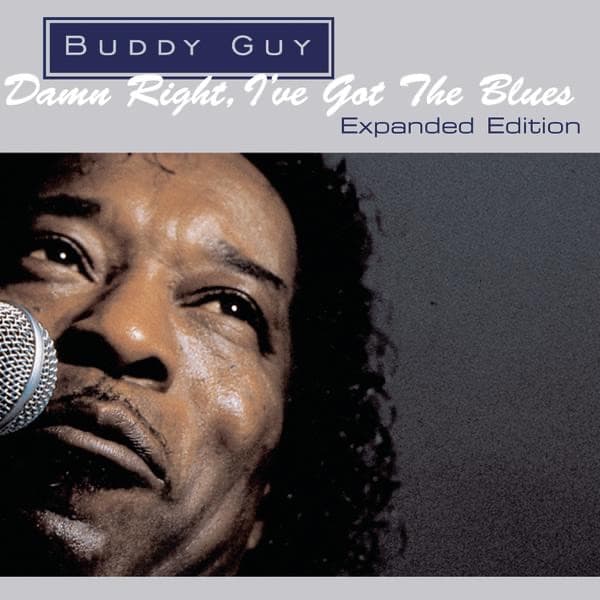
Blues in the 1990s was a reissue business and then it was not. Columbia's "Robert Johnson: The Complete Recordings" box set in 1990 sold a million copies of a man who had died in 1938. Stevie Ray Vaughan died in a helicopter crash on 27 August 1990, and the blues-rock guitar hero seat stayed empty. Buddy Guy, who had been without a label for a decade, made "Damn Right, I've Got the Blues" in 1991 with Eric Clapton and Jeff Beck and won a Grammy. Clapton himself made "From the Cradle" in 1994, a straight blues album that went to number one. John Lee Hooker, at seventy-two, was in the Top 40 with "The Healer" and its follow-ups.
The interesting blues came from Mississippi and from kids. Fat Possum Records, out of Oxford, recorded R.L. Burnside and Junior Kimbrough playing the one-chord hill country trance they had played in juke joints for fifty years, and put Burnside on tour with the Jon Spencer Blues Explosion. Keb' Mo' and Corey Harris went back to the acoustic Delta. Susan Tedeschi and Jonny Lang, who was fifteen, were the new guitar players. The White Stripes were in a Detroit garage working it out. The blues was not the decade's sound. It was under the decade's sound, the way it had been under every decade before it.
The last of the first generation
The blues in the 2010s was mostly a story of custody: who was keeping it, and how. B.B. King, the last true superstar of the electric blues, played his final shows in 2014 and died in May 2015 at eighty-nine. With him went the last direct line to the Mississippi juke joints of the 1940s.
What carried on did so at the edges of other genres. Gary Clark Jr. played Chicago blues with a fuzz pedal and a modern rhythm section and got a Grammy for it. The Black Keys built an arena career out of a two-piece blues band from Akron. Alabama Shakes, led by Brittany Howard, won Best Alternative Music Album in 2016 for a record that is really a Southern soul-blues album. Buddy Guy kept winning Grammys into his eighties, and Bobby Rush won his first at eighty-three.
Rhiannon Giddens and the Carolina Chocolate Drops did the archival work: showing where the banjo, the fiddle tunes and the field hollers actually came from, and who has been written out. That is blues history done as scholarship, and it changed how a lot of younger listeners heard the whole American songbook.
Timeline
Prohibition begins
The Volstead Act took effect on January 17. Bars closed and speakeasies opened, and the ones that could afford it hired bands. For the next thirteen years the underground nightclub, often mob-owned, was the best-paying room in American music, and it is where Chicago and Harlem jazz grew up.
Mamie Smith records "Crazy Blues"
On August 10 in New York, Mamie Smith and a Black band cut Perry Bradford's "Crazy Blues" for Okeh, after a February session had shown the label she could sell. Released in November, it reportedly moved 75,000 copies in two months. It was the first blues record by a Black singer, and its sales convinced every label that Black buyers were a market. The "race record" catalogs, the classic blues singers and the whole recorded blues tradition start here.
Black Swan Records and "Down Home Blues"
Harry Pace, W. C. Handy's former publishing partner, founded Black Swan in Harlem, the first significant Black-owned record label. Its hit was Ethel Waters' "Down Home Blues," with a young Fletcher Henderson running the music. The label lasted only until 1923 and was sold to Paramount, but it proved a Black company could make and sell Black records.
Okeh names the "race record"
Okeh's Ralph Peer, following the Black press's own use of "the Race," gave its 8000 series of records for Black buyers the name "race records." Paramount, Columbia and Vocalion followed with series of their own. The term sorted Black music into a separate catalog for thirty years, and it is the reason the blues, jazz and gospel of this decade survived on disc at all.
Bessie Smith signs with Columbia
Smith cut her first sides in New York in mid-February. "Downhearted Blues," written by Alberta Hunter and Lovie Austin, sold by the hundreds of thousands within months and helped pull Columbia back from bankruptcy. Nobody on record had sung with that much weight before. For the next decade she was the Empress of the Blues, and her 160 or so Columbia sides are the core of the classic blues.
Ma Rainey records for Paramount
Gertrude "Ma" Rainey had been singing the blues in tent shows since before Bessie Smith joined her troupe. In December, at 37, she made her first records in Chicago, including "Bo-Weavil Blues" and "Moonshine Blues" with Lovie Austin. She cut about a hundred sides in five years, rougher and more Southern than Smith, the bridge between the minstrel tent and the studio.
Ma Rainey, "See See Rider Blues"
Rainey's New York recording of the old song about a faithless lover, with Armstrong on cornet, fixed the version everyone since has sung. It has been re-recorded as "C.C. Rider" by everyone from Chuck Willis to Elvis Presley, which makes this one of the longest straight lines in the whole century.
Alain Locke publishes The New Negro
Locke's anthology gathered the poets, essayists and artists of Harlem and declared a cultural coming of age. Langston Hughes, whose first book The Weary Blues followed in 1926, wrote poems in twelve-bar form. The Harlem Renaissance treated jazz and blues as art worth arguing about, which most of America did not yet.
Bessie Smith and Louis Armstrong, "St. Louis Blues"
On January 14 in New York, Smith sang W. C. Handy's song with only Armstrong's cornet and Fred Longshaw's wheezing harmonium behind her. The two of them trade phrases like a sermon and its amen. It is the most admired recording either of them made in the classic blues style, and it was still acoustic: the horn, not the microphone.
The microphone replaces the horn
Bell Labs engineers Joseph Maxfield and Henry Harrison built a recording chain of condenser microphone, vacuum-tube amplifier and electromagnetic cutter, and Western Electric licensed it to Victor and Columbia for $50,000 plus royalties. The first electrical records went on sale in the spring of 1925 without announcement; the frequency range roughly tripled, bass and sibilants appeared, and a singer could whisper. On November 2, Victor launched the Orthophonic Victrola to play the new discs. Bristol, "West End Blues," the crooners and everything after depend on this.
Blind Lemon Jefferson and the country blues on record
Paramount had brought the blind Dallas street singer to Chicago in late 1925 to cut two hymns under a false name. In March 1926 he recorded blues under his own: "Got the Blues," "Long Lonesome Blues," "Booster Blues," "Dry Southern Blues." Just a man, a guitar and a two-octave holler, and the records sold by mail order across the rural South. Every label went hunting for solo bluesmen after this. He cut about a hundred sides before he died in Chicago in December 1929.
Arizona Dranes brings the piano into gospel
On June 17 in Chicago, a blind Pentecostal pianist from Texas cut six sides for Okeh, the first gospel records built on piano. Her left hand rolls like a barrelhouse player and her right hand rings like a church bell, and the singing is straight from a Church of God in Christ service. Thomas Dorsey heard it. So, decades later, did the rock and roll pianists who never knew her name.
Bessie Smith, "Backwater Blues"
Recorded February 17 with James P. Johnson on piano, and written about a Cumberland River flood that had swamped Nashville at Christmas. Two months later the Mississippi broke its levees, and the record became the song of the great flood of 1927. Musicologist David Evans traced the real story; the record's meaning had already moved on without it.
Jimmie Rodgers, "Blue Yodel"
On November 30, in the old church Victor used as a studio in Camden, New Jersey, Rodgers recorded four songs. One was a string of blues verses about a cheating woman with a yodel at the end of each, and Victor called it "Blue Yodel." It sold in the hundreds of thousands, made him the first country star, and its first line came from Black Memphis singers Frank Stokes and Jim Jackson. Twelve more Blue Yodels followed before tuberculosis killed him in 1933.
Blind Willie Johnson, "Dark Was the Night, Cold Was the Ground"
On December 3 in Dallas, a Columbia field unit recorded a blind Texas street preacher humming an eighteenth-century hymn about the night before the Crucifixion while his slide guitar sang the melody. There are no words. It is three minutes long. In 1977 NASA put it on the Voyager record as one of Earth's messages to whoever is out there.
Tommy Johnson in Memphis
In the first days of February, Victor recorded the Crystal Springs, Mississippi, bluesman who had learned alongside Charley Patton at Dockery. "Canned Heat Blues," about drinking cooking fuel, "Big Road Blues" and "Cool Drink of Water Blues," with its falsetto leaps, are the first Delta blues on record. Johnson also told people he had sold his soul at a crossroads, years before anyone said it about Robert Johnson.
Leroy Carr, "How Long, How Long Blues"
Recorded June 19 in Indianapolis for Vocalion: Carr's soft voice and rolling piano with Scrapper Blackwell's single-string guitar answering. It sold in the hundreds of thousands and became a song every blues pianist had to know. This is the first city blues, urbane where Patton was rough, and the model for Nat King Cole, Charles Brown and Ray Charles.
Tampa Red and Georgia Tom, "It's Tight Like That"
A dirty joke with a bounce, cut in Chicago on October 24, 1928 and issued as Vocalion 1216, sold so fast it created a genre called hokum. Georgia Tom was Thomas A. Dorsey, a Georgia preacher's son who had been writing sacred songs on the side since 1921. Within four years he would leave the blues and invent modern gospel, carrying this rhythm into the church with him.
Pine Top Smith names boogie-woogie
On December 29 in Chicago, a 24-year-old pianist from Alabama recorded "Pine Top's Boogie Woogie" for Vocalion, talking dancers through the steps over a rolling eight-to-the-bar left hand. It was the first record with "boogie" in the title. Smith was killed by a stray bullet in a Chicago dance hall in March 1929, before he could see the craze he started.
Bessie Smith, "Nobody Knows You When You're Down and Out"
Recorded May 15, 1929, five months before the Crash, Jimmy Cox's song about losing everything and every friend with it. Smith's own career was already sliding as tastes changed, and Columbia dropped her in 1931. It is the decade's epitaph, sung before the decade knew it needed one.
Charley Patton, "Pony Blues"
Talent scout H. C. Speir sent Patton a train ticket from the Delta to Richmond, Indiana, where Paramount was borrowing Gennett's studio. On June 14 he cut fourteen sides. "Pony Blues," released with "Banty Rooster Blues" on Paramount 12792, was a hit, and the rest of the session is the foundation of Delta blues on record: Son House, Robert Johnson and Howlin' Wolf all learned from the man on these discs.
Bessie Smith on film
Dudley Murphy shot the two-reel St. Louis Blues in Astoria, Queens, in June 1929, with Smith, James P. Johnson and members of Fletcher Henderson's band. It is the only footage of her that exists. Released that September, it is also one of the first sound films built around Black music, stereotypes and all.
The Crash
Between October 24 and 29 the stock market lost a quarter of its value. The record industry, already shrunk by radio and consolidating (RCA had bought Victor early in the year), collapsed with it: by most estimates sales fell from around a hundred million discs a year to a few million by 1932. Paramount and Gennett would be gone within a few years. Blind Willie Johnson, Charley Patton and hundreds of others made their last records in the shadow of this week.
Blind Lemon Jefferson dies in Chicago
He was found dead in a Chicago snowstorm in December 1929, aged about 36; the cause is still argued, a heart attack or exposure or both. Paramount shipped his body home to Wortham, Texas. He was the most popular bluesman of the decade, and the first solo singer-guitarist the record business ever made a star of.
The Mississippi Sheiks cut "Sitting on Top of the World"
Guitarist Walter Vinson and fiddler Lonnie Chatmon walked unannounced into an OKeh field session in Shreveport, Louisiana, early in 1930 and recorded eight songs. The one with the shrugging refrain about a woman who left became a hit with Black and white buyers alike and kept the Sheiks on record through the worst of the Depression. Its melody resurfaces in Robert Johnson's "Come On in My Kitchen" and, decades later, in Howlin' Wolf and Cream.
Son House, Charley Patton, and Willie Brown record at Grafton
Paramount brought the three Delta musicians and pianist Louise Johnson north to its Grafton, Wisconsin studio in late May 1930. House's "Preachin' the Blues" and "My Black Mama," cut on May 28, are the loudest and rawest Delta records of the era, and the direct model for the young Robert Johnson, who was watching. The pressings were terrible and sold poorly; the label was dead within two years.
Jimmie Rodgers and Louis Armstrong cut "Blue Yodel No. 9"
In a Hollywood studio the Singing Brakeman recorded his ninth blue yodel with Armstrong on trumpet and Lil Hardin Armstrong on piano. It is one of the first records to put a white country star and a Black jazz star in the same room, and it makes plain what Rodgers always said: his music was blues with a yodel on top. The Country Music Hall of Fame still uses it to explain him.
Skip James records in the cold at Grafton
Nehemiah James of Bentonia, Mississippi, traveled to Paramount's studio in Grafton, Wisconsin, in 1931 and recorded eighteen songs, thirteen on guitar in an eerie open minor tuning and five on piano. "Devil Got My Woman" and "I'm So Glad" sold almost nothing in a collapsing market. Robert Johnson learned from the records anyway, and Cream would cover "I'm So Glad" in 1966.
The bottom: six million records and a scrapped label
1932 was the worst year the record business has ever had. Sales that had passed a hundred million units in 1927 fell to roughly six million. Paramount, the label that had recorded Patton, House, and James, went out of business and sold its metal stampers for scrap, which is why their records survive only as worn, noisy 78s. Only radio, and soon the jukebox, kept the music moving.
The Delmore Brothers join the Grand Ole Opry
Alton and Rabon Delmore, two brothers from the red clay of north Alabama, sang soft close harmony built for the microphone rather than the tent show. They joined WSM's Saturday night program in 1933, signed to Victor's new budget label Bluebird the same year, and cut "Brown's Ferry Blues." By 1936 the Opry said they were its most popular act, and every brother duo from the Louvins to the Everlys starts here.
The Lomaxes record Lead Belly at Angola
John and Alan Lomax, recording for the Library of Congress with a disc machine in their car, reached the Louisiana State Penitentiary in July 1933 and recorded Huddie Ledbetter singing "Irene," "Angola Blues," and other songs. "Irene" had never been recorded before. Within eighteen months Lead Belly was out of prison and singing for audiences in New York, and the American folk revival had its first star.
Repeal fills the bars, and the bars buy jukeboxes
Prohibition ended on December 5, 1933. Thousands of newly legal bars needed music and could not afford bands, and the coin-operated phonograph filled the gap. Production of jukeboxes rose more than tenfold between 1934 and 1937, and by the end of the decade stocking them accounted for a large share of all records sold. Jukebox plays also told labels, nickel by nickel, what the public wanted.
Big Bill Broonzy and the Bluebird beat
When Broonzy resumed recording in March 1934 it was for Bluebird's new Chicago operation under producer Lester Melrose. Together they built the house sound of 1930s urban blues, with trap drums and string bass behind the guitar. Broonzy became Melrose's unofficial second in command, auditioning artists and playing on hundreds of records by Washboard Sam, Sonny Boy Williamson, and others. This is the band blues Muddy Waters electrified after the war.
Robert Johnson records in room 414 of the Gunter Hotel
Referred by Jackson talent broker H. C. Speir to ARC's Ernie Oertle, Johnson recorded in San Antonio over three days in late November 1936 under producer Don Law, singing into the corner of the room. "Cross Road Blues," "Come On in My Kitchen," "Terraplane Blues," and "Kind Hearted Woman Blues" came from these sessions. It was a bad year to record a Delta bluesman, and the industry was holding far fewer such sessions than it had in 1929.
"Terraplane Blues" is released
Johnson's first record, a blues that treats a woman like a car with a bad battery, was the standout seller of his San Antonio sides when it came out in March 1937. It did well enough that ARC invited him back for a second session that summer. It was the only thing close to a hit he had in his lifetime.
Robert Johnson's Dallas sessions
Invited back after "Terraplane Blues" sold, Johnson recorded in Dallas in June 1937 for what turned out to be the last time. "Hellhound on My Trail," "Love in Vain," and "Me and the Devil Blues" came from these days. Twenty-nine songs in forty-one takes was the whole of his recorded life, about two hours of music.
Bessie Smith dies after a car wreck in Mississippi
The Empress of the Blues, whose 1920s records had defined the classic blues and whose last session in 1933 had been produced by John Hammond, died on September 26, 1937, in Clarksdale after a crash on Highway 61. Hammond planned his From Spirituals to Swing concert the following year partly as a memorial to her.
Robert Johnson dies near Greenwood
Johnson died on a plantation outside Greenwood, Mississippi, in August 1938, at twenty-seven, under circumstances that have never been settled; the story most people tell involves poisoned whiskey and a jealous husband. John Hammond had been trying to reach him for the Carnegie Hall concert that December. Instead the audience heard two of his records played from the stage.
From Spirituals to Swing at Carnegie Hall
John Hammond's December 23, 1938, concert traced Black American music from spirituals to the Basie band in one evening: the Golden Gate Quartet, Sister Rosetta Tharpe, Big Bill Broonzy, Sonny Terry, the boogie-woogie pianists Ammons, Lewis, and Johnson, and Big Joe Turner. No sponsor would touch an integrated show; the Marxist magazine New Masses paid for it. It sold out, and a second concert followed on Christmas Eve 1939.
"Roll 'Em Pete": rhythm and blues before the name
A week after Carnegie Hall, on December 30, 1938, Pete Johnson and Joe Turner recorded the number they had worked up in Kansas City clubs where Turner tended bar and shouted over the piano. Johnson's boogie-woogie at a sprint, Turner's huge voice tossing off verses: it is a blues, and it is also the clearest preview of rock and roll the decade offers. Turner recorded "Shake, Rattle and Roll" sixteen years later.
Alan Lomax records Muddy Waters at Stovall
Working for the Library of Congress and Fisk University on a study of Black life in Coahoma County, Mississippi, Alan Lomax and John Work set up a portable disc recorder in a sharecropper's cabin on the Stovall plantation and recorded a field hand named McKinley Morganfield singing "Country Blues" and "I Be's Troubled". Lomax had come looking for Robert Johnson, who was dead; he had also recorded Son House nearby that summer. When Muddy heard his own voice played back he decided he could make a living at this. Two years later he was in Chicago.
The recording ban begins
On 1 August 1942 James C. Petrillo, president of the American Federation of Musicians, forbade every union musician in the country from making records until the labels agreed to pay royalties into a fund for musicians put out of work by jukeboxes and radio. Singers were not union members and kept recording, with choirs behind them. Instrumental music stopped. The ban lasted more than two years and is the longest strike in entertainment history; it put the singer in front of the band for good and kept bebop off record until 1945.
RCA Victor and Columbia give in; the ban ends
After twenty-seven months, the two biggest labels signed the union's agreement in November 1944 and studios reopened. The world they reopened into had changed: singers had the charts, big bands had lost their dancers, and a generation of small-group musicians had two years of unrecorded ideas waiting.
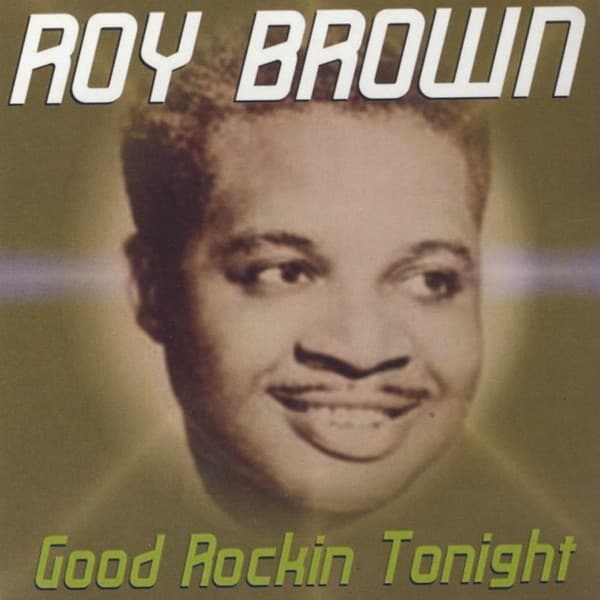
Roy Brown: "Good Rockin' Tonight"
Brown, a New Orleans singer who had tried to sound like Bing Crosby, wrote a jump blues about a party and offered it to Wynonie Harris, who turned it down. Brown recorded it himself for the DeLuxe label in 1947 and it climbed to number thirteen on the race chart. The word "rocking" had been church slang and bedroom slang for years; this is the record that made it a party. Harris changed his mind within months.
T-Bone Walker: "Call It Stormy Monday"
Aaron "T-Bone" Walker, a Texan who had learned the trade leading Blind Lemon Jefferson around the Central Avenue blocks of Dallas, cut a slow blues for the Black & White label in 1947. His electric guitar, played through a small amplifier with a tone nobody had heard, fills every gap in the vocal with bent, horn-like phrases. It is the first electric blues guitar record that every later player had to learn, and the reason a generation of them, B.B. King loudest among them, wanted an amplifier before they wanted anything else.
Aristocrat Records, Chicago
Evelyn and Charles Aron started a small label on the South Side in April 1947; a nightclub owner named Leonard Chess bought in that autumn. In the late summer of that year Muddy Waters made his first Aristocrat sides as a sideman to pianist Sunnyland Slim, the session that produced "Gypsy Woman" and "Little Anna Mae" on Aristocrat 1302; discographies put it in late August or on 30 September. In 1950 Leonard and his brother Phil would rename the company Chess, and it would record Muddy, Howlin' Wolf, Little Walter, Chuck Berry and Bo Diddley. The independent label boom that made rock and roll possible starts in rooms like this one.
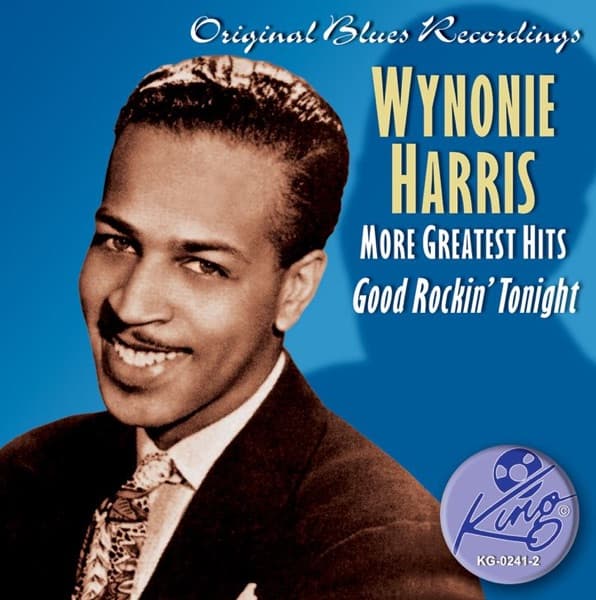
Wynonie Harris: "Good Rockin' Tonight"
Harris, the Omaha shouter who had turned Roy Brown's song down, recorded it for King in Cincinnati late in 1947, in the rush of sessions before the second recording ban. His version added a hand-clapped backbeat and a gospel-style call and response, and it went to number one on the race chart in 1948 and stayed on the chart half a year. When historians want to name a first rock and roll record and do not want to say "Rocket 88", this is the one they usually pick. Elvis cut it at Sun in 1954.
Muddy Waters: "I Can't Be Satisfied"
Aristocrat put out "I Can't Be Satisfied" backed with "I Feel Like Going Home" in June 1948: two of Muddy's own songs with nothing behind his electric slide guitar but Ernest "Big" Crawford's slapped bass. Discographies disagree about when it was cut, some giving the December 1947 session and some the following spring. Leonard Chess did not understand the music and pressed it anyway. It is the Stovall plantation song from 1941 with a cord running out of it. Chicago blues, the electric band blues that the Rolling Stones and everyone after them learned from, starts here.
The second recording ban
The Taft-Hartley Act of 1947 made the union's royalty fund illegal as written, and on 1 January 1948 Petrillo called a second strike on recording. Labels had stockpiled sessions through December 1947, which is why so many of this chapter's records were cut in the last week of that year. The ban ended on 14 December 1948 with the creation of the Music Performance Trust Fund, which still pays for free concerts. Independent labels ignored it more freely than the majors, and small blues and country outfits gained ground while the majors sat still.
John Lee Hooker: "Boogie Chillen'"
Hooker, a Mississippi migrant working in Detroit car plants, recorded alone at United Sound with an acoustic guitar fitted with a pickup, one microphone and a sheet of plywood under his stamping foot. One chord, a boogie riff his stepfather had taught him, and a story about a boy sneaking out to a club on Hastings Street. Modern Records released it in November 1948 and it reached number one on the race chart in January 1949. It is the most primitive-sounding hit of the decade and one of the most modern.
Billboard renames the chart "Rhythm & Blues"
In June 1949 the trade magazine dropped "race records", the label the industry had used for Black music since the 1920s, and adopted "rhythm and blues", a term proposed by its young reporter Jerry Wexler, who thought the old name sat too close to "racist". Wexler would join Atlantic in 1953 and produce Ray Charles, Aretha Franklin and Wilson Pickett. Some accounts date Wexler's coinage to 1948; the chart changed in 1949.
Lead Belly dies
Huddie Ledbetter, the Louisiana twelve-string guitarist whom John and Alan Lomax had recorded in Angola prison in 1933, died in New York on 6 December 1949 of amyotrophic lateral sclerosis, months after a first European tour. Six months later the Weavers' version of his "Goodnight, Irene" was the best-selling record in America. He never had a hit in his life; the folk revival, skiffle in Britain and half of the 1960s owe him their repertoire.
Sam Phillips opens a studio at 706 Union Avenue
On January 3, 1950, a former radio engineer named Sam Phillips opened the Memphis Recording Service in a storefront on Union Avenue, advertising that he would record anything, anywhere, any time. He meant weddings and funerals. What walked in were B.B. King, Howlin’ Wolf, Ike Turner and, four years later, a truck driver named Presley. Phillips launched his own label, Sun Records, in February 1952. Every rockabilly record in this chapter was cut in that one small room.
"Rocket 88"
Ike Turner’s Kings of Rhythm drove from Clarksdale to Memphis in March 1951 and cut a song about an Oldsmobile at Sam Phillips’s studio, credited to their saxophonist and singer Jackie Brenston. The guitar amplifier had been damaged on the way, and the fuzz stayed on the record. Chess Records in Chicago released it and it went to number one on the R&B chart. Many historians file it as the first rock and roll record; others point to Wynonie Harris or Fats Domino in 1948 and 1949. Either way, the distortion was the future.
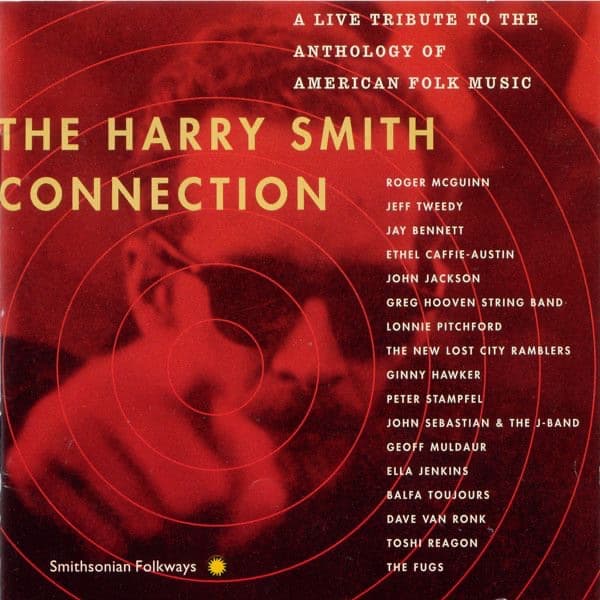
Harry Smith’s "Anthology of American Folk Music"
A record collector, filmmaker and occultist named Harry Smith persuaded Moses Asch of Folkways to issue eighty-four commercial 78s from 1927 to 1932 as three two-LP boxes: ballads, social music, songs. Blues, hillbilly, Cajun and gospel sat side by side with no note of who was Black and who was white. It sold poorly and never went out of print, and Bob Dylan, Joan Baez and the whole 1960s revival learned their repertoire from it.
Big Mama Thornton records "Hound Dog"
Two white Los Angeles teenagers, Jerry Leiber and Mike Stoller, wrote it in about ten minutes for Willie Mae Thornton after seeing her sing. She recorded it with Johnny Otis’s band on August 13, 1952, growling and barking, and it became the biggest seller in the history of Don Robey’s Peacock label. Elvis Presley’s 1956 version, learned from a Las Vegas lounge act, became the bigger record, and the publishing suits that followed cost Otis the share he had been given. Thornton spent the rest of her life telling people how rich Elvis got on her song.
Howlin’ Wolf comes north to Chess
Chester Burnett had recorded for Sam Phillips in Memphis in 1951, and Phillips called him the greatest voice he ever put on tape. By 1953 the Wolf had moved to Chicago to record for Chess full time, driving his own car north with money in his pocket, which almost no bluesman could say. "Smokestack Lightnin’" (1956), one chord and a howl, would become the record every British band tried to copy.
Solid bodies: the Stratocaster, the Les Paul and the electric bass
Leo Fender, a radio repairman in Fullerton, California, had put the first mass-produced solid-body electric guitar on sale in 1950 and the Precision Bass, the first practical electric bass, in 1951. Gibson answered in 1952 with a gold-top model carrying Les Paul’s name. In 1954 Fender released the Stratocaster, with three pickups, a contoured body and a vibrato arm. Buddy Holly played one on Ed Sullivan. The instruments that would define rock for the rest of the century were all in the shops before the music had a name in most towns.
Muddy Waters records "Hoochie Coochie Man"
Willie Dixon brought the song to Muddy in late 1953 and had him learn it in a club washroom. On January 7, 1954, at Chess, with Little Walter on harmonica and Otis Spann on piano, the band played the stop-time riff, four beats of silence, and Muddy filled them with a boast. The riff would show up under a thousand rock songs. It went to number three on the R&B chart, Muddy’s biggest hit, and it defined what a Chicago blues band was.
Elvis Presley records "That’s All Right"
Sam Phillips had put the nineteen-year-old with guitarist Scotty Moore and bassist Bill Black on July 5, 1954, and the session was going nowhere until Elvis started clowning through Arthur Crudup’s 1946 blues at double speed. Phillips rolled tape. The flip side was Bill Monroe’s bluegrass waltz "Blue Moon of Kentucky," sped up the same way. Disc jockey Dewey Phillips played the record on WHBQ two nights later and the phones lit up. Sun 209 was in stores by July 19.
Bo Diddley records the beat that carries his name
Ellas McDaniel, a Chicago street musician with a homemade tremolo, auditioned for Chess and recorded on March 2, 1955, with Jerome Green on maracas and Billy Boy Arnold on harmonica. "Bo Diddley," released on Checker in April, put the hambone rhythm, shave-and-a-haircut, two bits, on an electric guitar and a tom-tom. The B-side, "I’m a Man," answered Muddy’s "Hoochie Coochie Man," and Muddy answered back with "Mannish Boy." Diddley played the song on Ed Sullivan that November (the Library of Congress essay says November 20; the Rock Hall says the 17th), was told to play something else, and played it anyway.
"Green Onions" gives Stax a house band and a sound
Booker T. Jones, Steve Cropper, Lewie Steinberg and Al Jackson Jr. were killing time in the Stax studio on East McLemore Avenue when they hit on a twelve-bar organ groove. It went out in the summer of 1962 as Volt 102, sold fast enough regionally that Stax told the plant to change the stampers and press it on the parent label, entered the Hot 100 in August and reached number three. An integrated band in segregated Memphis had just become the M.G.'s, and every Otis Redding, Sam and Dave and Wilson Pickett record for the rest of the decade was built on that room and those players.
"Highway 61 Revisited" makes the rock album a literary form
Released August 30, 1965, five weeks after Newport, and named for the road that runs from Dylan's Minnesota to the Mississippi Delta. Mike Bloomfield's guitar, Al Kooper's organ, a police whistle, and nine songs that read like Beat poetry set to Chicago blues, ending with the eleven-minute "Desolation Row". The Beatles heard it and started writing differently. So did everyone else.
"Clapton is God": the British blues boom produces Cream
Eric Clapton left the Yardbirds because they wanted hits, joined John Mayall's Bluesbreakers, and made an album in 1966 with a Les Paul turned up so loud the engineer complained. Someone painted "Clapton is God" on a London wall. In July 1966 he formed Cream with Jack Bruce and Ginger Baker, the first supergroup and the first power trio, and blues rock became a genre with a ten-minute solo in the middle of it. Jimi Hendrix arrived in London that autumn and sat in with them.
The Jimi Hendrix Experience releases "Are You Experienced"
Chas Chandler of the Animals found Hendrix playing in a Greenwich Village club in 1966, took him to London, and paired him with Noel Redding and Mitch Mitchell. The album, released in Britain on May 12, 1967 and in America in August with a different track list, had "Purple Haze", "Hey Joe", "The Wind Cries Mary", "Foxy Lady" and a title track that ran the guitar backwards. He played feedback like a melody. Nobody had done this, and the guitar has not recovered.
"Led Zeppelin": the blues, heavier than it has ever been
Jimmy Page built the band out of the ashes of the Yardbirds with Robert Plant, John Paul Jones and John Bonham, recorded the album in about thirty-six hours of studio time, and released it in America on January 12, 1969 before Britain had heard of them. "Dazed and Confused", "Communication Breakdown" and a cover of "You Shook Me" defined the template: blues form, a drummer who hit like a heavyweight, and a volume that needed stadiums. "Led Zeppelin II" and "Whole Lotta Love" followed in October. Heavy metal now had a business model.
The Harlem Cultural Festival
Six free Sunday concerts in Mount Morris Park from June 29 to August 24, 1969, drew close to three hundred thousand people. Stevie Wonder, Sly and the Family Stone, Nina Simone, B.B. King, Mahalia Jackson, the Staple Singers, Gladys Knight and the Pips, Mongo Santamaría and the 5th Dimension played; the Black Panthers handled security after the police declined. Forty hours of film sat in a basement for fifty years until Questlove cut it into "Summer of Soul" in 2021. It was Woodstock's equal and hardly anyone outside Harlem knew.
Woodstock
August 15 to 18, 1969, on Max Yasgur's dairy farm in Bethel, New York. The organizers expected fifty thousand; more than four hundred thousand came, the fences came down, and it became a free festival in the rain. Richie Havens opened, Santana's "Soul Sacrifice" on the Saturday made an unknown band famous, Sly played at three in the morning, and Jimi Hendrix closed on Monday morning to a thinned crowd with a "Star-Spangled Banner" full of feedback bombs and sirens. The film made it a myth. For three days the counterculture looked like a country.
The Allman Brothers Band at Fillmore East
Over 12 and 13 March 1971 the Allman Brothers record two nights at Bill Graham's Fillmore East in New York. Duane Allman and Dickey Betts's twin guitars, Gregg Allman's organ and two drummers stretch "Whipping Post" past twenty minutes without wasting a bar. Released in July, it is the record that makes Southern rock a national thing. Duane dies in a motorcycle crash in Macon that October, aged twenty-four.
The Rolling Stones, "Exile on Main St."
Tax exiles from Britain, the Stones record in the humid basement of Keith Richards's rented villa on the French Riviera through the summer of 1971, then finish in Los Angeles. Released 12 May 1972, the double album is blues, gospel, country and soul played loose and mixed murky on purpose. Critics are lukewarm. Within a decade it is the record people mean when they say the Stones.
Wattstax: a hundred thousand people for a dollar
On 20 August 1972 Stax Records fills the Los Angeles Memorial Coliseum for a concert marking seven years since the Watts uprising. Tickets are a dollar. Jesse Jackson leads the crowd in "I am somebody", the Staple Singers, Isaac Hayes, Albert King, Rufus Thomas and the Bar-Kays play, and Mel Stuart films it. It is the largest gathering of Black Americans outside a civil rights event to that date, and the film is now in the National Film Registry.
Stevie Ray Vaughan dies
On 27 August 1990 a helicopter carrying Vaughan from an Eric Clapton show in Wisconsin hit a hillside in fog. He was thirty-five and had been sober for four years. He was the last blues guitarist to be a rock star on the scale of Hendrix, and the decade that followed found nobody to take the chair.
Eric Clapton on "MTV Unplugged"
Taped 16 January 1992 in Windsor, England, with "Tears in Heaven" for his dead son and a slow acoustic "Layla". The album sold twenty-six million copies and won Album of the Year at the 1993 Grammys. MTV had found the format that would define the decade's idea of authenticity: the same songs, the plug pulled, the singer with nowhere to hide.
Moby, "Play"
Released 17 May 1999. A vegan New York DJ who had already been through techno and punk put Alan Lomax's 1959 field recordings of Southern singers, Vera Hall's "Trouble So Hard", Bessie Jones, Boy Blue, over house pianos and breakbeats, and then licensed every one of the eighteen tracks to a film, a television show or an advert. It sold ten million copies to people who had never set foot in a club. Electronic music had found a way into American living rooms, and the licensing model had found the internet age.
The White Stripes' White Blood Cells
Released 3 July 2001 on the tiny Sympathy for the Record Industry label, and recorded in three days in Memphis, White Blood Cells was the moment the Detroit duo stopped being a garage-rock secret. Fell in Love with a Girl got a Lego video from Michel Gondry and MTV play. The Rock and Roll Hall of Fame, which inducted the band in 2025, dates the record to its 2002 V2 reissue; the first pressing was 2001.
The White Stripes' Elephant and Seven Nation Army
Recorded in two weeks at Toe Rag in London on equipment older than the band, and released 1 April 2003, Elephant opened with a riff Jack White played on a guitar through an octave pedal so it sounded like a bass. Seven Nation Army became a football chant in Belgium and Italy, then everywhere. The Rock and Roll Hall of Fame calls it anthemic, much-sampled and genre-defying; I call it the last rock riff everyone on earth knows.
The Black Keys break out with Brothers
Two men from Akron, Ohio had been making blues-rock in a basement for eight years. Brothers, released in May 2010, was the record that turned them into an arena band, and it won Best Alternative Music Album at the Grammys the following February. Tighten Up is a whistle, a drum break and a riff, and it was everywhere for two years.
Chris Stapleton releases Traveller
A Nashville songwriter who had written hits for other people finally made his own record, in a voice full of gravel and church. It sold modestly until November, when he sang with Justin Timberlake at the CMA Awards and the whole country looked him up at once. He won Best Country Solo Performance in 2016.
B.B. King dies
The last superstar of the electric blues died on 14 May 2015 in Las Vegas at eighty-nine, after more than sixty years of touring. He had played over ten thousand shows. Every guitarist who bends one note and lets it hang is quoting him, whether they know it or not.
Artists
Everyone in the century tagged Blues, in the order they arrived. Each name opens its full entry in the chapter that carries it.
Mamie Smith
- Crazy Blues
- That Thing Called Love
Ethel Waters
- Down Home Blues
- Dinah
- Am I Blue?
Alberta Hunter
- Downhearted Blues
- Sugar
Bessie Smith
- Downhearted Blues
- St. Louis Blues
- Backwater Blues
- Nobody Knows You When You're Down and Out
Ma Rainey
- Bo-Weavil Blues
- See See Rider Blues
- Black Bottom
Lonnie Johnson
- Mr. Johnson's Blues
- A Handful of Riffs
- Hot Fingers
Louis Armstrong
- Heebie Jeebies
- Potato Head Blues
- West End Blues
- Weather Bird
Blind Lemon Jefferson
- Long Lonesome Blues
- Match Box Blues
- Black Snake Moan
- See That My Grave Is Kept Clean
Blind Blake
- West Coast Blues
- Diddie Wa Diddie
Thomas A. Dorsey
- It's Tight Like That
- If You See My Savior
- Take My Hand, Precious Lord
Arizona Dranes
- I Shall Wear a Crown
- My Soul Is a Witness for the Lord
- God's Got a Crown
Blind Willie Johnson
- Dark Was the Night, Cold Was the Ground
- It's Nobody's Fault but Mine
- John the Revelator
Jimmie Rodgers
- Blue Yodel (T for Texas)
- Waiting for a Train
- In the Jailhouse Now
- Blue Yodel No. 9
Leroy Carr
- How Long, How Long Blues
- Prison Bound Blues
- Blues Before Sunrise
Tommy Johnson
- Canned Heat Blues
- Big Road Blues
- Cool Drink of Water Blues
Mississippi John Hurt
- Avalon Blues
- Frankie
- Spike Driver Blues
Pine Top Smith
- Pine Top's Boogie Woogie
- Pine Top's Blues
Tampa Red
- It's Tight Like That
- Let Me Play with Your Poodle
- Things 'Bout Comin' My Way
Leroy Carr
- How Long, How Long Blues
- Blues Before Sunrise
- When the Sun Goes Down
Jimmie Rodgers
- Blue Yodel No. 9
- T.B. Blues
- Waiting for a Train
Charley Patton
- Pony Blues
- High Water Everywhere
- Screamin' and Hollerin' the Blues
Son House
- Preachin' the Blues
- My Black Mama
- Clarksdale Moan
Memphis Minnie
- Bumble Bee
- New Bumble Bee
- Me and My Chauffeur Blues
Skip James
- Devil Got My Woman
- I'm So Glad
- Hard Time Killing Floor Blues
Big Bill Broonzy
- Just a Dream
- Key to the Highway
- Big Bill Blues
Thomas A. Dorsey
- Take My Hand, Precious Lord
- Peace in the Valley
Lead Belly
- Goodnight Irene
- Midnight Special
- The Bourgeois Blues
The Delmore Brothers
- Brown's Ferry Blues
- Gonna Lay Down My Old Guitar
John and Alan Lomax
- Lead Belly at Angola (field recordings)
- Jelly Roll Morton: The Library of Congress Recordings
Robert Johnson
- Cross Road Blues
- Terraplane Blues
- Come On in My Kitchen
- Hellhound on My Trail
- Love in Vain
Big Joe Turner and Pete Johnson
- Roll 'Em Pete
- Cherry Red
Big Joe Turner
- Roll 'Em Pete
- Cherry Red
- Shake, Rattle and Roll
Lead Belly
- Goodnight, Irene
- Midnight Special
- Rock Island Line
Muddy Waters
- I Can't Be Satisfied
- I Feel Like Going Home
- Country Blues (Library of Congress)
- Rollin' Stone
Big Bill Broonzy
- Key to the Highway
- All by Myself
- When I Been Drinking
Son House
- Walking Blues (Library of Congress)
- Shetland Pony Blues
- Death Letter
Billie Holiday
- God Bless the Child
- Lover Man
- Good Morning Heartache
- Don't Explain
T-Bone Walker
- Call It Stormy Monday
- Mean Old World
- T-Bone Shuffle
- Bobby Sox Blues
Dinah Washington
- Evil Gal Blues
- Baby Get Lost
- Am I Asking Too Much
Sister Rosetta Tharpe
- Strange Things Happening Every Day
- Up Above My Head
- Didn’t It Rain
Wynonie Harris
- Good Rockin' Tonight
- Who Threw the Whiskey in the Well
- All She Wants to Do Is Rock
- Bloodshot Eyes
Lightnin' Hopkins
- Katie Mae
- Short Haired Woman
- Tim Moore's Farm
Roy Brown
- Good Rockin' Tonight
- Rockin' at Midnight
- Hard Luck Blues
Amos Milburn
- Chicken Shack Boogie
- Bad, Bad Whiskey
- Down the Road Apiece
John Lee Hooker
- Boogie Chillen'
- Hobo Blues
- Crawlin' King Snake
- I'm in the Mood
Muddy Waters
- Rollin’ Stone
- Hoochie Coochie Man
- Mannish Boy
- Got My Mojo Working
Howlin’ Wolf
- How Many More Years
- Smokestack Lightnin’
- Spoonful
Little Walter
- Juke
- My Babe
- Blues with a Feeling
B.B. King
- Three O’Clock Blues
- You Upset Me Baby
- Sweet Little Angel
Big Mama Thornton
- Hound Dog
- They Call Me Big Mama
- Ball and Chain
Chuck Berry
- Maybellene
- Roll Over Beethoven
- Rock and Roll Music
- Johnny B. Goode
Bo Diddley
- Bo Diddley
- I’m a Man
- Who Do You Love?
- Say Man
Bob Dylan
- The Freewheelin' Bob Dylan
- Highway 61 Revisited
- Blonde on Blonde
- John Wesley Harding
- Nashville Skyline
The Animals
- The House of the Rising Sun
- We Gotta Get Out of This Place
- Don't Let Me Be Misunderstood
The Rolling Stones
- (I Can't Get No) Satisfaction
- Paint It Black
- Beggars Banquet
- Let It Bleed
Cream
- Fresh Cream
- Disraeli Gears
- Wheels of Fire
Jimi Hendrix
- Are You Experienced
- Axis: Bold as Love
- Electric Ladyland
Merle Haggard
- I'm a Lonesome Fugitive
- Mama Tried
- Okie from Muskogee
Grateful Dead
- Anthem of the Sun
- Live/Dead
Janis Joplin
- Cheap Thrills
- I Got Dem Ol' Kozmic Blues Again Mama!
- Pearl
Led Zeppelin
- Led Zeppelin
- Led Zeppelin II
Santana
- Santana
- Abraxas
Led Zeppelin
- Led Zeppelin IV
- Physical Graffiti
- Houses of the Holy
The Allman Brothers Band
- At Fillmore East
- Eat a Peach
- Brothers and Sisters
Lynyrd Skynyrd
- (Pronounced 'Lĕh-'nérd 'Skin-'nérd)
- Second Helping
- Street Survivors
Fleetwood Mac
- Fleetwood Mac
- Rumours
- Tusk
Tracy Chapman
- Tracy Chapman
- New Beginning
Buddy Guy
- Damn Right, I've Got the Blues
- Feels Like Rain
Cassandra Wilson
- Blue Light 'til Dawn
- New Moon Daughter
Lucinda Williams
- Car Wheels on a Gravel Road
The White Stripes
- White Blood Cells
- Elephant
- Seven Nation Army
The Black Keys
- Brothers
- El Camino
Chris Stapleton
- Traveller
- Tennessee Whiskey
Rhiannon Giddens
- Tomorrow Is My Turn
- Songs of Our Native Daughters
Sierra Ferrell
- Long Time Coming
- Trail of Flowers
- American Dreaming
Records
Every record in the century tagged Blues, oldest first. Each title opens its write-up in its own decade.
Mamie Smith and Her Jazz Hounds
Crazy Blues / It's Right Here for You
Ethel Waters
Down Home Blues / Oh Daddy
Bessie Smith
Downhearted Blues / Gulf Coast Blues

Bessie Smith
The Essential Bessie Smith
Ma Rainey
See See Rider Blues / Jealous Hearted Blues
Arizona Dranes
Complete Recorded Works 1926–1929
Blind Lemon Jefferson
Black Snake Moan / Match Box Blues
Jimmie Rodgers
Blue Yodel / Away Out on the Mountain
Blind Willie Johnson
Dark Was the Night, Cold Was the Ground / It's Nobody's Fault but Mine
Leroy Carr
How Long, How Long Blues / My Own Lonesome Blues
Tampa Red and Georgia Tom
It's Tight Like That
Pine Top Smith
Pine Top's Boogie Woogie / Pine Top's Blues
Charley Patton
Pony Blues / Banty Rooster Blues
Mississippi Sheiks
Sitting on Top of the World / Lonely One in This Town
Son House
Preachin' the Blues, Parts 1 and 2
Jimmie Rodgers
Blue Yodel No. 9 (Standin' on the Corner)
Skip James
Devil Got My Woman / Cypress Grove Blues

Lead Belly
The Library of Congress Recordings

Robert Johnson
The Complete Recordings
Pete Johnson and Big Joe Turner
Roll 'Em Pete
Various Artists
From Spirituals to Swing: The Legendary 1938 and 1939 Carnegie Hall Concerts
Big Bill Broonzy
Just a Dream / Baby I Done Got Wise

Muddy Waters
The Complete Plantation Recordings

Billie Holiday
God Bless the Child
T-Bone Walker
Call It Stormy Monday (But Tuesday Is Just as Bad)
Roy Brown
Good Rockin' Tonight
Muddy Waters
I Can't Be Satisfied / I Feel Like Going Home

John Lee Hooker
Boogie Chillen'
Wynonie Harris
Good Rockin' Tonight
Amos Milburn
Chicken Shack Boogie
Various Artists
Anthology of American Folk Music
Various artists, edited by Harry Smith
Anthology of American Folk Music
Odetta
Odetta Sings Ballads and Blues

Bo Diddley
Bo Diddley

Muddy Waters
The Best of Muddy Waters

Howlin’ Wolf
Moanin’ in the Moonlight

Muddy Waters
Muddy Waters at Newport 1960

Bob Dylan
Highway 61 Revisited
John Mayall with Eric Clapton
Blues Breakers with Eric Clapton

The Jimi Hendrix Experience
Are You Experienced

Cream
Disraeli Gears

Blue Cheer
Vincebus Eruptum

The Jimi Hendrix Experience
Electric Ladyland
Big Brother and the Holding Company
Cheap Thrills

Led Zeppelin
Led Zeppelin

The Rolling Stones
Let It Bleed

Grateful Dead
Live/Dead

The Allman Brothers Band
At Fillmore East
The Rolling Stones
Exile on Main St.
Buddy Guy
Damn Right, I've Got the Blues

Cassandra Wilson
Blue Light 'til Dawn

Lucinda Williams
Car Wheels on a Gravel Road

Moby
Play

The White Stripes
Elephant
The Black Keys
Brothers
Chris Stapleton
Traveller
Bob Dylan
Rough and Rowdy Ways
The Mixtape
Crazy Blues
Mamie Smith and Her Jazz HoundsRecorded through a horn three months after "Whispering," and the record that told the industry Black buyers existed. Listen for the band tumbling around her in the choruses.
Down Home Blues
Ethel WatersThe first hit for the first Black-owned label, and a lighter, cooler way to sing the blues that points at the jazz singers to come.
Downhearted Blues
Bessie SmithVoice and piano only. Notice how she leans on the word "trouble." Nobody had sung with this much weight on a record before.
See See Rider Blues
Ma RaineyThe tent show meets the new jazz: Rainey's heavy voice answered by a young Louis Armstrong. Elvis sang this forty years later and did not change much.
St. Louis Blues
Bessie Smith with Louis ArmstrongA voice, a cornet and a wheezing pump organ. Smith sings a line, Armstrong comments on it. This is call and response, the oldest conversation in Black music, caught on a disc.
How Long, How Long Blues
Leroy Carr and Scrapper BlackwellThe blues moves to the city and lowers its voice. Piano and guitar, no strain, and a melody every blues player had to know by 1930.
Pine Top's Boogie Woogie
Pine Top SmithEight to the bar in the left hand and a dance lesson on top. The name boogie-woogie starts here, and so does rock and roll piano.
Pony Blues
Charley PattonThe Delta on record at last. Listen through the surface noise for the guitar being slapped like a drum and the voice dropping syllables to fit the dance.
Nobody Knows You When You're Down and Out
Bessie SmithRecorded in May 1929 about losing everything. Five months later the whole country did. End the decade here.
Sitting on Top of the World
Mississippi SheiksStart with a fiddle and a guitar and a man pretending not to care. The melody will come back three more times before the century is over.
Devil Got My Woman
Skip JamesThe coldest voice in the Delta over a guitar in an open minor tuning. Robert Johnson turned this into "Hellhound on My Trail"; hear the original first.
Cross Road Blues
Robert JohnsonRecorded facing the corner of a hotel room in San Antonio. Count how many parts one man is playing: bass line, slide fill, rhythm, and a voice that keeps breaking upward. Then think about Cream.
Call It Stormy Monday
T-Bone WalkerThe first electric blues guitar solo every later guitarist learned. Listen to how the guitar answers the voice in every gap, bending notes like a saxophone.
I Can't Be Satisfied
Muddy WatersThe Delta plugged in. An electric slide guitar and a slapped bass in a Chicago studio, singing the song he sang for the Library of Congress on a plantation in 1941. This is where Chicago blues and, by extension, the Rolling Stones start.
Boogie Chillen'
John Lee HookerOne chord, one man, one foot on a sheet of plywood. It was a number one record. Everything about it should not work, and it has never stopped working.
Hoochie Coochie Man
Muddy WatersThe stop-time riff, the silence, the boast. Count the four beats of nothing before each line and you will hear the space every hard rock band has been filling since.
Smokestack Lightnin’
Howlin’ WolfOne chord, a howl and a train. This is the record every British blues band tried to play and none could, because none of them had that voice.