100 Years of Music / Genre
Electronic
Music made by machines began in radio laboratories in 1948 and became popular music when Kraftwerk drove down the Autobahn in 1974. House and techno turned it into dance music in the 1980s, and by the 2010s nearly all pop was made this way.
The lineage
The first electronic music was an experiment in what sound could be. Pierre Schaeffer at French radio in Paris spliced recordings of trains and saucepans into compositions in 1948 and called it musique concrète. Karlheinz Stockhausen’s studio in Cologne built sounds from oscillators. Louis and Bebe Barron scored Forbidden Planet (1956) entirely with circuits; the BBC Radiophonic Workshop produced the Doctor Who theme in 1963. Then Robert Moog built a synthesizer musicians could actually play (1964), and Wendy Carlos’s Switched-On Bach (1968) sold a million copies and put it on the cover of rock albums. A synthesizer makes a tone with an oscillator, shapes it with a filter and gives it a beginning and end with an envelope; a sequencer plays those notes in a loop without a hand on the keys. The Beatles, Pink Floyd and Stevie Wonder used the machines. Nobody yet built a music around them.
Kraftwerk did. Formed in Düsseldorf in 1970 out of the German experimental rock scene called Krautrock, Ralf Hütter and Florian Schneider released Autobahn in November 1974: a twenty-two-minute title track of synthesizers, a drum machine and a vocoder, cut down to a single that reached the American top twenty-five. That is the year this history uses for electronic music becoming popular music. Trans-Europe Express (1977), The Man-Machine (1978) and Computer World (1981) followed. Around them the pieces assembled: Tangerine Dream’s sequencers, Brian Eno’s Music for Airports (1978), which named ambient, Giorgio Moroder’s "I Feel Love" (1977) with its Moog bass line pulsing four to the bar, Yellow Magic Orchestra in Tokyo, and the Roland TR-808 drum machine (1980), whose kick drum became hip-hop’s bass. British synth-pop from Gary Numan (1979) to New Order’s "Blue Monday" (1983) sold the machines to the charts.
Dance music proper came from two American cities. In Chicago Frankie Knuckles played disco with a drum machine underneath it at the Warehouse from 1977; Jesse Saunders’s "On and On" (1984) was the first house record on vinyl, and Trax Records, Marshall Jefferson’s "Move Your Body" (1986) and Phuture’s "Acid Tracks" (1987), built on the squelch of a Roland TB-303, followed. In Detroit three high-school friends, Juan Atkins, Derrick May and Kevin Saunderson, mixed Kraftwerk, funk and science fiction: Cybotron’s "Techno City" (1984), Model 500’s "No UFO’s" (1985), Rhythim Is Rhythim’s "Strings of Life" (1987), and the 1988 compilation that gave it the name techno. Britain took both to the rave: the Haçienda, Shoom, the Second Summer of Love in 1988, and warehouse parties big enough that Parliament passed a law against repetitive beats in 1994. Berlin, reunified, built Tresor (1991) and made techno its identity.
The 1990s split it a hundred ways. Warp’s Artificial Intelligence (1992) and Aphex Twin were labelled IDM. Breakbeat hardcore chopped the Amen break, a 1969 drum solo, into jungle (1993) and then drum and bass. Frankfurt made trance. Bristol’s Massive Attack and Portishead slowed hip-hop into trip-hop. The Prodigy’s The Fat of the Land (1997) went to number one in America, and Daft Punk’s Homework (1997) and Discovery (2001) turned disco into French house. London’s pirate radio ran from UK garage to grime to dubstep (2002), whose bass weight came straight from dub reggae. Ableton Live (2001) and FL Studio put the studio on a laptop, and the producer, not the band, became the artist. Timbaland and the Neptunes had already made electronic production the sound of pop and hip-hop by then.
EDM was the American name for what happened when all of this reached the festival stage. David Guetta’s productions for the Black Eyed Peas (2009), Skrillex’s Scary Monsters and Nice Sprites (2010), Avicii, Swedish House Mafia and Calvin Harris made the DJ a stadium headliner and the drop, the moment the beat returns after a build, the decade’s signature. Since then the current has run back underground and sideways: Disclosure and Fred again.. in Britain, amapiano from South Africa, Afro house, Peggy Gou, Charli XCX’s Brat (2024) drawing on the hyperpop of SOPHIE and A. G. Cook, Beyoncé’s Renaissance (2022) returning to Chicago house. The larger fact is simpler. Trap’s 808, pop’s synths, R&B’s programmed drums, reggaeton’s dembow, K-pop’s everything: nearly all popular music is now electronic music. The laboratory won.
Branches
Electronic art music
Schaeffer’s musique concrète (1948), Stockhausen’s Cologne studio, the RCA synthesizer at Columbia-Princeton, the BBC Radiophonic Workshop. Experiments in sound that gave popular music its tools twenty years later.
Synthesizer records
The Moog on record: Switched-On Bach (1968), Silver Apples, Perrey and Kingsley, then progressive rock’s banks of keyboards. The instrument as novelty, then as orchestra.
Krautrock and kosmische
West German bands using sequencers, tape and repetition: Kraftwerk, Can, Neu!, Cluster, Tangerine Dream, Klaus Schulze. Motorik rhythm and long electronic drift. Autobahn (1974) is its crossover.
Disco electronics
Giorgio Moroder’s "I Feel Love" (1977) replaced the band with a Moog and set the four-on-the-floor pulse in silicon. Cerrone, Patrick Cowley’s Hi-NRG, Italo disco. The bridge from disco to house.
House
Chicago’s disco with a drum machine: four-on-the-floor kick, hi-hat on the offbeat, gospel vocals or none. Jesse Saunders’s "On and On" (1984), Frankie Knuckles, Marshall Jefferson, Larry Heard. The most durable dance music there is.
Techno
Detroit’s futurist dance music: machine rhythm, minimal melody, Kraftwerk and funk. Juan Atkins’s Model 500 (1985), Derrick May, Kevin Saunderson, Underground Resistance; then Berlin, Tresor and Berghain.
IDM
Electronic music for headphones rather than dance floors, named after Warp’s Artificial Intelligence (1992). Aphex Twin, Autechre, Boards of Canada, Squarepusher. Intricate, strange and hugely influential on producers.
Jungle and drum and bass
The Amen break chopped and sped past 160 beats per minute over reggae bass. Goldie, LTJ Bukem, Roni Size, then Pendulum. Britain’s own electronic invention, born of rave and sound-system culture.
Dubstep
South London’s half-time, bass-heavy offshoot of UK garage, named around 2002: Skream, Benga, Digital Mystikz, Burial’s Untrue (2007). Skrillex’s louder American version drove the EDM boom.
EDM
Festival-scale electronic pop built on the build and the drop. Skrillex (2010), Avicii, Swedish House Mafia, Calvin Harris, the Chainsmokers. The DJ as headliner, and dance music as American mainstream.
How to listen
Listen for the repetition and what changes inside it. Electronic dance music is built on loops, so the drama is in the small moves: a filter opening, a hi-hat entering, a bass line dropping out for eight bars and returning. Put on "Strings of Life" or "Blue Monday" and count the bars between changes. The patience is the point.
Then listen to the machines as voices. The Roland TR-808’s booming kick, the TB-303’s squelch, the Moog’s round bass, the vocoder’s robot choir. Each has a date and a city attached. Once you can name them you can place a record within a few years, the way a guitar tone dates a rock record.
Play the line from laboratory to dance floor. Kraftwerk’s "Autobahn" (1974), "I Feel Love" (1977), "Planet Rock" (1982), "On and On" (1984), "Strings of Life" (1987), Daft Punk’s "Around the World" (1997), Skrillex’s "Scary Monsters and Nice Sprites" (2010). Same oscillators, thirty-six years, from art to the biggest stage on earth.
Across the decades
Music out of thin air
In October 1920, in a physics laboratory in Petrograd, Lev Termen noticed that a radio circuit he had built for measuring gases changed pitch when he moved his hand near it. He built a cabinet with two antennas and played it without touching anything. He demonstrated the theremin to Lenin in 1922, toured Europe, and arrived in New York in December 1927 to play Carnegie Hall. RCA licensed it for mass production in 1929. It is the first electronic instrument anyone had heard of, and its wail runs from 1950s science fiction to "Good Vibrations."
In Paris in April 1928, Maurice Martenot, a cellist and wartime radio operator, presented the ondes Martenot: a keyboard, a ring on a wire, and a tone you could bend like a voice. Messiaen and later Radiohead wrote for it. Electrical recording, radio and these first instruments all arrive in the same five years because they are the same technology, the vacuum tube, pointed at music from different sides. The synthesizer is forty years off, but the door is open.
Tape, the multitrack and music made of noise
The most important instrument invented in the 1940s was not a guitar. It was the tape recorder. German engineers at AEG had perfected the Magnetophon during the war; in 1945 an American signals officer named Jack Mullin found two of them at a radio station near Frankfurt, shipped them home in pieces, and in 1947 demonstrated them to Bing Crosby. Crosby's Philco radio show went out from tape that October, the first network program to do so. In April 1948 the first Ampex Model 200 machines, built with Crosby's money, were delivered. Within five years every studio in the country would record on tape, and the ability to cut, splice and layer sound would change what a record was.
Les Paul got there first with discs. In his Hollywood garage in 1947 he recorded a guitar part onto an acetate, then played along with it while cutting a second acetate, then a third, until "Lover" had eight guitars on it, some of them recorded at half speed so they played back an octave high. Capitol released it in 1948 and the trade papers did not know what they were hearing. It is the first multitrack pop record, and with tape and his wife Mary Ford he would turn it into a string of hits in the 1950s. Patti Page did the same trick with her own voice on "Confess" in 1948.
In Paris, meanwhile, a radio engineer named Pierre Schaeffer asked what would happen if the recording itself were the instrument. On 5 October 1948 French radio broadcast his "Concert de bruits", including an "Étude aux chemins de fer" built from the recorded sounds of locomotives, looped, cut and reversed. He called it musique concrète. Sampling, hip-hop production and every record built on a loop are its grandchildren.
The laboratories
Electronic music in the 1950s was made in radio stations, universities and one married couple’s Greenwich Village apartment. In Paris, Pierre Schaeffer had already cut and looped recordings of trains into "musique concrète." In Cologne, the West German radio studio went the other way, building sounds from pure electronic tones, and Karlheinz Stockhausen’s "Gesang der Jünglinge" (1956) fused the two, splicing a boy soprano into a sine-wave landscape spread across five loudspeakers. It is the first electronic piece most people would still call beautiful.
In New York, Louis and Bebe Barron built circuits designed to overload and burn out, recorded their death throes to tape and assembled them into the score for MGM’s "Forbidden Planet" (1956): the first all-electronic film score, credited as "electronic tonalities" because the musicians’ union would not call it music. Uptown, RCA engineers Harry Olson and Herbert Belar built the Mark II Sound Synthesizer, a room-sized machine programmed with punched paper tape, and installed it at Columbia University in 1957, where it became the centerpiece of the Columbia-Princeton Electronic Music Center.
None of this was pop. But Les Paul was already using tape to stack guitars in 1951, Raymond Scott was building sequencers to write commercials, and Sam Phillips was making slapback echo a lead instrument. The idea that a record could be a thing built in a studio rather than a performance captured in one starts here, and it leads through the Beatles and Kraftwerk to every beat made on a laptop.
Oscillators, tape loops and the Moog: the machines learn to sing
Electronic music in 1960 lived in university studios and radio workshops, and it was mostly unlistenable on purpose. The BBC Radiophonic Workshop changed that by accident. In 1963 Delia Derbyshire realized Ron Grainer's theme for a new children's science fiction show called "Doctor Who" by cutting and splicing tape of oscillators and a single plucked string, note by note, and it became the first electronic signature tune on television. Millions of British children heard the future every Saturday and did not know it.
Terry Riley's "In C", premiered in San Francisco in November 1964 with Steve Reich in the band, was written for acoustic instruments but thought like a machine: fifty-three short patterns, a pulse, and players who move through them at their own speed. It is the founding document of minimalism and the reason a lot of electronic music since has been built on loops. The Beatles, meanwhile, made "Tomorrow Never Knows" in April 1966 from tape loops running on five machines at once, with the engineers holding pencils to keep them taut.
Robert Moog showed his modular synthesizer at an audio engineering convention in 1964. Wendy Carlos, who had met him there, built a studio in a Manhattan apartment and in late 1968 released "Switched-On Bach" on Columbia Masterworks: Bach played one line at a time on a monophonic Moog and stacked on an eight-track. It sold over a million copies and made the synthesizer a real instrument. Silver Apples, a New York duo with a home-built stack of oscillators, put out one of the first electronic rock records the same year. The Monkees, Simon and Garfunkel and the Byrds all bought Moogs. The 1970s were going to be loud in a new way.
The machines learn to sing
In 1970 a synthesizer was a wall of modules in a university. By 1979 it was in every pop record. The Minimoog started it: portable, affordable, with a pitch wheel so a keyboard player could bend a note like a guitarist. Then the ARP 2600 and Odyssey, the string machines, and at the very end of the decade the first samplers, Australia's Fairlight CMI (1979), which let a musician record a sound and play it on a keyboard. Each of these instruments arrived first in prog and jazz and disco, then everywhere.
The people who made the machines the whole point were in West Germany. Kraftwerk, from Düsseldorf, spent three albums as an experimental rock group and then, in November 1974, released "Autobahn": a twenty-two-minute drive down the motorway made of synthesizers, a vocoder and a rhythm box, and it went to number five on the American album chart. "Trans-Europe Express" (1977) was steel wheels on rails as music; Afrika Bambaataa would build "Planet Rock" on it five years later. "The Man-Machine" (1978) drew the robot pop that would fill the eighties. Around them, what the British press called Krautrock: Can's grooves, Neu!'s motorik beat that never changes, Tangerine Dream's long synthesizer suites, Cluster and Harmonia. Brian Eno went to Germany to work with them and came back with "Ambient 1: Music for Airports" (1978), whose sleeve notes named a new genre: music as ignorable as it is interesting.
Disco made the machines dance. Giorgio Moroder, an Italian in Munich, borrowed a Moog modular and sequenced a bass line that never stops under Donna Summer's "I Feel Love" in the summer of 1977; Eno ran into David Bowie's Berlin studio with the single saying he had heard the future. Cerrone in Paris and Jean-Michel Jarre, whose "Oxygène" (1976) sold twelve million copies with no words at all, made France a synthesizer country. In New York, Suicide, two men with a Farfisa organ and a cheap rhythm box, played CBGB and Max's and put out their debut in December 1977, and it was punk without a guitar. The line from all of this runs to house, techno and every bedroom producer of the next fifty years.
House, techno and the machines that sang
Between 1977 and 1982 Frankie Knuckles played to a Black, largely gay crowd at the Warehouse, a three-storey building at 206 South Jefferson Street in Chicago. He re-edited disco records on reel-to-reel tape, stretched the breaks and added a drum machine underneath. Record shops on the South Side started stocking a bin marked "Warehouse music", then "house music". By 1983 Knuckles had left for his own club, the Power Plant, and Ron Hardy was playing harder and stranger at the Music Box.
Jesse Saunders' "On and On" (1984) is generally called the first house record on vinyl. Knuckles and Jamie Principle's "Your Love", Marshall Jefferson's "Move Your Body" (1986) and Larry Heard's "Can You Feel It" followed on Trax and DJ International. In 1987 Phuture twisted the knobs on a Roland TB-303 bass machine until it squealed, and "Acid Tracks" gave the music a new sub-genre and a name for a British summer.
Forty minutes from Detroit, in Belleville, three high-school friends, Juan Atkins, Derrick May and Kevin Saunderson, were listening to Kraftwerk, Parliament and Italian disco on the Electrifying Mojo's radio show. Atkins' Cybotron and Model 500 ("No UFOs", 1985) built the template; May's "Strings of Life" (1987) gave it strings and grandeur; Saunderson's Inner City ("Good Life", 1988) gave it a chorus. A 1988 British compilation gave it a name: techno.
Britain took all of it and added ecstasy, Ibiza and a smiley face. Danny Rampling's Shoom opened in London in late 1987; the Haçienda, open in Manchester since 1982 and losing money ever since, finally filled. The summer of 1988 became the Second Summer of Love, then the warehouse parties, then the tabloid panic. A Guy Called Gerald's "Voodoo Ray" was the homegrown answer, and 808 State's "Pacific State" followed a year later. Kraftwerk's "Computer World" (1981) had predicted the whole thing, and hip-hop, house and techno all sampled it.
Rave, the Act, and the machines cross the ocean
Britain spent 1990 to 1992 in a field. Acid house had become rave, and rave meant twenty thousand people at an illegal free party like Castlemorton Common in May 1992, which is the one that made the government act. The Criminal Justice and Public Order Act 1994 gave police power to shut down gatherings playing music "characterised by the emission of a succession of repetitive beats". The scene went indoors and split into a dozen sounds. The Prodigy, who had been a rave act, made "The Fat of the Land" and went to number one in America. The Chemical Brothers, Fatboy Slim and the big beat clubs in Brighton and London put rock drums and hip-hop breaks under acid lines. Underworld's "Born Slippy .NUXX" became the anthem after "Trainspotting" used it. Orbital played Glastonbury in 1994 and made dance music a festival headliner.
Jungle came out of London's Black and mixed-race clubs: breakbeats sped to 160 beats per minute, dub bass, ragga vocals. Goldie's "Timeless" in 1995 made it an album form, and Roni Size and Reprazent's "New Forms" won the 1997 Mercury Prize over "OK Computer". UK garage followed at the end of the decade, the sound that would give the 2000s Craig David, So Solid Crew and, eventually, dubstep and grime. Meanwhile Warp Records in Sheffield released "Artificial Intelligence" in 1992 and a label sampler accidentally named a genre: Aphex Twin, Autechre, Boards of Canada. Aphex Twin's "Selected Ambient Works 85–92" was the sound of a teenager in Cornwall building his own synthesizers, and it is still the record people mean when they say "IDM".
On the continent, techno had gone home to Berlin. Tresor opened in a bank vault in 1991. Basic Channel stripped techno to a pulse and an echo. The Love Parade grew from a few hundred people in 1989 to over a million in the late 1990s. Detroit's second wave, Carl Craig, Jeff Mills and Underground Resistance, Richie Hawtin across the river in Windsor, played Berlin as often as home. Trance, from Frankfurt, was the melodic, hands-in-the-air version that would fill superclubs by 1999. And in Paris two kids in robot helmets released "Homework" in 1997; Daft Punk, Air, Cassius and Étienne de Crécy were "French touch", disco filtered through a sampler, and it made the world want to dance to France.
America came last and came through Moby. "Play", released in May 1999, put Alan Lomax's 1959 field recordings of Southern gospel and blues singers over house beats and licensed every track to an advert or a film. It sold ten million copies to people who had never been to a club. Björk's "Homogenic", with Mark Bell of LFO on beats and an Icelandic string octet, showed what electronic pop could be when a singer treated the machines as an orchestra. Between them they pointed at the 2000s, when the laptop would be the instrument.
Robots, pyramids, Croydon basements and the road to EDM
Daft Punk's Discovery, in March 2001, turned French house into a candy-colored pop record and gave the decade One More Time. Their pyramid show at Coachella on 29 April 2006, two robots in a glowing triangle running the hits together, is the moment American festival culture decided it wanted dance music on the main stage; Alive 2007 is the recording. Ed Banger Records, run by their manager Pedro Winter, made Justice's Cross the sound of blog house in 2007. Basement Jaxx's Rooty, the Chemical Brothers, Röyksopp, Gorillaz's cartoon pop and Kylie's Can't Get You Out of My Head kept British dance-pop on the radio. The Avalanches' Since I Left You, in November 2000, was made of thousands of samples and sounded like a party heard through a wall. Boards of Canada's Geogaddi, Aphex Twin's Drukqs, Four Tet, Squarepusher, Venetian Snares and Amon Tobin held down the headphone end.
The decade's most important new sound came from South London. UK garage had crossed over with Craig David and So Solid Crew at the turn of the decade; its darker children were grime, with Wiley's Eskimo, Dizzee Rascal's Boy in da Corner and Lethal Bizzle's Pow!, and dubstep, built in Croydon by Skream, Benga, Digital Mystikz and the DMZ nights, with Burial's Untrue in November 2007 as its masterpiece and Rusko and Caspa as the bridge to the American version Skrillex would sell in 2010. Electroclash, with Fischerspooner, Peaches and Ladytron, was the decade's first revival. Berlin's minimal techno, with Ricardo Villalobos, Richie Hawtin and the club Berghain, which opened in 2004, was its longest-running one.
By 2009 the next thing was visible. Trance had peaked with Tiësto playing the opening ceremony of the 2004 Olympics and Paul van Dyk and Armin van Buuren topping the DJ polls. Deadmau5's Ghosts 'n' Stuff, Swedish House Mafia forming in Stockholm, and David Guetta's When Love Takes Over with Kelly Rowland, in 2009, pointed at the EDM boom. Girl Talk and Danger Mouse's Grey Album made the mashup a form. Ableton Live made a laptop a band. And in Los Angeles, Flying Lotus's Los Angeles, his Brainfeeder label and the Low End Theory club night built a beat scene out of J Dilla's ghost.
EDM eats America, then the underground takes it back
For about four years, dance music was the biggest business in American pop. Skrillex won three Grammys in February 2012 for a sound built out of digital screeching. Avicii's Levels in 2011 and Wake Me Up in 2013 put folk melodies over four-to-the-floor kicks and sold everywhere. Swedish House Mafia, Calvin Harris, Zedd, Martin Garrix and Marshmello filled Las Vegas residencies and festival fields. Major Lazer's Lean On in 2015 was streamed more than almost anything ever had been.
It burned out fast, as booms do, and what remained was better. Disclosure's Settle in 2013 brought UK garage back into pop. Jamie xx made In Colour, a record about the memory of raving. Flume, Kaytranada, Four Tet, Floating Points, Jon Hopkins, Caribou and Bicep built dance music you could sit down to. James Blake turned dubstep's low end into chamber music for a cracked voice.
Underneath that, techno got its history back. Berlin's clubs became cultural institutions, formally recognised when a German court ruled in 2016 that Berghain counted as a place of culture rather than entertainment. A new generation of DJs made the scene's queer and Black roots visible again: Honey Dijon, the Black Madonna, Peggy Gou, Nina Kraviz, Charlotte de Witte. Chicago footwork went global with DJ Rashad's Double Cup in 2013, and his death the next year left a hole.
At the experimental end, Aphex Twin returned with Syro in 2014 and won a Grammy. Arca, Oneohtrix Point Never, Holly Herndon and SOPHIE built the deconstructed-club sound: music that sounds like a machine having feelings. Flying Lotus, Thundercat and Kaytranada tied electronic music back to jazz and funk. And in 2013 Daft Punk did the opposite of all of it, hiring session players from the seventies to make Random Access Memories, which won Album of the Year.
Dancing again: garage revivals, amapiano and the return of the club
Electronic music spent 2020 and 2021 mourning the dancefloor and 2022 onward celebrating getting it back. Fred again.. built a career out of exactly that: field recordings of voices from the internet, chopped into house tracks on his "Actual Life" records, one of which is literally called "Marea (We've Lost Dancing)". His Boiler Room set in London in 2022 spread far outside dance music, and by 2023 he was closing Coachella with Skrillex and Four Tet.
Britain went back to its own history. UK garage, jungle and drum and bass came back through PinkPantheress, whose songs are ninety seconds long and built from Y2K breakbeats, through Nia Archives, and through Eliza Rose's "B.O.T.A.", a bassline house record that went to number one in the UK in 2022. Jamie xx, Overmono, Bicep and Barry Can't Swim made records for actual rooms with actual sound systems.
The centre of gravity moved south, though. Amapiano, built in the townships of Gauteng out of deep house, kwaito and a rubbery log-drum bassline, went from South African taxis to the entire world. Kabza De Small and DJ Maphorisa built the sound and Uncle Waffles made it a spectacle. Tyla, from Johannesburg, took "Water" into the American top ten and won the first Grammy ever awarded for Best African Music Performance.
And in February 2021 Daft Punk, who had shaped forty years of this, posted an eight-minute video in which one robot blew the other up, and quit.
Timeline
The theremin
In Petrograd, physicist Lev Termen built an instrument played by moving the hands near two antennas, with no strings, keys or contact. He played it for Lenin in 1922, reached New York in December 1927, and signed a production deal with RCA in March 1929. It was the first electronic instrument to reach the public, and the first sound that belonged to no acoustic object at all.
The ondes Martenot
On April 20 in Paris, Maurice Martenot demonstrated his electronic instrument in Dimitrios Levidis's Poeme symphonique, the first concert work written for it. Played with a keyboard and a ring sliding along a wire, it could bend a note like a voice. Messiaen wrote for it in the 1940s; Radiohead's Jonny Greenwood plays one now.
The Hammond organ goes on sale
Laurens Hammond, a Chicago clockmaker, filed his patent for an electric organ in April 1934 and shipped the Model A in 1935. It used spinning tonewheels and an amplifier to imitate a pipe organ at a fraction of the price, and its first customers were churches. Black congregations took to it fastest, and through gospel it reached jazz, blues, soul, and rock. It is the first electronic instrument to become an everyday one.
Bing Crosby goes on tape
Jack Mullin, a Signal Corps officer who had shipped two German Magnetophon recorders home in pieces in 1945, demonstrated them to Crosby in 1947. Crosby, who hated performing his weekly Philco radio show live, had the first show of the season taped and edited. Billboard reviewed it on the night it aired, 1 October 1947, and put the jump in fidelity over the previous season down to "the tape recording technique". He then put fifty thousand dollars into the small California company building American machines, Ampex.
Les Paul: "Lover (When You're Near Me)"
In his Hollywood garage in 1947 Paul recorded a guitar part onto an acetate disc, played along with it while cutting a second disc, and repeated the trick until the Rodgers and Hart tune had eight guitars on it, some recorded at half speed so they played back an octave high and twice as fast. Capitol released it in 1948. It is the first multitrack pop record; by 1950 he was doing it on Ampex tape with Mary Ford, and in 1952 Gibson put his name on a solid-body guitar.
The Ampex Model 200
The first two production Ampex tape recorders, serial numbers one and two, were delivered to Jack Mullin and the Crosby show in April 1948, and the networks began installing them in Hollywood, Chicago and New York that spring. Within a few years tape replaced the disc cutter in every American studio. Editing, overdubbing and the take-after-take perfectionism of modern recording all became possible in this room.
Pierre Schaeffer's "Concert de bruits"
On 5 October 1948 French national radio broadcast four noise collages by its engineer Pierre Schaeffer, made entirely from recorded sound: locomotives, saucepans, a spinning top, a piano. The "Étude aux chemins de fer" was built from recordings Schaeffer made at the Gare des Batignolles with six engine drivers improvising to his instructions, then looped and cut into rhythm. He called the method musique concrète, music made from concrete sound rather than written notes. Listeners were baffled or angry. Sampling and the loop-based production of hip-hop and electronic music are its direct descendants.
Les Paul and Mary Ford stack "How High the Moon"
Recorded on January 4, 1951, the Capitol single layered a dozen guitar parts and Mary Ford’s voice on top of itself using sound-on-sound tape technique that Les Paul had worked out with an Ampex machine given to him by Bing Crosby. It spent nine weeks at number one. Nobody had heard a record that could not have been played live by the people on it, and every studio trick of the next seventy years starts here.
Stockhausen finishes "Gesang der Jünglinge" in Cologne
At the West German radio’s electronic studio, Karlheinz Stockhausen spent 1955 and 1956 cutting a boy soprano’s recorded voice into syllables and setting the pieces inside sine tones and noise. The finished piece runs thirteen minutes and fourteen seconds on four-track tape, played back through four pairs of loudspeakers placed around the listeners, so the voice moves through the room. It brought the Paris school of recorded sound and the Cologne school of pure electronics together in one work, and it is the earliest electronic music that a lot of people still find moving rather than merely interesting.
"Forbidden Planet": the first all-electronic film score
Louis and Bebe Barron built small circuits in their Greenwich Village apartment, drove them until they burned out, and recorded the results to tape. Assembled and slowed down, the bleeps and moans became the whole soundtrack of MGM’s science-fiction film, released in spring 1956. The Library of Congress calls it the first totally electronic score; the credits call it "electronic tonalities", because the musicians’ union would not let it be called music. It is the first time a mass audience heard a score with no instruments in it.
The RCA Mark II arrives at Columbia University
RCA engineers Harry Olson and Herbert Belar had demonstrated a room-sized electronic music machine, the Mark I, in 1955. In 1957 RCA gave the improved Mark II, seven feet tall and twenty feet wide, to a joint Columbia and Princeton project that became the Columbia-Princeton Electronic Music Center. Composers programmed it with punched paper tape. It was the first programmable synthesizer, and for a decade it was the only one.
Terry Riley premieres "In C" in San Francisco
Riley heard the whole thing on a night bus home from a piano-bar job: fifty-three short phrases, all in C, that any number of players move through at their own pace over a pulsing high C. It was first performed at the San Francisco Tape Music Center in November 1964 with Steve Reich, Pauline Oliveros and Morton Subotnick in the ensemble. Columbia recorded it in 1968 and printed the score inside the sleeve. Minimalism, and a good deal of later electronic music, begins with this piece.
"Revolver" and the tape loops of "Tomorrow Never Knows"
The first song recorded for "Revolver", in April 1966, was its last track: one chord, a drum pattern that sounds like a machine, John Lennon's voice run through a rotating Leslie speaker, and five tape loops the band had made at home, played on machines around Abbey Road with engineers holding pencils to keep the tape taut. "Eleanor Rigby" had a string octet and no Beatles playing. Released August 5, 1966, "Revolver" is the point at which the studio became the band's main instrument. They played their last concert three weeks later.
"Switched-On Bach" makes the Moog an instrument
Robert Moog had first shown his modular synthesizer at an audio engineering convention in 1964. Wendy Carlos, who met him there, assembled one in a Manhattan apartment along with a home-built eight-track recorder and, with producer Rachel Elkind, played Bach on it one line at a time, retuning between takes because the oscillators drifted with the temperature. Columbia Masterworks released it in late 1968. It sold over a million copies, won three Grammys, and every rock band with money went out and bought a Moog.
The Minimoog goes on sale
Robert Moog's company turns the wall-sized modular synthesizer into a single keyboard with three oscillators, a filter and a pitch wheel, small enough to sit on top of a Hammond organ and cheap enough for a working band. It is the first synthesizer sold in music shops. Sun Ra records with one the same year; Keith Emerson, Herbie Hancock, Stevie Wonder and Kraftwerk follow. The three oscillators never quite lock together, which is the fat sound everyone falls for.
Kraftwerk, "Autobahn"
Released in November 1974, the title track is twenty-two minutes of Minimoog, vocoder, a rhythm box and a chorus that goes "wir fahr'n fahr'n fahr'n auf der Autobahn": a drive down the motorway as music, cool and clean and slightly funny. Edited to three minutes it goes top thirty in America and the album reaches number five. Two men from Düsseldorf with no guitars are on the same chart as the Eagles, and electronic pop has a starting line.
Donna Summer, "Love to Love You Baby"
A seventeen-minute version of a song Summer had cut in Munich with Giorgio Moroder and Pete Bellotte, extended at the request of Casablanca Records boss Neil Bogart so that it would fill a side. It is mostly sighs and moans over a slow disco pulse, and radio bans it, and it goes top three. Summer becomes disco's first international star, and Moroder learns that a groove can be a whole record.
The first twelve-inch single goes on sale
Tom Moulton, who had been making extended mixes on reel-to-reel for Fire Island discos, worked out that cutting a single onto a bigger disc gave it wider grooves and a louder, punchier sound, with room for a longer track. In 1976 Salsoul puts Walter Gibbons's nine-minute mix of Double Exposure's "Ten Percent" in shops: the first commercially released twelve-inch single. The DJ now has a format of his own, and the remix becomes a way of making records rather than a way of playing them.
Kraftwerk, "Trans-Europe Express"
Released in March 1977. The title suite is a train ride rendered in synthesizer and steel percussion, "Metal on Metal" clanking beside it, and "Showroom Dummies" and "The Hall of Mirrors" are cold, funny songs about being looked at. In the Bronx, Afrika Bambaataa plays it at parties. In 1982 he and Arthur Baker build "Planet Rock" on its melody and its rhythm, and electro, and through it much of hip-hop and techno, descends from a German train.
Donna Summer and Giorgio Moroder, "I Feel Love"
Released 2 July 1977, made in Munich on a Moog modular synthesizer borrowed from the composer Eberhard Schoener. Moroder and Pete Bellotte sequence a bass line that pulses for the whole record and delay it to make it gallop; there is no band, only Summer's voice floating over the machine. Brian Eno, in Berlin with David Bowie, says he has heard the sound of the future. He is right: house, techno and synth-pop all start here.
Sylvester, "You Make Me Feel (Mighty Real)"
A gospel-trained falsetto from Los Angeles, out and flamboyant, records in San Francisco with Harvey Fuqua producing and makes the decade's most joyful disco record: a synthesizer pulse borrowed from "I Feel Love" and a voice that testifies. It is a top-forty hit and a number-one club record, and it puts the queer Black church that disco came out of on the radio without apology. Patrick Cowley, who heard a rehearsal and asked to remix it, points the sound toward hi-NRG and house.
Brian Eno, "Ambient 1: Music for Airports"
Eno, recovering from a car accident and lying in bed unable to reach the volume knob on a record of harp music, decides that music can be part of a room like light. "Music for Airports" is four pieces of piano and voice loops of different lengths drifting in and out of phase, with sleeve notes proposing a music as ignorable as it is interesting. The sleeve says 1978; some discographies date the release to early 1979. Either way, ambient has a name.
The Paradise Garage officially opens
After a year of "construction parties" in a former parking garage at 84 King Street in SoHo, Michael Brody's club opens fully on 28 January 1978 with Larry Levan as its only DJ. No liquor, a Richard Long sound system tuned like a studio, and a mostly Black and gay membership who come for Levan's three-hour stories in records. "Garage" becomes the name of a whole style of dance music. It runs until 1987.
Kraftwerk release "Computer World"
Four men from Düsseldorf sang about pocket calculators, home computers and data banks over sequenced rhythms a year before most listeners had seen a computer. "Numbers" and "Trans-Europe Express" would be rebuilt into "Planet Rock" within a year, and Detroit's teenagers were taking notes.
The Human League release "Dare"
Sheffield's Human League, reduced to Phil Oakey and two girls he met in a nightclub, made an all-synthesizer pop album with Martin Rushent and took "Don't You Want Me" to number one in Britain and, in 1982, America. Synth-pop had its first blockbuster and MTV had a video it could play every hour.
"Planet Rock" and the Roland TR-808
Afrika Bambaataa and the Soulsonic Force, with producer Arthur Baker, built a record from Kraftwerk's "Trans-Europe Express" and "Numbers", played on synthesizers, over a Roland TR-808 drum machine. Electro was born, and the 808's booming kick and hissing hi-hat became the foundation of hip-hop, Miami bass, techno and, forty years later, most of pop.
Frankie Knuckles leaves the Warehouse for the Power Plant
From March 1977 Knuckles had played the Warehouse at 206 South Jefferson Street in Chicago, re-editing disco on tape for a Black, mostly gay membership crowd; record shops called what they sold "Warehouse music", then "house". In spring 1983 he left to open the Power Plant, and Ron Hardy took over the harder room, the Music Box. The city now had two engines.
Herbie Hancock's "Rockit" puts a scratch on MTV
Produced with Bill Laswell and Michael Beinhorn of Material, with Grand Mixer D.ST scratching a record on a turntable as a lead instrument, "Rockit" was a hit on MTV in 1983, won a Grammy, and introduced most of America to the DJ as musician. A jazz pianist had built the bridge between hip-hop and everyone else.
MIDI is demonstrated, and the Yamaha DX7 arrives
At the January 1983 NAMM show a Sequential Circuits Prophet-600 talked to a Roland JX-3P through a five-pin cable, the first public demonstration of MIDI, the standard Dave Smith and Ikutaro Kakehashi had pushed for. The same year Yamaha released the DX7, a digital synthesizer whose electric piano, bass and bell presets are on more 1980s records than any other instrument.
New Order release "Blue Monday"
Seven and a half minutes on a twelve-inch, no seven-inch, a sleeve that looked like a floppy disc and cost more to make than the record sold for. Built on an Oberheim DMX drum machine and a sequenced bassline after the band heard Italian disco and Kraftwerk. It became the best-selling twelve-inch single ever made and the bridge between post-punk and house.
Jesse Saunders' "On and On": house on vinyl
A Chicago DJ pressed a bootleg-style bassline record with a Roland TR-808 and a 303 and sold it out of the trunk of a car. "On and On" is usually called the first house record on vinyl. Trax and DJ International followed within a year, and Knuckles and Jamie Principle's "Your Love", with a TR-909 Derrick May had brought from Detroit, made house a songwriter's form.
Model 500, "No UFOs": Detroit techno on record
Juan Atkins, who had already made electro as Cybotron, released "No UFOs" under the name Model 500 on his own Metroplex label. Cold, funky, made in a bedroom on a sequencer and a drum machine, it is the record techno starts from. His Belleville schoolmates Derrick May and Kevin Saunderson were two years behind him.
"Sleng Teng" and the first reggae Grammy
Wayne Smith and Noel Davey found a preset "rock" bassline on a Casio MT-40 home keyboard; King Jammy slowed it and cut "Under Me Sleng Teng", reggae's first fully digital riddim. Weeks later, on 26 February 1985, Black Uhuru's "Anthem", produced by Sly and Robbie on LinnDrum and 808, won the first Grammy for reggae. Both records pointed the same way: toward machines.
Phuture's "Acid Tracks" and Derrick May's "Strings of Life"
In Chicago, DJ Pierre and Spanky twisted the cutoff and resonance knobs of a Roland TB-303 bass machine until it squealed, and Ron Hardy played the tape four times in one night. In Detroit, Derrick May, as Rhythim Is Rhythim, put sampled strings and a piano line over a machine rhythm. Acid house had its name; techno had its anthem. Britain was about to take both.
The Second Summer of Love
Chicago records, Ibiza DJs, ecstasy and a smiley face. Danny Rampling's Shoom had opened in London in late 1987; Manchester's Haçienda, open since 1982, finally filled. By summer 1988 acid house was in clubs, warehouses and fields across Britain, spread by flyers and phone lines. A Guy Called Gerald's "Voodoo Ray" was the homegrown record; 808 State's "Pacific State" arrived a year later. The tabloids and the police arrived by autumn.
The Stone Roses' debut; Bobby Brown and new jack swing
Manchester's Stone Roses put Byrds guitars over a dance-floor rhythm section and made the record that turned indie kids toward acid house; "Madchester" and Britpop follow from it. In America Bobby Brown's "Don't Be Cruel" (1988), produced by Teddy Riley and L.A. Reid and Babyface, had spent 1989 making new jack swing, hip-hop drums under R&B singing, the sound of the radio.
Massive Attack, "Blue Lines"
A Bristol sound system called the Wild Bunch slowed hip-hop to a walking pace, put a dub bassline and a string section under it, and let Shara Nelson sing "Unfinished Sympathy" over the top. Released 8 April 1991, it invented what the press called trip-hop. Portishead, Tricky and half of the 2000s' chill-out compilations followed it out of the same city.
Castlemorton and the road to the Criminal Justice Act
Over the May 1992 bank holiday about twenty thousand people held a free rave on Castlemorton Common in Worcestershire for a week. The BBC calls it the biggest illegal rave Britain has had. The tabloids ran it on the front page and the government wrote a law: the Criminal Justice and Public Order Act of November 1994 let police stop vehicles within five miles of a rave and shut down gatherings playing, in the Act's own words, wholly or mainly repetitive beats. Rave went indoors, split into jungle, garage and big beat, and bands like the Prodigy wrote songs about it.
Aphex Twin, "Selected Ambient Works 85–92"
Richard D. James, a teenager from Cornwall who built his own synthesizers, released a collection of home recordings on the Belgian label R&S in November 1992. Warp's "Artificial Intelligence" compilation, out four months earlier, had already put him beside Autechre and given the press the tag "IDM". The record is melodic, hissy, and unlike anything from the clubs it came out of. Everyone who has made electronic music for headphones since has heard it.
Björk, "Debut"
The singer from the Sugarcubes moved to London, hired the house producer Nellee Hooper, and released "Debut" on 5 July 1993. Harps, brass, house beats, a voice from another planet. "Post" (1995) and "Homogenic" (1997) followed, each stranger and better. Björk made electronic pop that treated the machines as an orchestra and the voice as a weather system, and nobody has caught up.
Nine Inch Nails, "The Downward Spiral"
Trent Reznor rented the house where the Manson family killed Sharon Tate, built a studio in it and made a concept album about a man taking himself apart. Released 8 March 1994, it went to number two. "Closer" became a club hit despite its chorus, and "Hurt" would be Johnny Cash's last great song. Industrial rock, a Chicago and Berlin underground for a decade, was suddenly arena music.
Portishead, "Dummy"
Released 22 August 1994. Geoff Barrow, who had been a tape operator on "Blue Lines", scratched spy-movie soundtracks and Isaac Hayes into slow beats, and Beth Gibbons sang like a torch singer in a bomb shelter. It won the 1995 Mercury Prize. "Glory Box" and "Sour Times" were on every late-night radio show for a decade. Bristol had a second masterpiece and trip-hop had a name it hated.
Daft Punk, "Homework"
Released 20 January 1997 on Virgin. Two Parisians in their early twenties, Thomas Bangalter and Guy-Manuel de Homem-Christo, filtered Chicago house and 1970s disco through cheap samplers in a bedroom, and "Da Funk" and "Around the World" became the sound of every club in the world. French touch, the press called it. Air's "Moon Safari" arrived a year later and made the same city sound like a spaceship lounge. Paris had not mattered in pop since Gainsbourg. Now it did.
Radiohead, "OK Computer"
Released in Britain on 16 June 1997, recorded in a mansion near Bath with the producer Nigel Godrich. The Library of Congress essay on it notes what it broke: song form, guitar sound, and the rock lyric itself, replaced with fragments about airbags, corporations and a man who has had enough. "Paranoid Android" was six and a half minutes long and went top three in Britain. It has sold millions and taught a generation that a rock record could sound like anxiety.
Roni Size and Reprazent win the Mercury Prize
On 11 September 1997 a drum-and-bass collective from Bristol beat "OK Computer", the Prodigy, the Spice Girls and the Chemical Brothers to the Mercury Prize with "New Forms". Goldie's "Timeless" in 1995 had shown jungle could be an album; Size showed it could be jazz, with a live double bass and a rapper. The London underground that started in Black clubs after the Criminal Justice Act now had Britain's most serious music prize.
Cher, "Believe", and the Auto-Tune effect
Antares released Auto-Tune in 1997 as a tool to fix flat notes without anyone noticing. On "Believe", released 19 October 1998, the pitch-correction speed was set fast enough to snap Cher's voice between notes like a robot: Sound on Sound calls it the first commercial record to use the software's side-effects on purpose, and notes that the producers spent years crediting a Digitech Talker pedal instead. It won Best Dance Recording and was nominated for Record of the Year. Producers called it the Cher effect. Ten years later T-Pain and Kanye West would build careers on it.
Moby, "Play"
Released 17 May 1999. A vegan New York DJ who had already been through techno and punk put Alan Lomax's 1959 field recordings of Southern singers, Vera Hall's "Trouble So Hard", Bessie Jones, Boy Blue, over house pianos and breakbeats, and then licensed every one of the eighteen tracks to a film, a television show or an advert. It sold ten million copies to people who had never set foot in a club. Electronic music had found a way into American living rooms, and the licensing model had found the internet age.
Napster
Shawn Fanning, eighteen, released Napster on 1 June 1999 from a Northeastern University dorm. It let any computer share any MP3 with any other, free, and by the end of the year millions were using it. The RIAA sued on 7 December 1999; Metallica followed in April 2000. Britannica's entry tracks the shutdown in 2001, but the point had been made: the compact disc's decade was over, and the industry had spent it raising prices and killing the single. The next ten years would be about what replaced it.
Radiohead put the guitars down: Kid A
Released 2 October 2000, Kid A was the biggest rock band in the world abandoning rock: Warp Records electronics, Charles Mingus horns, a lyric sheet Thom Yorke cut up and pulled out of a hat. There was no single and no video. It went to number one in America anyway, partly because the whole album had leaked on Napster weeks before, and the Rock and Roll Hall of Fame later called the band pioneers of the digital revolution. Every indie band that added a laptop this decade was answering it.
The Avalanches' Since I Left You
Released in Australia on 27 November 2000, Since I Left You was assembled from thousands of samples by Robbie Chater and Darren Seltmann, two producers trading mixes between near-identical studios in Melbourne. It sounds like a cruise ship party heard through a wall, and it took the group sixteen years to follow it up. It was the decade's proof that a record made entirely of other records could be its own thing.
Daft Punk's Discovery
Released 12 March 2001, Discovery moved Daft Punk from the raw Chicago house of Homework to a record built from disco, soft rock and childhood memories of the radio. One More Time, with Romanthony's Auto-Tuned vocal, was the decade's first great dance-pop single, and Harder, Better, Faster, Stronger would be sampled by Kanye West six years later. Every Ed Banger record, every blog-house remix and half of EDM starts here.
Dizzee Rascal's Boy in da Corner
Released 21 July 2003 on XL, when Dizzee was eighteen, Boy in da Corner was grime's first album: PlayStation beats, a voice that cracked with panic, songs about Bow, East London, that the rest of Britain had never had to hear. On 9 September 2003 it won the Mercury Prize over Coldplay and Radiohead, and the BBC called him the first rapper to take it. The Guardian ranked it sixth among the century's albums. Skepta, Kano and Wiley walked through the door it opened.
Berghain opens in Berlin
Norbert Thormann and Michael Teufele opened Berghain in 2004 in a former East German power plant between Kreuzberg and Friedrichshain, with a Funktion-One system and a door policy that became a legend of its own. Ricardo Villalobos, Richie Hawtin and the Ostgut Ton label's residents made it the capital of minimal techno for the rest of the decade. In 2016 a German court classed it as a cultural venue, the same as a concert hall.
Daft Punk in a pyramid at Coachella
On 29 April 2006 Daft Punk headlined the Sahara tent at Coachella inside a glowing pyramid, two robot helmets, a light show built from the ground up, and a set that stitched Homework, Discovery and Human After All into one continuous mix. Far more people wanted into the tent than it held. The tour that followed was recorded as Alive 2007, which the Guardian's reviewer treated as a conversion experience. American promoters saw what dance music could do on a main stage and built the EDM festival business around it.
Justin Timberlake's FutureSex/LoveSounds
Released 8 September 2006 and built at Timbaland's studio with Danja, FutureSex/LoveSounds turned the beatboxing and stutter-edits of Justified into arena music. SexyBack, My Love and What Goes Around... Comes Around all went to number one. It won two Grammys in February 2007. Timbaland produced Nelly Furtado's Loose the same summer, and for a year and a half the two of them were pop radio.
Apple announces the iPhone
On 9 January 2007 Steve Jobs introduced a phone he called a widescreen iPod with touch controls. It shipped in June. Within two years the phone was the music player, the record store and the radio, and when Spotify launched in Sweden in October 2008 the argument about whether anyone would still buy music had a device to happen on.
LCD Soundsystem's Sound of Silver
Released 12 March 2007 in Britain and a week later in America on James Murphy's DFA label, Sound of Silver was the record where the DFA joke, punks playing disco, became serious: All My Friends is a song about getting old built on one piano chord, and Someone Great is about a death set to a synth pulse. The Guardian ranked it fifth among the century's albums. The dance-punk scene Murphy had started with the Rapture in 2002 had produced its masterpiece.
Justice's Cross and the blog-house summer
Released 11 June 2007 on Ed Banger, the label run by Daft Punk's manager Pedro Winter, the album everyone called Cross was distorted disco built from four hundred sampled records. D.A.N.C.E. was a children's choir singing about Michael Jackson. With Simian Mobile Disco, MSTRKRFT, Crystal Castles and the Hype Machine blogs, it made 2007 the summer indie kids danced, and it was the French touch's second wave.
Kanye beats 50 Cent: Graduation
Both albums came out on 11 September 2007, and 50 Cent had said he would retire if Graduation outsold Curtis. It did, 957,000 to 691,000 in the first week. Stronger sampled Daft Punk, and the whole record was built for stadiums after opening for U2. Rolling Stone called the battle a fight between the present of rap and its future. Gangsta rap's decade as the default was over, and Kanye won four Grammys in February 2008.
Radiohead: pay what you want for In Rainbows
Out of contract with EMI, Radiohead announced In Rainbows ten days before it went on sale on 10 October 2007, as a download from their own website at any price the buyer typed in, including nothing. Nigel Godrich later told Rolling Stone the sessions had been the hardest of the band's life. The forty-pound discbox, with the CD and double vinyl in it, followed in December, and the CD went to number one after the new year. It was the decade's most-discussed business decision, and the record, with Reckoner and Nude, is one of their warmest.
Burial's Untrue
Released 5 November 2007 on Kode9's Hyperdub label, Untrue was made by a South Londoner nobody had seen, in Sound Forge, with vocal samples pitched up and down until they sounded like ghosts on a night bus. I call it dubstep's masterpiece, and it was also the genre's exit: the sound Skream, Benga and Digital Mystikz had built in Croydon was about to be turned into something louder in America. The Guardian had tracked Burial down the month before; he said only five people knew he made music.
Alive 2007 and Guitar Hero III
Daft Punk's live album from the Paris show of 14 June 2007 came out on 19 November, a document of the pyramid tour that the Guardian's reviewer described as a conversion experience. That autumn Guitar Hero III and the first Rock Band put plastic guitars in millions of living rooms, and a generation learned Through the Fire and Flames by Dragonforce with their thumbs. Music was becoming a thing you played along with on a screen.
Lady Gaga's The Fame
Released 19 August 2008 on Interscope, produced mostly by RedOne, The Fame was a New York club kid's record about wanting to be famous, made before she was. Just Dance took five months to reach number one; Poker Face followed it there. The Guardian's review that January said she had arrived fully formed. She had. By 2010 she was the biggest pop star in the world, and the electropop the decade ended on was hers.
Animal Collective's Merriweather Post Pavilion
Released in January 2009 on Domino, the Baltimore band's ninth album turned a decade of noise and freak-folk into electronic pop: My Girls was a song about wanting a house for your family built on one arpeggio. The Guardian's review that month called it a triumph. It was the year's most acclaimed record, and the indie decade's last statement before the genre dissolved into the electronic pop it had been circling.
The Black Eyed Peas' I Gotta Feeling
The E.N.D. came out on 9 June 2009 and I Gotta Feeling, produced by David Guetta, spent fourteen weeks at number one behind the group's own Boom Boom Pow, twenty-six straight weeks at the top for one act. Guetta's When Love Takes Over with Kelly Rowland was a hit the same summer. It was the moment the European house sound arrived on American pop radio, and the EDM boom of the next decade was its consequence.
Robyn releases Body Talk
The Swedish singer put out three mini-albums across 2010 and then combined them. Dancing On My Own is a song about watching someone you love kiss somebody else, sung over a pounding synth line, and it invented a mood that the rest of the decade lived in: crying at the club, loudly, on purpose. Almost every sad pop banger since owes it something.
Avicii releases Levels
A Swedish teenager took an Etta James vocal, put it over a rising synth arpeggio, and made the single most recognisable piece of dance music of the decade. Levels is the starting gun for EDM's American takeover: Las Vegas residencies, festival main stages, and a generation of DJs earning more than rock bands.
The Weeknd posts House of Balloons for free
An anonymous Toronto singer put nine songs on a blog with no name attached, sampling Siouxsie and the Banshees and Beach House, and singing about drugs and hotel rooms in a voice like Michael Jackson at four in the morning. It changed the sound of R&B production for ten years, and it did it by being given away.
LCD Soundsystem say goodbye at Madison Square Garden
James Murphy retired his band with a three-and-a-half-hour show at Madison Square Garden on 2 April 2011, filmed, recorded and treated as the end of an era. He un-retired it six years later with american dream, which annoyed some people and delighted more. The goodbye still stands as the moment the dance-punk decade formally ended.
Lady Gaga releases Born This Way
The biggest pop star in the world made an album whose title track was an unambiguous queer anthem, at a time when that was still a commercial risk in America. It is glam-rock, Eurodance and church all at once, and it sold enormously. Gaga spent the rest of the decade proving she could sing anything, ending up in a Hollywood musical.
Skrillex wins three Grammys
Sonny Moore had been the singer in a post-hardcore band. He reinvented himself as a producer making the most aggressive electronic music on the radio, and at the 2012 Grammys he took Best Dance Recording, Best Dance/Electronic Album and Best Remixed Recording. American dubstep, a sound British purists disowned entirely, was now award-winning pop.
Gangnam Style
A South Korean comedian and rapper released a video about a wealthy Seoul neighbourhood with a horse-riding dance in it, and by the end of 2012 it was the first video to reach a billion views on YouTube. Nobody planned it and nobody could repeat it on purpose. It is the moment the internet proved it could make a hit anywhere, in any language.
Daft Punk release Random Access Memories
Two French robots who had built a career on samplers hired Nile Rodgers, Giorgio Moroder and a room of Los Angeles session players and made an album about how records used to be made. Get Lucky was the song of that summer. It won Album of the Year at the 2014 Grammys, beating Kendrick Lamar, and the argument about that has never quite stopped.
Disclosure release Settle
Two teenage brothers from Surrey put UK garage, the sound of British clubs in 1999, back into the pop charts, and gave Sam Smith and Jessie Ware their first big records. Latch is the one everyone knows. It made dance music that was warm rather than aggressive, and it aged far better than the EDM around it.
Kanye West releases Yeezus
Ten songs, no cover art, industrial noise, distorted 808s and a Nina Simone sample stapled to a Hungarian rock riff. It is the ugliest record a major pop star has released this century and one of the most influential: half of the trap and drill production of the next five years is downstream of it.
FKA twigs releases LP1
A dancer from Gloucestershire made a debut album out of silence, sub-bass and a soprano that sounds like it is being whispered directly into your ear. Two Weeks is the entry point. It is one of the few records of the decade that genuinely does not sound like anything before it, and it pushed R&B toward the avant-garde.
Tame Impala releases Currents
Kevin Parker put the guitars away, built the record himself in a studio in Perth, and turned psychedelic rock into synth-heavy heartbreak pop. The Less I Know the Better has a bass line half the world can hum. It is the exact point where indie rock stopped resisting the dancefloor.
Pulse
On 12 June 2016 a gunman killed 49 people at Pulse, a gay nightclub in Orlando, on its Latin night. The club had been a refuge, which is what dance music has always built. The response ran through the whole culture, from vigils and benefit records to the way queer club nights were talked about for the rest of the decade.
Avicii dies
Tim Bergling died on 20 April 2018 in Oman, aged twenty-eight. He had retired from touring two years earlier because the schedule was destroying him. His songs are the sound of festival euphoria, and his death made the industry finally talk about what it does to the people who make it.
Rosalía releases El Mal Querer
A flamenco student from Catalonia made her college thesis into a concept album based on a thirteenth-century Occitan novel, using hand claps, Auto-Tune, motorbike engines and a choir. It sounds like nothing else. Two years later she was one of the most influential singers in Spanish-language music, and Best New Artist nominated at the 2020 Grammys.
Billie Eilish releases her debut album
A seventeen-year-old and her brother made When We All Fall Asleep, Where Do We Go? in a bedroom in Highland Park on a laptop, with vocals whispered a few inches from the microphone. It went to number one worldwide and swept the four main Grammy categories in January 2020, the first time anyone had done that since 1981.
The Weeknd's After Hours and the biggest song of all time
After Hours arrived on 20 March 2020 and went to number one with 444,000 units. Its second single, "Blinding Lights", was a synth-pop record built on an eighties pulse, and it simply refused to leave: forty-three weeks in the Hot 100's top five. In November 2021 Billboard recalculated its all-time chart and named it the biggest Hot 100 song in history, ahead of Chubby Checker's "The Twist". A song about driving around a city at night became the soundtrack of a year when nobody could.
Dua Lipa releases Future Nostalgia into an empty world
Future Nostalgia came out on 27 March 2020, a disco record made for rooms that had just been closed. Dua Lipa considered delaying it and did not. It won Best Pop Vocal Album at the 2021 Grammys, and for two years it was what people played in kitchens instead of clubs. Nostalgia was the whole idea; the timing made it accidental therapy.
SOPHIE dies in Athens
SOPHIE, the Scottish producer whose plasticky, enormous, physically strange synth sounds built the whole language of hyperpop, died in Athens on 30 January 2021 after a fall, aged 34. She had produced for Charli XCX and Madonna and made records that sounded like nothing had before. Everything glitchy and maximalist that follows in this chapter is using her vocabulary.
Daft Punk break up
On 22 February 2021 Daft Punk posted an eight-minute clip in which one helmeted robot detonates the other, captioned Epilogue, and that was the end. For twenty-eight years they had connected French filter house to disco, to Kanye West, to EDM and back again. Their split is the closing bracket on an era of dance music that had a face, even if the face was a helmet.
Promises, and a saxophonist at the end of his life
Released 26 March 2021, Promises pairs the electronic producer Floating Points with Pharoah Sanders, then eighty, and the London Symphony Orchestra. It is one forty-six-minute piece built on a seven-note phrase that repeats while everything around it changes. Sanders had played with Coltrane in 1965. He died the following year, and it is the best possible last word.
Rosalía breaks her own record apart on Motomami
Motomami, released March 2022, is a flamenco-trained singer taking reggaeton, bachata, industrial noise and a Soulja Boy sample and refusing to sand any of the edges. Half the songs stop before they finish. It is the record every ambitious Spanish-language artist of the next three years measured themselves against.
Beyoncé's Renaissance sends the credits to the source
Released 29 July 2022, Renaissance is a house and disco record that traces Black dance music back through ballroom, Chicago house and 1970s New York, and puts the pioneers in the credits rather than the samples. It arrived when everyone was desperate to dance again, and in August 2022 it put her at number one on the Billboard 200 and the Hot 100 in the same week.
Shakira turns a divorce into a Bizarrap session
Released 11 January 2023, BZRP Music Sessions #53 put Shakira over an Argentine producer's minimal beat, naming names about the end of her relationship with the footballer Gerard Piqué. Half the Spanish-speaking world learned the words in a week. It is also a neat picture of the new pipeline: a YouTube producer's series had become a bigger platform than a label campaign.
Heart on My Sleeve: a hit by nobody
In April 2023 an anonymous producer released a track using AI-cloned voices of Drake and the Weeknd. It was streamed millions of times before the label had it removed, and neither artist had been in a room. Tennessee passed the ELVIS Act in March 2024 to give performers a right in their own voice, and in June 2024 the major labels sued the AI music companies Suno and Udio. By 2026 Warner and BMG had licensing deals with Suno while Universal and Sony were still in court.
Brat summer
Charli XCX released Brat on 7 June 2024. It debuted at number three, which undersells it completely: the lime-green cover became a meme, a political slogan and a shorthand for a whole mood, and the record's mixture of hard club production and unflattering honesty made it the most talked-about album of the year. It won three Grammys. A decade of pop stars had been polished; this one sounded hungover and told you why.
Artists
Everyone in the century tagged Electronic, in the order they arrived. Each name opens its full entry in the chapter that carries it.
Les Paul
- Lover (When You're Near Me)
- Brazil
- How High the Moon
Les Paul
- How High the Moon
- The World Is Waiting for the Sunrise
- Vaya con Dios
Louis and Bebe Barron
- Heavenly Menagerie
- Forbidden Planet
Karlheinz Stockhausen
- Studie II
- Gesang der Jünglinge
- Kontakte
The Beatles
- A Hard Day's Night
- Rubber Soul
- Revolver
- Sgt. Pepper's Lonely Hearts Club Band
- Abbey Road
Pink Floyd
- The Piper at the Gates of Dawn
- A Saucerful of Secrets
Wendy Carlos
- Switched-On Bach
- The Well-Tempered Synthesizer
David Bowie
- Hunky Dory
- The Rise and Fall of Ziggy Stardust and the Spiders from Mars
- Low
Herbie Hancock
- Head Hunters
- Thrust
- Chameleon
Kraftwerk
- Autobahn
- Trans-Europe Express
- The Man-Machine
Brian Eno
- Here Come the Warm Jets
- Another Green World
- Ambient 1: Music for Airports
Donna Summer
- Love to Love You Baby
- I Feel Love
- Bad Girls
Lee "Scratch" Perry
- Super Ape
- Heart of the Congos (The Congos)
- War ina Babylon (Max Romeo)
Sylvester
- Step II
- You Make Me Feel (Mighty Real)
Afrika Bambaataa
- Zulu Nation Throwdown
- Planet Rock
Depeche Mode
- Just Can't Get Enough
- People Are People
- Stripped
- Personal Jesus
New Order
- Ceremony
- Blue Monday
- Bizarre Love Triangle
- True Faith
Duran Duran
- Girls on Film
- Hungry Like the Wolf
- Rio
- The Reflex
Afrika Bambaataa
- Planet Rock
- Looking for the Perfect Beat
- Renegades of Funk
Madonna
- Holiday
- Like a Virgin
- Into the Groove
- Like a Prayer
Herbie Hancock
- Rockit
- Future Shock
- Hardrock
Frankie Knuckles
- Your Love
- Baby Wants to Ride
- Tears
Derrick May
- Nude Photo
- Strings of Life
- It Is What It Is
Nine Inch Nails
- Pretty Hate Machine
- The Downward Spiral
- The Fragile
Massive Attack
- Blue Lines
- Mezzanine
Aphex Twin
- Selected Ambient Works 85–92
- Richard D. James Album
Björk
- Debut
- Post
- Homogenic
The Prodigy
- Music for the Jilted Generation
- The Fat of the Land
Radiohead
- The Bends
- OK Computer
The Chemical Brothers
- Exit Planet Dust
- Dig Your Own Hole
Goldie
- Timeless
Moby
- Everything Is Wrong
- Play
Daft Punk
- Homework
Radiohead
- Kid A
- Hail to the Thief
- In Rainbows
Daft Punk
- Discovery
- One More Time
- Alive 2007
Missy Elliott
- Miss E... So Addictive
- Under Construction
- Work It
LCD Soundsystem
- Losing My Edge
- LCD Soundsystem
- Sound of Silver
- All My Friends
Dizzee Rascal
- Boy in da Corner
- Fix Up, Look Sharp
- Bonkers
Kanye West
- The College Dropout
- Late Registration
- Graduation
- 808s & Heartbreak
M.I.A.
- Arular
- Kala
- Paper Planes
Burial
- Burial
- Untrue
- Archangel
Lady Gaga
- The Fame
- Poker Face
- The Fame Monster
Kanye West
- My Beautiful Dark Twisted Fantasy
- Yeezus
- The Life of Pablo
Robyn
- Body Talk
- Dancing On My Own
- Honey
Skrillex
- Scary Monsters and Nice Sprites
- Where Are Ü Now
The Weeknd
- House of Balloons
- Can't Feel My Face
- Beauty Behind the Madness
Lady Gaga
- Born This Way
- Joanne
- Shallow
Bon Iver
- Bon Iver
- 22, A Million
- Holocene
Radiohead
- The King of Limbs
- A Moon Shaped Pool
Avicii
- Levels
- True
- Wake Me Up
James Blake
- James Blake
- Overgrown
- Retrograde
Tame Impala
- Lonerism
- Currents
- The Less I Know the Better
Disclosure
- Settle
- Latch
Grimes
- Visions
- Art Angels
- Oblivion
Daft Punk
- Random Access Memories
- Get Lucky
St. Vincent
- St. Vincent
- Masseduction
- Digital Witness
FKA twigs
- LP1
- Magdalene
- Two Weeks
Travis Scott
- Rodeo
- Astroworld
- Sicko Mode
Sufjan Stevens
- Carrie and Lowell
- Should Have Known Better
Rosalía
- El Mal Querer
- Malamente
SOPHIE
- Oil of Every Pearl's Un-Insides
Billie Eilish
- When We All Fall Asleep, Where Do We Go?
- bad guy
Kaytranada
- Bubba
- Timeless
- Witchy
The Weeknd
- After Hours
- Blinding Lights
- Dawn FM
Charli XCX
- How I'm Feeling Now
- Crash
- Brat
Billie Eilish
- Happier Than Ever
- Hit Me Hard and Soft
- BIRDS OF A FEATHER
Fred again..
- Actual Life (April 14 – December 17 2020)
- Marea (We've Lost Dancing)
- Actual Life 3
PinkPantheress
- to hell with it
- Boy's a liar Pt. 2
- Heaven knows
Rosalía
- Motomami
- LUX
- SAOKO
NewJeans
- Ditto
- OMG
- Get Up
Tyla
- Water
- Tyla
- Truth or Dare
Records
Every record in the century tagged Electronic, oldest first. Each title opens its write-up in its own decade.
Les Paul
Lover (When You're Near Me)
Les Paul
The New Sound!
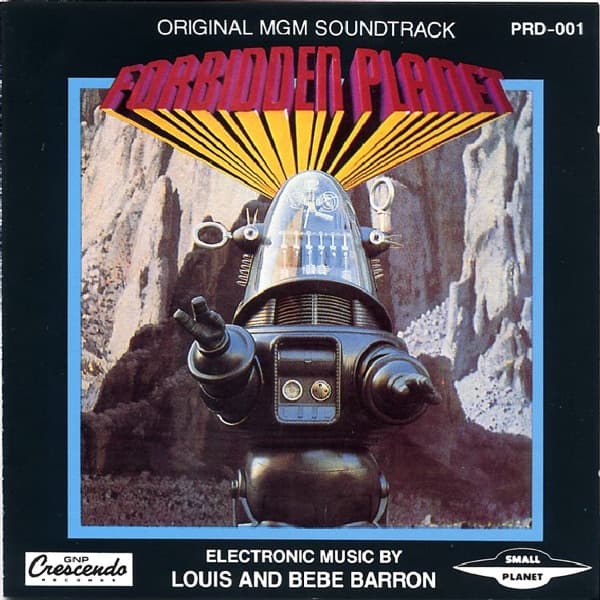
Louis and Bebe Barron
Forbidden Planet

The Beatles
Revolver

Pink Floyd
The Piper at the Gates of Dawn
Wendy Carlos
Switched-On Bach

Miles Davis
In a Silent Way

Kraftwerk
Autobahn

Jean-Michel Jarre
Oxygène

Kraftwerk
Trans-Europe Express

Suicide
Suicide

Brian Eno
Ambient 1: Music for Airports

The Human League
Dare

Kraftwerk
Computer World

New Order
Power, Corruption & Lies

Madonna
Like a Virgin

Black Uhuru
Anthem

The Stone Roses
The Stone Roses

Massive Attack
Blue Lines

Aphex Twin
Selected Ambient Works 85–92

Portishead
Dummy
Nine Inch Nails
The Downward Spiral

Goldie
Timeless

Radiohead
OK Computer

Björk
Homogenic
Roni Size and Reprazent
New Forms

The Prodigy
The Fat of the Land

Daft Punk
Homework
Refused
The Shape of Punk to Come

Boards of Canada
Music Has the Right to Children

Moby
Play

Radiohead
Kid A

Daft Punk
Discovery

Dizzee Rascal
Boy in da Corner

LCD Soundsystem
Sound of Silver

Kanye West
Graduation

Radiohead
In Rainbows

Burial
Untrue
M.I.A.
Kala

Kanye West
808s & Heartbreak

Lady Gaga
The Fame

Animal Collective
Merriweather Post Pavilion
Robyn
Body Talk
Flying Lotus
Cosmogramma
The Weeknd
House of Balloons
Lady Gaga
Born This Way
Grimes
Visions
Daft Punk
Random Access Memories
Disclosure
Settle
Kanye West
Yeezus
FKA twigs
LP1
Aphex Twin
Syro
Tame Impala
Currents
Jamie xx
In Colour
Grimes
Art Angels
Carly Rae Jepsen
Emotion
Justin Bieber
Purpose
LCD Soundsystem
american dream
SOPHIE
Oil of Every Pearl's Un-Insides
Rosalía
El Mal Querer
Travis Scott
ASTROWORLD
Billie Eilish
When We All Fall Asleep, Where Do We Go?
Tyler, the Creator
IGOR
The Weeknd
After Hours
Dua Lipa
Future Nostalgia
Floating Points, Pharoah Sanders and the London Symphony Orchestra
Promises
Beyoncé
Renaissance
Rosalía
Motomami
Charli XCX
Brat
Kaytranada
Timeless
Billie Eilish
Hit Me Hard and Soft
Various Artists
KPop Demon Hunters (Soundtrack)
Bon Iver
SABLE, fABLE
The Mixtape
Forbidden Planet: Main Titles (Overture)
Louis and Bebe BarronNo instruments. Circuits recorded as they burned out, slowed and layered. It is the sound of the future as 1956 imagined it, and it still sounds like nothing else.
Autobahn
KraftwerkThe full twenty-two minutes: an engine, a Minimoog, a vocoder, and a drive down a German motorway that reached the American top five with no guitars. Electronic pop starts here.
Computer Love
KraftwerkFour Germans predicting online dating in 1981. Hip-hop, house and techno all sampled this album; Coldplay borrowed the melody twenty-four years later.
Blue Monday
New OrderThe best-selling twelve-inch ever made, by a guitar band that had been listening to Italian disco. Indie and the dance floor meet in the middle.
Your Love
Frankie Knuckles and Jamie PrincipleHouse music's first love song, built on a TR-909 Derrick May brought from Detroit. Played at the Power Plant for years before Trax pressed it.
Strings of Life
Rhythim Is RhythimDerrick May, a piano and sampled strings over a machine. Detroit techno's anthem, and the record Britain would rave to a year later.
Voodoo Ray
A Guy Called GeraldManchester answers Chicago: a bedroom, a 808, a 303 and a sampled voice. The Second Summer of Love's homegrown anthem.
Unfinished Sympathy
Massive AttackHip-hop slowed to a heartbeat, strings recorded at Abbey Road, and Shara Nelson walking down a Los Angeles street in one unbroken shot. Bristol invents a tempo.
Hyperballad
BjörkA woman throws things off a cliff every morning so she can be kind all day, over a beat that builds from a pulse to a storm. Electronic pop with a whole life in it.
Inner City Life
GoldieBreakbeats at 160, strings, and Diane Charlemagne singing about London over the top. Jungle becomes drum and bass becomes an album, in one single.
Around the World
Daft PunkThree words, a disco bassline through a filter, and a Michel Gondry video with skeletons and swimmers. French touch conquers the world with almost no lyrics.
Porcelain
MobyA piano, a reversed string sample and a whisper, licensed to every advert and film of 2000. Electronic music in the living room, and the end of the CD decade in one quiet song.
One More Time
Daft PunkRomanthony's Auto-Tuned voice over a filtered horn loop. The happiest song of the decade, and the seed of Kanye's Stronger, blog house and the EDM festival.
D.A.N.C.E.
JusticeA children's choir singing about Michael Jackson over distorted disco. The blog-house summer, and the French touch's second wave.
Levels
AviciiThe starting gun for EDM's American takeover: an Etta James sample over a rising synth line, built to be heard from half a mile away in a field.
Midnight City
M83A saxophone solo in an indie song in 2011, and it works. This is the sound of every film trailer and advert for about four years, and it still lifts.
Oblivion
GrimesThe happiest-sounding song about being assaulted ever recorded, made alone on a laptop in a Montreal apartment. That contradiction is the point of the whole record.
Latch
DisclosureUK garage, a sound from British clubs in 1999, back in the pop charts, with an unknown Sam Smith singing on it. Warm where the EDM around it was hostile.
Loud Places
Jamie xxRomy Madley Croft sings about going to loud places to forget someone, over a gospel sample that arrives late and undoes you. The saddest dance record of the decade.
Lean On
Major LazerA Danish singer, an American producer and a rhythm borrowed from Jamaica and India, streamed more times than almost anything before it. Global pop with no home country.
Marea (We've Lost Dancing)
Fred again..A voice note from the Blessed Madonna about missing nightclubs, turned into a house record. The lockdown's grief, with a beat under it.
Boy's a liar Pt. 2
PinkPantheressTwo minutes, a Y2K garage break, and Ice Spice sounding entirely unbothered. A whole revival of UK dance music, delivered to American teenagers.