100 Years of Music / Genre
Jazz
New Orleans put the blues, ragtime and the brass band in one room and let the players make it up as they went. Jazz was America’s pop music for twenty years, then its art music, and it is still the deepest well the others drink from.
The lineage
Jazz was assembled in New Orleans in the twenty years either side of 1900, and the parts are easy to name. Ragtime supplied syncopation: the trick of putting the accent where the ear does not expect it, between the beats, which Scott Joplin’s "Maple Leaf Rag" (1899) had already made a national fashion. The brass bands that played parades and funerals supplied the instruments and the marching pulse. The blues supplied the bent notes and the feeling. What the city added was improvisation, the players inventing their parts on the spot. Buddy Bolden, a cornetist who led bands from 1895 until his breakdown in 1906, is remembered as the first musician with the new sound. Nobody recorded him.
The first jazz record was made in New York in February 1917 by the Original Dixieland Jass Band, five white musicians from New Orleans, for Victor. "Livery Stable Blues" was a novelty hit, and it sent the word "jazz" around the world. The musicians who had actually built the music followed the work north. King Oliver’s Creole Jazz Band was recording in Chicago by 1923 with a young Louis Armstrong on second cornet. Armstrong’s own Hot Five and Hot Seven records from 1925 to 1928 changed the music’s centre of gravity from the group to the soloist. Listen to "West End Blues" (1928): the opening cadenza is the sound of one person deciding jazz would be about individual voices.
In the 1930s jazz was pop. Fletcher Henderson wrote arrangements for big bands, Duke Ellington ran the best one from the Cotton Club, and when Benny Goodman’s band played the Palomar Ballroom in Los Angeles on 21 August 1935 and the crowd rushed the stage, the swing era began. For a decade the biggest records in America were made by Goodman, Count Basie, Glenn Miller and Artie Shaw, and the singers who stood in front of them, Billie Holiday and Ella Fitzgerald among them, became the century’s first pop stars. The war ended it: the bands were too expensive to keep on the road, and the musicians who came home wanted to play something harder.
Bebop was that something. In after-hours sessions at Minton’s Playhouse in Harlem, Charlie Parker, Dizzy Gillespie, Thelonious Monk and Kenny Clarke sped the tempos up, made the chords more complicated and turned jazz from dance music into music for listening. Parker’s "Ko-Ko" (1945) is the founding document. The next fifteen years were a run of new answers to bop. Miles Davis’s Birth of the Cool sessions (1949) made it quieter and more arranged. Art Blakey and Horace Silver’s hard bop (1954) put the gospel and blues back in. Kind of Blue (1959) built solos on scales instead of chord changes, which is what modal means. Ornette Coleman’s The Shape of Jazz to Come (1959) and Free Jazz (1960) threw out the chords altogether. John Coltrane’s A Love Supreme (1964) made a jazz record into a prayer.
From there jazz spread rather than marched. Miles plugged in for In a Silent Way (1969) and Bitches Brew (1970), and fusion put jazz harmony over rock and funk rhythm; Herbie Hancock’s Head Hunters (1973) was the first jazz album to go platinum. Latin jazz had been its own current since Gillespie and Chano Pozo’s "Manteca" (1947). In the 1980s Wynton Marsalis argued the tradition back into concert halls. In the 1990s hip-hop producers rediscovered it as a sample library: A Tribe Called Quest’s The Low End Theory (1991) put Ron Carter’s bass under rap. Robert Glasper’s Black Radio (2012) and Kamasi Washington’s The Epic (2015) made the exchange two-way. Jazz stopped being the pop music in 1946 and never stopped being the music the others learn from.
Branches
Ragtime
Syncopated piano music from the Midwest, published as sheet music and played in every parlour. Scott Joplin’s "Maple Leaf Rag" (1899) sold in the hundreds of thousands. Ragtime gave jazz its rhythm and Tin Pan Alley its first craze.
New Orleans jazz
Cornet, clarinet and trombone improvising together over a marching rhythm section. Played in the city from the 1890s, first recorded in 1917, and perfected on Louis Armstrong’s Hot Five sides from 1925.
Swing
Big bands, written arrangements, riffing horn sections and a four-beat pulse you could dance the Lindy Hop to. Goodman, Basie, Ellington. From 1935 to 1946 this was the popular music of the United States.
Bebop
Fast, harmonically dense small-group jazz built for listening rather than dancing. Charlie Parker and Dizzy Gillespie’s 1945 records made the soloist’s intelligence the point. Every jazz musician since has had to learn its language.
Cool jazz
Bop’s ideas at a lower temperature: softer tone, written counterpoint, room to breathe. Miles Davis’s nonet sessions of 1949 named it; Dave Brubeck, Gerry Mulligan and the West Coast players sold it.
Latin jazz
Cuban rhythm under jazz harmony. Mario Bauzá’s Machito orchestra had been doing it since 1943; Dizzy Gillespie’s "Manteca" with Chano Pozo (1947) made it a movement. Clave meets the ride cymbal.
Hard bop
Bebop with the church and the blues put back in: heavier drums, gospel piano, singable themes. Art Blakey’s Jazz Messengers and Horace Silver from 1954, then Blue Note’s whole 1950s catalogue.
Modal jazz
Improvising on scales that sit still for a long time instead of chords that change every bar. Kind of Blue (1959) is the model, and Coltrane’s quartet spent the early 1960s finding out how far it went.
Free jazz
Ornette Coleman’s quartet dropped the piano and the chord changes and played from the melody outward. Free Jazz (1960) named it. Cecil Taylor, Albert Ayler and late Coltrane took it further out.
Fusion
Jazz players with electric pianos, guitars and rock and funk drummers. Miles Davis’s In a Silent Way (1969) and Bitches Brew (1970) opened it; Weather Report, Mahavishnu Orchestra and Head Hunters (1973) filled the decade.
How to listen
Follow one instrument through a whole tune. On a New Orleans record, follow the clarinet weaving around the cornet; on a swing record, follow the saxophone section riffing behind the soloist; on a bebop record, follow the bass walking four notes to the bar while everything else moves at double speed. Jazz is a conversation, and it is easier to hear if you pick one voice to listen for first.
Learn the shape of a solo. Most jazz from 1925 to 1960 works the same way: the band plays the melody, then each player improvises over the same chords for one or more choruses, then the melody returns. Once you can feel where the chorus starts again, you can hear what the soloist is doing with it. Armstrong’s "West End Blues", Parker’s "Ko-Ko" and Davis’s "So What" are three good places to practise.
Then listen for the decade. Play Ellington’s "It Don’t Mean a Thing" (1932), Parker’s "Ko-Ko" (1945), Kind of Blue (1959) and Head Hunters (1973) in order. Same instruments, same freedom, four completely different answers to what the music is for.
Across the decades
From the parade to the solo
In 1920 jazz was a band sound: cornet, clarinet and trombone weaving three lines at once, the way New Orleans marching bands had done it. King Oliver brought that sound to Chicago and recorded it in 1923 with a second cornet player named Louis Armstrong standing next to him. Listen to "Dippermouth Blues" and you hear the ensemble rule: nobody stands out for long.
Armstrong broke the rule. On the Hot Five and Hot Seven records he made for Okeh between 1925 and 1928, the band backs off and one man improvises. Improvising means making up the melody as you go, on the spot, over a set of chords. Everyone in the band had always done a little of it. Armstrong did it for a whole chorus, then for a whole record. "West End Blues" in 1928 opens with twelve seconds of unaccompanied trumpet that musicians are still studying.
Jazz split into several things at once. Jelly Roll Morton composed it, planning every chorus of "Black Bottom Stomp" like an architect. Fletcher Henderson and his arranger Don Redman wrote it for a big band with sections, which is the blueprint for swing. Bix Beiderbecke played it cool and lyrical, a whole other emotional temperature. Paul Whiteman dressed it in strings and sold it to people who would never have entered a South Side cabaret, and commissioned "Rhapsody in Blue" to prove it belonged in a concert hall.
Duke Ellington ended the decade at the Cotton Club in Harlem, writing music for a floor show and a radio wire that carried it across the country. The band he built there is the seed of the orchestra he led for the next forty-five years. Jazz went into the 1920s as a dance craze. It came out as a music with composers, soloists and a canon.
Swing: jazz becomes the pop music of a whole country
Jazz in 1930 was a specialist taste with a few crossover stars. Jazz in 1939 was the most popular music in the United States. The vehicle was the big band: three or four trumpets, three trombones, four or five saxophones, and a rhythm section of piano, guitar, bass, and drums, all playing written arrangements that left holes for improvised solos. Fletcher Henderson had worked out the recipe in Harlem years earlier. What changed was who was listening.
The usual date for the Swing Era's start is August 21, 1935, when Benny Goodman's band, playing Henderson's arrangements, set off a near riot at the Palomar Ballroom in Los Angeles in front of a live radio audience. Goodman's Carnegie Hall concert in January 1938 made the point in evening dress. But the sound was Black before it was national. Duke Ellington had named it in 1932 with "It Don't Mean a Thing (If It Ain't Got That Swing)." Chick Webb's band ran the Savoy Ballroom in Harlem, where the Lindy Hop was invented, and beat Goodman in a famous 1937 band battle on his own floor. Count Basie brought the loose, riff-based Kansas City style east in 1936 and rewrote what a rhythm section was for.
Under the dance music, jazz was already turning into an art of the soloist. Lester Young's light, floating tenor with Basie and Coleman Hawkins's dense, harmonic "Body and Soul" in October 1939 are the two poles the beboppers would argue between. Billie Holiday, singing behind the beat with Teddy Wilson's small groups, invented modern jazz singing. In Paris, a Romani guitarist named Django Reinhardt built a swing band out of nothing but strings. And in August 1939 a twenty-three-year-old from Oklahoma City named Charlie Christian sat in with Goodman on an amplified guitar, and the instrument's future changed shape.
Swing dies, bebop is born
In 1940 jazz was the most popular music in America. Glenn Miller, Benny Goodman, Tommy Dorsey, Count Basie and Duke Ellington led big bands that filled ballrooms and sold millions of 78s. Basie's rhythm section gave swing its walk and its swagger; Ellington's orchestra dipped deeper into blues than anyone, and in 1943 he took a fifty-minute suite about Black American history to Carnegie Hall. Boogie-woogie piano, the eight-to-the-bar left hand that Meade Lux Lewis, Albert Ammons and Pete Johnson had brought from Chicago and Kansas City to New York in 1938, was the dance floor's engine and would become rock and roll's.
The war killed the big band as a business. The draft took the players. Gas rationing took the tours. A federal tax on dance rooms took the ballrooms. Then the musicians' union recording ban of 1942 to 1944 stopped new instrumental records entirely, and when the bands came back the singers, who had kept recording, were the stars. In December 1946 eight of the biggest leaders in the country, Goodman, Dorsey, Harry James and Woody Herman among them, folded their orchestras in the same month.
Meanwhile, after hours in Harlem, a new music had been growing where nobody was recording it. From early 1941 the house band at Minton's Playhouse, drummer Kenny Clarke and pianist Thelonious Monk, hosted jam sessions where Dizzy Gillespie, Charlie Christian and a young alto player from Kansas City named Charlie Parker played standards at impossible tempos over chords stacked with extra notes, partly to make music they could hear in their heads and partly to run the amateurs off the stand. They called it bebop, or just "the new thing". Its tempos were too fast to dance to; that was the point. Jazz stopped being pop music here and became art music, and the split never healed.
Because of the ban, bebop reached records all at once in 1945: Gillespie and Parker's "Salt Peanuts" and "Shaw 'Nuff", Sarah Vaughan's "Lover Man" with both of them behind her, and in November Parker's "Ko-Ko", a solo over the chords of "Cherokee" that sounds like a door being kicked open. Bud Powell translated Parker's lines to the piano. Monk recorded his own strange, spacious compositions for Blue Note from 1947. By 1949 Miles Davis, who had been the nervous nineteen-year-old trumpeter on "Ko-Ko", was leading a nine-piece band with arranger Gil Evans toward something cooler. The 1950s would call it cool jazz, then hard bop, then modal. All of it starts at Minton's.
And a word for the singers, because the decade's great jazz records are as often vocal as not. Billie Holiday, Ella Fitzgerald, Sarah Vaughan, Dinah Washington and Nat King Cole are all in this chapter. They are where jazz, blues and pop stopped being separate rooms.
Jazz’s richest decade
Bebop had blown the music open in the 1940s; the 1950s spent ten years deciding what to do with the pieces. One answer was to cool it down. Miles Davis’s nonet sessions of 1949 and 1950, collected as "Birth of the Cool" in 1957, and Dave Brubeck’s college concerts made a jazz of quiet dynamics and odd meters that filled campus gyms. The other answer was to heat it up. Art Blakey, Horace Silver, Clifford Brown and Sonny Rollins played hard bop: bebop with the blues and the church put back in, loud and swinging.
The long-playing record changed the music. A tune could run ten minutes. Sonny Rollins’s "Saxophone Colossus" (1956), Thelonious Monk’s "Brilliant Corners" (1957) and the Duke Ellington band’s twenty-seven-chorus explosion at Newport in 1956 were album-length statements that a 78 could never have held. Newport itself, founded in 1954 on a Rhode Island tennis lawn, made jazz a summer festival music. Verve’s Ella Fitzgerald songbooks and Sinatra’s Capitol records with Nelson Riddle turned the American popular song into an art of the album.
Then came 1959, the year the decade put everything on the table at once. Miles Davis recorded "Kind of Blue" in two sessions in March and April, built on scales rather than chord changes. John Coltrane, who played on it, recorded "Giant Steps" in May, a tune whose chords move so fast that saxophonists still practice it like scripture. Ornette Coleman recorded "The Shape of Jazz to Come" the same month with no piano and no fixed chords at all. Charles Mingus made "Mingus Ah Um," and Brubeck cut "Time Out," a jazz record in 5/4 and 9/8 that sold a million copies. Billie Holiday and Lester Young both died that year. Charlie Parker had gone in 1955. An era ended and three new ones began in the same twelve months.
Modal, free, spiritual, electric: jazz takes every exit at once
Jazz entered the decade at a fork. "Kind of Blue" in 1959 had shown that you could improvise on scales instead of chord changes and make something calm and enormous. John Coltrane took the idea into "My Favorite Things" in 1960, a Broadway waltz stretched to fourteen minutes on soprano saxophone, and then into "A Love Supreme", recorded in one evening in December 1964 with McCoy Tyner, Jimmy Garrison and Elvin Jones. It is a prayer in four parts. He wrote the poem in the liner notes and then played it, syllable by syllable, on the tenor.
Ornette Coleman had already taken the other road. "Free Jazz", recorded in December 1960 with two quartets playing at once, put a name on music that abandoned chord changes altogether. Albert Ayler's "Spiritual Unity" in 1964 sounded like a New Orleans brass band having a religious experience. Sun Ra dressed his Arkestra in robes and said he was from Saturn, and "The Heliocentric Worlds" proved he had at least been somewhere. Coltrane went there too before he died in July 1967, and a lot of listeners could not follow.
Miles Davis did what Miles always did: built a new band. The second quintet, with Herbie Hancock, Wayne Shorter, Ron Carter and a seventeen-year-old drummer named Tony Williams, played standards so loosely they became new compositions. Then in February 1969 he brought electric pianos and a guitarist into the studio and made "In a Silent Way", and in August he cut the sessions that became "Bitches Brew". Hancock's "Maiden Voyage" and Wes Montgomery's "Smokin' at the Half Note" showed there was still plenty of room in the middle.
And there was bossa nova, which arrived from Rio via a saxophonist from Philadelphia. "Getz/Gilberto", released in March 1964, put Stan Getz with João Gilberto and Antônio Carlos Jobim, and the version of "The Girl from Ipanema" sung in halting English by Gilberto's wife Astrud became a worldwide hit and won Record of the Year. For a couple of years every lounge in America wanted to sound like Ipanema.
Jazz plugs in
Miles Davis had heard Sly Stone and Jimi Hendrix and decided jazz was going to have to deal with them. "Bitches Brew" (March 1970) was recorded with two bassists, two or three drummers, three electric keyboards and John McLaughlin's guitar, then cut up and spliced by producer Teo Macero like a film. It sold half a million copies, more than any record Davis had made, and it emptied the room of purists. Everyone in the band went on to lead the decade.
Wayne Shorter and Joe Zawinul formed Weather Report; "Heavy Weather" (1977) with Jaco Pastorius's fretless bass and the hit "Birdland" was fusion at its most joyful. McLaughlin's Mahavishnu Orchestra played faster and louder than any rock band. Chick Corea's Return to Forever went from Brazilian breeze to "Romantic Warrior". Herbie Hancock listened to Sly and James Brown, built a band called the Headhunters and made "Head Hunters" (October 1973), whose "Chameleon" rides an ARP Odyssey bass line for fifteen minutes; it outsold everything in jazz until George Benson's "Breezin'" three years later, and hip-hop producers have been cutting it up ever since. In fusion's swirl, the Minimoog and the Fender Rhodes became jazz instruments.
Other rooms stayed acoustic and went somewhere else. Keith Jarrett, exhausted and handed a broken piano at the Cologne opera house on 24 January 1975, improvised for an hour; "The Köln Concert" on Manfred Eicher's ECM label became the best-selling solo piano record in history and defined that label's clear, spacious sound. Alice Coltrane, after her husband's death, made "Journey in Satchidananda" (1971) with harp and tanpura and pointed jazz toward the spiritual. Pharoah Sanders kept the fire from Coltrane's last bands. In lower Manhattan, players locked out of the clubs turned lofts into venues, and Sam Rivers' Studio Rivbea and the loft scene kept free jazz alive on its own terms. Sun Ra bought a Minimoog in 1970 and took it to Saturn.
Young lions, a comeback and a scratch
Jazz in the 1980s argued about its own past. In 1980 a nineteen-year-old New Orleans trumpeter, Wynton Marsalis, joined Art Blakey's Jazz Messengers, the same finishing school that had produced Lee Morgan and Freddie Hubbard. In 1983 and again in 1984 he won Grammys in jazz and classical in the same year, the only musician ever to do so, and Columbia built a movement of sharp-suited "young lions" around him: Branford Marsalis, Terence Blanchard, Marcus Roberts. "Black Codes (From the Underground)" (1985) is the case for the defence: acoustic, post-bop, fiercely played.
Miles Davis had the opposite idea. Back from five silent years, he returned in 1980 and toured again in 1981 with "The Man with the Horn", then spent the decade with pop tunes, synthesizers and Marcus Miller, whose "Tutu" (1986) put Miles alone against a wall of programmed sound. Herbie Hancock went further: "Rockit" (1983), built with Bill Laswell and Grand Mixer D.ST scratching a record on the turntable, was a hit on MTV and the first time most of America heard a DJ scratch.
Everywhere else the map fragmented. Pat Metheny found a huge audience for a warm, open guitar sound. Ornette Coleman's Prime Time played free jazz with two electric bands. Weather Report ended in 1986; Steps Ahead and Kenny G, in very different ways, defined what "contemporary" and "smooth" jazz would mean on radio. Betty Carter kept the vocal tradition honest. Clint Eastwood's "Bird" (1988) put Charlie Parker in cinemas. And Sade, Anita Baker and the quiet-storm producers borrowed jazz's chords for the biggest R&B records of the decade.
Young Lions, a Pulitzer and the sample vault
Miles Davis died on 28 September 1991 with a hip-hop record, "Doo-Bop", unfinished on the shelf. The argument about what jazz should be after him ran the decade. Wynton Marsalis and the Young Lions, the suit-wearing neo-traditionalists who ran the new Jazz at Lincoln Center, said it should sound like the tradition and honor it. In April 1997 Marsalis's oratorio "Blood on the Fields" became the first jazz work to win the Pulitzer Prize for Music. Joshua Redman, Roy Hargrove, Brad Mehldau and Christian McBride were the generation under him, virtuosos who could play anything and mostly chose the standards. Cassandra Wilson and Diana Krall showed a jazz singer could sell records again, Wilson by covering Robert Johnson and Joni Mitchell, Krall by channeling Nat King Cole.
The other answer came from the sample vault. Blue Note opened its catalog to a British producer and Us3's "Cantaloop (Flip Fantasia)", built on Herbie Hancock's "Cantaloupe Island", became the label's first platinum record in 1993. Guru of Gang Starr put Donald Byrd, Roy Ayers and Branford Marsalis on "Jazzmatazz", live jazz over rap beats. A Tribe Called Quest had already made the case on "The Low End Theory" with Ron Carter on bass. Medeski Martin and Wood took the organ trio to the jam-band circuit. Acid jazz, in London and New York, was the club version. Jazz was alive in hip-hop whether the Young Lions liked it or not.
And the decade's biggest jazz record was neither. Ry Cooder and Nick Gold went to Havana in March 1996 and recorded a room full of Cuban musicians in their seventies and eighties. "Buena Vista Social Club" sold millions, won a Grammy, became a Wim Wenders film and put Ibrahim Ferrer and Compay Segundo at Carnegie Hall. Ken Burns's ten-part "Jazz" would air in January 2001 and argue the whole history from Armstrong to Marsalis. The 1990s had already shown the music was bigger than any one story about it.
Norah Jones, the Pulitzer, and jazz meets the beat
Jazz had its biggest commercial moment in decades from a singer most jazz players did not claim. Norah Jones' Come Away with Me, on Blue Note in February 2002, sold more than twenty million copies and won eight Grammys in one night, including Album of the Year, on the strength of Don't Know Why, a Jesse Harris song sung like a secret. Diana Krall and Jamie Cullum followed the same lane. Ken Burns' ten-part Jazz aired on PBS in January 2001 and argued, controversially, that the story more or less ended in the sixties. Wynton Marsalis answered by opening Jazz at Lincoln Center's Frederick P. Rose Hall in October 2004, the first concert hall built for jazz.
The living music went two ways. Brad Mehldau, the Bad Plus and the Esbjörn Svensson Trio rebuilt the piano trio out of Radiohead covers and rock dynamics. Wayne Shorter's quartet with Danilo Pérez, John Patitucci and Brian Blade was the best working band in the world. Jason Moran, Vijay Iyer and a young Christian Scott sharpened the avant-garde. Herbie Hancock's River: The Joni Letters won Album of the Year in February 2008, the first jazz record to do it since 1965. Ornette Coleman won the Pulitzer Prize for Music in 2007 for Sound Grammar, forty-eight years after The Shape of Jazz to Come.
The bridge to hip-hop, which the 2010s would cross, was built here. Madlib recorded as Yesterdays New Quintet and cut Shades of Blue from the Blue Note vaults. The Roots, Medeski Martin and Wood and Soulive played jazz on the jam-band circuit. Robert Glasper's Double Booked, in 2009, put a trio on one disc and a Rhodes-and-808 band on the other, and Kamasi Washington was a sideman in Los Angeles waiting for his turn. The decade also buried a generation: Elvin Jones in 2004, Michael Brecker, Alice Coltrane, Max Roach and Oscar Peterson all in 2007, Freddie Hubbard in 2008.
Jazz stops being a museum and joins the conversation
Jazz spent the 2010s getting younger, louder and much more connected to hip-hop. Robert Glasper's Black Radio in 2012 put rappers and R&B singers on a jazz record and won a Grammy for it. Esperanza Spalding, an upright bassist and singer, won Best New Artist in 2011 and the internet lost its mind, which told you exactly how far jazz had drifted from the mainstream and how quickly it was coming back.
The pivot was Kendrick Lamar's To Pimp a Butterfly in 2015, which is as much a jazz and funk record as a rap one: Terrace Martin, Robert Glasper, Thundercat and Kamasi Washington all play on it. Two months later Washington released The Epic, three hours of big-band spiritual jazz on a hip-hop label, and it worked. Thundercat's Drunk in 2017 did the same thing from the other direction.
London built the decade's most exciting scene, out of youth music programmes and Caribbean and West African rhythm rather than American bebop: Shabaka Hutchings with Sons of Kemet and the Comet Is Coming, Nubya Garcia, Moses Boyd, Ezra Collective, Yussef Kamaal. Chicago had Makaya McCraven and the International Anthem label. New York had Vijay Iyer, Mary Halvorson, Cécile McLorin Salvant and Christian Scott.
The old masters kept leaving: Dave Brubeck in December 2012, Charlie Haden in 2014, Ornette Coleman in June 2015, Geri Allen in 2017, Cecil Taylor and Roy Hargrove in 2018. And in June 2018 an entire lost John Coltrane studio session from 1963 was released for the first time, which meant the most influential musician in the music's modern history had a new album out fifty-one years after he died.
London swings, and jazz stops being a museum
The most surprising thing to happen to jazz this decade happened in London. A generation of players who came up through Tomorrow's Warriors and church bands, raised on Afrobeat, grime and dub as much as on Coltrane, made jazz that people danced to. Ezra Collective's "Where I'm Meant to Be" won the Mercury Prize in September 2023, the first jazz album in the prize's history to do it, and their bandleader used his speech to thank a youth club.
In America the tradition and the experiment both did well. Samara Joy, a singer from the Bronx in her early twenties, won Best New Artist at the Grammys in 2023 singing standards. Jon Batiste won Album of the Year in 2022 with a record that had gospel, hip-hop and New Orleans parade music in it. Kamasi Washington kept building his enormous spiritual jazz. Laufey, an Icelandic-Chinese cellist, wrote songs that sounded like 1955 and sold them to teenagers on TikTok.
It was also a decade of funerals. Chick Corea died in 2021, Pharoah Sanders in 2022 after making one last masterpiece with a dance producer, Wayne Shorter in March 2023, and Quincy Jones, who connected almost every part of this century's story, in November 2024.
Timeline
Prohibition begins
The Volstead Act took effect on January 17. Bars closed and speakeasies opened, and the ones that could afford it hired bands. For the next thirteen years the underground nightclub, often mob-owned, was the best-paying room in American music, and it is where Chicago and Harlem jazz grew up.
Mamie Smith records "Crazy Blues"
On August 10 in New York, Mamie Smith and a Black band cut Perry Bradford's "Crazy Blues" for Okeh, after a February session had shown the label she could sell. Released in November, it reportedly moved 75,000 copies in two months. It was the first blues record by a Black singer, and its sales convinced every label that Black buyers were a market. The "race record" catalogs, the classic blues singers and the whole recorded blues tradition start here.
Paul Whiteman cuts "Whispering"
Recorded in Camden on August 23 with Ferde Grofe's arrangement, "Whispering" sold in the millions and set the pattern for the decade's dance bands: a written arrangement, a smooth ensemble, a hint of jazz phrasing with none of the risk. Whiteman would be the most famous bandleader in America for ten years and would hire Bix Beiderbecke and Bing Crosby along the way.
KDKA goes on the air
On November 2, Westinghouse's station in Pittsburgh broadcast the Harding-Cox election returns under a commercial license, the event usually counted as the start of broadcast radio in America. Stations multiplied by the hundreds within a few years. For the record business, radio was free music in every living room, and a rival it never fully beat.
Black Swan Records and "Down Home Blues"
Harry Pace, W. C. Handy's former publishing partner, founded Black Swan in Harlem, the first significant Black-owned record label. Its hit was Ethel Waters' "Down Home Blues," with a young Fletcher Henderson running the music. The label lasted only until 1923 and was sold to Paramount, but it proved a Black company could make and sell Black records.
Shuffle Along opens on Broadway
Noble Sissle and Eubie Blake's musical opened on May 23 at the 63rd Street Music Hall, a multipurpose room well north of the theatre district, and ran 504 performances, the first Black-written, Black-performed hit on Broadway in a generation. Josephine Baker and Florence Mills came out of its chorus. Langston Hughes said it was the show that started the Harlem Renaissance.
James P. Johnson records "Carolina Shout"
Johnson's Okeh recording of his own piano piece is the founding document of Harlem stride: a left hand leaping between bass notes and chords while the right hand plays rings around it. Duke Ellington and Fats Waller both learned it note for note from his piano roll. Johnson would write "Charleston" two years later.
Okeh names the "race record"
Okeh's Ralph Peer, following the Black press's own use of "the Race," gave its 8000 series of records for Black buyers the name "race records." Paramount, Columbia and Vocalion followed with series of their own. The term sorted Black music into a separate catalog for thirty years, and it is the reason the blues, jazz and gospel of this decade survived on disc at all.
King Oliver's Creole Jazz Band records in Richmond, Indiana
On April 5 and 6 the band drove from Chicago to the Gennett studio beside a piano factory and cut the first substantial body of New Orleans jazz by Black musicians, including "Dippermouth Blues," with Oliver's muted cornet solo and 21-year-old Louis Armstrong on second cornet. Musicians across the country learned the style from these discs.
Sidney Bechet on "Wild Cat Blues"
On July 30 Clarence Williams' Blue Five recorded a tune by a teenage Fats Waller, his first, with Sidney Bechet on soprano saxophone. It is Bechet's first issued record and the first great jazz saxophone performance. The small, drumless Blue Five was the model for Armstrong's Hot Five two years later.
The Charleston
James P. Johnson's song "Charleston" opened in the Black revue Runnin' Wild on Broadway on October 29. The dance that went with it, knees knocking and heels kicking, became the decade's signature step and the picture people still have of the Jazz Age. Its rhythm came from Black dockworkers in South Carolina.
"Rhapsody in Blue" at Aeolian Hall
Paul Whiteman billed February 12 as "An Experiment in Modern Music." George Gershwin, who had forgotten the commission until he read about it in the paper, wrote the piece in five weeks and played the piano part himself; Ferde Grofe orchestrated it page by page. Ross Gorman turned the opening clarinet run into a smear in rehearsal as a joke, and Gershwin kept it. The first recording followed on June 10, acoustically, cut down to fit two sides.
Louis Armstrong joins Fletcher Henderson in New York
Henderson led the top Black dance band in New York at the Roseland Ballroom and hired Armstrong out of Chicago in the fall of 1924. Over thirteen months his solos taught the band, and its arranger Don Redman, how to make a written arrangement swing. That lesson became the big-band language of the 1930s. Armstrong also recorded with Bessie Smith and Ma Rainey while he was in town.
Ma Rainey, "See See Rider Blues"
Rainey's New York recording of the old song about a faithless lover, with Armstrong on cornet, fixed the version everyone since has sung. It has been re-recorded as "C.C. Rider" by everyone from Chuck Willis to Elvis Presley, which makes this one of the longest straight lines in the whole century.
Alain Locke publishes The New Negro
Locke's anthology gathered the poets, essayists and artists of Harlem and declared a cultural coming of age. Langston Hughes, whose first book The Weary Blues followed in 1926, wrote poems in twelve-bar form. The Harlem Renaissance treated jazz and blues as art worth arguing about, which most of America did not yet.
Bessie Smith and Louis Armstrong, "St. Louis Blues"
On January 14 in New York, Smith sang W. C. Handy's song with only Armstrong's cornet and Fred Longshaw's wheezing harmonium behind her. The two of them trade phrases like a sermon and its amen. It is the most admired recording either of them made in the classic blues style, and it was still acoustic: the horn, not the microphone.
The microphone replaces the horn
Bell Labs engineers Joseph Maxfield and Henry Harrison built a recording chain of condenser microphone, vacuum-tube amplifier and electromagnetic cutter, and Western Electric licensed it to Victor and Columbia for $50,000 plus royalties. The first electrical records went on sale in the spring of 1925 without announcement; the frequency range roughly tripled, bass and sibilants appeared, and a singer could whisper. On November 2, Victor launched the Orthophonic Victrola to play the new discs. Bristol, "West End Blues," the crooners and everything after depend on this.
The Hot Five
On November 12 in Chicago, Armstrong, his wife Lil Hardin Armstrong, Kid Ory, Johnny Dodds and Johnny St. Cyr cut their first sides for Okeh. The band existed only on record. They kept at it until December 1927, adding a bass and a drummer in May 1927 for a run of sides as the Hot Seven, and turned jazz from a group music into a soloist's art. "Heebie Jeebies," released in March 1926, made scat singing a craze.
"Heebie Jeebies"
Released in March, the Hot Five's novelty tune became a national hit on the strength of Armstrong's scat chorus, nonsense syllables sung like a horn. The story that he dropped the lyric sheet is probably a story. What matters is that it made the human voice an instrument on record, and put the Hot Five in every Black household with a Victrola.
The Savoy Ballroom opens
On March 12 a block-long dance hall opened on Lenox Avenue in Harlem with two bandstands and room for thousands. Unlike the Cotton Club a few blocks south, it admitted Black and white dancers together. Fletcher Henderson played opening night. The Lindy hop was invented on its floor, and for thirty years it was the room every big band had to win.
Jelly Roll Morton's Red Hot Peppers, "Black Bottom Stomp"
On September 15 in Chicago, Morton took seven New Orleans musicians into Victor's studio with parts written out and every break planned. The result is three minutes with more ideas than most albums: stop-time, a banjo solo, a minor-key trumpet turn, the "Spanish tinge" he always insisted jazz needed. It is the first proof that jazz could be composed without losing its heat.
NBC, the first network
On November 15 the National Broadcasting Company opened with a four-hour gala from the Waldorf-Astoria carried by about two dozen stations. One orchestra, heard from New York to Kansas City at the same instant. Within three years a Cotton Club broadcast could make a band famous in towns that had no record shop.
Bix and Tram, "Singin' the Blues"
On February 4 in New York, Frankie Trumbauer's C-melody saxophone and Bix Beiderbecke's cornet, with Eddie Lang's guitar under them, took a forgotten 1920 pop tune and played it slow, cool and almost without vibrato, never stating the melody until the end. Released in April, it was copied note for note by Fletcher Henderson's saxophone section. Lester Young learned from it. It is the first jazz ballad, and the first jazz that sounds like thinking out loud.
The Hot Seven, "Potato Head Blues"
Armstrong added bass and drums to the Hot Five for eleven sides in May 1927. On "Potato Head Blues," recorded May 10, his stop-time solo, the band hitting one chord a bar while he flies over the gaps, is the moment jazz historians point to when they say improvisation became composition in real time. Hoagy Carmichael quoted it in "Star Dust" five months later.
Hoagy Carmichael records "Star Dust"
On October 31 at the Gennett studio in Richmond, Indiana, a young Indiana lawyer and hot pianist recorded his own tune as a medium-tempo instrumental with a borrowed band. Mitchell Parish added words in 1929 and everyone slowed it down. It has since been recorded more than 1,500 times. The melody's third and fourth bars come straight out of Armstrong's "Potato Head Blues."
Duke Ellington opens at the Cotton Club
On December 4, Ellington opened at the whites-only Harlem nightclub run by gangster Owney Madden. The Victor ledgers that autumn list ten men in the band; the count on opening night is still argued. They stayed until 1931. A radio wire from the club carried Ellington's "jungle" sound, Bubber Miley's growling plunger trumpet over dark minor harmonies, across the country, and "Black and Tan Fantasy" and "East St. Louis Toodle-Oo" made him the first jazz composer with a national audience.
Louis Armstrong, "West End Blues"
On June 28 in Chicago, with Earl Hines on piano and Zutty Singleton on drums, Armstrong opened a slow King Oliver blues with an unaccompanied trumpet cadenza that runs up two octaves and falls back down in about twelve seconds, then sang a wordless chorus against the clarinet and finished on a high note held for four bars. Okeh now had microphones, so you can hear all of it. Most jazz musicians of the next generation named this as the record that decided them.
Pine Top Smith names boogie-woogie
On December 29 in Chicago, a 24-year-old pianist from Alabama recorded "Pine Top's Boogie Woogie" for Vocalion, talking dancers through the steps over a rolling eight-to-the-bar left hand. It was the first record with "boogie" in the title. Smith was killed by a stray bullet in a Chicago dance hall in March 1929, before he could see the craze he started.
Bessie Smith, "Nobody Knows You When You're Down and Out"
Recorded May 15, 1929, five months before the Crash, Jimmy Cox's song about losing everything and every friend with it. Smith's own career was already sliding as tastes changed, and Columbia dropped her in 1931. It is the decade's epitaph, sung before the decade knew it needed one.
Bessie Smith on film
Dudley Murphy shot the two-reel St. Louis Blues in Astoria, Queens, in June 1929, with Smith, James P. Johnson and members of Fletcher Henderson's band. It is the only footage of her that exists. Released that September, it is also one of the first sound films built around Black music, stereotypes and all.
Fats Waller, "Ain't Misbehavin'"
On August 2 in Camden, Victor let Waller record a full session of his own piano solos for the first time. He opened with the song he had written for the revue Hot Chocolates, which had opened in June. The solo is stride piano at its peak, and the song became one of the most recorded of the century. Louis Armstrong sang it in the show's pit and made it his own.
The Crash
Between October 24 and 29 the stock market lost a quarter of its value. The record industry, already shrunk by radio and consolidating (RCA had bought Victor early in the year), collapsed with it: by most estimates sales fell from around a hundred million discs a year to a few million by 1932. Paramount and Gennett would be gone within a few years. Blind Willie Johnson, Charley Patton and hundreds of others made their last records in the shadow of this week.
Jimmie Rodgers and Louis Armstrong cut "Blue Yodel No. 9"
In a Hollywood studio the Singing Brakeman recorded his ninth blue yodel with Armstrong on trumpet and Lil Hardin Armstrong on piano. It is one of the first records to put a white country star and a Black jazz star in the same room, and it makes plain what Rodgers always said: his music was blues with a yodel on top. The Country Music Hall of Fame still uses it to explain him.
Duke Ellington records "Mood Indigo"
Ellington's band was still the house orchestra at Harlem's Cotton Club when it cut this slow, strange ballad for Brunswick on October 17, 1930, with the trombone, muted trumpet, and clarinet voiced upside down from where any arranger would put them. He remade it for Victor on December 10 and kept remaking it for forty years. It became his first great popular hit and the proof that a dance band could be a composer's instrument.
Cab Calloway records "Minnie the Moocher"
Calloway's band had just replaced Ellington's at the Cotton Club when it recorded his tale of a Harlem hustler and her cocaine-smoking boyfriend. The scat chorus, which the audience had to sing back, made the record a call-and-response event rather than a song. It sold over a million copies, put Calloway in Betty Boop cartoons, and showed that a Black bandleader could be a national pop star on his own terms.
The bottom: six million records and a scrapped label
1932 was the worst year the record business has ever had. Sales that had passed a hundred million units in 1927 fell to roughly six million. Paramount, the label that had recorded Patton, House, and James, went out of business and sold its metal stampers for scrap, which is why their records survive only as worn, noisy 78s. Only radio, and soon the jukebox, kept the music moving.
The Frying Pan goes on sale
George Beauchamp's aluminum lap steel with a horseshoe-magnet pickup, built by machinist Adolph Rickenbacker's company in Los Angeles, became the first commercially produced electric guitar in 1932. Fewer than twenty sets sold that year. But it solved the problem every guitarist in a band had, which was being heard, and within seven years the idea had reached Bob Dunn in Texas and Charlie Christian in Oklahoma City.
Ellington names the era: "It Don't Mean a Thing"
Recorded in February 1932 with Ivie Anderson singing, Ellington's tune used the word swing as a verb and a standard three and a half years before Benny Goodman made it a marketing term. Every argument about what the music was for is settled in the title. It is one of the few songs of the decade that both the musicians and the dancers claimed as theirs.
Repeal fills the bars, and the bars buy jukeboxes
Prohibition ended on December 5, 1933. Thousands of newly legal bars needed music and could not afford bands, and the coin-operated phonograph filled the gap. Production of jukeboxes rose more than tenfold between 1934 and 1937, and by the end of the decade stocking them accounted for a large share of all records sold. Jukebox plays also told labels, nickel by nickel, what the public wanted.
The Quintette du Hot Club de France forms in Paris
Out of backstage jams at the Hôtel Claridge on the Champs-Élysées, guitarist Django Reinhardt and violinist Stéphane Grappelli built a swing band with no horns and no drums: three guitars, a bass, and a violin. Reinhardt, a Romani musician who had lost the use of two fingers in a caravan fire, played lead with the other two. It was the first great jazz made outside America, and its 1937 "Minor Swing" is still the style's national anthem.
Bob Wills brings the Texas Playboys to Tulsa
Wills and five musicians arrived at KVOO on February 9, 1934, for a trial daily broadcast. The 12:30 show, sponsored by a laxative and then by General Mills, made him the most popular act in the Southwest. Over the next six years he added horns, drums, and the electric steel of Leon McAuliffe, building a string band that played like a jazz orchestra.
American Decca opens and cuts the price of a record
Jack Kapp launched the American branch of Britain's Decca in August 1934 and sold big-name records for thirty-five cents when the standard price was fifty. Bing Crosby was his first signing; the Sons of the Pioneers were his third. Cheap records plus jukeboxes are what pulled the industry off the floor, and by 1938 Decca and Victor between them sold thirty-three million discs.
The Hammond organ goes on sale
Laurens Hammond, a Chicago clockmaker, filed his patent for an electric organ in April 1934 and shipped the Model A in 1935. It used spinning tonewheels and an amplifier to imitate a pipe organ at a fraction of the price, and its first customers were churches. Black congregations took to it fastest, and through gospel it reached jazz, blues, soul, and rock. It is the first electronic instrument to become an everyday one.
Bob Dunn plugs in a steel guitar
On January 27, 1935, in Chicago, Milton Brown and His Musical Brownies recorded "Taking Off" with Bob Dunn playing an amplified steel guitar, the first electric instrument on a country record. Dunn had come up through Hawaiian music and phrased his steel like the trombonist Jack Teagarden. Brown died in a car wreck in 1936; Dunn's sound went straight into Bob Wills's band.
The Palomar Ballroom: the Swing Era gets a start date
Benny Goodman's band had spent a summer tour losing money, playing safe stock arrangements for club owners who wanted waltzes. On August 21, 1935, at the Palomar in Los Angeles, they gave up and pulled out Fletcher Henderson's hot charts. The crowd was young, it already knew the band from its late-night Let's Dance broadcasts, and it went off. Black bands had been swinging for years. This was the night a white audience decided it was theirs too.
Porgy and Bess opens on Broadway
George Gershwin's opera about a Black neighborhood in Charleston opened at the Alvin Theatre on October 10, 1935, with a classically trained all-Black cast. It ran 124 performances and lost money. Its songs did not: "Summertime" was on record by Billie Holiday within a year, and jazz musicians have been reworking the score ever since. Gershwin was dead within two years.
John Hammond hears Count Basie on the radio
Late-night broadcasts from the Reno Club in Kansas City reached the car radio of John Hammond, the wealthy jazz enthusiast and producer, and he drove out to hear the band. Basie had rebuilt Bennie Moten's orchestra around a rhythm section of Walter Page, Jo Jones, Freddie Green, and himself, playing head arrangements on the blues. Hammond brought them to New York, and within a year the whole Swing Era was trying to sound that loose.
Bob Wills records "Steel Guitar Rag"
Leon McAuliffe's electric steel instrumental, cut at the Texas Playboys' Chicago session in the fall of 1936, became the piece every steel player had to learn and the record that made the instrument a lead voice in country music. Wills hollering over the top is the western swing signature. The tune's ancestor is a Black ragtime guitar piece, and the lineage is not hidden.
Chick Webb beats Benny Goodman at the Savoy
The Savoy Ballroom on Lenox Avenue, integrated from the day it opened in 1926, was Webb's home floor, and on May 11, 1937, Goodman's band came uptown to battle him. Close to five thousand people got inside and thousands more waited on the street. Webb led from a drum platform set front and center of the bandstand, playing charts he had memorized because he never learned to read music, and the crowd gave the night to him. Only Duke Ellington ever beat him on that floor. The Lindy Hop, born there, was now the whole country's dance.
Count Basie records "One O'Clock Jump"
Cut for Decca on July 7, 1937, the band's theme was a twelve-bar blues head arrangement the musicians had worked out on the stand. Basie's piano, Walter Page's walking bass, and Jo Jones's hi-hat set a groove that Goodman, Miller, and Harry James all tried to copy, then Herschel Evans, Lester Young, and Buck Clayton took solos and the sections riffed the band home. Basie had signed away his royalties and never saw the money.
George Gershwin dies at thirty-eight
Gershwin collapsed in Hollywood and died of a brain tumor on July 11, 1937. He had written Rhapsody in Blue at twenty-five and Porgy and Bess at thirty-six, and had spent his last year writing songs for Astaire pictures. No American songwriter had moved so freely between the concert hall, the theater, and the jazz band, and none has since.
Bessie Smith dies after a car wreck in Mississippi
The Empress of the Blues, whose 1920s records had defined the classic blues and whose last session in 1933 had been produced by John Hammond, died on September 26, 1937, in Clarksdale after a crash on Highway 61. Hammond planned his From Spirituals to Swing concert the following year partly as a memorial to her.
Benny Goodman plays Carnegie Hall
On January 16, 1938, Goodman brought swing into the country's temple of classical music, with Gene Krupa, Harry James, Lionel Hampton, and Teddy Wilson on the bill and guests from the Basie and Ellington bands. The integrated stage was itself a statement. "Sing, Sing, Sing" ran past twelve minutes. The recording sat unreleased for twelve years, and when Columbia issued it in 1950 it revived Goodman's career.
Ella Fitzgerald and Chick Webb record "A-Tisket, A-Tasket"
Fitzgerald, twenty-one, had been singing with Webb's band since he took her on after an amateur night at the Apollo. On May 2, 1938, they rehearsed her rewrite of a nursery rhyme for an hour and recorded it that night for Decca. It was the biggest hit either would ever have, and it made the shy girl from the Yonkers orphanage the most famous singer in swing.
Alan Lomax records Jelly Roll Morton's life story
Beginning May 21, 1938, in the Coolidge Auditorium of the Library of Congress, Lomax recorded the fifty-two-year-old pianist talking and playing through the birth of jazz in New Orleans: nine hours on fifty-four twelve-inch discs. It was the first extended oral history of a musician ever recorded, and the source of Lomax's 1950 book Mister Jelly Roll. Morton, broke and forgotten, died three years later.
From Spirituals to Swing at Carnegie Hall
John Hammond's December 23, 1938, concert traced Black American music from spirituals to the Basie band in one evening: the Golden Gate Quartet, Sister Rosetta Tharpe, Big Bill Broonzy, Sonny Terry, the boogie-woogie pianists Ammons, Lewis, and Johnson, and Big Joe Turner. No sponsor would touch an integrated show; the Marxist magazine New Masses paid for it. It sold out, and a second concert followed on Christmas Eve 1939.
Billie Holiday records "Strange Fruit"
Abel Meeropol, a Bronx schoolteacher, wrote the poem after seeing a photograph of a lynching and set it to music himself. In April 1939 he brought it to Café Society, the integrated Greenwich Village club where Holiday was singing, and she performed it that night. Columbia would not record it, so on April 20 she cut it for Milt Gabler's small Commodore label with "Fine and Mellow" on the flip. It reached the top twenty and she sang it, at cost to herself, for the rest of her life.
Chick Webb dies at thirty-four
Webb collapsed on a riverboat in Washington that June and died in Baltimore on the 16th, after spinal surgery he never came out of. He was thirty-four if you take the census year of 1905; his own death certificate says 1909. He had led the Savoy Ballroom house band since 1931. Ella Fitzgerald, twenty-two, took over the orchestra and led it for two years.
Charlie Christian joins Benny Goodman
John Hammond smuggled the twenty-three-year-old Oklahoma City guitarist onto the bandstand at the Victor Hugo restaurant in Los Angeles in August 1939 while Goodman was away from the stand. Goodman called "Rose Room," a tune he assumed the kid would not know, and Christian took chorus after chorus on his amplified Gibson. He was hired on the spot. The electric guitar had its first great soloist and its first star.
Glenn Miller records "In the Mood"
The riff had been kicking around since a 1930 Wingy Manone record, and Joe Garland's arrangement had been recorded by Edgar Hayes in 1938 and tried by Artie Shaw without success. Miller bought it, had Eddie Durham of the Basie band help trim it to three minutes with the false endings, and recorded it for Bluebird on August 1, 1939. It sold over a million copies and became the sound people mean when they say the 1940s.
Coleman Hawkins records "Body and Soul"
Back from five years in Europe, Hawkins cut the 1930 ballad at a Victor session in New York on October 11, 1939, and barely touched the melody at all. Two choruses of pure harmonic invention on the tenor saxophone, put out that December on RCA's budget label Bluebird. Every bebop musician learned it. Along with Armstrong's "West End Blues" it is the jazz solo that other solos are measured against.
"In the Mood" tops the charts
Glenn Miller's Bluebird record of Joe Garland's riff tune, cut in August 1939, became the best-selling record in the country in early 1940 and has never left the radio since. The riff itself had been kicking around Black bands for a decade, from Wingy Manone's "Tar Paper Stomp" to Edgar Hayes's 1938 version. Miller's arrangement, with its fake endings and its two-tenor chase, made it the anthem of swing at the exact moment swing had two years left.
Bob Wills records "New San Antonio Rose"
Wills and his Texas Playboys put words and a horn section on his 1938 fiddle instrumental and made the biggest Western swing record of all. Tommy Duncan sang it; Bing Crosby covered it the next year and sold a million. Western swing was a Texas dance band playing jazz on fiddles, steel guitar and drums, and this is it at full strength, two years before the draft took most of the band.
Sinatra and Dorsey: "I'll Never Smile Again"
Tommy Dorsey's band with its new singer, a skinny kid from Hoboken, and the Pied Pipers behind him held number one for twelve weeks from mid-July 1940. It is the record where the band singer becomes the point of the record. Sinatra later said he learned to phrase a line without breathing by watching Dorsey's trombone.
Machito forms the Afro-Cubans
Frank "Machito" Grillo held the band's first rehearsal at the Park Palace Ballroom in Harlem on 3 December 1940. His brother-in-law Mario Bauzá, fresh from the trumpet sections of Chick Webb and Cab Calloway, became musical director in January 1941 and set out to put an authentic Cuban rhythm section under jazz horns. Latin jazz begins with this band, in this room.
The house band opens at Minton's Playhouse
Bandleader Teddy Hill, hired to run the club on West 118th Street, put together a house band around drummer Kenny Clarke and pianist Thelonious Monk. Monday night jam sessions drew Dizzy Gillespie, guitarist Charlie Christian and, soon, Charlie Parker, who played standards at breakneck tempos over chords with extra notes stacked on top, partly to hear something new and partly to clear the stage of players who could not keep up. This is where bebop was worked out, in front of nobody, during the two years when nobody was allowed to record it.
The recording ban begins
On 1 August 1942 James C. Petrillo, president of the American Federation of Musicians, forbade every union musician in the country from making records until the labels agreed to pay royalties into a fund for musicians put out of work by jukeboxes and radio. Singers were not union members and kept recording, with choirs behind them. Instrumental music stopped. The ban lasted more than two years and is the longest strike in entertainment history; it put the singer in front of the band for good and kept bebop off record until 1945.
Glenn Miller disbands and enlists
The most popular bandleader in America broke up his orchestra in September 1942 and took a captain's commission to build a band for the Army Air Forces. The AAF band broadcast and played for troops across England and France and modernised military music. It was the most public sign that the swing era was going to war and might not come back.
Machito and Bauzá: "Tanga"
Mario Bauzá built a head arrangement over a bass riff at a Machito rehearsal at the Park Palace Ballroom on 29 May 1943 and called it "Tanga", a slang word for marijuana. He had caught the vamp the night before at the La Conga club. It is usually named as the first Afro-Cuban jazz composition: a jazz big band's horns riffing over Cuban rhythm rather than the other way round. The band did not record it until later in the decade, so the piece lived for years as a nightly jam.
Decca and Capitol settle with the union
Decca, the label with Bing Crosby, the Andrews Sisters and Louis Jordan, was the first to agree to Petrillo's royalty fund in September 1943; the year-old Capitol followed within weeks. RCA Victor and Columbia held out for another year, which meant the two labels with the smaller, hungrier rosters got a year's head start on the postwar market.
The first V-Discs ship
The Army's Special Services division began pressing twelve-inch 78s on unbreakable vinyl and shipping them to troops in waterproof boxes with spare needles. Petrillo let union musicians record for them on condition the discs were never sold, so V-Discs are the only new instrumental recordings from the ban years, and the reason vinyl, not shellac, was proven ready for the LP. Eight million were shipped before the program ended in 1949, when the union required the masters destroyed.
The King Cole Trio's first Capitol session
On 30 November 1943, at C. P. MacGregor's studio in Los Angeles and weeks after Capitol settled with the union, Nat Cole's piano, guitar and bass trio recorded "Straighten Up and Fly Right", a song Cole wrote from a sermon his father used to preach about a monkey riding a buzzard. It topped the Black chart, crossed to pop and sold half a million. Cole had sold the song outright to a publisher for cash and never saw a royalty. The trio format, small and swinging with a singer who could really play, became the template for lounge jazz, and Capitol, eighteen months old, had its first franchise.
Louis Jordan crosses over
"G.I. Jive" reached number one on the pop chart in 1944 and "Is You Is or Is You Ain't My Baby" went top ten; both also topped the Black chart. Jordan's Tympany Five, a shuffling small band with a honking saxophone and a comedian at the microphone, was selling to everyone in a segregated market. The jukebox trade called him its king. Chuck Berry called him the model.
RCA Victor and Columbia give in; the ban ends
After twenty-seven months, the two biggest labels signed the union's agreement in November 1944 and studios reopened. The world they reopened into had changed: singers had the charts, big bands had lost their dancers, and a generation of small-group musicians had two years of unrecorded ideas waiting.
Glenn Miller disappears
On 15 December 1944 Major Miller boarded a single-engine plane in England bound for Paris to prepare his band's Christmas broadcasts. The plane never arrived and no trace of it has been found. He was forty. The swing era had already been dying for two years; Miller's disappearance is the date most people give for its death.
"Caldonia"
Louis Jordan's shouted question about a hard-headed woman went to number one on the Black chart and top ten pop in 1945, and Jordan sang it in a short film that played in theatres and on jukebox "soundies" machines. Woody Herman's big band covered it the same year. The chorus, the horn riff and the comic delivery are the whole grammar of jump blues in three minutes.
Bebop reaches record: Gillespie, Parker and Sarah Vaughan
With the ban lifted, Dizzy Gillespie took a quintet with Charlie Parker into the studio for the small Guild label and cut "Salt Peanuts", "Shaw 'Nuff" and "Hot House" in the first half of 1945. On 11 May the same group backed a twenty-one-year-old singer from Newark, Sarah Vaughan, on "Lover Man". Bebop, four years old in the clubs, was suddenly on 78s, and the trade press did not know whether to review it or complain.
"Ko-Ko"
On 26 November 1945 at WOR Studios in New York, Charlie Parker led his first session as a leader for Savoy. The trumpet chair was a nineteen-year-old Miles Davis; on "Ko-Ko", built on the chords of Ray Noble's "Cherokee" at a tempo nobody else could manage, Dizzy Gillespie played the trumpet intro and then sat down at the piano. Parker's two choruses are the sound of bebop arriving fully formed: long lines, high intervals, accents that fall where nobody expected. Released in early 1946, it sounded less like the next step than like a revolution.
"Choo Choo Ch'Boogie"
Louis Jordan's train song, written by two country songwriters and a Decca producer, spent eighteen weeks at number one on the Black chart in 1946 and crossed to the pop top ten. A boogie bass, a shuffle beat, a saxophone riff and a story about a man with no money and a train ticket: Bill Haley's "Rock Around the Clock" is this record with the names changed.
The big bands fold
In the last weeks of 1946 the name bands went down one after another. Billboard counted Tommy Dorsey, Benny Goodman, Les Brown, Bobby Sherwood, Sonny Dunham, Charlie Ventura and Herbie Fields breaking up or "temporarily" disbanding inside a few weeks, and named the reason: a leader who folded in New York and rebuilt on the coast dodged the union's ten percent travelling bonus and the fares for a whole orchestra. Ballrooms were empty, a federal tax sat on any room with dancing, and the singers had the hits. The big band did not disappear, but from here on it was a nostalgia act or an art project. Popular music had been a bandleader's business since 1935; it now belonged to the singer and the small group.
Dizzy Gillespie and Chano Pozo at Carnegie Hall
On 29 September 1947 Gillespie's big band played Carnegie Hall with a Cuban conga drummer, Chano Pozo, whom Mario Bauzá had introduced to him that summer. The session logs put Pozo on conga and Lorenzo Salan on bongo that night, with George Russell's "Cubana Be, Cubana Bop" on the programme and a new piece built on Pozo's bass riff. Pozo drummed, danced and chanted in the Yoruba-derived language of Afro-Cuban religion. Bebop and Cuban rhythm on a concert stage in the same night: Latin jazz has a birthday.
Atlantic Records is founded
Ahmet Ertegun, the jazz-obsessed son of Turkey's ambassador to Washington, and Herb Abramson, a record man from National, incorporated Atlantic in New York in October 1947 with money borrowed from Ertegun's dentist. It recorded jazz and rhythm and blues out of a hotel room office. Within twenty years it would have Ruth Brown, Ray Charles, Aretha Franklin, Otis Redding and Led Zeppelin, and Ertegun would help found the Rock and Roll Hall of Fame.
"Manteca"
Gillespie's big band with Chano Pozo recorded "Manteca" for RCA Victor on 22 December 1947, in the rush of sessions before the second recording ban. Pozo brought the bass line and the chant; Gillespie wrote the bridge so it would not, he said, be Cuban music all the way through; arranger Gil Fuller finished it. It sold better than any other Gillespie record and is the founding document of Afro-Cuban jazz.
The second recording ban
The Taft-Hartley Act of 1947 made the union's royalty fund illegal as written, and on 1 January 1948 Petrillo called a second strike on recording. Labels had stockpiled sessions through December 1947, which is why so many of this chapter's records were cut in the last week of that year. The ban ended on 14 December 1948 with the creation of the Music Performance Trust Fund, which still pays for free concerts. Independent labels ignored it more freely than the majors, and small blues and country outfits gained ground while the majors sat still.
Columbia introduces the LP
At the Waldorf-Astoria in New York in June 1948 (the trade saw it on the 18th, the press on the 20th; sources give both dates and the 21st), Columbia's Edward Wallerstein stood a stack of 78s eight feet high next to a stack of the new discs fifteen inches high and said they held the same music. The twelve-inch microgroove vinyl record turned at 33 1/3 rpm and played more than twenty minutes a side. Engineer Peter Goldmark's team had built it; RCA turned down the offer to license it. The album as a thing you sit down and listen to begins here.
Chano Pozo is killed
On 2 December 1948 the drummer who had brought Cuban ritual rhythm into jazz was shot dead in the Rio Bar in Harlem in an argument over a drug sale, fourteen months after the Carnegie Hall concert and a year after recording "Manteca". He was thirty-three. Gillespie kept a Cuban percussionist in every band he led for the rest of his life.
Les Paul and Mary Ford stack "How High the Moon"
Recorded on January 4, 1951, the Capitol single layered a dozen guitar parts and Mary Ford’s voice on top of itself using sound-on-sound tape technique that Les Paul had worked out with an Ampex machine given to him by Bing Crosby. It spent nine weeks at number one. Nobody had heard a record that could not have been played live by the people on it, and every studio trick of the next seventy years starts here.
The first Newport Jazz Festival
Elaine and Louis Lorillard, rich and bored in Newport, Rhode Island, hired Boston club owner George Wein to put on a jazz weekend at the casino tennis grounds on July 17 and 18, 1954. Billie Holiday, Dizzy Gillespie and the Modern Jazz Quartet played to society people on folding chairs. It broke even, came back every summer, and gave jazz a stage outside the nightclub. Miles Davis relaunched his career there in 1955, Ellington in 1956, and Mahalia Jackson sang there in 1958.
Little Rock
In September 1957 Governor Orval Faubus called out the Arkansas National Guard to keep nine Black students out of Central High School, and President Eisenhower sent the 101st Airborne to walk them in. Charles Mingus wrote "Fables of Faubus" about it; Columbia would not let him record the lyrics in 1959, so the version on "Mingus Ah Um" is instrumental. The words came out on another label a year later.
Miles Davis records "Kind of Blue"
Two sessions at Columbia’s 30th Street studio, March 2 and April 22, 1959, with John Coltrane, Cannonball Adderley, Bill Evans, Wynton Kelly, Paul Chambers and Jimmy Cobb. Miles brought sketches, not charts, and the tunes were built on scales held for long stretches rather than chords changing every bar, so the players had nowhere to hide and nothing to lean on. It sounds calm because everyone is listening harder than they ever have. Released in August, it has never stopped selling.
John Coltrane records "Giant Steps"
Weeks after "Kind of Blue," Coltrane went into Atlantic’s studio with a tune of his own whose chords move by thirds every two beats, a pattern so fast and strange that pianist Tommy Flanagan famously stumbles on the record. The session logs put it at Atlantic’s New York studio on 4 and 5 May 1959, released in early 1960, his first album of entirely his own compositions. Modal jazz had just opened one door; "Giant Steps" slammed another one shut behind everyone who thought bebop harmony had been exhausted.
Ornette Coleman, "The Shape of Jazz to Come"
A Fort Worth alto player with a plastic saxophone recorded for Atlantic in Los Angeles on May 22, 1959, with no piano, no fixed chords and a trumpeter, Don Cherry, who followed the melody wherever it went. Released in the fall, and followed by an extended run at the Five Spot in New York the same year, it split the jazz world in half. "Lonely Woman," the opening track, is one of the saddest melodies ever recorded, and it proved free jazz could be beautiful before it proved anything else.
The first Grammy Awards
The new National Academy of Recording Arts and Sciences handed out twenty-eight awards at dinners in Beverly Hills and New York on May 4, 1959, for the records of 1958. Record of the Year was Domenico Modugno’s "Volare." Album of the Year was Henry Mancini’s "Peter Gunn." Ella Fitzgerald won twice. Rock and roll got one line on the ballot: Best Rhythm & Blues Recording, won by the Champs’ instrumental "Tequila". Nothing with a singer and a backbeat came near the big awards, which tells you what the industry thought its own music was.
Coltrane stretches "My Favorite Things" to fourteen minutes
John Coltrane had just left Miles Davis and formed his own quartet with McCoy Tyner and Elvin Jones. In October 1960 he recorded a Broadway waltz from "The Sound of Music" on soprano saxophone, an instrument almost nobody in jazz played, and let it circle for a quarter of an hour on two chords. Released in March 1961, it was a hit by jazz standards and the template for the modal, hypnotic music of the next seven years.
Ornette Coleman records "Free Jazz" with two quartets at once
On December 21, 1960, Ornette Coleman put two quartets in a New York studio, one in each stereo channel, and recorded thirty-seven minutes of collective improvisation with no chord changes and no set melody. Atlantic released it in 1961 with a Jackson Pollock painting on the cover. The title became the name of a movement, and Lou Reed, Albert Ayler and a generation of rock and jazz musicians took it as permission.
Nina Simone releases "Mississippi Goddam"
Simone wrote it in under an hour in September 1963, after the Birmingham church bombing killed four girls and Medgar Evers was murdered in Mississippi. She called it a show tune for a show that had not been written yet. Recorded live at Carnegie Hall in front of a mostly white audience and released on "Nina Simone in Concert" in 1964, it was banned in several Southern states, and Simone changed the second line at every march she played for the rest of the decade.
John Coltrane records "A Love Supreme" in one evening
On December 9, 1964, at Rudy Van Gelder's studio in Englewood Cliffs, New Jersey, Coltrane, McCoy Tyner, Jimmy Garrison and Elvin Jones cut a four-part suite in a single session. The opening bass figure turns out, at the end of the first movement, to be the words of the title, which Coltrane chants. In the last movement he plays the poem printed on the sleeve, one note per syllable. Released early in 1965, it is the record that made a jazz album a spiritual object for people who did not otherwise listen to jazz.
John Coltrane dies at forty
Coltrane died of liver cancer on July 17, 1967, in Huntington, New York. In the two and a half years since "A Love Supreme" he had pushed further out: "Ascension" with eleven players, "Meditations", "Interstellar Space" as a duo with drummer Rashied Ali. Some listeners followed him and some could not. Albert Ayler played at the funeral. Jazz lost its center of gravity, and the spiritual and free strands he had held together went their own ways.
Miles Davis goes electric: "In a Silent Way" and the "Bitches Brew" sessions
On February 18, 1969, Miles brought three electric keyboard players, including Herbie Hancock and Chick Corea, and the guitarist John McLaughlin into a New York studio and recorded a few long takes that producer Teo Macero spliced into two side-long pieces. "In a Silent Way" came out in July. In August, over three days, he cut the sessions for "Bitches Brew", released the following March, louder, longer and built like a rock record. Fusion, and the argument about it, start here.
The Harlem Cultural Festival
Six free Sunday concerts in Mount Morris Park from June 29 to August 24, 1969, drew close to three hundred thousand people. Stevie Wonder, Sly and the Family Stone, Nina Simone, B.B. King, Mahalia Jackson, the Staple Singers, Gladys Knight and the Pips, Mongo Santamaría and the 5th Dimension played; the Black Panthers handled security after the police declined. Forty hours of film sat in a basement for fifty years until Questlove cut it into "Summer of Soul" in 2021. It was Woodstock's equal and hardly anyone outside Harlem knew.
The Minimoog goes on sale
Robert Moog's company turns the wall-sized modular synthesizer into a single keyboard with three oscillators, a filter and a pitch wheel, small enough to sit on top of a Hammond organ and cheap enough for a working band. It is the first synthesizer sold in music shops. Sun Ra records with one the same year; Keith Emerson, Herbie Hancock, Stevie Wonder and Kraftwerk follow. The three oscillators never quite lock together, which is the fat sound everyone falls for.
Miles Davis releases "Bitches Brew"
Recorded over three days in August 1969 with two bassists, multiple drummers, three electric keyboards and John McLaughlin on guitar, then spliced together by producer Teo Macero, "Bitches Brew" hits shops on 30 March 1970. It is the loudest argument yet that jazz can absorb Sly Stone and Jimi Hendrix. It sells half a million copies and empties the room of purists. Nearly every member of the band leads a fusion group within two years.
Herbie Hancock, "Head Hunters"
Released 26 October 1973. Hancock had been listening to Sly and James Brown and wanted a band that grooved before it thought. "Chameleon" opens with an ARP Odyssey bass line and rides it for fifteen minutes; "Watermelon Man" is rebuilt around Bill Summers blowing across a beer bottle like a Pygmy hindewhu whistle. It becomes the best-selling jazz album ever made, until George Benson three years later, and a foundation stone of hip-hop production.
Keith Jarrett improvises "The Köln Concert"
On 24 January 1975 Jarrett arrives at the Cologne opera house exhausted, in back pain, to find the wrong piano on stage: a small rehearsal instrument with a thin top end and pedals that stick. He nearly cancels. Instead he plays for over an hour in the middle and low registers, in vamps and gospel figures the piano can carry. ECM releases it in November and it becomes the best-selling solo piano album ever made, and the sound of that label.
Herbie Hancock's "Rockit" puts a scratch on MTV
Produced with Bill Laswell and Michael Beinhorn of Material, with Grand Mixer D.ST scratching a record on a turntable as a lead instrument, "Rockit" was a hit on MTV in 1983, won a Grammy, and introduced most of America to the DJ as musician. A jazz pianist had built the bridge between hip-hop and everyone else.
"Sun City": Artists United Against Apartheid
Little Steven Van Zandt, inspired by Peter Gabriel's "Biko", gathered Springsteen, Miles Davis, Run-DMC, Bono, Bob Dylan and dozens more to vow never to play the whites-only South African resort. Radio mostly ignored it. Paul Simon, who had recorded in Johannesburg that year, was about to test the boycott from the other side.
Take 6 make gospel a cappella modern
Six singers who met at Oakwood College in Huntsville, Alabama, signed to Reprise in 1987 and released a self-titled album in 1988 with no instruments at all: jazz chords, gospel words. It reached the top ten of the contemporary jazz and Christian charts and won two Grammys. Quincy Jones and Stevie Wonder came calling.
A Tribe Called Quest, "The Low End Theory"
Also 24 September 1991. Q-Tip and Ali Shaheed Muhammad turned the bass up, brought Ron Carter in to play upright on "Verses from the Abstract" and let Phife Dawg become a star. Every jazz-rap and boom-bap producer of the next decade, from Pete Rock to J Dilla, studied how quiet this record is. The Native Tongues had made their masterpiece, and "Scenario", with a nineteen-year-old Busta Rhymes, closed it.
Miles Davis dies
On 28 September 1991 in Santa Monica, at sixty-five, with "Doo-Bop", a hip-hop album made with the producer Easy Mo Bee, unfinished. He had played Montreux that summer with a Gil Evans orchestra, looking back for the first time in his life. The argument about what jazz was for after him, tradition or fusion or the sample vault, ran the whole decade.
Us3, "Cantaloop (Flip Fantasia)"
Blue Note, the most famous jazz label in the world, let a British producer named Geoff Wilkinson sample its vault. He built a rap track on Herbie Hancock's 1964 "Cantaloupe Island" and it went top ten in America in 1994. "Hand on the Torch" became Blue Note's first platinum album. Guru's "Jazzmatazz" the same year put the real players, Donald Byrd and Roy Ayers, in the studio with the rappers. Jazz found its next audience through a sampler.
Wynton Marsalis wins the Pulitzer
On 7 April 1997 "Blood on the Fields", a three-hour oratorio about a couple in slavery, became the first jazz work to win the Pulitzer Prize for Music. Duke Ellington had been refused one in 1965. Marsalis, the trumpet player who ran Jazz at Lincoln Center and argued that jazz was a classical tradition to be preserved, had won the argument in the one room that had always said no. Ken Burns's "Jazz" would make his case on television in 2001.
Roni Size and Reprazent win the Mercury Prize
On 11 September 1997 a drum-and-bass collective from Bristol beat "OK Computer", the Prodigy, the Spice Girls and the Chemical Brothers to the Mercury Prize with "New Forms". Goldie's "Timeless" in 1995 had shown jungle could be an album; Size showed it could be jazz, with a live double bass and a rapper. The London underground that started in Black clubs after the Criminal Justice Act now had Britain's most serious music prize.
Norah Jones' Come Away with Me
Released 26 February 2002 on Blue Note, the debut by Ravi Shankar's twenty-two-year-old daughter was a quiet record of jazz-tinged folk and country that sold more than twenty million copies. Don't Know Why, written by Jesse Harris, was the song. In February 2003 she won five Grammys herself and the album eight in total, including Album, Record and Song of the Year. Blue Note had not seen money like it since the sixties.
Amy Winehouse's Back to Black
Released 27 October 2006, produced by Mark Ronson and Salaam Remi with the Dap-Kings playing sixties soul arrangements, Back to Black was eleven songs about a breakup with Blake Fielder-Civil, sung by a twenty-three-year-old from Camden in a voice that sounded fifty. Rehab was the single. She won five Grammys on 10 February 2008, singing by satellite from London because she could not get a visa. The Guardian named it the best album of the century. She died in July 2011.
Esperanza Spalding wins Best New Artist
A jazz bassist and singer beat Justin Bieber, Drake, Florence and the Machine and Mumford and Sons to Best New Artist at the 2011 Grammys. Bieber's fans attacked her Wikipedia page. It reads now as the first sign of the decade's biggest surprise in jazz: young musicians moving back toward the middle of the culture.
Amy Winehouse dies at twenty-seven
She was found dead at her home in Camden on 23 July 2011. An inquest ruled she died of alcohol toxicity, with more than five times the drink-drive limit in her blood. She had made two albums. The second, Back to Black, had already rewritten what British pop could sound like and cleared the path for Adele, Duffy and Sam Smith.
Robert Glasper releases Black Radio
A jazz pianist made a record with Erykah Badu, Yasiin Bey, Lupe Fiasco and Bilal on it, refused to call it a crossover, and won a Grammy. Black Radio is the hinge on which the decade's jazz turns: it argued that hip-hop and R&B were the living tradition and jazz should be in the room with them, not above them.
Dave Brubeck dies
The pianist who put an odd time signature at number one, with Take Five in 1959, died on 5 December 2012, one day before his ninety-second birthday. He was the last of the mid-century jazz musicians who had been a household name in America, and he had spent his later decades quietly refusing to be a nostalgia act.
To Pimp a Butterfly
Kendrick Lamar followed a great rap album with a free-jazz, P-Funk and spoken-word record about depression, survivor guilt and Black America, with Kamasi Washington, Thundercat and Terrace Martin playing on it. Alright became the chant at Black Lives Matter protests. It won Best Rap Album in 2016 and is the most ambitious record any American made in the decade. Billboard's decade-end album list prints 2016 against it; the first commercial issue was March 2015.
Kamasi Washington releases The Epic
Three hours of jazz, with a choir and a string orchestra, released on Flying Lotus's electronic label two months after the saxophonist had played on To Pimp a Butterfly. Nobody puts out a triple album of spiritual jazz and expects an audience. He got one, and the London and Chicago scenes that followed all point back at it.
Blackstar and the death of David Bowie
Bowie released Blackstar on 8 January 2016, his sixty-ninth birthday, a record built on a young London jazz quartet and full of horns, and he died of cancer two days later. He had known. The album won Best Alternative Music Album and Best Rock Song at the 2017 Grammys, his first competitive wins for his own music.
A lost John Coltrane album is released
In June 2018 Impulse! released Both Directions at Once, a complete studio session Coltrane's classic quartet had recorded in 1963 and then apparently forgotten, including two compositions nobody had ever heard. Fifty-one years after his death, the most influential musician in modern jazz had a new record in the shops.
Promises, and a saxophonist at the end of his life
Released 26 March 2021, Promises pairs the electronic producer Floating Points with Pharoah Sanders, then eighty, and the London Symphony Orchestra. It is one forty-six-minute piece built on a seven-note phrase that repeats while everything around it changes. Sanders had played with Coltrane in 1965. He died the following year, and it is the best possible last word.
Jon Batiste wins Album of the Year
At the Grammys on 3 April 2022, We Are, a record made by a New Orleans pianist and bandleader out of gospel, hip-hop, brass-band parade music and social justice, took Album of the Year over Olivia Rodrigo, Kanye West and Taylor Swift. Batiste won five awards that night. It was the sort of result the Grammys almost never produce, and the room did not see it coming.
Ezra Collective win the Mercury Prize
On 7 September 2023 Where I'm Meant to Be became the first jazz album to win the Mercury Prize in the award's history. Ezra Collective are five Londoners who met at a youth club, and their bandleader Femi Koleoso used the acceptance speech to say so. Their jazz is a party: Afrobeat, reggae, highlife and hard bop played fast enough to dance to.
Quincy Jones and a year of endings
Quincy Jones died on 3 November 2024, aged 91. He had arranged for Count Basie, produced Michael Jackson's Thriller, scored films and connected almost every thread in this century's story. Wayne Shorter had died in March 2023, Pharoah Sanders in 2022, Chick Corea in 2021, Tina Turner in May 2023, Sinéad O'Connor and Tony Bennett in July 2023. The generation that built the modern record was leaving.
Artists
Everyone in the century tagged Jazz, in the order they arrived. Each name opens its full entry in the chapter that carries it.
Mamie Smith
- Crazy Blues
- That Thing Called Love
Paul Whiteman
- Whispering
- Rhapsody in Blue
- Mississippi Mud
George Gershwin
- Swanee
- Rhapsody in Blue
- Fascinating Rhythm
- An American in Paris
Ethel Waters
- Down Home Blues
- Dinah
- Am I Blue?
James P. Johnson
- Carolina Shout
- Charleston
- Snowy Morning Blues
Alberta Hunter
- Downhearted Blues
- Sugar
Bessie Smith
- Downhearted Blues
- St. Louis Blues
- Backwater Blues
- Nobody Knows You When You're Down and Out
King Oliver
- Dippermouth Blues
- Canal Street Blues
- Snake Rag
Sidney Bechet
- Wild Cat Blues
- Kansas City Man Blues
- Cake Walking Babies from Home
Lonnie Johnson
- Mr. Johnson's Blues
- A Handful of Riffs
- Hot Fingers
Fletcher Henderson
- Sugar Foot Stomp
- The Stampede
- King Porter Stomp
Louis Armstrong
- Heebie Jeebies
- Potato Head Blues
- West End Blues
- Weather Bird
Jelly Roll Morton
- Black Bottom Stomp
- Grandpa's Spells
- The Chant
Bix Beiderbecke
- Singin' the Blues
- I'm Coming Virginia
- In a Mist
Duke Ellington
- East St. Louis Toodle-Oo
- Black and Tan Fantasy
- Creole Love Call
- The Mooche
Hoagy Carmichael
- Star Dust
- Georgia on My Mind
Bing Crosby
- Mississippi Mud
- Ol' Man River
Pine Top Smith
- Pine Top's Boogie Woogie
- Pine Top's Blues
Fats Waller
- Ain't Misbehavin'
- Handful of Keys
Fats Waller
- Honeysuckle Rose
- Ain't Misbehavin'
- Your Feet's Too Big
Duke Ellington
- Mood Indigo
- It Don't Mean a Thing (If It Ain't Got That Swing)
- Caravan
Cab Calloway
- Minnie the Moocher
- Reefer Man
Bing Crosby
- Brother, Can You Spare a Dime?
- Pennies from Heaven
Art Tatum
- Tea for Two
- Tiger Rag
John and Alan Lomax
- Lead Belly at Angola (field recordings)
- Jelly Roll Morton: The Library of Congress Recordings
Chick Webb
- Stompin' at the Savoy
- A-Tisket, A-Tasket
- Liza
Milton Brown
- Taking Off
- St. Louis Blues
Benny Goodman
- Sing, Sing, Sing (Carnegie Hall)
- King Porter Stomp
- Rose Room (Sextet)
Billie Holiday
- Strange Fruit
- Summertime
- What a Little Moonlight Can Do
- Fine and Mellow
Django Reinhardt
- Minor Swing
- Djangology
- Nuages
Count Basie
- One O'Clock Jump
- Jumpin' at the Woodside
- Lady Be Good (Jones-Smith Inc.)
Lester Young
- Lady Be Good
- Lester Leaps In
Bob Wills
- Steel Guitar Rag
- New San Antonio Rose
- Take Me Back to Tulsa
Ella Fitzgerald
- A-Tisket, A-Tasket
- Undecided
Big Joe Turner
- Roll 'Em Pete
- Cherry Red
- Shake, Rattle and Roll
Count Basie
- Tickle Toe
- Jumpin' at the Woodside
- Open the Door, Richard
Coleman Hawkins
- Body and Soul
Charlie Christian
- Rose Room
- Seven Come Eleven
- Solo Flight
Louis Jordan
- Keep A-Knockin' (But You Can't Come In)
- Caldonia
Glenn Miller
- In the Mood
- Chattanooga Choo Choo
- Moonlight Serenade
- A String of Pearls
Ella Fitzgerald
- Flying Home
- Oh, Lady Be Good
- Undecided
Frank Sinatra
- I'll Never Smile Again
- Nancy (With the Laughing Face)
- All or Nothing at All
Duke Ellington
- Take the 'A' Train
- Cotton Tail
- Black, Brown and Beige (Carnegie Hall)
- Harlem Air Shaft
Bob Wills
- New San Antonio Rose
- Take Me Back to Tulsa
- Stay a Little Longer
Billie Holiday
- God Bless the Child
- Lover Man
- Good Morning Heartache
- Don't Explain
The Andrews Sisters
- Boogie Woogie Bugle Boy
- Rum and Coca-Cola
- Don't Sit Under the Apple Tree
T-Bone Walker
- Call It Stormy Monday
- Mean Old World
- T-Bone Shuffle
- Bobby Sox Blues
Bing Crosby
- White Christmas
- Swinging on a Star
- Don't Fence Me In
Nat King Cole
- Straighten Up and Fly Right
- Nature Boy
- The Christmas Song
- Route 66
Dinah Washington
- Evil Gal Blues
- Baby Get Lost
- Am I Asking Too Much
Louis Jordan
- Choo Choo Ch'Boogie
- Caldonia
- Saturday Night Fish Fry
- Ain't That Just Like a Woman
- Let the Good Times Roll
Charlie Parker
- Ko-Ko
- Now's the Time
- Ornithology
- Parker's Mood
Dizzy Gillespie
- Manteca
- Salt Peanuts
- A Night in Tunisia
- Cubana Be, Cubana Bop
Sarah Vaughan
- Lover Man
- Tenderly
- It's Magic
Thelonious Monk
- Round Midnight
- Thelonious
- Ruby, My Dear
- Epistrophy
Les Paul
- Lover (When You're Near Me)
- Brazil
- How High the Moon
Machito and his Afro-Cubans
- Tanga
- Cubop City
- Mambo Inn
Bud Powell
- Tempus Fugue-it
- Bouncing with Bud
- Un Poco Loco
Tito Puente
- Ran Kan Kan
- Dance Mania
- Oye Como Va
Les Paul
- How High the Moon
- The World Is Waiting for the Sunrise
- Vaya con Dios
Ray Charles
- I Got a Woman
- Hallelujah I Love Her So
- Lonely Avenue
- What’d I Say
Frank Sinatra
- In the Wee Small Hours
- Songs for Swingin’ Lovers!
- Come Fly with Me
- Only the Lonely
Charles Mingus
- Pithecanthropus Erectus
- Mingus Ah Um
- Blues & Roots
Sonny Rollins
- Saxophone Colossus
- Way Out West
- A Night at the Village Vanguard
Ella Fitzgerald
- Ella Fitzgerald Sings the Cole Porter Song Book
- Ella and Louis
- Ella Fitzgerald Sings the George and Ira Gershwin Song Book
Miles Davis
- Birth of the Cool
- ’Round About Midnight
- Milestones
- Kind of Blue
Thelonious Monk
- Brilliant Corners
- Monk’s Music
- Thelonious Monk with John Coltrane
John Coltrane
- Blue Train
- Giant Steps
- My Favorite Things
Ornette Coleman
- The Shape of Jazz to Come
- Change of the Century
- Free Jazz
John Coltrane
- My Favorite Things
- A Love Supreme
- Ascension
Stan Getz and João Gilberto
- Jazz Samba
- Getz/Gilberto
Nina Simone
- Nina Simone in Concert
- I Put a Spell on You
- Wild Is the Wind
Miles Davis
- E.S.P.
- Miles Smiles
- In a Silent Way
- Bitches Brew
Miles Davis
- Bitches Brew
- A Tribute to Jack Johnson
- On the Corner
Santana
- Abraxas
- Santana III
- Caravanserai
Joni Mitchell
- Blue
- Court and Spark
- Hejira
The Allman Brothers Band
- At Fillmore East
- Eat a Peach
- Brothers and Sisters
Willie Nelson
- Shotgun Willie
- Red Headed Stranger
- Stardust
Herbie Hancock
- Head Hunters
- Thrust
- Chameleon
Weather Report
- Heavy Weather
- Black Market
Miles Davis
- The Man with the Horn
- Time After Time
- Tutu
Herbie Hancock
- Rockit
- Future Shock
- Hardrock
Wynton Marsalis
- Black Codes (From the Underground)
- J Mood
- Standard Time, Vol. 1
Wynton Marsalis
- Blood on the Fields
- Standard Time, Vol. 1
Take 6
- Spread Love
- Mary
- Get Away, Jordan
A Tribe Called Quest
- The Low End Theory
- Midnight Marauders
Cassandra Wilson
- Blue Light 'til Dawn
- New Moon Daughter
The Roots
- Do You Want More?!!!??!
- Illadelph Halflife
- Things Fall Apart
Erykah Badu
- Baduizm
- Live
Buena Vista Social Club
- Buena Vista Social Club
Norah Jones
- Come Away with Me
- Don't Know Why
- Feels Like Home
Amy Winehouse
- Frank
- Back to Black
- Rehab
Kendrick Lamar
- good kid, m.A.A.d city
- To Pimp a Butterfly
- DAMN.
Robert Glasper
- Black Radio
- Black Radio 2
Chance the Rapper
- Acid Rap
- Coloring Book
- No Problem
David Bowie
- The Next Day
- Blackstar
Mac Miller
- Faces
- Swimming
- Self Care
Kamasi Washington
- The Epic
- Heaven and Earth
Thundercat
- Drunk
- Them Changes
Little Simz
- Sometimes I Might Be Introvert
- No Thank You
- Lotus
Jon Batiste
- We Are
- FREEDOM
- World Music Radio
Ezra Collective
- Where I'm Meant to Be
- Victory Dance
- Dance, No One's Watching
Samara Joy
- Linger Awhile
- Guess Who I Saw Today
- Portrait
Laufey
- Everything I Know About Love
- Bewitched
- From The Start
Records
Every record in the century tagged Jazz, oldest first. Each title opens its write-up in its own decade.
Mamie Smith and Her Jazz Hounds
Crazy Blues / It's Right Here for You
Paul Whiteman and His Orchestra
Whispering / The Japanese Sandman
Ethel Waters
Down Home Blues / Oh Daddy
King Oliver's Creole Jazz Band
The Complete 1923 Recordings

Bessie Smith
The Essential Bessie Smith
Clarence Williams' Blue Five
Wild Cat Blues / Kansas City Man Blues

Paul Whiteman and His Concert Orchestra with George Gershwin
Rhapsody in Blue
Ma Rainey
See See Rider Blues / Jealous Hearted Blues
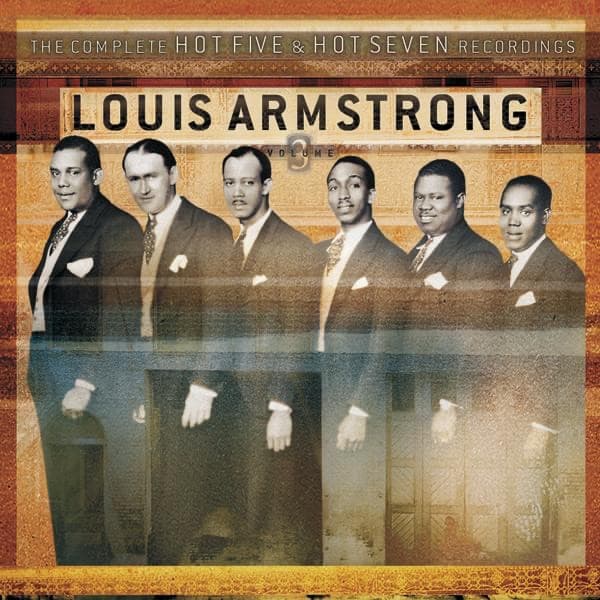
Louis Armstrong
The Complete Hot Five and Hot Seven Recordings
Jelly Roll Morton's Red Hot Peppers
Black Bottom Stomp / The Chant

Duke Ellington
Early Ellington: The Complete Brunswick and Vocalion Recordings, 1926–1931
Frankie Trumbauer and His Orchestra
Singin' the Blues / Clarinet Marmalade
Hoagy Carmichael and His Pals
Star Dust / One Night in Havana
Louis Armstrong and His Hot Five
West End Blues / Fireworks
Pine Top Smith
Pine Top's Boogie Woogie / Pine Top's Blues

Fats Waller
Ain't Misbehavin' (piano solo)
Duke Ellington and His Orchestra
Mood Indigo
Jimmie Rodgers
Blue Yodel No. 9 (Standin' on the Corner)
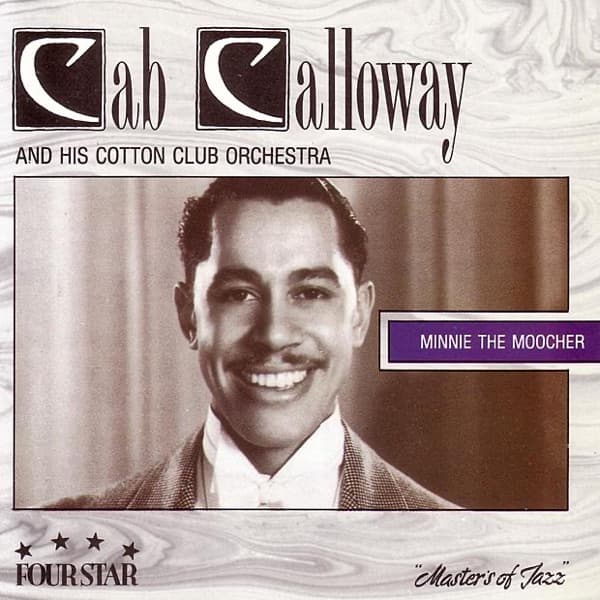
Cab Calloway
Minnie the Moocher
Milton Brown and His Musical Brownies
Taking Off
Bob Wills and His Texas Playboys
Steel Guitar Rag

Count Basie and His Orchestra
One O'Clock Jump
Quintette du Hot Club de France
Minor Swing
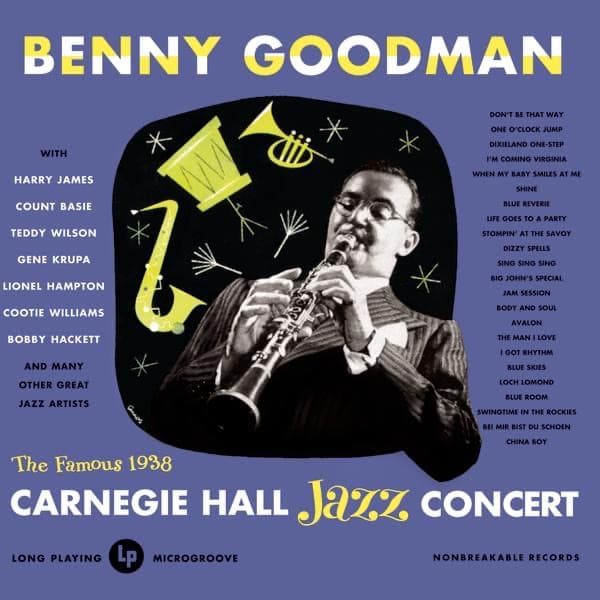
Benny Goodman
The Famous 1938 Carnegie Hall Jazz Concert
Chick Webb and His Orchestra with Ella Fitzgerald
A-Tisket, A-Tasket
Various Artists
From Spirituals to Swing: The Legendary 1938 and 1939 Carnegie Hall Concerts
Jelly Roll Morton
The Complete Library of Congress Recordings by Alan Lomax
Billie Holiday
Strange Fruit / Fine and Mellow

Coleman Hawkins
Body and Soul
Glenn Miller and His Orchestra
In the Mood

Duke Ellington
Never No Lament: The Blanton-Webster Band
Bob Wills and his Texas Playboys
New San Antonio Rose
Glenn Miller and his Orchestra
Chattanooga Choo Choo

Billie Holiday
God Bless the Child
The Andrews Sisters
Boogie Woogie Bugle Boy
Nat King Cole
The King Cole Trio
Charlie Parker
The Complete Savoy and Dial Studio Recordings
Louis Jordan and his Tympany Five
Let the Good Times Roll: The Complete Decca Recordings 1938–1954
Frank Sinatra
The Voice of Frank Sinatra

Dizzy Gillespie
Manteca
Thelonious Monk
Genius of Modern Music, Volume 1
Machito and his Afro-Cubans
Tanga

Miles Davis
Birth of the Cool
Les Paul
The New Sound!
Clifford Brown and Max Roach
Clifford Brown & Max Roach

Frank Sinatra
In the Wee Small Hours

Sonny Rollins
Saxophone Colossus

Duke Ellington
Ellington at Newport

Ella Fitzgerald
Ella Fitzgerald Sings the Cole Porter Song Book

Frank Sinatra
Songs for Swingin’ Lovers!
Miles Davis
Birth of the Cool

Thelonious Monk
Brilliant Corners
Cachao
Cuban Jam Sessions in Miniature ("Descargas")

Billie Holiday
Lady in Satin
Tito Puente
Dance Mania
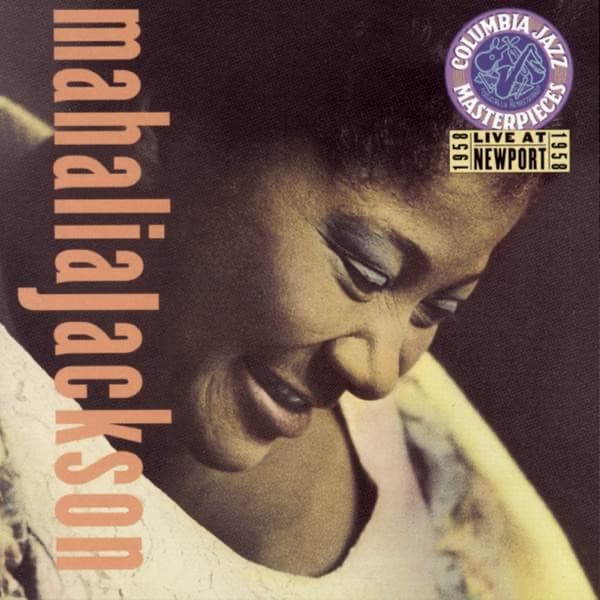
Mahalia Jackson
Newport 1958
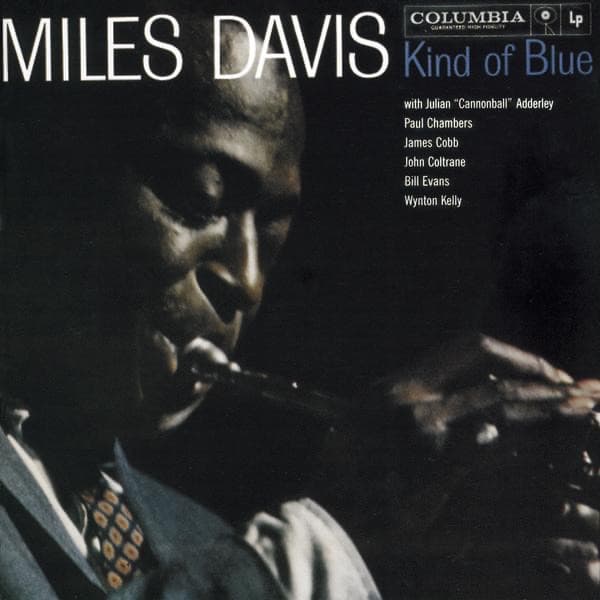
Miles Davis
Kind of Blue

John Coltrane
Giant Steps
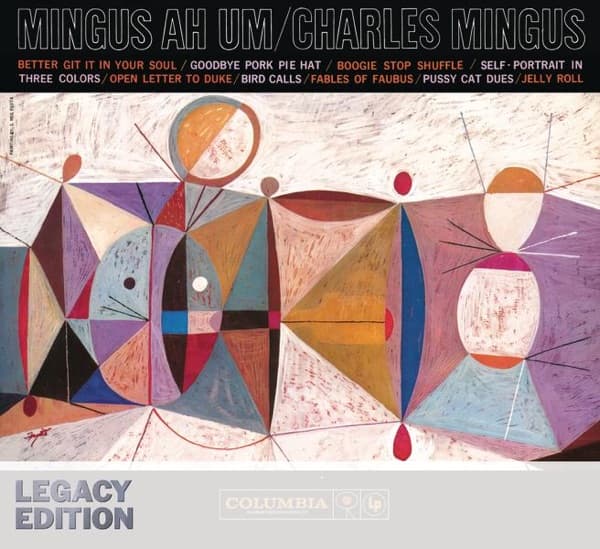
Charles Mingus
Mingus Ah Um

The Dave Brubeck Quartet
Time Out
Art Blakey and the Jazz Messengers
Moanin’

Ornette Coleman
The Shape of Jazz to Come

Ray Charles
The Genius of Ray Charles

John Coltrane
My Favorite Things
Ornette Coleman
Free Jazz: A Collective Improvisation
Stan Getz and João Gilberto
Getz/Gilberto

Nina Simone
Nina Simone in Concert

John Coltrane
A Love Supreme

Van Morrison
Astral Weeks

Miles Davis
In a Silent Way

Miles Davis
Bitches Brew

The Allman Brothers Band
At Fillmore East

Herbie Hancock
Head Hunters

Keith Jarrett
The Köln Concert

Stevie Wonder
Songs in the Key of Life

Steely Dan
Aja

Weather Report
Heavy Weather
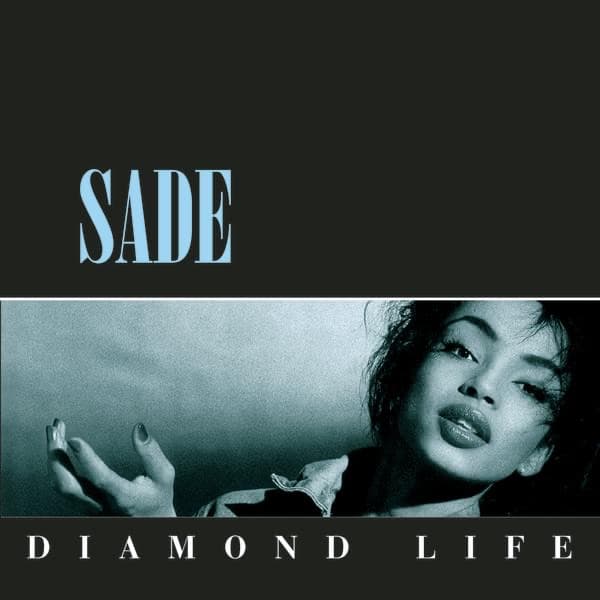
Sade
Diamond Life

Wynton Marsalis
Black Codes (From the Underground)

Anita Baker
Rapture

Take 6
Take 6
A Tribe Called Quest
The Low End Theory

Us3
Hand on the Torch

Cassandra Wilson
Blue Light 'til Dawn
Erykah Badu
Baduizm
Roni Size and Reprazent
New Forms

Buena Vista Social Club
Buena Vista Social Club

Norah Jones
Come Away with Me

Amy Winehouse
Back to Black
Flying Lotus
Cosmogramma
Chance the Rapper
Acid Rap
Kendrick Lamar
To Pimp a Butterfly
Kamasi Washington
The Epic
David Bowie
Blackstar
Thundercat
Drunk
Mac Miller
Swimming
Sons of Kemet
Your Queen Is a Reptile
Little Simz
Sometimes I Might Be Introvert
Floating Points, Pharoah Sanders and the London Symphony Orchestra
Promises
Jon Batiste
We Are
Ezra Collective
Where I'm Meant to Be
Doechii
Alligator Bites Never Heal
Rosalía
LUX
The Mixtape
Carolina Shout
James P. JohnsonStride piano, the Harlem engine. Count the left hand: bass note, chord, bass note, chord, faster than seems possible, while the right hand parties.
Dippermouth Blues
King Oliver's Creole Jazz BandNew Orleans ensemble jazz at its peak: nobody solos for long, everybody talks at once, and it works. Oliver's wah-wah cornet chorus was copied by every band in the country.
Rhapsody in Blue
Paul Whiteman and His Concert Orchestra with George GershwinThe premiere recording, Gershwin at the piano, cut down to fit two sides of a 78. The clarinet smear at the start was a rehearsal joke that stuck.
Black Bottom Stomp
Jelly Roll Morton's Red Hot PeppersComposed jazz. Every chorus changes texture: stop-time, banjo solo, clarinet in the low register, trumpet in the minor. Three minutes with more ideas than most albums.
Singin' the Blues
Frankie Trumbauer and His Orchestra with Bix BeiderbeckeThe first jazz ballad. The melody is never played until the end; the solos float above the beat. This is jazz as thought, not shout.
Potato Head Blues
Louis Armstrong and His Hot SevenThe stop-time chorus near the end is the moment the jazz solo became an art form. The band plays one chord a bar and Armstrong flies over the gaps.
Black and Tan Fantasy
Duke Ellington and His OrchestraBubber Miley's growling plunger trumpet over minor chords, and a quote from Chopin's funeral march at the end. The Cotton Club jungle sound, and the first Ellington that sounds like Ellington.
Ain't Misbehavin'
Fats WallerThe stride pianist as composer, taking his own hit apart and rebuilding it in three minutes. Compare it with "Carolina Shout" and hear eight years of Harlem.
It Don't Mean a Thing (If It Ain't Got That Swing)
Duke Ellington and His OrchestraIvie Anderson sings the era's name three years before anyone marketed it. The doo-wah brass figure behind her is what every dance band would chase.
One O'Clock Jump
Count Basie and His OrchestraListen to the bottom, not the top: Walter Page walking the bass and Jo Jones keeping time on the hi-hat instead of the bass drum. That lightness is the Kansas City gift to everyone after.
Minor Swing
Quintette du Hot Club de FranceJazz leaves America. Django Reinhardt solos with two fingers and Grappelli's violin swings like a horn. No drums, and you will not notice until someone tells you.
Sing, Sing, Sing (With a Swing) (Live at Carnegie Hall)
Benny Goodman and His OrchestraTwelve minutes, Gene Krupa's tom-toms, and a hall built for Beethoven losing its mind. Wait for Jess Stacy's unplanned piano solo near the end; even Goodman looks surprised on the recording.
A-Tisket, A-Tasket
Chick Webb and His Orchestra with Ella FitzgeraldA nursery rhyme, a twenty-one-year-old singer, and perfect pitch. The band answers her like a schoolyard. It made her famous and it still sounds like a good day.
Strange Fruit
Billie HolidayListen to what she does not do. No vibrato to speak of, no volume, no plea. She reports it, and the report is unbearable. This is the beginning of the protest song as pop music.
Body and Soul
Coleman HawkinsHe plays the tune for about four bars and then abandons it for the chords underneath. Bebop musicians memorized this solo. Try to hum the original melody while it plays; you will lose it fast.
Rose Room
Benny Goodman SextetThe tune Goodman called to trip up the guitarist John Hammond had smuggled onto his stage. Charlie Christian's amplified single-note lines are the electric guitar's first real solo voice.
Chattanooga Choo Choo
Glenn Miller and his OrchestraStart where the decade started: the biggest band in the world, a train whistle and a vocal chorus, at number one the week Pearl Harbor was bombed. Everything after this is what replaced it.
Take the 'A' Train
Duke EllingtonBilly Strayhorn's subway directions to Harlem, the greatest band Ellington ever led, three minutes long. Listen for how much happens in the space a pop song would spend on a chorus.
God Bless the Child
Billie HolidayShe sings a hair behind the beat and says more by holding back than the band does by playing. A song about money, written after a fight about money.
Straighten Up and Fly Right
Nat King Cole TrioA preacher's story about a monkey and a buzzard, sung by a jazz pianist who was about to become the biggest Black pop star in America. Piano, guitar and bass, no drums, and it swings harder than most big bands.
Lover Man
Sarah Vaughan with Dizzy Gillespie and Charlie ParkerBebop's first great vocal record, cut in May 1945 with the two men who invented the music playing behind a twenty-one-year-old. She phrases like a horn; they play like they are listening.
Ko-Ko
Charlie ParkerTwo choruses of alto saxophone over "Cherokee" at a tempo nobody else could manage. The moment jazz stops being dance music and becomes something you sit still and listen to, hard.
Flying Home
Ella FitzgeraldA whole chorus of made-up syllables sung with a horn player's logic. Scat singing had existed since Louis Armstrong; nobody had done it like this.
Boplicity
Miles DavisClose the decade with the nineteen-year-old trumpeter from "Ko-Ko", now twenty-two, turning bebop's heat down into something cool. The 1950s are on the other side of this record.
So What
Miles DavisTwo chords, nine minutes, and the most famous bass line in jazz. Listen to how much space there is and how nobody rushes to fill it. That patience is the whole record.
Lonely Woman
Ornette ColemanEnd the decade at the edge. A melody that sounds like weeping, over a rhythm section running at a different speed, with no chords to hold it. The 1960s begin here, in every music.
Acknowledgement
John ColtraneThe first movement of "A Love Supreme". Four notes on the bass, a solo that visits all twelve keys, and then the chant. Jazz as prayer.
Chameleon
Herbie HancockAn ARP Odyssey bass line, a clavinet, and fifteen minutes of groove. Jazz deciding it wanted to be funk, and the loop hip-hop producers reached for first.
Rockit
Herbie HancockA jazz pianist, a bass player from the downtown avant-garde, and Grand Mixer D.ST scratching. The first scratch most of America ever heard, on MTV.