100 Years of Music / Genre
Country
Fiddle tunes and ballads from the Southern mountains met the phonograph in 1923 and became a business. Country has swung between the honky-tonk and the Nashville studio ever since, and it is still the biggest radio format in America.
The lineage
The songs came from the British Isles by way of the Appalachian mountains, where ballads about murder and lost love were still being sung the way they had been in 1700. The fiddle came with them. The banjo came from West Africa by way of the plantations. The harmony came from the shape-note singing schools and the church. By 1900 all of it was mixed together at Saturday-night dances across the rural South, and none of it had been sold. Radio changed that. WSB in Atlanta went on the air in 1922, WLS in Chicago started its National Barn Dance in 1924, and on 28 November 1925 WSM in Nashville broadcast the show that became the Grand Ole Opry.
The record business followed the radio. In June 1923 Ralph Peer of OKeh took portable equipment to Atlanta and recorded Fiddlin’ John Carson singing "The Little Old Log Cabin in the Lane". Peer thought it sounded terrible; it sold out, and the industry had a new category it called hillbilly. Vernon Dalhart’s "The Prisoner’s Song", backed with "Wreck of the Old 97" (1924), was the first million-seller. Then in Bristol, on the Tennessee-Virginia line, between 25 July and 5 August 1927, Peer recorded both the Carter Family and Jimmie Rodgers. The Carters gave country its harmony and its songbook; Maybelle Carter’s guitar style, melody on the bass strings and rhythm on the treble, is still taught. Rodgers, a tubercular railroad brakeman from Mississippi, gave it the blues. His "Blue Yodel" records sold by the million, and in 1930 he cut one with Louis Armstrong.
The 1930s and 1940s split the music into styles. Gene Autry made the singing cowboy a movie star. Bob Wills’s Texas Playboys played Western swing, a country big band with horns and drums, and drew thousands to Cain’s Ballroom in Tulsa. Ernest Tubb’s "Walking the Floor Over You" (1941), with an electric guitar, defined honky-tonk: music loud enough for a Texas beer joint and sad enough for the people in it. Hank Williams took honky-tonk to the Opry in June 1949 and wrote the best songs the genre has. In 1945 Bill Monroe added Earl Scruggs’s three-finger banjo to his Blue Grass Boys and bluegrass was complete, though nobody called it that until the mid-1950s. In 1949 Billboard renamed the hillbilly chart "country and western".
Rock and roll nearly killed it. Elvis Presley’s first single (1954) had Monroe’s "Blue Moon of Kentucky" on the B-side, and for a few years the young audience left. Nashville answered with the Nashville sound: Chet Atkins and Owen Bradley took out the fiddle and steel, added strings and background singers, and made Jim Reeves’s "Four Walls" (1957) and Patsy Cline’s "Crazy" (1961) into pop records. Bakersfield, California, answered back with Telecasters and drums: Buck Owens’s "Act Naturally" (1963) and Merle Haggard’s "Mama Tried" (1968). Johnny Cash recorded at Folsom Prison in 1968. Then the outlaws took the music away from the producers: Waylon Jennings’s Honky Tonk Heroes (1973), Willie Nelson’s Red Headed Stranger (1975), and Wanted! The Outlaws (1976), country’s first platinum album.
Since then country has repeated the cycle roughly every decade: a pop turn (the Urban Cowboy years after 1980, Shania Twain in 1995, Taylor Swift crossing over after 2008, bro-country after 2012), then a return to the honky-tonk (the new traditionalists of 1986, Randy Travis and George Strait; Chris Stapleton in 2015; Zach Bryan in the 2020s). Garth Brooks made it stadium music in 1991. Uncle Tupelo’s No Depression (1990) started alt-country, which became Americana and got its own chart in 1995. Beyoncé’s Cowboy Carter (2024) reopened the argument about who the music belongs to, an argument as old as Rodgers and Armstrong in 1930. Through all of it the subject has not changed: work, drink, God, the road and the person who left.
Branches
Old-time and hillbilly
String bands, fiddlers and ballad singers recorded from 1923. Fiddlin’ John Carson, Charlie Poole, the Skillet Lickers, the Carter Family. The raw material every later style refined.
Western
Cowboy songs sung by movie cowboys. Gene Autry and the Sons of the Pioneers ("Tumbling Tumbleweeds", 1934) put the West into "country and western". Marty Robbins’s Gunfighter Ballads (1959) is its late peak.
Western swing
Country string bands that hired horns and drummers and played jazz. Bob Wills and his Texas Playboys, recording from 1935, filled Southwestern dance halls and gave country its drum kit.
Honky-tonk
Electric guitar, steel guitar, fiddle and a two-beat rhythm, built for loud rooms and sad drinkers. Ernest Tubb’s "Walking the Floor Over You" (1941) set it; Hank Williams, Lefty Frizzell and George Jones perfected it.
Bluegrass
Bill Monroe’s high tenor, mandolin and fiddle, completed when Earl Scruggs’s three-finger banjo joined in December 1945. Acoustic, fast and virtuosic. Flatt and Scruggs took it to television and the Beverly Hillbillies.
Nashville sound
Producers Chet Atkins and Owen Bradley replaced fiddle and steel with strings, piano and vocal choruses to win back the audience rock had taken. Jim Reeves, Patsy Cline, Eddy Arnold. Smooth, adult and enormously successful.
Bakersfield sound
The California reply to Nashville: Telecasters, drums, a rock backbeat and honky-tonk songs. Buck Owens and the Buckaroos, Merle Haggard and the Strangers. Wynn Stewart started it; Owens’s first hits in 1959 sold it.
Outlaw country
Waylon Jennings, Willie Nelson and Kris Kristofferson won the right to pick their own songs, bands and producers. Honky Tonk Heroes (1973), Red Headed Stranger (1975) and Wanted! The Outlaws (1976) made rebellion sell.
New traditionalists
After the Urban Cowboy pop years, a return to fiddles and steel. Randy Travis’s Storms of Life (1986), George Strait, Dwight Yoakam and Reba McEntire. Garth Brooks took this sound into stadiums in 1991.
Alt-country and Americana
Punk and indie musicians playing country songs. Uncle Tupelo’s No Depression (1990) named a magazine and a movement; Lucinda Williams, Wilco, Gillian Welch, Jason Isbell and Sturgill Simpson live under the Americana banner.
How to listen
Listen to the words first. Country is the most lyric-driven music in this history: a verse sets a scene, the chorus turns the knife, and the last verse usually reveals the line the whole song was written for. Hank Williams’s "I’m So Lonesome I Could Cry", George Jones’s "He Stopped Loving Her Today" and Kacey Musgraves’s "Rainbow" all work that way.
Then listen to the instruments as a signature of decade and place. Fiddle and acoustic guitar mean the 1920s and 1930s. Steel guitar and a two-beat bass mean a honky-tonk. Strings and background singers mean Nashville after 1957. A Telecaster with a bright, twangy attack means Bakersfield. Banjo in triple time means bluegrass. Once you can hear those, you can date a country record within a few years without checking.
Play the arguments. Put Patsy Cline’s "Crazy" (1961) next to Buck Owens’s "Act Naturally" (1963), or Shania Twain’s "Any Man of Mine" (1995) next to Chris Stapleton’s "Tennessee Whiskey" (2015). The genre has spent a century deciding whether it wants to be pop, and both sides keep winning.
Across the decades
Hillbilly music learns it has an audience
In 1922 two Texas fiddlers walked into Victor's New York office in cowboy clothes and asked to make a record. In 1923 an Atlanta fiddler named John Carson cut two sides for Okeh that a producer called awful and that sold out in days. In 1924 a light-opera tenor called Vernon Dalhart recorded "The Prisoner's Song" and it became the first country record to sell a million. The companies had not planned any of this. They now knew there was a market for rural white Southern music and no name for it. They settled on "hillbilly."
Radio found the same audience the same year. On November 28, 1925, a 77-year-old fiddler played an hour on WSM in Nashville, and George D. Hay's barn dance never stopped. By December 1927 it was called the Grand Ole Opry.
The decade's big bang came in a hat warehouse in Bristol, on the Tennessee-Virginia line, in the summer of 1927. Ralph Peer set up Victor's new microphones, advertised in the paper, and in two weeks recorded 76 sides by 19 acts. Two of them were the Carter Family, who sang the old songs in three-part harmony over Maybelle Carter's thumb-and-finger guitar, and Jimmie Rodgers, a railroad brakeman who sang the blues and yodeled at the end of every verse. The Carters are the root of the harmony tradition and bluegrass. Rodgers is the root of the country singing star. "Blue Yodel," recorded that November, borrowed its opening line from Black Memphis blues singers, and Howlin' Wolf later said his howl was a yodel he could not manage. Country and blues were never separate rivers.
Hillbilly music grows up and puts on a cowboy hat
The 1927 Bristol sessions had given the music its first two stars, Jimmie Rodgers and the Carter Family. Rodgers died of tuberculosis in a New York hotel in May 1933, two days after finishing his last session, and the decade that followed was a fight over what came after him. The answer turned out to be several things at once.
One was the singing cowboy. Gene Autry started as a Rodgers imitator on Tulsa radio, had his first hit with a parlor ballad in 1931, and by 1935 was starring in Republic Pictures westerns that carried country music to city theaters where no fiddle band had ever played. The Sons of the Pioneers gave the cowboy song three-part harmony and "Tumbling Tumbleweeds." Patsy Montana's 1935 "I Want to Be a Cowboy's Sweetheart" made her the first woman in the field with a runaway hit.
Another was western swing, the Texas dance music that treated a string band like a jazz orchestra. Milton Brown's Musical Brownies recorded the first electric steel guitar in country music in January 1935 with Bob Dunn. Bob Wills took his Texas Playboys to KVOO in Tulsa in February 1934, added horns and drums, and by "Steel Guitar Rag" in 1936 had a band that could play a fiddle breakdown and a Gershwin tune in the same set.
The third was Nashville. The Grand Ole Opry on WSM added the Delmore Brothers in 1933, Roy Acuff in February 1938, and a Kentucky mandolin player named Bill Monroe in October 1939, whose Blue Grass Boys would give a whole style its name. That same month NBC picked up a half hour of the Opry for a regional network, and country music had a Saturday night address. Border radio did the rest: from the fall of 1938 the Carter Family sang twice a day on XERA in Mexico, a station ten times stronger than any American one, and the whole continent could hear Maybelle's guitar.
Honky-tonk, bluegrass and the last peak of Western swing
Country music in 1940 was still called hillbilly music on the charts, and its big sound was Western swing: Bob Wills and his Texas Playboys, a Texas dance band with fiddles, steel guitar, horns and a jazz drummer, at the peak of their powers with "New San Antonio Rose". Wills was the first country bandleader to put drums on the Grand Ole Opry stage and had to fight to do it. His music is jazz with a fiddle, and it fed straight into rockabilly.
Honky-tonk was the war's country music. It came from the Texas beer joints where oil workers and soldiers drank, and it needed to be loud enough to hear over them. Ernest Tubb's "Walking the Floor Over You", recorded in Dallas in April 1941 with an electric lead guitar played by a Fort Worth sideman named Fay "Smitty" Smith, is the record that named the style; when Tubb joined the Opry in 1943 he brought the electric guitar with him. The songs were about drinking, cheating and walking the floor at night, and they were written for adults who did those things.
Then two things happened almost at once. In December 1945 a North Carolina banjo player named Earl Scruggs joined Bill Monroe's Blue Grass Boys, alongside singer and guitarist Lester Flatt, fiddler Chubby Wise and bassist Howard Watts. Scruggs picked with three fingers, fast, rolling and syncopated, and the Opry crowd came apart. Monroe's Columbia session of September 1946, which produced "Blue Moon of Kentucky", is the first bluegrass record; the style took its name from the band. In 1954 a Memphis truck driver named Elvis Presley would cut "Blue Moon of Kentucky" as the flip side of his first single, sped up into 4/4 time.
And in 1949 a thin Alabama singer with a bad back and a drinking problem, Hank Williams, took a 1922 Tin Pan Alley song called "Lovesick Blues", put a yodel and a Cincinnati studio band behind it, and held number one on the country chart for sixteen weeks. His Opry debut that June got six encores. In three years he wrote the songbook country music still lives in, and in four he was dead. Kitty Wells cut her first, unnoticed sides for RCA in 1949; her answer to honky-tonk's men would arrive in 1952.
Honky-tonk, heartbreak and the Nashville Sound
Country entered the decade as honky-tonk: fiddle, steel guitar, a shuffle beat and songs about drinking and cheating written for jukeboxes in bars. Hank Williams was its poet, and he wrote faster than he could live. He was fired from the Grand Ole Opry in August 1952 and died in the back seat of his Cadillac on the way to a New Year’s Day show in 1953, at twenty-nine. His songs had already crossed to the pop charts through Tony Bennett’s "Cold, Cold Heart." His ghost hangs over everything after.
Kitty Wells answered Hank Thompson’s "The Wild Side of Life" with "It Wasn’t God Who Made Honky Tonk Angels" in 1952 and became the first woman to top the country chart, proving that women could sell records to an industry that had decided they could not. Patsy Cline sang "Walkin’ After Midnight" on Arthur Godfrey’s television show in January 1957 and a career began. The Louvin Brothers brought close-harmony gospel fire; Marty Robbins wrote cowboy ballads; Ray Price invented a shuffle that still carries his name.
Then rock and roll ate country’s young audience, and Nashville answered in two ways. Some of its own sons, Johnny Cash and Carl Perkins and Jerry Lee Lewis, simply became rockabillies at Sun. And on 16th Avenue South, producer Owen Bradley built a studio in a Quonset hut in 1955 while Chet Atkins took over RCA’s Nashville operation. They pulled out the fiddles and steel, added vocal choruses and strings, and built the Nashville Sound: country records that could sit on a pop station. Music Row was born there. So was the argument about authenticity that country has had ever since.
Nashville polishes it, Bakersfield roughs it up, and Cash takes it to prison
The Nashville Sound was at its peak: strings, background choirs, no fiddle, records built by Chet Atkins and Owen Bradley to sell to people who did not think they liked country. Patsy Cline was its greatest voice. "Crazy", written by a young Willie Nelson, came out in 1961; she died in a plane crash near Camden, Tennessee, on March 5, 1963, at thirty. Jim Reeves, Eddy Arnold and Glen Campbell, whose "Gentle on My Mind" and "Wichita Lineman" made him a television star, carried the polished version to the end of the decade.
Bakersfield, California, was the answer to all that. Buck Owens and his Buckaroos, with Don Rich on a Telecaster, played country like a rock band: sharp, loud, danceable, "Act Naturally" in 1963. Merle Haggard, born near Bakersfield to Dust Bowl Okies and paroled from San Quentin in 1960, wrote about himself when nobody else did. "Mama Tried" in 1968 put his own prison record in a three-minute song and only softened the sentence. "Okie from Muskogee" the next year started a fight that has not ended.
The women told the truth first. Loretta Lynn, a coal miner's daughter married at fifteen, wrote "Don't Come Home A-Drinkin' (With Lovin' on Your Mind)" in 1966 and it went to number one. Tammy Wynette recorded "Stand by Your Man" with Billy Sherrill in 1968 and it has been argued about ever since. Dolly Parton put out "Hello, I'm Dolly" in 1967 and joined Porter Wagoner's television show the same year; she was already the best songwriter in the room.
Then the rock kids came to Nashville. The Byrds, pushed by Gram Parsons, made "Sweetheart of the Rodeo" in 1968. Dylan went to Nashville for "Blonde on Blonde" and stayed for "Nashville Skyline" in 1969, singing duets with Johnny Cash. And Cash, whose career had been sunk by pills, walked into Folsom Prison on January 13, 1968, with a small band and a tape machine and came out the biggest star in the genre. Country and rock have been trading songs across that line ever since.
Outlaws, Austin and the countrypolitan
Nashville in 1970 was a factory. Producers picked the songs, session players cut them in three hours and the artist showed up to sing. Two Texans broke the deal. Willie Nelson, who had written "Crazy" for Patsy Cline and been a Nashville songwriter for a decade, moved home to Austin in 1972, grew his hair and found that hippies and rednecks would both stand in the same hall, the Armadillo World Headquarters, if the songs were good. "Red Headed Stranger" (1975) was a concept album about a preacher who kills his wife, recorded so sparely that Columbia thought it was a demo. "Blue Eyes Crying in the Rain" went to number one anyway.
Waylon Jennings won the fight in a contract: the right to use his own band and pick his own producer. "Honky Tonk Heroes" (1973), written almost entirely by Billy Joe Shaver, was the result, and in January 1976 RCA gathered Waylon, Willie, Jessi Colter and Tompall Glaser on a compilation called "Wanted! The Outlaws". In November it became the first country album certified platinum. Kris Kristofferson, a Rhodes scholar and army helicopter pilot, had already shown that a country song could be written like a poem: "Me and Bobby McGee", "Sunday Mornin' Comin' Down", "Help Me Make It Through the Night". Townes Van Zandt, in Texas, wrote better and sold less than any of them.
The women were writing too. Loretta Lynn's "Coal Miner's Daughter" (1970) was autobiography set to a shuffle, and "The Pill" (1975) got banned for saying what every woman in her audience already knew. Dolly Parton, still Porter Wagoner's duet partner, wrote "Coat of Many Colors" (1971) about being poor and proud and "Jolene" (1973) about a woman begging another not to take her man, then wrote "I Will Always Love You" to Porter as her resignation letter and left. Emmylou Harris learned country from Gram Parsons, who died in September 1973 at twenty-six; their duets on "Grievous Angel" (1974) are the hinge between country rock and what would later be called Americana. Harris's Hot Band, with James Burton and then Ricky Skaggs, kept that door open all decade. George Jones kept being the greatest pure singer country had, through a marriage to Tammy Wynette that supplied both of them with material.
Meanwhile the factory did fine. Billy Sherrill's countrypolitan sound, strings and choirs and a soft beat, made Charlie Rich's "Behind Closed Doors" (1973) a crossover hit and Tammy Wynette a star. Kenny Rogers, out of a pop group, cut "The Gambler" (1978) and became the biggest country act in the world by talking a story over a shuffle. Both roads, the outlaws and the pop, ran straight into the 1980s.
Urban cowboys and new traditionalists
The decade opened with a film. "Urban Cowboy" (1980) sent America to Gilley's honky-tonk in a Stetson and made country the pop-crossover sound of 1980 and 1981. Dolly Parton's "9 to 5" went to number one on both charts. Kenny Rogers and Dolly's "Islands in the Stream" (1983), written by the Bee Gees, and Willie Nelson's "Always on My Mind" (1982) were as smooth as anything on adult radio. Alabama, a self-contained band in a genre of solo singers, put a number one on the country chart every year of the decade.
The reaction came from Texas. George Strait, signed to MCA in 1981, had a hit with "Unwound" and did not change his hat, his band or his western swing for the next forty years. Ricky Skaggs brought bluegrass mandolin to the top of the charts. The Judds, a mother and daughter from Kentucky, made acoustic harmony records. Reba McEntire moved to MCA in 1984 and took control of her own songs. Nashville called it "new traditionalism". The fans called it country.
Randy Travis made it a movement. "Storms of Life" (1986), cut with Kyle Lehning for Warner Bros., was the first country debut to go platinum, and its baritone and steel guitar cleared the way for Dwight Yoakam ("Guitars, Cadillacs", 1986), Steve Earle ("Guitar Town", 1986), k.d. lang, Lyle Lovett and Rosanne Cash, who each pulled the form somewhere new. In 1985 Cash, Nelson, Jennings and Kristofferson formed the Highwaymen. In April 1989 Capitol released a debut by an Oklahoma singer named Garth Brooks, and Clint Black followed a month later. The 1990s explosion had its fuse.
Garth, the boom and the road out of Nashville
Country had never sold like this. Garth Brooks, an Oklahoma kid who loved Kiss and James Taylor equally, took arena rock staging, a headset microphone and a fly rig into the country show. "No Fences" in 1990 sold more than sixteen million. "Ropin' the Wind" in September 1991 became the first country album ever to enter the Billboard 200 at number one, a fact SoundScan made visible and the industry could not ignore. He sold more records than anyone in the 1990s, in any genre. Billy Ray Cyrus's "Achy Breaky Heart" in 1992 taught America a line dance and sat at number one on the pop album chart for seventeen weeks. Brooks and Dunn's "Boot Scootin' Boogie" did the same job for the dance halls.
Under the boom, the neo-traditionalists held the line. Alan Jackson's "keep it country" was a philosophy and a business plan; George Strait kept doing what he had done since 1981, and it kept working; Vince Gill sang harmony so clean it became a standard. Trisha Yearwood and Mary Chapin Carpenter wrote and sang grown women's songs. Tim McGraw and Faith Hill married in 1996 and became the format's royal couple. LeAnn Rimes sang "Blue" at thirteen. Shania Twain and her husband Mutt Lange, who had produced Def Leppard, made "Come On Over" a pop record with a fiddle on it and sold forty million copies. Then the Dixie Chicks, three women with a banjo and a fiddle and real harmony, sold twelve million copies of "Wide Open Spaces" and proved the boom could be traditional and enormous at once.
And a road ran the other way. Uncle Tupelo, from Belleville, Illinois, named their 1990 debut after a Carter Family song, played punk-fast hillbilly and Hank Williams slow, and when they split in 1994 they became Wilco and Son Volt. A magazine named "No Depression" after that record became the name for the whole scene. Whiskeytown gave the world Ryan Adams. Lucinda Williams took six years and three producers to make "Car Wheels on a Gravel Road" and it is the record every Americana songwriter still measures against. Steve Earle came out of jail and rehab and made three great albums in a row. And Johnny Cash, dropped by his label and playing dinner theatres, sat down in Rick Rubin's living room with a guitar in 1994 and made "American Recordings". The last act of his life, and one of the best.
O Brother, the Chicks, and a country at war
The decade opened with a soundtrack. O Brother, Where Art Thou?, produced by T Bone Burnett for the Coen brothers' film in December 2000, was old-time string band music, Ralph Stanley singing O Death unaccompanied and Alison Krauss and Gillian Welch harmonizing on hymns, and it won Album of the Year at the Grammys in February 2002 without a single country radio station playing it. It started a bluegrass revival that ran through Dolly Parton's bluegrass trilogy, Old Crow Medicine Show's Wagon Wheel, Nickel Creek and, at the end of the decade, the Avett Brothers and Mumford and Sons.
Then the war came. Alan Jackson's Where Were You (When the World Stopped Turning) was the plainspoken 9/11 song; Toby Keith's Courtesy of the Red, White and Blue was the angry one, and it went to number one in July 2002. On 10 March 2003, nine days before the invasion of Iraq, Natalie Maines told a London crowd the Dixie Chicks were ashamed the president was from Texas, and country radio dropped the biggest-selling female group in American history overnight. Their answer, Taking the Long Way, swept the Grammys in February 2007. Johnny Cash covered Nine Inch Nails' Hurt in late 2002, and the video Mark Romanek shot in his cluttered Hendersonville house became his last testament; he died on 12 September 2003, four months after June Carter Cash. Loretta Lynn, at seventy-two, made Van Lear Rose with Jack White.
Mainstream Nashville got bigger and louder: Kenny Chesney's stadium tours, Tim McGraw's Live Like You Were Dying, Brad Paisley's guitar, Keith Urban, Rascal Flatts and Lady Antebellum. Gretchen Wilson's Redneck Woman and Big and Rich's Save a Horse (Ride a Cowboy) made 2004 the year of the MuzikMafia. Carrie Underwood came off American Idol and sold seven and a half million copies of Some Hearts. Miranda Lambert was the first of the new outlaw women. And Taylor Swift, sixteen years old at her debut in 2006, wrote her own songs about her own high school and made Fearless, the record that won Album of the Year and took her, and country, into pop. On the other side of town, Drive-By Truckers' Southern Rock Opera, Ryan Adams' Heartbreaker and Gold, and Jason Isbell were building the Americana that the 2010s would run on.
Bro-country, then the correction
Country radio in the early 2010s had one idea and played it constantly: a truck, a dirt road, a girl in the passenger seat, a hip-hop drum pattern underneath. Florida Georgia Line's Cruise in 2012 is the template, and Luke Bryan and Jason Aldean built stadium careers on it. Sam Hunt took it further on Montevallo in 2014, half-singing and half-talking over programmed beats, and Body Like a Back Road in 2017 sat on the country chart for months.
The pushback came from two directions. In 2015 a radio consultant told an industry newsletter that women were the tomatoes in the salad of country radio and should be played less often, which became known as tomato-gate and made explicit a bias everyone already knew was there. And a run of writers simply made better records: Kacey Musgraves, whose Same Trailer Different Park in 2013 won Best Country Album and whose Golden Hour won Album of the Year in 2019; Chris Stapleton, whose Traveller in 2015 was an obscure songwriter's debut until a duet with Justin Timberlake at the CMA Awards made it a phenomenon; Miranda Lambert, Eric Church, Ashley McBryde, Maren Morris.
Outside Nashville, Americana became its own economy. Jason Isbell wrote Southeastern in 2013 about getting sober and won two Grammys for The Nashville Sound. Sturgill Simpson made a psychedelic country record and then a letter to his newborn son. Tyler Childers, Colter Wall, Margo Price and Brandi Carlile all found large audiences without country radio, mostly through streaming and word of mouth. The Highwomen formed in 2019 to make the point about who gets played.
And the decade's biggest country-adjacent story was not country at all, officially. In March 2019 Billboard removed Lil Nas X's Old Town Road from its country chart, saying it did not embrace enough elements of today's country music. The song then spent nineteen weeks at number one on the Hot 100, the longest run in the chart's history. Ken Burns' eight-part documentary on country music aired that same autumn, a reminder that the genre's borders had always been policed and had always leaked.
The biggest genre nobody in the cities was watching
Country had the strangest decade of any American genre: commercially enormous, culturally contested, and constantly arguing with itself about who counts. Morgan Wallen's "Dangerous" spent its first ten weeks at number one on the Billboard 200, the first album to do that since 1987, and it did most of it after a video of him using a racial slur got him pulled from every major radio group in the country. Fans bought more, not less. Nobody in Nashville had a plan for that.
The other half of the story is that country got looser. Zach Bryan recorded on a phone in a barracks and ended up with the biggest streaming week ever for a rock album. Tyler Childers, Sierra Ferrell, Charley Crockett and Billy Strings pulled the sound back toward old-time and bluegrass and filled theatres doing it. Jelly Roll came out of rap and jail and sang about it. Lainey Wilson brought back the seventies. Chris Stapleton just kept being the best singer in the building.
Then 2024 blew the doors off. Beyoncé released "Cowboy Carter" and "Texas Hold 'Em" made her the first Black woman ever to top Hot Country Songs, a chart that had existed since 1958. Country radio mostly ignored it and the argument that followed was about a hundred years of who gets called country. Shaboozey, a Nigerian-American from Virginia, then spent nineteen weeks at number one on the Hot 100 with a drinking song, tying the all-time record. Luke Combs took a Tracy Chapman song to number one on country radio and put its writer on the Grammy stage. Post Malone made a country album with everyone in Nashville on it.
Timeline
KDKA goes on the air
On November 2, Westinghouse's station in Pittsburgh broadcast the Harding-Cox election returns under a commercial license, the event usually counted as the start of broadcast radio in America. Stations multiplied by the hundreds within a few years. For the record business, radio was free music in every living room, and a rival it never fully beat.
Eck Robertson makes the first country records
Texas fiddler Eck Robertson and Civil War veteran Henry Gilliland, both in cowboy dress, talked their way into Victor's New York office. On June 30 the pair cut "Arkansaw Traveler" and three other tunes; Robertson came back alone the next day for "Sallie Gooden." The two are usually counted as the first commercial country recordings, and Victor issued them on September 1, 1922, a reluctant company's first step into country music.
Fiddlin' John Carson and the first country hit
On June 14, in a temporary Okeh studio on Nassau Street in Atlanta, the 55-year-old fiddler recorded "The Little Old Log Cabin in the Lane" and "The Old Hen Cackled." Ralph Peer thought it was terrible and pressed 500 copies. They sold out in days and orders kept coming. This is the record that told the industry rural white Southerners would buy their own music.
Vernon Dalhart sells a million
On August 13, Marion Try Slaughter, a Texas-born light-opera tenor who had renamed himself after two Texas towns, recorded "The Wreck of the Old 97" and "The Prisoner's Song" for Victor. The coupling became the first country record to sell a million copies. Dalhart was not a hillbilly, and that was the point: he showed the songs could sell far beyond the South.
The microphone replaces the horn
Bell Labs engineers Joseph Maxfield and Henry Harrison built a recording chain of condenser microphone, vacuum-tube amplifier and electromagnetic cutter, and Western Electric licensed it to Victor and Columbia for $50,000 plus royalties. The first electrical records went on sale in the spring of 1925 without announcement; the frequency range roughly tripled, bass and sibilants appeared, and a singer could whisper. On November 2, Victor launched the Orthophonic Victrola to play the new discs. Bristol, "West End Blues," the crooners and everything after depend on this.
The WSM Barn Dance
National Life and Accident Insurance had put WSM on the air in Nashville that October. On November 28, announcer George D. Hay put 77-year-old fiddler Uncle Jimmy Thompson in front of the microphone for an hour, and the mail came in. In December 1927, following a network program of grand opera, Hay renamed the show the Grand Ole Opry. It has not gone off the air since.
NBC, the first network
On November 15 the National Broadcasting Company opened with a four-hour gala from the Waldorf-Astoria carried by about two dozen stations. One orchestra, heard from New York to Kansas City at the same instant. Within three years a Cotton Club broadcast could make a band famous in towns that had no record shop.
The Bristol sessions
Ralph Peer set up Victor's microphones on the Tennessee side of State Street on July 22 and recorded from July 25 to August 5: 76 sides by 19 acts. The Carter Family came down from Maces Spring, Virginia, on August 1 and 2 and cut six songs, including "Single Girl, Married Girl," with Sara singing lead and eighteen-year-old Maybelle's guitar carrying the melody. Jimmie Rodgers recorded alone on August 4 after his band quit on him. The label did not know it, but it had just found the two founding acts of country music in the same week.
The Stamps Quartet, "Give the World a Smile"
Frank Stamps sang bass on it when his Texas quartet cut the song for Victor in Atlanta on October 20, 1927, with Ralph Peer supervising and Dwight Brock at the piano. It made them the first white Southern gospel quartet on a major label and gave the style its first hit. Bass lead, close harmony, a bouncing afterbeat: the sound of the shape-note singing conventions, and the ancestor of the quartets that raised Elvis Presley.
Jimmie Rodgers, "Blue Yodel"
On November 30, in the old church Victor used as a studio in Camden, New Jersey, Rodgers recorded four songs. One was a string of blues verses about a cheating woman with a yodel at the end of each, and Victor called it "Blue Yodel." It sold in the hundreds of thousands, made him the first country star, and its first line came from Black Memphis singers Frank Stokes and Jim Jackson. Twelve more Blue Yodels followed before tuberculosis killed him in 1933.
The Carter Family, "Wildwood Flower"
Victor called the Carters to Camden after their Bristol sides sold. On May 10, 1928, Maybelle's nineteenth birthday, Sara sang a parlor song whose words had first been printed as a poem in 1860 and worn strange by decades of memory since, and Maybelle picked the melody on the bass strings while strumming the rhythm above. The "Carter scratch" is the root of country and folk guitar. Victor released it in January 1929.
The Crash
Between October 24 and 29 the stock market lost a quarter of its value. The record industry, already shrunk by radio and consolidating (RCA had bought Victor early in the year), collapsed with it: by most estimates sales fell from around a hundred million discs a year to a few million by 1932. Paramount and Gennett would be gone within a few years. Blind Willie Johnson, Charley Patton and hundreds of others made their last records in the shadow of this week.
The Mississippi Sheiks cut "Sitting on Top of the World"
Guitarist Walter Vinson and fiddler Lonnie Chatmon walked unannounced into an OKeh field session in Shreveport, Louisiana, early in 1930 and recorded eight songs. The one with the shrugging refrain about a woman who left became a hit with Black and white buyers alike and kept the Sheiks on record through the worst of the Depression. Its melody resurfaces in Robert Johnson's "Come On in My Kitchen" and, decades later, in Howlin' Wolf and Cream.
Jimmie Rodgers and Louis Armstrong cut "Blue Yodel No. 9"
In a Hollywood studio the Singing Brakeman recorded his ninth blue yodel with Armstrong on trumpet and Lil Hardin Armstrong on piano. It is one of the first records to put a white country star and a Black jazz star in the same room, and it makes plain what Rodgers always said: his music was blues with a yodel on top. The Country Music Hall of Fame still uses it to explain him.
Gene Autry stops imitating Jimmie Rodgers
After two years of recording Rodgers covers for every label that would have him, Autry cut a sentimental duet with fellow railroader Jimmy Long, "That Silver-Haired Daddy of Mine," in late October 1931. It was a major hit, won him a morning show on Chicago's WLS that December, and made him the best-selling country artist of the Depression years before he ever put on a cowboy hat.
The bottom: six million records and a scrapped label
1932 was the worst year the record business has ever had. Sales that had passed a hundred million units in 1927 fell to roughly six million. Paramount, the label that had recorded Patton, House, and James, went out of business and sold its metal stampers for scrap, which is why their records survive only as worn, noisy 78s. Only radio, and soon the jukebox, kept the music moving.
The Frying Pan goes on sale
George Beauchamp's aluminum lap steel with a horseshoe-magnet pickup, built by machinist Adolph Rickenbacker's company in Los Angeles, became the first commercially produced electric guitar in 1932. Fewer than twenty sets sold that year. But it solved the problem every guitarist in a band had, which was being heard, and within seven years the idea had reached Bob Dunn in Texas and Charlie Christian in Oklahoma City.
The Delmore Brothers join the Grand Ole Opry
Alton and Rabon Delmore, two brothers from the red clay of north Alabama, sang soft close harmony built for the microphone rather than the tent show. They joined WSM's Saturday night program in 1933, signed to Victor's new budget label Bluebird the same year, and cut "Brown's Ferry Blues." By 1936 the Opry said they were its most popular act, and every brother duo from the Louvins to the Everlys starts here.
Jimmie Rodgers dies in New York
Dying of tuberculosis, Rodgers went to New York in May 1933 to finish his Victor contract, recording twelve sides over a week with a cot in the studio to rest between takes. Two days after the last session, on May 26, he collapsed on the street and died at the Hotel Taft. He was thirty-five. Gene Autry had a record about his death in stores within weeks.
Repeal fills the bars, and the bars buy jukeboxes
Prohibition ended on December 5, 1933. Thousands of newly legal bars needed music and could not afford bands, and the coin-operated phonograph filled the gap. Production of jukeboxes rose more than tenfold between 1934 and 1937, and by the end of the decade stocking them accounted for a large share of all records sold. Jukebox plays also told labels, nickel by nickel, what the public wanted.
The Sons of the Pioneers and "Tumbling Tumbleweeds"
Leonard Slye, later Roy Rogers, Bob Nolan, and Tim Spencer formed the Pioneer Trio in Los Angeles in 1933, added fiddler Hugh Farr, and began cutting radio transcriptions as the Sons of the Pioneers in late 1934. Nolan's "Tumbling Tumbleweeds" gave the cowboy song three-part harmony and a melody that sounded like the West looked in the movies. Gene Autry's 1935 film took the title.
Bob Wills brings the Texas Playboys to Tulsa
Wills and five musicians arrived at KVOO on February 9, 1934, for a trial daily broadcast. The 12:30 show, sponsored by a laxative and then by General Mills, made him the most popular act in the Southwest. Over the next six years he added horns, drums, and the electric steel of Leon McAuliffe, building a string band that played like a jazz orchestra.
American Decca opens and cuts the price of a record
Jack Kapp launched the American branch of Britain's Decca in August 1934 and sold big-name records for thirty-five cents when the standard price was fifty. Bing Crosby was his first signing; the Sons of the Pioneers were his third. Cheap records plus jukeboxes are what pulled the industry off the floor, and by 1938 Decca and Victor between them sold thirty-three million discs.
Patsy Montana becomes the first woman with a country smash
Ruby Blevins of Hope, Arkansas, sang with the Prairie Ramblers on Chicago's WLS National Barn Dance, and in 1935 producer Art Satherley took them to New York to record for ARC. Her own "I Want to Be a Cowboy's Sweetheart," a polka-tempo yodel about freedom on horseback, became the first runaway hit by a female country artist. It is the ancestor of every cowgirl from Dale Evans to Dolly Parton's rhinestones.
Bob Dunn plugs in a steel guitar
On January 27, 1935, in Chicago, Milton Brown and His Musical Brownies recorded "Taking Off" with Bob Dunn playing an amplified steel guitar, the first electric instrument on a country record. Dunn had come up through Hawaiian music and phrased his steel like the trombonist Jack Teagarden. Brown died in a car wreck in 1936; Dunn's sound went straight into Bob Wills's band.
Roy Acuff records "The Great Speckled Bird"
Radio fame in Knoxville got Acuff a trip to Chicago in 1936 to cut his first twenty sides for ARC. Among them was his version of a mountain hymn that treats the church as a strange bird the world despises. Sung in his high, straining tenor over a dobro, it became his signature and the song that got him onto the Opry two years later.
The Monroe Brothers make their first records
Bill and Charlie Monroe, working out of Charlotte's 50,000-watt WBT, were recorded by Bluebird's Eli Oberstein in February 1936. "What Would You Give in Exchange for Your Soul" sold well and their hard-driving tempos and Bill's lightning mandolin set them apart from the other brother duos. They broke up in 1938, and Bill named his new band after the state of Kentucky.
Bob Wills records "Steel Guitar Rag"
Leon McAuliffe's electric steel instrumental, cut at the Texas Playboys' Chicago session in the fall of 1936, became the piece every steel player had to learn and the record that made the instrument a lead voice in country music. Wills hollering over the top is the western swing signature. The tune's ancestor is a Black ragtime guitar piece, and the lineage is not hidden.
Woody Guthrie reaches Los Angeles
Guthrie left his wife and children in Pampa, Texas, in May 1937 and rode west with the Dust Bowl migrants. By summer he had a daily fifteen-minute show on KFVD, and that fall he and Maxine Crissman, whom he called Lefty Lou, were the station's highest-rated act, with hundreds of fan letters from the migrant camps. The songs he wrote there became Dust Bowl Ballads.
Roy Acuff joins the Grand Ole Opry
After two rejections, promoter J. L. Frank got Acuff a guest spot on February 5, 1938. He sang "The Great Speckled Bird," the mail poured in, and the Opry hired him. Frank renamed the band the Smoky Mountain Boys. Within twenty months Acuff was hosting the show's network segment and on his way to being the most popular country singer of the war years.
The Carter Family go on border radio
In the fall of 1938 A.P., Sara, and Maybelle Carter moved to Del Rio, Texas, to broadcast twice a day on XERA, a 500,000-watt station just across the river in Mexico that was ten times as powerful as the law allowed in the United States. Their records had stopped selling; now the whole continent could hear them for free. Maybelle's daughters Helen, June, and Anita joined the act the next season.
The Grand Ole Opry goes network
On October 14, 1939, NBC's Red Network carried a half hour of the Opry, sponsored by Prince Albert tobacco, to twenty-six stations across the Southeast and Southwest. Roy Acuff hosted, Uncle Dave Macon and the harmonica player DeFord Bailey performed, and George D. Hay presided. The show had just moved into Nashville's War Memorial Auditorium and started charging a quarter at the door. Country music now had a national Saturday night.
Bill Monroe joins the Opry
Monroe auditioned for WSM's George D. Hay and the Stone brothers in October 1939 with a driving version of Jimmie Rodgers's "Mule Skinner Blues," and they hired him on the spot. His Blue Grass Boys, named for Kentucky, did not yet have a banjo; the sound would not be called bluegrass for fifteen years. But the high, lonesome tenor and the mandolin as lead instrument were already in place.
Bob Wills records "New San Antonio Rose"
Wills and his Texas Playboys put words and a horn section on his 1938 fiddle instrumental and made the biggest Western swing record of all. Tommy Duncan sang it; Bing Crosby covered it the next year and sold a million. Western swing was a Texas dance band playing jazz on fiddles, steel guitar and drums, and this is it at full strength, two years before the draft took most of the band.
Ernest Tubb cuts "Walking the Floor Over You"
On 26 April 1941 at a studio in Dallas, Tubb recorded his own song with an electric lead guitar played by a Fort Worth sideman, Fay "Smitty" Smith, who could not improvise and had his breaks written out note for note. The record sold a million and gave honky-tonk its name and its sound: a plain voice, a beat you could two-step to, and a guitar loud enough for a beer joint. In 1943 Tubb joined the Grand Ole Opry and brought the electric guitar onto its stage.
The recording ban begins
On 1 August 1942 James C. Petrillo, president of the American Federation of Musicians, forbade every union musician in the country from making records until the labels agreed to pay royalties into a fund for musicians put out of work by jukeboxes and radio. Singers were not union members and kept recording, with choirs behind them. Instrumental music stopped. The ban lasted more than two years and is the longest strike in entertainment history; it put the singer in front of the band for good and kept bebop off record until 1945.
RCA Victor and Columbia give in; the ban ends
After twenty-seven months, the two biggest labels signed the union's agreement in November 1944 and studios reopened. The world they reopened into had changed: singers had the charts, big bands had lost their dancers, and a generation of small-group musicians had two years of unrecorded ideas waiting.
Earl Scruggs joins the Blue Grass Boys
A twenty-one-year-old banjo player from Shelby, North Carolina, came off a stint with "Lost" John Miller, auditioned for Bill Monroe and joined the Blue Grass Boys late in 1945; the Bluegrass Music Hall of Fame dates the classic band from that summer, the Country Music Hall of Fame simply to 1945. Scruggs picked with three fingers in fast rolling patterns where every other banjo player strummed or frailed, and surviving Grand Ole Opry airchecks catch what that did to a crowd. With Lester Flatt on guitar and lead vocals, Chubby Wise on fiddle and Howard Watts on bass, this is the band that defined bluegrass: every band since is measured against it.
Bill Monroe records "Blue Moon of Kentucky"
Monroe's first Columbia session, on 16 September 1946 in Chicago, was the first time Flatt and Scruggs recorded with him, and it produced the waltz Monroe had been singing on the Opry for a year. Columbia issued it in 1947. Elvis Presley's 1954 cover, sped up and in 4/4, was the flip side of his first single; Monroe, told about it, went back and recut his own song faster. Bluegrass and rockabilly shake hands across this one record.
Hank Williams: "Move It On Over"
Williams's first record for MGM, a jumping song about a man locked out of his house and moving in with the dog, was his first chart hit in 1947. It has the same shape as "Rock Around the Clock" seven years early. Fred Rose, the Nashville publisher who had signed him, was building the country song into a national business; Williams was about to hand him the catalogue.
The second recording ban
The Taft-Hartley Act of 1947 made the union's royalty fund illegal as written, and on 1 January 1948 Petrillo called a second strike on recording. Labels had stockpiled sessions through December 1947, which is why so many of this chapter's records were cut in the last week of that year. The ban ended on 14 December 1948 with the creation of the Music Performance Trust Fund, which still pays for free concerts. Independent labels ignored it more freely than the majors, and small blues and country outfits gained ground while the majors sat still.
Hank Williams: "Lovesick Blues"
A Tin Pan Alley song from 1922, recorded by the blackface yodeller Emmett Miller in 1928 and by Rex Griffin in 1939, became the biggest country record of the decade when Williams cut it at the Herzog studio in Cincinnati on 22 December 1948, eight days after the ban lifted, and MGM released it in February 1949. Fred Rose had argued against recording it. It held number one on the country chart for sixteen weeks and got Williams the Grand Ole Opry booking he had been refused for drinking.
RCA Victor introduces the 45
RCA's answer to Columbia's LP went on sale in April 1949: a seven-inch vinyl disc with a large hole, spinning at 45 rpm, one song a side, colour-coded by genre, with its own fast-changing player. The "battle of the speeds" confused buyers for two years until the market settled on the LP for albums and the 45 for singles, and the 78 began its slide to obsolescence. The 45 was cheap, light and unbreakable, and it was about to be the format of the teenager.
Hank Williams debuts on the Grand Ole Opry
On 11 June 1949 at the Ryman Auditorium in Nashville, a singer the Opry had refused to book because of his drinking walked out and sang "Lovesick Blues". The crowd called him back six times and the announcer had to plead with them to let the show continue. No debut in the program's history has matched it. He had three and a half years to live.
Sam Phillips opens a studio at 706 Union Avenue
On January 3, 1950, a former radio engineer named Sam Phillips opened the Memphis Recording Service in a storefront on Union Avenue, advertising that he would record anything, anywhere, any time. He meant weddings and funerals. What walked in were B.B. King, Howlin’ Wolf, Ike Turner and, four years later, a truck driver named Presley. Phillips launched his own label, Sun Records, in February 1952. Every rockabilly record in this chapter was cut in that one small room.
Kitty Wells answers back
On May 3, 1952, a thirty-three-year-old Nashville mother of three recorded four songs for Decca mainly for the session fee. One of them, "It Wasn’t God Who Made Honky Tonk Angels," was an answer to Hank Thompson’s hit "The Wild Side of Life," and it blamed unfaithful men for the women in the bars. In August it became the first record by a solo woman to top the country chart. Whether the Opry banned it is still argued: the story that WSM and NBC would not let her sing it at all is the one usually told, but Wells and her husband said the objection was to a single word and only on the network half of the show. It sold 800,000 copies in a year either way.
Harry Smith’s "Anthology of American Folk Music"
A record collector, filmmaker and occultist named Harry Smith persuaded Moses Asch of Folkways to issue eighty-four commercial 78s from 1927 to 1932 as three two-LP boxes: ballads, social music, songs. Blues, hillbilly, Cajun and gospel sat side by side with no note of who was Black and who was white. It sold poorly and never went out of print, and Bob Dylan, Joan Baez and the whole 1960s revival learned their repertoire from it.
Hank Williams dies in the back of a Cadillac
Fired by the Grand Ole Opry in August 1952 for drunkenness, Hank Williams was being driven from Tennessee toward a New Year’s show in Canton, Ohio, when he died in the back seat, probably late on December 31; he was pronounced dead in Oak Hill, West Virginia, early on January 1, 1953. He was twenty-nine. "Your Cheatin’ Heart," recorded that September, came out weeks later and went to number one. Country music has been writing about him ever since.
Solid bodies: the Stratocaster, the Les Paul and the electric bass
Leo Fender, a radio repairman in Fullerton, California, had put the first mass-produced solid-body electric guitar on sale in 1950 and the Precision Bass, the first practical electric bass, in 1951. Gibson answered in 1952 with a gold-top model carrying Les Paul’s name. In 1954 Fender released the Stratocaster, with three pickups, a contoured body and a vibrato arm. Buddy Holly played one on Ed Sullivan. The instruments that would define rock for the rest of the century were all in the shops before the music had a name in most towns.
Elvis Presley records "That’s All Right"
Sam Phillips had put the nineteen-year-old with guitarist Scotty Moore and bassist Bill Black on July 5, 1954, and the session was going nowhere until Elvis started clowning through Arthur Crudup’s 1946 blues at double speed. Phillips rolled tape. The flip side was Bill Monroe’s bluegrass waltz "Blue Moon of Kentucky," sped up the same way. Disc jockey Dewey Phillips played the record on WHBQ two nights later and the phones lit up. Sun 209 was in stores by July 19.
Music Row is born
In 1955 Decca producer Owen Bradley bought an old house at 804 16th Avenue South in Nashville and built a studio behind it in an army-surplus Quonset hut. The same year RCA put guitarist Chet Atkins in charge of its Nashville sessions, a job that produced RCA Studio B. Between them they recorded Gene Vincent, Patsy Cline, Jim Reeves and Don Gibson and worked out the Nashville Sound: no fiddle, no steel, a vocal chorus, sometimes strings, aimed at the pop chart. The neighborhood is still called Music Row.
Chuck Berry records "Maybellene"
A St. Louis hairdresser in his late twenties drove to Chicago, found Muddy Waters, and was sent to Chess. On May 21, 1955, he recorded a hopped-up version of a country fiddle tune, "Ida Red," as a car-chase song with a guitar intro learned from Louis Jordan’s guitarist and T-Bone Walker. Leonard Chess gave Alan Freed a third of the writing credit, Freed played it on WINS, and it went to number one on the R&B chart and number five pop. Country, blues and a teenager’s vocabulary in one record: that is the recipe.
RCA buys Elvis for $35,000
Five singles into his Sun career, Elvis had a manager, Colonel Tom Parker, and a bidding war. On November 21, 1955, RCA Victor bought his contract from Sam Phillips for $35,000, more than anyone had ever paid for a singer, plus $5,000 in back royalties to Elvis. Phillips used the money to keep Sun alive and to promote Carl Perkins. RCA got the biggest star of the century. Both sides thought they had won, and both were right.
Carl Perkins records "Blue Suede Shoes"
Perkins wrote it on a potato sack after hearing a boy at a dance tell his date not to step on his suedes, and cut it at Sun on December 19, 1955. Released on New Year’s Day 1956, it climbed the country, R&B and pop charts at the same time, the first record to do that, and it became Sun’s first million seller. On the way to play it on national television in March, Perkins’s car crashed on Route 13 between Dover and Woodside, Delaware, and Elvis sang it on TV instead. Rockabilly’s truest guitarist never got the moment back.
"Heartbreak Hotel"
Elvis’s first RCA single, recorded in Nashville on January 10, 1956, and released on January 27, was a slow, echo-drenched blues written from a newspaper story about a suicide. RCA hated it. By spring it was number one on the pop chart for seven weeks, and number one on the country chart, and it sold a million copies. Elvis appeared on national television six times that winter and spring, and by summer the word teenager and the word Elvis meant roughly the same thing.
The Million Dollar Quartet
On December 4, 1956, Carl Perkins was cutting a session at Sun with a new piano player named Jerry Lee Lewis when Elvis dropped by with a girlfriend. Johnny Cash came in. Sam Phillips let the tape roll while the four of them sang gospel songs around the piano for an afternoon, and called the newspaper. The photograph became the studio’s icon. The tape, mostly hymns, is the sound of where all four of them came from.
Jerry Lee Lewis, "Whole Lotta Shakin’ Goin’ On"
A Louisiana piano player who had been thrown out of Bible college recorded a song he had been playing in clubs for years, at Sun in February 1957, in one take, with his own boogie left hand doing the work of a bass player. Radio stations banned it. Then he played it on the Steve Allen Show in July, kicked the piano stool across the stage, and the record sold millions and went to number one on the country and R&B charts. His career lasted another year before a marriage to his thirteen-year-old cousin ended it in London.
Buddy Holly and the Crickets, "That’ll Be the Day"
Holly had recorded the song for Decca in Nashville in 1956 and been dropped. In February 1957 he drove from Lubbock to Norman Petty’s studio in Clovis, New Mexico, and cut it again, faster, with his own guitar solo. Released on Brunswick under the band’s name on May 27, 1957, it climbed for four months and hit number one on September 23. Holly wrote his own songs, led his own band, produced his own records and wore glasses. The Beatles named themselves after the Crickets.
The first Grammy Awards
The new National Academy of Recording Arts and Sciences handed out twenty-eight awards at dinners in Beverly Hills and New York on May 4, 1959, for the records of 1958. Record of the Year was Domenico Modugno’s "Volare." Album of the Year was Henry Mancini’s "Peter Gunn." Ella Fitzgerald won twice. Rock and roll got one line on the ballot: Best Rhythm & Blues Recording, won by the Champs’ instrumental "Tequila". Nothing with a singer and a backbeat came near the big awards, which tells you what the industry thought its own music was.
Marty Robbins, "El Paso"
A four-and-a-half-minute cowboy ballad about a killing over a Mexican dancer, cut in one take with two acoustic guitars, was too long for radio and Columbia released it anyway in October 1959. It went to number one on both the country and pop charts and won a Grammy. It is the Nashville Sound’s proof that a story could carry a record as far as a beat could.
Patsy Cline records "Crazy", written by a young Willie Nelson
Cline had a hit with "I Fall to Pieces" that spring and broke both her wrists in a car crash in June. On crutches, she cut "Crazy" at Owen Bradley's Nashville studio in one take of the vocal, over a track built with piano, the Jordanaires and a shimmer of strings. It is the Nashville Sound at its most complete: country feeling in a pop dress. The Country Music Hall of Fame calls it the most-played jukebox record ever.
Ray Charles cuts "Modern Sounds in Country and Western Music"
Charles had already fused gospel and R&B in the 1950s. In 1962 he took Hank Williams, Don Gibson and the Everly Brothers and sang them with strings and a big band. "I Can't Stop Loving You" was number one for five weeks. A Black artist had made the biggest country-derived record of the year at the height of the civil rights struggle, and he had shown country and soul that they were cousins.
Patsy Cline dies in a plane crash at thirty
Flying home from a benefit in Kansas City, Cline's small plane went down in bad weather near Camden, Tennessee, on March 5, 1963, killing her, Cowboy Copas and Hawkshaw Hawkins. She had been the biggest female singer in country and had already broken the genre's rules by headlining over men and singing pop material. She was the first solo woman elected to the Country Music Hall of Fame, in 1973.
Johnny Cash records "At Folsom Prison"
Cash had been asking Columbia to let him record in a prison for years; new producer Bob Johnston said yes. On January 13, 1968, with the Tennessee Three, Carl Perkins, June Carter and the Statler Brothers, he played two shows for the inmates of Folsom State Prison in California and opened with "Folsom Prison Blues". Released in May, the album went gold before the year was out, put him on FM rock radio, got him a network television show and made him the country singer the counterculture trusted.
Merle Haggard releases "Mama Tried"
Haggard was born near Bakersfield to Oklahoma migrants, did time in San Quentin, and saw Johnny Cash play there in 1958. "Mama Tried" is that life in three minutes with the facts softened: he was not serving life without parole, but the rest is true. It was number one on the country chart for four weeks in the summer of 1968. Bakersfield had a poet, and country music had a new way of telling the truth about its singers.
Tammy Wynette records "Stand by Your Man"
Written with producer Billy Sherrill in a quarter of an hour at the end of a session, sung with a catch in the voice that gives the title away, and number one on the country chart in the autumn of 1968. Wynette always insisted the key line was "after all, he's just a man". Feminists heard a surrender; she heard a promise. The argument has outlasted everybody who started it, which is one definition of a standard.
The Armadillo World Headquarters opens in Austin
A former National Guard armory in Austin, Texas, opens as a music hall in August 1970. Within two years Willie Nelson has moved home from Nashville and found that long-haired students and boot-wearing ranchers will stand in the same room for the right songs. The Armadillo becomes the clubhouse of "progressive country" and the reason "outlaw" becomes a category rather than an insult.
Neil Young, "Harvest"
Released in February 1972, cut partly in Nashville with session players Young called the Stray Gators, partly in a barn. "Heart of Gold" goes to number one, the only chart-topping single he will ever have. Young later writes that it put him in the middle of the road, so he headed for the ditch. The next three years give us "Tonight's the Night" and "On the Beach", and the singer-songwriter has a model for refusing success.
Dolly Parton releases "Jolene"
The single comes out on 15 October 1973 and reaches number one on the country chart the following February. Parton says the name came from a young fan who asked for an autograph and the story from a red-haired bank teller who flirted with her husband. A minor-key guitar figure, a plea instead of a threat, and one of the most covered songs ever written. Parton had already written "I Will Always Love You" as her farewell to Porter Wagoner; both are on the same album.
Gram Parsons and Emmylou Harris, "Grievous Angel"
Parsons died of an overdose at the Joshua Tree Inn on 19 September 1973, aged twenty-six; his road manager stole the body and burned it in the desert. "Grievous Angel", released in January 1974, is what he left: country songs sung with Emmylou Harris, a folk singer he had found in a Washington bar, with James Burton on guitar. Their two voices on "Love Hurts" are the hinge between the Byrds and everything later called Americana.
Willie Nelson, "Red Headed Stranger"
Nelson's new contract with Columbia gives him full creative control, and he uses it on a concept album about a preacher who kills his wife and rides west: mostly his guitar, Bobbie Nelson's piano and almost nothing else, cut in a few days in Garland, Texas. The label thinks it is a demo. Released in May 1975, "Blue Eyes Crying in the Rain", a Fred Rose song from 1945, becomes his first number one, and the album goes double platinum.
"Wanted! The Outlaws" goes platinum
RCA releases a compilation of Waylon Jennings, Willie Nelson, Jessi Colter and Tompall Glaser on 12 January 1976, with a fake wanted poster on the sleeve. In November it becomes the first country album certified platinum for a million sales. "Outlaw" is now a marketing category, and the argument Waylon started in 1972, that a singer should choose his own band and producer, has been won at the cash register.
Eagles, "Hotel California"
Released 8 December 1976. Don Felder's twelve-string figure, Don Henley's lyric about a hotel you can check out of but never leave, and a two-guitar coda with Joe Walsh, who had replaced Bernie Leadon and turned the band from country rock to rock. The album sells more than twenty million copies in America. It is the sound of the Laurel Canyon dream after the money arrived, and the band knew it.
Elvis Presley dies at Graceland
Found on the bathroom floor of his Memphis mansion on 16 August 1977, aged forty-two, overweight and dependent on prescription drugs, the year after he cut his last studio tracks in the Jungle Room. Tens of thousands line Elvis Presley Boulevard. RCA's pressing plants run around the clock. The first rock and roll generation has a death to mark the end of its own youth, and the Elvis-imitation industry, and the cult of the dead star, both begin.
Kenny Rogers, "The Gambler"
A Don Schlitz song about advice from a card sharp on a train, cut by Rogers and released in November 1978. He half-talks it over a soft shuffle and it goes to number one on the country chart, wins a Grammy, and spawns a series of television films. Country's crossover to the pop mainstream, which the outlaws had fought and Billy Sherrill's strings had polished, now has its friendliest face.
Dolly Parton's "9 to 5"
Written for the film she starred in with Jane Fonda and Lily Tomlin, its percussion built from Parton clicking her acrylic fingernails together like a typewriter, "9 to 5" went to number one on the pop and country charts in early 1981. Country crossover had a new high-water mark, months after "Urban Cowboy" had sent America shopping for boots.
Alabama and George Strait: two roads for country
Alabama, signed to RCA in April 1980, put a run of singles at number one between 1980 and 1982 and proved a self-contained band could run country. George Strait, signed to MCA in 1981, took "Unwound" to number six with a honky-tonk and western swing sound Nashville had thought was finished. Both roads would be walked for forty years.
Kenny Rogers and Dolly Parton, "Islands in the Stream"
Written and produced by the Bee Gees, the duet went to number one on the pop, country and adult charts. Country's crossover decade peaked here; Wynton Marsalis, George Strait and Randy Travis were about to pull jazz and country back toward their roots.
The Judds and the new traditionalists
Naomi and Wynonna Judd, a mother and daughter from Kentucky, signed to RCA in 1983 and took "Mama He's Crazy" to number one in 1984, the first country chart-topper by a female duo in thirty years, on an acoustic sound built by producer Brent Maher. Ricky Skaggs, Reba McEntire and George Strait were making the same argument. Nashville began calling it new traditionalism.
Randy Travis releases "Storms of Life"
A former cook at the Nashville Palace, produced by Kyle Lehning for Warner Bros., with a baritone that sounded like Lefty Frizzell and a steel guitar that sounded like 1955. "On the Other Hand" went to number one; the album became the first country debut to go platinum, then triple platinum. New traditionalism now had a leader.
Pixies release "Doolittle"; Garth Brooks releases his debut
In April 1989, on 4AD, the Pixies followed "Surfer Rosa" (1988) with an album of two-minute songs that went quiet, then loud, then quiet: the trick Nirvana would build a career on. The same month Capitol released "Garth Brooks", produced by Allen Reynolds; "If Tomorrow Never Comes" went to number one, and by 1991 his second album, "No Fences", was the second best-selling record in America of any genre.
Uncle Tupelo, "No Depression"
Three kids from Belleville, Illinois, named their debut after a Carter Family song from 1936 and played it like the Minutemen. Jay Farrar and Jeff Tweedy would split in 1994 into Son Volt and Wilco, and a fan magazine would take the album's name for the whole alt-country movement. The record itself is the sound of punk discovering it had grandparents.
Garth Brooks, "No Fences"
Released 27 August 1990, with "Friends in Low Places" and "The Thunder Rolls". The Country Music Hall of Fame counts more than sixteen million copies. Brooks was a business student who had studied arena rock, and he brought its lights, its wireless headset and its fly-over-the-crowd rigging to a genre that had been standing still at a microphone. Country would not be small again.
SoundScan changes the chart
Billboard's chart dated 25 May 1991 was the first built on barcode scans instead of store clerks' guesses. N.W.A's "Efil4zaggin" went to number one within weeks and Garth Brooks lived at the top for months. The record industry had been under-counting rap and country for years. Once the numbers were honest, the money followed them.
Garth Brooks debuts at number one on the Billboard 200
"Ropin' the Wind", released in September 1991, was the first country album to enter the all-genre album chart at number one. It then fought Michael Jackson and Nirvana for the top spot through the winter. SoundScan had made the count honest; Brooks had made the audience huge. It finished 1992 as the best-selling album in America of any genre.
Billy Ray Cyrus, "Achy Breaky Heart"
A song the Marcy Brothers had already recorded as "Don't Tell My Heart", sung by a mulleted former car salesman from Kentucky, with a line dance attached. It went to number four on the pop chart and "Some Gave All" sat at number one on the Billboard 200 for seventeen weeks. The country boom had its novelty hit and its dance craze in the same summer, and the line-dance floor became a business.
Johnny Cash, "American Recordings"
Dropped by Columbia, ignored by Nashville, Cash sat in Rick Rubin's living room in 1993 with one guitar and sang whatever he wanted: his own murder ballads, Nick Lowe, Tom Waits, Leonard Cohen. Released 26 April 1994 on Rubin's American label, with a cover shot in black between two dogs. It won the Grammy for Best Contemporary Folk Album and started the last, best act of his career, six albums that ended with "Hurt".
O Brother, Where Art Thou? starts a bluegrass revival
T Bone Burnett's soundtrack for the Coen brothers' film came out on 5 December 2000: Ralph Stanley singing O Death alone, Alison Krauss and Gillian Welch on Didn't Leave Nobody but the Baby, Dan Tyminski as George Clooney's voice on Man of Constant Sorrow. Country radio ignored it. It won Album of the Year at the Grammys on 27 February 2002 and sent a generation of kids to the banjo.
9/11 and the Clear Channel memo
Within days of the attacks, Clear Channel, which owned more than a thousand American radio stations, circulated a list of about 160 songs its program directors considered lyrically questionable: Imagine, Walk Like an Egyptian, everything by Rage Against the Machine. It was a suggestion, not a ban, and it became the decade's symbol of how consolidated radio had become. Jimmy Eat World renamed Bleed American after itself. Alan Jackson and Bruce Springsteen wrote the songs the country actually needed.
Alan Jackson's Where Were You (When the World Stopped Turning)
Jackson wrote it in the weeks after the attacks and sang it for the first time at the CMA Awards on 7 November 2001, a plainspoken list of questions with no answer and no enemy. It won the Grammy for Best Country Song, and the CMA and ACM named it the year's best. Set beside Toby Keith's boot-in-your-face answer the following summer, it marks the two roads country music took into the war years.
Wilco's Yankee Hotel Foxtrot
Reprise Records rejected the album in 2001. Wilco bought it back, streamed it free from their own website on 29 September 2001, and sold it to Nonesuch, another label owned by the same parent company, which released it on 23 April 2002. It became the band's best-selling record. Jeff Tweedy's songs were wrapped in shortwave static and piano feedback, and the story became the decade's standard lesson about labels and the internet.
American Idol premieres
Fox launched the American version of Simon Fuller's Pop Idol on 11 June 2002. Kelly Clarkson won the first season in September and, with Since U Been Gone in 2004, became a real pop star rather than a television one; she won two Grammys for it in 2006. Carrie Underwood won season four and Best New Artist at the Grammys in 2007. For the rest of the decade the biggest show on American television was a singing contest.
Toby Keith's Courtesy of the Red, White and Blue goes to number one
Keith wrote it in twenty minutes after 9/11 and the death of his father, an army veteran, and at first played it only for troops. Released in May 2002, it reached number one in July. Its promise of a boot in the backside of America's enemies got him disinvited from an ABC Fourth of July special, started a feud with Natalie Maines, and made him the loudest voice in country music for the length of the Iraq war.
Johnny Cash records Hurt
American IV: The Man Comes Around, released 5 November 2002, was the fourth of Cash's records with Rick Rubin, and it closed on a cover of Nine Inch Nails' Hurt. Mark Romanek shot the video in February 2003 in the closed House of Cash museum, Cash at seventy-one with his hands shaking and June watching from the stairs. It won six MTV Video Music Award nominations that summer. Trent Reznor said the song was not his anymore.
The Dixie Chicks in London
On 10 March 2003, at the Shepherd's Bush Empire, Natalie Maines told the crowd the band did not want the coming war and was ashamed the president was from Texas. Country radio pulled their records within days, stations organized CD-smashing events, and the biggest-selling female group in American history got death threats. Their answer, Not Ready to Make Nice, took Record and Song of the Year in February 2007, on a night the band won all five awards it was up for and Taking the Long Way won Album of the Year.
Johnny Cash dies
Cash died in Nashville on 12 September 2003, of complications from diabetes, four months after June Carter Cash. He had spent the nineties and 2000s recording with Rick Rubin for American Recordings, an acoustic run that won Grammys and, with Hurt, a new generation. The posthumous American V and VI kept the voice going until 2010. The Country Music Hall of Fame calls him a cultural hero; the black clothes did the rest.
Gretchen Wilson's Redneck Woman
Released 15 March 2004 and written with John Rich, Redneck Woman went to number one on the country chart in five weeks and to twenty-two on the pop chart, for a thirty-year-old former bartender from Pocahontas, Illinois. It won the Grammy for Best Female Country Vocal Performance in February 2005. With Big and Rich's Save a Horse the same year, it was the MuzikMafia's moment, and the start of country's swagger decade.
Loretta Lynn's Van Lear Rose, produced by Jack White
Released 27 April 2004, Van Lear Rose was thirteen songs Lynn wrote herself, recorded in Nashville in twelve days with Jack White producing and playing guitar. She was seventy-two: the Guardian's obituary gives her birth year as 1932, though the Recording Academy's own page still carries the 1935 date reported during her lifetime, which would have made her sixty-nine. Portland, Oregon, a duet about a drunken one-night stand, was the single. It won the Grammy for Best Country Album and became the biggest crossover of her career, and it showed the garage-rock kids that the country legends were not museum pieces.
Carrie Underwood's Some Hearts
Released 15 November 2005, six months after she won American Idol, Some Hearts has sold about seven and a half million copies in America, and it topped Billboard's year-end country album chart in both 2006 and 2007. Jesus, Take the Wheel and Before He Cheats were both country and pop hits, and she won Best New Artist at the Grammys in February 2007. Television had produced a country star that Nashville could not argue with.
The Dixie Chicks: Not Ready to Make Nice
Taking the Long Way, released 23 May 2006 and produced by Rick Rubin, was the band's answer to three years of boycotts. Not Ready to Make Nice named the death threats. Country radio still would not play it; it debuted at number one anyway. On 11 February 2007 the band won all five Grammys they were nominated for: Album of the Year for Taking the Long Way, Record and Song of the Year for Not Ready to Make Nice. They did not make another record for fourteen years.
Taylor Swift's debut
Taylor Swift, released 24 October 2006 by the new Big Machine label, was written by a sixteen-year-old about her own high school in Hendersonville, Tennessee, and sold on MySpace as much as on country radio. Tim McGraw was the first single; Our Song was the first number one. She was the youngest person to write and sing a number one country hit alone, and the record spent more than a year in the top ten. Fearless, two years later, would take her to pop.
Taylor Swift's Fearless
Released 11 November 2008, Fearless was written on the road when Swift was seventeen and eighteen: Love Story, You Belong with Me, Fifteen. Rolling Stone's account of its making describes the deliberate pop crossover. It was the best-selling album of 2009 in America, and on 31 January 2010 it won Album of the Year at the Grammys, making her the youngest winner of the award. The 2010s belonged to her.
Taylor Swift releases Red
The record where she stopped being a country singer. Red has a dubstep breakdown, a Max Martin single and a six-minute break-up song with no chorus, all in the same tracklist. It is messy on purpose and it is the pivot point of her whole career: two years later 1989 was pure pop and won Album of the Year.
Taylor Swift pulls her catalogue off Spotify
In November 2014, days after 1989 came out, Swift removed her whole catalogue from Spotify, arguing that free streaming devalued music. It was the loudest artist protest of the streaming era. She returned in June 2017, on the day Katy Perry released an album, which was its own kind of statement.
Chris Stapleton releases Traveller
A Nashville songwriter who had written hits for other people finally made his own record, in a voice full of gravel and church. It sold modestly until November, when he sang with Justin Timberlake at the CMA Awards and the whole country looked him up at once. He won Best Country Solo Performance in 2016.
Route 91 and the year of the attack
On 1 October 2017 a gunman fired on the crowd at the Route 91 Harvest country festival in Las Vegas, killing 58 people. It came five months after Manchester and sixteen months after Pulse. Country music, which had rarely been forced into a national argument about guns, was forced into one.
Kacey Musgraves wins Album of the Year
Golden Hour, a country record made with disco strings, vocoders and a banjo, took the biggest Grammy in February 2019. It sold modestly and country radio largely ignored it. It is the decade's clearest example of a record winning on craft rather than reach, and it opened the door for a lot of country music that did not sound like a truck advert.
Old Town Road and the country chart
Billboard removed Lil Nas X's song from its Hot Country Songs chart in March 2019, saying it did not embrace enough elements of today's country music, a decision that landed on a Black artist making a song about horses. He put Billy Ray Cyrus on the remix. It reached number one on the Hot 100 on 13 April and stayed for nineteen weeks, the longest run in the chart's sixty-one-year history.
Ken Burns' Country Music airs
An eight-part, sixteen-hour documentary series ran on American public television in September 2019, tracing the music from the Bristol sessions to Garth Brooks. It arrived in the same year Old Town Road was removed from the country chart, which gave its long argument about who country music has always belonged to an unexpectedly sharp edge.
Morgan Wallen, a slur, and an audience that did not care
On 8 January 2021 Morgan Wallen released Dangerous: The Double Album. In early February a video showed him using a racial slur outside his house. His label suspended him, iHeartMedia pulled him from around 135 stations, Cumulus from 400, and CMT, SiriusXM and Pandora removed him. His sales went up. The album spent its first ten weeks at number one on the Billboard 200, the first record to do that since 1987. It is the decade's hardest lesson about who the gatekeepers actually are now.
Fearless (Taylor's Version) and the re-recording war
After her first six albums were sold to a company she did not want owning them, Taylor Swift began recording them again from scratch. Fearless (Taylor's Version) arrived on 9 April 2021 and went to number one, the first re-recorded album ever to do so. She was teaching a generation of listeners that a master recording is a legal object, not just a song, and other artists started reading their contracts.
The Eras Tour opens
Taylor Swift's Eras Tour began on 17 March 2023 and became the first tour in history to gross more than a billion dollars, passing that mark by December 2023. By the time it closed in Vancouver on 8 December 2024 the totals reported ran to around two billion, with Pollstar putting it at $2.2 billion from just over ten million tickets and other counts landing nearer $2.08 billion. Local economies measured the effect. Nothing in touring had ever been this size.
Tracy Chapman goes to number one on country radio
Luke Combs' cover of "Fast Car" topped Country Airplay in July 2023, making Tracy Chapman the first Black woman ever to write a solo number one on that chart, thirty-five years after she released the original. In February 2024 she came out of a long retreat from television to play it with Combs at the Grammys. The song is about escaping a small life. Its second act became a lesson about who country radio had been leaving out.
Zach Bryan and Oliver Anthony arrive from nowhere
Within three weeks in August 2023 two men with no radio support went to number one. Zach Bryan's self-titled album had the biggest streaming week any rock album had recorded, and "I Remember Everything" with Kacey Musgraves topped four separate Billboard charts at once, a first. Then Oliver Anthony, an unknown from Virginia filmed in a field, debuted at number one on the Hot 100 with "Rich Men North of Richmond", the first artist ever to do that with no prior chart history of any kind.
Texas Hold Em and a chart that had never done this
Beyoncé released "Texas Hold 'Em" during the Super Bowl on 11 February 2024, and on 20 February it debuted at number one on Hot Country Songs, making her the first Black woman ever to top a chart that had existed since 1958. Cowboy Carter followed on 29 March and went to number one on the Billboard 200 and on Top Country Albums. Country radio mostly did not play it. The argument that followed was about a hundred years of who gets counted.
A Bar Song ties the all-time record
Shaboozey, a Nigerian-American singer from Virginia, spent nineteen weeks at number one on the Hot 100 with "A Bar Song (Tipsy)", tying Lil Nas X's "Old Town Road" for the longest run in the chart's history. Both records are by Black artists working in country, and both were argued about on those grounds. Post Malone's country album F-1 Trillion topped the Billboard 200 the same month.
Beyoncé finally wins Album of the Year
At the Grammys on 2 February 2025, Cowboy Carter won Album of the Year and Best Country Album. Beyoncé was the first Black artist to win the country category, and the first Black woman to win Album of the Year since Lauryn Hill in 1999. Doechii won Best Rap Album for a mixtape, only the third woman ever to take that award. Chappell Roan won Best New Artist and Sierra Ferrell swept the roots categories with four wins.
Morgan Wallen and Sleep Token own the album chart
Ghost took their first American number one on the chart dated 10 May 2025. A fortnight later Sleep Token, a masked British band who mix djent with R&B and give no interviews, took theirs with Even in Arcadia. A week after that Morgan Wallen's I'm the Problem opened with 493,000 units, the year's biggest week for any album. Country and heavy metal, the two genres the industry pays least attention to, were running the chart.
Artists
Everyone in the century tagged Country, in the order they arrived. Each name opens its full entry in the chapter that carries it.
Eck Robertson
- Sallie Gooden
- Arkansaw Traveler
Fiddlin' John Carson
- The Little Old Log Cabin in the Lane
- The Old Hen Cackled and the Rooster's Going to Crow
Vernon Dalhart
- The Prisoner's Song
- The Wreck of the Old 97
Jimmie Rodgers
- Blue Yodel (T for Texas)
- Waiting for a Train
- In the Jailhouse Now
- Blue Yodel No. 9
The Carter Family
- Single Girl, Married Girl
- Keep on the Sunny Side
- Wildwood Flower
- Can the Circle Be Unbroken
Jimmie Rodgers
- Blue Yodel No. 9
- T.B. Blues
- Waiting for a Train
The Carter Family
- Can the Circle Be Unbroken
- Wildwood Flower
- Worried Man Blues
Gene Autry
- That Silver-Haired Daddy of Mine
- Tumbling Tumbleweeds
- Back in the Saddle Again
The Delmore Brothers
- Brown's Ferry Blues
- Gonna Lay Down My Old Guitar
Milton Brown
- Taking Off
- St. Louis Blues
Bob Wills
- Steel Guitar Rag
- New San Antonio Rose
- Take Me Back to Tulsa
Roy Acuff
- The Great Speckled Bird
- Wabash Cannonball
Bill Monroe
- What Would You Give in Exchange for Your Soul
- Mule Skinner Blues
- Blue Moon of Kentucky
Woody Guthrie
- Do Re Mi
- Dust Bowl Refugee
- This Land Is Your Land
Bill Monroe
- Blue Moon of Kentucky
- Molly and Tenbrooks
- Kentucky Waltz
- Mule Skinner Blues
Bob Wills
- New San Antonio Rose
- Take Me Back to Tulsa
- Stay a Little Longer
Ernest Tubb
- Walking the Floor Over You
- Soldier's Last Letter
- Drivin' Nails in My Coffin
Woody Guthrie
- This Land Is Your Land
- Pastures of Plenty
- Pretty Boy Floyd
- Grand Coulee Dam
Hank Williams
- Lovesick Blues
- Move It On Over
- I'm So Lonesome I Could Cry
- Lost Highway
Hank Williams
- Long Gone Lonesome Blues
- Cold, Cold Heart
- Jambalaya (On the Bayou)
- Your Cheatin’ Heart
Kitty Wells
- It Wasn’t God Who Made Honky Tonk Angels
- Making Believe
- Searching (For Someone Like You)
Bill Haley and His Comets
- Crazy Man, Crazy
- Shake, Rattle and Roll
- Rock Around the Clock
- See You Later, Alligator
Elvis Presley
- That’s All Right
- Mystery Train
- Heartbreak Hotel
- Hound Dog
- Jailhouse Rock
Ray Charles
- I Got a Woman
- Hallelujah I Love Her So
- Lonely Avenue
- What’d I Say
Johnny Cash
- Folsom Prison Blues
- I Walk the Line
- Big River
Carl Perkins
- Blue Suede Shoes
- Honey Don’t
- Matchbox
Wanda Jackson
- I Gotta Know
- Fujiyama Mama
- Let’s Have a Party
Marty Robbins
- Singing the Blues
- A White Sport Coat
- El Paso
Buddy Holly
- That’ll Be the Day
- Peggy Sue
- Not Fade Away
- Rave On
Jerry Lee Lewis
- Whole Lotta Shakin’ Goin’ On
- Great Balls of Fire
- Breathless
- High School Confidential
Patsy Cline
- Walkin’ After Midnight
- I Fall to Pieces
- Crazy
The Everly Brothers
- Bye Bye Love
- Wake Up Little Susie
- All I Have to Do Is Dream
- Cathy’s Clown
Patsy Cline
- I Fall to Pieces
- Crazy
- Sweet Dreams (Of You)
Bob Dylan
- The Freewheelin' Bob Dylan
- Highway 61 Revisited
- Blonde on Blonde
- John Wesley Harding
- Nashville Skyline
Johnny Cash
- Ring of Fire
- At Folsom Prison
- At San Quentin
Buck Owens
- Act Naturally
- I've Got a Tiger by the Tail
- Carnegie Hall Concert
The Byrds
- Mr. Tambourine Man
- Eight Miles High
- Sweetheart of the Rodeo
Loretta Lynn
- Don't Come Home A-Drinkin' (With Lovin' on Your Mind)
- Fist City
- Coal Miner's Daughter
Merle Haggard
- I'm a Lonesome Fugitive
- Mama Tried
- Okie from Muskogee
Dolly Parton
- Hello, I'm Dolly
- Just Because I'm a Woman
- Jolene
Neil Young
- After the Gold Rush
- Harvest
- Rust Never Sleeps
Dolly Parton
- Coat of Many Colors
- Jolene
- Here You Come Again
The Allman Brothers Band
- At Fillmore East
- Eat a Peach
- Brothers and Sisters
Loretta Lynn
- Coal Miner's Daughter
- The Pill
Eagles
- Desperado
- Hotel California
Willie Nelson
- Shotgun Willie
- Red Headed Stranger
- Stardust
Waylon Jennings
- Honky Tonk Heroes
- Dreaming My Dreams
- Wanted! The Outlaws
Lynyrd Skynyrd
- (Pronounced 'Lĕh-'nérd 'Skin-'nérd)
- Second Helping
- Street Survivors
Emmylou Harris
- Pieces of the Sky
- Elite Hotel
- Luxury Liner
George Strait
- Unwound
- Amarillo by Morning
- Does Fort Worth Ever Cross Your Mind
- The Chair
Randy Travis
- On the Other Hand
- Diggin' Up Bones
- Forever and Ever, Amen
Garth Brooks
- No Fences
- Ropin' the Wind
Alan Jackson
- Here in the Real World
- A Lot About Livin' (And a Little 'bout Love)
Johnny Cash
- American Recordings
- Unchained
Shania Twain
- The Woman in Me
- Come On Over
Wilco
- Being There
- Mermaid Avenue
- Summerteeth
Dixie Chicks
- Wide Open Spaces
- Fly
Lucinda Williams
- Car Wheels on a Gravel Road
Johnny Cash
- American III: Solitary Man
- American IV: The Man Comes Around
- Hurt
Alison Krauss
- New Favorite
- Raising Sand
- Lonely Runs Both Ways
Dixie Chicks
- Home
- Taking the Long Way
- Not Ready to Make Nice
Carrie Underwood
- Some Hearts
- Before He Cheats
- Carnival Ride
Taylor Swift
- Taylor Swift
- Fearless
- Love Story
Taylor Swift
- Red
- 1989
- Lover
Kacey Musgraves
- Same Trailer Different Park
- Golden Hour
- Follow Your Arrow
Jason Isbell
- Southeastern
- The Nashville Sound
Sturgill Simpson
- Metamodern Sounds in Country Music
- A Sailor's Guide to Earth
Chris Stapleton
- Traveller
- Tennessee Whiskey
Rhiannon Giddens
- Tomorrow Is My Turn
- Songs of Our Native Daughters
Brandi Carlile
- By the Way, I Forgive You
- The Joke
Lil Nas X
- Old Town Road
- 7
Taylor Swift
- Folklore
- Midnights
- The Tortured Poets Department
Morgan Wallen
- Dangerous: The Double Album
- One Thing at a Time
- I'm the Problem
Sierra Ferrell
- Long Time Coming
- Trail of Flowers
- American Dreaming
Beyoncé
- Renaissance
- Cowboy Carter
- Texas Hold 'Em
Zach Bryan
- American Heartbreak
- Zach Bryan
- I Remember Everything
MJ Lenderman
- Boat Songs
- Manning Fireworks
- She's Leaving You
Shaboozey
- A Bar Song (Tipsy)
- Where I've Been, Isn't Where I'm Going
Records
Every record in the century tagged Country, oldest first. Each title opens its write-up in its own decade.
Eck Robertson
Sallie Gooden / Arkansaw Traveler
Fiddlin' John Carson
The Little Old Log Cabin in the Lane / The Old Hen Cackled and the Rooster's Going to Crow
Vernon Dalhart
The Wreck of the Old 97 / The Prisoner's Song
Various Artists
The Bristol Sessions, 1927–1928: The Big Bang of Country Music
Jimmie Rodgers
Blue Yodel / Away Out on the Mountain
The Carter Family
Wildwood Flower / Forsaken Love
Mississippi Sheiks
Sitting on Top of the World / Lonely One in This Town
Jimmie Rodgers
Blue Yodel No. 9 (Standin' on the Corner)
Milton Brown and His Musical Brownies
Taking Off
Bob Wills and His Texas Playboys
Steel Guitar Rag
The Carter Family
On Border Radio, 1939
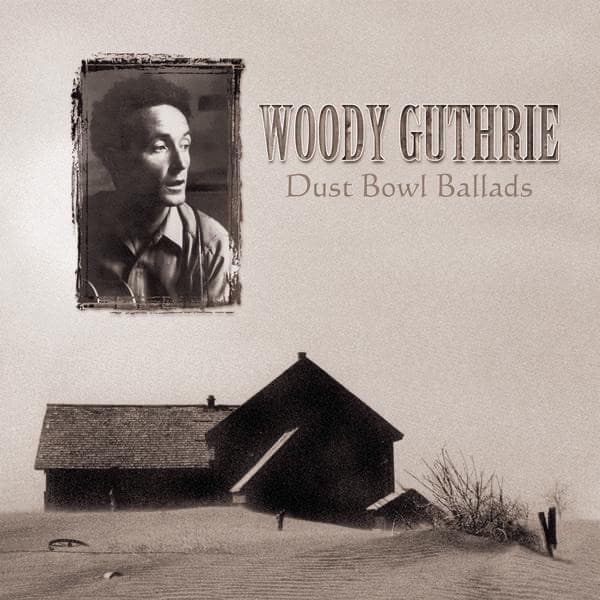
Woody Guthrie
Dust Bowl Ballads
Bob Wills and his Texas Playboys
New San Antonio Rose
Ernest Tubb
Walking the Floor Over You
Bill Monroe and his Blue Grass Boys
Blue Moon of Kentucky
Hank Williams
Lovesick Blues
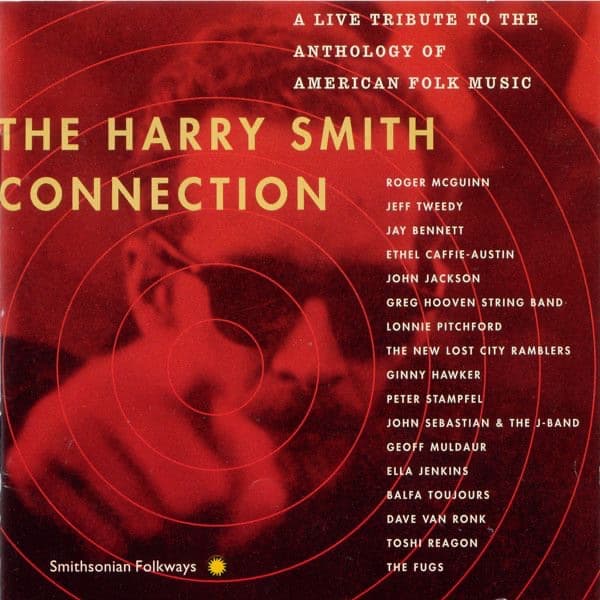
Various Artists
Anthology of American Folk Music

Hank Williams
Moanin’ the Blues
Various artists, edited by Harry Smith
Anthology of American Folk Music

Elvis Presley
Elvis Presley

Johnny Cash
Johnny Cash with His Hot and Blue Guitar
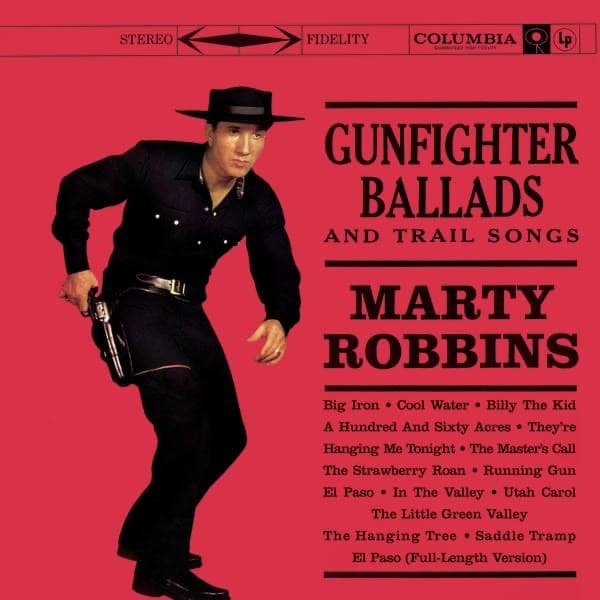
Marty Robbins
Gunfighter Ballads and Trail Songs

The Louvin Brothers
Satan Is Real

Ray Charles
Modern Sounds in Country and Western Music

Bob Dylan
Blonde on Blonde

Johnny Cash
At Folsom Prison

The Byrds
Sweetheart of the Rodeo

The Band
Music from Big Pink

Bob Dylan
Nashville Skyline

The Rolling Stones
Let It Bleed
The Rolling Stones
Exile on Main St.

Dolly Parton
Jolene

Gram Parsons
Grievous Angel

Willie Nelson
Red Headed Stranger
Waylon Jennings, Willie Nelson, Jessi Colter, Tompall Glaser
Wanted! The Outlaws

Eagles
Hotel California

George Strait
Strait Country

Randy Travis
Storms of Life
Garth Brooks
No Fences

Uncle Tupelo
No Depression

Johnny Cash
American Recordings

Shania Twain
Come On Over
Dixie Chicks
Wide Open Spaces

Lucinda Williams
Car Wheels on a Gravel Road
Wilco
Yankee Hotel Foxtrot

Johnny Cash
American IV: The Man Comes Around
Loretta Lynn
Van Lear Rose

Carrie Underwood
Some Hearts
Robert Plant and Alison Krauss
Raising Sand

Taylor Swift
Fearless
Taylor Swift
Red
Sturgill Simpson
Metamodern Sounds in Country Music
Chris Stapleton
Traveller
Beyoncé
Lemonade
Jason Isbell and the 400 Unit
The Nashville Sound
Kacey Musgraves
Golden Hour
Brandi Carlile
By the Way, I Forgive You
Zach Bryan
Zach Bryan
Beyoncé
Cowboy Carter
MJ Lenderman
Manning Fireworks
Morgan Wallen
I'm the Problem
The Mixtape
Sallie Gooden
Eck RobertsonOne fiddle, no accompaniment, a dozen variations on one tune. This is what country music sounded like before it knew it was country music.
The Little Old Log Cabin in the Lane
Fiddlin' John CarsonThe record a producer called awful and a region bought by the thousand. The roughness is the point: this is the porch, not the parlor.
Blue Yodel (T for Texas)
Jimmie RodgersBlues verses, a guitar, a yodel. The first country hit borrowed its first line from Black Memphis singers, and Howlin' Wolf borrowed it back.
Wildwood Flower
The Carter FamilySara's flat, unhurried voice and Maybelle's guitar playing melody and rhythm at once. The guitar part every country and folk picker learns first.
Blue Yodel No. 9
Jimmie RodgersCountry's first star and Louis Armstrong on the same twelve-bar blues. The genre wall has not been built yet, and you can hear that it never needed to be.
Taking Off
Milton Brown and His Musical BrowniesThe first electric instrument on a country record. Bob Dunn's steel guitar sounds like a trombone that has been struck by lightning, which is roughly what happened.
Steel Guitar Rag
Bob Wills and His Texas PlayboysLeon McAuliffe makes the electric steel a lead instrument and Wills hollers him on. Western swing in one take: a string band that thinks it is a jazz orchestra.
New San Antonio Rose
Bob Wills and his Texas PlayboysA country band playing jazz with a Texas accent. The horns, the fiddles and the drummer all argue for a living, and Wills hollers over the top.
Walking the Floor Over You
Ernest TubbThe first honky-tonk record and one of the first country records with an electric guitar. Notice how plain the voice is; that plainness is the style.
Blue Moon of Kentucky
Bill Monroe and his Blue Grass BoysThe first bluegrass record, a slow waltz with Flatt and Scruggs in the band. Then imagine a Memphis truck driver speeding it up eight years later; that is the flip side of the first Elvis single.
Lovesick Blues
Hank WilliamsThe record that got him onto the Opry and six encores on his first night. A twenty-year-old vaudeville song with a yodel, sung by a man who sounds like he means every word and is not sure he will survive them.
It Wasn’t God Who Made Honky Tonk Angels
Kitty WellsThe first number one by a woman on the country chart, and an answer record that turned a whole genre’s blame around. Listen for how plainly she sings it.
Your Cheatin’ Heart
Hank WilliamsReleased weeks after he died. Steel guitar, a fiddle, a voice that cracks on "weep," and not one wasted word. This is what every country song since has been trying to do.
Folsom Prison Blues (Live)
Johnny Cash"Hello, I'm Johnny Cash," and then the boom-chicka-boom in a prison cafeteria. The applause after the Reno line was added later; the rest is the realest thing on country radio that year.
Mama Tried
Merle HaggardA Telecaster lick, a train, and a man telling you exactly how he ended up in San Quentin without asking for your pity. Bakersfield answers Nashville.
Jolene
Dolly PartonA minor-key guitar figure and a woman begging, not threatening. Parton wrote it and "I Will Always Love You" in the same stretch, and this one has been covered by everyone from the White Stripes to Beyoncé.
Blue Eyes Crying in the Rain
Willie NelsonA 1945 Fred Rose song sung over a nylon-string guitar and almost nothing else. The label thought the album was a demo. This was Nelson's first number one, at forty-two.
Forever and Ever, Amen
Randy TravisA baritone, a steel guitar and a wedding vow. The new traditionalists take over country radio, and the 1990s boom gets its voice.
Delia's Gone
Johnny CashA murder ballad, one voice, one guitar, a man in his sixties in a producer's living room. The whole "American Recordings" idea in three minutes.
Hurt
Johnny CashA seventy-year-old sings Trent Reznor's song about self-destruction with his hands shaking, and it becomes his. Play the video; that is the point.
Tennessee Whiskey
Chris StapletonAn old George Jones song sung like Southern soul by a Nashville songwriter nobody had heard of. He sang it on television and the whole country looked him up.
Old Town Road
Lil Nas XA thirty-dollar beat, a Nine Inch Nails banjo sample and a song about horses, removed from the country chart and then number one for nineteen weeks. The decade in one record.
I Remember Everything
Zach BryanTwo voices, one bad relationship, no polish. It topped four separate Billboard charts at once, which no song had ever done.
TEXAS HOLD 'EM
BeyoncéBanjo by Rhiannon Giddens, and the first Black woman ever to top a country chart that had existed since 1958. The argument it started is the point.
A Bar Song (Tipsy)
ShaboozeyNineteen weeks at number one, tying the all-time record. A Nigerian-American from Virginia making country music the industry did not have a box for.