100 Years of Music / Genre
Latin
A Cuban street-vendor’s song sold a million records in New York in 1930 and started the rumba craze. Since then the Latin current has run under American pop, from mambo to salsa to reggaeton, and it is now the fastest-growing music in the country.
The lineage
Latin music was in American pop before America noticed. The habanera rhythm was in Bizet’s Carmen (1875) and in the middle of W. C. Handy’s "St. Louis Blues" (1914); Jelly Roll Morton said jazz needed a Spanish tinge; the tango was a dance craze in 1913. The moment this history uses for the Latin current becoming a U.S. popular music is 1930, when Don Azpiazú and his Havana Casino Orchestra recorded "El Manisero", "The Peanut Vendor", for Victor in New York, and it became the first million-selling Cuban record in the country. The rumba craze it started, which was really the Cuban son, put maracas and congas in every hotel ballroom and Xavier Cugat in every movie. The key to all of it is clave: a five-stroke rhythm, three beats then two, that every other part locks to. Learn to hear the clave and you can hear the Cuban root of half the rhythms in this history.
The next thirty years were the Cuban decades. Machito’s Afro-Cubans, led by Mario Bauzá, put Cuban rhythm under a jazz big band from 1940; Dizzy Gillespie and the conga player Chano Pozo recorded "Manteca" in 1947, and Latin jazz became a permanent branch. Pérez Prado’s "Mambo No. 5" (1949) made mambo a craze from Mexico City to New York, where the Palladium Ballroom on 53rd Street ran Tito Puente, Tito Rodríguez and Machito for eighteen years. Cha-cha-chá arrived in 1953. On the Texas border, Narciso Martínez’s accordion and bajo sexto (recorded from 1936) founded conjunto and Tejano; in Mexico mariachi became a national symbol through radio and film. Then the Cuban Revolution (1959) cut New York off from Havana, and the same year João Gilberto’s "Chega de Saudade" (1958) began arriving from Brazil. Stan Getz and Gilberto’s "The Girl from Ipanema" (1964) made bossa nova the cool sound of the American 1960s.
New York, cut off, built its own music. Puerto Rican and Cuban musicians in the barrio fused son, mambo and soul: boogaloo, Joe Cuba’s "Bang! Bang!" (1966), was Latin R&B with English lyrics. Then Fania Records, founded in 1964 by Johnny Pacheco and Jerry Masucci, gathered Willie Colón, Héctor Lavoe, Ray Barretto, Celia Cruz and Rubén Blades, and on 26 August 1971 the Fania All-Stars played the Cheetah club and filmed it. The music was called salsa, and Blades and Colón’s Siembra (1978) made it a literature. Santana had put a Tito Puente tune on the rock charts with "Oye Como Va" in 1971. In the 1980s Gloria Estefan’s "Conga" (1985) and Julio Iglesias sold Latin pop in English; Los Tigres del Norte sold corridos to the border; and in Texas a teenager named Selena took Tejano to arenas, won a Grammy for 1993’s Live, and was killed in March 1995 with Dreaming of You about to enter the pop chart at number one.
The Latin explosion was dated to a single television performance: Ricky Martin at the Grammys in February 1999, then "Livin’ la Vida Loca" at number one that May. Shakira, Enrique Iglesias, Marc Anthony and Jennifer Lopez followed; the Latin Grammys began in 2000. Underneath, a harder music had been growing in Puerto Rico since the early 1990s. Panama’s Spanish-language reggae and Shabba Ranks’s "Dem Bow" riddim (1990) met hip-hop on DJ Playero’s mixtapes; Daddy Yankee said the word reggaeton on Playero 34 in 1994, and his "Gasolina" (2004) took it to the world. Bachata, once the Dominican Republic’s bar music, became Aventura’s "Obsesión" (2002) and Romeo Santos’s stadiums. "Despacito" (2017) spent sixteen weeks at number one in the United States and became the most-watched video on YouTube.
Then Bad Bunny stopped translating. X 100pre (2018), YHLQMDLG (2020) and Un Verano Sin Ti (2022), the most streamed album in the world that year, were entirely in Spanish, and in 2026 he headlined the Super Bowl halftime show. Rosalía brought flamenco, Karol G and J Balvin brought Medellín, and regional Mexican music, once a border-radio business, became a chart force: Peso Pluma and Eslabon Armado’s "Ella Baila Sola" (2023) reached the top five, and Natanael Cano’s corridos tumbados, trap flows over a requinto guitar, made a hundred-year-old ballad form the sound of teenagers in Los Angeles and Culiacán. Latin music is now the fastest-growing revenue category in the American record business. The clave that arrived with "The Peanut Vendor" in 1930 never left; it just waited for the country to catch up.
Branches
Rumba craze
"The Peanut Vendor" (1930) and the Cuban son sold to America as rumba: maracas, congas, hotel orchestras and Xavier Cugat in the movies. The first time Latin rhythm was American pop.
Conjunto and Tejano
Texas-Mexican dance music built on the button accordion and bajo sexto, recorded from Narciso Martínez in 1936. Flaco Jiménez, Little Joe, then Selena and La Mafia in the 1990s, when Tejano filled the Astrodome.
Mambo
Cuban big-band dance music with blaring brass over clave, popularised by Pérez Prado from 1949 and by Machito, Tito Puente and Tito Rodríguez at New York’s Palladium. Cha-cha-chá (1953) was its slower cousin.
Bossa nova
Samba whispered over jazz chords from Rio de Janeiro. João Gilberto’s "Chega de Saudade" (1958), Antônio Carlos Jobim, then Getz/Gilberto (1964) and "The Girl from Ipanema". The cool room of the 1960s.
Boogaloo
Latin New York’s answer to soul: son rhythm, R&B piano, handclaps and English hooks. Joe Cuba’s "Bang! Bang!" (1966), Pete Rodríguez’s "I Like It Like That" (1967). Short-lived and endlessly sampled.
Salsa
Cuban son and mambo rebuilt in New York by Puerto Rican musicians, branded by Fania and launched at the Cheetah in 1971. Willie Colón, Héctor Lavoe, Celia Cruz, Rubén Blades, Eddie Palmieri. Still the dance music of the Caribbean.
Reggaeton
Jamaican dancehall’s dembow rhythm with Spanish rap, grown in Puerto Rico on DJ Playero’s mixtapes and named around 1994. Daddy Yankee’s "Gasolina" (2004), Don Omar, Tego Calderón, then J Balvin and Bad Bunny.
Latin pop
Spanish-language singers on the English-language charts. Gloria Estefan and Julio Iglesias led; Ricky Martin’s "Livin’ la Vida Loca" (1999) made it an explosion, with Shakira, Enrique Iglesias and Marc Anthony behind him.
Urban bachata
Dominican guitar ballads updated with R&B and hip-hop by Bronx teenagers. Aventura’s "Obsesión" (2002), Romeo Santos, Prince Royce. Bachata went from the bars of Santo Domingo to Yankee Stadium.
Corridos tumbados
Regional Mexican corridos with trap flows and attitude, played on requinto, tuba and acoustic bass. Natanael Cano named it in 2019; Peso Pluma, Fuerza Regida and Junior H put it in the American top ten by 2023.
How to listen
Learn the clave. Clap it: three strokes across the first two beats of one bar, two strokes in the next. Then put on a mambo, a salsa or a reggaeton record and find the instrument that is playing it, the wood block, the cowbell or the snare. Every other rhythm in the band is arranged around that pattern, and once you feel it the music stops sounding busy and starts sounding organised.
Then listen for the dembow. It is a four-beat pattern with the kick on one and three and the snare falling between, boom-ch-boom-chick, and it is under every reggaeton hit since 1990 and under "Sorry", "Shape of You" and half the pop of the 2010s. It came from a Shabba Ranks record. Hearing it is hearing Jamaica, Panama and Puerto Rico in one bar.
Play the century in one language. "El Manisero" (1930), "Mambo No. 5" (1949), "The Girl from Ipanema" (1964), Willie Colón and Héctor Lavoe’s "El Malo" (1967), Selena’s "Como la Flor" (1992), "Gasolina" (2004), Bad Bunny’s "Tití Me Preguntó" (2022). Spanish never stopped being sung; America started listening.
Across the decades
Son, tango and the rumba that is coming
In Cuba the son came down from the eastern hills into Havana in the early 1920s and became the island's pop music: guitar, tres, bongo, maracas, claves, a bass, and a singer trading lines with a chorus. Victor was recording Havana's sextets by the middle of the decade. The Trio Matamoros formed in Santiago in 1925 and recorded "Son de la loma" for Victor in New York in 1928. Rita Montaner recorded "El Manisero," the peanut vendor's street cry, for Columbia around 1927. Two years after this chapter ends, Don Azpiazu's band would play it on Broadway and set off the rumba craze. The seed is here.
In Buenos Aires the tango had been a dance. Carlos Gardel made it a song. From "Mi Noche Triste" in 1917 he turned the tango-cancion into a form for a solo singer with a story, recorded hundreds of them for Odeon, and in September 1928 conquered Paris. He is the first Latin American recording star with a global audience, and the model for every singer-idol who followed.
The rumba craze: Cuban son takes Manhattan
On April 26, 1930, Don Azpiazú's Havana Casino Orchestra opened at the Palace Theater on Broadway. The singer pushed a peanut cart onto the stage and threw bags of peanuts into the crowd while the band played "El Manisero," a Cuban son about a street vendor. The Victor recording made that May was the first American hit built on real Afro-Cuban rhythm and instruments: maracas, claves, bongos, timbales. The industry called it a rumba, misspelled it rhumba, and sold more than a million copies of the sheet music.
Xavier Cugat, a Catalan violinist raised in Havana, turned the craze into an institution when he moved his band into the Waldorf-Astoria in 1933 and stayed for sixteen years. His rumbas were smoothed for ballroom feet, but the drums stayed, and the arrangers and players who passed through his band, Mario Bauzá among them, would build the mambo and Afro-Cuban jazz of the next decade.
Latin music in the United States was never only Cuban. In 1930 Canario y su Grupo recorded Rafael Hernández's "Lamento Borincano," a song about a Puerto Rican farmer ruined by the Depression, and it became an anthem across the Spanish-speaking Americas. In Texas a seventeen-year-old Lydia Mendoza cut "Mal Hombre" in 1934 with a twelve-string guitar and became the singer of the poor along the migrant routes. And in 1939 Carmen Miranda arrived from Brazil for a Broadway revue and stayed for Hollywood. The decade ends with Latin rhythm in every American city that had a ballroom.
Cubop and the mambo
In December 1940 a Cuban singer named Frank Grillo, called Machito, held the first rehearsal of his Afro-Cubans in a Harlem ballroom. His brother-in-law Mario Bauzá, a trumpeter who had played with Chick Webb and Cab Calloway and had introduced Dizzy Gillespie to Calloway's band, took over as musical director a month later. Bauzá's idea was simple and nobody had done it: put a real Cuban rhythm section, congas, bongos and timbales, under a jazz big band's horns. His "Tanga" in 1943 is the first Afro-Cuban jazz composition.
Gillespie had been listening. In 1947 Bauzá introduced him to Chano Pozo, a conga drummer and dancer just arrived from Havana who had learned his rhythms in Afro-Cuban religious ceremonies and carnival street bands. On 29 September 1947 Pozo walked onto the Carnegie Hall stage with Gillespie's big band. That December they recorded "Manteca", Pozo's bass riff and Gillespie's screaming trumpet on top of it, the record that made "Cubop" a word. Pozo was shot dead in a Harlem bar fourteen months later. He was thirty-three.
The dance floor had its own revolution. In 1948 the Palladium Ballroom on Broadway at 53rd Street switched to an all-Latin policy, and Machito, Tito Puente and Tito Rodríguez turned it into the home of the mambo, a faster, hornier development of the Cuban danzón. In Mexico City, a year later, a Cuban pianist and bandleader named Dámaso Pérez Prado was arranging mambos with grunts and stabbing brass; his "Mambo No. 5", recorded for RCA Victor's Mexican branch in 1949, would make him the King of Mambo across the Americas in the decade to come. Salsa, boogaloo and Latin rock all descend from these two rooms, the Palladium and Carnegie Hall.
Mambo mania and the Palladium
On Broadway at 53rd Street in Manhattan, the Palladium Ballroom ran the biggest dance in America. Machito’s Afro-Cubans, Tito Puente and Tito Rodríguez, the "Big Three," played mambo to mixed crowds of Puerto Ricans, Cubans, Italians, Jews and Black New Yorkers who came to see the dancers as much as the bands. Puente’s "Dance Mania" (1958) is the sound of that room: timbales up front, a brass section that punches, a beat that will not let you stand still.
Mambo went mainstream through Cuban bandleader Pérez Prado, who worked out of Mexico City and had a number one American hit for ten weeks in 1955 with "Cherry Pink and Apple Blossom White," a trumpet instrumental with his trademark grunt. Perry Como and Rosemary Clooney sang about mambo; the cha-cha-chá, a slower step invented in Havana by violinist Enrique Jorrín, followed it into the dance schools. In Havana itself, Celia Cruz joined the Sonora Matancera in 1950 and became the voice of the island, while bassist Cachao’s late-night descargas of 1957 turned Cuban dance music into a jam session.
Two things at the decade’s end changed the map. Ritchie Valens, a Mexican-American teenager from Pacoima, rocked up a Veracruz wedding song called "La Bamba" in 1958 and put Spanish on the rock and roll charts. And on New Year’s Day 1959 the Cuban revolution took Havana. Within a few years the traffic of musicians between Cuba and New York would close, and the New York Puerto Ricans who inherited mambo would build salsa from what was left.
Boogaloo in the Bronx, Fania in a car trunk, and Tropicália under a dictatorship
New York Latin music in the early 1960s was the mambo generation getting older. Then the kids who had grown up on both Tito Puente and Motown made boogaloo: Cuban rhythm, English lyrics, a soul backbeat and handclaps. Joe Cuba's "Bang! Bang!" in 1966 and Pete Rodríguez's "I Like It Like That" in 1967 were the hits. It ran for a few years, and most of the established bandleaders ended up cutting boogaloo records themselves to keep up. It proved there was a Latin audience that also bought R&B.
In 1964 a Dominican flautist named Johnny Pacheco and a lawyer named Jerry Masucci started a label and called it Fania, after an old Cuban song. They sold records from the trunk of a car in Spanish Harlem. By 1967 they had signed a teenage trombonist from the Bronx called Willie Colón, and by 1968 they had a house orchestra, the Fania All-Stars. Eddie Palmieri, working across town with two trombones and a rougher sound, cut "Azúcar Pa' Ti" in 1965. Nobody was calling it salsa yet. They would.
Brazil had bossa nova, which went global through Getz and Gilberto, and then Sérgio Mendes made it pop with "Mas Que Nada" in 1966. Under the military dictatorship that took power in 1964, Caetano Veloso, Gilberto Gil, Gal Costa, Tom Zé and Os Mutantes made Tropicália: Brazilian song swallowing the Beatles, Hendrix and the avant-garde whole. The collective album "Tropicália ou Panis et Circencis" came out in 1968. By the end of that year Veloso and Gil were in jail, and then in exile in London. And at Woodstock in August 1969, a young Mexican-American guitarist from San Francisco named Carlos Santana played "Soul Sacrifice" with a conga player and a timbalero and told rock what it had been missing.
Salsa's golden age
Salsa was a New York word for a Cuban and Puerto Rican thing: son, mambo, guaracha and plena, played hard by kids from the Bronx and East Harlem. The Fania label, founded by Dominican bandleader Johnny Pacheco and lawyer Jerry Masucci in 1964, owned the decade. Its house supergroup, the Fania All-Stars, filled Yankee Stadium on 24 August 1973 with more than forty thousand people and the show ended early when the crowd poured onto the field during "Congo Bongo". Puerto Rican New York had a stadium-sized proof that it existed.
The label's stars were the decade's. Willie Colón, a trombonist from the Bronx who put gangster imagery on his sleeves, and Héctor Lavoe, the singer from Ponce with the most beloved voice in the music, made a run of albums together and then apart; Lavoe's "El Cantante" (1978) is a song about being the singer everybody loves and nobody knows. Celia Cruz, the Cuban queen who had left after the revolution, joined Fania and "Celia & Johnny" (1974) with Pacheco made her the face of salsa for the rest of her life. Ray Barretto, Eddie Palmieri, Larry Harlow and Cheo Feliciano filled out a scene that could sell out the Cheetah club every weekend.
Then Rubén Blades, a Panamanian law graduate, changed what salsa could say. On "Siembra" (1978), with Willie Colón, he sang "Pedro Navaja", a seven-minute street story built on Brecht's "Mack the Knife", and "Plástico", a satire of the middle class. It became the best-selling salsa album ever. Meanwhile, Carlos Santana, a Mexican kid from San Francisco, had opened the decade with "Abraxas" (1970) and Tito Puente's "Oye Como Va" as a rock hit, and Latin rock was a thing. In Brazil, Milton Nascimento and the Clube da Esquina collective made "Clube da Esquina" (1972), a record as ambitious as anything in rock, and Jorge Ben's "África Brasil" (1976) put samba on a funk footing. In Chile and Argentina, Nueva canción's protest folk, Violeta Parra's heirs, was silenced by the coups of 1973 and 1976 and went into exile with Inti-Illimani and Mercedes Sosa.
Miami, East L.A., Panama and the rock en español wave
Latin pop in the 1980s found the American Top 40 through Miami. Gloria Estefan, born in Havana in 1957 and raised in exile, fronted the Miami Sound Machine; "Conga" (1985), a bilingual party record with a Cuban horn section over a pop drum machine, went top ten and made Emilio Estefan's studio the Latin hit factory of the next twenty years. Julio Iglesias, singing with Willie Nelson and Diana Ross, sold the ballad version to the same audience.
In East Los Angeles, Los Lobos had been playing weddings and punk clubs for a decade when "How Will the Wolf Survive?" (1984) made them a college-radio band. In 1987 their recording of Ritchie Valens' "La Bamba", for the film of the same name, went to number one: a Mexican folk song, sung in Spanish, at the top of the American chart. The same year the Tejano Music Awards named a teenage singer from Corpus Christi, Selena, female vocalist of the year, the first of nine in a row, and Tejano began its rise.
Salsa grew up. Rubén Blades, a Panamanian who had written "Pedro Navaja" for Fania, made "Buscando América" (1984) with his band Seis del Solar for Elektra: salsa with synthesizers, no horns, and lyrics about disappearances and dictatorships. He then went to Harvard for a law degree. In Argentina and Chile, Soda Stereo and Los Prisioneros wrote the first great rock en español records under and after dictatorships, and Juan Luis Guerra took Dominican merengue and bachata toward the international stage. Menudo, five rotating Puerto Rican teenagers, was the boy band that taught the industry how a boy band could work.
Selena, the Latin explosion and rock en español
Selena Quintanilla was the Queen of Tejano, the accordion-and-synth border music of South Texas, and she was about to be much more. "Amor Prohibido" in 1994 sold like a pop record and won her a Grammy. On 31 March 1995 the president of her fan club shot her dead in a Corpus Christi motel. She was twenty-three. "Dreaming of You", the English-language crossover she was recording, came out that July and entered the Billboard 200 at number one, the first mostly Spanish-language album to do it. Jennifer Lopez played her in the 1997 film and then made her own record.
The crossover Selena did not live to lead arrived four years later. Ricky Martin, a former member of Menudo, sang "The Cup of Life" at the Grammys on 24 February 1999 and got a standing ovation; "Livin' la Vida Loca" was number one within three months. Enrique Iglesias, Marc Anthony, who had already made salsa romántica records that sold in the millions, and Shakira, whose "Pies Descalzos" and "Dónde Están los Ladrones?" were rock records from Barranquilla, all followed. Carlos Santana's "Supernatural", his comeback with Clive Davis, won eight Grammys in one night. Luis Miguel had spent the decade selling boleros to the whole Spanish-speaking world. The industry called it the Latin explosion. It was a market noticing itself.
Under and around all of it, other Latin musics were doing their own work. Café Tacvba's "Re" (1994), Maná, Los Fabulosos Cadillacs and Soda Stereo made rock en español a continent-wide scene with its own MTV. Los Tigres del Norte's "Jefe de Jefes" was the corrido, the border ballad, grown up and dangerous. Banda and technobanda, brass bands from Sinaloa, filled Los Angeles dance halls and made a Spanish-language station the city's number one. In Puerto Rico, DJ Playero's underground cassettes put Spanish rap over dancehall riddims; a teenager named Daddy Yankee first appeared on "Playero 37" in 1992. Celia Cruz kept touring at seventy. Buena Vista Social Club brought Cuba's old men to Carnegie Hall. Latin music in the 1990s was not one thing. It was a dozen, and each was about to get louder.
Reggaeton explodes, and Latin pop crosses over on its own terms
Reggaeton came out of Panama's Spanish reggae and San Juan's marquesinas, the carport parties where DJ Playero's mixtapes played in the nineties, and in 2004 it went global. Daddy Yankee's Gasolina, the lead single from Barrio Fino, took the dembow rhythm, a boom-ch-boom-chick borrowed from Shabba Ranks' Dem Bow, and put it on radio stations that switched formats to keep up. Tego Calderón's El Abayarde in 2002 had made the genre credible; Luny Tunes' productions made it hit; Don Omar, Wisin y Yandel and Ivy Queen, the queen in a genre of kings, made it a scene. Calle 13's debut in 2005 made it smart. The Library of Congress named Gasolina to the National Recording Registry in 2023, the first reggaeton record there.
Pop crossed over too. Shakira learned English well enough to write Laundry Service in 2001, and Hips Don't Lie with Wyclef Jean in 2006 was a number one in a dozen countries. Juanes' Un Día Normal and A Dios le Pido made Colombian rock an export. Enrique Iglesias' Escape, Ricky Martin's Sound Loaded, Paulina Rubio and Jennifer Lopez kept the late-nineties Latin boom going; the Latin Grammys, first held in September 2000, gave it an awards show. Aventura's Obsesión, in 2002, took bachata, the Dominican guitar music that used to be too poor for the radio, from the Bronx to Europe, and Romeo Santos became the biggest Latin star of the next decade because of it.
Regional Mexican music was the genre's quiet giant: Los Tigres del Norte's corridos, Vicente Fernández, and Jenni Rivera, whose banda records made her the most important woman in the music. Rock en español had Café Tacvba's Cuatro Caminos, Zoé, Babasónicos, Molotov, Kinky, Julieta Venegas and Aterciopelados. Brazil sent Bebel Gilberto's Tanto Tempo and Seu Jorge, whose voice carried City of God in 2002. Gotan Project and Bajofondo made tango electronic. Marc Anthony kept salsa on the charts. And on 16 July 2003 Celia Cruz, the Queen of Salsa, died in New Jersey, and her funeral procession stopped traffic in Miami and Manhattan.
Reggaeton takes the world, in Spanish
The single most important fact about Latin music in the 2010s is that it crossed over without translating itself. Despacito, released in January 2017 by Luis Fonsi and Daddy Yankee and remixed with Justin Bieber that April, spent sixteen weeks at number one on the American Hot 100 and became the most-watched video on YouTube. It is almost entirely in Spanish. The old rule, that a Latin hit needed an English version to travel, simply stopped applying.
Reggaeton had been building in Puerto Rico since the nineties. In the 2010s it fused with trap and went global. J Balvin brought Medellín to the world and made Vibras in 2018, a record that sounds like sunlight. Bad Bunny released X 100PRE on Christmas Eve 2018, a debut that mixed reggaeton, trap, pop-punk and bolero and refused every expectation of what a Latin trap star was supposed to be. Ozuna, Karol G, Anuel AA and Farruko filled the charts.
Spain sent something else entirely. Rosalía's El Mal Querer in 2018 built a concept album out of flamenco, hand claps, Auto-Tune and a thirteenth-century Occitan novel, and Con Altura the next year put her in the reggaeton mainstream on her own terms. Cardi B's I Like It in 2018, with Bad Bunny and J Balvin over a boogaloo sample, went to number one in the United States, which meant a Bronx rapper, a Puerto Rican trap singer and a Colombian reggaetonero had a joint American chart-topper in Spanish and English.
Spanish stops being a niche and starts being the chart
For a hundred years the American chart treated Spanish-language music as a curiosity that occasionally crossed over. That ended in this decade, and one person did most of it. Bad Bunny's "El Último Tour del Mundo" went to number one on the Billboard 200 in December 2020, the first all-Spanish album ever to do it in the chart's sixty-four year history. He did not sing a word in English to get there. "Un Verano Sin Ti" was then the most consumed album in the United States across all of 2022.
Reggaeton was only half the story. The other half came out of Sinaloa and Jalisco: corridos tumbados, old Mexican ballad forms about outlaws and heartbreak, played on requinto guitar and tuba by kids raised on trap. Natanael Cano started it, Peso Pluma made it enormous, and Fuerza Regida, Junior H, Grupo Frontera and Eslabon Armado filled in the rest. "Ella Baila Sola" put regional Mexican music in the American top ten for the first time. Luminate measured regional Mexican streams growing 56% in a single year.
Around them, the women took the biggest rooms. Karol G's "Mañana Será Bonito" was the first all-Spanish album by a woman to top the Billboard 200. Shakira turned a divorce into a Bizarrap session that half the Spanish-speaking world learned by heart in a week. Rosalía made "Motomami", a flamenco-trained singer breaking her own record into pieces, and then in 2025 made "Lux", an eighteen-track album recorded with the London Symphony Orchestra.
The institutions followed the money. The Latin Grammys left the United States for the first time and were held in Seville in November 2023. And in February 2026, Bad Bunny's "Debí Tirar Más Fotos", an album about Puerto Rico losing itself, won Album of the Year at the Grammys, the first primarily Spanish-language record ever to do so, a week before he played the Super Bowl halftime show almost entirely in Spanish.
Timeline
The Trio Matamoros record "Son de la loma"
Formed in Santiago de Cuba in 1925, Miguel Matamoros' trio of two guitars and a maracas player was recorded by Victor in 1928, including "Son de la loma," a song Matamoros had written in 1922 about where the singers come from. Their records sold across Latin America and set the template for the Cuban trio sound that fed the bolero and, much later, the Buena Vista Social Club.
Carlos Gardel conquers Paris
After three years shuttling between Buenos Aires and Spain, the tango singer opened in Paris in September 1928 and sold tens of thousands of records there in a few months. The tango had been a scandalous dance in Paris since before the war; Gardel made it a song with a face. He was the first Latin American recording star with a global public.
"Lamento Borincano" gives the Depression a Puerto Rican voice
Rafael Hernández wrote it in New York about a farmer who takes his produce to town and finds nobody with money to buy. Canario y su Grupo recorded it in 1930 with an eighteen-year-old singer named Davilita, and it became an anthem far beyond Puerto Rico. The Library of Congress added the original to the National Recording Registry in 2018.
The Peanut Vendor opens on Broadway
On April 26 Don Azpiazú's Havana Casino Orchestra played the Palace Theater with maracas, claves, bongos, and a singer pushing a peanut cart. Their Victor recording of "El Manisero" that May was the first American hit built on authentic Cuban son, and it set off the rumba craze that put Latin percussion in ballrooms and movies for the rest of the decade. Mario Bauzá, who played on it, would later help build the mambo.
Xavier Cugat opens at the Waldorf-Astoria
Cugat moved his band from Los Angeles to the Waldorf-Astoria in New York in 1933 as a relief orchestra at five hundred dollars a week. He stayed sixteen years, became the hotel's highest-paid act, and made the rumba, the tango, and the conga part of the American ballroom vocabulary. The critics called it watered down. The drums were real, and so were the musicians who passed through.
Lydia Mendoza records "Mal Hombre"
The Mendoza family had sung for coins on the streets of San Antonio and recorded as a group since the 1920s. In 1934 Lydia, seventeen, made her first solo record: a bitter tango-flavored song in a woman's voice about the man who ruined her, accompanied by her own twelve-string guitar. It made her the Lark of the Border, and audiences along the migrant routes requested it for the next fifty years.
Machito forms the Afro-Cubans
Frank "Machito" Grillo held the band's first rehearsal at the Park Palace Ballroom in Harlem on 3 December 1940. His brother-in-law Mario Bauzá, fresh from the trumpet sections of Chick Webb and Cab Calloway, became musical director in January 1941 and set out to put an authentic Cuban rhythm section under jazz horns. Latin jazz begins with this band, in this room.
Machito and Bauzá: "Tanga"
Mario Bauzá built a head arrangement over a bass riff at a Machito rehearsal at the Park Palace Ballroom on 29 May 1943 and called it "Tanga", a slang word for marijuana. He had caught the vamp the night before at the La Conga club. It is usually named as the first Afro-Cuban jazz composition: a jazz big band's horns riffing over Cuban rhythm rather than the other way round. The band did not record it until later in the decade, so the piece lived for years as a nightly jam.
Dizzy Gillespie and Chano Pozo at Carnegie Hall
On 29 September 1947 Gillespie's big band played Carnegie Hall with a Cuban conga drummer, Chano Pozo, whom Mario Bauzá had introduced to him that summer. The session logs put Pozo on conga and Lorenzo Salan on bongo that night, with George Russell's "Cubana Be, Cubana Bop" on the programme and a new piece built on Pozo's bass riff. Pozo drummed, danced and chanted in the Yoruba-derived language of Afro-Cuban religion. Bebop and Cuban rhythm on a concert stage in the same night: Latin jazz has a birthday.
"Manteca"
Gillespie's big band with Chano Pozo recorded "Manteca" for RCA Victor on 22 December 1947, in the rush of sessions before the second recording ban. Pozo brought the bass line and the chant; Gillespie wrote the bridge so it would not, he said, be Cuban music all the way through; arranger Gil Fuller finished it. It sold better than any other Gillespie record and is the founding document of Afro-Cuban jazz.
Chano Pozo is killed
On 2 December 1948 the drummer who had brought Cuban ritual rhythm into jazz was shot dead in the Rio Bar in Harlem in an argument over a drug sale, fourteen months after the Carnegie Hall concert and a year after recording "Manteca". He was thirty-three. Gillespie kept a Cuban percussionist in every band he led for the rest of his life.
Celia Cruz joins the Sonora Matancera
In 1950 a twenty-five-year-old singer from the Santos Suárez neighborhood of Havana became the lead voice of the Sonora Matancera, the band on Radio Progreso and the most popular dance orchestra in Cuba. Celia Cruz was its first Black front woman, and its ratings went to their highest with her in front. She stayed until 1965, cutting "Burundanga", which went gold and got her to the United States, and "El Yerberito Moderno". When the revolution came she did not go back, and salsa in New York got its queen.
Mambo mania: Pérez Prado tops the chart while the Palladium dances
Cuban bandleader Pérez Prado, working from Mexico City, held number one on the American pop chart for ten weeks in 1955 with "Cherry Pink and Apple Blossom White," a trumpet mambo with a slide and a grunt. In New York the Palladium Ballroom on Broadway was packed every Wednesday for Machito, Tito Puente and Tito Rodríguez, and Puente had talked George Goldner into letting him record an album of drums alone after midnight to save on studio time. Mambo was the biggest dance craze since swing, and it was Cuban, Puerto Rican and Black at once.
Harry Belafonte’s "Calypso" sells a million
RCA doubted that a whole album of Caribbean songs would sell. Released at the end of May 1956, "Calypso" knocked Elvis’s first album off the top of the album chart and stayed there thirty-one weeks. It was the first LP by a single performer to sell a million copies. "Day-O," a Jamaican dock-workers’ song, became a schoolyard chant. Belafonte, a Harlem-born son of Jamaican immigrants who wanted to be an actor, was now the most popular Black performer in America and was already sending money to Montgomery.
Ritchie Valens, "Donna" and "La Bamba"
Richard Valenzuela, seventeen, from Pacoima in the San Fernando Valley, had a ballad for his girlfriend on one side and a Veracruz wedding song he barely knew the Spanish words to on the other. "Donna" broke first in late November 1958; disc jockeys flipped it and "La Bamba" followed. It was the first rock and roll hit sung in Spanish. He had eight months left.
The day the music died
Buddy Holly, sick of a freezing tour bus, chartered a small plane after a show at the Surf Ballroom in Clear Lake, Iowa. Ritchie Valens won a seat on a coin toss; J.P. "The Big Bopper" Richardson took Waylon Jennings’s. The plane went down in a snowy field minutes after takeoff early on February 3, 1959. Holly was twenty-two, Valens seventeen. Don McLean gave the date its name twelve years later.
Johnny Pacheco and Jerry Masucci found Fania Records
A Dominican flautist and a Brooklyn divorce lawyer named the label after an old Cuban song and released Pacheco's "Cañonazo". They delivered the records to Spanish Harlem shops from the trunk of a car. Within four years Fania had signed Willie Colón, Larry Harlow and Bobby Valentín and formed the Fania All-Stars, and the word for what they were doing, salsa, was on its way.
Boogaloo: Joe Cuba's "Bang! Bang!" puts a backbeat under the clave
Puerto Rican and Cuban kids in East Harlem and the Bronx had grown up on mambo and on Motown, and boogaloo was what happened when they stopped choosing. Joe Cuba's sextet cut "Bang! Bang!" with an English chorus, a shuffle beat, piano montuno and a crowd whooping in the studio, and it sold to kids who bought R&B singles as well as mambo records. Boogaloo ran a few years, and rather than sneer at it most of the established salsa bandleaders cut boogaloo sides of their own to keep up. Fania, founded two years earlier, had its evidence that a young bilingual audience existed.
Tropicália: Caetano Veloso and Gilberto Gil swallow the world
Brazil had been under military rule since 1964. Veloso and Gil, with Gal Costa, Tom Zé, Os Mutantes and the arranger Rogério Duprat, put out the collective album "Tropicália ou Panis et Circencis" in July 1968: bossa nova, Beatles, Hendrix, tango, twelve-tone music and military marches at once. Veloso's own song "Tropicália" opened his solo album the same year. Purists booed them at festivals for using electric guitars. In December the regime jailed both men, and in 1969 sent them into exile in London.
The Harlem Cultural Festival
Six free Sunday concerts in Mount Morris Park from June 29 to August 24, 1969, drew close to three hundred thousand people. Stevie Wonder, Sly and the Family Stone, Nina Simone, B.B. King, Mahalia Jackson, the Staple Singers, Gladys Knight and the Pips, Mongo Santamaría and the 5th Dimension played; the Black Panthers handled security after the police declined. Forty hours of film sat in a basement for fifty years until Questlove cut it into "Summer of Soul" in 2021. It was Woodstock's equal and hardly anyone outside Harlem knew.
Woodstock
August 15 to 18, 1969, on Max Yasgur's dairy farm in Bethel, New York. The organizers expected fifty thousand; more than four hundred thousand came, the fences came down, and it became a free festival in the rain. Richie Havens opened, Santana's "Soul Sacrifice" on the Saturday made an unknown band famous, Sly played at three in the morning, and Jimi Hendrix closed on Monday morning to a thinned crowd with a "Star-Spangled Banner" full of feedback bombs and sirens. The film made it a myth. For three days the counterculture looked like a country.
Santana, "Abraxas"
A year after Woodstock, Carlos Santana's band releases "Abraxas" in September 1970 and it goes to number one. "Oye Como Va" is a Tito Puente cha-cha-chá from 1962 played through a Hammond organ and a sustaining guitar; "Black Magic Woman" is a Fleetwood Mac blues taken to Latin percussion. Latin rock becomes a shelf in the record shop, and a generation of Mexican-American kids hears itself on FM radio.
The Fania All-Stars fill Yankee Stadium
On 24 August 1973 more than forty thousand people, most of them Puerto Rican New Yorkers, pack Yankee Stadium for the Fania label's supergroup: Johnny Pacheco, Willie Colón, Héctor Lavoe, Celia Cruz, Ray Barretto, Larry Harlow, Cheo Feliciano. During "Congo Bongo" the crowd pours onto the field and the show is stopped. Filmed for the documentary "Salsa", it is the night salsa becomes a stadium music and a word the whole world learns.
Willie Colón and Rubén Blades, "Siembra"
Released on Fania in September 1978 (some sources say December). Blades, a Panamanian law graduate, writes salsa with a novelist's eye: "Pedro Navaja", a seven-minute street story built on "Mack the Knife"; "Plástico", a satire that ends with a roll call of Latin American nations. Colón's trombones and arrangements carry it. It becomes the best-selling salsa album in history, and it makes the music a place for ideas.
Los Lobos take "La Bamba" to number one
Ritchie Valens had cut the Mexican folk song in 1958. For the 1987 biopic, Los Lobos, a band from East Los Angeles who had already made a college-radio classic with "How Will the Wolf Survive?" (1984), recorded it again. It went to number one, in Spanish. The next year their all-Mexican "La Pistola y el Corazón" won a Grammy.
Selena, "Amor Prohibido"
Released 13 March 1994 on EMI Latin, a month after Selena won a Grammy for her live album. The title track was about her grandparents' romance across a class line; "Bidi Bidi Bom Bom" was a beach party; "Fotos y Recuerdos" was a Pretenders song in Spanish. Tejano, the accordion-and-synth music of the Texas border, had a pop star, and she was about to record in English.
Selena is murdered
On 31 March 1995 Yolanda Saldívar, who ran Selena's fan club and had been caught stealing from it, shot her at a Days Inn in Corpus Christi. She was twenty-three. Sixty thousand people filed past her coffin. "Dreaming of You", the English-language album she had been making, came out on 18 July and entered the Billboard 200 at number one, the first mostly Spanish-language record to do it. The crossover happened; she was not there for it.
The Grammys: Lauryn Hill's five and Ricky Martin's "Cup of Life"
On 24 February 1999 Lauryn Hill won five Grammys, including Album of the Year, the first hip-hop record to take it, and the first time a woman had won five in a night. The same evening Ricky Martin, a former member of Menudo, made his Grammy stage debut with "La Copa de la Vida" and a full brass section, and collected Best Latin Pop Performance for "Vuelve". "Livin' la Vida Loca" was number one by May, and the industry announced a Latin explosion with Marc Anthony, Enrique Iglesias, Jennifer Lopez and Santana's "Supernatural" behind it. One night, two futures.
Celia Cruz dies
The Queen of Salsa died in Fort Lee, New Jersey, on 16 July 2003, at seventy-seven, four decades after she left Cuba for good. Her body lay in state in Miami and at Manhattan's Frank E. Campbell funeral home, and the procession up Fifth Avenue stopped traffic. She had recorded with Fania, with Tito Puente, with Wyclef Jean, and her last studio album, Regalo del Alma, won a Grammy after her death.
Daddy Yankee's Gasolina
Barrio Fino, released 13 July 2004, was reggaeton's first number one Latin album in America; Gasolina, released as a single that October, was its first global hit. The dembow beat, Glory's uncredited hook, a lyric about a girl who lives for the weekend. Radio stations switched formats to play it. In 2023 the Library of Congress named it to the National Recording Registry, the first reggaeton record there, and the essay notes the shift it started from Latin radio to every radio.
Pulse
On 12 June 2016 a gunman killed 49 people at Pulse, a gay nightclub in Orlando, on its Latin night. The club had been a refuge, which is what dance music has always built. The response ran through the whole culture, from vigils and benefit records to the way queer club nights were talked about for the rest of the decade.
Despacito
Luis Fonsi and Daddy Yankee released a reggaeton single in January 2017; a remix with Justin Bieber followed in April. It spent sixteen weeks at number one in America, almost entirely in Spanish, and became the most-watched video in YouTube's history. The rule that Latin music had to translate itself to travel was over.
Cardi B debuts at number one with Invasion of Privacy
Released on 6 April 2018, the album entered the Billboard 200 at number one with 255,000 equivalent album units, the second-biggest week of that year to date. It went on to win Best Rap Album at the 2019 Grammys, making her the first solo woman ever to take that award.
Rosalía releases El Mal Querer
A flamenco student from Catalonia made her college thesis into a concept album based on a thirteenth-century Occitan novel, using hand claps, Auto-Tune, motorbike engines and a choir. It sounds like nothing else. Two years later she was one of the most influential singers in Spanish-language music, and Best New Artist nominated at the 2020 Grammys.
Bad Bunny releases X 100PRE on Christmas Eve
The Puerto Rican singer put out his debut album on 24 December 2018, mixing reggaeton, Latin trap, pop-punk guitars and a slow bolero, in Spanish, with no English-language concessions at all. He had already been on a number one American single with Cardi B. He would spend the 2020s as the most-streamed artist on earth.
The world stops touring
In the week of 11 March 2020 the live music business closed. The Rolling Stones postponed a stadium tour. Festivals, award shows and club nights went with them. Touring is where working musicians actually earn, so this was not a pause in entertainment, it was the removal of an entire industry's income overnight, from the headliner to the person selling shirts at the back. It stayed mostly closed for two years.
The first all-Spanish number one album in America
Bad Bunny's El Último Tour del Mundo, released 27 November 2020, debuted at number one on the Billboard 200 with 116,000 units. In the chart's sixty-four year history no all-Spanish-language album had ever topped it. He did not make a crossover record, cut an English version or bring in an American guest to explain himself. The audience simply arrived.
Rosalía breaks her own record apart on Motomami
Motomami, released March 2022, is a flamenco-trained singer taking reggaeton, bachata, industrial noise and a Soulja Boy sample and refusing to sand any of the edges. Half the songs stop before they finish. It is the record every ambitious Spanish-language artist of the next three years measured themselves against.
Bad Bunny's Un Verano Sin Ti becomes the year
Released 6 May 2022, Un Verano Sin Ti was the most consumed album in the United States across all of 2022, in any language. It is a beach record with dembow, indie guitars, Dominican mambo and a broken heart in it. The same year, on-demand audio streaming in America passed one trillion plays for the first time. Those two facts belong in the same sentence.
Shakira turns a divorce into a Bizarrap session
Released 11 January 2023, BZRP Music Sessions #53 put Shakira over an Argentine producer's minimal beat, naming names about the end of her relationship with the footballer Gerard Piqué. Half the Spanish-speaking world learned the words in a week. It is also a neat picture of the new pipeline: a YouTube producer's series had become a bigger platform than a label campaign.
Peso Pluma and the corridos tumbados boom
"Ella Baila Sola", by Eslabon Armado with Peso Pluma, became the first regional Mexican song to reach the Hot 100's top ten in 2023, and Peso Pluma's Génesis had the biggest week by units any regional Mexican album had ever had. Requinto guitar, tuba and trap phrasing, sung by kids from Sinaloa and Jalisco. Luminate measured regional Mexican streaming in America up 56% inside a year.
GNX arrives with no warning
Kendrick Lamar put GNX out at around noon on 22 November 2024 with no announcement. It debuted at number one with 319,000 units and 379 million streams, "squabble up" debuted at number one on the Hot 100, and he took the entire top five of that chart, something only Taylor Swift, Drake and the Beatles had managed. Six months after winning a rap battle he had made the most confident record of his career.
Bad Bunny makes a record about losing Puerto Rico
Released on a Sunday, 5 January 2025, DeBÍ TiRAR MáS FOToS uses plena and salsa and old Puerto Rican forms to argue about displacement, gentrification and what happens to an island when the people who grew up there cannot afford to stay. It climbed to number one on the Billboard 200 within a fortnight. He then played a thirty-date residency at home in San Juan, reserving the first nine nights for island residents.
A Spanish-language album wins Album of the Year
At the Grammys on 1 February 2026, DeBÍ TiRAR MáS FOToS became the first primarily Spanish-language album ever to win Album of the Year. Kendrick Lamar won five awards and passed Jay-Z as the most-decorated rapper in the award's history. Olivia Dean won Best New Artist and the Cure swept the alternative categories. Nearly half the televised acceptance speeches touched on immigration enforcement in the United States.
Bad Bunny plays the Super Bowl in Spanish
On 8 February 2026, at Levi's Stadium in California, Bad Bunny headlined the Super Bowl LX halftime show almost entirely in Spanish, with Lady Gaga and Ricky Martin as guests, and closed by naming the countries of the Americas. An estimated 128.2 million people watched, the fourth-largest halftime audience recorded, and Telemundo's Spanish-language broadcast peaked during it. The set drew heavy criticism from the American political right, including the president, and won seven Primetime Emmys, more than any halftime show in history.
Artists
Everyone in the century tagged Latin, in the order they arrived. Each name opens its full entry in the chapter that carries it.
Carlos Gardel
- Mi Noche Triste
- Caminito
- Mi Buenos Aires querido
Trio Matamoros
- Son de la loma
- El que siembra su maiz
- Lagrimas negras
Lydia Mendoza
- Mal Hombre
- Mujer Paseada
Xavier Cugat
- The Peanut Vendor
- Perfidia
Dizzy Gillespie
- Manteca
- Salt Peanuts
- A Night in Tunisia
- Cubana Be, Cubana Bop
Machito and his Afro-Cubans
- Tanga
- Cubop City
- Mambo Inn
Pérez Prado
- Mambo No. 5
- Qué rico el mambo
- Cherry Pink and Apple Blossom White
Tito Puente
- Ran Kan Kan
- Dance Mania
- Oye Como Va
Pérez Prado
- Mambo No. 5
- Cherry Pink and Apple Blossom White
- Patricia
Celia Cruz
- Burundanga
- Yerbero Moderno
- Caramelos
Harry Belafonte
- Day-O (The Banana Boat Song)
- Jamaica Farewell
- Belafonte at Carnegie Hall
Ritchie Valens
- Come On, Let’s Go
- Donna
- La Bamba
Stan Getz and João Gilberto
- Jazz Samba
- Getz/Gilberto
Santana
- Santana
- Abraxas
Santana
- Abraxas
- Santana III
- Caravanserai
Celia Cruz
- Celia & Johnny
- Tremendo Caché (with Johnny Pacheco)
Héctor Lavoe
- La Voz
- Comedia
Rubén Blades
- Siembra (with Willie Colón)
- Metiendo Mano! (with Willie Colón)
Rubén Blades
- Buscando América
- Decisiones
- El Padre Antonio y el Monaguillo Andrés
Gloria Estefan and Miami Sound Machine
- Conga
- Rhythm Is Gonna Get You
- Anything for You
Cypress Hill
- Cypress Hill
- Black Sunday
Selena
- Amor Prohibido
- Dreaming of You
Café Tacvba
- Re
- Revés/Yo Soy
Shakira
- Pies Descalzos
- Dónde Están los Ladrones?
Buena Vista Social Club
- Buena Vista Social Club
Ricky Martin
- Vuelve
- Ricky Martin
Shakira
- Laundry Service
- Whenever, Wherever
- Hips Don't Lie
Daddy Yankee
- Barrio Fino
- Gasolina
- El Cartel: The Big Boss
Cardi B
- Bodak Yellow
- Invasion of Privacy
- I Like It
J Balvin
- Vibras
- Mi Gente
Bad Bunny
- X 100PRE
- I Like It
Rosalía
- El Mal Querer
- Malamente
Bad Bunny
- YHLQMDLG
- Un Verano Sin Ti
- DeBÍ TiRAR MáS FOToS
Karol G
- KG0516
- Mañana Será Bonito
- Provenza
Rosalía
- Motomami
- LUX
- SAOKO
Peso Pluma
- Génesis
- Ella Baila Sola
- Éxodo
Records
Every record in the century tagged Latin, oldest first. Each title opens its write-up in its own decade.
Sexteto Habanero
Las raices del son
Trio Matamoros
Son de la loma / El que siembra su maiz
Don Azpiazú and His Havana Casino Orchestra
El Manisero (The Peanut Vendor)
Canario y su Grupo
Lamento Borincano

Lydia Mendoza
Mal Hombre

Dizzy Gillespie
Manteca
Machito and his Afro-Cubans
Tanga
Pérez Prado and his Orchestra
Mambo No. 5

Harry Belafonte
Calypso

Pérez Prado
Havana, 3 A.M.
Cachao
Cuban Jam Sessions in Miniature ("Descargas")
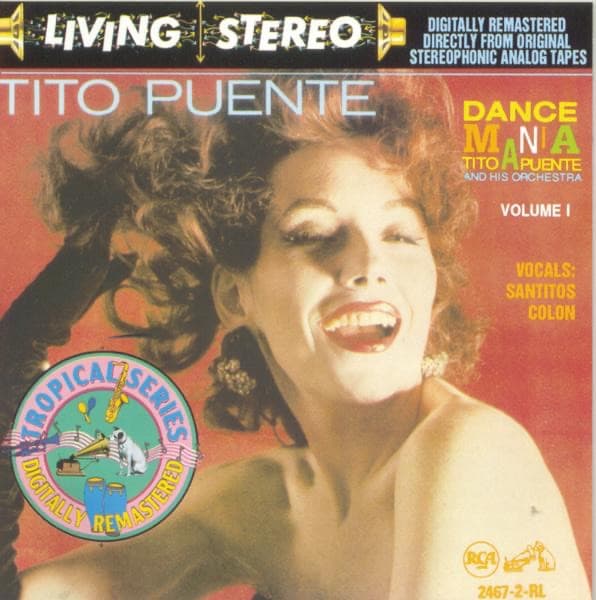
Tito Puente
Dance Mania
Stan Getz and João Gilberto
Getz/Gilberto
Various
Tropicália ou Panis et Circencis

Santana
Abraxas
Willie Colón and Rubén Blades
Siembra
Rubén Blades y Seis del Solar
Buscando América

Selena
Amor Prohibido

Café Tacvba
Re

Buena Vista Social Club
Buena Vista Social Club

Daddy Yankee
Barrio Fino
Cardi B
Invasion of Privacy
Rosalía
El Mal Querer
Bad Bunny
X 100PRE
J Balvin
Vibras
Bad Bunny
YHLQMDLG
Bad Bunny
Un Verano Sin Ti
Rosalía
Motomami
Peso Pluma
Génesis
Karol G
Mañana Será Bonito
Kendrick Lamar
GNX
Bad Bunny
DeBÍ TiRAR MáS FOToS
Rosalía
LUX
The Mixtape
Son de la loma
Trio MatamorosTwo guitars, maracas, two voices in harmony, and a question about where the singers come from. The Cuban son before it was sold as rumba.
El Manisero
Don Azpiazú and His Havana Casino OrchestraMaracas and claves in a New York studio for the first time. Listen for the street cry and the trumpet answering it; that dialogue is the whole of Cuban son.
Mal Hombre
Lydia MendozaSeventeen years old, a twelve-string guitar, and a verdict on a man delivered without raising her voice. This is the beginning of Tejano music.
Manteca
Dizzy GillespieA Cuban conga drummer's bass riff, a big band's brass and a bebop trumpet on top. Latin jazz begins here, and the whole record is one riff you cannot stop hearing.
Mambo No. 5
Pérez Prado and his OrchestraBrass stabs, a saxophone riff and a grunt. The mambo as pure pop, on its way north from Mexico City to every dance floor in America. Yes, the 1999 song sampled it.
Cherry Pink and Apple Blossom White
Pérez PradoTen weeks at number one in the year of "Rock Around the Clock." The trumpet slide and the grunt are the sound of the mambo craze, and half of America learned to dance to it.
La Bamba
Ritchie ValensA Veracruz wedding song with a rock and roll rhythm, sung in Spanish by a seventeen-year-old from the San Fernando Valley. The first Latin rock record, and still the happiest.
The Girl from Ipanema
Stan Getz and João Gilberto with Astrud GilbertoBossa nova arrives in America in a voice that had never sung professionally. Getz's tenor solo is the sound of an entire genre of cocktail lounges being invented.
Pedro Navaja
Willie Colón and Rubén BladesA knife, a woman with a gun, a drunk who takes the money, told over seven minutes of trombones. Salsa's "Mack the Knife" and the best-selling Latin record of its decade.
Amor Prohibido
SelenaA cumbia about her grandparents falling in love across a class line, sung by the Queen of Tejano a year before she was killed. The border's pop music, at its peak.
Livin' la Vida Loca
Ricky MartinDesmond Child's song, a horn section, five weeks at number one, and the Latin explosion in a single. Often cited as the first number one recorded entirely in Pro Tools.
Hips Don't Lie
ShakiraColombian pop with a Wyclef Jean verse and a Jerry Rivera horn line, number one in a dozen countries. Latin pop crosses over on its own terms.
Despacito
Luis FonsiSixteen weeks at number one in America, almost entirely in Spanish, and the most-watched video on YouTube. The rule that Latin music had to translate itself was over.
Malamente
RosalíaFlamenco hand claps, Auto-Tune and a motorbike, from a Catalan singer's college project. Nothing else in the decade sounds remotely like it.
Tití Me Preguntó
Bad BunnyDembow that changes tempo three times and a joke about how many girlfriends he has. From the most consumed album in America that year, in any language.
Ella Baila Sola
Eslabon ArmadoRequinto guitar, tuba, and Peso Pluma's thin nasal voice: the first regional Mexican song in the American top ten, and a hundred-year-old form going global.
NUEVAYoL
Bad BunnySalsa, a sampled classic, and a record about Puerto Ricans in New York, from the album that became the first primarily Spanish-language Album of the Year winner.