100 Years of Music / Genre
Pop
Pop is whatever the most people are listening to this week, and the machine built to make it. That machine was Tin Pan Alley, and it became a recording industry around 1920. Every other genre in this history has passed through it.
The lineage
Pop began as a business of paper. From about 1885 the music publishers clustered on West 28th Street in Manhattan wrote and sold songs as sheet music, and the street was called Tin Pan Alley for the racket of its upright pianos. "After the Ball" (1892) sold millions of copies; Irving Berlin’s "Alexander’s Ragtime Band" (1911) made syncopation a parlour fashion. This history dates pop’s emergence to 1920 because that is when the song stopped being paper and became a record and a broadcast. Paul Whiteman’s "Whispering" and Al Jolson’s "Swanee", both 1920, sold in the millions on disc, and KDKA in Pittsburgh went on the air as the first commercial radio station that November. From then on pop was the sound coming out of a machine in the living room.
The electrical microphone (1925) let singers whisper instead of shout, and crooning was born: Gene Austin’s "My Blue Heaven" (1927), Rudy Vallée, and from 1931 Bing Crosby, the first singer whose intimacy was the point. Gershwin, Kern, Porter and Rodgers wrote the Great American Songbook for Broadway and Hollywood. Swing bands were pop from 1935, and their singers became the stars: Frank Sinatra’s bobby-soxers rioted outside the Paramount Theatre in October 1944. Billboard published its first pop chart in July 1940. After the war Nat King Cole, Patti Page and Perry Como sold ballads and novelties to adults, and in 1955 rock and roll took the teenagers away and split pop in two.
Pop answered by manufacturing teenagers of its own: Pat Boone’s covers, Paul Anka’s "Diana" (1957), Ricky Nelson, and American Bandstand on national television from 1957. The Brill Building writers, Goffin and King, Leiber and Stoller, Bacharach and David, turned the hit song into a craft again; the Shirelles’ "Will You Love Me Tomorrow" (1960) was the first girl-group number one, and Phil Spector’s Wall of Sound (1962–1963) made the producer the star. The Beatles were the best Tin Pan Alley writers of their generation, and Motown was the best factory. The Monkees (1966) were assembled for television; the Archies’ "Sugar, Sugar" (1969) was sung by a cartoon. ABBA won Eurovision in 1974, the Bee Gees’ Saturday Night Fever sold forty million copies in 1977, and the idea that pop could be looked down on and still be perfect was settled.
MTV (August 1981) made pop visual, and the 1980s produced its emperors. Thriller (1982) became the best-selling album ever made, and "Billie Jean" broke MTV’s colour line in March 1983. Madonna’s Like a Virgin (1984), Prince’s Purple Rain (1984) and Whitney Houston (1985) filled out the court. Synth-pop, British and cheap, gave the decade its sound: Gary Numan (1979), the Human League’s "Don’t You Want Me" (1981), Eurythmics, Pet Shop Boys. Stock Aitken Waterman ran a hit factory in London; New Kids on the Block ran one in Boston. Then Cheiron Studios in Stockholm, where Max Martin learned his trade, wrote the late 1990s: Backstreet Boys, Britney Spears’s "...Baby One More Time" (1998), NSYNC. The Spice Girls sold girl power, Ricky Martin sold Latin pop, and MTV’s Total Request Live (1998) counted the votes.
The 2000s dissolved the walls. Auto-Tune, used as an effect on Cher’s "Believe" (1998), became a voice. The Neptunes and Timbaland made hip-hop rhythm the pop default; Beyoncé, Rihanna, Lady Gaga (The Fame, 2008) and Katy Perry ruled the radio, and Taylor Swift walked from country to pop and stayed. iTunes (2003) sold the single again; Spotify (in the US from 2011) replaced selling with streaming, and the Billboard chart began counting plays. K-pop crossed over with "Gangnam Style" (2012) and BTS (2017). Billie Eilish’s debut, made in her brother’s bedroom, went to number one in 2019; Bad Bunny became the most streamed artist in the world singing in Spanish; TikTok now chooses the singles. Pop remains what it was in 1920: the water every other genre swims in, and the reason they exist as separate names at all.
Branches
Tin Pan Alley
Songs written to order and sold as sheet music from West 28th Street. "After the Ball" (1892), Irving Berlin, the whole pre-record song industry. Its verse-and-chorus form is still the shape of a pop song.
Crooners
The electrical microphone let singers murmur instead of project. Rudy Vallée, Gene Austin, then Bing Crosby, the model for every intimate pop voice from Sinatra to Nat King Cole to Michael Bublé.
Vocal pop
Singers stepping out from the big bands to front their own records and radio shows. Sinatra from 1943, Perry Como, Nat King Cole, Patti Page, Doris Day. The adult pop that rock and roll rebelled against.
Teen pop
Pop made for and often by teenagers, with the singer’s image as the product. Paul Anka and Ricky Nelson in 1957, the teen idols of American Bandstand, then Menudo, New Kids on the Block and Britney Spears.
Brill Building
Professional songwriting teams in a Broadway office block writing for girl groups and teen singers. Goffin and King, Mann and Weil, Leiber and Stoller, Phil Spector. "Will You Love Me Tomorrow" (1960) is the model.
Bubblegum
Simple, sugary pop built for children and cartoons by producers Kasenetz and Katz and by Don Kirshner. "Simon Says" (1968), "Sugar, Sugar" (1969), the Monkees and the Partridge Family. Disposable and durable at once.
Synth-pop
Songs built on cheap synthesizers and drum machines after punk. Gary Numan’s "Are ‘Friends’ Electric?" (1979), the Human League, Depeche Mode, Soft Cell, Eurythmics. The sound of the early 1980s and of the 2010s revival.
Dance-pop
Post-disco rhythm under pop songs, made for radio and video. Madonna’s "Holiday" (1983), Michael Jackson, Janet Jackson, Kylie Minogue, then Lady Gaga and Dua Lipa. The mainstream of pop for forty years.
Boy bands and the teen pop revival
Swedish songwriters, American vocal groups and MTV: Backstreet Boys (US breakthrough 1997), NSYNC, Britney Spears, the Spice Girls. Max Martin’s melodic method still writes the charts.
How to listen
Listen for the hook and clock it. A pop record has to earn your attention in about ten seconds and pay it off in a chorus you can sing after one hearing. Notice where the chorus arrives, how many times it returns, and what the producer changes each time. That structure is Tin Pan Alley’s, and it has survived every change of instrument.
Then listen for the production as a date stamp. Orchestra and a crooner is the 1930s. Wall of Sound is 1963. Gated reverb on the drums is 1984. A Max Martin chorus with a vowel-heavy, nonsense-adjacent lyric is 1999. Auto-Tune as texture is 2008. A whispered vocal over a sub-bass is 2019. Pop’s job is to sound like right now, which makes it the easiest music to date.
Play the machine across the decades. Al Jolson’s "Swanee" (1920), Bing Crosby’s "Pennies from Heaven" (1936), the Shirelles’ "Will You Love Me Tomorrow" (1960), "Billie Jean" (1983), "...Baby One More Time" (1998), "bad guy" (2019). Six eras, one aim: everybody, at once.
Across the decades
Tin Pan Alley meets the microphone
Pop in 1920 meant sheet music. Publishers on West 28th Street in Manhattan, the block nicknamed Tin Pan Alley, hired pianists to plug new songs to performers, and a hit was a song that sold in the parlor. Paul Whiteman changed the unit of measurement. His Victor record of "Whispering," cut in August 1920, sold in the millions and made the dance-band arrangement, not the sheet, the thing people bought.
Most of the songwriters were the children of Jewish immigrants writing in a Black rhythmic idiom, and singers have been recording their songs ever since. George Gershwin went from "Swanee" to "Rhapsody in Blue" to "Fascinating Rhythm" in five years. Irving Berlin wrote "Always" and "Blue Skies." Jerome Kern and Oscar Hammerstein II wrote Show Boat in 1927, the first Broadway musical whose songs carried a serious story, and put "Ol' Man River" in the mouth of a Black dockworker. Hoagy Carmichael, a law student in Indiana, recorded a tune called "Star Dust" in 1927 that has been put on record more than 1,500 times since.
The microphone remade the singer. Before 1925 a pop vocalist had to fill a theater or shout into a horn. After it, Gene Austin, Rudy Vallee and a young Bing Crosby could sing quietly, close, as if to one person, and the record and the radio carried it. They called it crooning. Every intimate pop vocal since, from Sinatra to Billie Eilish, descends from that change in the room.
Al Jolson stood on the other side of the line. He was the biggest star on Broadway, a belter who sang in blackface, and when The Jazz Singer put him on film in October 1927 he became the face of the talkies. The stage tradition he came from was dying in that same moment, and the film is where you can watch it happen.
Tin Pan Alley moves to Hollywood and the crooner takes the microphone
Popular song in the 1930s was written in New York and sold from Los Angeles. The great songwriting decade of Cole Porter, George Gershwin, Irving Berlin, Jerome Kern, Harold Arlen, and Rodgers and Hart overlapped almost exactly with the rise of the film musical, and the best songs of the era arrived on screen: "Cheek to Cheek" in Top Hat in 1935, "Over the Rainbow" in The Wizard of Oz in 1939. Gershwin's Porgy and Bess opened on Broadway in October 1935; he was dead of a brain tumor by July 1937, at thirty-eight.
The microphone changed how those songs were sung. Before electrical recording and radio, a singer had to fill a theater. Now he could whisper. Bing Crosby understood this first and best: his 1932 "Brother, Can You Spare a Dime?" is sung close and low, as if to one person on a breadline, and it became the Depression's anthem. The crooner style he built ran straight through Sinatra to every pop vocalist since.
Pop also meant the charts. Your Hit Parade began on radio in 1935, counting down the week's top songs from sheet music and radio plays, and it trained the country to think of music as a race. Kate Smith premiered Irving Berlin's "God Bless America" on her CBS show for the twentieth Armistice Day in November 1938. By 1939 Glenn Miller had "In the Mood," and swing and pop were, for a few years, the same thing.
The singer steps out in front of the band
In 1940 the singer was a band's employee, seated at the side of the stage until the vocal chorus. By 1945 the band was the singer's employee. The man who made that happen was Frank Sinatra. He left Tommy Dorsey in 1942, opened at the Paramount Theatre in Times Square that December, and found that teenage girls in rolled-down white socks screamed at him the way nobody had screamed at a singer before. When he came back to the Paramount in October 1944 the crowd outside was estimated at thirty thousand and the police called it a riot. The bobby-soxers were the first teen fandom. Everything Beatlemania did, they did first.
Bing Crosby, the singer Sinatra grew up on, sang the decade's biggest record: "White Christmas", from a 1942 film, a song about missing home released to a country whose sons were all away. Crosby also, almost by accident, changed how records were made. In 1947 he put his radio show on magnetic tape so he would not have to perform it live twice, and put his own money into the company that built the machines, Ampex.
The recording ban of 1942 to 1944 shaped pop in strange ways. Singers were not in the musicians' union, so vocal groups kept recording with nothing behind them: the Mills Brothers' "Paper Doll" and the Ink Spots' ballads owned the wartime charts, and Sinatra signed with Columbia in 1943 and cut his first solo hits with a choir. The Andrews Sisters, three sisters from Minneapolis who sang tight, swinging harmony, were the sound of the home front and the USO; "Boogie Woogie Bugle Boy" from 1941 and "Rum and Coca-Cola" from 1945 are both here, and the second one is a Trinidadian calypso whose writer had to sue to get paid.
Nat King Cole, a jazz pianist who sang almost as an afterthought, became the biggest Black pop star in America on the strength of the King Cole Trio's "Straighten Up and Fly Right" in 1944 and "Nature Boy" in 1948. Doris Day, Peggy Lee, Jo Stafford and Perry Como all began the decade as band singers and ended it as names. In 1948 Patti Page, denied the budget for backing singers during the second recording ban, harmonised with herself by overdubbing, a trick Les Paul was already using on guitars. In Paris, Édith Piaf sang "La Vie en rose" and made the chanson, the French art of the confessional song, an international export. The 1950s crooner and the 1960s singer-songwriter both start here.
Sinatra, Ella and the concept album
While the singles chart went to the teenagers, the adults got the album, and the album got good. Frank Sinatra, washed up at thirty-seven, signed to Capitol in 1953 and with arranger Nelson Riddle made the first great concept LPs: "In the Wee Small Hours" (1955), sixteen songs about being alone at 3 a.m., and "Songs for Swingin’ Lovers!" (1956), its opposite. Ella Fitzgerald began her songbook series with Cole Porter in 1956, one composer per album, and made the case that Tin Pan Alley was a body of classical music. Nat King Cole was the most-heard voice in America and the first Black performer with his own network television show.
The pop mainstream also did the thing it always does: it copied. Pat Boone’s "Tutti Frutti" outsold Little Richard’s. Georgia Gibbs took LaVern Baker’s "Tweedle Dee." The Crew-Cuts cleaned up "Sh-Boom." Those covers were where a lot of white America first heard the songs, and they are also why the originals’ songwriters and singers spent decades fighting for their money. By 1957 the kids had learned to ask for the original. The first Grammys, handed out in 1959 for the records of 1958, found room for exactly one rock and roll winner, the Champs’ instrumental "Tequila", and gave the big awards to Modugno and Mancini.
The Brill Building, the Wall of Sound and the pocket symphony
Pop at the start of the 1960s was written on a schedule. In the Brill Building and the offices at 1650 Broadway, songwriting teams like Carole King and Gerry Goffin, Barry Mann and Cynthia Weil, and Jeff Barry and Ellie Greenwich turned out three-minute records for teenagers, and the Shirelles, the Crystals, the Chiffons and the Shangri-Las sang them. The girl groups were the sound of American radio between Elvis and the Beatles, and they were the sound the Beatles were copying.
Phil Spector took those songs into Gold Star Studios in Los Angeles and built a wall around them. Three pianos, four guitars, a room full of percussion, everything recorded through an echo chamber until it sounded like weather. "Be My Baby" by the Ronettes, August 1963, is the record every producer since has been trying to make. Brian Wilson has told the story of hearing it in his car and having to pull over.
What Wilson did with that lesson changed what pop could be. "Pet Sounds" in May 1966 was a sad, gorgeous album built from harpsichords, bicycle bells, a theremin and the Wrecking Crew, and it sold poorly in America and blew the Beatles' minds in London. "Good Vibrations", the single that followed in October, was cut in four studios over six months and promoted as a pocket symphony. By 1967 pop meant the studio, and the studio meant anything you could imagine.
Pop learns to be looked at
Pop in the 1980s meant a face, a video, a producer and a machine. Michael Jackson's "Thriller" (1982) is the model: Quincy Jones sequencing nine songs like a film, Eddie Van Halen dropped into "Beat It", the title track shot as a fourteen-minute horror movie. It sold more than any album before it and forced MTV and Top 40 radio to end their unofficial colour line.
Prince did it from Minneapolis with a Linn drum machine, an Oberheim synth and a guitar that could do anything. Madonna did it from the New York clubs with a producer, Nile Rodgers, and an instinct for the camera that nobody has matched since. Whitney Houston did it with a voice out of the Newark church and Clive Davis's A&R desk. Janet Jackson did it by hiring Jimmy Jam and Terry Lewis, two of Prince's cast-offs, and calling the record "Control".
Across the Atlantic, British pop got there through synthesizers. The Human League, Soft Cell, Depeche Mode, Yazoo, Eurythmics, Duran Duran, Tears for Fears, the Pet Shop Boys and a-ha wrote pop songs with the drums programmed and the guitars optional. MTV, short on American videos, played them constantly. Britain's second invasion of the American charts arrived on cable television.
By 1989 pop had absorbed hip-hop beats (Janet's "Rhythm Nation 1814"), gospel ("Like a Prayer") and house. The DX7 electric piano, the gated snare and the big chorus were everywhere. Then the decade ended, and so, for a while, did the appetite for gloss.
Divas, boy bands and the Swedish hit factory
Pop in the 1990s belonged first to the voices. Mariah Carey arrived in 1990 with a five-octave range and by 1995 was putting Ol' Dirty Bastard on a remix. Whitney Houston sang Dolly Parton's "I Will Always Love You" in "The Bodyguard" and held number one for fourteen weeks. Celine Dion sang the "Titanic" song. Janet Jackson signed the biggest record deal in history in 1991 and used it to make "janet." and "The Velvet Rope", records about sex and depression that sounded like the future. Michael Jackson made "Dangerous" with Teddy Riley and premiered "Black or White" in front of half a billion people. The ballad, the key change and the video budget were the tools.
Then the kids took over. Lou Pearlman built the Backstreet Boys and *NSYNC in Orlando and sold them to Europe before America noticed. The Spice Girls sold girl power to the whole planet in 1996. And in a studio in Stockholm called Cheiron, a former metal singer named Max Martin worked out a formula: a huge chorus, a vocal melody that sat on the beat like a drum part, and lyrics in slightly wrong English that everyone could sing. "Quit Playing Games (with My Heart)", "...Baby One More Time", "I Want It That Way". Britney Spears was sixteen. Christina Aguilera followed. "TRL" counted the votes. The 2000s pop chart was built here.
Pop also learned new tricks. Los del Río's "Macarena" spent fourteen weeks at number one in 1996 and taught America a dance. Cher's "Believe" in 1998 pushed an Antares pitch-correction box called Auto-Tune past the point where it fixed a note and into the place where it became a sound; twenty years later every rapper would use it. Ricky Martin's "The Cup of Life" at the February 1999 Grammys started a Latin pop explosion. Shania Twain's "Come On Over" made a country record the best-selling album by a woman in American history. Pop was learning to eat every other genre. It has not stopped.
Teen pop grows up, and the producer becomes the star
The decade started with the last great sales week the old business would ever see: *NSYNC's No Strings Attached sold about 2.4 million copies in seven days in March 2000. Britney Spears followed with Oops!... I Did It Again and then, on Toxic in 2004, made my pick for the best pop single of the decade. Christina Aguilera stripped the teen image off on Stripped. Avril Lavigne, Pink and Kelly Clarkson gave girls a guitar and an attitude. Gwen Stefani went solo. Kylie Minogue's Can't Get You Out of My Head and Girls Aloud's Xenomania singles kept Britain the home of the perfect three-minute record.
Then the producers took over. Justin Timberlake left the boy band for the Neptunes and Timbaland on Justified, and FutureSex/LoveSounds in 2006 turned Timbaland's stutter-beats into stadium pop. Nelly Furtado's Loose and Timbaland's own Shock Value were the same story. Max Martin, who had written the Backstreet Boys' hits, teamed with Dr. Luke on Since U Been Gone and rebuilt his empire. Beyoncé's Crazy in Love and Single Ladies, Rihanna's Umbrella and Lady Gaga's Poker Face were all producer records first: Rich Harrison, Tricky Stewart and the-Dream, RedOne. Shakira's Hips Don't Lie and the Black Eyed Peas' I Gotta Feeling were global in a way pop had never quite been.
Television built its own stars. American Idol gave the world Kelly Clarkson and Carrie Underwood. Disney gave it Hannah Montana, the Jonas Brothers and High School Musical, and then Miley Cyrus and Taylor Swift, whose second album Fearless won Album of the Year in January 2010. Britain answered with Amy Winehouse's Back to Black, a sixties soul record about a very modern mess that won five Grammys in 2008, then Adele's 19 and Duffy in its wake. And on 25 June 2009 Michael Jackson died in Los Angeles, and for a week every radio station on earth played the same songs.
Everyone in the same room: pop absorbs everything
Pop in the 2010s had no center and every center. It swallowed EDM, then trap, then reggaeton, then bedroom recordings made on a laptop by teenagers. What held it together was a small group of producers and a very large group of listeners choosing songs one at a time.
Adele bookended it. Her album 21, released in early 2011, was the best-selling album of the decade in America, a break-up record sung with the force of a gospel singer and no interest in fashion at all. Its follow-up, 25, sold 3.38 million copies in its first American week in November 2015, the biggest sales week ever measured. She proved a thing everyone had forgotten: if the song is good enough, people will still buy it.
Taylor Swift left country behind on Red in 2012 and went fully pop on 1989 in 2014, which won Album of the Year. Then she pulled her catalogue off Spotify in November 2014 over free streaming, put it back in 2017, and spent 2019 in public war over who owned her master recordings. Beyoncé dropped a self-titled album with no announcement in December 2013 and changed how records are released, then made Lemonade in 2016, a film and an album about betrayal, Black womanhood and the American South. Lady Gaga, Rihanna, Katy Perry, Bruno Mars, Justin Bieber and Ariana Grande all built and rebuilt themselves inside the decade.
The edges were more interesting than the middle, and the middle kept borrowing from them. Lorde arrived at sixteen with Pure Heroine in 2013 and made minimalism a teenage language. Lana Del Rey invented a whole cinematic America and then wrote her best record, Norman Fucking Rockwell, in 2019. Carly Rae Jepsen turned a novelty hit into a cult career. Charli XCX, the PC Music producers and SOPHIE built hyperpop out of shattered glass and pitched-up voices. Robyn's Body Talk in 2010 taught the decade how to cry on a dancefloor. Billie Eilish closed the decade whispering into a microphone in her brother's bedroom and swept the 2020 Grammys at eighteen.
And pop stopped being American by default. PSY's Gangnam Style in 2012 was the first genuinely global internet song. BTS put a Korean-language album at number one on the Billboard 200 in 2018. Despacito ran the world in 2017 and Latin pop never went back into its box. The lingua franca of pop was now streaming, and streaming does not care what language you sing in.
The star system splinters, and everybody writes their own diary
Pop in the 2020s stopped pretending to be one thing. The old machine still worked, and Max Martin's descendants still built choruses, but the biggest records of the decade were written from inside somebody's actual life and sold on that basis. Taylor Swift wrote two records of imaginary people in a cabin in 2020 and became the most powerful person in the business. Olivia Rodrigo turned a break-up at seventeen into the fastest-moving debut of the decade. Billie Eilish and her brother kept making records in a bedroom in Highland Park and kept winning.
Then the 2024 class arrived at once, and it was the best pop year since 2013. Charli XCX made a sweaty, self-loathing club record called "Brat" and accidentally named a summer and a colour. Chappell Roan came up through drag aesthetics and years of getting dropped, and "Good Luck, Babe!" made her a headliner in eighteen months. Sabrina Carpenter turned innuendo into craft on "Short n' Sweet". Every one of them wrote or co-wrote their own material, and every one of them was funnier than pop stars are usually allowed to be.
The old guard did not go anywhere. Dua Lipa made the best disco record in forty years while the clubs were shut. The Weeknd finished a trilogy about dying under stage lights. Beyoncé made a house record and then a country record and finally won Album of the Year. Adele sold 839,000 copies of "30" in a week in 2021, in a market that was not supposed to sell albums any more. Lady Gaga went back to being frightening on "Mayhem" in 2025.
And pop stopped being American or British by default. K-pop put BTS at number one on the Hot 100 in 2020 singing in English, then the band paused for military service and the field opened up: Stray Kids topped the Billboard 200 with everything they released, Blackpink headlined Coachella, and NewJeans made the best pop singles in the world for two years before their label fight swallowed them. In 2025 the biggest pop song on earth came from an animated film about a girl group who fight demons, sung by session singers most listeners could not name.
Timeline
Prohibition begins
The Volstead Act took effect on January 17. Bars closed and speakeasies opened, and the ones that could afford it hired bands. For the next thirteen years the underground nightclub, often mob-owned, was the best-paying room in American music, and it is where Chicago and Harlem jazz grew up.
Mamie Smith records "Crazy Blues"
On August 10 in New York, Mamie Smith and a Black band cut Perry Bradford's "Crazy Blues" for Okeh, after a February session had shown the label she could sell. Released in November, it reportedly moved 75,000 copies in two months. It was the first blues record by a Black singer, and its sales convinced every label that Black buyers were a market. The "race record" catalogs, the classic blues singers and the whole recorded blues tradition start here.
Paul Whiteman cuts "Whispering"
Recorded in Camden on August 23 with Ferde Grofe's arrangement, "Whispering" sold in the millions and set the pattern for the decade's dance bands: a written arrangement, a smooth ensemble, a hint of jazz phrasing with none of the risk. Whiteman would be the most famous bandleader in America for ten years and would hire Bix Beiderbecke and Bing Crosby along the way.
KDKA goes on the air
On November 2, Westinghouse's station in Pittsburgh broadcast the Harding-Cox election returns under a commercial license, the event usually counted as the start of broadcast radio in America. Stations multiplied by the hundreds within a few years. For the record business, radio was free music in every living room, and a rival it never fully beat.
Black Swan Records and "Down Home Blues"
Harry Pace, W. C. Handy's former publishing partner, founded Black Swan in Harlem, the first significant Black-owned record label. Its hit was Ethel Waters' "Down Home Blues," with a young Fletcher Henderson running the music. The label lasted only until 1923 and was sold to Paramount, but it proved a Black company could make and sell Black records.
Shuffle Along opens on Broadway
Noble Sissle and Eubie Blake's musical opened on May 23 at the 63rd Street Music Hall, a multipurpose room well north of the theatre district, and ran 504 performances, the first Black-written, Black-performed hit on Broadway in a generation. Josephine Baker and Florence Mills came out of its chorus. Langston Hughes said it was the show that started the Harlem Renaissance.
The Charleston
James P. Johnson's song "Charleston" opened in the Black revue Runnin' Wild on Broadway on October 29. The dance that went with it, knees knocking and heels kicking, became the decade's signature step and the picture people still have of the Jazz Age. Its rhythm came from Black dockworkers in South Carolina.
"Rhapsody in Blue" at Aeolian Hall
Paul Whiteman billed February 12 as "An Experiment in Modern Music." George Gershwin, who had forgotten the commission until he read about it in the paper, wrote the piece in five weeks and played the piano part himself; Ferde Grofe orchestrated it page by page. Ross Gorman turned the opening clarinet run into a smear in rehearsal as a joke, and Gershwin kept it. The first recording followed on June 10, acoustically, cut down to fit two sides.
Vernon Dalhart sells a million
On August 13, Marion Try Slaughter, a Texas-born light-opera tenor who had renamed himself after two Texas towns, recorded "The Wreck of the Old 97" and "The Prisoner's Song" for Victor. The coupling became the first country record to sell a million copies. Dalhart was not a hillbilly, and that was the point: he showed the songs could sell far beyond the South.
The microphone replaces the horn
Bell Labs engineers Joseph Maxfield and Henry Harrison built a recording chain of condenser microphone, vacuum-tube amplifier and electromagnetic cutter, and Western Electric licensed it to Victor and Columbia for $50,000 plus royalties. The first electrical records went on sale in the spring of 1925 without announcement; the frequency range roughly tripled, bass and sibilants appeared, and a singer could whisper. On November 2, Victor launched the Orthophonic Victrola to play the new discs. Bristol, "West End Blues," the crooners and everything after depend on this.
"Heebie Jeebies"
Released in March, the Hot Five's novelty tune became a national hit on the strength of Armstrong's scat chorus, nonsense syllables sung like a horn. The story that he dropped the lyric sheet is probably a story. What matters is that it made the human voice an instrument on record, and put the Hot Five in every Black household with a Victrola.
NBC, the first network
On November 15 the National Broadcasting Company opened with a four-hour gala from the Waldorf-Astoria carried by about two dozen stations. One orchestra, heard from New York to Kansas City at the same instant. Within three years a Cotton Club broadcast could make a band famous in towns that had no record shop.
The Jazz Singer
Warner Bros. opened it in New York on October 6 with Vitaphone sound on disc. Only a quarter of it talks, but when Al Jolson says "You ain't heard nothin' yet" and sings "Blue Skies," the silent era is over. Within two years the film industry would be the biggest buyer of songs in America and the fastest way to make one famous.
Hoagy Carmichael records "Star Dust"
On October 31 at the Gennett studio in Richmond, Indiana, a young Indiana lawyer and hot pianist recorded his own tune as a medium-tempo instrumental with a borrowed band. Mitchell Parish added words in 1929 and everyone slowed it down. It has since been recorded more than 1,500 times. The melody's third and fourth bars come straight out of Armstrong's "Potato Head Blues."
Show Boat
Jerome Kern and Oscar Hammerstein II's musical opened at the Ziegfeld Theatre on December 27 and ran 572 performances. For the first time a Broadway musical's songs carried a serious plot, about race, marriage and time on the Mississippi. "Ol' Man River" was written for a Black dockworker, and Paul Robeson's 1928 recording of it is the one people still mean.
Tampa Red and Georgia Tom, "It's Tight Like That"
A dirty joke with a bounce, cut in Chicago on October 24, 1928 and issued as Vocalion 1216, sold so fast it created a genre called hokum. Georgia Tom was Thomas A. Dorsey, a Georgia preacher's son who had been writing sacred songs on the side since 1921. Within four years he would leave the blues and invent modern gospel, carrying this rhythm into the church with him.
Fats Waller, "Ain't Misbehavin'"
On August 2 in Camden, Victor let Waller record a full session of his own piano solos for the first time. He opened with the song he had written for the revue Hot Chocolates, which had opened in June. The solo is stride piano at its peak, and the song became one of the most recorded of the century. Louis Armstrong sang it in the show's pit and made it his own.
The Crash
Between October 24 and 29 the stock market lost a quarter of its value. The record industry, already shrunk by radio and consolidating (RCA had bought Victor early in the year), collapsed with it: by most estimates sales fell from around a hundred million discs a year to a few million by 1932. Paramount and Gennett would be gone within a few years. Blind Willie Johnson, Charley Patton and hundreds of others made their last records in the shadow of this week.
The Peanut Vendor opens on Broadway
On April 26 Don Azpiazú's Havana Casino Orchestra played the Palace Theater with maracas, claves, bongos, and a singer pushing a peanut cart. Their Victor recording of "El Manisero" that May was the first American hit built on authentic Cuban son, and it set off the rumba craze that put Latin percussion in ballrooms and movies for the rest of the decade. Mario Bauzá, who played on it, would later help build the mambo.
Duke Ellington records "Mood Indigo"
Ellington's band was still the house orchestra at Harlem's Cotton Club when it cut this slow, strange ballad for Brunswick on October 17, 1930, with the trombone, muted trumpet, and clarinet voiced upside down from where any arranger would put them. He remade it for Victor on December 10 and kept remaking it for forty years. It became his first great popular hit and the proof that a dance band could be a composer's instrument.
Cab Calloway records "Minnie the Moocher"
Calloway's band had just replaced Ellington's at the Cotton Club when it recorded his tale of a Harlem hustler and her cocaine-smoking boyfriend. The scat chorus, which the audience had to sing back, made the record a call-and-response event rather than a song. It sold over a million copies, put Calloway in Betty Boop cartoons, and showed that a Black bandleader could be a national pop star on his own terms.
Gene Autry stops imitating Jimmie Rodgers
After two years of recording Rodgers covers for every label that would have him, Autry cut a sentimental duet with fellow railroader Jimmy Long, "That Silver-Haired Daddy of Mine," in late October 1931. It was a major hit, won him a morning show on Chicago's WLS that December, and made him the best-selling country artist of the Depression years before he ever put on a cowboy hat.
The bottom: six million records and a scrapped label
1932 was the worst year the record business has ever had. Sales that had passed a hundred million units in 1927 fell to roughly six million. Paramount, the label that had recorded Patton, House, and James, went out of business and sold its metal stampers for scrap, which is why their records survive only as worn, noisy 78s. Only radio, and soon the jukebox, kept the music moving.
Ellington names the era: "It Don't Mean a Thing"
Recorded in February 1932 with Ivie Anderson singing, Ellington's tune used the word swing as a verb and a standard three and a half years before Benny Goodman made it a marketing term. Every argument about what the music was for is settled in the title. It is one of the few songs of the decade that both the musicians and the dancers claimed as theirs.
Bing Crosby records the Depression's anthem
"Brother, Can You Spare a Dime?" came from a failed Broadway revue, with words by Yip Harburg and a minor-key melody Jay Gorney remembered from a Russian lullaby. Crosby recorded it in late October 1932 with Lennie Hayton's orchestra, singing close to the microphone as if to one man on a breadline. It was the best-selling record of its moment and made the crooner the voice of the country.
Xavier Cugat opens at the Waldorf-Astoria
Cugat moved his band from Los Angeles to the Waldorf-Astoria in New York in 1933 as a relief orchestra at five hundred dollars a week. He stayed sixteen years, became the hotel's highest-paid act, and made the rumba, the tango, and the conga part of the American ballroom vocabulary. The critics called it watered down. The drums were real, and so were the musicians who passed through.
Repeal fills the bars, and the bars buy jukeboxes
Prohibition ended on December 5, 1933. Thousands of newly legal bars needed music and could not afford bands, and the coin-operated phonograph filled the gap. Production of jukeboxes rose more than tenfold between 1934 and 1937, and by the end of the decade stocking them accounted for a large share of all records sold. Jukebox plays also told labels, nickel by nickel, what the public wanted.
The Sons of the Pioneers and "Tumbling Tumbleweeds"
Leonard Slye, later Roy Rogers, Bob Nolan, and Tim Spencer formed the Pioneer Trio in Los Angeles in 1933, added fiddler Hugh Farr, and began cutting radio transcriptions as the Sons of the Pioneers in late 1934. Nolan's "Tumbling Tumbleweeds" gave the cowboy song three-part harmony and a melody that sounded like the West looked in the movies. Gene Autry's 1935 film took the title.
American Decca opens and cuts the price of a record
Jack Kapp launched the American branch of Britain's Decca in August 1934 and sold big-name records for thirty-five cents when the standard price was fifty. Bing Crosby was his first signing; the Sons of the Pioneers were his third. Cheap records plus jukeboxes are what pulled the industry off the floor, and by 1938 Decca and Victor between them sold thirty-three million discs.
Astaire and Rogers dance "Cheek to Cheek"
Irving Berlin wrote it for Fred Astaire, and in Top Hat he sings it to Ginger Rogers while they dance. It spent five weeks at number one on Your Hit Parade and was the top song of 1935. The Astaire and Rogers pictures were the Depression's most reliable escape, and they taught songwriters that the best place to launch a standard was a movie screen.
The Palomar Ballroom: the Swing Era gets a start date
Benny Goodman's band had spent a summer tour losing money, playing safe stock arrangements for club owners who wanted waltzes. On August 21, 1935, at the Palomar in Los Angeles, they gave up and pulled out Fletcher Henderson's hot charts. The crowd was young, it already knew the band from its late-night Let's Dance broadcasts, and it went off. Black bands had been swinging for years. This was the night a white audience decided it was theirs too.
Porgy and Bess opens on Broadway
George Gershwin's opera about a Black neighborhood in Charleston opened at the Alvin Theatre on October 10, 1935, with a classically trained all-Black cast. It ran 124 performances and lost money. Its songs did not: "Summertime" was on record by Billie Holiday within a year, and jazz musicians have been reworking the score ever since. Gershwin was dead within two years.
George Gershwin dies at thirty-eight
Gershwin collapsed in Hollywood and died of a brain tumor on July 11, 1937. He had written Rhapsody in Blue at twenty-five and Porgy and Bess at thirty-six, and had spent his last year writing songs for Astaire pictures. No American songwriter had moved so freely between the concert hall, the theater, and the jazz band, and none has since.
Toscanini takes the podium at NBC
NBC built a symphony orchestra to lure Arturo Toscanini out of retirement, and on Christmas night 1937 he conducted its first broadcast from Studio 8H. For seventeen years the most famous conductor alive played Beethoven into American living rooms for free. It is the high point of the radio century's belief that the network should raise the public's taste as well as sell it soap.
Benny Goodman plays Carnegie Hall
On January 16, 1938, Goodman brought swing into the country's temple of classical music, with Gene Krupa, Harry James, Lionel Hampton, and Teddy Wilson on the bill and guests from the Basie and Ellington bands. The integrated stage was itself a statement. "Sing, Sing, Sing" ran past twelve minutes. The recording sat unreleased for twelve years, and when Columbia issued it in 1950 it revived Goodman's career.
Ella Fitzgerald and Chick Webb record "A-Tisket, A-Tasket"
Fitzgerald, twenty-one, had been singing with Webb's band since he took her on after an amateur night at the Apollo. On May 2, 1938, they rehearsed her rewrite of a nursery rhyme for an hour and recorded it that night for Decca. It was the biggest hit either would ever have, and it made the shy girl from the Yonkers orphanage the most famous singer in swing.
Kate Smith introduces "God Bless America"
Irving Berlin had written it for an army camp show in 1918 and put it in a drawer. For the twentieth anniversary of the Armistice, Smith's manager asked him for a song, and she sang it on her CBS hour with the full opening verse about storm clouds across the sea. The Library of Congress dates the broadcast November 11, 1938; other sources say November 10. She sang it on every show for two years.
Billie Holiday records "Strange Fruit"
Abel Meeropol, a Bronx schoolteacher, wrote the poem after seeing a photograph of a lynching and set it to music himself. In April 1939 he brought it to Café Society, the integrated Greenwich Village club where Holiday was singing, and she performed it that night. Columbia would not record it, so on April 20 she cut it for Milt Gabler's small Commodore label with "Fine and Mellow" on the flip. It reached the top twenty and she sang it, at cost to herself, for the rest of her life.
Glenn Miller records "In the Mood"
The riff had been kicking around since a 1930 Wingy Manone record, and Joe Garland's arrangement had been recorded by Edgar Hayes in 1938 and tried by Artie Shaw without success. Miller bought it, had Eddie Durham of the Basie band help trim it to three minutes with the false endings, and recorded it for Bluebird on August 1, 1939. It sold over a million copies and became the sound people mean when they say the 1940s.
Judy Garland sings "Over the Rainbow"
The Wizard of Oz opened in August 1939 with a ballad by Harold Arlen and Yip Harburg, the lyricist of "Brother, Can You Spare a Dime?", that the studio nearly cut for slowing down the Kansas scenes. Garland was sixteen. It won the Academy Award, became her signature for thirty years, and is the decade's plainest statement of the wish to be somewhere else.
"In the Mood" tops the charts
Glenn Miller's Bluebird record of Joe Garland's riff tune, cut in August 1939, became the best-selling record in the country in early 1940 and has never left the radio since. The riff itself had been kicking around Black bands for a decade, from Wingy Manone's "Tar Paper Stomp" to Edgar Hayes's 1938 version. Miller's arrangement, with its fake endings and its two-tenor chase, made it the anthem of swing at the exact moment swing had two years left.
Bob Wills records "New San Antonio Rose"
Wills and his Texas Playboys put words and a horn section on his 1938 fiddle instrumental and made the biggest Western swing record of all. Tommy Duncan sang it; Bing Crosby covered it the next year and sold a million. Western swing was a Texas dance band playing jazz on fiddles, steel guitar and drums, and this is it at full strength, two years before the draft took most of the band.
Sinatra and Dorsey: "I'll Never Smile Again"
Tommy Dorsey's band with its new singer, a skinny kid from Hoboken, and the Pied Pipers behind him held number one for twelve weeks from mid-July 1940. It is the record where the band singer becomes the point of the record. Sinatra later said he learned to phrase a line without breathing by watching Dorsey's trombone.
The recording ban begins
On 1 August 1942 James C. Petrillo, president of the American Federation of Musicians, forbade every union musician in the country from making records until the labels agreed to pay royalties into a fund for musicians put out of work by jukeboxes and radio. Singers were not union members and kept recording, with choirs behind them. Instrumental music stopped. The ban lasted more than two years and is the longest strike in entertainment history; it put the singer in front of the band for good and kept bebop off record until 1945.
Glenn Miller disbands and enlists
The most popular bandleader in America broke up his orchestra in September 1942 and took a captain's commission to build a band for the Army Air Forces. The AAF band broadcast and played for troops across England and France and modernised military music. It was the most public sign that the swing era was going to war and might not come back.
Sinatra opens at the Paramount
On 30 December 1942, three months after leaving Dorsey, Sinatra went on at the Paramount Theatre in Times Square as an outside act on Benny Goodman's bill. Billboard's reviewer was in the house that night: Goodman got the write-up, but the paper noted that Sinatra was booked for the full ten-week run of the film, that he sang straight at the customers, and that his "boyish appearance and mannerisms" were "catnip for the ladies". The bobby-soxers, teenage girls in rolled-down socks, had found their first star, and pop music had found the teenage girl.
Sinatra signs with Columbia and records a cappella
With the recording ban still on, Sinatra signed to Columbia in June 1943 and cut his first solo sides with the Bobby Tucker Singers and no instruments at all. "You'll Never Know" and "People Will Say We're in Love" were hits anyway. The ban, meant to protect musicians, was making the singer the star.
Decca and Capitol settle with the union
Decca, the label with Bing Crosby, the Andrews Sisters and Louis Jordan, was the first to agree to Petrillo's royalty fund in September 1943; the year-old Capitol followed within weeks. RCA Victor and Columbia held out for another year, which meant the two labels with the smaller, hungrier rosters got a year's head start on the postwar market.
The first V-Discs ship
The Army's Special Services division began pressing twelve-inch 78s on unbreakable vinyl and shipping them to troops in waterproof boxes with spare needles. Petrillo let union musicians record for them on condition the discs were never sold, so V-Discs are the only new instrumental recordings from the ban years, and the reason vinyl, not shellac, was proven ready for the LP. Eight million were shipped before the program ended in 1949, when the union required the masters destroyed.
The King Cole Trio's first Capitol session
On 30 November 1943, at C. P. MacGregor's studio in Los Angeles and weeks after Capitol settled with the union, Nat Cole's piano, guitar and bass trio recorded "Straighten Up and Fly Right", a song Cole wrote from a sermon his father used to preach about a monkey riding a buzzard. It topped the Black chart, crossed to pop and sold half a million. Cole had sold the song outright to a publisher for cash and never saw a royalty. The trio format, small and swinging with a singer who could really play, became the template for lounge jazz, and Capitol, eighteen months old, had its first franchise.
Louis Jordan crosses over
"G.I. Jive" reached number one on the pop chart in 1944 and "Is You Is or Is You Ain't My Baby" went top ten; both also topped the Black chart. Jordan's Tympany Five, a shuffling small band with a honking saxophone and a comedian at the microphone, was selling to everyone in a segregated market. The jukebox trade called him its king. Chuck Berry called him the model.
The Columbus Day riot
Sinatra opened a three-week return at the Paramount on Wednesday 11 October 1944. The next day was Columbus Day and a school holiday, and the crowd that came for it turned Times Square into news. Billboard's man reported that the Paramount called in the police department before the run even started, that the kids mobbed the house and screamed through the show, and that they then sat all day and refused to leave: the theatre could not turn its audience over, and the week's gross came in at ninety thousand dollars against the ninety-four thousand the Andrews Sisters had taken the week before. The papers called it a riot. It is the first documented case of pop-star mass hysteria, and every scream at a Beatles or a Bieber show descends from it.
RCA Victor and Columbia give in; the ban ends
After twenty-seven months, the two biggest labels signed the union's agreement in November 1944 and studios reopened. The world they reopened into had changed: singers had the charts, big bands had lost their dancers, and a generation of small-group musicians had two years of unrecorded ideas waiting.
Glenn Miller disappears
On 15 December 1944 Major Miller boarded a single-engine plane in England bound for Paris to prepare his band's Christmas broadcasts. The plane never arrived and no trace of it has been found. He was forty. The swing era had already been dying for two years; Miller's disappearance is the date most people give for its death.
The big bands fold
In the last weeks of 1946 the name bands went down one after another. Billboard counted Tommy Dorsey, Benny Goodman, Les Brown, Bobby Sherwood, Sonny Dunham, Charlie Ventura and Herbie Fields breaking up or "temporarily" disbanding inside a few weeks, and named the reason: a leader who folded in New York and rebuilt on the coast dodged the union's ten percent travelling bonus and the fares for a whole orchestra. Ballrooms were empty, a federal tax sat on any room with dancing, and the singers had the hits. The big band did not disappear, but from here on it was a nostalgia act or an art project. Popular music had been a bandleader's business since 1935; it now belonged to the singer and the small group.
Édith Piaf: "La Vie en rose"
Piaf had written the lyric in 1945 and sung the song in concert through 1946; her Columbia recording was issued in France in 1947. Credited to the composer Louiguy because Piaf was not yet a registered author, it made the chanson, the French tradition of the plainly sung confessional song, a worldwide export. Louis Armstrong recorded it in English in 1950, and every French singer-songwriter since has had to stand next to it.
Bing Crosby goes on tape
Jack Mullin, a Signal Corps officer who had shipped two German Magnetophon recorders home in pieces in 1945, demonstrated them to Crosby in 1947. Crosby, who hated performing his weekly Philco radio show live, had the first show of the season taped and edited. Billboard reviewed it on the night it aired, 1 October 1947, and put the jump in fidelity over the previous season down to "the tape recording technique". He then put fifty thousand dollars into the small California company building American machines, Ampex.
Les Paul: "Lover (When You're Near Me)"
In his Hollywood garage in 1947 Paul recorded a guitar part onto an acetate disc, played along with it while cutting a second disc, and repeated the trick until the Rodgers and Hart tune had eight guitars on it, some recorded at half speed so they played back an octave high and twice as fast. Capitol released it in 1948. It is the first multitrack pop record; by 1950 he was doing it on Ampex tape with Mary Ford, and in 1952 Gibson put his name on a solid-body guitar.
The second recording ban
The Taft-Hartley Act of 1947 made the union's royalty fund illegal as written, and on 1 January 1948 Petrillo called a second strike on recording. Labels had stockpiled sessions through December 1947, which is why so many of this chapter's records were cut in the last week of that year. The ban ended on 14 December 1948 with the creation of the Music Performance Trust Fund, which still pays for free concerts. Independent labels ignored it more freely than the majors, and small blues and country outfits gained ground while the majors sat still.
The Ampex Model 200
The first two production Ampex tape recorders, serial numbers one and two, were delivered to Jack Mullin and the Crosby show in April 1948, and the networks began installing them in Hollywood, Chicago and New York that spring. Within a few years tape replaced the disc cutter in every American studio. Editing, overdubbing and the take-after-take perfectionism of modern recording all became possible in this room.
Columbia introduces the LP
At the Waldorf-Astoria in New York in June 1948 (the trade saw it on the 18th, the press on the 20th; sources give both dates and the 21st), Columbia's Edward Wallerstein stood a stack of 78s eight feet high next to a stack of the new discs fifteen inches high and said they held the same music. The twelve-inch microgroove vinyl record turned at 33 1/3 rpm and played more than twenty minutes a side. Engineer Peter Goldmark's team had built it; RCA turned down the offer to license it. The album as a thing you sit down and listen to begins here.
RCA Victor introduces the 45
RCA's answer to Columbia's LP went on sale in April 1949: a seven-inch vinyl disc with a large hole, spinning at 45 rpm, one song a side, colour-coded by genre, with its own fast-changing player. The "battle of the speeds" confused buyers for two years until the market settled on the LP for albums and the 45 for singles, and the 78 began its slide to obsolescence. The 45 was cheap, light and unbreakable, and it was about to be the format of the teenager.
The Weavers take Lead Belly’s "Goodnight, Irene" to number one
Huddie Ledbetter had sung "Goodnight, Irene" since before the First World War and died in December 1949 without a hit. Eight months later the Weavers, a Greenwich Village folk quartet with Pete Seeger on banjo, took a smoothed-out version with Gordon Jenkins’s orchestra to the top of the pop chart, where it stayed for thirteen weeks. It was the first time a folk group had sold like that, and it lasted until the blacklist reached them in 1952.
Les Paul and Mary Ford stack "How High the Moon"
Recorded on January 4, 1951, the Capitol single layered a dozen guitar parts and Mary Ford’s voice on top of itself using sound-on-sound tape technique that Les Paul had worked out with an Ampex machine given to him by Bing Crosby. It spent nine weeks at number one. Nobody had heard a record that could not have been played live by the people on it, and every studio trick of the next seventy years starts here.
Bill Haley records "Rock Around the Clock"
A former western-swing bandleader from Pennsylvania cut the song for Decca on April 12, 1954, in two takes at the end of a session, and it did nothing. Haley had been rocking since "Rocket 88" (he covered it in 1951) and "Crazy Man, Crazy" (1953). The record needed a movie. It got one a year later.
"Earth Angel" reaches the pop top ten
Four Los Angeles teenagers called the Penguins cut a ballad in a garage studio for the tiny Dootone label. Curtis Williams’s piano triplets, the "ooh" behind the lead and Cleve Duncan’s pleading vocal became the template for every doo-wop slow dance to come. It spent fifteen weeks on the pop chart and hit number eight the week of Christmas 1954, while the Crew-Cuts’ whitewashed cover went to number three. The argument about covers had begun.
Music Row is born
In 1955 Decca producer Owen Bradley bought an old house at 804 16th Avenue South in Nashville and built a studio behind it in an army-surplus Quonset hut. The same year RCA put guitarist Chet Atkins in charge of its Nashville sessions, a job that produced RCA Studio B. Between them they recorded Gene Vincent, Patsy Cline, Jim Reeves and Don Gibson and worked out the Nashville Sound: no fiddle, no steel, a vocal chorus, sometimes strings, aimed at the pop chart. The neighborhood is still called Music Row.
Mambo mania: Pérez Prado tops the chart while the Palladium dances
Cuban bandleader Pérez Prado, working from Mexico City, held number one on the American pop chart for ten weeks in 1955 with "Cherry Pink and Apple Blossom White," a trumpet mambo with a slide and a grunt. In New York the Palladium Ballroom on Broadway was packed every Wednesday for Machito, Tito Puente and Tito Rodríguez, and Puente had talked George Goldner into letting him record an album of drums alone after midnight to save on studio time. Mambo was the biggest dance craze since swing, and it was Cuban, Puerto Rican and Black at once.
"Blackboard Jungle" makes "Rock Around the Clock" a hit
The film about a teacher in a violent city high school opened in March 1955 with Bill Haley’s year-old flop playing over the titles at a volume theaters had never used. Kids danced in the aisles. By July the record was number one on the Billboard chart, where it stayed eight weeks, and it eventually sold more than three million copies. It was the first rock and roll record to top the pop chart, and the first time adults understood that the music and the teenager were the same problem.
RCA buys Elvis for $35,000
Five singles into his Sun career, Elvis had a manager, Colonel Tom Parker, and a bidding war. On November 21, 1955, RCA Victor bought his contract from Sam Phillips for $35,000, more than anyone had ever paid for a singer, plus $5,000 in back royalties to Elvis. Phillips used the money to keep Sun alive and to promote Carl Perkins. RCA got the biggest star of the century. Both sides thought they had won, and both were right.
"Heartbreak Hotel"
Elvis’s first RCA single, recorded in Nashville on January 10, 1956, and released on January 27, was a slow, echo-drenched blues written from a newspaper story about a suicide. RCA hated it. By spring it was number one on the pop chart for seven weeks, and number one on the country chart, and it sold a million copies. Elvis appeared on national television six times that winter and spring, and by summer the word teenager and the word Elvis meant roughly the same thing.
Harry Belafonte’s "Calypso" sells a million
RCA doubted that a whole album of Caribbean songs would sell. Released at the end of May 1956, "Calypso" knocked Elvis’s first album off the top of the album chart and stayed there thirty-one weeks. It was the first LP by a single performer to sell a million copies. "Day-O," a Jamaican dock-workers’ song, became a schoolyard chant. Belafonte, a Harlem-born son of Jamaican immigrants who wanted to be an actor, was now the most popular Black performer in America and was already sending money to Montgomery.
Elvis on The Ed Sullivan Show
Sullivan had said he would never book him. On September 9, 1956, with Charles Laughton hosting because Sullivan was recovering from a car crash, Elvis sang "Don’t Be Cruel," "Love Me Tender," Little Richard’s "Ready Teddy" and part of "Hound Dog" from a CBS studio in Los Angeles. Sixty million people watched, more than eighty percent of everyone in front of a television. On the third appearance, January 6, 1957, the cameras stayed above his waist, which only told the country where to look.
Buddy Holly and the Crickets, "That’ll Be the Day"
Holly had recorded the song for Decca in Nashville in 1956 and been dropped. In February 1957 he drove from Lubbock to Norman Petty’s studio in Clovis, New Mexico, and cut it again, faster, with his own guitar solo. Released on Brunswick under the band’s name on May 27, 1957, it climbed for four months and hit number one on September 23. Holly wrote his own songs, led his own band, produced his own records and wore glasses. The Beatles named themselves after the Crickets.
American Bandstand goes national
A Philadelphia afternoon dance show hosted by a twenty-seven-year-old named Dick Clark went out on the ABC network on August 5, 1957. Every weekday after school, teenagers across the country watched other teenagers dance to records and rate them. Clark was clean, polite and enormously powerful, and the show made a Philadelphia teen idol out of anyone he chose to.
Sam Cooke, "You Send Me"
Cooke had been the Soul Stirrers’ lead singer for six years, and in 1956 he tried a pop record under the name Dale Cook so as not to scandalize his church audience. Nobody was fooled. He left the group in 1957, and his first release on the tiny Keen label, a song of his own with a chorus of "whoa-oh," went to number one on both the pop and R&B charts by December. The prettiest voice in gospel was now the prettiest voice in pop, and he would spend the rest of his short life proving the two were the same thing.
Elvis goes into the Army
On March 24, 1958, the most famous man in America reported to the Memphis draft board, had his hair cut at Fort Chaffee in front of the press, and served two years as an ordinary soldier, most of it in Germany. He recorded enough beforehand to keep the hits coming. He came back a different singer, and the music he had led was, for the moment, leaderless.
The Kingston Trio, "Tom Dooley"
Three college boys from the San Francisco club scene recorded a nineteenth-century North Carolina murder ballad as album filler for Capitol in early 1958. A Salt Lake City disc jockey started playing it, and by November it was number one. It sold millions, won the first Grammy for Best Country & Western Recording the following May, and started the commercial folk boom that would carry Joan Baez and Bob Dylan into the next decade.
Ritchie Valens, "Donna" and "La Bamba"
Richard Valenzuela, seventeen, from Pacoima in the San Fernando Valley, had a ballad for his girlfriend on one side and a Veracruz wedding song he barely knew the Spanish words to on the other. "Donna" broke first in late November 1958; disc jockeys flipped it and "La Bamba" followed. It was the first rock and roll hit sung in Spanish. He had eight months left.
Berry Gordy borrows $800 and starts Tamla
A Detroit songwriter who had written "Reet Petite" and "Lonely Teardrops" for Jackie Wilson and got almost nothing for them borrowed $800 from his family’s savings fund and founded Tamla Records on January 12, 1959. He bought a house on West Grand Boulevard, called it Hitsville U.S.A., and added a second label named Motown. The first big record, Barrett Strong’s "Money (That’s What I Want)," came out that summer. The 1960s had a sound before they started.
The day the music died
Buddy Holly, sick of a freezing tour bus, chartered a small plane after a show at the Surf Ballroom in Clear Lake, Iowa. Ritchie Valens won a seat on a coin toss; J.P. "The Big Bopper" Richardson took Waylon Jennings’s. The plane went down in a snowy field minutes after takeoff early on February 3, 1959. Holly was twenty-two, Valens seventeen. Don McLean gave the date its name twelve years later.
Leiber and Stoller put strings on the Drifters
A new Drifters, with Ben E. King singing lead, recorded "There Goes My Baby" for Atlantic in March 1959 with a string section, tympani and a Brazilian baião rhythm, all of it slightly out of tune with each other. Jerry Wexler called it a radio stuck between two stations. It reached number two that summer. Soul music had learned to wear a suit, and Phil Spector, who was apprenticing with Leiber and Stoller, was taking notes.
The first Grammy Awards
The new National Academy of Recording Arts and Sciences handed out twenty-eight awards at dinners in Beverly Hills and New York on May 4, 1959, for the records of 1958. Record of the Year was Domenico Modugno’s "Volare." Album of the Year was Henry Mancini’s "Peter Gunn." Ella Fitzgerald won twice. Rock and roll got one line on the ballot: Best Rhythm & Blues Recording, won by the Champs’ instrumental "Tequila". Nothing with a singer and a backbeat came near the big awards, which tells you what the industry thought its own music was.
Marty Robbins, "El Paso"
A four-and-a-half-minute cowboy ballad about a killing over a Mexican dancer, cut in one take with two acoustic guitars, was too long for radio and Columbia released it anyway in October 1959. It went to number one on both the country and pop charts and won a Grammy. It is the Nashville Sound’s proof that a story could carry a record as far as a beat could.
Payola
Congress, already investigating rigged television quiz shows, turned to radio in November 1959 and found that hundreds of disc jockeys had taken money to play records. Alan Freed refused to sign a statement denying it and was fired by WABC on November 21. Dick Clark sold his music interests, testified politely in 1960 and survived. Freed pleaded guilty to commercial bribery, was blackballed, and died broke in 1965. The man who named rock and roll became its first scapegoat, and the majors used the scandal to take the business back from the independents.
Motown gets its first million-seller with "Shop Around"
Berry Gordy had started Tamla with an eight-hundred-dollar family loan in January 1959 and bought a house on West Grand Boulevard with a photo studio out back. Smokey Robinson and the Miracles' "Shop Around", recut in the middle of the night because Gordy did not like the first version, went to number one on the R&B chart and number two pop in early 1961. The assembly line was working.
Patsy Cline records "Crazy", written by a young Willie Nelson
Cline had a hit with "I Fall to Pieces" that spring and broke both her wrists in a car crash in June. On crutches, she cut "Crazy" at Owen Bradley's Nashville studio in one take of the vocal, over a track built with piano, the Jordanaires and a shimmer of strings. It is the Nashville Sound at its most complete: country feeling in a pop dress. The Country Music Hall of Fame calls it the most-played jukebox record ever.
Ray Charles cuts "Modern Sounds in Country and Western Music"
Charles had already fused gospel and R&B in the 1950s. In 1962 he took Hank Williams, Don Gibson and the Everly Brothers and sang them with strings and a big band. "I Can't Stop Loving You" was number one for five weeks. A Black artist had made the biggest country-derived record of the year at the height of the civil rights struggle, and he had shown country and soul that they were cousins.
Phil Spector builds the Wall of Sound around "Be My Baby"
Ronnie Spector sang it; Hal Blaine's drum intro and a Gold Star Studios echo chamber packed with pianos, guitars, castanets and strings did the rest. Released in August 1963 on Philles, the Ronettes' debut single went to number two. Spector called his records little symphonies for the kids. Brian Wilson said hearing this one in his car changed his life, and "Pet Sounds" three years later was his answer to it.
Thirteen-year-old Stevie Wonder tops the Hot 100 with a live recording
"Fingertips, Part 2" was cut on stage at Chicago's Regal Theater during a Motortown Revue: a harmonica jam, a false ending, and a bass player audibly asking what key they were in. In August 1963 it went to number one on the Hot 100, and Motown's second pop chart-topper after the Marvelettes' "Please Mr. Postman" in 1961. It is usually called the first live recording to top that chart, a claim that turns on what anyone counts as a live single. Little Stevie Wonder, blind since infancy, was the youngest artist ever to top the chart.
The Beatles play "The Ed Sullivan Show"
They landed at the newly renamed Kennedy Airport on February 7, 1964 with "I Want to Hold Your Hand" already at number one. Two nights later, seventy-three million people, close to forty percent of the country, watched them play five songs on CBS. The British Invasion starts here: within months the Dave Clark Five, the Animals, the Kinks, the Rolling Stones and the Who were on American radio, and every garage in the country had a band in it.
The Supremes start a run of five straight number ones
Holland-Dozier-Holland wrote "Where Did Our Love Go" for the Marvelettes, who turned it down. The Supremes, who had gone three years at Motown without a hit, cut it with foot stomps for a beat and Diana Ross singing low and cool, and it topped the Hot 100 on August 22, 1964. "Baby Love", "Come See About Me", "Stop! In the Name of Love" and "Back in My Arms Again" followed, each one number one. No American group had done that. Berry Gordy had a product that could beat the Beatles.
"A Change Is Gonna Come" comes out eleven days after Sam Cooke is shot
Cooke wrote it after hearing "Blowin' in the Wind" and after being turned away from a whites-only motel in Shreveport, Louisiana. He recorded it on January 30, 1964 with a full orchestra, and it appeared on an album that spring. On December 11, 1964 he was shot dead by a motel manager in Los Angeles. The single, released December 22, became the civil rights movement's hymn and the song every soul singer since has had to measure themselves against.
Smokey Robinson gives the Temptations "My Girl"
Robinson wrote it about his wife Claudette, taught it to the group in a dressing room at the Apollo, and gave the lead to David Ruffin, whose voice was, in Otis Williams' words, sandpaper and honey. James Jamerson's bass line and Robert White's climbing guitar figure open it. Released December 21, 1964 on the Gordy label, it was number one by March 1965, the Temptations' first, and the template for every Motown ballad after it.
"Rubber Soul" starts the album race
Released December 3, 1965, and made in about a month, "Rubber Soul" had a sitar on "Norwegian Wood", a fuzz bass on "Think for Yourself", a harmonium, and no filler. Capitol issued it in America with no singles pulled from it, so people had to buy the whole record. Brian Wilson heard it, decided the Beach Boys had to answer it, and made "Pet Sounds". The Beatles heard "Pet Sounds" and made "Sgt. Pepper". The album, not the single, was now the unit of ambition.
"Pet Sounds": Brian Wilson composes with the studio
Wilson stopped touring in 1964 and stayed in Los Angeles writing. With lyricist Tony Asher and the Wrecking Crew he built tracks out of harpsichord, bass harmonica, bicycle bells, a theremin and dogs barking, and had the band add their harmonies when they got home. Released May 16, 1966, it disappointed Capitol and confused American fans. In London, Paul McCartney called "God Only Knows" the greatest song ever written. The album was the response to "Rubber Soul" that inspired "Sgt. Pepper".
"Revolver" and the tape loops of "Tomorrow Never Knows"
The first song recorded for "Revolver", in April 1966, was its last track: one chord, a drum pattern that sounds like a machine, John Lennon's voice run through a rotating Leslie speaker, and five tape loops the band had made at home, played on machines around Abbey Road with engineers holding pencils to keep the tape taut. "Eleanor Rigby" had a string octet and no Beatles playing. Released August 5, 1966, "Revolver" is the point at which the studio became the band's main instrument. They played their last concert three weeks later.
Aretha spells it out: "Respect"
Otis Redding's 1965 original was a man asking for his due when he got home. Franklin and her sister Carolyn rearranged it at the piano, added the spelled-out chorus and the "sock it to me" refrain, and cut it in New York on Valentine's Day 1967 with King Curtis on saxophone. Released in April, it was number one on the pop chart by June and the Queen of Soul had a crown. Women heard one thing in it, the movement heard another, and Redding said the girl had taken his song.
"Sgt. Pepper's Lonely Hearts Club Band"
Released in Britain on May 26, 1967 and in America the following week (some sources give June 1, others June 2), it was the Beatles' answer to "Pet Sounds": a fictional band, a gatefold sleeve with the lyrics printed, a crowd of cardboard celebrities, and songs that ran into one another. "A Day in the Life" ended with a forty-piece orchestra climbing to a chord that hangs for forty seconds. It was recorded on four-track machines over five months. For a summer it was the record everybody on earth was listening to at once.
Otis Redding dies; "(Sittin' On) The Dock of the Bay" is a posthumous number one
Three days after finishing the vocal, Redding's plane went into a Wisconsin lake on December 10, 1967, killing him and four of the Bar-Kays. He had written the song on a houseboat in Sausalito after Monterey, and Steve Cropper finished it with a whistled outro where a verse should have been. Released January 8, 1968, it was number one in March, the first posthumous number one on the Hot 100. He was twenty-six.
Tammy Wynette records "Stand by Your Man"
Written with producer Billy Sherrill in a quarter of an hour at the end of a session, sung with a catch in the voice that gives the title away, and number one on the country chart in the autumn of 1968. Wynette always insisted the key line was "after all, he's just a man". Feminists heard a surrender; she heard a promise. The argument has outlasted everybody who started it, which is one definition of a standard.
Marvin Gaye's "I Heard It Through the Grapevine"
Norman Whitfield and Barrett Strong wrote it in 1966. Gaye cut it in 1967 and Berry Gordy shelved it; Gladys Knight and the Pips had the hit instead. Whitfield slipped Gaye's slower, darker version onto an album, disc jockeys found it, and Motown put it out as a single on October 30, 1968. It was number one for seven weeks, the label's biggest seller to that point. The tambourine, the electric piano and the dread in Gaye's voice point straight at "What's Going On".
An Oakland youth choir takes "Oh Happy Day" into the Top 5
Edwin Hawkins rearranged an eighteenth-century hymn for the Northern California State Youth Choir and recorded it on two tracks at the Ephesians Church of God in Christ in Oakland to raise money for a trip. Five hundred copies were pressed. A rock disc jockey at KSAN started playing it early in 1969, Buddah Records won a bidding war, and with Dorothy Combs Morrison's lead it went to number four on the pop chart and number two in Britain. Contemporary gospel dates from this record.
"Abbey Road"
Released September 26, 1969, and the last album the Beatles recorded together, though "Let It Be" came out later. George Harrison wrote "Something" and "Here Comes the Sun"; the second side was a suite of song fragments stitched into one piece, ending with a drum solo, three guitar solos traded in turn, and a line about the love you take. It was recorded on an eight-track console, the first the band had used for a whole album, and mixed to sound like the future. By April 1970 the band was over.
Carole King, "Tapestry"
Released 10 February 1971. King had spent the sixties writing hits for other people from a cubicle in the Brill Building. Now she sings them herself, plainly, at a piano, with Joni Mitchell and James Taylor in the room: "It's Too Late", "I Feel the Earth Move", "You've Got a Friend", and her own "(You Make Me Feel Like) A Natural Woman". It spends fifteen weeks at number one and six years on the chart, and it makes the confessional singer-songwriter a commercial fact.
David Bowie becomes Ziggy Stardust
"The Rise and Fall of Ziggy Stardust and the Spiders from Mars" arrives on 16 June 1972: a concept album about an alien rock star with five years to save the Earth, played by a bisexual singer with orange hair and Mick Ronson on guitar. On 6 July Bowie sings "Starman" on Top of the Pops and drapes an arm around Ronson, and a generation of British kids, many of them future punks and synth-pop stars, decides on the spot that they can be anyone. Glam has its king.
Stevie Wonder, "Talking Book", and "Superstition"
Wonder turned twenty-one in 1971, let his Motown contract lapse, and came back with full creative control and a bank of synthesizers programmed by Malcolm Cecil and Robert Margouleff. "Talking Book", released in October 1972, opens with "You Are the Sunshine of My Life" and holds "Superstition", a riff played on a Hohner clavinet through a wah pedal, with Wonder on drums, that goes to number one. It is the first of five albums in five years that no other artist of the decade matches.
Dolly Parton releases "Jolene"
The single comes out on 15 October 1973 and reaches number one on the country chart the following February. Parton says the name came from a young fan who asked for an autograph and the story from a red-haired bank teller who flirted with her husband. A minor-key guitar figure, a plea instead of a threat, and one of the most covered songs ever written. Parton had already written "I Will Always Love You" as her farewell to Porter Wagoner; both are on the same album.
ABBA win Eurovision with "Waterloo"
On 6 April 1974, in Brighton, England, two Swedish couples in glitter and platform boots win the Eurovision Song Contest with a glam stomp about surrender. It goes to number one across Europe and top ten in America. Björn Ulvaeus and Benny Andersson turn out to be the best pop craftsmen of the decade, and "Dancing Queen" (1976), with its piano glissando and Agnetha and Frida's doubled harmonies, makes them the biggest group in the world outside America.
Kraftwerk, "Autobahn"
Released in November 1974, the title track is twenty-two minutes of Minimoog, vocoder, a rhythm box and a chorus that goes "wir fahr'n fahr'n fahr'n auf der Autobahn": a drive down the motorway as music, cool and clean and slightly funny. Edited to three minutes it goes top thirty in America and the album reaches number five. Two men from Düsseldorf with no guitars are on the same chart as the Eagles, and electronic pop has a starting line.
Queen, "Bohemian Rhapsody"
Released as a single on 31 October 1975: five minutes fifty-five seconds, a ballad, an opera of overdubbed Freddie Mercury voices (up to 180 of them, the tape worn transparent), a hard-rock section and a coda. EMI said it was too long for radio. Mercury gave a copy to DJ Kenny Everett, who played it fourteen times in a weekend. It spends nine weeks at number one in Britain, and the promotional film made to avoid miming on Top of the Pops is the model for the music video.
Stevie Wonder, "Songs in the Key of Life"
Two years late and released 28 September 1976 as a double LP with a bonus seven-inch, it debuts at number one, only the third album ever to do so. "Sir Duke", "I Wish", "Isn't She Lovely", "As", "Pastime Paradise" with its choir and Hare Krishnas, "Village Ghetto Land" on a synthesizer string section. It is the end of a five-year run nobody in pop has matched, and Wonder wins his third Album of the Year Grammy in four years.
Fleetwood Mac, "Rumours"
Released 4 February 1977 by a band in which two couples had just broken up and the drummer's marriage was ending, recorded in Sausalito on cocaine and grief. Every song is an argument with someone else in the room: Lindsey Buckingham's "Go Your Own Way", Stevie Nicks's "Dreams", Christine McVie's "Don't Stop". It spends thirty-one weeks at number one and sells forty million copies. Pop-rock production has a new benchmark for polish.
Studio 54 opens
Steve Rubell and Ian Schrager open a nightclub in a former CBS television theatre on West 54th Street on 26 April 1977. Bianca Jagger rides in on a white horse a week later. The door policy, the celebrities and the balcony make disco a spectacle for the rich; the DJs and dancers at the Loft and the Paradise Garage, who invented the music, watch the world confuse the two. In December 1978 the IRS raids it, and the owners go to prison for tax evasion.
Donna Summer and Giorgio Moroder, "I Feel Love"
Released 2 July 1977, made in Munich on a Moog modular synthesizer borrowed from the composer Eberhard Schoener. Moroder and Pete Bellotte sequence a bass line that pulses for the whole record and delay it to make it gallop; there is no band, only Summer's voice floating over the machine. Brian Eno, in Berlin with David Bowie, says he has heard the sound of the future. He is right: house, techno and synth-pop all start here.
Elvis Presley dies at Graceland
Found on the bathroom floor of his Memphis mansion on 16 August 1977, aged forty-two, overweight and dependent on prescription drugs, the year after he cut his last studio tracks in the Jungle Room. Tens of thousands line Elvis Presley Boulevard. RCA's pressing plants run around the clock. The first rock and roll generation has a death to mark the end of its own youth, and the Elvis-imitation industry, and the cult of the dead star, both begin.
"Saturday Night Fever" and the Bee Gees
The soundtrack is released 15 November 1977, a month before the film, with the Bee Gees' "Stayin' Alive", "Night Fever" and "How Deep Is Your Love" alongside the Trammps, Tavares and KC and the Sunshine Band. John Travolta walking down a Brooklyn street to Barry Gibb's falsetto makes disco the mainstream of the world. The double album spends twenty-four weeks at number one and sells more than forty million copies, and three brothers from the Isle of Man are the biggest act in pop.
Blondie, "Parallel Lines"
Released in September 1978, produced by Mike Chapman, who had made glam hits for Sweet. Debbie Harry, a former Playboy bunny and CBGB regular, sings power pop, girl-group revival and, on "Heart of Glass", a disco song with a Roland rhythm box, which goes to number one on both sides of the Atlantic in 1979. Punk purists call it a betrayal. It is new wave finding out that it can be pop.
Kenny Rogers, "The Gambler"
A Don Schlitz song about advice from a card sharp on a train, cut by Rogers and released in November 1978. He half-talks it over a soft shuffle and it goes to number one on the country chart, wins a Grammy, and spawns a series of television films. Country's crossover to the pop mainstream, which the outlaws had fought and Billy Sherrill's strings had polished, now has its friendliest face.
2 Tone: the Specials release "Gangsters"
Jerry Dammers, a keyboard player from Coventry, prints five thousand copies of a single on his own 2 Tone label on 4 May 1979, credited to the Special AKA vs Rico, with a cartoon rude boy on the sleeve and a Prince Buster ska tune rewritten about a promoter who held the band's gear hostage. A Black and white band playing Jamaican ska at punk speed, in a city where the National Front marched, goes top ten. Madness, the Selecter and the Beat follow within months.
The Sony Walkman goes on sale
On 1 July 1979 Sony releases the TPS-L2 in Japan: a blue and silver cassette player the size of a paperback, with light headphones and no record button. Co-founder Masaru Ibuka wanted to listen to opera on flights; engineers built it from the Pressman journalists' recorder. Sony expected to sell five thousand a month and sold thirty thousand in two months. Listening becomes private, portable and personal, and the mixtape gets a reason to exist.
Michael Jackson, "Off the Wall"
Released 10 August 1979. Jackson, twenty, has met producer Quincy Jones on the set of "The Wiz" and asks him to make his first adult record. "Don't Stop 'Til You Get Enough", which Jackson wrote, opens with a whispered count-in and a falsetto shriek over a disco groove played by the best session band in Los Angeles; "Rock with You" is Rod Temperton's. Four top-ten singles, the first album ever to do that. The 1980s' biggest star has clocked in.
John Lennon is murdered
On 8 December 1980 Lennon was shot four times outside the Dakota on Manhattan's Upper West Side by a fan who had asked for his autograph that afternoon. "Double Fantasy", his comeback with Yoko Ono, had been out three weeks. Fans kept a vigil outside the building for a week. The 1960s were finally over.
Dolly Parton's "9 to 5"
Written for the film she starred in with Jane Fonda and Lily Tomlin, its percussion built from Parton clicking her acrylic fingernails together like a typewriter, "9 to 5" went to number one on the pop and country charts in early 1981. Country crossover had a new high-water mark, months after "Urban Cowboy" had sent America shopping for boots.
Kraftwerk release "Computer World"
Four men from Düsseldorf sang about pocket calculators, home computers and data banks over sequenced rhythms a year before most listeners had seen a computer. "Numbers" and "Trans-Europe Express" would be rebuilt into "Planet Rock" within a year, and Detroit's teenagers were taking notes.
MTV goes on the air
At 12:01 am on 1 August 1981, in a few thousand New Jersey cable homes, John Lack said "Ladies and gentlemen, rock and roll" and the Buggles' "Video Killed the Radio Star" played. Within two years a video could break a single nationally. Within eighteen months the channel's near-total absence of Black artists had become a scandal.
The Human League release "Dare"
Sheffield's Human League, reduced to Phil Oakey and two girls he met in a nightclub, made an all-synthesizer pop album with Martin Rushent and took "Don't You Want Me" to number one in Britain and, in 1982, America. Synth-pop had its first blockbuster and MTV had a video it could play every hour.
The compact disc goes on sale
Sony and Philips had agreed the "Red Book" standard in 1980. On 1 October 1982 Sony's CDP-101 player and Billy Joel's "52nd Street" went on sale in Japan; Europe and America followed on 2 March 1983. Sixteen bits, 44.1 kHz, seventy-four minutes, no surface noise. Within a decade it would replace both the LP and the cassette.
Prince releases "1999"
A double album from Minneapolis on Linn drums and Oberheim synths, with "Little Red Corvette" and the title track. MTV played the videos, the album sold millions, and Prince reached the crossover audience he would explode with "Purple Rain". The "Minneapolis sound" had its manifesto.
Michael Jackson releases "Thriller"
Jackson and Quincy Jones sifted hundreds of songs down to nine, then sequenced them like a film. "Beat It" carried an Eddie Van Halen solo; "Billie Jean" a bassline everyone on earth can hum. Released in the autumn of 1982 into the worst year the record business had seen, it became the best-selling album in history within fifteen months and won eight Grammys in 1984.
MIDI is demonstrated, and the Yamaha DX7 arrives
At the January 1983 NAMM show a Sequential Circuits Prophet-600 talked to a Roland JX-3P through a five-pin cable, the first public demonstration of MIDI, the standard Dave Smith and Ikutaro Kakehashi had pushed for. The same year Yamaha released the DX7, a digital synthesizer whose electric piano, bass and bell presets are on more 1980s records than any other instrument.
Michael Jackson breaks the MTV colour line
MTV had programmed itself as a rock channel and played almost no Black artists in its first eighteen months. CBS pushed "Billie Jean" onto the playlist in March 1983; the clip, then "Beat It", then the fourteen-minute "Thriller" film in December, became the channel's most requested videos. The gatekeepers relented, and the 1980s became the most integrated decade the charts had seen.
New Order release "Blue Monday"
Seven and a half minutes on a twelve-inch, no seven-inch, a sleeve that looked like a floppy disc and cost more to make than the record sold for. Built on an Oberheim DMX drum machine and a sequenced bassline after the band heard Italian disco and Kraftwerk. It became the best-selling twelve-inch single ever made and the bridge between post-punk and house.
The moonwalk on "Motown 25"
Taped on 25 March and broadcast by NBC on 16 May 1983, Motown's anniversary special had Jackson performing "Billie Jean", alone, to a backing track, in a single sequined glove. Halfway through he slid backwards across the stage. Forty-seven million people watched. The next day every schoolyard in America was trying it.
The Police release "Synchronicity"
Recorded on Montserrat by three men who could barely stand to be in a room together, with Stewart Copeland's drums set up in the dining room. "Every Breath You Take", its video shot by Godley and Creme, became the most-played song in radio history. The album went to number one in June 1983, the band played Shea Stadium in August and then stopped.
Kenny Rogers and Dolly Parton, "Islands in the Stream"
Written and produced by the Bee Gees, the duet went to number one on the pop, country and adult charts. Country's crossover decade peaked here; Wynton Marsalis, George Strait and Randy Travis were about to pull jazz and country back toward their roots.
Van Halen's "1984" and "Jump"
Eddie Van Halen built his own studio and put an Oberheim synthesizer riff on the band's first number one single. Producer Ted Templeman said the keyboard won them a bigger audience; the guitar solo kept the old one. The album sat at number two behind "Thriller", and "Beat It" had Eddie on it too.
Prince releases "Purple Rain"
The soundtrack to a film in which Prince plays himself, built from sessions between March 1983 and March 1984 on Oberheim and DX7 synths and a Linn LM-1, with the title track, "I Would Die 4 U" and "Baby I'm a Star" taken from a live show at First Avenue in Minneapolis on 3 August 1983. Twenty-four straight weeks at number one, four top-ten singles, an Oscar, and "Darling Nikki", which sent Tipper Gore to the Senate.
Madonna releases "Like a Virgin"
Produced by Nile Rodgers, released in November 1984, two months after Madonna had rolled around the stage of the first MTV Video Music Awards in a wedding dress. Her first number one album and single, and the moment a New York club singer became the most photographed woman in the world. The Rock Hall lists the album as 1985, its American breakthrough year.
Band Aid records "Do They Know It's Christmas?"
Bob Geldof, after seeing BBC reports of the Ethiopian famine, wrote a song with Midge Ure and put a studio full of British pop stars to work on it for a day. Released in December 1984, it became the best-selling British single to that date and raised more than ten million dollars. "We Are the World" and Live Aid followed within seven months.
Whitney Houston's debut
Cissy Houston's daughter and Dionne Warwick's cousin, signed by Clive Davis to Arista in 1983, released "Whitney Houston" in February 1985. "Saving All My Love for You", "How Will I Know" and "Greatest Love of All" all went to number one, and Billboard's year-end chart made it the best-selling album in America of 1986, ahead of everything by anyone. Pop had a new definition of a voice.
"Brothers in Arms" and the CD million-seller
Dire Straits recorded their fifth album digitally on Montserrat and released it in May 1985. "Money for Nothing", with Sting on the chorus and a computer-animated video MTV played on a loop, made it a monster. It became the first album to sell a million copies on compact disc and the first to outsell its own LP on the format.
Live Aid
On 13 July 1985, sixteen hours of concerts at Wembley Stadium in London and JFK Stadium in Philadelphia, organised by Geldof and Ure, reached a television audience estimated above a billion people in more than a hundred countries and raised over a hundred million dollars for famine relief. Queen's twenty minutes, U2's "Bad", Phil Collins flying Concorde to play both shows: the decade's definitive spectacle.
The PMRC hearings and the Parental Advisory label
On 19 September 1985 a Senate committee heard the Parents Music Resource Center, led by Tipper Gore and Susan Baker, present its "Filthy Fifteen": Prince, Madonna, Judas Priest, Mötley Crüe, Twisted Sister, AC/DC. Frank Zappa, Dee Snider and John Denver testified against a ratings system. On 1 November the record industry agreed to a voluntary warning sticker. Farm Aid had played three days after the hearing.
Janet Jackson releases "Control"
The youngest Jackson fired her father as manager, flew to Minneapolis and made an album with Jimmy Jam and Terry Lewis, the ex-Time producers, in their Flyte Tyme studio: clipped synth stabs, hard drum machines and a title that meant what it said. Five top-five singles. The sound of R&B for the rest of the decade.
Bon Jovi's "Slippery When Wet" and "Graceland"
In August 1986 two very different records defined the tent. Bon Jovi, with songwriter Desmond Child, made hair metal into pop and sold twelve million; "Livin' on a Prayer" was its anthem. The same month Paul Simon released "Graceland", recorded partly in Johannesburg with South African musicians during the cultural boycott: a masterpiece and an argument that has never entirely ended.
Salt-N-Pepa's "Push It"
Cheryl James and Sandra Denton, from Queens, produced by Hurby Azor, put a synth riff and a drum machine under the first rap single by women to go platinum. "Hot, Cool & Vicious" (1986) became the first gold and platinum album by an all-female rap group. MC Lyte (1988) and Queen Latifah (1989) followed, and rap stopped being a boys' club on record, if not in the boardroom.
U2 release "The Joshua Tree"; Prince releases "Sign o' the Times"
Two March 1987 albums at opposite ends of the tent. U2, with Eno and Lanois, wrote about America from the outside and became the biggest band in the world; "With or Without You" was their first number one. Prince, having disbanded the Revolution in October 1986, made a double album alone that covered AIDS, crack, gospel and jazz. Time magazine put U2 on its cover.
Tracy Chapman, "Fast Car", and the new folk
A Cleveland singer with an acoustic guitar and a story about a car and a way out. Her debut and Suzanne Vega's "Luka" (1987) put the singer-songwriter back on pop radio, and her set at the Mandela birthday concert at Wembley in June 1988 sold the album worldwide. Rolling Stone's end-of-decade list put her beside U2 and Prince.
Janet Jackson's "Rhythm Nation 1814"; Madonna's "Like a Prayer"
Janet, Jam and Lewis made a concept album about racism, poverty and illiteracy with an industrial drum sound and a black-and-white video full of military drills; it produced seven top-five singles across three years. Madonna's "Like a Prayer" (March 1989), with a gospel choir and a video that lost her a Pepsi contract, argued pop could be both confession and provocation. Pop entered the 1990s grown up.
The Berlin Wall opens
On 9 November 1989 East Germany opened its border. Public Enemy would sample Desmond Tutu on the change in the "climate of consciousness"; David Hasselhoff would sing on the wall at New Year; Roger Waters would stage "The Wall" in Potsdamer Platz the following July. The Cold War that had shaped the decade's politics ended on television, like everything else in it.
Sinéad O'Connor, "Nothing Compares 2 U"
A Prince song nobody had noticed, sung by a shaven-headed Irish woman in a single close-up with one real tear. It went to number one almost everywhere. Two years later she tore up a photograph of the Pope on "Saturday Night Live" and American radio dropped her. Both events belong to the same person and the same decade: the one that rewarded honesty and then punished it.
SoundScan changes the chart
Billboard's chart dated 25 May 1991 was the first built on barcode scans instead of store clerks' guesses. N.W.A's "Efil4zaggin" went to number one within weeks and Garth Brooks lived at the top for months. The record industry had been under-counting rap and country for years. Once the numbers were honest, the money followed them.
Garth Brooks debuts at number one on the Billboard 200
"Ropin' the Wind", released in September 1991, was the first country album to enter the all-genre album chart at number one. It then fought Michael Jackson and Nirvana for the top spot through the winter. SoundScan had made the count honest; Brooks had made the audience huge. It finished 1992 as the best-selling album in America of any genre.
Michael Jackson, "Dangerous" and "Black or White"
The "Black or White" video premiered on 14 November 1991 across four American networks and dozens of countries at once, and the album, produced with Teddy Riley's new jack swing, came out twelve days later and went straight to number one. Then a punk band from Seattle knocked it off. The transition of power in pop is exactly that specific.
Billy Ray Cyrus, "Achy Breaky Heart"
A song the Marcy Brothers had already recorded as "Don't Tell My Heart", sung by a mulleted former car salesman from Kentucky, with a line dance attached. It went to number four on the pop chart and "Some Gave All" sat at number one on the Billboard 200 for seventeen weeks. The country boom had its novelty hit and its dance craze in the same summer, and the line-dance floor became a business.
Whitney Houston, "I Will Always Love You"
Released 3 November 1992 from "The Bodyguard". Dolly Parton wrote it in 1973 as a goodbye to her mentor Porter Wagoner. Houston opens it a cappella, on Kevin Costner's suggestion, and holds the key change for the biggest chorus of the decade. Fourteen weeks at number one, a record at the time, and the soundtrack sold more than forty million copies worldwide.
Janet Jackson, "janet."
In 1991 Janet signed with Virgin for a reported thirty-two million dollars, then the largest record deal in history. "janet.", released 18 May 1993, was what she did with it: an album about sex and freedom, produced with Jimmy Jam and Terry Lewis, that went to number one and sold twenty million copies. "The Velvet Rope" in 1997 went darker. Between them they set the template for the pop diva as auteur.
Björk, "Debut"
The singer from the Sugarcubes moved to London, hired the house producer Nellee Hooper, and released "Debut" on 5 July 1993. Harps, brass, house beats, a voice from another planet. "Post" (1995) and "Homogenic" (1997) followed, each stranger and better. Björk made electronic pop that treated the machines as an orchestra and the voice as a weather system, and nobody has caught up.
Selena, "Amor Prohibido"
Released 13 March 1994 on EMI Latin, a month after Selena won a Grammy for her live album. The title track was about her grandparents' romance across a class line; "Bidi Bidi Bom Bom" was a beach party; "Fotos y Recuerdos" was a Pretenders song in Spanish. Tejano, the accordion-and-synth music of the Texas border, had a pop star, and she was about to record in English.
Blur, "Parklife"
Released 25 April 1994. Damon Albarn, an art-school kid who had toured America and hated it, wrote a concept album about English suburbia with the Kinks and Madness in its ear and the actor Phil Daniels narrating the title track. It won four Brit Awards and named a movement. Britpop was now a word the newspapers used, and Oasis were four months away.
TLC, "CrazySexyCool"
Released 15 November 1994 on LaFace, with "Creep", "Red Light Special" and "Waterfalls", a song about AIDS and drug dealing that went to number one with a video in which the group walked on water. The album sold more than ten million copies in America. In July 1995 all three members filed for bankruptcy. The record was the sound of the mid-1990s; the contract was the sound of the industry.
Selena is murdered
On 31 March 1995 Yolanda Saldívar, who ran Selena's fan club and had been caught stealing from it, shot her at a Days Inn in Corpus Christi. She was twenty-three. Sixty thousand people filed past her coffin. "Dreaming of You", the English-language album she had been making, came out on 18 July and entered the Billboard 200 at number one, the first mostly Spanish-language record to do it. The crossover happened; she was not there for it.
Alanis Morissette, "Jagged Little Pill"
A former Canadian teen-pop singer moved to Los Angeles, wrote with the producer Glen Ballard, and on 13 June 1995 released the decade's biggest breakup record. "You Oughta Know" was the single radio was scared of and played anyway. It sold thirty-three million copies worldwide and won Album of the Year. NPR ranks it among the greatest albums by women; teenage girls in 1995 did not need a list to know.
The Battle of Britpop
Blur moved "Country House" to 14 August 1995 to clash with Oasis's "Roll with It", and the whole country picked a side; the BBC's evening news led with the chart. Blur won the week, 274,000 to 216,000. Oasis won the war: "(What's the Story) Morning Glory?" in October sold four million in Britain and put "Wonderwall" in every pub. Britannica's entry on Britpop treats the week as the movement's peak, and it was. Pulp's "Different Class" in October was its best record.
Lilith Fair
Sarah McLachlan had been told promoters would not book two women on the same bill. So she booked thirty. Lilith Fair, opening 5 July 1997, was Jewel, Tracy Chapman, Fiona Apple, Sheryl Crow, the Indigo Girls, Erykah Badu and a rotating cast, and it out-grossed every other festival tour in America that summer. It ran three years and a dollar of every ticket went to women's charities. The singer-songwriter had a festival and radio ran out of excuses.
"Candle in the Wind 1997"
Diana, Princess of Wales, died in a Paris car crash on 31 August 1997. Bernie Taupin rewrote the 1973 Marilyn Monroe lyric in a day, Elton John sang it once at Westminster Abbey on 6 September to two billion viewers, George Martin produced the single, and it sold thirty-three million copies, the most of any single since the charts began. It was never performed again. The decade mourned in public and bought the record.
"TRL" premieres and Britney arrives
"Total Request Live" started on 14 September 1998 in a glass studio over Times Square with Carson Daly counting down the ten videos viewers had voted for. Five weeks later "...Baby One More Time", written and produced in Stockholm by Max Martin and sung by a sixteen-year-old from Louisiana in a school uniform, was released, and by January it was number one everywhere. Backstreet Boys, *NSYNC, Christina Aguilera and Korn shared the countdown. Pop had a parliament, and it met at 3.30 every afternoon.
Cher, "Believe", and the Auto-Tune effect
Antares released Auto-Tune in 1997 as a tool to fix flat notes without anyone noticing. On "Believe", released 19 October 1998, the pitch-correction speed was set fast enough to snap Cher's voice between notes like a robot: Sound on Sound calls it the first commercial record to use the software's side-effects on purpose, and notes that the producers spent years crediting a Digitech Talker pedal instead. It won Best Dance Recording and was nominated for Record of the Year. Producers called it the Cher effect. Ten years later T-Pain and Kanye West would build careers on it.
The Grammys: Lauryn Hill's five and Ricky Martin's "Cup of Life"
On 24 February 1999 Lauryn Hill won five Grammys, including Album of the Year, the first hip-hop record to take it, and the first time a woman had won five in a night. The same evening Ricky Martin, a former member of Menudo, made his Grammy stage debut with "La Copa de la Vida" and a full brass section, and collected Best Latin Pop Performance for "Vuelve". "Livin' la Vida Loca" was number one by May, and the industry announced a Latin explosion with Marc Anthony, Enrique Iglesias, Jennifer Lopez and Santana's "Supernatural" behind it. One night, two futures.
Backstreet Boys, "Millennium"
Released 18 May 1999 and sold 1.13 million copies in its first week in the United States, the record at the time. "I Want It That Way", written by Max Martin and Andreas Carlsson in Stockholm, is the song that defines the Cheiron formula: a chorus you can sing after one listen and a lyric that does not quite make sense. Lou Pearlman's Orlando factory had two of the three biggest acts in America and a fraud conviction waiting for him.
Napster
Shawn Fanning, eighteen, released Napster on 1 June 1999 from a Northeastern University dorm. It let any computer share any MP3 with any other, free, and by the end of the year millions were using it. The RIAA sued on 7 December 1999; Metallica followed in April 2000. Britannica's entry tracks the shutdown in 2001, but the point had been made: the compact disc's decade was over, and the industry had spent it raising prices and killing the single. The next ten years would be about what replaced it.
*NSYNC sell 2.4 million in a week
No Strings Attached came out on 21 March 2000 after a legal fight with the group's old management, and sold roughly 2.4 million copies in the United States in seven days, a record that stood for fifteen years. It is the high-water mark of the CD business. Fourteen months later Napster was shut down, and no pop record would sell like this again until the streaming era learned to count differently.
Daft Punk's Discovery
Released 12 March 2001, Discovery moved Daft Punk from the raw Chicago house of Homework to a record built from disco, soft rock and childhood memories of the radio. One More Time, with Romanthony's Auto-Tuned vocal, was the decade's first great dance-pop single, and Harder, Better, Faster, Stronger would be sampled by Kanye West six years later. Every Ed Banger record, every blog-house remix and half of EDM starts here.
Alicia Keys' Songs in A Minor
Released 26 June 2001 on Clive Davis' new J Records, Songs in A Minor was written, arranged and mostly produced by a twenty-year-old classically trained pianist from Hell's Kitchen. Fallin' was a blues over a Chopin-style figure. The album won five Grammys in February 2002, including Best New Artist and Song of the Year, and made neo-soul a chart-topping business rather than a critics' favorite.
Napster is shut down
Shawn Fanning and Sean Parker's file-sharing service had launched in June 1999 and reached tens of millions of users by the time Metallica and Dr. Dre sued it in 2000. A court injunction forced it offline in July 2001, and Metallica and Dre settled their suits that month. The record business had won the case and lost the war: Kazaa, LimeWire and BitTorrent were already running, and the RIAA would spend the decade suing its own customers.
Aaliyah dies in the Bahamas
On 25 August 2001, a small Cessna overloaded with people and equipment crashed on takeoff from Marsh Harbour, killing Aaliyah and eight others. She was twenty-two. Her third album, released 7 July, had put Timbaland's stuttering beats under a voice that never raised itself, and More Than a Woman and Rock the Boat were still climbing the charts. The cool, conversational R&B of the next two decades is her idea.
9/11 and the Clear Channel memo
Within days of the attacks, Clear Channel, which owned more than a thousand American radio stations, circulated a list of about 160 songs its program directors considered lyrically questionable: Imagine, Walk Like an Egyptian, everything by Rage Against the Machine. It was a suggestion, not a ban, and it became the decade's symbol of how consolidated radio had become. Jimmy Eat World renamed Bleed American after itself. Alan Jackson and Bruce Springsteen wrote the songs the country actually needed.
A thousand songs in your pocket: the iPod
Apple announced the iPod on 23 October 2001: a five-gigabyte hard drive, a scroll wheel, 399 dollars, and a slogan that put a thousand songs in your pocket. It only worked with a Mac at first. Within four years it was the object that defined the decade, the white earbuds were a brand, and the shuffle button had changed how a generation listened, one song at a time, from any era, in any order.
Norah Jones' Come Away with Me
Released 26 February 2002 on Blue Note, the debut by Ravi Shankar's twenty-two-year-old daughter was a quiet record of jazz-tinged folk and country that sold more than twenty million copies. Don't Know Why, written by Jesse Harris, was the song. In February 2003 she won five Grammys herself and the album eight in total, including Album, Record and Song of the Year. Blue Note had not seen money like it since the sixties.
American Idol premieres
Fox launched the American version of Simon Fuller's Pop Idol on 11 June 2002. Kelly Clarkson won the first season in September and, with Since U Been Gone in 2004, became a real pop star rather than a television one; she won two Grammys for it in 2006. Carrie Underwood won season four and Best New Artist at the Grammys in 2007. For the rest of the decade the biggest show on American television was a singing contest.
Coldplay's A Rush of Blood to the Head
Released 26 August 2002, Coldplay's second album traded the acoustic hush of Parachutes for piano and electric guitar and made them the biggest British band of the decade. Clocks, built on a piano figure Chris Martin found at the end of the sessions, won Record of the Year at the Grammys in February 2004. Every sensitive stadium band that followed, from Snow Patrol to the Fray, took its map from here.
Sean Paul's Dutty Rock and the Diwali riddim
Released 12 November 2002 on VP and Atlantic, Dutty Rock rode Steven Marsden's Diwali riddim, a handclap pattern that half of Kingston voiced that year, to the top of the American album chart. Get Busy went to number one, Sean Paul sang on Beyoncé's Baby Boy, and for two summers MTV spoke patois. It was dancehall's biggest crossover since Shabba Ranks, and the last before the genre turned inward.
Justin Timberlake's Justified
Released 5 November 2002, Justified was the boy-band singer's escape: six weeks of recording with the Neptunes and Timbaland while *NSYNC was on hiatus. Cry Me a River, a revenge song about Britney Spears with Timbaland beatboxing underneath, made the breakup a public event. Timberlake would be the decade's most successful male pop star, and the record made the Neptunes' four-count intro the sound of 2003.
Evanescence's Fallen
Released 4 March 2003 on Wind-up, Fallen put Amy Lee's operatic voice over nu-metal guitars and a piano, and Bring Me to Life, with Paul McCoy of 12 Stones shouting the counter-vocal, went top five on the strength of the Daredevil soundtrack. It sold seventeen million copies. The band won Best New Artist at the Grammys in February 2004, and every symphonic-goth act from Within Temptation to Nightwish suddenly had an American audience.
The iTunes Music Store opens
On 28 April 2003 Apple opened a store with 200,000 songs from all five major labels at 99 cents each, no subscription, and burned to as many CDs as you liked. It sold a million songs in its first week. It was the first time the labels had let anyone sell single tracks online at scale, and it broke the album as the unit of sale. Windows users got it in October, and by the end of the decade Apple was the biggest music retailer in America.
Beyoncé's Dangerously in Love and Crazy in Love
Released 20 June 2003, Beyoncé's first solo album opened with Rich Harrison's horn sample from the Chi-Lites and Jay-Z, who was not yet her husband, rapping a verse. Crazy in Love spent eight weeks at number one. Beyoncé won five Grammys in February 2004, tying the record for a woman in one night: four for this record, and a fifth for a duet on Luther Vandross's album. Destiny's Child made one more record and then she did not need a group anymore.
MySpace launches
Tom Anderson and Chris DeWolfe launched MySpace on 1 August 2003 with a music player any band could put four songs into. By 2005 it was the biggest social network in the world and News Corp bought it for 580 million dollars. Arctic Monkeys, Lily Allen, Adele, Panic! at the Disco and thousands of emo bands were discovered on it. For a few years the friend count was the chart.
OutKast: Speakerboxxx/The Love Below
Released 23 September 2003, it was two solo albums in one box: Big Boi's funk and Atlanta bass on Speakerboxxx, André 3000's Prince-and-Stevie pop on The Love Below. I call Hey Ya! the decade's happiest single, and The Way You Move went to number one behind it. It won Album of the Year at the Grammys on 8 February 2004, one of the very few rap records to do so, and finished 2004 as the second best-selling album in America. OutKast never made another proper album together.
The Super Bowl halftime show
On 1 February 2004 in Houston, at the end of Rock Your Body, Justin Timberlake tore away part of Janet Jackson's costume on live CBS television. The FCC fined the network, Congress held hearings, and MTV and Clear Channel radio quietly dropped Jackson's new record while Timberlake apologized at the Grammys a week later and went on to the biggest years of his career. YouTube's founders later cited the search for the clip as one reason they built the site.
Usher's Confessions
Released 23 March 2004, Confessions sold 1.1 million copies in its first week and about ten million in America by the end of the decade, the biggest R&B record of the 2000s. Yeah!, with Lil Jon's crunk beat and a Ludacris verse, spent twelve weeks at number one and made crunk&B a thing; Burn and Confessions Part II were the ballads that followed it. Usher won three Grammys in February 2005, and every male R&B singer after him had to decide whether to dance.
YouTube is founded
Chad Hurley, Steve Chen and Jawed Karim, three PayPal veterans, registered the domain on 14 February 2005 and uploaded the first video that April; Google bought it for 1.65 billion dollars in October 2006. Music was its first killer content: the Lazy Sunday clip from Saturday Night Live, OK Go on treadmills, and in 2007 a seventeen-year-old from Atlanta teaching the world a dance. By 2009 it was where kids heard new songs.
Live 8
On 2 July 2005, twenty years after Live Aid, Bob Geldof staged ten free concerts in the G8 countries and South Africa to pressure the summit at Gleneagles on African debt and aid. Pink Floyd reunited with Roger Waters in Hyde Park for the last time, Paul McCartney and U2 opened with Sgt. Pepper, and Jay-Z and Linkin Park played Philadelphia. The leaders promised to double aid by 2010. It was the last time a rock concert could plausibly claim to be the biggest event on earth.
Carrie Underwood's Some Hearts
Released 15 November 2005, six months after she won American Idol, Some Hearts has sold about seven and a half million copies in America, and it topped Billboard's year-end country album chart in both 2006 and 2007. Jesus, Take the Wheel and Before He Cheats were both country and pop hits, and she won Best New Artist at the Grammys in February 2007. Television had produced a country star that Nashville could not argue with.
Justin Timberlake's FutureSex/LoveSounds
Released 8 September 2006 and built at Timbaland's studio with Danja, FutureSex/LoveSounds turned the beatboxing and stutter-edits of Justified into arena music. SexyBack, My Love and What Goes Around... Comes Around all went to number one. It won two Grammys in February 2007. Timbaland produced Nelly Furtado's Loose the same summer, and for a year and a half the two of them were pop radio.
Amy Winehouse's Back to Black
Released 27 October 2006, produced by Mark Ronson and Salaam Remi with the Dap-Kings playing sixties soul arrangements, Back to Black was eleven songs about a breakup with Blake Fielder-Civil, sung by a twenty-three-year-old from Camden in a voice that sounded fifty. Rehab was the single. She won five Grammys on 10 February 2008, singing by satellite from London because she could not get a visa. The Guardian named it the best album of the century. She died in July 2011.
Taylor Swift's debut
Taylor Swift, released 24 October 2006 by the new Big Machine label, was written by a sixteen-year-old about her own high school in Hendersonville, Tennessee, and sold on MySpace as much as on country radio. Tim McGraw was the first single; Our Song was the first number one. She was the youngest person to write and sing a number one country hit alone, and the record spent more than a year in the top ten. Fearless, two years later, would take her to pop.
Apple announces the iPhone
On 9 January 2007 Steve Jobs introduced a phone he called a widescreen iPod with touch controls. It shipped in June. Within two years the phone was the music player, the record store and the radio, and when Spotify launched in Sweden in October 2008 the argument about whether anyone would still buy music had a device to happen on.
Soulja Boy: the first YouTube hit
DeAndre Way was seventeen, from Batesville, Mississippi, and Atlanta, when he uploaded Crank That, a song made on a demo version of FL Studio with a steel-drum preset, and a video teaching its dance. It went to number one on 15 September 2007 and stayed seven weeks. He had seeded his songs on SoundClick, MySpace and YouTube, and mislabelled them on LimeWire so that other kids downloaded them by accident. Stereogum's history of the number ones calls him the first artist to go around every gatekeeper. Every rapper who came up on the internet after him, from Drake to Lil Nas X, owes him.
Lady Gaga's The Fame
Released 19 August 2008 on Interscope, produced mostly by RedOne, The Fame was a New York club kid's record about wanting to be famous, made before she was. Just Dance took five months to reach number one; Poker Face followed it there. The Guardian's review that January said she had arrived fully formed. She had. By 2010 she was the biggest pop star in the world, and the electropop the decade ended on was hers.
Beyoncé's Single Ladies and Kanye's 808s & Heartbreak
I Am... Sasha Fierce came out on 12 November 2008 and 808s & Heartbreak on 24 November. Single Ladies (Put a Ring on It), written with the-Dream and Tricky Stewart, had a black-and-white video of three women dancing that became the decade's most imitated clip, and it won Song of the Year in January 2010. 808s was Kanye singing through Auto-Tune over a Roland drum machine after his mother's death; critics did not know what to do with it, and the next decade's rappers, Drake, Kid Cudi, Future, all learned to sing from it.
Taylor Swift's Fearless
Released 11 November 2008, Fearless was written on the road when Swift was seventeen and eighteen: Love Story, You Belong with Me, Fifteen. Rolling Stone's account of its making describes the deliberate pop crossover. It was the best-selling album of 2009 in America, and on 31 January 2010 it won Album of the Year at the Grammys, making her the youngest winner of the award. The 2010s belonged to her.
Michael Jackson dies
Jackson died at his rented house in Holmby Hills, Los Angeles, on 25 June 2009, of an overdose of the anesthetic propofol given by his personal doctor, weeks before fifty comeback shows in London. He was fifty. The Guardian's reporting that week tracked the doctor hiring a lawyer as the family hired its own pathologist. Twitter and Google buckled under the traffic; his records outsold every living artist that summer. The decade that had made pop out of hip-hop and producers ended by burying the man whose records had set the terms for it.
The Black Eyed Peas' I Gotta Feeling
The E.N.D. came out on 9 June 2009 and I Gotta Feeling, produced by David Guetta, spent fourteen weeks at number one behind the group's own Boom Boom Pow, twenty-six straight weeks at the top for one act. Guetta's When Love Takes Over with Kelly Rowland was a hit the same summer. It was the moment the European house sound arrived on American pop radio, and the EDM boom of the next decade was its consequence.
Robyn releases Body Talk
The Swedish singer put out three mini-albums across 2010 and then combined them. Dancing On My Own is a song about watching someone you love kiss somebody else, sung over a pounding synth line, and it invented a mood that the rest of the decade lived in: crying at the club, loudly, on purpose. Almost every sad pop banger since owes it something.
Katy Perry ties Michael Jackson
Teenage Dream produced five number one singles on the Hot 100, matching what Michael Jackson had done with Bad in 1987 and 1988. It is an unfashionable record to admire, and it is a masterclass in how the Max Martin school of songwriting worked: enormous choruses, no wasted seconds, a hook every eight bars.
My Beautiful Dark Twisted Fantasy
Kanye West went to Hawaii after a public disgrace and came back with the most expensive-sounding rap album ever made: choirs, orchestras, a King Crimson sample, a nine-minute posse cut, and Nicki Minaj stealing the whole thing in one verse. It won Best Rap Album at the 2012 Grammys and topped Billboard's list of the decade's best albums. It is the album of the decade, and that is not alone.
Nicki Minaj releases Pink Friday
The first solo album by a woman in rap to sell on this scale since Missy Elliott, and the launch of a decade in which Minaj was the most technically gifted rapper on most of the songs she appeared on. She could switch voices mid-bar and did, and she opened a door that Cardi B, Megan Thee Stallion and Doja Cat all walked through.
Avicii releases Levels
A Swedish teenager took an Etta James vocal, put it over a rising synth arpeggio, and made the single most recognisable piece of dance music of the decade. Levels is the starting gun for EDM's American takeover: Las Vegas residencies, festival main stages, and a generation of DJs earning more than rock bands.
Adele releases 21
A twenty-two-year-old from Tottenham made a break-up record with a producer who mostly worked in indie rock, and it became the best-selling album of the entire decade in America. It won Album of the Year at the 2012 Grammys. No image, no dance routine, no featured rapper: just Rolling in the Deep, a stomping foot and a voice that sounds like it has been through more than twenty-two years.
The Weeknd posts House of Balloons for free
An anonymous Toronto singer put nine songs on a blog with no name attached, sampling Siouxsie and the Banshees and Beach House, and singing about drugs and hotel rooms in a voice like Michael Jackson at four in the morning. It changed the sound of R&B production for ten years, and it did it by being given away.
Lady Gaga releases Born This Way
The biggest pop star in the world made an album whose title track was an unambiguous queer anthem, at a time when that was still a commercial risk in America. It is glam-rock, Eurodance and church all at once, and it sold enormously. Gaga spent the rest of the decade proving she could sing anything, ending up in a Hollywood musical.
Spotify launches in the United States
The Swedish service arrived in America in July 2011 with a catalogue of nearly everything and a free tier paid for by adverts. In 2011 streaming was about nine percent of US recorded-music revenue. Within five years it would be more than half, and within eight nearly eighty percent. Every other business story in this chapter follows from this one.
Amy Winehouse dies at twenty-seven
She was found dead at her home in Camden on 23 July 2011. An inquest ruled she died of alcohol toxicity, with more than five times the drink-drive limit in her blood. She had made two albums. The second, Back to Black, had already rewritten what British pop could sound like and cleared the path for Adele, Duffy and Sam Smith.
Gotye and Kimbra record Somebody That I Used to Know
A Belgian-Australian musician built a song around a sample of a 1967 Brazilian guitar instrumental, sang a verse about a broken relationship, and gave the answer verse to a New Zealand singer nobody had heard of. It went to number one in more than twenty countries and won Record of the Year, and it is one of the last global smash hits to come out of nowhere before the algorithm took over.
Lana Del Rey releases Born to Die
A slow, cinematic, deliberately artificial record about Americana, doomed romance and money, made by a singer whose authenticity was argued about for years. The arguments now look silly. Born to Die invented a whole visual and vocal language that pop is still using, and its author ended the decade with the best reviews of her life.
Whitney Houston dies
She drowned in a bathtub at the Beverly Hilton on 11 February 2012, the night before the Grammys, aged forty-eight. The ceremony the next evening turned into a memorial. She had the most imitated voice in pop for thirty years, and she was inducted into the Rock and Roll Hall of Fame in 2020.
Carly Rae Jepsen and Call Me Maybe
A Canadian singer's song about a crush became the first true meme-hit of the social-media era, spread by celebrity lip-sync videos rather than radio. It also, quietly, made her a cult figure: three years later Emotion sold poorly and became the most loved pop album of the decade among people who care about pop albums.
Frank Ocean releases channel ORANGE
Days before the album came out he posted an open letter about falling in love with a man at nineteen. The record itself is a set of short stories: Super Rich Kids about bored wealth, Pyramids a ten-minute two-part epic, Bad Religion a confession in the back of a taxi. It won Best Urban Contemporary Album and it rewrote what an R&B singer was allowed to say.
Gangnam Style
A South Korean comedian and rapper released a video about a wealthy Seoul neighbourhood with a horse-riding dance in it, and by the end of 2012 it was the first video to reach a billion views on YouTube. Nobody planned it and nobody could repeat it on purpose. It is the moment the internet proved it could make a hit anywhere, in any language.
Taylor Swift releases Red
The record where she stopped being a country singer. Red has a dubstep breakdown, a Max Martin single and a six-minute break-up song with no chorus, all in the same tracklist. It is messy on purpose and it is the pivot point of her whole career: two years later 1989 was pure pop and won Album of the Year.
Daft Punk release Random Access Memories
Two French robots who had built a career on samplers hired Nile Rodgers, Giorgio Moroder and a room of Los Angeles session players and made an album about how records used to be made. Get Lucky was the song of that summer. It won Album of the Year at the 2014 Grammys, beating Kendrick Lamar, and the argument about that has never quite stopped.
Disclosure release Settle
Two teenage brothers from Surrey put UK garage, the sound of British clubs in 1999, back into the pop charts, and gave Sam Smith and Jessie Ware their first big records. Latch is the one everyone knows. It made dance music that was warm rather than aggressive, and it aged far better than the EDM around it.
Lorde releases Pure Heroine
A sixteen-year-old from Auckland wrote songs about being bored in the suburbs and not wanting the things pop songs are about, then set them to almost nothing: a click, a bass note, a stack of her own voice. Royals won Song of the Year. It made minimalism the default sound of teenage pop for the rest of the decade.
Beyoncé releases an album with no warning
On 13 December 2013 she put a fourteen-song album with seventeen videos on iTunes at midnight, having told nobody. It sold enormously and it changed the release calendar permanently: the surprise drop became a standard weapon, used by Drake, Frank Ocean, Kendrick Lamar and eventually almost everyone.
Beck wins Album of the Year over Beyoncé
Morning Phase, a quiet acoustic record, beat Beyoncé at the 2015 Grammys, and Kanye West nearly walked on stage about it. It became a shorthand for the Recording Academy's problem: an awards body whose voters were older, whiter and more guitar-inclined than the audience it claimed to represent, in a decade when the audience had moved.
Apple buys Beats for three billion dollars
Apple acquired Beats Electronics and Beats Music on 28 May 2014, bringing Jimmy Iovine and Dr. Dre into the company. It was the largest acquisition Apple had ever made. A year later the streaming service they had bought reappeared as Apple Music, and the streaming war had two giants in it instead of one.
U2 put Songs of Innocence in 500 million iTunes accounts
On 9 September 2014 Apple pushed U2's new album into every iTunes library on earth for free, without asking. The reaction was fury: people wanted to know how to delete it. Apple had to publish a removal tool. It is the decade's clearest lesson in the difference between distribution and desire.
Taylor Swift pulls her catalogue off Spotify
In November 2014, days after 1989 came out, Swift removed her whole catalogue from Spotify, arguing that free streaming devalued music. It was the loudest artist protest of the streaming era. She returned in June 2017, on the day Katy Perry released an album, which was its own kind of statement.
Uptown Funk
Mark Ronson and Bruno Mars made a record that sounds like 1981 and behaves like a hit from any era: fourteen weeks at number one, and the biggest song of the entire decade on the Billboard Hot 100. It won Record of the Year in 2016. Nothing about it was new and that was the whole design.
The Billboard 200 starts counting streams
From the chart dated 13 December 2014, America's album chart stopped being a pure sales ranking and started measuring consumption: sales, track downloads and on-demand streams, folded together. It was the biggest change to the chart since 1991, and it rewired how records are made, sequenced and marketed.
The Blurred Lines verdict
On 10 March 2015 a Los Angeles jury found that Robin Thicke and Pharrell Williams had infringed Marvin Gaye's Got to Give It Up, awarding the Gaye family 7.4 million dollars. What made it frightening for musicians was that the verdict was about feel, not melody. Every producer in the business started keeping notes about what they were listening to.
Apple Music launches
Apple relaunched the service it had bought with Beats, and it arrived with a three-month free trial that would not have paid artists at all. Taylor Swift published an open letter about it and Apple changed the policy within a day. Between Spotify, Apple and a relaunched Tidal, the streaming subscription became the way most people would pay for music.
Adele sells 3.38 million copies in a week
25 came out on 20 November 2015 and sold 3.38 million copies in America in seven days, the largest week for any album since Nielsen began counting in 1991 and the first ever to pass three million. She kept it off streaming services at launch. It won Album of the Year in 2017, and it is the last time an album will probably ever do this.
Lemonade
Beyoncé released a visual album on HBO about infidelity, ancestry, the American South and Black womanhood, with Jack White, James Blake and Kendrick Lamar on it and a country song in the middle. It won Best Urban Contemporary Album but lost Album of the Year to Adele, who said on stage that it should have won. Billboard called it the second-best album of the decade.
Pulse
On 12 June 2016 a gunman killed 49 people at Pulse, a gay nightclub in Orlando, on its Latin night. The club had been a refuge, which is what dance music has always built. The response ran through the whole culture, from vigils and benefit records to the way queer club nights were talked about for the rest of the decade.
Frank Ocean releases Blonde
After four years of silence he put out a visual album to satisfy a label contract, then released Blonde independently the next day. It is quiet, structureless and full of pitched voices and long silences, with no drums on half of it. It should not work as a popular record and it is one of the most loved albums of the decade.
Despacito
Luis Fonsi and Daddy Yankee released a reggaeton single in January 2017; a remix with Justin Bieber followed in April. It spent sixteen weeks at number one in America, almost entirely in Spanish, and became the most-watched video in YouTube's history. The rule that Latin music had to translate itself to travel was over.
One Love Manchester
A bomb at the end of Ariana Grande's Manchester Arena show on 22 May 2017 killed 22 people, most of them young. Thirteen days later she returned to the city for a benefit concert with Coldplay, Liam Gallagher, Miley Cyrus and others, watched by millions. It was the decade's clearest statement that the show is a public good worth defending.
Bruno Mars sweeps the Grammys and the Academy sets itself on fire
24K Magic took Album, Record and Song of the Year in January 2018 over Kendrick Lamar's DAMN. and Jay-Z's 4:44. Backstage, the Academy's president Neil Portnow said women needed to step up if they wanted to be recognised, in a year when Lorde was the only woman nominated for Album of the Year and was not offered a solo performance. Four months later he announced he would not seek a new contract, and he left in 2019.
BTS put a Korean album at number one in America
Love Yourself: Tear entered the Billboard 200 at number one in June 2018, the first primarily Korean-language album ever to do it. It was driven almost entirely by a global online fandom rather than American radio, which is the clearest demonstration anyone gave of how the new distribution actually worked.
The Music Modernization Act passes
The House approved the Senate's version unanimously on 25 September 2018 and it was signed into law that October. It created a single agency to collect and pay mechanical royalties for streaming, extended federal protection to recordings made before 1972, and gave producers a legal claim to royalties. It is the biggest rewrite of American music copyright in a generation.
Rosalía releases El Mal Querer
A flamenco student from Catalonia made her college thesis into a concept album based on a thirteenth-century Occitan novel, using hand claps, Auto-Tune, motorbike engines and a choir. It sounds like nothing else. Two years later she was one of the most influential singers in Spanish-language music, and Best New Artist nominated at the 2020 Grammys.
Bad Bunny releases X 100PRE on Christmas Eve
The Puerto Rican singer put out his debut album on 24 December 2018, mixing reggaeton, Latin trap, pop-punk guitars and a slow bolero, in Spanish, with no English-language concessions at all. He had already been on a number one American single with Cardi B. He would spend the 2020s as the most-streamed artist on earth.
Surviving R. Kelly and the reckoning
A six-part documentary aired in January 2019 laying out decades of allegations against R. Kelly, and two months later Leaving Neverland did the same for Michael Jackson. Radio stations pulled the records. Listeners had to decide what to do with music they had grown up loving, and there was no comfortable answer.
Kacey Musgraves wins Album of the Year
Golden Hour, a country record made with disco strings, vocoders and a banjo, took the biggest Grammy in February 2019. It sold modestly and country radio largely ignored it. It is the decade's clearest example of a record winning on craft rather than reach, and it opened the door for a lot of country music that did not sound like a truck advert.
Billie Eilish releases her debut album
A seventeen-year-old and her brother made When We All Fall Asleep, Where Do We Go? in a bedroom in Highland Park on a laptop, with vocals whispered a few inches from the microphone. It went to number one worldwide and swept the four main Grammy categories in January 2020, the first time anyone had done that since 1981.
Old Town Road and the country chart
Billboard removed Lil Nas X's song from its Hot Country Songs chart in March 2019, saying it did not embrace enough elements of today's country music, a decision that landed on a Black artist making a song about horses. He put Billy Ray Cyrus on the remix. It reached number one on the Hot 100 on 13 April and stayed for nineteen weeks, the longest run in the chart's sixty-one-year history.
Burna Boy releases African Giant
A Nigerian singer made a record that refused to be a support act for Western pop, drawing on Fela Kuti, dancehall and American rap in equal measure. Afrobeats had been feeding into global pop for years, mostly uncredited, through hooks on other people's singles. This was the argument that it was a centre of its own.
Lana Del Rey releases Norman Fucking Rockwell!
Working with Jack Antonoff, she made a long, slow, funny record about California, disappointment and the end of an American story, and the critics who had spent seven years doubting her all changed their minds at once. It was nominated for Album of the Year at the 2020 Grammys.
Streaming ends the decade at almost eighty percent
The RIAA's year-end figures for 2019 put streaming at 79.5 percent of all American recorded-music revenue, with 60.4 million paid subscriptions. Vinyl earned 504 million dollars, its best year since 1988 and its fourteenth straight year of growth. Everything else, downloads especially, was in retreat. The industry had a new shape.
The world stops touring
In the week of 11 March 2020 the live music business closed. The Rolling Stones postponed a stadium tour. Festivals, award shows and club nights went with them. Touring is where working musicians actually earn, so this was not a pause in entertainment, it was the removal of an entire industry's income overnight, from the headliner to the person selling shirts at the back. It stayed mostly closed for two years.
The Weeknd's After Hours and the biggest song of all time
After Hours arrived on 20 March 2020 and went to number one with 444,000 units. Its second single, "Blinding Lights", was a synth-pop record built on an eighties pulse, and it simply refused to leave: forty-three weeks in the Hot 100's top five. In November 2021 Billboard recalculated its all-time chart and named it the biggest Hot 100 song in history, ahead of Chubby Checker's "The Twist". A song about driving around a city at night became the soundtrack of a year when nobody could.
Dua Lipa releases Future Nostalgia into an empty world
Future Nostalgia came out on 27 March 2020, a disco record made for rooms that had just been closed. Dua Lipa considered delaying it and did not. It won Best Pop Vocal Album at the 2021 Grammys, and for two years it was what people played in kitchens instead of clubs. Nostalgia was the whole idea; the timing made it accidental therapy.
Blackout Tuesday and The Show Must Be Paused
On 2 June 2020, a week after George Floyd was murdered in Minneapolis, the music industry stopped work for a day. The idea came from two Black executives, Jamila Thomas and Brianna Agyemang, and it spread further than they intended: millions of black squares posted by people who had no idea what the original demand was. The organisers spent the following days trying to turn a hashtag into an actual programme of hiring, funding and ownership.
Taylor Swift disappears into the woods: Folklore
Announced in the morning and released at midnight on 24 July 2020, Folklore was made remotely with Aaron Dessner of the National and Jack Antonoff. It is quiet, wooden and full of invented people. It debuted at number one on the Billboard 200 while "cardigan" debuted at number one on the Hot 100, the first time any artist had opened at the top of both charts in the same week, and it won Album of the Year in March 2021. The biggest pop star on earth had just proved she could sell an indie record.
BTS take Dynamite to number one
"Dynamite", released 21 August 2020, was BTS's first single entirely in English and their first Hot 100 number one, on the chart dated 5 September 2020. A Korean group had reached the top of the American singles chart by singing in English about disco. It opened a door that within five years would not need English at all.
Machine Gun Kelly takes pop-punk to number one
Tickets to My Downfall, produced by Travis Barker of blink-182, debuted at number one on the Billboard 200 on the chart dated 10 October 2020. A Cleveland rapper had made a 2003 pop-punk record, and a generation who were not born in 2003 bought it. Barker went on to produce for half the scene, and the revival ran for the rest of the decade.
A skateboard, a cranberry juice and Fleetwood Mac's Dreams
In late September 2020 a man named Nathan Apodaca filmed himself longboarding to work drinking juice and lip-syncing to "Dreams", a song from 1977. By mid-October Fleetwood Mac were in the top ten of Billboard's global charts alongside BTS. Nothing about the record had changed. The distribution had. This is the clearest single example of what the algorithm did to music history: it flattened time.
The first all-Spanish number one album in America
Bad Bunny's El Último Tour del Mundo, released 27 November 2020, debuted at number one on the Billboard 200 with 116,000 units. In the chart's sixty-four year history no all-Spanish-language album had ever topped it. He did not make a crossover record, cut an English version or bring in an American guest to explain himself. The audience simply arrived.
drivers license and the seventeen-year-old
Olivia Rodrigo released "drivers license" on 8 January 2021 and it debuted at number one on the Hot 100 on the chart dated 23 January. It is a piano ballad about driving past a house, written by a teenager, and it broke streaming records because everybody on the internet decided at once to work out who it was about. Her album Sour followed in May and made her the most convincing new songwriter in pop.
SOPHIE dies in Athens
SOPHIE, the Scottish producer whose plasticky, enormous, physically strange synth sounds built the whole language of hyperpop, died in Athens on 30 January 2021 after a fall, aged 34. She had produced for Charli XCX and Madonna and made records that sounded like nothing had before. Everything glitchy and maximalist that follows in this chapter is using her vocabulary.
Daft Punk break up
On 22 February 2021 Daft Punk posted an eight-minute clip in which one helmeted robot detonates the other, captioned Epilogue, and that was the end. For twenty-eight years they had connected French filter house to disco, to Kanye West, to EDM and back again. Their split is the closing bracket on an era of dance music that had a face, even if the face was a helmet.
Fearless (Taylor's Version) and the re-recording war
After her first six albums were sold to a company she did not want owning them, Taylor Swift began recording them again from scratch. Fearless (Taylor's Version) arrived on 9 April 2021 and went to number one, the first re-recorded album ever to do so. She was teaching a generation of listeners that a master recording is a legal object, not just a song, and other artists started reading their contracts.
Rosalía breaks her own record apart on Motomami
Motomami, released March 2022, is a flamenco-trained singer taking reggaeton, bachata, industrial noise and a Soulja Boy sample and refusing to sand any of the edges. Half the songs stop before they finish. It is the record every ambitious Spanish-language artist of the next three years measured themselves against.
Bad Bunny's Un Verano Sin Ti becomes the year
Released 6 May 2022, Un Verano Sin Ti was the most consumed album in the United States across all of 2022, in any language. It is a beach record with dembow, indie guitars, Dominican mambo and a broken heart in it. The same year, on-demand audio streaming in America passed one trillion plays for the first time. Those two facts belong in the same sentence.
Kalush Orchestra win Eurovision for Ukraine
Three months after Russia invaded, a Ukrainian group mixing rap with traditional flute and folk singing won Eurovision on 14 May 2022, carried by an enormous public vote across Europe. Their song was written for the singer's mother. It is the clearest example in the decade of a song contest doing something other than being a song contest.
Kate Bush goes to number one thirty-seven years late
"Running Up That Hill", released in 1985, was used in the fourth season of Stranger Things and by July 2022 it was topping charts around the world and back in the Hot 100's top five. Metallica's "Master of Puppets" got the same treatment from the same show. A television sync could now do more for a catalogue than any radio campaign, and the entire licensing business reorganised itself around that fact.
Beyoncé's Renaissance sends the credits to the source
Released 29 July 2022, Renaissance is a house and disco record that traces Black dance music back through ballroom, Chicago house and 1970s New York, and puts the pioneers in the credits rather than the samples. It arrived when everyone was desperate to dance again, and in August 2022 it put her at number one on the Billboard 200 and the Hot 100 in the same week.
Midnights takes the entire Hot 100 top ten
On the chart dated 5 November 2022, every one of the top ten songs in America was from Taylor Swift's Midnights. No artist had ever done that. It was the clearest sign of what streaming had done to the singles chart: a big enough album no longer produced a hit, it produced a wall. Three weeks later Ticketmaster's system collapsed under the demand for her tour.
The Ticketmaster meltdown
The Eras Tour presale on 15 November 2022 broke Ticketmaster, and the resulting fury produced a Senate hearing in January 2023 and, in May 2024, an antitrust lawsuit from the Justice Department and a coalition of states. Attorney General Merrick Garland said it was time to break the company up. A pop fanbase, not a regulator, started the biggest antitrust action in the history of live music.
SZA's SOS refuses to leave the chart
Released 9 December 2022, SOS debuted at number one with the biggest streaming week an R&B album had ever had. Then it stayed. In May 2025, two and a half years later, it took a thirteenth non-consecutive week at number one, something no R&B record had done since The Bodyguard. SOS is the definitive artefact of the streaming era: an album that succeeds by being lived with rather than bought.
Shakira turns a divorce into a Bizarrap session
Released 11 January 2023, BZRP Music Sessions #53 put Shakira over an Argentine producer's minimal beat, naming names about the end of her relationship with the footballer Gerard Piqué. Half the Spanish-speaking world learned the words in a week. It is also a neat picture of the new pipeline: a YouTube producer's series had become a bigger platform than a label campaign.
The Eras Tour opens
Taylor Swift's Eras Tour began on 17 March 2023 and became the first tour in history to gross more than a billion dollars, passing that mark by December 2023. By the time it closed in Vancouver on 8 December 2024 the totals reported ran to around two billion, with Pollstar putting it at $2.2 billion from just over ten million tickets and other counts landing nearer $2.08 billion. Local economies measured the effect. Nothing in touring had ever been this size.
Heart on My Sleeve: a hit by nobody
In April 2023 an anonymous producer released a track using AI-cloned voices of Drake and the Weeknd. It was streamed millions of times before the label had it removed, and neither artist had been in a room. Tennessee passed the ELVIS Act in March 2024 to give performers a right in their own voice, and in June 2024 the major labels sued the AI music companies Suno and Udio. By 2026 Warner and BMG had licensing deals with Suno while Universal and Sony were still in court.
The last Beatles song
"Now and Then", built from a 1977 cassette demo of John Lennon using machine learning to separate his voice from his piano, was released on 2 November 2023 and went to number one in Britain a week later. It was the Beatles' eighteenth UK number one, sixty years after their first: the longest gap between an act's first and last chart-topper ever recorded. The same technology that frightened everybody in the Heart on My Sleeve story made this possible.
Texas Hold Em and a chart that had never done this
Beyoncé released "Texas Hold 'Em" during the Super Bowl on 11 February 2024, and on 20 February it debuted at number one on Hot Country Songs, making her the first Black woman ever to top a chart that had existed since 1958. Cowboy Carter followed on 29 March and went to number one on the Billboard 200 and on Top Country Albums. Country radio mostly did not play it. The argument that followed was about a hundred years of who gets counted.
Universal pulls its catalogue off TikTok
At the end of January 2024 Universal Music Group, the largest music company in the world, removed every recording and composition it controlled from TikTok after licensing talks broke down, partly over what the platform wanted to do with AI music. For three months a huge share of popular music was simply missing from millions of videos. A deal was struck in May 2024, and a wider one followed in 2026, with clauses about removing unauthorised AI-generated music.
Brat summer
Charli XCX released Brat on 7 June 2024. It debuted at number three, which undersells it completely: the lime-green cover became a meme, a political slogan and a shorthand for a whole mood, and the record's mixture of hard club production and unflattering honesty made it the most talked-about album of the year. It won three Grammys. A decade of pop stars had been polished; this one sounded hungover and told you why.
A Bar Song ties the all-time record
Shaboozey, a Nigerian-American singer from Virginia, spent nineteen weeks at number one on the Hot 100 with "A Bar Song (Tipsy)", tying Lil Nas X's "Old Town Road" for the longest run in the chart's history. Both records are by Black artists working in country, and both were argued about on those grounds. Post Malone's country album F-1 Trillion topped the Billboard 200 the same month.
Quincy Jones and a year of endings
Quincy Jones died on 3 November 2024, aged 91. He had arranged for Count Basie, produced Michael Jackson's Thriller, scored films and connected almost every thread in this century's story. Wayne Shorter had died in March 2023, Pharoah Sanders in 2022, Chick Corea in 2021, Tina Turner in May 2023, Sinéad O'Connor and Tony Bennett in July 2023. The generation that built the modern record was leaving.
Bad Bunny makes a record about losing Puerto Rico
Released on a Sunday, 5 January 2025, DeBÍ TiRAR MáS FOToS uses plena and salsa and old Puerto Rican forms to argue about displacement, gentrification and what happens to an island when the people who grew up there cannot afford to stay. It climbed to number one on the Billboard 200 within a fortnight. He then played a thirty-date residency at home in San Juan, reserving the first nine nights for island residents.
Los Angeles burns and FireAid answers
Wildfires tore through Los Angeles in January 2025, destroying whole neighbourhoods including homes belonging to musicians and crew. On 30 January the industry staged FireAid across two arenas. The concerts raised around $100 million, and when questions were later raised about where the money went, an outside law firm reviewed it and reported no misconduct in September 2025.
Brian Wilson and Sly Stone die two days apart
Sly Stone died on 9 June 2025, aged 82, after a long illness. Brian Wilson died on 11 June, also 82. Between them they invented most of what a pop record could be in the 1960s: Wilson made the studio an instrument, Stone put a multiracial band on stage and made funk out of gospel and rock. Losing both inside three days felt like a door closing on the century this project has been walking through.
Golden: the biggest song in the world is from a cartoon
"Golden", performed by the fictional group HUNTR/X from the Netflix film KPop Demon Hunters, reached number one on the Hot 100 on the chart dated 16 August 2025 and kept coming back. Billboard counted it the ninth song from the world of Korean pop to top the chart, and the first led by women with ties to the genre. In February 2026 it won Best Song Written for Visual Media at the Grammys.
A Spanish-language album wins Album of the Year
At the Grammys on 1 February 2026, DeBÍ TiRAR MáS FOToS became the first primarily Spanish-language album ever to win Album of the Year. Kendrick Lamar won five awards and passed Jay-Z as the most-decorated rapper in the award's history. Olivia Dean won Best New Artist and the Cure swept the alternative categories. Nearly half the televised acceptance speeches touched on immigration enforcement in the United States.
Bad Bunny plays the Super Bowl in Spanish
On 8 February 2026, at Levi's Stadium in California, Bad Bunny headlined the Super Bowl LX halftime show almost entirely in Spanish, with Lady Gaga and Ricky Martin as guests, and closed by naming the countries of the Americas. An estimated 128.2 million people watched, the fourth-largest halftime audience recorded, and Telemundo's Spanish-language broadcast peaked during it. The set drew heavy criticism from the American political right, including the president, and won seven Primetime Emmys, more than any halftime show in history.
The money keeps growing and the argument does not stop
By the first half of 2026 American recorded music revenue was up 6.9% year on year, with streaming making up 82% of it and double-digit growth in vinyl, CDs and sync licensing. Meanwhile a court had found Live Nation to be an illegal monopoly, the Justice Department settled rather than force a sale, and rivals called the deal feeble. The industry has never made more money or trusted its own structure less.
Artists
Everyone in the century tagged Pop, in the order they arrived. Each name opens its full entry in the chapter that carries it.
Carlos Gardel
- Mi Noche Triste
- Caminito
- Mi Buenos Aires querido
Mamie Smith
- Crazy Blues
- That Thing Called Love
Paul Whiteman
- Whispering
- Rhapsody in Blue
- Mississippi Mud
George Gershwin
- Swanee
- Rhapsody in Blue
- Fascinating Rhythm
- An American in Paris
Al Jolson
- Swanee
- April Showers
- Blue Skies
Ethel Waters
- Down Home Blues
- Dinah
- Am I Blue?
James P. Johnson
- Carolina Shout
- Charleston
- Snowy Morning Blues
Alberta Hunter
- Downhearted Blues
- Sugar
Vernon Dalhart
- The Prisoner's Song
- The Wreck of the Old 97
Irving Berlin
- Always
- Blue Skies
- Puttin' on the Ritz
Paul Robeson
- Go Down, Moses
- Ol' Man River
Louis Armstrong
- Heebie Jeebies
- Potato Head Blues
- West End Blues
- Weather Bird
Jimmie Rodgers
- Blue Yodel (T for Texas)
- Waiting for a Train
- In the Jailhouse Now
- Blue Yodel No. 9
Duke Ellington
- East St. Louis Toodle-Oo
- Black and Tan Fantasy
- Creole Love Call
- The Mooche
Jerome Kern
- Ol' Man River
- Can't Help Lovin' Dat Man
Hoagy Carmichael
- Star Dust
- Georgia on My Mind
Bing Crosby
- Mississippi Mud
- Ol' Man River
Fats Waller
- Ain't Misbehavin'
- Handful of Keys
Fats Waller
- Honeysuckle Rose
- Ain't Misbehavin'
- Your Feet's Too Big
Duke Ellington
- Mood Indigo
- It Don't Mean a Thing (If It Ain't Got That Swing)
- Caravan
Cab Calloway
- Minnie the Moocher
- Reefer Man
Gene Autry
- That Silver-Haired Daddy of Mine
- Tumbling Tumbleweeds
- Back in the Saddle Again
Bing Crosby
- Brother, Can You Spare a Dime?
- Pennies from Heaven
Benny Goodman
- Sing, Sing, Sing (Carnegie Hall)
- King Porter Stomp
- Rose Room (Sextet)
Billie Holiday
- Strange Fruit
- Summertime
- What a Little Moonlight Can Do
- Fine and Mellow
Fred Astaire
- Cheek to Cheek
- The Way You Look Tonight
- They Can't Take That Away from Me
Xavier Cugat
- The Peanut Vendor
- Perfidia
Ella Fitzgerald
- A-Tisket, A-Tasket
- Undecided
Glenn Miller
- In the Mood
- Chattanooga Choo Choo
- Moonlight Serenade
- A String of Pearls
Ella Fitzgerald
- Flying Home
- Oh, Lady Be Good
- Undecided
Frank Sinatra
- I'll Never Smile Again
- Nancy (With the Laughing Face)
- All or Nothing at All
Édith Piaf
- La Vie en rose
- Hymne à l'amour
- L'Accordéoniste
Billie Holiday
- God Bless the Child
- Lover Man
- Good Morning Heartache
- Don't Explain
The Andrews Sisters
- Boogie Woogie Bugle Boy
- Rum and Coca-Cola
- Don't Sit Under the Apple Tree
Bing Crosby
- White Christmas
- Swinging on a Star
- Don't Fence Me In
Nat King Cole
- Straighten Up and Fly Right
- Nature Boy
- The Christmas Song
- Route 66
Dinah Washington
- Evil Gal Blues
- Baby Get Lost
- Am I Asking Too Much
Louis Jordan
- Choo Choo Ch'Boogie
- Caldonia
- Saturday Night Fish Fry
- Ain't That Just Like a Woman
- Let the Good Times Roll
Sarah Vaughan
- Lover Man
- Tenderly
- It's Magic
Les Paul
- Lover (When You're Near Me)
- Brazil
- How High the Moon
Pérez Prado
- Mambo No. 5
- Qué rico el mambo
- Cherry Pink and Apple Blossom White
Pérez Prado
- Mambo No. 5
- Cherry Pink and Apple Blossom White
- Patricia
The Weavers
- Goodnight, Irene
- Tzena, Tzena, Tzena
- The Weavers at Carnegie Hall
Les Paul
- How High the Moon
- The World Is Waiting for the Sunrise
- Vaya con Dios
Bill Haley and His Comets
- Crazy Man, Crazy
- Shake, Rattle and Roll
- Rock Around the Clock
- See You Later, Alligator
The Drifters
- Money Honey
- Honey Love
- There Goes My Baby
The Flamingos
- Golden Teardrops
- I Only Have Eyes for You
- Lovers Never Say Goodbye
Elvis Presley
- That’s All Right
- Mystery Train
- Heartbreak Hotel
- Hound Dog
- Jailhouse Rock
The Penguins
- Earth Angel (Will You Be Mine)
- Hey Señorita
LaVern Baker
- Tweedle Dee
- Jim Dandy
- I Cried a Tear
The Platters
- Only You (And You Alone)
- The Great Pretender
- Smoke Gets in Your Eyes
Frank Sinatra
- In the Wee Small Hours
- Songs for Swingin’ Lovers!
- Come Fly with Me
- Only the Lonely
Sam Cooke
- Touch the Hem of His Garment
- You Send Me
- Wonderful World
The Five Satins
- In the Still of the Night
- To the Aisle
Frankie Lymon and the Teenagers
- Why Do Fools Fall in Love
- I Want You to Be My Girl
- I’m Not a Juvenile Delinquent
Marty Robbins
- Singing the Blues
- A White Sport Coat
- El Paso
Ella Fitzgerald
- Ella Fitzgerald Sings the Cole Porter Song Book
- Ella and Louis
- Ella Fitzgerald Sings the George and Ira Gershwin Song Book
Harry Belafonte
- Day-O (The Banana Boat Song)
- Jamaica Farewell
- Belafonte at Carnegie Hall
Lonnie Donegan
- Rock Island Line
- Cumberland Gap
- Gamblin’ Man
Buddy Holly
- That’ll Be the Day
- Peggy Sue
- Not Fade Away
- Rave On
The Coasters
- Searchin’
- Young Blood
- Yakety Yak
- Charlie Brown
Jackie Wilson
- Reet Petite
- Lonely Teardrops
- That’s Why (I Love You So)
Patsy Cline
- Walkin’ After Midnight
- I Fall to Pieces
- Crazy
The Everly Brothers
- Bye Bye Love
- Wake Up Little Susie
- All I Have to Do Is Dream
- Cathy’s Clown
The Kingston Trio
- Tom Dooley
- The Kingston Trio
- M.T.A.
Ritchie Valens
- Come On, Let’s Go
- Donna
- La Bamba
Smokey Robinson and the Miracles
- Shop Around
- The Tracks of My Tears
- The Tears of a Clown
Patsy Cline
- I Fall to Pieces
- Crazy
- Sweet Dreams (Of You)
The Beach Boys
- Surfin' U.S.A.
- Pet Sounds
- Good Vibrations
Sam Cooke
- Live at the Harlem Square Club, 1963
- Ain't That Good News
- A Change Is Gonna Come
Stevie Wonder
- Fingertips
- Uptight (Everything's Alright)
- For Once in My Life
The Beatles
- A Hard Day's Night
- Rubber Soul
- Revolver
- Sgt. Pepper's Lonely Hearts Club Band
- Abbey Road
The Kinks
- You Really Got Me
- Waterloo Sunset
- The Kinks Are the Village Green Preservation Society
The Supremes
- Where Did Our Love Go
- Stop! In the Name of Love
- You Can't Hurry Love
The Temptations
- My Girl
- Ain't Too Proud to Beg
- Cloud Nine
Marvin Gaye
- How Sweet It Is (To Be Loved by You)
- Ain't No Mountain High Enough
- I Heard It Through the Grapevine
Simon & Garfunkel
- Sounds of Silence
- Parsley, Sage, Rosemary and Thyme
- Bookends
Aretha Franklin
- I Never Loved a Man the Way I Love You
- Aretha Arrives
- Lady Soul
- Aretha Now
Dolly Parton
- Hello, I'm Dolly
- Just Because I'm a Woman
- Jolene
Sly and the Family Stone
- Dance to the Music
- Stand!
- There's a Riot Goin' On
Michael Jackson
- ABC (The Jackson 5)
- Off the Wall
- Don't Stop 'Til You Get Enough
David Bowie
- Hunky Dory
- The Rise and Fall of Ziggy Stardust and the Spiders from Mars
- Low
Carole King
- Tapestry
- Music
Dolly Parton
- Coat of Many Colors
- Jolene
- Here You Come Again
Stevie Wonder
- Talking Book
- Innervisions
- Songs in the Key of Life
Elton John
- Honky Château
- Goodbye Yellow Brick Road
- Captain Fantastic and the Brown Dirt Cowboy
Eagles
- Desperado
- Hotel California
Kraftwerk
- Autobahn
- Trans-Europe Express
- The Man-Machine
Earth, Wind and Fire
- That's the Way of the World
- All 'n All
- September
Donna Summer
- Love to Love You Baby
- I Feel Love
- Bad Girls
Bee Gees
- Main Course
- Saturday Night Fever
Queen
- A Night at the Opera
- News of the World
- Bohemian Rhapsody
Fleetwood Mac
- Fleetwood Mac
- Rumours
- Tusk
ABBA
- Arrival
- ABBA: The Album
- Dancing Queen
Elvis Costello
- My Aim Is True
- This Year's Model
- Armed Forces
Chic
- C'est Chic
- Risqué
- Good Times
Blondie
- Parallel Lines
- Eat to the Beat
- Heart of Glass
The Police
- Outlandos d'Amour
- Reggatta de Blanc
- Roxanne
The Police
- Don't Stand So Close to Me
- Every Little Thing She Does Is Magic
- Every Breath You Take
The Cure
- Boys Don't Cry
- Close to Me
- Just Like Heaven
- Pictures of You
Depeche Mode
- Just Can't Get Enough
- People Are People
- Stripped
- Personal Jesus
New Order
- Ceremony
- Blue Monday
- Bizarre Love Triangle
- True Faith
Duran Duran
- Girls on Film
- Hungry Like the Wolf
- Rio
- The Reflex
Van Halen
- Unchained
- Jump
- Panama
- Hot for Teacher
Michael Jackson
- Billie Jean
- Beat It
- Thriller
- Man in the Mirror
Prince
- 1999
- When Doves Cry
- Purple Rain
- Sign o' the Times
Madonna
- Holiday
- Like a Virgin
- Into the Groove
- Like a Prayer
Bon Jovi
- Runaway
- You Give Love a Bad Name
- Livin' on a Prayer
- Wanted Dead or Alive
Whitney Houston
- How Will I Know
- Greatest Love of All
- I Wanna Dance with Somebody (Who Loves Me)
Gloria Estefan and Miami Sound Machine
- Conga
- Rhythm Is Gonna Get You
- Anything for You
Janet Jackson
- Nasty
- What Have You Done for Me Lately
- Rhythm Nation
Tracy Chapman
- Fast Car
- Talkin' 'bout a Revolution
- Baby Can I Hold You
Mariah Carey
- Mariah Carey
- Daydream
- Butterfly
Garth Brooks
- No Fences
- Ropin' the Wind
Whitney Houston
- The Bodyguard
- My Love Is Your Love
Björk
- Debut
- Post
- Homogenic
Janet Jackson
- janet.
- The Velvet Rope
Oasis
- Definitely Maybe
- (What's the Story) Morning Glory?
Blur
- Parklife
- The Great Escape
- Blur
Pulp
- His 'n' Hers
- Different Class
TLC
- CrazySexyCool
- FanMail
Selena
- Amor Prohibido
- Dreaming of You
Shania Twain
- The Woman in Me
- Come On Over
Shakira
- Pies Descalzos
- Dónde Están los Ladrones?
Aaliyah
- One in a Million
- Aaliyah
Backstreet Boys
- Backstreet's Back
- Millennium
Ricky Martin
- Vuelve
- Ricky Martin
Britney Spears
- ...Baby One More Time
Eminem
- The Marshall Mathers LP
- The Eminem Show
- Lose Yourself
OutKast
- Stankonia
- Speakerboxxx/The Love Below
- Hey Ya!
Nelly
- Country Grammar
- Nellyville
- Hot in Herre
Britney Spears
- Oops!... I Did It Again
- Toxic
- Blackout
Aaliyah
- Aaliyah
- Try Again
- Rock the Boat
Daft Punk
- Discovery
- One More Time
- Alive 2007
Coldplay
- Parachutes
- A Rush of Blood to the Head
- Clocks
- Viva la Vida or Death and All His Friends
blink-182
- Take Off Your Pants and Jacket
- blink-182
- I Miss You
Alicia Keys
- Songs in A Minor
- Fallin'
- The Diary of Alicia Keys
- No One
Shakira
- Laundry Service
- Whenever, Wherever
- Hips Don't Lie
Justin Timberlake
- Justified
- FutureSex/LoveSounds
- Cry Me a River
Sean Paul
- Dutty Rock
- Get Busy
- The Trinity
Norah Jones
- Come Away with Me
- Don't Know Why
- Feels Like Home
Beyoncé
- Dangerously in Love
- Crazy in Love
- I Am... Sasha Fierce
- Single Ladies (Put a Ring on It)
Amy Winehouse
- Frank
- Back to Black
- Rehab
Kanye West
- The College Dropout
- Late Registration
- Graduation
- 808s & Heartbreak
The Killers
- Hot Fuss
- Mr. Brightside
- Sam's Town
Kelly Clarkson
- Breakaway
- Since U Been Gone
- My December
Usher
- Confessions
- Yeah!
- Burn
Fall Out Boy
- From Under the Cork Tree
- Infinity on High
- Dance, Dance
Carrie Underwood
- Some Hearts
- Before He Cheats
- Carnival Ride
M.I.A.
- Arular
- Kala
- Paper Planes
Taylor Swift
- Taylor Swift
- Fearless
- Love Story
Paramore
- Riot!
- Misery Business
- Brand New Eyes
Rihanna
- Good Girl Gone Bad
- Umbrella
- Rated R
Lady Gaga
- The Fame
- Poker Face
- The Fame Monster
Adele
- 21
- 25
- Rolling in the Deep
Rihanna
- Loud
- ANTI
- Work
Nicki Minaj
- Pink Friday
- The Pinkprint
- Monster
Janelle Monáe
- The ArchAndroid
- Dirty Computer
Robyn
- Body Talk
- Dancing On My Own
- Honey
Drake
- Take Care
- Nothing Was the Same
- Views
The Weeknd
- House of Balloons
- Can't Feel My Face
- Beauty Behind the Madness
Lana Del Rey
- Born to Die
- Norman Fucking Rockwell!
- Video Games
Lady Gaga
- Born This Way
- Joanne
- Shallow
Avicii
- Levels
- True
- Wake Me Up
Taylor Swift
- Red
- 1989
- Lover
Frank Ocean
- channel ORANGE
- Blonde
- Thinkin Bout You
Bruno Mars
- Unorthodox Jukebox
- 24K Magic
- Uptown Funk
Disclosure
- Settle
- Latch
Grimes
- Visions
- Art Angels
- Oblivion
Beyoncé
- Beyoncé
- Lemonade
- Formation
Lorde
- Pure Heroine
- Melodrama
- Royals
Vampire Weekend
- Modern Vampires of the City
- Father of the Bride
David Bowie
- The Next Day
- Blackstar
Daft Punk
- Random Access Memories
- Get Lucky
Kacey Musgraves
- Same Trailer Different Park
- Golden Hour
- Follow Your Arrow
Paramore
- Paramore
- After Laughter
Ed Sheeran
- x
- ÷
- Shape of You
Cardi B
- Bodak Yellow
- Invasion of Privacy
- I Like It
J Balvin
- Vibras
- Mi Gente
Lizzo
- Cuz I Love You
- Truth Hurts
Ariana Grande
- Sweetener
- Thank U, Next
BTS
- Love Yourself: Tear
- Map of the Soul: Persona
Bad Bunny
- X 100PRE
- I Like It
Rosalía
- El Mal Querer
- Malamente
Lauren Daigle
- Look Up Child
- You Say
Burna Boy
- African Giant
- Ye
SOPHIE
- Oil of Every Pearl's Un-Insides
Billie Eilish
- When We All Fall Asleep, Where Do We Go?
- bad guy
Lil Nas X
- Old Town Road
- 7
Bad Bunny
- YHLQMDLG
- Un Verano Sin Ti
- DeBÍ TiRAR MáS FOToS
Taylor Swift
- Folklore
- Midnights
- The Tortured Poets Department
The Weeknd
- After Hours
- Blinding Lights
- Dawn FM
Charli XCX
- How I'm Feeling Now
- Crash
- Brat
Chappell Roan
- The Rise and Fall of a Midwest Princess
- Good Luck, Babe!
- Pink Pony Club
Burna Boy
- Twice as Tall
- Love, Damini
- Last Last
Wizkid
- Made in Lagos
- Essence
- More Love, Less Ego
BTS
- Dynamite
- Butter
- Proof
Drake
- Certified Lover Boy
- Her Loss
- For All the Dogs
Olivia Rodrigo
- drivers license
- Sour
- Guts
Billie Eilish
- Happier Than Ever
- Hit Me Hard and Soft
- BIRDS OF A FEATHER
Karol G
- KG0516
- Mañana Será Bonito
- Provenza
Mitski
- Laurel Hell
- The Land Is Inhospitable and So Are We
- Working for the Knife
PinkPantheress
- to hell with it
- Boy's a liar Pt. 2
- Heaven knows
Beyoncé
- Renaissance
- Cowboy Carter
- Texas Hold 'Em
SZA
- SOS
- Kill Bill
- Snooze
Rosalía
- Motomami
- LUX
- SAOKO
Laufey
- Everything I Know About Love
- Bewitched
- From The Start
NewJeans
- Ditto
- OMG
- Get Up
Tyla
- Water
- Tyla
- Truth or Dare
Sabrina Carpenter
- Espresso
- Short n' Sweet
- Please Please Please
Shaboozey
- A Bar Song (Tipsy)
- Where I've Been, Isn't Where I'm Going
Records
Every record in the century tagged Pop, oldest first. Each title opens its write-up in its own decade.
Mamie Smith and Her Jazz Hounds
Crazy Blues / It's Right Here for You
Paul Whiteman and His Orchestra
Whispering / The Japanese Sandman
Ethel Waters
Down Home Blues / Oh Daddy

Paul Whiteman and His Concert Orchestra with George Gershwin
Rhapsody in Blue
Vernon Dalhart
The Wreck of the Old 97 / The Prisoner's Song
Hoagy Carmichael and His Pals
Star Dust / One Night in Havana
Paul Robeson with Paul Whiteman and His Concert Orchestra
Ol' Man River
Tampa Red and Georgia Tom
It's Tight Like That

Fats Waller
Ain't Misbehavin' (piano solo)
Duke Ellington and His Orchestra
Mood Indigo
Don Azpiazú and His Havana Casino Orchestra
El Manisero (The Peanut Vendor)
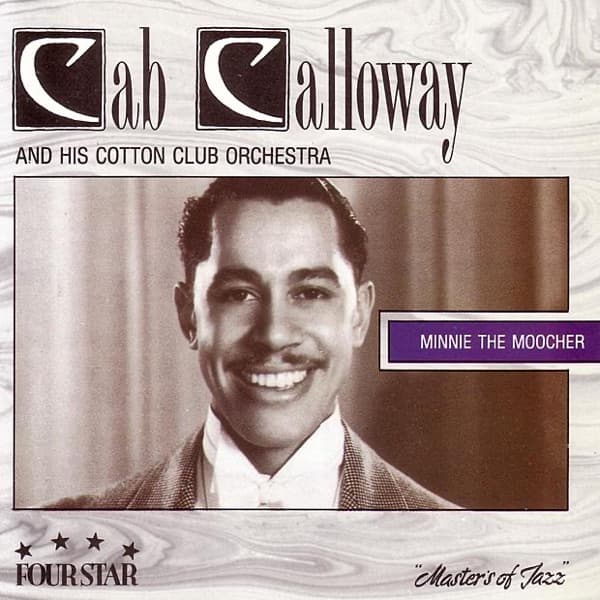
Cab Calloway
Minnie the Moocher
Bing Crosby
Brother, Can You Spare a Dime?
Fred Astaire
Cheek to Cheek
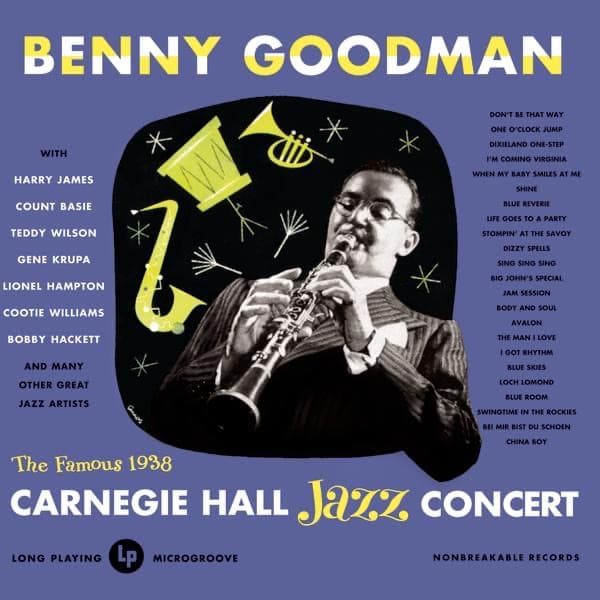
Benny Goodman
The Famous 1938 Carnegie Hall Jazz Concert
Chick Webb and His Orchestra with Ella Fitzgerald
A-Tisket, A-Tasket
Billie Holiday
Strange Fruit / Fine and Mellow

Judy Garland
Over the Rainbow
Glenn Miller and His Orchestra
In the Mood
Bob Wills and his Texas Playboys
New San Antonio Rose
Glenn Miller and his Orchestra
Chattanooga Choo Choo

Billie Holiday
God Bless the Child
The Andrews Sisters
Boogie Woogie Bugle Boy

Bing Crosby
White Christmas
Nat King Cole
The King Cole Trio
Louis Jordan and his Tympany Five
Let the Good Times Roll: The Complete Decca Recordings 1938–1954
Frank Sinatra
The Voice of Frank Sinatra
Édith Piaf
La Vie en rose
Les Paul
Lover (When You're Near Me)
Pérez Prado and his Orchestra
Mambo No. 5
Les Paul
The New Sound!

Frank Sinatra
In the Wee Small Hours

Ella Fitzgerald
Ella Fitzgerald Sings the Cole Porter Song Book

Frank Sinatra
Songs for Swingin’ Lovers!

Harry Belafonte
Calypso

Pérez Prado
Havana, 3 A.M.

The Crickets
The "Chirping" Crickets

Billie Holiday
Lady in Satin

Sam Cooke
Sam Cooke

The Kingston Trio
The Kingston Trio

The Dave Brubeck Quartet
Time Out

Ray Charles
The Genius of Ray Charles

Ray Charles
Modern Sounds in Country and Western Music

The Beatles
Rubber Soul

The Beach Boys
Pet Sounds

The Beatles
Revolver

The Beatles
Sgt. Pepper's Lonely Hearts Club Band

The Beatles
Abbey Road

Carole King
Tapestry

David Bowie
The Rise and Fall of Ziggy Stardust and the Spiders from Mars

Stevie Wonder
Talking Book

Dolly Parton
Jolene

Kraftwerk
Autobahn

Queen
A Night at the Opera

Stevie Wonder
Songs in the Key of Life

Eagles
Hotel California

Fleetwood Mac
Rumours

Bee Gees and Various Artists
Saturday Night Fever

Steely Dan
Aja

Blondie
Parallel Lines

Michael Jackson
Off the Wall

The Human League
Dare

Kraftwerk
Computer World

Michael Jackson
Thriller

The Police
Synchronicity

New Order
Power, Corruption & Lies
Prince and the Revolution
Purple Rain

Madonna
Like a Virgin
Sade
Diamond Life

Whitney Houston
Whitney Houston

Janet Jackson
Control

Paul Simon
Graceland

Bon Jovi
Slippery When Wet

Prince
Sign o' the Times

Tracy Chapman
Tracy Chapman
The Cure
Disintegration
Whitney Houston and others
The Bodyguard: Original Soundtrack Album

Blur
Parklife

TLC
CrazySexyCool

Selena
Amor Prohibido
Alanis Morissette
Jagged Little Pill

Oasis
(What's the Story) Morning Glory?
Pulp
Different Class

Aaliyah
One in a Million

Björk
Homogenic

Shania Twain
Come On Over

Britney Spears
...Baby One More Time

Daft Punk
Discovery
Alicia Keys
Songs in A Minor

Norah Jones
Come Away with Me

Coldplay
A Rush of Blood to the Head
Sean Paul
Dutty Rock
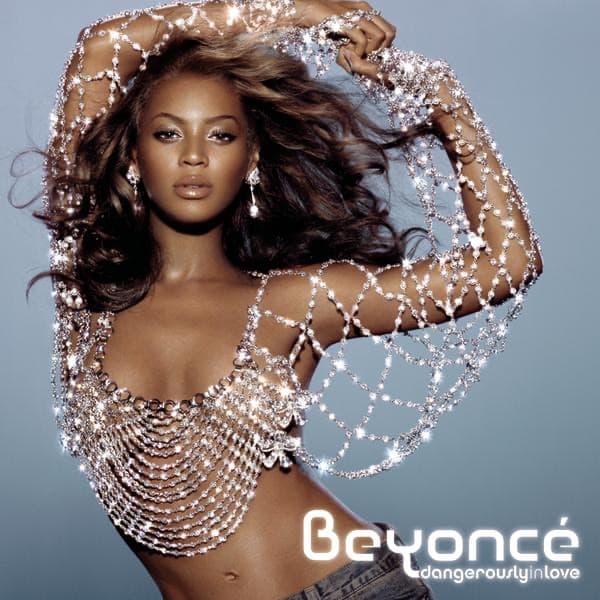
Beyoncé
Dangerously in Love

OutKast
Speakerboxxx/The Love Below

blink-182
blink-182

Usher
Confessions

Carrie Underwood
Some Hearts

Amy Winehouse
Back to Black
M.I.A.
Kala

Kanye West
808s & Heartbreak

Taylor Swift
Fearless

Lady Gaga
The Fame
Kanye West
My Beautiful Dark Twisted Fantasy
Robyn
Body Talk
Katy Perry
Teenage Dream
Adele
21
Lady Gaga
Born This Way
Lana Del Rey
Born to Die
Frank Ocean
channel ORANGE
Taylor Swift
Red
Grimes
Visions
Daft Punk
Random Access Memories
Disclosure
Settle
Lorde
Pure Heroine
Beyoncé
Beyoncé
Taylor Swift
1989
Grimes
Art Angels
Adele
25
Twenty One Pilots
Blurryface
Carly Rae Jepsen
Emotion
Justin Bieber
Purpose
Beyoncé
Lemonade
Lorde
Melodrama
Ed Sheeran
÷
Kacey Musgraves
Golden Hour
Janelle Monáe
Dirty Computer
SOPHIE
Oil of Every Pearl's Un-Insides
Rosalía
El Mal Querer
Bad Bunny
X 100PRE
Ariana Grande
Sweetener
Post Malone
beerbongs & bentleys
BTS
Love Yourself: Tear
J Balvin
Vibras
Billie Eilish
When We All Fall Asleep, Where Do We Go?
Lana Del Rey
Norman Fucking Rockwell!
Burna Boy
African Giant
Taylor Swift
Folklore
The Weeknd
After Hours
Dua Lipa
Future Nostalgia
Machine Gun Kelly
Tickets to My Downfall
Olivia Rodrigo
Sour
Adele
30
Bad Bunny
Un Verano Sin Ti
SZA
SOS
Rosalía
Motomami
Karol G
Mañana Será Bonito
Chappell Roan
The Rise and Fall of a Midwest Princess
Beyoncé
Cowboy Carter
Charli XCX
Brat
Sabrina Carpenter
Short n' Sweet
Billie Eilish
Hit Me Hard and Soft
Bad Bunny
DeBÍ TiRAR MáS FOToS
Rosalía
LUX
Morgan Wallen
I'm the Problem
Various Artists
KPop Demon Hunters (Soundtrack)
The Mixtape
Whispering
Paul Whiteman and His OrchestraStart with what the decade thought pop music was: a sweet, arranged dance tune with a hint of jazz. Everything else on this list is a reaction to it or an escape from it.
Brother, Can You Spare a Dime?
Bing CrosbyThe microphone changes what singing is. Crosby is not filling a hall; he is telling you, alone, that he used to build railroads. Notice the snare drum when the memory turns to the war.
Cheek to Cheek
Fred AstaireThe top song of 1935 and the sound of the movie musical taking over popular song. Astaire's timing is a drummer's; jazz players loved him for it.
Over the Rainbow
Judy GarlandSixteen years old, in a Kansas farmyard, asking to be somewhere else. Yip Harburg wrote this lyric and the breadline lyric. The distance between them is the decade.
I'll Never Smile Again
Frank Sinatra with Tommy DorseyThe singer steps out of the band. Twelve weeks at number one and the beginning of the idea that a voice, not an orchestra, is what a record is for.
Boogie Woogie Bugle Boy
The Andrews SistersThe home front in three voices. A boogie bass line under a song about the draft, released eleven months before there was one for everybody.
White Christmas
Bing CrosbyThe best-selling record ever made, released to a country whose sons had just left. Hear it as a war song about missing home, because that is what it was.
La Vie en rose
Édith PiafThe decade's great European pop record: a street singer from Paris, an accordion and a lyric she wrote herself about being held. Every wedding since has borrowed it.
Be My Baby
The RonettesFour drum hits, then the Wall of Sound. Everything Phil Spector knew in two minutes and forty seconds, and the record Brian Wilson said he had to pull the car over for.
God Only Knows
The Beach BoysFrench horn, harpsichord, sleigh bells, and Carl Wilson singing a love song that starts with the words "I may not always love you". Paul McCartney called it the greatest song ever written and was not being polite.
Don't Stop 'Til You Get Enough
Michael JacksonA whispered count-in, a shriek, and a groove that disco's obituary writers had not heard yet. Twenty years old and writing his own hits. The next decade starts here.
Video Killed the Radio Star
The BugglesReleased in 1979, but this is the first thing MTV ever played, at 12:01 am on 1 August 1981. The mixtape has to start where the decade did.
Billie Jean
Michael JacksonThe bassline, the drum machine, the glove, the moonwalk, the video that broke MTV. If the decade has one song, this is it.
Sweet Dreams (Are Made of This)
EurythmicsA sequencer riff, Annie Lennox in a suit with orange hair, and a video MTV played until America surrendered. British synth-pop at its most imperial.
When Doves Cry
Prince and the RevolutionNo bassline, because he took it out at the last minute. The biggest single of 1984 sounds like nothing before or since.
I Will Always Love You
Whitney HoustonDolly Parton's goodbye to Porter Wagoner, opened a cappella and held at number one for fourteen weeks. The pop ballad at the top of its power.
...Baby One More Time
Britney SpearsThree piano chords, a Max Martin chorus and a school uniform. The "TRL" era starts here, and so does the pop machine of the next twenty years.
Hey Ya!
OutKastAndré 3000 stopped rapping and made a Prince record, and it was the happiest single of the decade. Shake it like a Polaroid picture.
Since U Been Gone
Kelly ClarksonMax Martin and Dr. Luke rebuild their empire on a pop-rock chorus borrowed from the Yeah Yeah Yeahs, sung by a television winner who turned out to be the real thing.
Rehab
Amy WinehouseA Motown beat and a refusal, sung by a twenty-three-year-old from Camden in a voice that sounded fifty. Five Grammys, and the door Adele walked through.
Single Ladies (Put a Ring on It)
BeyoncéThree women, one hand, a black-and-white video every school on earth copied. Song of the Year, and the biggest star in the world at the end of the decade.
Poker Face
Lady GagaRedOne's Europop synths and a New York club kid's lyric about bluffing. The last pop star who could still shock, and the electropop the decade ended on.
I Gotta Feeling
The Black Eyed PeasDavid Guetta's house beat under a party chant, fourteen weeks at number one. The European club sound lands on American pop radio, and the EDM decade is about to begin.
Dancing On My Own
RobynA synth line like fireworks and a lyric about standing in the corner watching someone else be loved. Every sad pop banger of the next ten years is a footnote to this.
Rolling in the Deep
AdeleA stomp, a guitar and a voice with gospel weight. No production trick, no featured rapper. It sold more than anything else in the decade by simply being enormous.
Somebody That I Used to Know
GotyeBuilt on a sample of a Brazilian guitar record from 1967, with Kimbra answering in the second half. One of the last global hits to come out of nowhere before the algorithm learned to predict them.
Gangnam Style
PSYThe first video the whole planet watched together, and the first billion-view clip on YouTube. Nobody could have planned it and nobody could repeat it on purpose.
Royals
LordeA click, a bass note and a sixteen-year-old refusing to want what pop songs want. It won Song of the Year and made almost-nothing the default arrangement for teenage pop.
Blank Space
Taylor SwiftA joke about her own tabloid reputation, delivered as the catchiest song on an album of catchy songs. The moment the country singer finished becoming a pop machine.
Can't Feel My Face
The WeekndA song about cocaine that sounds like Michael Jackson at his most joyful, from a man who four years earlier was giving away music about hating himself.
bad guy
Billie EilishMade in a bedroom, sung a few inches from the microphone, with a bass line and a bark and a joke at the end. Pop's next twenty years start about here.
Truth Hurts
LizzoWritten in 2017, ignored, then pushed to number one by TikTok two years later. The clearest demonstration anyone gave that the audience now decides the release schedule.
Blinding Lights
The WeekndStart where the decade started: a 1985 synth pulse, a chorus that lifts like a car cresting a hill, and the biggest chart song in Hot 100 history. A record about driving around a city at night, released the month nobody could.
Dynamite
BTSA Korean group singing in English about disco, at number one in America. The door opens here; by 2025 it did not need English at all.
drivers license
Olivia RodrigoA seventeen-year-old, a piano and a suburb, straight to number one, with the whole internet trying to work out who it was about. Pop as a group investigation.
Water
TylaAmapiano's log-drum bassline in the American top ten, sung softly by a twenty-one-year-old from Johannesburg. It won the first Grammy for African music.
360
Charli XCXHard club synths, total self-awareness, and the record that turned a colour into a summer. Pop stopped being polished right here.
Espresso
Sabrina CarpenterA nonsense hook delivered with absolute conviction over a soft-disco groove. Craft and silliness are not opposites, and this is the proof.
Golden
HUNTR/XThe biggest song of 2025 came from an animated film and was sung by a group that does not exist. Then it won a Grammy. End the mixtape there and let your kids explain it to you.