100 Years of Music / Chapter 3 of 11
1940s: The Roots of Rock
Where blues bled into the future, and a war changed who was listening.
Opening
Chicago, 1948. A man from the Mississippi Delta who drives a truck for a venetian blind company walks into a small studio on the South Side with an electric guitar. He plays a song he first sang into a Library of Congress microphone on a plantation seven years earlier. This time the guitar is plugged in, a bass thumps under it, and the record sells out at the corner store over one weekend.
Before Elvis shook his hips, before Chuck Berry duckwalked across a stage, before distortion ever screamed through a speaker, there was this: the blues, with a cord running out of it. The 1940s were the smoky, gritty prelude to rock and roll. Nobody in the decade used the words. Everybody was building the thing.
It is also the decade a war emptied the ballrooms. Millions of young men shipped out, the government rationed the shellac that records were pressed from, and the musicians' union shut down every recording studio in America for more than a year. Big bands, the sound of the 1930s, went out to sea and did not come back. What filled the space was smaller, louder, more personal: a shouter and a saxophone, a trio around a piano, a singer alone at a microphone, a man with a mandolin who played it like a drum.
Up in Harlem after midnight, a handful of players who were bored with swing invented a music too fast to dance to and called it bebop. Down in the Delta and out in Texas and up in Chicago, guitar players discovered that an amplifier turned a porch instrument into a horn section. In churches, gospel singers were shouting and shaking in ways that would look, ten years later, exactly like rock and roll. In New York a Cuban conga drummer stood next to a trumpet player and Latin jazz was born on a Carnegie Hall stage.
By 1949 the records had new names. The chart that had been called "race records" was now "rhythm and blues". Records themselves came in two new shapes, the long-playing album and the seven-inch single, and were being made on magnetic tape that had come home from Germany in a soldier's duffel bag. Every tool the next seventy years would use was on the bench. This chapter is about who picked them up.
The World
The war comes home
Pearl Harbor was bombed on 7 December 1941, the same week Glenn Miller had the number one record in the country. Within a year sixteen million Americans were in uniform. Ballrooms lost their dancers, bands lost their players to the draft, a midnight curfew and a federal cabaret tax on rooms with dancing squeezed what was left, and the gasoline that touring bands ran on was rationed. Music did not stop. It moved: into radio, into jukeboxes, into records shipped to soldiers overseas, and into smaller bands that could fit in a car.
Shellac, the material records were made of
Before vinyl, a 78 rpm record was pressed from shellac, a resin harvested from insects in India and Southeast Asia. The war cut off the supply and the government rationed what was left. Labels ran scrap drives asking customers to turn in old records to be ground up and pressed again. Scarcity is one reason the decade's independent labels stayed small, and one reason the new vinyl formats of 1948 and 1949 arrived exactly when they did.
The Second Great Migration
War factories in Chicago, Detroit, Los Angeles and Oakland needed workers, and Black families from Mississippi, Louisiana and Texas took the trains north and west by the hundreds of thousands. Muddy Waters rode the Illinois Central to Chicago in 1943. John Lee Hooker went to Detroit. T-Bone Walker was already in Los Angeles. Every one of them carried a Southern blues and found, in the noise of a city bar, that it needed an amplifier. The music the migration made is the music this chapter is about.
The GI Bill and the suburbs
The Servicemen's Readjustment Act of 1944, the GI Bill, paid for college and guaranteed home loans for returning veterans. Levittown, the first mass-produced suburb, opened on Long Island in 1947. The result was a generation of families with a house, a car, a record player and, soon, teenagers with pocket money. The 1950s youth market that rock and roll sold to was built here, out of federal mortgages and cheap tract homes. The same policies mostly excluded Black veterans, which is part of why the music stayed segregated even as it crossed over.
Television turns on
Regular network television began in the United States in 1948. Milton Berle's "Texaco Star Theater" and Ed Sullivan's "Toast of the Town" both went on the air in June of that year, and a few hundred thousand sets became millions within three years. Radio, which had carried music into every home for two decades, now had a rival for the living room. Radio's answer, over the next decade, was to play records instead of live bands, and a disc jockey playing records is how rhythm and blues found white teenagers.
The Cold War begins
The alliance that won the war fell apart within two years of it. The Truman Doctrine of 1947, the Berlin airlift of 1948, NATO and the first Soviet atomic bomb in 1949 set the temperature of the next forty years. For musicians it meant loyalty oaths and blacklists were coming: by the early 1950s the Weavers, the folk group formed in 1948, would be driven off television and out of nightclubs for their politics. The folk revival of the 1960s was born partly out of that silencing.
Jackie Robinson and the end of the segregated army
Robinson broke baseball's color line in April 1947. President Truman ordered the armed forces desegregated in July 1948. Neither integrated the charts, which stayed split into pop, "race" and "hillbilly" lists, but a war fought against a racist enemy made segregation harder to defend at home, and the records were already crossing the lines the laws had only begun to. Louis Jordan and Nat King Cole sold to everyone. "Rhythm and blues" as a name was itself a small act of respect.
The Sounds
The blues plugs in
The decade opens with the Delta blues as it had been: a voice, a guitar, a world of hurt. Charley Patton had died in 1934 and Robert Johnson in 1938, leaving twenty-nine recordings that guitar players would treat as scripture. Son House, the preacher turned blues prophet, was still farming in Mississippi. Blind Lemon Jefferson's high, fluid Texas style had been gone since 1929 but lived in every Texan who picked up a guitar. In the summers of 1941 and 1942 Alan Lomax and Fisk University's John Work drove into Coahoma County with a recording machine and found both the past and the future on the same plantation: Son House with his hard, hypnotic slide, and a young field hand named McKinley Morganfield who called himself Muddy Waters.
Then the migration moved the blues to the city, and the city was loud. In Chicago, Big Bill Broonzy had already been bridging country blues and a small-band, urban sound through the 1930s. Muddy arrived in 1943, put a pickup on his guitar so a bar could hear him over itself, and by 1948 was cutting "I Can't Be Satisfied" for a tiny label called Aristocrat with nothing but that electric guitar and a slapped bass. The record sold out in a weekend. This is the moment the blues band, and with it the rock combo, is invented: a small group, amplified, urgent, built around a riff.
The same thing was happening in three other cities at once. In Los Angeles, T-Bone Walker, who had led Blind Lemon around Dallas as a boy, played a hollow-body electric guitar held flat across his chest and made it phrase like a horn. "Call It Stormy Monday" in 1947 is the first electric blues guitar solo that every later guitarist had to learn. In Detroit, John Lee Hooker stamped out "Boogie Chillen'" in 1948 on one chord and a piece of plywood. In Houston, Lightnin' Hopkins spun street-corner poetry over a loose, jazz-touched guitar. Four regions, four electric styles, one decade.
Why it matters: everything called rock a decade later is one of these records played faster by someone younger. The Rolling Stones took their name from a Muddy Waters song. B.B. King built his whole approach on T-Bone. ZZ Top and Canned Heat lived inside Hooker's boogie. This decade is the roots of rock, and this essay is the root system.
Swing dies, bebop is born
In 1940 jazz was the most popular music in America. Glenn Miller, Benny Goodman, Tommy Dorsey, Count Basie and Duke Ellington led big bands that filled ballrooms and sold millions of 78s. Basie's rhythm section gave swing its walk and its swagger; Ellington's orchestra dipped deeper into blues than anyone, and in 1943 he took a fifty-minute suite about Black American history to Carnegie Hall. Boogie-woogie piano, the eight-to-the-bar left hand that Meade Lux Lewis, Albert Ammons and Pete Johnson had brought from Chicago and Kansas City to New York in 1938, was the dance floor's engine and would become rock and roll's.
The war killed the big band as a business. The draft took the players. Gas rationing took the tours. A federal tax on dance rooms took the ballrooms. Then the musicians' union recording ban of 1942 to 1944 stopped new instrumental records entirely, and when the bands came back the singers, who had kept recording, were the stars. In December 1946 eight of the biggest leaders in the country, Goodman, Dorsey, Harry James and Woody Herman among them, folded their orchestras in the same month.
Meanwhile, after hours in Harlem, a new music had been growing where nobody was recording it. From early 1941 the house band at Minton's Playhouse, drummer Kenny Clarke and pianist Thelonious Monk, hosted jam sessions where Dizzy Gillespie, Charlie Christian and a young alto player from Kansas City named Charlie Parker played standards at impossible tempos over chords stacked with extra notes, partly to make music they could hear in their heads and partly to run the amateurs off the stand. They called it bebop, or just "the new thing". Its tempos were too fast to dance to; that was the point. Jazz stopped being pop music here and became art music, and the split never healed.
Because of the ban, bebop reached records all at once in 1945: Gillespie and Parker's "Salt Peanuts" and "Shaw 'Nuff", Sarah Vaughan's "Lover Man" with both of them behind her, and in November Parker's "Ko-Ko", a solo over the chords of "Cherokee" that sounds like a door being kicked open. Bud Powell translated Parker's lines to the piano. Monk recorded his own strange, spacious compositions for Blue Note from 1947. By 1949 Miles Davis, who had been the nervous nineteen-year-old trumpeter on "Ko-Ko", was leading a nine-piece band with arranger Gil Evans toward something cooler. The 1950s would call it cool jazz, then hard bop, then modal. All of it starts at Minton's.
And a word for the singers, because the decade's great jazz records are as often vocal as not. Billie Holiday, Ella Fitzgerald, Sarah Vaughan, Dinah Washington and Nat King Cole are all in this chapter. They are where jazz, blues and pop stopped being separate rooms.
Jump blues becomes rhythm and blues
Take a swing band. Cut it down to six or seven players. Turn the volume up, put a honking tenor saxophone out front, a boogie-woogie piano underneath, and a singer who is half comedian and half preacher. That is jump blues, and Louis Jordan and his Tympany Five were its kings. From 1942 to 1950 Jordan had more number one records on the Black charts than anyone, and songs like "Caldonia" and "Choo Choo Ch'Boogie" crossed to the white pop chart too. Chuck Berry said he wanted to be Louis Jordan. Listen to the guitar on "Ain't That Just Like a Woman" and you will hear the intro to "Johnny B. Goode".
If Jordan was the party's host, the shouters were the ones who made it dangerous. Big Joe Turner had been a singing bartender in Kansas City with pianist Pete Johnson; his voice could flatten a wall, and it was already rocking in 1938. Wynonie Harris screamed like a rock star before the term existed. Amos Milburn's piano boogies got the floor moving in Los Angeles. Roy Brown, a New Orleans singer who had wanted to be Bing Crosby, brought gospel phrasing and suggestive swagger together on "Good Rockin' Tonight" in 1947. Harris turned it down, then covered it when it took off, and his 1948 version with a handclap backbeat is the record most historians reach for when they need a first rock and roll record and do not want to say "Rocket 88".
The industry that sold this music was new too. The major labels had mostly given up on Black audiences during the war, and the space filled with independents: Savoy in Newark, King in Cincinnati, Apollo in New York, Modern and Specialty and Aladdin and Imperial in Los Angeles, Aristocrat in Chicago, DeLuxe in New Jersey, and in October 1947 Atlantic, started in New York by a Turkish ambassador's son named Ahmet Ertegun. Atlantic's first star, in 1949, was Ruth Brown; they would call it the house that Ruth built. In New Orleans that December a twenty-one-year-old pianist named Fats Domino cut "The Fat Man" for Imperial, and the next decade was already rolling.
In 1949 the trade magazine Billboard renamed its Black music chart. "Race records" became "rhythm and blues", a term its young writer Jerry Wexler had proposed; he would go on to produce Ray Charles and Aretha Franklin at Atlantic. The name was catching up with a sound that was already everything the next decade would need: a backbeat, a riff, a saxophone, a shout.
The holy fire
Gospel was the emotional powerhouse of the decade. In storefront churches and Baptist conventions, singers were taught to soar, shout, moan and shake in ways secular music had not yet dared. Thomas A. Dorsey, a former blues pianist who had written "Take My Hand, Precious Lord", had spent the 1930s building the gospel song into an industry out of Chicago. The 1940s were when its singers became stars, and when their style crossed over.
Sister Rosetta Tharpe is the blueprint. An Arkansas-born guitarist who played electric in church and in nightclubs, she recorded "Strange Things Happening Every Day" for Decca in September 1944 with pianist Sammy Price, and in the spring of 1945 it reached number two on the race chart, the first gospel record to climb that high. Listen to the guitar breaks: the bends, the drive, the swagger. Chuck Berry, Little Richard, Johnny Cash and Elvis all heard this, and the Rock and Roll Hall of Fame finally inducted her in 2018 as an early influence. Her 1947 duets with Marie Knight, "Up Above My Head" among them, are just as electric.
Mahalia Jackson is the voice. Born poor in New Orleans, she followed the railroad to Chicago and sang Dorsey's songs on the church circuit for a decade before a last-chance session for the tiny Apollo label in 1947. "Move On Up a Little Higher" sold in the millions and made her the first gospel singer white America knew by name. Aretha Franklin grew up with her in the house.
And the quartets: the Golden Gate Quartet's jubilee harmonies, the Dixie Hummingbirds' hard-driving lead swapping, and the Soul Stirrers, whose R. H. Harris invented the ad-lib lead over a repeating chorus. In 1950 the Soul Stirrers would hire a nineteen-year-old named Sam Cooke. Soul music is what happens when this decade's gospel singers walk out of the church door. Ray Charles was already trying it by 1949.
Honky-tonk, bluegrass and the last peak of Western swing
Country music in 1940 was still called hillbilly music on the charts, and its big sound was Western swing: Bob Wills and his Texas Playboys, a Texas dance band with fiddles, steel guitar, horns and a jazz drummer, at the peak of their powers with "New San Antonio Rose". Wills was the first country bandleader to put drums on the Grand Ole Opry stage and had to fight to do it. His music is jazz with a fiddle, and it fed straight into rockabilly.
Honky-tonk was the war's country music. It came from the Texas beer joints where oil workers and soldiers drank, and it needed to be loud enough to hear over them. Ernest Tubb's "Walking the Floor Over You", recorded in Dallas in April 1941 with an electric lead guitar played by a Fort Worth sideman named Fay "Smitty" Smith, is the record that named the style; when Tubb joined the Opry in 1943 he brought the electric guitar with him. The songs were about drinking, cheating and walking the floor at night, and they were written for adults who did those things.
Then two things happened almost at once. In December 1945 a North Carolina banjo player named Earl Scruggs joined Bill Monroe's Blue Grass Boys, alongside singer and guitarist Lester Flatt, fiddler Chubby Wise and bassist Howard Watts. Scruggs picked with three fingers, fast, rolling and syncopated, and the Opry crowd came apart. Monroe's Columbia session of September 1946, which produced "Blue Moon of Kentucky", is the first bluegrass record; the style took its name from the band. In 1954 a Memphis truck driver named Elvis Presley would cut "Blue Moon of Kentucky" as the flip side of his first single, sped up into 4/4 time.
And in 1949 a thin Alabama singer with a bad back and a drinking problem, Hank Williams, took a 1922 Tin Pan Alley song called "Lovesick Blues", put a yodel and a Cincinnati studio band behind it, and held number one on the country chart for sixteen weeks. His Opry debut that June got six encores. In three years he wrote the songbook country music still lives in, and in four he was dead. Kitty Wells cut her first, unnoticed sides for RCA in 1949; her answer to honky-tonk's men would arrive in 1952.
The singer steps out in front of the band
In 1940 the singer was a band's employee, seated at the side of the stage until the vocal chorus. By 1945 the band was the singer's employee. The man who made that happen was Frank Sinatra. He left Tommy Dorsey in 1942, opened at the Paramount Theatre in Times Square that December, and found that teenage girls in rolled-down white socks screamed at him the way nobody had screamed at a singer before. When he came back to the Paramount in October 1944 the crowd outside was estimated at thirty thousand and the police called it a riot. The bobby-soxers were the first teen fandom. Everything Beatlemania did, they did first.
Bing Crosby, the singer Sinatra grew up on, sang the decade's biggest record: "White Christmas", from a 1942 film, a song about missing home released to a country whose sons were all away. Crosby also, almost by accident, changed how records were made. In 1947 he put his radio show on magnetic tape so he would not have to perform it live twice, and put his own money into the company that built the machines, Ampex.
The recording ban of 1942 to 1944 shaped pop in strange ways. Singers were not in the musicians' union, so vocal groups kept recording with nothing behind them: the Mills Brothers' "Paper Doll" and the Ink Spots' ballads owned the wartime charts, and Sinatra signed with Columbia in 1943 and cut his first solo hits with a choir. The Andrews Sisters, three sisters from Minneapolis who sang tight, swinging harmony, were the sound of the home front and the USO; "Boogie Woogie Bugle Boy" from 1941 and "Rum and Coca-Cola" from 1945 are both here, and the second one is a Trinidadian calypso whose writer had to sue to get paid.
Nat King Cole, a jazz pianist who sang almost as an afterthought, became the biggest Black pop star in America on the strength of the King Cole Trio's "Straighten Up and Fly Right" in 1944 and "Nature Boy" in 1948. Doris Day, Peggy Lee, Jo Stafford and Perry Como all began the decade as band singers and ended it as names. In 1948 Patti Page, denied the budget for backing singers during the second recording ban, harmonised with herself by overdubbing, a trick Les Paul was already using on guitars. In Paris, Édith Piaf sang "La Vie en rose" and made the chanson, the French art of the confessional song, an international export. The 1950s crooner and the 1960s singer-songwriter both start here.
This land, this union, this machine
Woody Guthrie wrote "This Land Is Your Land" in a cheap New York hotel in February 1940, sick of hearing Kate Smith sing "God Bless America" on the radio. He did not record it until April 1944, in a marathon of sessions for Moses Asch, the engineer whose Folkways label would become the folk revival's library. The verse about the private property sign and the verse about the relief office were left off the famous version; they are the point of the song.
In 1941 Guthrie joined Pete Seeger, Lee Hays and Millard Lampell in the Almanac Singers, a loose group living in a Greenwich Village house and singing union songs at strikes and rallies. Seeger's banjo had "This machine surrounds hate and forces it to surrender" written around the head; Guthrie's guitar said "This machine kills fascists". The Almanacs broke up when the war came. Lead Belly, the Louisiana twelve-string player Alan Lomax had recorded in prison in the 1930s, spent the decade in New York on radio and on Asch's label, and died in December 1949 of Lou Gehrig's disease, a few months before the Weavers' version of his "Goodnight, Irene" became the biggest record in America.
The Weavers were Seeger and Hays again, with Ronnie Gilbert and Fred Hellerman, formed in 1948 and struggling until Seeger got them a booking at the Village Vanguard in December 1949. Their success in 1950 and the blacklist that ended it in 1952 are the next chapter. But the folk revival that Bob Dylan walked into in 1961 was built by these people in this decade: Asch's label, Lomax's field recordings, Guthrie's songs and Seeger's insistence that a crowd could sing.
Cubop and the mambo
In December 1940 a Cuban singer named Frank Grillo, called Machito, held the first rehearsal of his Afro-Cubans in a Harlem ballroom. His brother-in-law Mario Bauzá, a trumpeter who had played with Chick Webb and Cab Calloway and had introduced Dizzy Gillespie to Calloway's band, took over as musical director a month later. Bauzá's idea was simple and nobody had done it: put a real Cuban rhythm section, congas, bongos and timbales, under a jazz big band's horns. His "Tanga" in 1943 is the first Afro-Cuban jazz composition.
Gillespie had been listening. In 1947 Bauzá introduced him to Chano Pozo, a conga drummer and dancer just arrived from Havana who had learned his rhythms in Afro-Cuban religious ceremonies and carnival street bands. On 29 September 1947 Pozo walked onto the Carnegie Hall stage with Gillespie's big band. That December they recorded "Manteca", Pozo's bass riff and Gillespie's screaming trumpet on top of it, the record that made "Cubop" a word. Pozo was shot dead in a Harlem bar fourteen months later. He was thirty-three.
The dance floor had its own revolution. In 1948 the Palladium Ballroom on Broadway at 53rd Street switched to an all-Latin policy, and Machito, Tito Puente and Tito Rodríguez turned it into the home of the mambo, a faster, hornier development of the Cuban danzón. In Mexico City, a year later, a Cuban pianist and bandleader named Dámaso Pérez Prado was arranging mambos with grunts and stabbing brass; his "Mambo No. 5", recorded for RCA Victor's Mexican branch in 1949, would make him the King of Mambo across the Americas in the decade to come. Salsa, boogaloo and Latin rock all descend from these two rooms, the Palladium and Carnegie Hall.
The fuse is lit
Nobody in the 1940s made a rock and roll record, because the phrase did not exist as a genre. But if you line up the records historians argue about as the first one, most of them are in this chapter. Sister Rosetta Tharpe's "Strange Things Happening Every Day" (1944): electric guitar, boogie piano, a gospel shout. Roy Brown's "Good Rockin' Tonight" (1947) and Wynonie Harris's cover (1948), with the word rocking used the way the next decade would use it and a backbeat you can clap to. John Lee Hooker's "Boogie Chillen'" (1948), a teenager sneaking out to a club on one chord. Fats Domino's "The Fat Man" (December 1949), a New Orleans piano playing triplets over a snare. Big Joe Turner had been doing it since 1938.
What these records share is the machinery. Electric guitar, from T-Bone Walker and Muddy Waters and Ernest Tubb's sideman. Boogie-woogie piano, from Pete Johnson and Amos Milburn. The honking tenor saxophone, from Louis Jordan's band and Illinois Jacquet's solo on Lionel Hampton's "Flying Home". The backbeat, from gospel handclaps and jump blues drummers. The shout, from the church and the Kansas City bars. And the independent label with a distributor in the trunk of a car. The 1950s did not invent any of it; the 1950s found the teenagers.
Two technical strands run underneath. Les Paul spent the decade building a solid-body electric guitar out of a four-by-four fence post and recording himself eight times over on "Lover" in 1948; his name would be on the guitar that Jimmy Page and Slash played. Bing Crosby's tape machines made overdubbing and editing normal by 1950. A distorted guitar through a torn speaker cone, the sound of "Rocket 88" in 1951, was an accident waiting for this decade's tools.
Tape, the multitrack and music made of noise
The most important instrument invented in the 1940s was not a guitar. It was the tape recorder. German engineers at AEG had perfected the Magnetophon during the war; in 1945 an American signals officer named Jack Mullin found two of them at a radio station near Frankfurt, shipped them home in pieces, and in 1947 demonstrated them to Bing Crosby. Crosby's Philco radio show went out from tape that October, the first network program to do so. In April 1948 the first Ampex Model 200 machines, built with Crosby's money, were delivered. Within five years every studio in the country would record on tape, and the ability to cut, splice and layer sound would change what a record was.
Les Paul got there first with discs. In his Hollywood garage in 1947 he recorded a guitar part onto an acetate, then played along with it while cutting a second acetate, then a third, until "Lover" had eight guitars on it, some of them recorded at half speed so they played back an octave high. Capitol released it in 1948 and the trade papers did not know what they were hearing. It is the first multitrack pop record, and with tape and his wife Mary Ford he would turn it into a string of hits in the 1950s. Patti Page did the same trick with her own voice on "Confess" in 1948.
In Paris, meanwhile, a radio engineer named Pierre Schaeffer asked what would happen if the recording itself were the instrument. On 5 October 1948 French radio broadcast his "Concert de bruits", including an "Étude aux chemins de fer" built from the recorded sounds of locomotives, looped, cut and reversed. He called it musique concrète. Sampling, hip-hop production and every record built on a loop are its grandchildren.
Timeline
Woody Guthrie writes "This Land Is Your Land"
In a room at the Hanover House hotel on West 43rd Street, Guthrie wrote six verses to the tune of a Carter Family hymn as an answer to Irving Berlin's "God Bless America", which he was tired of hearing on the radio. The original refrain was "God blessed America for me". He would not record it for four years, and the verses about the "No Trespassing" sign and the relief office would mostly be left out of the version schoolchildren learned.
"In the Mood" tops the charts
Glenn Miller's Bluebird record of Joe Garland's riff tune, cut in August 1939, became the best-selling record in the country in early 1940 and has never left the radio since. The riff itself had been kicking around Black bands for a decade, from Wingy Manone's "Tar Paper Stomp" to Edgar Hayes's 1938 version. Miller's arrangement, with its fake endings and its two-tenor chase, made it the anthem of swing at the exact moment swing had two years left.
Bob Wills records "New San Antonio Rose"
Wills and his Texas Playboys put words and a horn section on his 1938 fiddle instrumental and made the biggest Western swing record of all. Tommy Duncan sang it; Bing Crosby covered it the next year and sold a million. Western swing was a Texas dance band playing jazz on fiddles, steel guitar and drums, and this is it at full strength, two years before the draft took most of the band.
Sinatra and Dorsey: "I'll Never Smile Again"
Tommy Dorsey's band with its new singer, a skinny kid from Hoboken, and the Pied Pipers behind him held number one for twelve weeks from mid-July 1940. It is the record where the band singer becomes the point of the record. Sinatra later said he learned to phrase a line without breathing by watching Dorsey's trombone.
Machito forms the Afro-Cubans
Frank "Machito" Grillo held the band's first rehearsal at the Park Palace Ballroom in Harlem on 3 December 1940. His brother-in-law Mario Bauzá, fresh from the trumpet sections of Chick Webb and Cab Calloway, became musical director in January 1941 and set out to put an authentic Cuban rhythm section under jazz horns. Latin jazz begins with this band, in this room.
The Almanac Singers
Pete Seeger, Lee Hays and Millard Lampell formed a loose singing group in New York to perform union and peace songs at strikes and rallies; Woody Guthrie joined them in 1941 and they recorded the "Talking Union" album for Keynote. They lived communally in Greenwich Village and broke up when the war came, but the idea that a folk group could be a political act was born here, and it would return as the Weavers.
The house band opens at Minton's Playhouse
Bandleader Teddy Hill, hired to run the club on West 118th Street, put together a house band around drummer Kenny Clarke and pianist Thelonious Monk. Monday night jam sessions drew Dizzy Gillespie, guitarist Charlie Christian and, soon, Charlie Parker, who played standards at breakneck tempos over chords with extra notes stacked on top, partly to hear something new and partly to clear the stage of players who could not keep up. This is where bebop was worked out, in front of nobody, during the two years when nobody was allowed to record it.
Ernest Tubb cuts "Walking the Floor Over You"
On 26 April 1941 at a studio in Dallas, Tubb recorded his own song with an electric lead guitar played by a Fort Worth sideman, Fay "Smitty" Smith, who could not improvise and had his breaks written out note for note. The record sold a million and gave honky-tonk its name and its sound: a plain voice, a beat you could two-step to, and a guitar loud enough for a beer joint. In 1943 Tubb joined the Grand Ole Opry and brought the electric guitar onto its stage.
Alan Lomax records Muddy Waters at Stovall
Working for the Library of Congress and Fisk University on a study of Black life in Coahoma County, Mississippi, Alan Lomax and John Work set up a portable disc recorder in a sharecropper's cabin on the Stovall plantation and recorded a field hand named McKinley Morganfield singing "Country Blues" and "I Be's Troubled". Lomax had come looking for Robert Johnson, who was dead; he had also recorded Son House nearby that summer. When Muddy heard his own voice played back he decided he could make a living at this. Two years later he was in Chicago.
The recording ban begins
On 1 August 1942 James C. Petrillo, president of the American Federation of Musicians, forbade every union musician in the country from making records until the labels agreed to pay royalties into a fund for musicians put out of work by jukeboxes and radio. Singers were not union members and kept recording, with choirs behind them. Instrumental music stopped. The ban lasted more than two years and is the longest strike in entertainment history; it put the singer in front of the band for good and kept bebop off record until 1945.
Glenn Miller disbands and enlists
The most popular bandleader in America broke up his orchestra in September 1942 and took a captain's commission to build a band for the Army Air Forces. The AAF band broadcast and played for troops across England and France and modernised military music. It was the most public sign that the swing era was going to war and might not come back.
Sinatra opens at the Paramount
On 30 December 1942, three months after leaving Dorsey, Sinatra went on at the Paramount Theatre in Times Square as an outside act on Benny Goodman's bill. Billboard's reviewer was in the house that night: Goodman got the write-up, but the paper noted that Sinatra was booked for the full ten-week run of the film, that he sang straight at the customers, and that his "boyish appearance and mannerisms" were "catnip for the ladies". The bobby-soxers, teenage girls in rolled-down socks, had found their first star, and pop music had found the teenage girl.
Machito and Bauzá: "Tanga"
Mario Bauzá built a head arrangement over a bass riff at a Machito rehearsal at the Park Palace Ballroom on 29 May 1943 and called it "Tanga", a slang word for marijuana. He had caught the vamp the night before at the La Conga club. It is usually named as the first Afro-Cuban jazz composition: a jazz big band's horns riffing over Cuban rhythm rather than the other way round. The band did not record it until later in the decade, so the piece lived for years as a nightly jam.
Sinatra signs with Columbia and records a cappella
With the recording ban still on, Sinatra signed to Columbia in June 1943 and cut his first solo sides with the Bobby Tucker Singers and no instruments at all. "You'll Never Know" and "People Will Say We're in Love" were hits anyway. The ban, meant to protect musicians, was making the singer the star.
Decca and Capitol settle with the union
Decca, the label with Bing Crosby, the Andrews Sisters and Louis Jordan, was the first to agree to Petrillo's royalty fund in September 1943; the year-old Capitol followed within weeks. RCA Victor and Columbia held out for another year, which meant the two labels with the smaller, hungrier rosters got a year's head start on the postwar market.
The first V-Discs ship
The Army's Special Services division began pressing twelve-inch 78s on unbreakable vinyl and shipping them to troops in waterproof boxes with spare needles. Petrillo let union musicians record for them on condition the discs were never sold, so V-Discs are the only new instrumental recordings from the ban years, and the reason vinyl, not shellac, was proven ready for the LP. Eight million were shipped before the program ended in 1949, when the union required the masters destroyed.
The King Cole Trio's first Capitol session
On 30 November 1943, at C. P. MacGregor's studio in Los Angeles and weeks after Capitol settled with the union, Nat Cole's piano, guitar and bass trio recorded "Straighten Up and Fly Right", a song Cole wrote from a sermon his father used to preach about a monkey riding a buzzard. It topped the Black chart, crossed to pop and sold half a million. Cole had sold the song outright to a publisher for cash and never saw a royalty. The trio format, small and swinging with a singer who could really play, became the template for lounge jazz, and Capitol, eighteen months old, had its first franchise.
Louis Jordan crosses over
"G.I. Jive" reached number one on the pop chart in 1944 and "Is You Is or Is You Ain't My Baby" went top ten; both also topped the Black chart. Jordan's Tympany Five, a shuffling small band with a honking saxophone and a comedian at the microphone, was selling to everyone in a segregated market. The jukebox trade called him its king. Chuck Berry called him the model.
Guthrie records for Moses Asch
In April 1944, in a studio on West 46th Street, Woody Guthrie sat down for Asch and recorded well over a hundred songs in a few weeks, among them the first recording of "This Land Is Your Land". Asch was an engineer who believed everything should be recorded and nothing deleted; his Folkways label became the folk revival's library, and this batch of songs is its cornerstone.
The Columbus Day riot
Sinatra opened a three-week return at the Paramount on Wednesday 11 October 1944. The next day was Columbus Day and a school holiday, and the crowd that came for it turned Times Square into news. Billboard's man reported that the Paramount called in the police department before the run even started, that the kids mobbed the house and screamed through the show, and that they then sat all day and refused to leave: the theatre could not turn its audience over, and the week's gross came in at ninety thousand dollars against the ninety-four thousand the Andrews Sisters had taken the week before. The papers called it a riot. It is the first documented case of pop-star mass hysteria, and every scream at a Beatles or a Bieber show descends from it.
RCA Victor and Columbia give in; the ban ends
After twenty-seven months, the two biggest labels signed the union's agreement in November 1944 and studios reopened. The world they reopened into had changed: singers had the charts, big bands had lost their dancers, and a generation of small-group musicians had two years of unrecorded ideas waiting.
Glenn Miller disappears
On 15 December 1944 Major Miller boarded a single-engine plane in England bound for Paris to prepare his band's Christmas broadcasts. The plane never arrived and no trace of it has been found. He was forty. The swing era had already been dying for two years; Miller's disappearance is the date most people give for its death.
Earl Scruggs joins the Blue Grass Boys
A twenty-one-year-old banjo player from Shelby, North Carolina, came off a stint with "Lost" John Miller, auditioned for Bill Monroe and joined the Blue Grass Boys late in 1945; the Bluegrass Music Hall of Fame dates the classic band from that summer, the Country Music Hall of Fame simply to 1945. Scruggs picked with three fingers in fast rolling patterns where every other banjo player strummed or frailed, and surviving Grand Ole Opry airchecks catch what that did to a crowd. With Lester Flatt on guitar and lead vocals, Chubby Wise on fiddle and Howard Watts on bass, this is the band that defined bluegrass: every band since is measured against it.
"Caldonia"
Louis Jordan's shouted question about a hard-headed woman went to number one on the Black chart and top ten pop in 1945, and Jordan sang it in a short film that played in theatres and on jukebox "soundies" machines. Woody Herman's big band covered it the same year. The chorus, the horn riff and the comic delivery are the whole grammar of jump blues in three minutes.
Sister Rosetta Tharpe: "Strange Things Happening Every Day"
Recorded for Decca in September 1944 with pianist Sammy Price's trio, Tharpe's gospel song about hypocrites and miracles reached number two on the race chart in the spring of 1945, the first gospel record to cross over. Her electric guitar breaks, bent and driving, are the reason it keeps turning up on lists of the first rock and roll record. Chuck Berry, Little Richard and Elvis all said they had heard her.
Bebop reaches record: Gillespie, Parker and Sarah Vaughan
With the ban lifted, Dizzy Gillespie took a quintet with Charlie Parker into the studio for the small Guild label and cut "Salt Peanuts", "Shaw 'Nuff" and "Hot House" in the first half of 1945. On 11 May the same group backed a twenty-one-year-old singer from Newark, Sarah Vaughan, on "Lover Man". Bebop, four years old in the clubs, was suddenly on 78s, and the trade press did not know whether to review it or complain.
"Ko-Ko"
On 26 November 1945 at WOR Studios in New York, Charlie Parker led his first session as a leader for Savoy. The trumpet chair was a nineteen-year-old Miles Davis; on "Ko-Ko", built on the chords of Ray Noble's "Cherokee" at a tempo nobody else could manage, Dizzy Gillespie played the trumpet intro and then sat down at the piano. Parker's two choruses are the sound of bebop arriving fully formed: long lines, high intervals, accents that fall where nobody expected. Released in early 1946, it sounded less like the next step than like a revolution.
"Choo Choo Ch'Boogie"
Louis Jordan's train song, written by two country songwriters and a Decca producer, spent eighteen weeks at number one on the Black chart in 1946 and crossed to the pop top ten. A boogie bass, a shuffle beat, a saxophone riff and a story about a man with no money and a train ticket: Bill Haley's "Rock Around the Clock" is this record with the names changed.
Bill Monroe records "Blue Moon of Kentucky"
Monroe's first Columbia session, on 16 September 1946 in Chicago, was the first time Flatt and Scruggs recorded with him, and it produced the waltz Monroe had been singing on the Opry for a year. Columbia issued it in 1947. Elvis Presley's 1954 cover, sped up and in 4/4, was the flip side of his first single; Monroe, told about it, went back and recut his own song faster. Bluegrass and rockabilly shake hands across this one record.
The big bands fold
In the last weeks of 1946 the name bands went down one after another. Billboard counted Tommy Dorsey, Benny Goodman, Les Brown, Bobby Sherwood, Sonny Dunham, Charlie Ventura and Herbie Fields breaking up or "temporarily" disbanding inside a few weeks, and named the reason: a leader who folded in New York and rebuilt on the coast dodged the union's ten percent travelling bonus and the fares for a whole orchestra. Ballrooms were empty, a federal tax sat on any room with dancing, and the singers had the hits. The big band did not disappear, but from here on it was a nostalgia act or an art project. Popular music had been a bandleader's business since 1935; it now belonged to the singer and the small group.
Roy Brown: "Good Rockin' Tonight"
Brown, a New Orleans singer who had tried to sound like Bing Crosby, wrote a jump blues about a party and offered it to Wynonie Harris, who turned it down. Brown recorded it himself for the DeLuxe label in 1947 and it climbed to number thirteen on the race chart. The word "rocking" had been church slang and bedroom slang for years; this is the record that made it a party. Harris changed his mind within months.
T-Bone Walker: "Call It Stormy Monday"
Aaron "T-Bone" Walker, a Texan who had learned the trade leading Blind Lemon Jefferson around the Central Avenue blocks of Dallas, cut a slow blues for the Black & White label in 1947. His electric guitar, played through a small amplifier with a tone nobody had heard, fills every gap in the vocal with bent, horn-like phrases. It is the first electric blues guitar record that every later player had to learn, and the reason a generation of them, B.B. King loudest among them, wanted an amplifier before they wanted anything else.
Mahalia Jackson: "Move On Up a Little Higher"
Apollo Records, a small New York label, was about to drop Jackson when producer Art Freeman asked her to record a song by Memphis preacher W. Herbert Brewster that she used to warm up with. Cut in late 1947 with pianist Mildred Falls and organist Ralph Jones and spread over two sides of a 78, it sold, by the label's count, two million copies and made Jackson the first gospel singer white America knew by name. Her improvised second side is one of the great vocal performances on record in any genre.
Hank Williams: "Move It On Over"
Williams's first record for MGM, a jumping song about a man locked out of his house and moving in with the dog, was his first chart hit in 1947. It has the same shape as "Rock Around the Clock" seven years early. Fred Rose, the Nashville publisher who had signed him, was building the country song into a national business; Williams was about to hand him the catalogue.
Édith Piaf: "La Vie en rose"
Piaf had written the lyric in 1945 and sung the song in concert through 1946; her Columbia recording was issued in France in 1947. Credited to the composer Louiguy because Piaf was not yet a registered author, it made the chanson, the French tradition of the plainly sung confessional song, a worldwide export. Louis Armstrong recorded it in English in 1950, and every French singer-songwriter since has had to stand next to it.
Aristocrat Records, Chicago
Evelyn and Charles Aron started a small label on the South Side in April 1947; a nightclub owner named Leonard Chess bought in that autumn. In the late summer of that year Muddy Waters made his first Aristocrat sides as a sideman to pianist Sunnyland Slim, the session that produced "Gypsy Woman" and "Little Anna Mae" on Aristocrat 1302; discographies put it in late August or on 30 September. In 1950 Leonard and his brother Phil would rename the company Chess, and it would record Muddy, Howlin' Wolf, Little Walter, Chuck Berry and Bo Diddley. The independent label boom that made rock and roll possible starts in rooms like this one.
Dizzy Gillespie and Chano Pozo at Carnegie Hall
On 29 September 1947 Gillespie's big band played Carnegie Hall with a Cuban conga drummer, Chano Pozo, whom Mario Bauzá had introduced to him that summer. The session logs put Pozo on conga and Lorenzo Salan on bongo that night, with George Russell's "Cubana Be, Cubana Bop" on the programme and a new piece built on Pozo's bass riff. Pozo drummed, danced and chanted in the Yoruba-derived language of Afro-Cuban religion. Bebop and Cuban rhythm on a concert stage in the same night: Latin jazz has a birthday.
Bing Crosby goes on tape
Jack Mullin, a Signal Corps officer who had shipped two German Magnetophon recorders home in pieces in 1945, demonstrated them to Crosby in 1947. Crosby, who hated performing his weekly Philco radio show live, had the first show of the season taped and edited. Billboard reviewed it on the night it aired, 1 October 1947, and put the jump in fidelity over the previous season down to "the tape recording technique". He then put fifty thousand dollars into the small California company building American machines, Ampex.
Atlantic Records is founded
Ahmet Ertegun, the jazz-obsessed son of Turkey's ambassador to Washington, and Herb Abramson, a record man from National, incorporated Atlantic in New York in October 1947 with money borrowed from Ertegun's dentist. It recorded jazz and rhythm and blues out of a hotel room office. Within twenty years it would have Ruth Brown, Ray Charles, Aretha Franklin, Otis Redding and Led Zeppelin, and Ertegun would help found the Rock and Roll Hall of Fame.
"Manteca"
Gillespie's big band with Chano Pozo recorded "Manteca" for RCA Victor on 22 December 1947, in the rush of sessions before the second recording ban. Pozo brought the bass line and the chant; Gillespie wrote the bridge so it would not, he said, be Cuban music all the way through; arranger Gil Fuller finished it. It sold better than any other Gillespie record and is the founding document of Afro-Cuban jazz.
Wynonie Harris: "Good Rockin' Tonight"
Harris, the Omaha shouter who had turned Roy Brown's song down, recorded it for King in Cincinnati late in 1947, in the rush of sessions before the second recording ban. His version added a hand-clapped backbeat and a gospel-style call and response, and it went to number one on the race chart in 1948 and stayed on the chart half a year. When historians want to name a first rock and roll record and do not want to say "Rocket 88", this is the one they usually pick. Elvis cut it at Sun in 1954.
Muddy Waters: "I Can't Be Satisfied"
Aristocrat put out "I Can't Be Satisfied" backed with "I Feel Like Going Home" in June 1948: two of Muddy's own songs with nothing behind his electric slide guitar but Ernest "Big" Crawford's slapped bass. Discographies disagree about when it was cut, some giving the December 1947 session and some the following spring. Leonard Chess did not understand the music and pressed it anyway. It is the Stovall plantation song from 1941 with a cord running out of it. Chicago blues, the electric band blues that the Rolling Stones and everyone after them learned from, starts here.
Les Paul: "Lover (When You're Near Me)"
In his Hollywood garage in 1947 Paul recorded a guitar part onto an acetate disc, played along with it while cutting a second disc, and repeated the trick until the Rodgers and Hart tune had eight guitars on it, some recorded at half speed so they played back an octave high and twice as fast. Capitol released it in 1948. It is the first multitrack pop record; by 1950 he was doing it on Ampex tape with Mary Ford, and in 1952 Gibson put his name on a solid-body guitar.
The Weavers form
Pete Seeger and Lee Hays of the old Almanac Singers recruited Ronnie Gilbert and Fred Hellerman and began singing as a quartet in New York in 1948, mixing union songs, Lead Belly, Guthrie and folk songs from around the world. They struggled for a year. Their 1950 breakthrough, the blacklist that stopped it and the 1955 Carnegie Hall comeback that started the folk revival are all in the next chapter; the group is this decade's.
The second recording ban
The Taft-Hartley Act of 1947 made the union's royalty fund illegal as written, and on 1 January 1948 Petrillo called a second strike on recording. Labels had stockpiled sessions through December 1947, which is why so many of this chapter's records were cut in the last week of that year. The ban ended on 14 December 1948 with the creation of the Music Performance Trust Fund, which still pays for free concerts. Independent labels ignored it more freely than the majors, and small blues and country outfits gained ground while the majors sat still.
The Ampex Model 200
The first two production Ampex tape recorders, serial numbers one and two, were delivered to Jack Mullin and the Crosby show in April 1948, and the networks began installing them in Hollywood, Chicago and New York that spring. Within a few years tape replaced the disc cutter in every American studio. Editing, overdubbing and the take-after-take perfectionism of modern recording all became possible in this room.
Columbia introduces the LP
At the Waldorf-Astoria in New York in June 1948 (the trade saw it on the 18th, the press on the 20th; sources give both dates and the 21st), Columbia's Edward Wallerstein stood a stack of 78s eight feet high next to a stack of the new discs fifteen inches high and said they held the same music. The twelve-inch microgroove vinyl record turned at 33 1/3 rpm and played more than twenty minutes a side. Engineer Peter Goldmark's team had built it; RCA turned down the offer to license it. The album as a thing you sit down and listen to begins here.
The Empire Windrush docks at Tilbury
On 22 June 1948 a troopship carrying several hundred passengers from Jamaica and Trinidad arrived in England, the beginning of large-scale Caribbean migration to Britain. Among them was the Trinidadian calypsonian Aldwyn Roberts, Lord Kitchener, who sang a song he had written on the voyage, "London Is the Place for Me", for the Pathé newsreel cameras on the dock. Caribbean music in Britain, the line that runs through ska and reggae and lovers rock to grime, starts on this gangway.
Pierre Schaeffer's "Concert de bruits"
On 5 October 1948 French national radio broadcast four noise collages by its engineer Pierre Schaeffer, made entirely from recorded sound: locomotives, saucepans, a spinning top, a piano. The "Étude aux chemins de fer" was built from recordings Schaeffer made at the Gare des Batignolles with six engine drivers improvising to his instructions, then looped and cut into rhythm. He called the method musique concrète, music made from concrete sound rather than written notes. Listeners were baffled or angry. Sampling and the loop-based production of hip-hop and electronic music are its direct descendants.
John Lee Hooker: "Boogie Chillen'"
Hooker, a Mississippi migrant working in Detroit car plants, recorded alone at United Sound with an acoustic guitar fitted with a pickup, one microphone and a sheet of plywood under his stamping foot. One chord, a boogie riff his stepfather had taught him, and a story about a boy sneaking out to a club on Hastings Street. Modern Records released it in November 1948 and it reached number one on the race chart in January 1949. It is the most primitive-sounding hit of the decade and one of the most modern.
Chano Pozo is killed
On 2 December 1948 the drummer who had brought Cuban ritual rhythm into jazz was shot dead in the Rio Bar in Harlem in an argument over a drug sale, fourteen months after the Carnegie Hall concert and a year after recording "Manteca". He was thirty-three. Gillespie kept a Cuban percussionist in every band he led for the rest of his life.
Ruth Brown: "So Long"
A twenty-one-year-old from Portsmouth, Virginia, signed to Atlantic from a hospital bed after a car crash on the way to her first New York booking, recorded a blues ballad in the spring of 1949 and put the new label in the top ten of the rhythm and blues chart for the first time. Over the next decade her hits kept Atlantic solvent, and the company was nicknamed the house that Ruth built.
Hank Williams: "Lovesick Blues"
A Tin Pan Alley song from 1922, recorded by the blackface yodeller Emmett Miller in 1928 and by Rex Griffin in 1939, became the biggest country record of the decade when Williams cut it at the Herzog studio in Cincinnati on 22 December 1948, eight days after the ban lifted, and MGM released it in February 1949. Fred Rose had argued against recording it. It held number one on the country chart for sixteen weeks and got Williams the Grand Ole Opry booking he had been refused for drinking.
RCA Victor introduces the 45
RCA's answer to Columbia's LP went on sale in April 1949: a seven-inch vinyl disc with a large hole, spinning at 45 rpm, one song a side, colour-coded by genre, with its own fast-changing player. The "battle of the speeds" confused buyers for two years until the market settled on the LP for albums and the 45 for singles, and the 78 began its slide to obsolescence. The 45 was cheap, light and unbreakable, and it was about to be the format of the teenager.
Billboard renames the chart "Rhythm & Blues"
In June 1949 the trade magazine dropped "race records", the label the industry had used for Black music since the 1920s, and adopted "rhythm and blues", a term proposed by its young reporter Jerry Wexler, who thought the old name sat too close to "racist". Wexler would join Atlantic in 1953 and produce Ray Charles, Aretha Franklin and Wilson Pickett. Some accounts date Wexler's coinage to 1948; the chart changed in 1949.
Hank Williams debuts on the Grand Ole Opry
On 11 June 1949 at the Ryman Auditorium in Nashville, a singer the Opry had refused to book because of his drinking walked out and sang "Lovesick Blues". The crowd called him back six times and the announcer had to plead with them to let the show continue. No debut in the program's history has matched it. He had three and a half years to live.
Lead Belly dies
Huddie Ledbetter, the Louisiana twelve-string guitarist whom John and Alan Lomax had recorded in Angola prison in 1933, died in New York on 6 December 1949 of amyotrophic lateral sclerosis, months after a first European tour. Six months later the Weavers' version of his "Goodnight, Irene" was the best-selling record in America. He never had a hit in his life; the folk revival, skiffle in Britain and half of the 1960s owe him their repertoire.
The Weavers open at the Village Vanguard
Seeger talked Max Gordon into booking the struggling quartet into his Greenwich Village basement club in December 1949 for the fee Seeger could have earned alone. The run stretched to six months, bandleader Gordon Jenkins heard them and signed them to Decca, and "Goodnight, Irene" followed in 1950. The commercial folk revival begins here, in the same year the Cold War blacklist that would try to end it was gathering.
Fats Domino: "The Fat Man"
On 10 December 1949 at Cosimo Matassa's J&M studio in New Orleans, a twenty-one-year-old pianist recorded a rewrite of the old "Junker's Blues" for Imperial with bandleader Dave Bartholomew producing. Rolling piano triplets, a snare on the backbeat and a wah-wah vocal trumpet: Imperial claimed ten thousand sales in New Orleans in ten days and it reached number two on the rhythm and blues chart in early 1950. Domino later said what they called rock and roll was what he had been playing all along.
Artists
Muddy Waters
The icon. He took the Delta blues to Chicago, plugged it in, and built the blueprint every electric blues band and most rock bands still use: a riff, a slide guitar, a rhythm section that pushes. In 1941 he was a field hand singing into Alan Lomax's Library of Congress machine; in 1948 "I Can't Be Satisfied" sold out over a weekend and the small-band electric blues was born. The band he built over the next few years, with Little Walter's harmonica, Jimmy Rogers's guitar and Otis Spann's piano, is the 1950s' story. The Rolling Stones named themselves after one of his songs.
- I Can't Be Satisfied
- I Feel Like Going Home
- Country Blues (Library of Congress)
- Rollin' Stone
T-Bone Walker
The first real electric blues guitar hero, and the man who invented the cool. As a boy he led Blind Lemon Jefferson around Dallas; by the early 1940s in Los Angeles he was playing a hollow-body electric flat across his body, doing the splits, playing it behind his head, and phrasing single-note lines like a saxophone. "Call It Stormy Monday" in 1947 is the electric blues solo every later guitarist learned first. B.B. King, Chuck Berry and Jimi Hendrix all took pieces of him; Hendrix's stage tricks were T-Bone's.
- Call It Stormy Monday
- Mean Old World
- T-Bone Shuffle
- Bobby Sox Blues
John Lee Hooker
The laid-back, groove-heavy boogie man: a whisper that could shake a room. Hooker's music has almost no chord changes and no fixed bar count. It is a riff, a stamping foot, a mumbled story and a hypnotic drone that his stepfather Will Moore taught him in Mississippi and that sounds older than anything else recorded in the decade. "Boogie Chillen'" was a number one record in 1949; Canned Heat, ZZ Top and the Rolling Stones lived inside it. He recorded for dozens of labels under a dozen names and never changed a thing.
- Boogie Chillen'
- Hobo Blues
- Crawlin' King Snake
- I'm in the Mood
Big Bill Broonzy
The bridge between acoustic country blues and the electric, small-band Chicago sound. Broonzy had been recording since the 1920s and by the 1940s was the leading figure of a Chicago blues scene that used piano, bass and drums behind the guitar; "Key to the Highway" in 1941 became a standard for everyone from Little Walter to Eric Clapton. When Muddy Waters arrived in 1943 it was Broonzy who showed him around. Late in the decade he reinvented himself as a folk bluesman for European audiences and became the first bluesman many British guitarists ever heard.
- Key to the Highway
- All by Myself
- When I Been Drinking
Lightnin' Hopkins
A street-smart, freewheeling blues poet with a jazz musician's touch. Hopkins made up songs on the spot about whatever was in front of him, played the guitar in a loose, snapping Texas style that owed something to Blind Lemon and something to nobody, and refused to count bars for anyone. His first records for Aladdin in Los Angeles in 1946, where a producer named him Lightnin' to go with his pianist Thunder Smith, started a career of hundreds of sides for dozens of labels. He is the sound of Houston's Third Ward and one of the last great solo bluesmen.
- Katie Mae
- Short Haired Woman
- Tim Moore's Farm
Son House
A preacher turned blues prophet, whose spiritual moans and slashing slide guitar were pure fire. House had recorded for Paramount in 1930 and taught both Robert Johnson and Muddy Waters; in 1941 and 1942 Alan Lomax found him near Robinsonville and recorded him for the Library of Congress with a small band, the only recordings of him in his prime. Then he stopped, moved to Rochester, New York, and was not heard of again until young record collectors tracked him down in 1964. He is in this chapter because of those Lomax discs and because the whole Delta line runs through him.
- Walking Blues (Library of Congress)
- Shetland Pony Blues
- Death Letter
Louis Jordan
Mr. Personality: sax-blasting, joke-dropping, beat-driving legend, and the King of the Jukebox. Jordan left Chick Webb's big band in 1938 to lead a small group, the Tympany Five, and between 1942 and 1950 he had more number one records on the Black chart than anyone alive, many of them crossing to pop. The formula, a shuffle beat, a boogie piano, a saxophone riff and a story told with a wink, is jump blues, and jump blues is the parent of rock and roll. Chuck Berry said his own act was Jordan's with a guitar; Bill Haley and Ray Charles both started as Jordan imitators.
- Choo Choo Ch'Boogie
- Caldonia
- Saturday Night Fish Fry
- Ain't That Just Like a Woman
- Let the Good Times Roll
Wynonie Harris
He screamed like a rock star before the term existed: raw charisma, a leer, a voice that cut through a big band. Harris came up as a dancer and singer in Omaha, joined Lucky Millinder's orchestra in 1944 and had a number one with "Who Threw the Whiskey in the Well", then went solo. His 1948 cover of Roy Brown's "Good Rockin' Tonight", cut for King with a handclapped backbeat, is on every short list of first rock and roll records. He sang about drinking, women and Saturday night, and the 1950s sanitized him into Elvis.
- Good Rockin' Tonight
- Who Threw the Whiskey in the Well
- All She Wants to Do Is Rock
- Bloodshot Eyes
Roy Brown
Gospel roots with suggestive swagger, and a key link to early rhythm and blues. Brown wanted to be Bing Crosby and ended up inventing a style: a pleading, church-trained tenor with sobs and shouts in it, over a jump band. "Good Rockin' Tonight" in 1947 was the prototype; his own version was a modest hit, Wynonie Harris's cover a smash, and both put the word "rocking" in the air. Brown's melodramatic phrasing went straight into Jackie Wilson, Little Richard, James Brown and Elvis, who recorded the song in 1954.
- Good Rockin' Tonight
- Rockin' at Midnight
- Hard Luck Blues
Big Joe Turner
His voice could flatten a wall. Turner was a singing bartender in the Kansas City clubs of the 1930s with pianist Pete Johnson; their "Roll 'Em Pete" in 1938 is a rock and roll record in everything but date. Through the 1940s he recorded boogie and blues shouts for Decca, National and a string of small labels, never quite breaking nationally, always the loudest man in the room. In 1951 he signed with Atlantic, and in 1954 "Shake, Rattle and Roll" launched rock's teen era with a fifty-year-old at the microphone. He is the proof that nothing in this chapter started from nothing.
- Roll 'Em Pete
- Cherry Red
- Shake, Rattle and Roll
Amos Milburn
Piano-led boogie that got the floor moving. Milburn came home from the Navy, signed with Aladdin in Los Angeles in 1946 and rolled out a string of hits built on a pounding left hand and songs mostly about drinking: "Chicken Shack Boogie" was a number one in 1948, "Bad, Bad Whiskey" followed. He is the missing link between the boogie-woogie pianists of the 1930s and Fats Domino, who took the same left hand and softened the voice. Half the piano players in 1950s New Orleans were Milburn fans.
- Chicken Shack Boogie
- Bad, Bad Whiskey
- Down the Road Apiece
Ruth Brown
The voice of Atlantic Records and an early queen of rhythm and blues. Brown arrived in New York to sing at the Apollo, was hurt in a car crash, and signed to the year-old Atlantic from her hospital bed. "So Long" in 1949 was her first hit; "Teardrops from My Eyes" in 1950, "5-10-15 Hours" and "(Mama) He Treats Your Daughter Mean" made her the biggest-selling Black woman in the country in the early 1950s and paid for the label. Her little catch in the voice, a squeak on the high notes, became a signature that Little Richard borrowed. Late in life she led the fight to get 1950s artists their unpaid royalties.
- So Long
- Teardrops from My Eyes
- (Mama) He Treats Your Daughter Mean
Fats Domino
He would not explode until the 1950s, but the roots were already bubbling. Antoine Domino was a Ninth Ward pianist playing the Hideaway Club when trumpeter and bandleader Dave Bartholomew brought Imperial's Lew Chudd to hear him, and on 10 December 1949 they cut "The Fat Man" at J&M. Rolling triplets, a backbeat and a smile: it sold a million over the next few years and was the first of a string of hits that made him the best-selling rock and roll artist of the 1950s after Elvis. His music barely changed from this first record, because it did not need to.
- The Fat Man
- Ain't That a Shame
- Blueberry Hill
Sister Rosetta Tharpe
The blueprint. She shredded electric guitar in church and in the Cotton Club, and inspired generations of rockers who often did not know her name. Tharpe was a child evangelist with a guitar in Chicago's Pentecostal churches, signed to Decca in 1938, and spent the 1940s scandalising the church by playing nightclubs and thrilling the nightclubs by playing gospel. "Strange Things Happening Every Day" in 1945 was the first gospel record to cross over and her guitar breaks on it are the first rock and roll guitar solos; her duets with Marie Knight in 1947 are just as fierce. The Rock and Roll Hall of Fame inducted her in 2018 as an early influence, forty-five years after her death.
- Strange Things Happening Every Day
- Up Above My Head
- This Train
- Down by the Riverside
Mahalia Jackson
The voice. Her delivery, a huge contralto that could whisper and then surge into a shout, influenced everyone from Aretha Franklin, who grew up around her, to Elvis. Jackson refused to sing secular music no matter the money, which meant that when "Move On Up a Little Higher" sold in the millions in 1948 the whole country came to gospel on gospel's terms. She sang at the 1963 March on Washington, moments before Martin Luther King's speech, and at his funeral. The 1940s made her; the 1950s and 1960s made her a national figure.
- Move On Up a Little Higher
- Even Me
- Just Over the Hill
The Soul Stirrers
Where Sam Cooke got his start, and harmonies that hit like a choir of thunder. Under lead singer Rebert H. Harris in the 1940s the Soul Stirrers changed how a gospel quartet worked: Harris sang an ad-libbed lead floating above the chorus, added a second lead so the two could trade, and pushed the whole group behind the beat. That structure, a lead voice improvising over a repeating vocal chorus, is the structure of soul music. Harris quit in 1950 over the worldliness of the road and was replaced by a nineteen-year-old from Chicago named Sam Cooke.
- By and By
- Walk Around
- Jesus Gave Me Water
Charlie Parker
Bird. The alto saxophonist who found the language of bebop in a Harlem chili house in 1939 by playing the high notes of the chord as the melody, and who spent the 1940s playing it faster and truer than anyone could follow. He came out of Jay McShann's Kansas City band, worked out the music at Minton's and on 52nd Street, and in 1945 put it on record with Dizzy Gillespie and then alone on "Ko-Ko". Heroin and drink took him at thirty-four. Every jazz musician since has had to decide what to do about him; most of them started by copying his solos note for note.
- Ko-Ko
- Now's the Time
- Ornithology
- Parker's Mood
Dizzy Gillespie
The trumpet half of bebop and the man who explained it. Where Parker was a mystery, Gillespie was a teacher, a bandleader and a showman with a beret and a goatee who could sell the new music to a crowd. He co-wrote its anthems, "Salt Peanuts", "A Night in Tunisia" and "Groovin' High", led the first bebop big band, and in 1947 put a Cuban conga drummer, Chano Pozo, in it and invented Afro-Cuban jazz with "Manteca". His trumpet, with its bent bell from a 1953 accident, went higher and faster than anyone's; his influence went wider.
- Manteca
- Salt Peanuts
- A Night in Tunisia
- Cubana Be, Cubana Bop
Thelonious Monk
The house pianist at Minton's, and the strangest composer jazz has produced. Monk played with flat fingers, left holes where other pianists put notes, and wrote tunes, "Round Midnight", "Ruby, My Dear", "Well, You Needn't", "Epistrophy", that sounded wrong the first time and inevitable the tenth. His own first records, for Blue Note from 1947, sold almost nothing; the world caught up in the late 1950s. Bebop's harmony is largely his; its wit is entirely his.
- Round Midnight
- Thelonious
- Ruby, My Dear
- Epistrophy
Bud Powell
The pianist who translated Charlie Parker's saxophone lines to the keyboard and so invented modern jazz piano: a right hand that runs like a horn, a left hand that stabs chords under it. Powell was a Minton's regular as a teenager and Cootie Williams's pianist by 1943. A police beating in 1945 and the electroshock treatment that followed damaged him for life. His 1949 sessions for Clef and Blue Note, "Tempus Fugue-it", "Un Poco Loco" soon after, are the source for nearly every jazz pianist since, from Bill Evans to Herbie Hancock.
- Tempus Fugue-it
- Bouncing with Bud
- Un Poco Loco
Duke Ellington
He dipped his orchestra into blues-soaked waters and came up with the richest sound in American music. The band of 1940 to 1942, with bassist Jimmy Blanton, tenor Ben Webster and the arranger Billy Strayhorn newly arrived, is the one most critics call his greatest: "Take the 'A' Train", "Cotton Tail", "Ko-Ko" (his own, unrelated to Parker's), "Harlem Air Shaft". In January 1943 he premiered "Black, Brown and Beige", a fifty-minute history of Black America, at Carnegie Hall; the critics did not know what to do with it. When the big bands folded in 1946 he kept his on the road with his song royalties and never stopped.
- Take the 'A' Train
- Cotton Tail
- Black, Brown and Beige (Carnegie Hall)
- Harlem Air Shaft
Count Basie
He gave rhythm sections their swing and their swagger. Basie's Kansas City band ran on the lightest, most propulsive rhythm section in jazz, with Freddie Green's guitar and Jo Jones's hi-hat, and on riffs the band made up on the stand. Through the 1940s, with Lester Young gone and the war taking his players, he kept the machine running on records like "Jumpin' at the Woodside" and "One O'Clock Jump" and on the blues shouting of Jimmy Rushing, which fed straight into jump blues. The Basie rhythm section is the rhythm section rhythm and blues was built on.
- Tickle Toe
- Jumpin' at the Woodside
- Open the Door, Richard
Glenn Miller
The most popular bandleader in the world for the four years before America entered the war, and the sound the decade remembers. Miller was a trombonist and arranger who found a signature, a clarinet playing lead over four saxophones, and a gift for the hit: "In the Mood", "Moonlight Serenade", "Chattanooga Choo Choo", which earned the first gold record in February 1942. He disbanded to join the Army Air Forces that September, built a band that played for the troops in England, and vanished over the Channel in December 1944. His music is the home front's memory of itself.
- In the Mood
- Chattanooga Choo Choo
- Moonlight Serenade
- A String of Pearls
Billie Holiday
She sang behind the beat, bent the melody toward speech and made every song sound like something that had happened to her. Holiday had cut "Strange Fruit" in 1939; in the 1940s she recorded "God Bless the Child", which she co-wrote after a fight with her mother about money, and moved to Decca for string-backed records like "Lover Man". Her voice was smaller by the end of the decade and her troubles with heroin and the law bigger, which is why the 1940s records are the ones to hear. Frank Sinatra said she was the biggest influence on him of anyone.
- God Bless the Child
- Lover Man
- Good Morning Heartache
- Don't Explain
Ella Fitzgerald
She took over Chick Webb's band when he died in 1939, went solo in 1942, and spent the decade turning from a swing band's girl singer into the greatest jazz singer of the century. The turn happened in October 1945 on "Flying Home", where she scatted an entire chorus of invented syllables with a horn player's logic; "Oh, Lady Be Good" in 1947, cut while she was touring with Dizzy Gillespie's bebop band, sealed it. Norman Granz put her in Jazz at the Philharmonic and became her manager; the Songbook albums of the 1950s are the next chapter.
- Flying Home
- Oh, Lady Be Good
- Undecided
Sarah Vaughan
Sassy. She won an amateur night at the Apollo in 1942, joined Earl Hines's band the next year alongside Parker and Gillespie, and was the first singer to phrase like a bebop horn. Her voice was an opera singer's instrument, three octaves with a vibrato she could turn on and off, used on pop tunes. "Lover Man" in 1945 with Gillespie and Parker behind her is bebop's first vocal record; "Tenderly" and "It's Magic" made her a pop star by 1948. She got better for forty years.
- Lover Man
- Tenderly
- It's Magic
Dinah Washington
Jazz phrasing, blues power: an early queen of crossover. Ruth Jones sang gospel in Chicago churches with Sallie Martin, joined Lionel Hampton's band in 1943 as Dinah Washington and cut "Evil Gal Blues" that December with Hampton's sidemen. From 1946 on Mercury she had a number one rhythm and blues record almost every year, singing blues, jazz standards and pop ballads with the same clipped, bitter diamond of a voice. Aretha Franklin, who called her the queen, recorded a tribute album the year after she died.
- Evil Gal Blues
- Baby Get Lost
- Am I Asking Too Much
Nat King Cole
A jazz pianist first, one of the best of his generation, who sang almost by accident and became the biggest Black pop star in America. The King Cole Trio's piano, guitar and bass format, without drums, defined a swinging, intimate small-group sound that every cocktail trio still copies. "Straighten Up and Fly Right" in 1944 was Capitol's first big Black hit; "The Christmas Song" in 1946 and "Nature Boy" in 1948 made him a crooner with a velvet baritone, and the piano moved to the background. The 1950s would give him a television show and take it away when sponsors would not back a Black host.
- Straighten Up and Fly Right
- Nature Boy
- The Christmas Song
- Route 66
Frank Sinatra
The first modern pop star. Sinatra learned breath control from Tommy Dorsey's trombone and phrasing from Billie Holiday, left the band in 1942, and found at the Paramount Theatre that teenage girls would scream for a singer the way they had never screamed for a bandleader. The Columbia records of 1943 to 1949, "Nancy", "I've Got a Crush on You", "Saturday Night Is the Loneliest Night of the Week", are tender and light, sung by a young man; the hard, swinging, heartbroken Sinatra of the 1950s Capitol albums is a different chapter. But the machinery of pop stardom, the fan club, the riot, the press agent, was built around him here.
- I'll Never Smile Again
- Nancy (With the Laughing Face)
- All or Nothing at All
Bing Crosby
The most popular singer of the first half of the century and, in this decade, an engineer of the second half. Crosby's easy, intimate baritone was invented for the microphone; "White Christmas" in 1942 became the biggest-selling record ever made. In 1947 he put his radio show on magnetic tape so he could record it in one sitting, bankrolled the Ampex company that built the first American machines, and so gave every studio in the country the tool that made modern recording possible. He also gave one of the first Ampex machines to Les Paul.
- White Christmas
- Swinging on a Star
- Don't Fence Me In
The Andrews Sisters
LaVerne, Maxene and Patty, three sisters who sang close, swinging, trumpet-like harmony and became the sound of the home front. They toured for the USO, made a dozen films, and sold more records than any female group before them: "Boogie Woogie Bugle Boy" in 1941, "Don't Sit Under the Apple Tree" in 1942, "Rum and Coca-Cola", a Trinidadian calypso, in 1945. They were Bing Crosby's regular partners and the model for every girl group from the Chordettes to the Supremes.
- Boogie Woogie Bugle Boy
- Rum and Coca-Cola
- Don't Sit Under the Apple Tree
Édith Piaf
The Little Sparrow. Piaf was a street singer discovered in Pigalle, four foot eight, in a black dress, with a voice that seemed too big for her and a life of poverty, lovers and loss that she sang as if in confession. "La Vie en rose" in 1947 and "Hymne à l'amour" in 1950 made her the ambassador of the chanson, and through the decade she mentored Yves Montand and Charles Aznavour. She matters here because she proved that a singer's own life could be the subject of pop, a decade before anyone called it singer-songwriting.
- La Vie en rose
- Hymne à l'amour
- L'Accordéoniste
Les Paul
A jazz guitarist who played the first Jazz at the Philharmonic concert in 1944 and backed Bing Crosby, and an inventor who would not leave the recording alone. In his garage he built "the Log", a solid-body electric guitar made from a fence post, and multitracked himself eight times over on "Lover" in 1948. Gibson put his name on its solid-body guitar in 1952, and with tape from Crosby and his wife Mary Ford's voice he made a run of overdubbed hits that made the studio an instrument. The Les Paul guitar and the multitrack studio are both his.
- Lover (When You're Near Me)
- Brazil
- How High the Moon
Bill Monroe
The Father of Bluegrass, a title he earned and then spent fifty years guarding. Monroe played the mandolin like a drum, sang high and hard, and in 1939 named his band after his home state; but bluegrass as a style dates from December 1945, when Earl Scruggs's banjo and Lester Flatt's guitar and singing joined him. The Columbia sessions of 1946 and 1947, "Blue Moon of Kentucky" among them, are its founding records. Flatt and Scruggs left in 1948 and Monroe did not speak to them for twenty years. Elvis cut his song; the folk revival adopted him; he died with the music exactly the shape he had made it.
- Blue Moon of Kentucky
- Molly and Tenbrooks
- Kentucky Waltz
- Mule Skinner Blues
Hank Williams
He learned guitar from a Black street singer named Rufus Payne, sang on Montgomery radio at fourteen, and between 1947 and his death on New Year's Day 1953 wrote the songbook country music still lives in: "Cold, Cold Heart", "I'm So Lonesome I Could Cry", "Your Cheatin' Heart", "Hey, Good Lookin'", "Jambalaya". The words were plain and the pain was real; the songs were the first country songs pop singers covered as a matter of course. "Lovesick Blues" in 1949 made him a star, the Opry made him a legend, and drink and a bad back and a fake doctor killed him at twenty-nine in the back of a Cadillac.
- Lovesick Blues
- Move It On Over
- I'm So Lonesome I Could Cry
- Lost Highway
Ernest Tubb
The Texas Troubadour. A Jimmie Rodgers imitator who lost his yodel to a tonsillectomy and had to find his own voice, which turned out to be flat, plain and completely honest. "Walking the Floor Over You" in 1941 put an electric guitar on a country record and named honky-tonk; joining the Opry in 1943 he put the electric guitar on its stage. He ran a record shop in Nashville with a live radio show after the Opry that gave hundreds of young singers their first break, and he kept touring, playing beer joints, until the year he died.
- Walking the Floor Over You
- Soldier's Last Letter
- Drivin' Nails in My Coffin
Bob Wills
The King of Western Swing: a fiddler who wanted to lead a jazz band and did, with a Texas accent. The Texas Playboys played the dance halls of Tulsa and Texas with fiddles, steel guitar, horns and a drummer, and Wills hollered "ah-ha" over the solos. "New San Antonio Rose" in 1940 was the peak; the war scattered the band and he spent the late 1940s in California with a smaller group. Merle Haggard, Asleep at the Wheel and every Texas dance band since carry him. The drums he forced onto the Opry stage in 1944 stayed.
- New San Antonio Rose
- Take Me Back to Tulsa
- Stay a Little Longer
Woody Guthrie
The Dust Bowl balladeer, who wrote a thousand songs on borrowed tunes about the people he met on the road and never expected to be paid for them. Guthrie reached New York in 1940, sang for the Almanac Singers, wrote for the Bonneville Power Administration, shipped out with the merchant marine, and in 1944 sat down for Moses Asch and recorded the body of work the folk revival was built on, "This Land Is Your Land" included. Huntington's disease took his ability to play by the mid-1950s; a nineteen-year-old Bob Dylan visited him in hospital in 1961 to learn how to be him.
- This Land Is Your Land
- Pastures of Plenty
- Pretty Boy Floyd
- Grand Coulee Dam
Pete Seeger
A Harvard dropout with a long-necked banjo who believed a crowd could sing. Seeger worked for Alan Lomax at the Library of Congress, formed the Almanac Singers with Guthrie and Lee Hays in 1941, and the Weavers with Hays, Ronnie Gilbert and Fred Hellerman in 1948. The 1940s were his apprenticeship; the blacklist, "Where Have All the Flowers Gone", "We Shall Overcome" and Newport are all ahead of him. But the whole idea of the folk revival, that old songs belonged to everyone and could be aimed at power, is his, and it starts in this decade.
- Talking Union (Almanac Singers)
- Goodnight, Irene (The Weavers)
- If I Had a Hammer
Lead Belly
Huddie Ledbetter, a twelve-string guitarist with a huge repertoire of work songs, blues, ballads and children's songs, recorded in prison by the Lomaxes in 1933 and brought north as a living archive. In the 1940s he lived in New York, sang on radio, recorded for Asch, Capitol and the Library of Congress and taught his songs to Guthrie and Seeger. He died in December 1949 without a hit. Within a year "Goodnight, Irene" was number one; within ten, "Rock Island Line" had started skiffle in Britain, and every 1960s folk singer had "Midnight Special" and "Cotton Fields" in the set.
- Goodnight, Irene
- Midnight Special
- Rock Island Line
Machito and his Afro-Cubans
The band that put a Cuban rhythm section under a jazz horn section and so started Latin jazz. Machito sang and shook maracas out front; his brother-in-law Mario Bauzá ran the music from the trumpet section, wrote "Tanga" in 1943 and hired arrangers who could write for both idioms. Charlie Parker recorded with them in 1948 and 1950. They were a house band of the Palladium's mambo years, the first Latin band to play jazz festivals, and Tito Puente's employer before he was a bandleader. Salsa's arrangers learned from their charts.
- Tanga
- Cubop City
- Mambo Inn
Pérez Prado
The King of Mambo, by his own coronation and then everyone's. Prado left Havana for Mexico City in 1949 and built a mambo big band with stabbing brass, a saxophone section playing riffs and his own grunt, "dilo!", between phrases. "Mambo No. 5" and "Qué rico el mambo", cut for RCA Victor's Mexican branch in 1949, spread through Latin America and then to the United States, where in the 1950s the mambo craze and "Cherry Pink and Apple Blossom White" made him the most successful Latin bandleader in the world. Lou Bega's 1999 hit is his riff.
- Mambo No. 5
- Qué rico el mambo
- Cherry Pink and Apple Blossom White
Records
Muddy Waters
I Can't Be Satisfied / I Feel Like Going Home
A 78 rpm single, two sides, three minutes each: an electric slide guitar, a slapped bass and a voice. What happens when you play it is that you hear the Delta and the city at the same time, the old moan through a small amplifier in a room full of people. It sold out its first pressing over a weekend. The 1993 compilation "The Complete Plantation Recordings" pairs it with the 1941 Library of Congress versions of the same songs so you can hear the cord being plugged in.

Muddy Waters
The Complete Plantation Recordings
Everything Alan Lomax and John Work recorded of Muddy at Stovall and Clarksdale in 1941 and 1942, issued as a compilation in 1993: solo songs, string-band numbers with fiddler Son Sims, and a long interview in which a shy young man explains where he learned what. Play it before the Aristocrat sides and the electric records stop sounding like a break and start sounding like a plan.
T-Bone Walker
Call It Stormy Monday (But Tuesday Is Just as Bad)
A single, later the anchor of every T-Bone compilation, including the essential "The Complete Capitol/Black & White Recordings". A slow blues with a jazz quintet behind it, and in every gap in the singing a guitar phrase that bends, hangs and resolves like a horn. It is the first electric blues guitar record and the one every later player learned first; the Allman Brothers made it a rock standard in 1971.

John Lee Hooker
Boogie Chillen'
One side of one 78: a man, a guitar with a pickup, a stamping foot and a single chord. The story is a teenager's, sneaking out to Hastings Street against his mother's rules and hearing his father tell her to let the boy boogie because it is in him and has to come out. Hooker's whole career is this record played again; ZZ Top's "La Grange" is this record with a drummer.
Louis Jordan and his Tympany Five
Let the Good Times Roll: The Complete Decca Recordings 1938–1954
Jordan made singles, not albums, so the way in is a compilation; the Bear Family box has everything, and any single-disc best-of has the essentials. Give it "Caldonia", "Choo Choo Ch'Boogie", "Saturday Night Fish Fry" and "Ain't That Just Like a Woman" in a row and you will hear a rock and roll record being assembled piece by piece between 1945 and 1949. The year given is the peak year of the run.
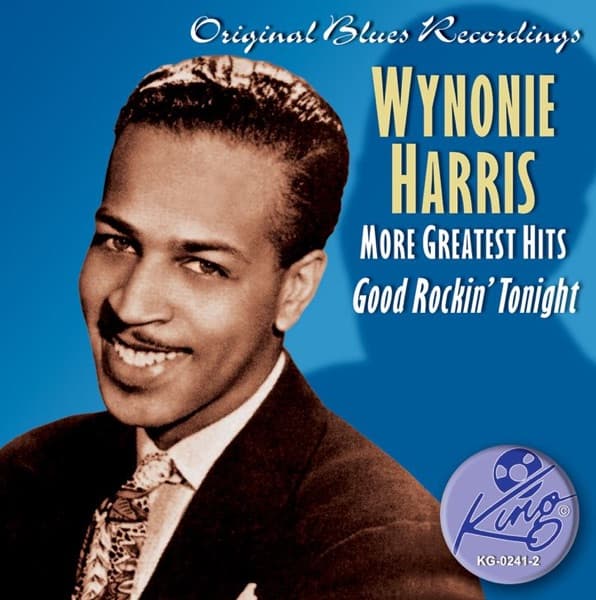
Wynonie Harris
Good Rockin' Tonight
A single, and the record more historians than any other name as the first rock and roll record. A hand-clapped backbeat under a jump band, a shouter announcing that everybody's going to rock tonight and calling out the guests by name, a tenor saxophone that honks. Compare Roy Brown's original from the year before, sung with a sob; Harris sings it with a grin. Elvis's 1954 Sun version is the sequel.
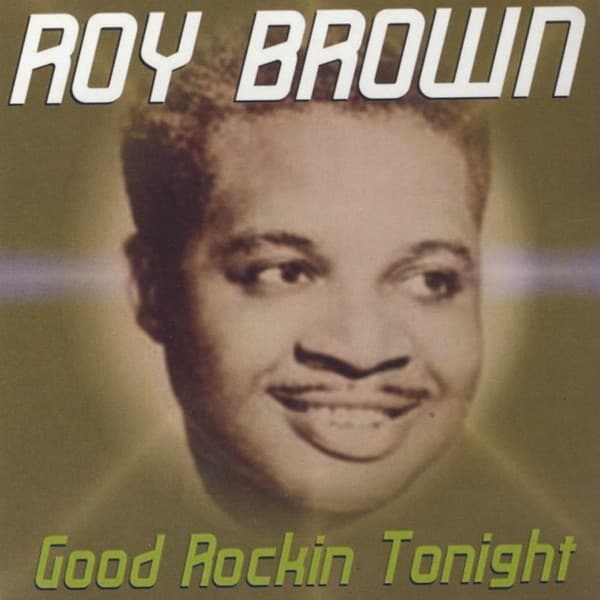
Roy Brown
Good Rockin' Tonight
The original single. Brown wrote it as a jump blues but sang it like a gospel ballad, with a pleading tenor that breaks into shouts, and the tension between the party in the lyric and the church in the voice is where soul singing starts. It went to number thirteen; the cover went to number one; the song went everywhere.
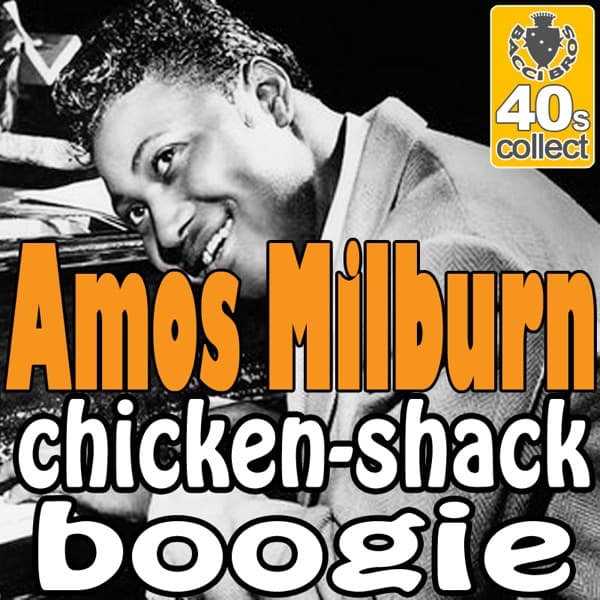
Amos Milburn
Chicken Shack Boogie
A single that spent five weeks at number one on the race chart in 1948 and the record where boogie-woogie piano becomes rhythm and blues. Milburn's left hand rolls, the band shuffles, the lyric is about a juke joint, and the whole thing is over in under three minutes. Fats Domino learned his left hand from records like this, and the piano on "The Fat Man" a year later is Milburn's with the tempo eased.
Sister Rosetta Tharpe
Strange Things Happening Every Day
A single: a gospel lyric about hypocrites and miracles, a boogie piano from Sammy Price's trio, and two electric guitar breaks that bend and drive like nothing else recorded in 1944. It reached number two on the race chart in 1945 and it is the first gospel record to cross over. If you want to argue that rock and roll was invented by a Black woman in church, this is the exhibit.
Mahalia Jackson
Move On Up a Little Higher
A two-part single: the song on side one, and on side two an improvised vamp in which Jackson simply keeps going, higher and higher, over Mildred Falls's piano and Ralph Jones's organ. Apollo claimed two million sold. The 1990s compilations of her Apollo years, "Gospels, Spirituals and Hymns" among them, gather it with "Even Me" and "Just Over the Hill"; the Apollo sides are the ones to hear, before Columbia smoothed her out.
Charlie Parker
The Complete Savoy and Dial Studio Recordings
Parker's small-group records for two independent labels between 1945 and 1948, including the "Ko-Ko" session of November 1945, "Now's the Time", "Ornithology", "Yardbird Suite" and "Parker's Mood", with every alternate take. This is bebop on record, as complete as it gets. Play "Ko-Ko" first: Gillespie's trumpet intro, then two choruses of alto saxophone that sound like a door being kicked open, then Max Roach's drum solo. The year given is the year of the first session.

Dizzy Gillespie
Manteca
A single from the big band's December 1947 sessions, and the founding record of Afro-Cuban jazz. Chano Pozo's conga sets up a two-bar bass riff, the band chants the title, the brass stacks up over it, and Gillespie plays a bridge that swings the whole thing back toward bebop before the riff returns. The RCA compilation "The Complete RCA Victor Recordings" puts it with "Cubana Be, Cubana Bop" and the rest of the band's work. Everything from mambo jazz to Santana runs through it.
Thelonious Monk
Genius of Modern Music, Volume 1
Monk's first sessions as a leader, recorded for Blue Note in October and November 1947 and issued as singles, then gathered on a ten-inch LP in 1951 and a twelve-inch in 1956. "Round Midnight", "Thelonious", "Ruby, My Dear", "Well, You Needn't" and "In Walked Bud" are all here in their first versions, with Art Blakey on drums. It sold almost nothing. What happens when you play it is that the piano keeps landing a half-step from where you expect and being right.

Duke Ellington
Never No Lament: The Blanton-Webster Band
The Ellington orchestra's Victor recordings from 1940 to 1942, with bassist Jimmy Blanton, tenor Ben Webster and the newly arrived Billy Strayhorn, collected on a three-disc set most critics name as the greatest big-band music ever recorded. "Take the 'A' Train", "Cotton Tail", "Harlem Air Shaft", "Jack the Bear", "Ko-Ko": three-minute compositions with more ideas in them than most symphonies. It stops in 1942 because the recording ban stopped it.
Glenn Miller and his Orchestra
Chattanooga Choo Choo
A single from the film "Sun Valley Serenade": a train-whistle intro, Tex Beneke and the Modernaires trading lines, and the most polished dance-band arrangement of the decade. It went to number one the week of Pearl Harbor and in February 1942 RCA Victor handed Miller a gold-painted copy for 1.2 million sales, the first gold record. Any Miller best-of will have it with "In the Mood" and "Moonlight Serenade"; that is the swing era's greatest hits in three songs.

Billie Holiday
God Bless the Child
A single, recorded in May 1941 with Roy Eldridge on trumpet, of a song Holiday wrote with Arthur Herzog after a quarrel with her mother about money. She sings it behind the beat, quietly, with the bitterness kept just under the melody. It is the best-known of her 1940s records and the one every later jazz singer has to try. The Columbia box "Lady Day: The Complete Columbia Recordings" holds it with the rest of the 1933 to 1944 sides.
Nat King Cole
The King Cole Trio
An actual album: four 78s in a bound folder, released by Capitol in 1944, and the first record to top Billboard's first album chart in 1945. Piano, guitar and bass, no drums, on "Sweet Lorraine", "Embraceable You" and "The Man I Love", with Cole singing lightly and playing brilliantly. It is where the cocktail-hour jazz trio comes from, and a reminder that before the LP an album was a book of singles.
Frank Sinatra
The Voice of Frank Sinatra
Four 78s in a folder, issued by Columbia in March 1946 and often called the first concept album: eight ballads about loneliness sung with a small string group, in sequence, as a mood. "I Don't Know Why", "Try a Little Tenderness", "These Foolish Things". It went to number one on the album chart. The 1955 LP "In the Wee Small Hours" is this idea done again, older and better.

Bing Crosby
White Christmas
A single from the film "Holiday Inn", recorded in May 1942 and released to a country whose sons had just shipped out. Irving Berlin's song about missing home, sung by the calmest voice in America, became the best-selling record ever made and stayed there for half a century. Crosby recut it in 1947 because the original master had worn out, and the 1947 remake is the one that has been in the catalogue ever since, including on the official release linked here.
The Andrews Sisters
Boogie Woogie Bugle Boy
A single introduced in the Abbott and Costello film "Buck Privates" a year before the draft made it a documentary: a Chicago trumpet player is drafted and teaches the company bugler to swing. Three voices in tight harmony imitating a horn section over a boogie bass. It is the sound of the home front, a novelty song that has outlived most serious ones.
Les Paul
Lover (When You're Near Me)
A single, cut in Paul's Hollywood garage in 1947 by recording one guitar onto an acetate disc, then playing along with that while cutting another, eight times over, some parts at half speed so they came back an octave up. Nobody had heard a record like it. It is the first multitrack pop hit; the Beatles' studio experiments, Brian Wilson and every home producer with a laptop are downstream of it.
Woody Guthrie
This Land Is Your Land: The Asch Recordings, Volume 1
The 1944 sessions for Moses Asch, gathered by Smithsonian Folkways in 1997: "This Land Is Your Land" in its first recording, "Pastures of Plenty", "Pretty Boy Floyd", "Do Re Mi", "Hard Travelin'". One man, a guitar and sometimes Cisco Houston or Sonny Terry, recorded fast and rough. What happens when you play it is that you hear the whole 1960s folk revival waiting.
Bill Monroe and his Blue Grass Boys
Blue Moon of Kentucky
A single from the September 1946 session, issued in 1947, and the first bluegrass record with the classic band: Monroe's mandolin and high tenor, Lester Flatt's guitar, Earl Scruggs's three-finger banjo, Chubby Wise's fiddle. A waltz, slow and lonesome. The Columbia box "The Essential Bill Monroe and his Blue Grass Boys 1945–1949" has the whole run, including "Molly and Tenbrooks", the song that taught the Stanley Brothers what bluegrass was. Elvis sped it up in 1954.
Hank Williams
Lovesick Blues
A single: a 1922 vaudeville song with a yodel in it, cut in Cincinnati in December 1948 against his publisher's advice, sixteen weeks at number one. Williams did not write it, which bothered him, and it is not his best record, which does not matter. It is the one that opened the door. Any Hank compilation puts it beside "I'm So Lonesome I Could Cry" and "Lost Highway" from the same year, and those are his.
Ernest Tubb
Walking the Floor Over You
A single, recorded in Dallas in April 1941: Tubb's flat, honest voice, an acoustic rhythm guitar and Smitty Smith's electric lead, written out note for note because Smith could not improvise. It sold a million and named a genre. The whole of honky-tonk, from Hank Williams to George Jones to the Bakersfield sound, is in this record's plain bounce.
Bob Wills and his Texas Playboys
New San Antonio Rose
A single: horns, fiddles, steel guitar, a drummer and Tommy Duncan crooning, with Wills hollering encouragement in the gaps. It is Western swing at its peak and the record that proved a country band could be a jazz band. The Bear Family box sets of the Playboys' Tiffany transcriptions from 1946 and 1947 are the deep cut, a band at its loosest playing for radio.
Machito and his Afro-Cubans
Tanga
Mario Bauzá's 1943 head arrangement finally on record at the end of the decade, the jazz-band-over-Cuban-rhythm idea in its purest form: a bass riff, a montuno piano, congas and bongos, and horn riffs that stack up like a big band warming up for something. The Afro-Cubans' "Cubop City" from 1948 is the same tune under a name that says what it is. The link here is a later studio recording; the 1943 original was never taped.
Pérez Prado and his Orchestra
Mambo No. 5
A single from Mexico City, issued at the turn of 1949 and 1950 (sources disagree on which), with a saxophone riff, brass stabs and Prado's grunts. It is the mambo as pop music, stripped of everything but the hook, and it spread across the Americas before he had ever played in the United States. The 1950s mambo craze, and Lou Bega's 1999 sample, start here.
Édith Piaf
La Vie en rose
A single, and the chanson's passport. Piaf's own lyric about seeing life in pink when her lover holds her, sung with a vibrato that could cut glass over an accordion and strings. Louis Armstrong recorded it in English in 1950 and it has been sung at every wedding since. The 1947 French recording linked here is the one to hear; the later live versions are heavier and sadder.

Miles Davis
Birth of the Cool
Twelve sides cut by a nine-piece band in January and April 1949 and March 1950, arranged by Gil Evans, Gerry Mulligan and John Lewis, and not gathered as an LP until 1957. French horn, tuba, no vibrato, medium tempos: bebop's harmony with the heat turned down. "Boplicity", "Move", "Israel". The decade that began with Glenn Miller ends with the twenty-two-year-old trumpeter from "Ko-Ko" inventing cool jazz, and the 1950s are open.
The Mixtape
The decade in tracks, in the order that tells its story. Press Listen on any of them.
Chattanooga Choo Choo
Glenn Miller and his OrchestraStart where the decade started: the biggest band in the world, a train whistle and a vocal chorus, at number one the week Pearl Harbor was bombed. Everything after this is what replaced it.
Take the 'A' Train
Duke EllingtonBilly Strayhorn's subway directions to Harlem, the greatest band Ellington ever led, three minutes long. Listen for how much happens in the space a pop song would spend on a chorus.
Boogie Woogie Bugle Boy
The Andrews SistersThe home front in three voices. A boogie bass line under a song about the draft, released eleven months before there was one for everybody.
God Bless the Child
Billie HolidayShe sings a hair behind the beat and says more by holding back than the band does by playing. A song about money, written after a fight about money.
Walking the Floor Over You
Ernest TubbThe first honky-tonk record and one of the first country records with an electric guitar. Notice how plain the voice is; that plainness is the style.
New San Antonio Rose
Bob Wills and his Texas PlayboysA country band playing jazz with a Texas accent. The horns, the fiddles and the drummer all argue for a living, and Wills hollers over the top.
I'll Never Smile Again
Frank Sinatra with Tommy DorseyThe singer steps out of the band. Twelve weeks at number one and the beginning of the idea that a voice, not an orchestra, is what a record is for.
White Christmas
Bing CrosbyThe best-selling record ever made, released to a country whose sons had just left. Hear it as a war song about missing home, because that is what it was.
Straighten Up and Fly Right
Nat King Cole TrioA preacher's story about a monkey and a buzzard, sung by a jazz pianist who was about to become the biggest Black pop star in America. Piano, guitar and bass, no drums, and it swings harder than most big bands.
This Land Is Your Land
Woody GuthrieThe first recording, from the Asch sessions. Listen for the verses the schoolbooks left out; they are the reason he wrote it.
Strange Things Happening Every Day
Sister Rosetta TharpeGospel with an electric guitar, boogie piano and a shout. Then the guitar solo. This is the record people mean when they say rock and roll was born in church.
Choo Choo Ch'Boogie
Louis Jordan and his Tympany FiveJump blues at full strength: a shuffle, a saxophone riff, a boogie piano and a story about a man with a train ticket and no money. Eighteen weeks at number one, and the template for Bill Haley.
Lover Man
Sarah Vaughan with Dizzy Gillespie and Charlie ParkerBebop's first great vocal record, cut in May 1945 with the two men who invented the music playing behind a twenty-one-year-old. She phrases like a horn; they play like they are listening.
Ko-Ko
Charlie ParkerTwo choruses of alto saxophone over "Cherokee" at a tempo nobody else could manage. The moment jazz stops being dance music and becomes something you sit still and listen to, hard.
Flying Home
Ella FitzgeraldA whole chorus of made-up syllables sung with a horn player's logic. Scat singing had existed since Louis Armstrong; nobody had done it like this.
Blue Moon of Kentucky
Bill Monroe and his Blue Grass BoysThe first bluegrass record, a slow waltz with Flatt and Scruggs in the band. Then imagine a Memphis truck driver speeding it up eight years later; that is the flip side of the first Elvis single.
Call It Stormy Monday
T-Bone WalkerThe first electric blues guitar solo every later guitarist learned. Listen to how the guitar answers the voice in every gap, bending notes like a saxophone.
Good Rockin' Tonight
Roy BrownThe original, sung like a gospel ballad with a party lyric. Play it back to back with Wynonie Harris's cover and you can hear the backbeat being added.
Good Rockin' Tonight
Wynonie HarrisThe cover, with handclaps on two and four. If you need one record to call the first rock and roll record and you are not in the mood to argue, this is the safe pick.
Manteca
Dizzy GillespieA Cuban conga drummer's bass riff, a big band's brass and a bebop trumpet on top. Latin jazz begins here, and the whole record is one riff you cannot stop hearing.
Move On Up a Little Higher
Mahalia JacksonA voice big enough to fill a stadium, in a small New York studio, singing about heaven as if it were a promotion she had earned. Stay for part two, where she improvises.
La Vie en rose
Édith PiafThe decade's great European pop record: a street singer from Paris, an accordion and a lyric she wrote herself about being held. Every wedding since has borrowed it.
I Can't Be Satisfied
Muddy WatersThe Delta plugged in. An electric slide guitar and a slapped bass in a Chicago studio, singing the song he sang for the Library of Congress on a plantation in 1941. This is where Chicago blues and, by extension, the Rolling Stones start.
Boogie Chillen'
John Lee HookerOne chord, one man, one foot on a sheet of plywood. It was a number one record. Everything about it should not work, and it has never stopped working.
Lovesick Blues
Hank WilliamsThe record that got him onto the Opry and six encores on his first night. A twenty-year-old vaudeville song with a yodel, sung by a man who sounds like he means every word and is not sure he will survive them.
Mambo No. 5
Pérez Prado and his OrchestraBrass stabs, a saxophone riff and a grunt. The mambo as pure pop, on its way north from Mexico City to every dance floor in America. Yes, the 1999 song sampled it.
Boplicity
Miles DavisClose the decade with the nineteen-year-old trumpeter from "Ko-Ko", now twenty-two, turning bebop's heat down into something cool. The 1950s are on the other side of this record.
What Came Next
Walk out of 1949 and look at the bench. Magnetic tape in every studio. The LP for grown-ups and the 45 for whoever is next. Independent labels in every city with a Black neighbourhood and a car to deliver records from. The electric guitar on the Opry stage, in the Chicago bars and in the church. A backbeat on the race chart and a name for the chart that was not an insult. Television in the living room and radio, pushed out of it, about to discover the disc jockey.
And the people. In New Orleans, Fats Domino has just cut "The Fat Man" and Little Richard is a teenager washing dishes. In Memphis a radio engineer named Sam Phillips is about to open a studio on Union Avenue where, in 1951, Ike Turner's band will play "Rocket 88" through an amplifier damaged in transit. In Chicago Muddy Waters is putting together a band with a harmonica player named Little Walter, and a hairdresser named Chuck Berry is playing weekends in St. Louis with Louis Jordan's guitar licks in his hands. In Georgia a blind pianist named Ray Charles is imitating Nat King Cole and about to stop. In Nashville Kitty Wells has made two records nobody bought, and Hank Williams has three years left.
I call this the decade that whispered rock and roll, moaned it, wailed it and boogied it without ever saying the words. The 1950s will say them. The volume is about to get dangerous.