100 Years of Music / Chapter 2 of 11
1930s: Roots and Resistance
The money runs out, the radio stays on, and the hard truths get a sound.
Opening
San Antonio, November 1936. Room 414 of the Gunter Hotel has been turned into a recording studio, which means a microphone, a portable lathe, and a mattress against the door. A young man from the Mississippi Delta sits facing the corner of the room. The engineer thinks it is shyness. He records twenty-nine songs in two trips to Texas, then goes home. Two years later he is dead, and almost nobody has heard of him.
That is the 1930s. Almost nobody hears the thing that matters most, because almost nobody can afford a record. In 1927 Americans bought more than a hundred million of them. By 1932 they bought six million. The label that recorded Charley Patton and Son House goes bankrupt and sells its metal masters for scrap. Blues singers who cut twenty sides a year in 1929 cut none.
But the radio is free once you own one, and by the middle of the decade a bar could buy a Wurlitzer for the price of a few hundred nickels. Music did not stop. It moved: out of the record shop and into the living room, the dance hall, the juke joint, the church, the border station blasting from Mexico. The Depression did not kill American music. It sorted it, hardened it, and sent it out over the air.
So the decade holds two stories at once. On one side, the largest audience in history: Benny Goodman at the Palomar, a Saturday night Opry on NBC, Judy Garland on a Kansas farm singing about a place over the rainbow. On the other, the quiet recordings that would matter more later: a convict in Louisiana singing a waltz for two folklorists, a gospel pianist writing a hymn the week his wife died, a woman in a New York nightclub singing about lynched bodies while the waiters stood still.
Every genre this project follows for the next ninety years is either born here or takes its adult shape here. Electric guitars. Black gospel as a name and a market. Western swing, bluegrass, the singing cowboy. The rumba craze that put Cuban drums in Manhattan ballrooms. Boogie-woogie piano stomping toward rhythm and blues. This is the root system. Put your headphones on and dig.
The World
The Depression empties the record shop
The crash of October 1929 became a ten-year slump. Unemployment reached a quarter of the workforce. Record sales, which had topped a hundred million units in 1927, collapsed to a few million by 1932, and phonograph sales fell with them. Labels merged, folded, or were bought by radio and appliance companies. By 1934 four groups owned nearly the whole business: RCA Victor, ARC, EMI, and the new American Decca.
Radio becomes the national living room
A radio was a one-time cost and then the music was free. Networks like NBC and CBS carried dance bands from hotel ballrooms coast to coast, and local stations from WSM in Nashville to KVOO in Tulsa to KFVD in Los Angeles built stars who never needed a hit record. A live remote broadcast at the right hour could make a band famous overnight, which is exactly what happened to Benny Goodman in 1935.
Repeal and the jukebox
Prohibition ended in December 1933, and legal bars reopened across the country. A bar needed music and could not afford a band, so the coin-operated record player went from novelty to fixture. American jukebox production rose from about 18,000 in 1934 to 210,000 in 1937. By 1938 some 225,000 machines needed stocking, and the records that got the nickels, from Basie to Bob Wills, told labels what to press next.
The Dust Bowl and the road west
Drought and bad farming turned the southern plains into blowing dirt from 1934 onward. Hundreds of thousands of families from Oklahoma, Texas, Arkansas, and Kansas loaded their cars and drove to California, where they were called Okies and largely unwelcome. Woody Guthrie went with them in 1937, and their story became the first great body of American topical song since the Civil War.
Jim Crow, lynching, and the color line
Segregation was law across the South and custom nearly everywhere else. Black bands played white ballrooms they could not enter as guests. Marian Anderson, the most celebrated contralto alive, was refused Constitution Hall in Washington in 1939 because she was Black. Music crossed the line more often than people could, which is why an integrated stage at Carnegie Hall or a Café Society nightclub counted as news.
The New Deal and the folklorists
Franklin Roosevelt took office in March 1933 and the federal government started paying people to document America. The Library of Congress sent John and Alan Lomax through Southern prisons and farms with a disc recorder in the trunk. Their trips put Lead Belly on record, captured Jelly Roll Morton's nine-hour memoir of early jazz, and built the archive that the folk revival would raid twenty years later.
Electricity comes to the bandstand
The 1930s put current through the instruments themselves. The Rickenbacker "Frying Pan" electric steel guitar went on sale in 1932. Laurens Hammond's tonewheel organ shipped in 1935 and went straight into churches. By 1939 Gibson's ES-150 was in Charlie Christian's hands, and the guitar could finally be heard over a big band's brass. Nobody yet called any of this rock and roll. They would.
Hollywood learns to sing
Sound film was barely three years old when the decade opened. By its end the musical was Hollywood's most reliable product: Astaire and Rogers in white tie, Gene Autry on horseback, Judy Garland in Kansas. A song in a hit picture reached more people in a month than a 78 reached in a year, and the film studios bought up the Tin Pan Alley publishers to make sure they owned what the country was humming.
The Sounds
The Delta goes quiet, the city turns up the drums
The blues had its first great recording boom in the late 1920s, and the Depression ended it almost overnight. Paramount, the Wisconsin label that had recorded Charley Patton, Son House, and Skip James, went out of business in 1932 and its masters were scrapped. Field trips to the South slowed to a trickle. The most important Delta record of the decade, Robert Johnson's twenty-nine songs from San Antonio and Dallas in 1936 and 1937, sold modestly and was forgotten for twenty years. That silence is the reason his legend grew: the music arrived in the 1960s without a face attached.
Meanwhile the blues that actually sold in the 1930s came out of Chicago. Lester Melrose, a music publisher turned producer, built a house sound for RCA's budget label Bluebird around Big Bill Broonzy, Tampa Red, Washboard Sam, and the harmonica player John Lee "Sonny Boy" Williamson. It used a piano, a string bass, and often a drummer behind the guitar, which no Delta record had. People call it the Bluebird beat. It is the sound of the blues becoming a band, and the band is the model Muddy Waters plugged in after the war.
Two other blues streams fed forward. The piano blues of Leroy Carr and the boogie-woogie of Meade Lux Lewis, Albert Ammons, and Pete Johnson put a rolling left hand under everything, and by the end of the decade Kansas City shouter Big Joe Turner was barking over it in a way that is rhythm and blues in everything but the name. And the string-band blues of the Mississippi Sheiks, whose fiddle-and-guitar "Sitting on Top of the World" sold to Black and white buyers alike in 1930, reminds you that the color line on record labels was never the color line in the music.
Swing: jazz becomes the pop music of a whole country
Jazz in 1930 was a specialist taste with a few crossover stars. Jazz in 1939 was the most popular music in the United States. The vehicle was the big band: three or four trumpets, three trombones, four or five saxophones, and a rhythm section of piano, guitar, bass, and drums, all playing written arrangements that left holes for improvised solos. Fletcher Henderson had worked out the recipe in Harlem years earlier. What changed was who was listening.
The usual date for the Swing Era's start is August 21, 1935, when Benny Goodman's band, playing Henderson's arrangements, set off a near riot at the Palomar Ballroom in Los Angeles in front of a live radio audience. Goodman's Carnegie Hall concert in January 1938 made the point in evening dress. But the sound was Black before it was national. Duke Ellington had named it in 1932 with "It Don't Mean a Thing (If It Ain't Got That Swing)." Chick Webb's band ran the Savoy Ballroom in Harlem, where the Lindy Hop was invented, and beat Goodman in a famous 1937 band battle on his own floor. Count Basie brought the loose, riff-based Kansas City style east in 1936 and rewrote what a rhythm section was for.
Under the dance music, jazz was already turning into an art of the soloist. Lester Young's light, floating tenor with Basie and Coleman Hawkins's dense, harmonic "Body and Soul" in October 1939 are the two poles the beboppers would argue between. Billie Holiday, singing behind the beat with Teddy Wilson's small groups, invented modern jazz singing. In Paris, a Romani guitarist named Django Reinhardt built a swing band out of nothing but strings. And in August 1939 a twenty-three-year-old from Oklahoma City named Charlie Christian sat in with Goodman on an amplified guitar, and the instrument's future changed shape.
Black gospel gets a name, a publisher, and a voice
Spirituals were centuries old and jubilee quartets had been on record since the 1900s. What the 1930s added was gospel as a modern, composed, commercial music with its own circuit. The man who did it was Thomas A. Dorsey, a Chicago pianist who had made his living as Georgia Tom, the hokum blues partner of Tampa Red. In August 1932 his wife Nettie died in childbirth and the baby followed her. Within days Dorsey wrote "Take My Hand, Precious Lord." He spent the rest of the decade organizing choirs, founding a convention for them, and printing sheet music that he sold out of his own storefront, because the established church publishers would not touch songs that sounded like the blues.
Dorsey's chosen singer was a New Orleans transplant named Mahalia Jackson, who demonstrated his songs from church to church and made her first records for Decca in May 1937. They did not sell. That did not matter yet; the audience was in the pews, not the record shop. On the quartet side, the Golden Gate Quartet from Norfolk, Virginia, recorded fourteen songs in two hours in a Charlotte hotel room in August 1937 and turned jubilee singing into something close to swing, with a bass singer imitating a locomotive.
Then there is Sister Rosetta Tharpe. In the fall of 1938 she walked out of the Pentecostal church and onto the stage of the Cotton Club, and on October 31 she recorded "Rock Me" for Decca with nothing behind her but her own guitar. Church people were scandalized. Everyone else heard the future. Elvis Presley, Little Richard, and Chuck Berry all named her, and the title is not a coincidence.
Hillbilly music grows up and puts on a cowboy hat
The 1927 Bristol sessions had given the music its first two stars, Jimmie Rodgers and the Carter Family. Rodgers died of tuberculosis in a New York hotel in May 1933, two days after finishing his last session, and the decade that followed was a fight over what came after him. The answer turned out to be several things at once.
One was the singing cowboy. Gene Autry started as a Rodgers imitator on Tulsa radio, had his first hit with a parlor ballad in 1931, and by 1935 was starring in Republic Pictures westerns that carried country music to city theaters where no fiddle band had ever played. The Sons of the Pioneers gave the cowboy song three-part harmony and "Tumbling Tumbleweeds." Patsy Montana's 1935 "I Want to Be a Cowboy's Sweetheart" made her the first woman in the field with a runaway hit.
Another was western swing, the Texas dance music that treated a string band like a jazz orchestra. Milton Brown's Musical Brownies recorded the first electric steel guitar in country music in January 1935 with Bob Dunn. Bob Wills took his Texas Playboys to KVOO in Tulsa in February 1934, added horns and drums, and by "Steel Guitar Rag" in 1936 had a band that could play a fiddle breakdown and a Gershwin tune in the same set.
The third was Nashville. The Grand Ole Opry on WSM added the Delmore Brothers in 1933, Roy Acuff in February 1938, and a Kentucky mandolin player named Bill Monroe in October 1939, whose Blue Grass Boys would give a whole style its name. That same month NBC picked up a half hour of the Opry for a regional network, and country music had a Saturday night address. Border radio did the rest: from the fall of 1938 the Carter Family sang twice a day on XERA in Mexico, a station ten times stronger than any American one, and the whole continent could hear Maybelle's guitar.
The Lomaxes, Lead Belly, and the Dust Bowl balladeer
Folk music in the 1930s was less a market than a mission. In 1933 John Lomax, a Texas folklorist in his sixties, and his teenage son Alan drove through the South with a disc recorder for the Library of Congress, looking for songs in the places commercial labels ignored: prisons, levee camps, church suppers. At the Louisiana State Penitentiary at Angola in July they recorded a twelve-string guitarist named Huddie Ledbetter, called Lead Belly, singing a waltz called "Irene." It was the first time the song had been recorded. Within two years he was performing in New York and the Lomaxes had a book about him.
Alan Lomax became the Archive of American Folk Song's assistant in charge in 1937, and in May 1938 he sat Jelly Roll Morton down at a piano in the Library's Coolidge Auditorium and recorded nine hours of him talking and playing through the birth of jazz. It was the first long oral history of a musician ever put on disc, and it set the pattern for how the century would document itself.
The other folk story was on the road. Woody Guthrie left the dust of Pampa, Texas, for California in 1937 and landed a daily show on KFVD in Los Angeles, singing old songs and new ones to the migrant camps. He did not record commercially until 1940, when "Dust Bowl Ballads" put the whole decade on two 78 albums. But the songs were written in the 1930s, and so was the idea that a singer with a guitar could be a reporter.
Boogie-woogie and the jump: rhythm and blues before the name
Nobody said rhythm and blues in the 1930s. The trade papers said race records, a category invented in the 1920s for music sold to Black buyers, and it stayed the official label until 1949. But the ingredients of the postwar sound were all on the table by 1938: a piano playing eight beats to the bar, a shouting singer, a saxophone honking a riff, and a crowd that wanted to dance harder than a ballroom allowed.
The piano came first. Boogie-woogie had been a Chicago rent-party style since the 1920s. Meade Lux Lewis's "Honky Tonk Train Blues" was a cult record among collectors, and in 1938 John Hammond put Lewis, Albert Ammons, and Pete Johnson on the stage of Carnegie Hall for his From Spirituals to Swing concert. Johnson brought his Kansas City partner, a bartender named Joe Turner, and a week later they cut "Roll 'Em Pete" for Vocalion. It is a blues, but it moves like something else, and people who trace rock and roll back through the 1940s tend to stop here.
The other line runs through the small band. Louis Jordan, an alto player from Chick Webb's orchestra, formed his Tympany Five in 1938 and built a repertoire of jokes, riffs, and shuffles that would rule the race charts in the 1940s. And the vocal group tradition that would become doo-wop was already selling: the Mills Brothers early in the decade, the Ink Spots' "If I Didn't Care" in 1939, with Bill Kenny's high tenor and Hoppy Jones's spoken bass chorus that a thousand street-corner groups would copy.
Tin Pan Alley moves to Hollywood and the crooner takes the microphone
Popular song in the 1930s was written in New York and sold from Los Angeles. The great songwriting decade of Cole Porter, George Gershwin, Irving Berlin, Jerome Kern, Harold Arlen, and Rodgers and Hart overlapped almost exactly with the rise of the film musical, and the best songs of the era arrived on screen: "Cheek to Cheek" in Top Hat in 1935, "Over the Rainbow" in The Wizard of Oz in 1939. Gershwin's Porgy and Bess opened on Broadway in October 1935; he was dead of a brain tumor by July 1937, at thirty-eight.
The microphone changed how those songs were sung. Before electrical recording and radio, a singer had to fill a theater. Now he could whisper. Bing Crosby understood this first and best: his 1932 "Brother, Can You Spare a Dime?" is sung close and low, as if to one person on a breadline, and it became the Depression's anthem. The crooner style he built ran straight through Sinatra to every pop vocalist since.
Pop also meant the charts. Your Hit Parade began on radio in 1935, counting down the week's top songs from sheet music and radio plays, and it trained the country to think of music as a race. Kate Smith premiered Irving Berlin's "God Bless America" on her CBS show for the twentieth Armistice Day in November 1938. By 1939 Glenn Miller had "In the Mood," and swing and pop were, for a few years, the same thing.
The rumba craze: Cuban son takes Manhattan
On April 26, 1930, Don Azpiazú's Havana Casino Orchestra opened at the Palace Theater on Broadway. The singer pushed a peanut cart onto the stage and threw bags of peanuts into the crowd while the band played "El Manisero," a Cuban son about a street vendor. The Victor recording made that May was the first American hit built on real Afro-Cuban rhythm and instruments: maracas, claves, bongos, timbales. The industry called it a rumba, misspelled it rhumba, and sold more than a million copies of the sheet music.
Xavier Cugat, a Catalan violinist raised in Havana, turned the craze into an institution when he moved his band into the Waldorf-Astoria in 1933 and stayed for sixteen years. His rumbas were smoothed for ballroom feet, but the drums stayed, and the arrangers and players who passed through his band, Mario Bauzá among them, would build the mambo and Afro-Cuban jazz of the next decade.
Latin music in the United States was never only Cuban. In 1930 Canario y su Grupo recorded Rafael Hernández's "Lamento Borincano," a song about a Puerto Rican farmer ruined by the Depression, and it became an anthem across the Spanish-speaking Americas. In Texas a seventeen-year-old Lydia Mendoza cut "Mal Hombre" in 1934 with a twelve-string guitar and became the singer of the poor along the migrant routes. And in 1939 Carmen Miranda arrived from Brazil for a Broadway revue and stayed for Hollywood. The decade ends with Latin rhythm in every American city that had a ballroom.
The parts get built: electricity, boogie, and a guitar out front
Rock and roll is twenty years away, but almost every part of it is manufactured in this decade. Start with the instrument. In 1932 a Los Angeles company run by George Beauchamp and Adolph Rickenbacker began selling the Electro A-22, an aluminum lap steel with a horseshoe magnet pickup that people called the Frying Pan. It was the first electric guitar anyone could buy. In January 1935 Bob Dunn recorded an amplified steel with Milton Brown's Musical Brownies in Texas. By 1939 Charlie Christian was playing single-note solos on a Gibson ES-150 through an amplifier in Benny Goodman's sextet, and the guitar had a voice as loud as a saxophone.
Then the rhythm. Boogie-woogie put eight beats to the bar under the blues, and "Roll 'Em Pete" in December 1938 showed what a shouter could do on top of it. The Bluebird blues records out of Chicago put drums behind a guitar. Western swing put drums behind a fiddle. Sister Rosetta Tharpe put a guitar solo at the front of a gospel song called "Rock Me" and sang it in a nightclub.
None of these people thought they were inventing anything. They were trying to be heard in a loud room, on a cheap record, over a big band, in a church that wanted to clap. That is the honest origin of most of what this project covers: not a manifesto, a volume problem.
Timeline
The Mississippi Sheiks cut "Sitting on Top of the World"
Guitarist Walter Vinson and fiddler Lonnie Chatmon walked unannounced into an OKeh field session in Shreveport, Louisiana, early in 1930 and recorded eight songs. The one with the shrugging refrain about a woman who left became a hit with Black and white buyers alike and kept the Sheiks on record through the worst of the Depression. Its melody resurfaces in Robert Johnson's "Come On in My Kitchen" and, decades later, in Howlin' Wolf and Cream.
"Lamento Borincano" gives the Depression a Puerto Rican voice
Rafael Hernández wrote it in New York about a farmer who takes his produce to town and finds nobody with money to buy. Canario y su Grupo recorded it in 1930 with an eighteen-year-old singer named Davilita, and it became an anthem far beyond Puerto Rico. The Library of Congress added the original to the National Recording Registry in 2018.
The Peanut Vendor opens on Broadway
On April 26 Don Azpiazú's Havana Casino Orchestra played the Palace Theater with maracas, claves, bongos, and a singer pushing a peanut cart. Their Victor recording of "El Manisero" that May was the first American hit built on authentic Cuban son, and it set off the rumba craze that put Latin percussion in ballrooms and movies for the rest of the decade. Mario Bauzá, who played on it, would later help build the mambo.
Son House, Charley Patton, and Willie Brown record at Grafton
Paramount brought the three Delta musicians and pianist Louise Johnson north to its Grafton, Wisconsin studio in late May 1930. House's "Preachin' the Blues" and "My Black Mama," cut on May 28, are the loudest and rawest Delta records of the era, and the direct model for the young Robert Johnson, who was watching. The pressings were terrible and sold poorly; the label was dead within two years.
Jimmie Rodgers and Louis Armstrong cut "Blue Yodel No. 9"
In a Hollywood studio the Singing Brakeman recorded his ninth blue yodel with Armstrong on trumpet and Lil Hardin Armstrong on piano. It is one of the first records to put a white country star and a Black jazz star in the same room, and it makes plain what Rodgers always said: his music was blues with a yodel on top. The Country Music Hall of Fame still uses it to explain him.
Duke Ellington records "Mood Indigo"
Ellington's band was still the house orchestra at Harlem's Cotton Club when it cut this slow, strange ballad for Brunswick on October 17, 1930, with the trombone, muted trumpet, and clarinet voiced upside down from where any arranger would put them. He remade it for Victor on December 10 and kept remaking it for forty years. It became his first great popular hit and the proof that a dance band could be a composer's instrument.
Skip James records in the cold at Grafton
Nehemiah James of Bentonia, Mississippi, traveled to Paramount's studio in Grafton, Wisconsin, in 1931 and recorded eighteen songs, thirteen on guitar in an eerie open minor tuning and five on piano. "Devil Got My Woman" and "I'm So Glad" sold almost nothing in a collapsing market. Robert Johnson learned from the records anyway, and Cream would cover "I'm So Glad" in 1966.
Cab Calloway records "Minnie the Moocher"
Calloway's band had just replaced Ellington's at the Cotton Club when it recorded his tale of a Harlem hustler and her cocaine-smoking boyfriend. The scat chorus, which the audience had to sing back, made the record a call-and-response event rather than a song. It sold over a million copies, put Calloway in Betty Boop cartoons, and showed that a Black bandleader could be a national pop star on his own terms.
Gene Autry stops imitating Jimmie Rodgers
After two years of recording Rodgers covers for every label that would have him, Autry cut a sentimental duet with fellow railroader Jimmy Long, "That Silver-Haired Daddy of Mine," in late October 1931. It was a major hit, won him a morning show on Chicago's WLS that December, and made him the best-selling country artist of the Depression years before he ever put on a cowboy hat.
The bottom: six million records and a scrapped label
1932 was the worst year the record business has ever had. Sales that had passed a hundred million units in 1927 fell to roughly six million. Paramount, the label that had recorded Patton, House, and James, went out of business and sold its metal stampers for scrap, which is why their records survive only as worn, noisy 78s. Only radio, and soon the jukebox, kept the music moving.
The Frying Pan goes on sale
George Beauchamp's aluminum lap steel with a horseshoe-magnet pickup, built by machinist Adolph Rickenbacker's company in Los Angeles, became the first commercially produced electric guitar in 1932. Fewer than twenty sets sold that year. But it solved the problem every guitarist in a band had, which was being heard, and within seven years the idea had reached Bob Dunn in Texas and Charlie Christian in Oklahoma City.
Ellington names the era: "It Don't Mean a Thing"
Recorded in February 1932 with Ivie Anderson singing, Ellington's tune used the word swing as a verb and a standard three and a half years before Benny Goodman made it a marketing term. Every argument about what the music was for is settled in the title. It is one of the few songs of the decade that both the musicians and the dancers claimed as theirs.
Thomas Dorsey writes "Take My Hand, Precious Lord"
Dorsey was on the road in St. Louis when a telegram told him his wife Nettie had died giving birth; the baby died the next day. Within days he had written new words to an old hymn tune, and the song became the foundation of Black gospel as a composed music. It was first recorded by the Heavenly Gospel Singers in 1937 and sung by Mahalia Jackson at Martin Luther King Jr.'s funeral in 1968.
Bing Crosby records the Depression's anthem
"Brother, Can You Spare a Dime?" came from a failed Broadway revue, with words by Yip Harburg and a minor-key melody Jay Gorney remembered from a Russian lullaby. Crosby recorded it in late October 1932 with Lennie Hayton's orchestra, singing close to the microphone as if to one man on a breadline. It was the best-selling record of its moment and made the crooner the voice of the country.
Xavier Cugat opens at the Waldorf-Astoria
Cugat moved his band from Los Angeles to the Waldorf-Astoria in New York in 1933 as a relief orchestra at five hundred dollars a week. He stayed sixteen years, became the hotel's highest-paid act, and made the rumba, the tango, and the conga part of the American ballroom vocabulary. The critics called it watered down. The drums were real, and so were the musicians who passed through.
The Delmore Brothers join the Grand Ole Opry
Alton and Rabon Delmore, two brothers from the red clay of north Alabama, sang soft close harmony built for the microphone rather than the tent show. They joined WSM's Saturday night program in 1933, signed to Victor's new budget label Bluebird the same year, and cut "Brown's Ferry Blues." By 1936 the Opry said they were its most popular act, and every brother duo from the Louvins to the Everlys starts here.
Jimmie Rodgers dies in New York
Dying of tuberculosis, Rodgers went to New York in May 1933 to finish his Victor contract, recording twelve sides over a week with a cot in the studio to rest between takes. Two days after the last session, on May 26, he collapsed on the street and died at the Hotel Taft. He was thirty-five. Gene Autry had a record about his death in stores within weeks.
The Lomaxes record Lead Belly at Angola
John and Alan Lomax, recording for the Library of Congress with a disc machine in their car, reached the Louisiana State Penitentiary in July 1933 and recorded Huddie Ledbetter singing "Irene," "Angola Blues," and other songs. "Irene" had never been recorded before. Within eighteen months Lead Belly was out of prison and singing for audiences in New York, and the American folk revival had its first star.
Repeal fills the bars, and the bars buy jukeboxes
Prohibition ended on December 5, 1933. Thousands of newly legal bars needed music and could not afford bands, and the coin-operated phonograph filled the gap. Production of jukeboxes rose more than tenfold between 1934 and 1937, and by the end of the decade stocking them accounted for a large share of all records sold. Jukebox plays also told labels, nickel by nickel, what the public wanted.
Lydia Mendoza records "Mal Hombre"
The Mendoza family had sung for coins on the streets of San Antonio and recorded as a group since the 1920s. In 1934 Lydia, seventeen, made her first solo record: a bitter tango-flavored song in a woman's voice about the man who ruined her, accompanied by her own twelve-string guitar. It made her the Lark of the Border, and audiences along the migrant routes requested it for the next fifty years.
The Quintette du Hot Club de France forms in Paris
Out of backstage jams at the Hôtel Claridge on the Champs-Élysées, guitarist Django Reinhardt and violinist Stéphane Grappelli built a swing band with no horns and no drums: three guitars, a bass, and a violin. Reinhardt, a Romani musician who had lost the use of two fingers in a caravan fire, played lead with the other two. It was the first great jazz made outside America, and its 1937 "Minor Swing" is still the style's national anthem.
The Sons of the Pioneers and "Tumbling Tumbleweeds"
Leonard Slye, later Roy Rogers, Bob Nolan, and Tim Spencer formed the Pioneer Trio in Los Angeles in 1933, added fiddler Hugh Farr, and began cutting radio transcriptions as the Sons of the Pioneers in late 1934. Nolan's "Tumbling Tumbleweeds" gave the cowboy song three-part harmony and a melody that sounded like the West looked in the movies. Gene Autry's 1935 film took the title.
Bob Wills brings the Texas Playboys to Tulsa
Wills and five musicians arrived at KVOO on February 9, 1934, for a trial daily broadcast. The 12:30 show, sponsored by a laxative and then by General Mills, made him the most popular act in the Southwest. Over the next six years he added horns, drums, and the electric steel of Leon McAuliffe, building a string band that played like a jazz orchestra.
Big Bill Broonzy and the Bluebird beat
When Broonzy resumed recording in March 1934 it was for Bluebird's new Chicago operation under producer Lester Melrose. Together they built the house sound of 1930s urban blues, with trap drums and string bass behind the guitar. Broonzy became Melrose's unofficial second in command, auditioning artists and playing on hundreds of records by Washboard Sam, Sonny Boy Williamson, and others. This is the band blues Muddy Waters electrified after the war.
American Decca opens and cuts the price of a record
Jack Kapp launched the American branch of Britain's Decca in August 1934 and sold big-name records for thirty-five cents when the standard price was fifty. Bing Crosby was his first signing; the Sons of the Pioneers were his third. Cheap records plus jukeboxes are what pulled the industry off the floor, and by 1938 Decca and Victor between them sold thirty-three million discs.
The Hammond organ goes on sale
Laurens Hammond, a Chicago clockmaker, filed his patent for an electric organ in April 1934 and shipped the Model A in 1935. It used spinning tonewheels and an amplifier to imitate a pipe organ at a fraction of the price, and its first customers were churches. Black congregations took to it fastest, and through gospel it reached jazz, blues, soul, and rock. It is the first electronic instrument to become an everyday one.
Astaire and Rogers dance "Cheek to Cheek"
Irving Berlin wrote it for Fred Astaire, and in Top Hat he sings it to Ginger Rogers while they dance. It spent five weeks at number one on Your Hit Parade and was the top song of 1935. The Astaire and Rogers pictures were the Depression's most reliable escape, and they taught songwriters that the best place to launch a standard was a movie screen.
Patsy Montana becomes the first woman with a country smash
Ruby Blevins of Hope, Arkansas, sang with the Prairie Ramblers on Chicago's WLS National Barn Dance, and in 1935 producer Art Satherley took them to New York to record for ARC. Her own "I Want to Be a Cowboy's Sweetheart," a polka-tempo yodel about freedom on horseback, became the first runaway hit by a female country artist. It is the ancestor of every cowgirl from Dale Evans to Dolly Parton's rhinestones.
Bob Dunn plugs in a steel guitar
On January 27, 1935, in Chicago, Milton Brown and His Musical Brownies recorded "Taking Off" with Bob Dunn playing an amplified steel guitar, the first electric instrument on a country record. Dunn had come up through Hawaiian music and phrased his steel like the trombonist Jack Teagarden. Brown died in a car wreck in 1936; Dunn's sound went straight into Bob Wills's band.
The Palomar Ballroom: the Swing Era gets a start date
Benny Goodman's band had spent a summer tour losing money, playing safe stock arrangements for club owners who wanted waltzes. On August 21, 1935, at the Palomar in Los Angeles, they gave up and pulled out Fletcher Henderson's hot charts. The crowd was young, it already knew the band from its late-night Let's Dance broadcasts, and it went off. Black bands had been swinging for years. This was the night a white audience decided it was theirs too.
Porgy and Bess opens on Broadway
George Gershwin's opera about a Black neighborhood in Charleston opened at the Alvin Theatre on October 10, 1935, with a classically trained all-Black cast. It ran 124 performances and lost money. Its songs did not: "Summertime" was on record by Billie Holiday within a year, and jazz musicians have been reworking the score ever since. Gershwin was dead within two years.
John Hammond hears Count Basie on the radio
Late-night broadcasts from the Reno Club in Kansas City reached the car radio of John Hammond, the wealthy jazz enthusiast and producer, and he drove out to hear the band. Basie had rebuilt Bennie Moten's orchestra around a rhythm section of Walter Page, Jo Jones, Freddie Green, and himself, playing head arrangements on the blues. Hammond brought them to New York, and within a year the whole Swing Era was trying to sound that loose.
Roy Acuff records "The Great Speckled Bird"
Radio fame in Knoxville got Acuff a trip to Chicago in 1936 to cut his first twenty sides for ARC. Among them was his version of a mountain hymn that treats the church as a strange bird the world despises. Sung in his high, straining tenor over a dobro, it became his signature and the song that got him onto the Opry two years later.
The Monroe Brothers make their first records
Bill and Charlie Monroe, working out of Charlotte's 50,000-watt WBT, were recorded by Bluebird's Eli Oberstein in February 1936. "What Would You Give in Exchange for Your Soul" sold well and their hard-driving tempos and Bill's lightning mandolin set them apart from the other brother duos. They broke up in 1938, and Bill named his new band after the state of Kentucky.
Bob Wills records "Steel Guitar Rag"
Leon McAuliffe's electric steel instrumental, cut at the Texas Playboys' Chicago session in the fall of 1936, became the piece every steel player had to learn and the record that made the instrument a lead voice in country music. Wills hollering over the top is the western swing signature. The tune's ancestor is a Black ragtime guitar piece, and the lineage is not hidden.
Robert Johnson records in room 414 of the Gunter Hotel
Referred by Jackson talent broker H. C. Speir to ARC's Ernie Oertle, Johnson recorded in San Antonio over three days in late November 1936 under producer Don Law, singing into the corner of the room. "Cross Road Blues," "Come On in My Kitchen," "Terraplane Blues," and "Kind Hearted Woman Blues" came from these sessions. It was a bad year to record a Delta bluesman, and the industry was holding far fewer such sessions than it had in 1929.
"Terraplane Blues" is released
Johnson's first record, a blues that treats a woman like a car with a bad battery, was the standout seller of his San Antonio sides when it came out in March 1937. It did well enough that ARC invited him back for a second session that summer. It was the only thing close to a hit he had in his lifetime.
Chick Webb beats Benny Goodman at the Savoy
The Savoy Ballroom on Lenox Avenue, integrated from the day it opened in 1926, was Webb's home floor, and on May 11, 1937, Goodman's band came uptown to battle him. Close to five thousand people got inside and thousands more waited on the street. Webb led from a drum platform set front and center of the bandstand, playing charts he had memorized because he never learned to read music, and the crowd gave the night to him. Only Duke Ellington ever beat him on that floor. The Lindy Hop, born there, was now the whole country's dance.
Mahalia Jackson makes her first record
On May 21, 1937, Jackson recorded four sides for Decca in Chicago with Estelle Allen at the piano, the first records she ever made, and a year and a half before the label got to Sister Rosetta Tharpe. "God's Gonna Separate the Wheat from the Tares" went nowhere in the shops. She went back to Chicago, kept her beauty shop, and kept singing Dorsey's songs in churches for another decade before "Move On Up a Little Higher" made her the most famous gospel singer in the world.
Woody Guthrie reaches Los Angeles
Guthrie left his wife and children in Pampa, Texas, in May 1937 and rode west with the Dust Bowl migrants. By summer he had a daily fifteen-minute show on KFVD, and that fall he and Maxine Crissman, whom he called Lefty Lou, were the station's highest-rated act, with hundreds of fan letters from the migrant camps. The songs he wrote there became Dust Bowl Ballads.
Robert Johnson's Dallas sessions
Invited back after "Terraplane Blues" sold, Johnson recorded in Dallas in June 1937 for what turned out to be the last time. "Hellhound on My Trail," "Love in Vain," and "Me and the Devil Blues" came from these days. Twenty-nine songs in forty-one takes was the whole of his recorded life, about two hours of music.
Count Basie records "One O'Clock Jump"
Cut for Decca on July 7, 1937, the band's theme was a twelve-bar blues head arrangement the musicians had worked out on the stand. Basie's piano, Walter Page's walking bass, and Jo Jones's hi-hat set a groove that Goodman, Miller, and Harry James all tried to copy, then Herschel Evans, Lester Young, and Buck Clayton took solos and the sections riffed the band home. Basie had signed away his royalties and never saw the money.
George Gershwin dies at thirty-eight
Gershwin collapsed in Hollywood and died of a brain tumor on July 11, 1937. He had written Rhapsody in Blue at twenty-five and Porgy and Bess at thirty-six, and had spent his last year writing songs for Astaire pictures. No American songwriter had moved so freely between the concert hall, the theater, and the jazz band, and none has since.
The Golden Gate Quartet records fourteen songs in two hours
On August 4, 1937, Bluebird's Eli Oberstein set up in a Charlotte hotel and the four young men from Norfolk, Virginia, recorded fourteen sides in a single sitting. "Golden Gate Gospel Train" turned the jubilee quartet into a rhythm machine, with the bass singer as the locomotive. Within eighteen months they were on the stage of Carnegie Hall and on network radio, and the whole gospel quartet tradition had a new tempo.
Bessie Smith dies after a car wreck in Mississippi
The Empress of the Blues, whose 1920s records had defined the classic blues and whose last session in 1933 had been produced by John Hammond, died on September 26, 1937, in Clarksdale after a crash on Highway 61. Hammond planned his From Spirituals to Swing concert the following year partly as a memorial to her.
Toscanini takes the podium at NBC
NBC built a symphony orchestra to lure Arturo Toscanini out of retirement, and on Christmas night 1937 he conducted its first broadcast from Studio 8H. For seventeen years the most famous conductor alive played Beethoven into American living rooms for free. It is the high point of the radio century's belief that the network should raise the public's taste as well as sell it soap.
Benny Goodman plays Carnegie Hall
On January 16, 1938, Goodman brought swing into the country's temple of classical music, with Gene Krupa, Harry James, Lionel Hampton, and Teddy Wilson on the bill and guests from the Basie and Ellington bands. The integrated stage was itself a statement. "Sing, Sing, Sing" ran past twelve minutes. The recording sat unreleased for twelve years, and when Columbia issued it in 1950 it revived Goodman's career.
Roy Acuff joins the Grand Ole Opry
After two rejections, promoter J. L. Frank got Acuff a guest spot on February 5, 1938. He sang "The Great Speckled Bird," the mail poured in, and the Opry hired him. Frank renamed the band the Smoky Mountain Boys. Within twenty months Acuff was hosting the show's network segment and on his way to being the most popular country singer of the war years.
Ella Fitzgerald and Chick Webb record "A-Tisket, A-Tasket"
Fitzgerald, twenty-one, had been singing with Webb's band since he took her on after an amateur night at the Apollo. On May 2, 1938, they rehearsed her rewrite of a nursery rhyme for an hour and recorded it that night for Decca. It was the biggest hit either would ever have, and it made the shy girl from the Yonkers orphanage the most famous singer in swing.
Alan Lomax records Jelly Roll Morton's life story
Beginning May 21, 1938, in the Coolidge Auditorium of the Library of Congress, Lomax recorded the fifty-two-year-old pianist talking and playing through the birth of jazz in New Orleans: nine hours on fifty-four twelve-inch discs. It was the first extended oral history of a musician ever recorded, and the source of Lomax's 1950 book Mister Jelly Roll. Morton, broke and forgotten, died three years later.
Robert Johnson dies near Greenwood
Johnson died on a plantation outside Greenwood, Mississippi, in August 1938, at twenty-seven, under circumstances that have never been settled; the story most people tell involves poisoned whiskey and a jealous husband. John Hammond had been trying to reach him for the Carnegie Hall concert that December. Instead the audience heard two of his records played from the stage.
Sister Rosetta Tharpe records "Rock Me"
Tharpe stepped out of the Pentecostal church and onto the stage of the Cotton Club that fall, and on October 31, 1938, she cut four sides for Decca alone: one voice, one guitar, no band. "Rock Me" opens with the guitar and swings like a dance record. Church people were scandalized, and Elvis Presley, Little Richard, and Chuck Berry were listening.
The Carter Family go on border radio
In the fall of 1938 A.P., Sara, and Maybelle Carter moved to Del Rio, Texas, to broadcast twice a day on XERA, a 500,000-watt station just across the river in Mexico that was ten times as powerful as the law allowed in the United States. Their records had stopped selling; now the whole continent could hear them for free. Maybelle's daughters Helen, June, and Anita joined the act the next season.
Kate Smith introduces "God Bless America"
Irving Berlin had written it for an army camp show in 1918 and put it in a drawer. For the twentieth anniversary of the Armistice, Smith's manager asked him for a song, and she sang it on her CBS hour with the full opening verse about storm clouds across the sea. The Library of Congress dates the broadcast November 11, 1938; other sources say November 10. She sang it on every show for two years.
From Spirituals to Swing at Carnegie Hall
John Hammond's December 23, 1938, concert traced Black American music from spirituals to the Basie band in one evening: the Golden Gate Quartet, Sister Rosetta Tharpe, Big Bill Broonzy, Sonny Terry, the boogie-woogie pianists Ammons, Lewis, and Johnson, and Big Joe Turner. No sponsor would touch an integrated show; the Marxist magazine New Masses paid for it. It sold out, and a second concert followed on Christmas Eve 1939.
"Roll 'Em Pete": rhythm and blues before the name
A week after Carnegie Hall, on December 30, 1938, Pete Johnson and Joe Turner recorded the number they had worked up in Kansas City clubs where Turner tended bar and shouted over the piano. Johnson's boogie-woogie at a sprint, Turner's huge voice tossing off verses: it is a blues, and it is also the clearest preview of rock and roll the decade offers. Turner recorded "Shake, Rattle and Roll" sixteen years later.
Marian Anderson sings at the Lincoln Memorial
Refused Constitution Hall by the Daughters of the American Revolution, and then a white high school auditorium by the D.C. school board, Anderson sang a free concert on the steps of the Lincoln Memorial on Easter Sunday, April 9, 1939, with Eleanor Roosevelt and Interior Secretary Harold Ickes behind the plan. Seventy-five thousand people came and NBC carried it live. She opened with "America" and changed the words to "to thee we sing."
Billie Holiday records "Strange Fruit"
Abel Meeropol, a Bronx schoolteacher, wrote the poem after seeing a photograph of a lynching and set it to music himself. In April 1939 he brought it to Café Society, the integrated Greenwich Village club where Holiday was singing, and she performed it that night. Columbia would not record it, so on April 20 she cut it for Milt Gabler's small Commodore label with "Fine and Mellow" on the flip. It reached the top twenty and she sang it, at cost to herself, for the rest of her life.
Chick Webb dies at thirty-four
Webb collapsed on a riverboat in Washington that June and died in Baltimore on the 16th, after spinal surgery he never came out of. He was thirty-four if you take the census year of 1905; his own death certificate says 1909. He had led the Savoy Ballroom house band since 1931. Ella Fitzgerald, twenty-two, took over the orchestra and led it for two years.
Charlie Christian joins Benny Goodman
John Hammond smuggled the twenty-three-year-old Oklahoma City guitarist onto the bandstand at the Victor Hugo restaurant in Los Angeles in August 1939 while Goodman was away from the stand. Goodman called "Rose Room," a tune he assumed the kid would not know, and Christian took chorus after chorus on his amplified Gibson. He was hired on the spot. The electric guitar had its first great soloist and its first star.
Glenn Miller records "In the Mood"
The riff had been kicking around since a 1930 Wingy Manone record, and Joe Garland's arrangement had been recorded by Edgar Hayes in 1938 and tried by Artie Shaw without success. Miller bought it, had Eddie Durham of the Basie band help trim it to three minutes with the false endings, and recorded it for Bluebird on August 1, 1939. It sold over a million copies and became the sound people mean when they say the 1940s.
Judy Garland sings "Over the Rainbow"
The Wizard of Oz opened in August 1939 with a ballad by Harold Arlen and Yip Harburg, the lyricist of "Brother, Can You Spare a Dime?", that the studio nearly cut for slowing down the Kansas scenes. Garland was sixteen. It won the Academy Award, became her signature for thirty years, and is the decade's plainest statement of the wish to be somewhere else.
Coleman Hawkins records "Body and Soul"
Back from five years in Europe, Hawkins cut the 1930 ballad at a Victor session in New York on October 11, 1939, and barely touched the melody at all. Two choruses of pure harmonic invention on the tenor saxophone, put out that December on RCA's budget label Bluebird. Every bebop musician learned it. Along with Armstrong's "West End Blues" it is the jazz solo that other solos are measured against.
The Grand Ole Opry goes network
On October 14, 1939, NBC's Red Network carried a half hour of the Opry, sponsored by Prince Albert tobacco, to twenty-six stations across the Southeast and Southwest. Roy Acuff hosted, Uncle Dave Macon and the harmonica player DeFord Bailey performed, and George D. Hay presided. The show had just moved into Nashville's War Memorial Auditorium and started charging a quarter at the door. Country music now had a national Saturday night.
Bill Monroe joins the Opry
Monroe auditioned for WSM's George D. Hay and the Stone brothers in October 1939 with a driving version of Jimmie Rodgers's "Mule Skinner Blues," and they hired him on the spot. His Blue Grass Boys, named for Kentucky, did not yet have a banjo; the sound would not be called bluegrass for fifteen years. But the high, lonesome tenor and the mandolin as lead instrument were already in place.
Artists
Robert Johnson
Two hours of music, recorded on two trips to Texas, is the whole of Robert Johnson: a San Antonio hotel room in November 1936, an office building on Dallas's Park Avenue in June 1937. He matters because of what he compressed: Son House's slide, Skip James's minor keys, Leroy Carr's piano blues, and a walking bass line on the guitar that made one man sound like a band. He also matters because his records survived in clean metal masters when Paramount's did not, so the 1960s could hear him properly. The devil story came later. The music does not need it.
- Cross Road Blues
- Terraplane Blues
- Come On in My Kitchen
- Hellhound on My Trail
- Love in Vain
Son House
A preacher who kept falling back into the blues, House sang like a man arguing with God in public and beat the guitar with a slide until the strings gave up. His 1930 Paramount sides are the fiercest Delta records made before the war. Robert Johnson learned by watching him at country dances, and Muddy Waters said House was the one who showed him what the music was for. Rediscovered in 1964, he played for another decade.
- Preachin' the Blues
- My Black Mama
- Clarksdale Moan
Skip James
James tuned his guitar to an open minor chord and sang in a high, cold falsetto that sounds like nothing else in the Delta. He was equally strange on piano. His single 1931 session for Paramount sold badly and he went back to Bentonia, then to the church, for thirty years. When collectors found him in 1964 he had lost none of it. Robert Johnson borrowed his "Devil Got My Woman" for "Hellhound on My Trail."
- Devil Got My Woman
- I'm So Glad
- Hard Time Killing Floor Blues
Lead Belly
Huddie Ledbetter carried more songs in his head than any singer the Lomaxes ever recorded: work songs, ballads, blues, children's games, cowboy tunes, all on a booming twelve-string guitar. Recorded in prison in 1933, presented in New York in 1935, he became the first American folk musician to be treated as a national treasure while alive, and the first to resent the way it was done. "Goodnight Irene" was a number-one hit for the Weavers a year after he died.
- Goodnight Irene
- Midnight Special
- The Bourgeois Blues
Big Bill Broonzy
Broonzy was the working center of Chicago blues for twenty years: a fast, clean guitarist, a warm singer, a prolific writer, and Lester Melrose's right hand at Bluebird, where he played on hundreds of other people's records. He stood in for the dead Robert Johnson at Carnegie Hall in 1938. In the 1950s he toured Europe as a folk bluesman, and half the British blues boom learned its first licks from him.
- Just a Dream
- Key to the Highway
- Big Bill Blues
Tampa Red
Hudson Whittaker played a gold-plated National steel guitar with a slide so smooth they called him the Guitar Wizard. With Georgia Tom Dorsey he had invented hokum, the sly, dirty, danceable blues, in 1928. Through the 1930s he was Bluebird's most reliable artist and his Chicago apartment was the rehearsal hall and boarding house for every bluesman arriving from the South. His songs were still being cut by Elmore James and B.B. King twenty years on.
- It's Tight Like That
- Let Me Play with Your Poodle
- Things 'Bout Comin' My Way
Memphis Minnie
Lizzie Douglas played guitar better than most of the men on Beale Street and beat Big Bill Broonzy in a Chicago cutting contest, or so he told it. Her 1930 "Bumble Bee" with Kansas Joe McCoy was a hit that Robert Johnson had in his repertoire. Through the decade she moved from country duets to full Chicago band records, the only woman leading that transition, and "Me and My Chauffeur Blues" in 1941 is where it arrived.
- Bumble Bee
- New Bumble Bee
- Me and My Chauffeur Blues
Leroy Carr
Carr sang softly over his own piano, with Scrapper Blackwell's single-string guitar answering, and sold more blues records in the early 1930s than any Delta guitarist. His relaxed, urban, slightly sad delivery is the model for everyone from Robert Johnson's slower songs to Nat King Cole and Ray Charles. He drank himself to death at thirty in 1935.
- How Long, How Long Blues
- Blues Before Sunrise
- When the Sun Goes Down
Benny Goodman
A clarinet prodigy from a poor Jewish family in Chicago, Goodman bought Fletcher Henderson's arrangements and played them with a discipline no other band could match. The Palomar in 1935 made swing the national music and him its king, a title that was always partly borrowed. His trio and quartet with Teddy Wilson and Lionel Hampton were the first famous integrated groups in American popular music, and in 1939 he gave Charlie Christian a chair.
- Sing, Sing, Sing (Carnegie Hall)
- King Porter Stomp
- Rose Room (Sextet)
Duke Ellington
Ellington wrote for the specific men in his band the way a painter mixes for a specific light, and the band stayed together for decades because of it. In the 1930s he moved from the Cotton Club to the concert stage, toured Europe in 1933, and wrote "Mood Indigo," "Sophisticated Lady," "Caravan," and the song that named swing. He never accepted the word jazz as big enough for what he did, and he had a point.
- Mood Indigo
- It Don't Mean a Thing (If It Ain't Got That Swing)
- Caravan
Count Basie
Basie learned stride piano from Fats Waller, then went to Kansas City and unlearned most of it. His band played the blues in riffs the musicians made up on the stand, and the rhythm section of Walter Page, Jo Jones, and Freddie Green floated instead of stomped. Everyone who followed borrowed that feel. He played fewer notes than any bandleader alive and made each one land.
- One O'Clock Jump
- Jumpin' at the Woodside
- Lady Be Good (Jones-Smith Inc.)
Chick Webb
Four feet tall, hunchbacked from a childhood spinal injury, Webb drummed from a raised platform at the Savoy Ballroom and drove the fastest, tightest band in Harlem. He gave Ella Fitzgerald her start and beat Benny Goodman on his own floor. Buddy Rich and Gene Krupa both called him the best. He died at thirty-four, and Ella led the band.
- Stompin' at the Savoy
- A-Tisket, A-Tasket
- Liza
Ella Fitzgerald
Fitzgerald won an amateur night at the Apollo in 1934 intending to dance, sang instead, and was in Chick Webb's band within months. Her voice was pure, in tune, and rhythmically exact, and "A-Tisket, A-Tasket" made her a star at twenty-one. The scat singing and the songbooks came later. The 1930s show the instrument before anyone knew how far it could go.
- A-Tisket, A-Tasket
- Undecided
Billie Holiday
Holiday had a small range and no interest in showing off. What she did instead was sing behind the beat, bend the melody like a horn player, and mean every word, and that is the whole of modern jazz singing. Her small-group records with Teddy Wilson and Lester Young from 1935 on are the best of the decade. "Strange Fruit" in 1939 made her something else: the first pop singer to put a political horror on a record and keep singing it when it cost her.
- Strange Fruit
- Summertime
- What a Little Moonlight Can Do
- Fine and Mellow
Coleman Hawkins
Hawkins made the tenor saxophone a jazz instrument in Fletcher Henderson's band, spent five years in Europe playing with Django Reinhardt, and came home in 1939 to record "Body and Soul," a solo built on the chords rather than the tune. Every bebop player studied it. He then spent the 1940s hiring the young modernists, Monk among them, when nobody else would.
- Body and Soul
Lester Young
Where Hawkins was heavy and harmonic, Young was light and melodic, floating over the beat with a tone people compared to a breeze. His solos with Basie and behind Billie Holiday from 1936 on are the bridge from swing to cool jazz, and Charlie Parker learned them by heart. Holiday named him Prez, President of the tenor saxophone, and he named her Lady Day.
- Lady Be Good
- Lester Leaps In
Django Reinhardt
A Manouche Romani guitarist raised in caravans outside Paris, Reinhardt lost the use of two fingers on his left hand in a fire at eighteen and rebuilt his technique around the other two. With Stéphane Grappelli he formed the Quintette du Hot Club de France in 1934, the first great jazz group not from America and one built entirely of strings. Gypsy jazz is still played the way he played it in 1937.
- Minor Swing
- Djangology
- Nuages
Cab Calloway
Calloway ran the Cotton Club band after Ellington, and where Ellington composed, Calloway performed: hair flying, zoot suit flapping, the crowd shouting hi-de-ho back at him. The record sold more than a million copies, and Max Fleischer traced Calloway's dancing frame by frame with a rotoscope so Betty Boop could do it too. His band was a school; Dizzy Gillespie passed through it. He was still doing "Minnie" in The Blues Brothers in 1980.
- Minnie the Moocher
- Reefer Man
Fats Waller
Waller played stride fast enough to make it look easy, and he wrote "Ain't Misbehavin'" and "Honeysuckle Rose." He was also a comic singer who could make a bad song funny and a good one his own. His Victor sides with his Rhythm from 1934 on sold through the worst of the Depression because they were the sound of a party. He taught Count Basie the organ and was dead at thirty-nine.
- Honeysuckle Rose
- Ain't Misbehavin'
- Your Feet's Too Big
Art Tatum
Nearly blind, self-taught from piano rolls, Tatum arrived in New York in 1932 and played so much piano that the Harlem masters stopped competing. His 1933 "Tea for Two" and "Tiger Rag" reharmonize the songs on the fly at speeds nobody else could reach. Classical pianists came to hear him. Bebop's harmony starts in his left hand.
- Tea for Two
- Tiger Rag
Thomas A. Dorsey
As Georgia Tom, Dorsey wrote dirty blues with Tampa Red and played piano for Ma Rainey. As Thomas A. Dorsey he wrote "Take My Hand, Precious Lord" and "Peace in the Valley," founded a national convention of gospel choirs in 1933, and published his own sheet music because nobody else would. He put blues feeling into church music and made it a business. Elvis sang his songs; so did Martin Luther King's mourners.
- Take My Hand, Precious Lord
- Peace in the Valley
Mahalia Jackson
Jackson grew up next to a Sanctified church in New Orleans and moved to Chicago at sixteen, where Dorsey made her his song demonstrator. Her 1937 Decca sides did not sell, and she spent the next decade singing in churches and running a beauty shop. What she had already was the voice: huge, slow, bent like a blues, refusing to hurry. When it finally reached records in 1947 it became the sound of the civil rights era.
- God's Gonna Separate the Wheat from the Tares
- Move On Up a Little Higher
Golden Gate Quartet
The group came together in 1931 in Eddie Griffin's barbershop in Norfolk, Virginia: the barber, an older one-legged bass singer, Robert "Peg Leg" Ford, and two boys out of the Booker T. Washington High School glee club. They turned the jubilee quartet into a rhythm engine: a bass singer imitating a train, percussive scat syllables, swing tempos borrowed from the Mills Brothers. Their August 1937 Bluebird session made them national stars, and Carnegie Hall and network radio followed within eighteen months. Every gospel quartet that followed, and through them every doo-wop group, learned the approach.
- Golden Gate Gospel Train
- Jonah
Sister Rosetta Tharpe
Tharpe played guitar in church from the age of six and played it like a lead instrument when nobody else in gospel did. In 1938 she took the songs to the Cotton Club and to Decca and became the first gospel singer with a mass secular audience. The church called it selling out. Chuck Berry, Little Richard, and Elvis Presley called it the blueprint, and the Rock and Roll Hall of Fame finally agreed in 2018.
- Rock Me
- That's All
- This Train
Jimmie Rodgers
The Singing Brakeman invented the country singer as a star: a name, a personality, a trademark yodel, a repertoire of drinking, rambling, trains, and blues learned from Black railroad crews. His last session in May 1933 was recorded with a cot in the studio. He died two days later. Every 1930s country act, from Autry to Monroe to Ernest Tubb, started by copying him.
- Blue Yodel No. 9
- T.B. Blues
- Waiting for a Train
The Carter Family
A.P. collected the songs, Sara sang them, and Maybelle played the melody on the bass strings while brushing rhythm on the trebles, the Carter scratch that every country guitarist learns first. Their marriage broke in 1932 and the act carried on. Border radio from 1938 put their sound into every kitchen in North America, and Maybelle's daughters, June among them, were on the air by 1939. The Carters are where country harmony comes from.
- Can the Circle Be Unbroken
- Wildwood Flower
- Worried Man Blues
Gene Autry
Autry went from Tulsa radio yodeler to the first singing cowboy of the movies in five years, and by 1937 exhibitors voted him the top western box-office draw. His warm, plain baritone carried country music into city theaters and, later, into Christmas. He was the best-selling country artist of the Depression and the reason a generation of kids wanted a horse and a guitar in that order.
- That Silver-Haired Daddy of Mine
- Tumbling Tumbleweeds
- Back in the Saddle Again
Bob Wills
Wills rode fifty miles on horseback as a teenager to hear Bessie Smith, and spent his life making a fiddle band swing like her accompanists. The Texas Playboys at KVOO in Tulsa grew to sixteen pieces with horns, drums, and Leon McAuliffe's electric steel, and could play a breakdown or a Gershwin tune to the same dancers. Western swing is his; so is much of honky-tonk's rhythm and the electric steel's place in country.
- Steel Guitar Rag
- New San Antonio Rose
- Take Me Back to Tulsa
Milton Brown
Brown sang with Bob Wills in the Light Crust Doughboys, left in 1932 to form the Musical Brownies in Fort Worth, and built the first real western swing band: twin fiddles, jazz piano, and from 1935 Bob Dunn's amplified steel guitar. He died after a car crash in April 1936 at thirty-two, and Wills inherited the field. Brown got there first.
- Taking Off
- St. Louis Blues
The Delmore Brothers
Alton and Rabon Delmore sang close harmony built for the microphone, played dazzling guitar runs, and loved the blues, which made them the most musically advanced act on the 1930s Opry. "Brown's Ferry Blues" is a country standard. In the 1940s they would add a harmonica and a boogie beat and record "Freight Train Boogie," one of the clearest rockabilly ancestors on any label.
- Brown's Ferry Blues
- Gonna Lay Down My Old Guitar
Roy Acuff
Acuff sang mountain hymns and train songs like a man on the edge of tears, and audiences believed him. He joined the Opry in 1938, hosted its NBC segment from 1939, and by the war years was the biggest name in country music. He was the last big country star before Nashville learned to smooth things out, and he stayed on the Opry stage for fifty-four years.
- The Great Speckled Bird
- Wabash Cannonball
Bill Monroe
Monroe learned fiddle tunes from his Uncle Pen and blues guitar from a Black neighbor named Arnold Shultz, then made the mandolin a lead instrument by playing it faster and harder than anyone had. The Monroe Brothers records from 1936 are the raw material. The Blue Grass Boys, hired by the Opry in October 1939, were the band, and when Earl Scruggs joined in 1945 the style got its final part and, later, its name.
- What Would You Give in Exchange for Your Soul
- Mule Skinner Blues
- Blue Moon of Kentucky
Woody Guthrie
Guthrie left the Dust Bowl for California in 1937 and found his subject on the way: the people the Depression had thrown out of their homes. On KFVD in Los Angeles he sang old ballads and new ones about them, in a plain voice with a plain guitar, and wrote a column for a Communist paper. Dust Bowl Ballads in 1940 put the decade on record. Dylan, Springsteen, and Billy Bragg are his direct descendants; so is the idea of the singer as witness.
- Do Re Mi
- Dust Bowl Refugee
- This Land Is Your Land
John and Alan Lomax
The father was a sixty-five-year-old folklorist with a book of cowboy songs; the son was eighteen. Together, from 1933, they drove the South with a disc recorder for the Library of Congress and recorded Lead Belly, prison work songs, and eventually Jelly Roll Morton, Muddy Waters, and Woody Guthrie. They were collectors, promoters, and sometimes exploiters, and the archive they built is the foundation of everything the folk revival knew.
- Lead Belly at Angola (field recordings)
- Jelly Roll Morton: The Library of Congress Recordings
Bing Crosby
Crosby came out of Paul Whiteman's band as a jazz singer who loved Louis Armstrong, and became the first star of the microphone: relaxed, low, intimate, singing to one listener instead of a hall. "Brother, Can You Spare a Dime?" in 1932 made him the country's voice; the Kraft Music Hall on radio from 1935 kept him there. He was Decca's first signing, and every crooner since, Sinatra included, is working in his room.
- Brother, Can You Spare a Dime?
- Pennies from Heaven
Fred Astaire
Astaire was a dancer who sang the way he danced, lightly and exactly on the beat, and the best songwriters alive wrote for him because he never got a lyric wrong. Berlin's "Cheek to Cheek," Gershwin's "They Can't Take That Away from Me," and Kern's "The Way You Look Tonight" all reached the world through his pictures with Ginger Rogers. Jazz musicians loved his records; he had the time.
- Cheek to Cheek
- The Way You Look Tonight
- They Can't Take That Away from Me
Xavier Cugat
Raised in Havana and trained as a classical violinist, Cugat turned the rumba craze into a sixteen-year residency at the Waldorf-Astoria and a string of Hollywood films. His arrangements sanded off the edges for ballroom dancers, and his bands were a finishing school: Mario Bauzá, Miguelito Valdés, and Desi Arnaz all passed through. Purists winced. The conga drum is in American pop because of him.
- The Peanut Vendor
- Perfidia
Lydia Mendoza
Mendoza sang in a low, speaking voice over her own twelve-string guitar, and Mexican Americans on the migrant routes from the Rio Grande Valley to Michigan called her the singer of the poor. "Mal Hombre," recorded at seventeen in 1934, stayed her signature for fifty years. She is the first star of Tejano music and the first Texan named a National Heritage Fellow.
- Mal Hombre
- Mujer Paseada
Charlie Christian
Christian grew up in Oklahoma City, bought his first electric guitar around 1937, and phrased on it like a saxophone: long, single-note lines with a horn player's rhythm. With Benny Goodman from August 1939 he made the guitar a solo instrument for the first time and won Down Beat's poll three years running. His after-hours jams at Minton's in Harlem helped invent bebop. He died of tuberculosis at twenty-five, and every electric guitarist since has played in his shadow.
- Rose Room
- Seven Come Eleven
- Solo Flight
Big Joe Turner and Pete Johnson
Turner tended bar at the Sunset in Kansas City and shouted the blues over Johnson's boogie-woogie piano between rounds. John Hammond put them on the Carnegie Hall stage in December 1938, and "Roll 'Em Pete" a week later is the record where you can hear rhythm and blues arriving. Turner would record "Shake, Rattle and Roll" in 1954 with the same voice, and rock and roll would claim him.
- Roll 'Em Pete
- Cherry Red
Louis Jordan
Jordan played alto in Chick Webb's band, then left in 1938 to lead a small combo he called the Tympany Five. Jokes, shuffles, a honking sax, and a singer who was also the funniest man in the room: that was the formula, and in the 1940s it made him the most successful Black recording artist in America. Chuck Berry said he took most of his act from Jordan.
- Keep A-Knockin' (But You Can't Come In)
- Caldonia
Marian Anderson
Anderson was a contralto of three octaves whom Toscanini said came once in a century, and Europe treated her as such before her own country would. Her Lincoln Memorial concert on Easter 1939, arranged after a segregated hall turned her away, was the first mass civil rights event to be broadcast live. She sang spirituals alongside Schubert, and put both on the same footing for everyone who heard her.
- My Country, 'Tis of Thee (Lincoln Memorial)
- Nobody Knows the Trouble I've Seen
Records

Robert Johnson
The Complete Recordings
There were no albums in the 1930s; a record was two songs on a ten-inch shellac disc. So this list is landmark 78 sides and the later compilations that gathered a period's work. This one is the model: twenty-nine songs in forty-one takes, recorded in San Antonio in November 1936 and Dallas in June 1937, first collected in 1961 as King of the Delta Blues Singers and completely in 1990. Put it on and you hear one man with a guitar making the rhythm section, the lead, and the song at once. Six hundred thousand people bought it in its first year, fifty-two years after he died.
Mississippi Sheiks
Sitting on Top of the World / Lonely One in This Town
A fiddle and a guitar, an eight-bar tune, and a refrain about a woman gone that shrugs instead of moans. Recorded at a Shreveport field session early in 1930, it sold to Black and white buyers alike and kept a Mississippi string band on record through the worst years of the decade. Play it next to Howlin' Wolf's 1957 version and Cream's 1968 one and you can hear seventy years of the blues moving through a single melody.
Son House
Preachin' the Blues, Parts 1 and 2
Two sides of a Paramount 78 from the May 1930 Grafton session, and the loudest thing the Delta put on record before the war. House hammers the slide, shouts about the preacher's life and the blues life in the same breath, and never lets the tempo breathe. The surviving copies are worn nearly to noise; listen through it and you hear where Robert Johnson and Muddy Waters got their attack.
Skip James
Devil Got My Woman / Cypress Grove Blues
A Paramount 78 from the 1931 Grafton session, sung in a falsetto that seems to come from another room over a guitar tuned to an open minor chord. Nothing else in the Delta sounds this cold or this precise. It barely sold, and James disappeared for thirty years. Robert Johnson rebuilt it as "Hellhound on My Trail"; the 1960s rebuilt James.

Lead Belly
The Library of Congress Recordings
The field recordings John and Alan Lomax made of Huddie Ledbetter between 1933 and 1935, starting in the Angola prison yard, gathered on disc decades later. "Irene," "Midnight Special," work songs, ballads, and a twelve-string guitar that sounds like a whole band. It is the sound of a folk archive being built in real time, and of a singer who would shortly be a New York celebrity singing for two men and a machine.
Big Bill Broonzy
Just a Dream / Baby I Done Got Wise
A 1939 Chicago side that shows the Bluebird-era blues at its most relaxed: Broonzy's easy tenor, a guitar run that turns on a dime, a piano and bass under it, and a lyric about dreaming he was in the White House with the president shaking his hand. It is a joke and it is not. This is the urban blues Muddy Waters found when he arrived in Chicago four years later.
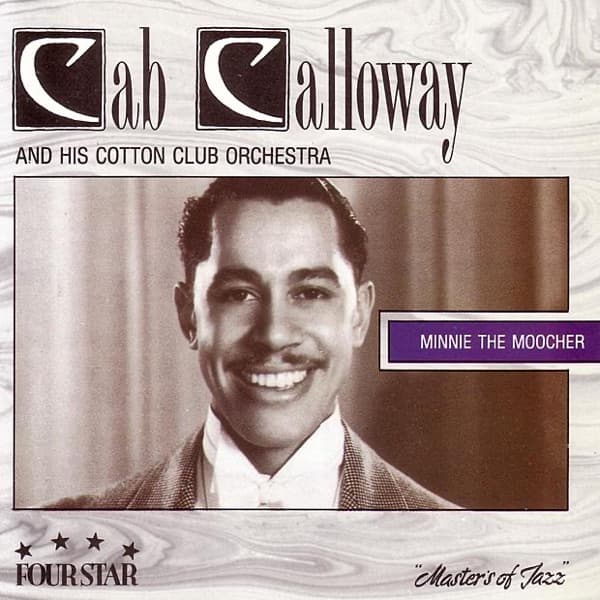
Cab Calloway
Minnie the Moocher
The March 1931 Brunswick 78 that made hi-de-ho a national catchphrase. A slow, sinister minor-key vamp, a story about a Harlem woman and her cocaine habit told with perfect diction, and a scat chorus the band and then the audience throw back. It sold over a million copies, unheard of for a Black bandleader in the Depression, and it is one of the first pop records that only works if the crowd sings along.
Duke Ellington and His Orchestra
Mood Indigo
Three minutes of muted trumpet, clarinet, and trombone voiced upside down, so that the lowest instrument plays the highest part and the sound seems to come from a distance. First cut for Brunswick on October 17, 1930, while the band was still at the Cotton Club, and remade for Victor that December as Victor 22587. It was Ellington's first great popular hit and the first proof that a dance orchestra could be one composer's instrument. It sounds like a color, which was the point.

Count Basie and His Orchestra
One O'Clock Jump
Recorded for Decca on July 7, 1937: a twelve-bar blues head arrangement with piano and rhythm first, then a modulation, then solos from Herschel Evans, Lester Young, and Buck Clayton, then the brass and reeds riffing against each other until the record runs out. The rhythm section floats; nobody had heard drums and bass this light drive a band this hard. Every swing band tried to copy it, and none quite did.
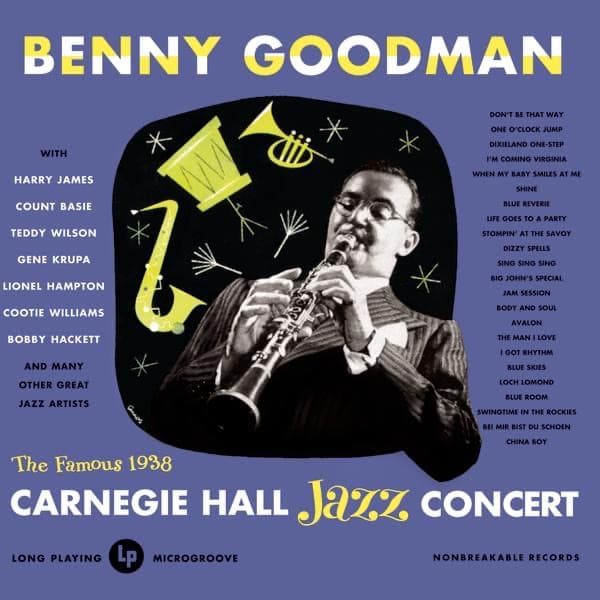
Benny Goodman
The Famous 1938 Carnegie Hall Jazz Concert
The January 16, 1938 concert, recorded on acetates and issued by Columbia only in 1950 as one of the first live jazz albums. It has the whole Swing Era on one night: the full band on "Don't Be That Way" and a twelve-minute "Sing, Sing, Sing," the integrated quartet with Teddy Wilson and Lionel Hampton, guests from Basie and Ellington, and a jam on "Honeysuckle Rose." The audience sounds like it cannot believe where it is.
Chick Webb and His Orchestra with Ella Fitzgerald
A-Tisket, A-Tasket
A nursery rhyme rewritten by a twenty-one-year-old singer, rehearsed for an hour, and recorded on May 2, 1938. Webb's band swings it politely, the trumpets answer her, and Fitzgerald sings with the pitch and time that would carry her for fifty years. It was the biggest hit either of them ever had, and one of the last records Webb made before he died.
Billie Holiday
Strange Fruit / Fine and Mellow
The Commodore 78 Columbia would not make. On one side, a slow, spare arrangement of Abel Meeropol's poem about lynching, sung almost without vibrato; the horror is in the restraint. On the other, a relaxed blues Holiday wrote herself. The record reached the top twenty, was mailed to every U.S. senator as a protest, and cost her work for the rest of her life. It is the first protest song in American pop that people still listen to as music.

Coleman Hawkins
Body and Soul
Recorded October 11, 1939, at the end of a session, more or less as an afterthought, and issued that December as Bluebird B-10523. Hawkins states about four bars of the melody and then leaves it entirely, improvising two choruses over the chord changes with a tone like poured metal. No singer, no big band, and it is the record bebop musicians learned note for note.
Quintette du Hot Club de France
Minor Swing
Three guitars, a bass, and a violin, recorded in Paris in November 1937: a two-chord minor vamp, Django Reinhardt soloing with two working fingers, and Stéphane Grappelli answering with a violin that swings as hard as any horn. There are no drums and you do not miss them. It is the anthem of gypsy jazz and the first jazz record from outside America that American musicians studied.
Mahalia Jackson
God's Gonna Separate the Wheat from the Tares
One of four sides from Jackson's first session, cut in Chicago on May 21, 1937 with Estelle Allen on piano and organ. The voice is already the one the world would meet a decade later, slow and enormous and bending the melody like a blues singer, over a plain piano. It did not sell, and she went back to Chicago churches. Hearing it now is like hearing a thunderstorm on the horizon.
Golden Gate Jubilee Quartet
Golden Gate Gospel Train
From the August 4, 1937 Charlotte session where the quartet recorded fourteen songs in two hours. The bass singer becomes a locomotive, the others chuff and whistle in rhythm, and the spiritual turns into a swing number without a single instrument. Everything doo-wop would do with the human voice is sketched here, twelve years early.
Sister Rosetta Tharpe
Rock Me / The Lonesome Road
Recorded October 31, 1938: one voice, one guitar, nothing else. A Thomas Dorsey gospel song played like a dance record, Tharpe's guitar out front and her voice pushing the beat like a shouter. She would not join Lucky Millinder's orchestra for another three years; this is the church sound arriving in the nightclub on its own. Sixteen years before Elvis, the word rock is right there in the title, and it means both things.
Jimmie Rodgers
Blue Yodel No. 9 (Standin' on the Corner)
Rodgers's ninth blue yodel, recorded in Hollywood in July 1930 with Louis Armstrong on trumpet and Lil Hardin Armstrong on piano. Country's first star and jazz's first genius trading phrases on a twelve-bar blues about a Memphis street corner. The record makes the whole argument of this project in under three minutes: the walls between these musics were built later, by people selling them.
Milton Brown and His Musical Brownies
Taking Off
Cut in Chicago on January 27, 1935, and the first country record with an electric instrument on it: Bob Dunn's amplified steel guitar, phrased like a jazz trombone and distorted by an amplifier built for a radio. Twin fiddles and a jazz pianist ride under it. The Brownies were the first real western swing band, and this is the moment the electric guitar entered the music that would carry it into rock and roll.
Bob Wills and His Texas Playboys
Steel Guitar Rag
Leon McAuliffe's electric steel instrumental from the Playboys' fall 1936 Chicago session, with Wills hollering encouragement over the top. The tune descends from a Black ragtime guitar piece, and the record made the steel guitar a lead voice in country music for good. Every steel player since has had to learn it, and most of them open with it.
The Carter Family
On Border Radio, 1939
Transcription discs from the Carters' XERA broadcasts in 1939, saved by chance and issued decades later. You hear the family as the continent heard it late at night: A.P. announcing, Sara and Maybelle singing, a very young June Carter. It is the closest thing to a live Carter Family album that exists, and the sound of border radio, which taught a generation of players from Chet Atkins to Johnny Cash.
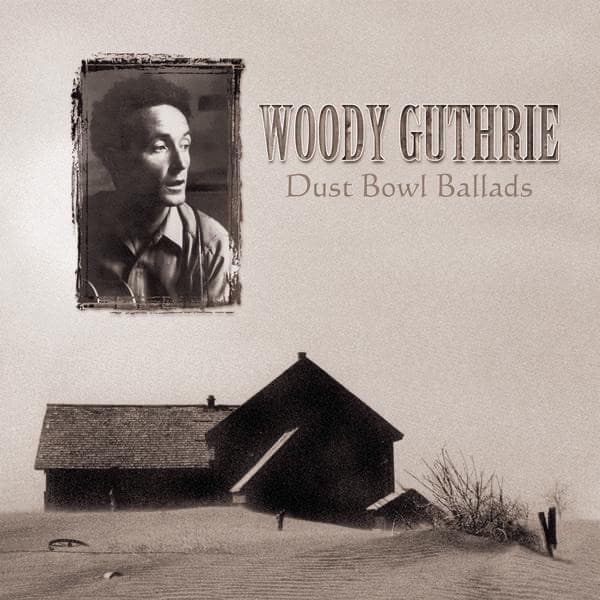
Woody Guthrie
Dust Bowl Ballads
Recorded in April 1940 and issued that year as two three-disc 78 albums, so it belongs to the next chapter by date and to this one by subject. Guthrie sings the decade he had just lived through: "Talking Dust Bowl Blues," "Do Re Mi," "Tom Joad," "I Ain't Got No Home in This World Anymore." It is the first concept album in American music and the model for every singer-songwriter who has ever reported the news with a guitar.
Bing Crosby
Brother, Can You Spare a Dime?
The Depression's theme song, recorded in late October 1932 with Lennie Hayton's orchestra. A minor-key melody from a Russian lullaby, a lyric by Yip Harburg about a veteran on a breadline who used to build railroads, and Crosby singing it so close to the microphone that it feels like a confession. It was the best-selling record of its moment and the birth of the crooner as the voice of ordinary trouble.
Fred Astaire
Cheek to Cheek
Irving Berlin's song from Top Hat, recorded by Astaire with Leo Reisman's orchestra in 1935, the year it was the top song in the country. Astaire's singing is light, exact, and slightly amused, and the melody keeps climbing when you expect it to rest. It is the sound of the Depression's most reliable escape: two people in evening clothes and nothing else in the world.

Judy Garland
Over the Rainbow
Harold Arlen and Yip Harburg's ballad from The Wizard of Oz, sung in the film by a sixteen-year-old in a Kansas farmyard and cut again that year for Decca with Victor Young's orchestra. This is the Decca side, not the soundtrack. It nearly got cut from the picture for slowing it down. It won the Academy Award, became the song Garland was asked for at every concert until she died, and is the decade's most direct expression of wanting to be somewhere the money and the dust are not.
Don Azpiazú and His Havana Casino Orchestra
El Manisero (The Peanut Vendor)
Recorded in New York in May 1930 with Antonio Machín singing the peanut vendor's street cry over maracas, claves, bongos, and a trumpet that answers him. It was the first American hit built on real Cuban son and the start of the rumba craze; the sheet music sold more than a million copies. Everything from Cugat to the mambo to Latin jazz traces back to this three and a half minutes.

Lydia Mendoza
Mal Hombre
A seventeen-year-old with a twelve-string guitar, recorded in San Antonio in 1934, singing a tango-flavored song in the voice of a woman betrayed and calling the man who did it exactly what he is. It made Mendoza the first star of Tejano music. Audiences on the migrant routes asked for it for fifty years, and the Library of Congress added it to the National Recording Registry in 2010.
Canario y su Grupo
Lamento Borincano
Rafael Hernández's song about a Puerto Rican farmer who brings his produce to town and finds no buyers, recorded in 1930 by Manuel "Canario" Jiménez's group with an eighteen-year-old singer, Davilita. It became an anthem across Spanish-speaking America and the first great Depression song in any language. The original was added to the National Recording Registry in 2018.
Pete Johnson and Big Joe Turner
Roll 'Em Pete
Recorded December 30, 1938, a week after the pair stopped the show at Carnegie Hall. Johnson's boogie-woogie piano runs at a sprint and Turner shouts a string of blues verses over it with a voice that could fill a stockyard. There is no drummer, and it is one of the hardest-driving records of the decade. People who trace rock and roll backward through the 1940s generally stop here and point.
Glenn Miller and His Orchestra
In the Mood
A riff that had been floating around since 1930, arranged by Joe Garland, trimmed by Eddie Durham and Miller to three minutes with the famous false endings, and recorded for Bluebird on August 1, 1939. It sold over a million copies and became the anthem of the swing era just as the era was about to go to war. The saxophones in unison and the tenor battle in the middle are the sound most people mean by big band.
Various Artists
From Spirituals to Swing: The Legendary 1938 and 1939 Carnegie Hall Concerts
John Hammond's two concerts, December 23, 1938, and December 24, 1939, recorded from the stage and issued in 1959. In one evening you get the Golden Gate Quartet, Sister Rosetta Tharpe, Big Bill Broonzy, Sonny Terry's harmonica, the boogie-woogie trio of Ammons, Lewis, and Johnson, Big Joe Turner, and the Basie band. It is the decade's own argument that all of this is one music, made in front of an integrated audience that had to be financed by a Marxist magazine.
Jelly Roll Morton
The Complete Library of Congress Recordings by Alan Lomax
Nine hours recorded in the Library's Coolidge Auditorium from May 21, 1938: Morton at the piano, talking through New Orleans in 1900, Storyville, the Spanish tinge, the birth of jazz, and his own part in it, which he never undersold. Issued complete in 2005 on eight CDs. It is the first oral history of a musician ever recorded, and it is still the one every other one is measured against.
Marian Anderson
The Lincoln Memorial Concert
The NBC radio recording of Easter Sunday, April 9, 1939: seven songs sung to seventy-five thousand people on the Mall and millions more at home, after a segregated hall turned her away. "America" with the words changed to "to thee we sing," Schubert's "Ave Maria," and the spirituals "Gospel Train" and "Trampin'." No newsreel filmed the whole thing, so the radio is the only complete record of the first mass civil rights event in American music.
The Mixtape
The decade in tracks, in the order that tells its story. Press Listen on any of them.
Sitting on Top of the World
Mississippi SheiksStart with a fiddle and a guitar and a man pretending not to care. The melody will come back three more times before the century is over.
El Manisero
Don Azpiazú and His Havana Casino OrchestraMaracas and claves in a New York studio for the first time. Listen for the street cry and the trumpet answering it; that dialogue is the whole of Cuban son.
Blue Yodel No. 9
Jimmie RodgersCountry's first star and Louis Armstrong on the same twelve-bar blues. The genre wall has not been built yet, and you can hear that it never needed to be.
Devil Got My Woman
Skip JamesThe coldest voice in the Delta over a guitar in an open minor tuning. Robert Johnson turned this into "Hellhound on My Trail"; hear the original first.
Brother, Can You Spare a Dime?
Bing CrosbyThe microphone changes what singing is. Crosby is not filling a hall; he is telling you, alone, that he used to build railroads. Notice the snare drum when the memory turns to the war.
It Don't Mean a Thing (If It Ain't Got That Swing)
Duke Ellington and His OrchestraIvie Anderson sings the era's name three years before anyone marketed it. The doo-wah brass figure behind her is what every dance band would chase.
Mal Hombre
Lydia MendozaSeventeen years old, a twelve-string guitar, and a verdict on a man delivered without raising her voice. This is the beginning of Tejano music.
Taking Off
Milton Brown and His Musical BrowniesThe first electric instrument on a country record. Bob Dunn's steel guitar sounds like a trombone that has been struck by lightning, which is roughly what happened.
Cheek to Cheek
Fred AstaireThe top song of 1935 and the sound of the movie musical taking over popular song. Astaire's timing is a drummer's; jazz players loved him for it.
Steel Guitar Rag
Bob Wills and His Texas PlayboysLeon McAuliffe makes the electric steel a lead instrument and Wills hollers him on. Western swing in one take: a string band that thinks it is a jazz orchestra.
Cross Road Blues
Robert JohnsonRecorded facing the corner of a hotel room in San Antonio. Count how many parts one man is playing: bass line, slide fill, rhythm, and a voice that keeps breaking upward. Then think about Cream.
One O'Clock Jump
Count Basie and His OrchestraListen to the bottom, not the top: Walter Page walking the bass and Jo Jones keeping time on the hi-hat instead of the bass drum. That lightness is the Kansas City gift to everyone after.
God's Gonna Separate the Wheat from the Tares
Mahalia JacksonHer first record, which sold nothing. The voice is already complete: slow, huge, and bending the notes the way a blues singer does. Gospel as a genre starts sounding like this.
Golden Gate Gospel Train
Golden Gate Jubilee QuartetFour voices and no instruments doing the job of a rhythm section and a locomotive. Doo-wop is twelve years away and already audible.
Minor Swing
Quintette du Hot Club de FranceJazz leaves America. Django Reinhardt solos with two fingers and Grappelli's violin swings like a horn. No drums, and you will not notice until someone tells you.
Sing, Sing, Sing (With a Swing) (Live at Carnegie Hall)
Benny Goodman and His OrchestraTwelve minutes, Gene Krupa's tom-toms, and a hall built for Beethoven losing its mind. Wait for Jess Stacy's unplanned piano solo near the end; even Goodman looks surprised on the recording.
A-Tisket, A-Tasket
Chick Webb and His Orchestra with Ella FitzgeraldA nursery rhyme, a twenty-one-year-old singer, and perfect pitch. The band answers her like a schoolyard. It made her famous and it still sounds like a good day.
Rock Me
Sister Rosetta TharpeA gospel song with a swing band, a guitar out front, and a word in the title that will mean something else in sixteen years. The church was scandalized. Chuck Berry was listening.
Roll 'Em Pete
Pete Johnson and Big Joe TurnerBoogie-woogie at a sprint and a bartender shouting over it. There is no drummer. If you want the exact moment rhythm and blues shows up, this is a good place to put the pin.
Strange Fruit
Billie HolidayListen to what she does not do. No vibrato to speak of, no volume, no plea. She reports it, and the report is unbearable. This is the beginning of the protest song as pop music.
Body and Soul
Coleman HawkinsHe plays the tune for about four bars and then abandons it for the chords underneath. Bebop musicians memorized this solo. Try to hum the original melody while it plays; you will lose it fast.
Rose Room
Benny Goodman SextetThe tune Goodman called to trip up the guitarist John Hammond had smuggled onto his stage. Charlie Christian's amplified single-note lines are the electric guitar's first real solo voice.
Over the Rainbow
Judy GarlandSixteen years old, in a Kansas farmyard, asking to be somewhere else. Yip Harburg wrote this lyric and the breadline lyric. The distance between them is the decade.
Do Re Mi
Woody GuthrieRecorded in April 1940, so it closes the mixtape from the next decade's doorstep. A Dust Bowl migrant warns you that California is a garden of Eden only if you have the do re mi. The 1930s, summarized by someone who drove through them.
What Came Next
The 1930s end with a war in Europe and a swing band on every network. Within two years the draft will empty the bandstands, a shellac shortage will ration records, and a musicians' union strike will shut the studios for most of 1942 and 1943. Big bands will never fully recover. Singers will: Sinatra leaves Tommy Dorsey in 1942 and the crooner Crosby invented becomes the center of pop.
Everything the decade built underground comes up in the 1940s. The boogie-woogie and jump combos of From Spirituals to Swing become rhythm and blues on independent labels. Muddy Waters leaves Mississippi for Chicago in 1943 and plugs into the Bluebird band sound. Charlie Christian's after-hours jams turn into bebop. Bill Monroe hires Earl Scruggs and bluegrass gets its banjo. Mahalia Jackson finally sells a record. And the electric guitar, which spent this decade as a novelty on Texas dance records and Benny Goodman's bandstand, becomes the instrument the second half of the century is played on.