100 Years of Music / Chapter 4 of 11
1950s: The Birth of Rock and Roll
When rhythm met riot: blues went electric, gospel went wild, and country picked up a backbeat.
Opening
Memphis, a Monday night in July 1954. A nineteen-year-old truck driver named Elvis Presley is fooling around between takes at a storefront studio on Union Avenue, singing a blues song by Arthur Crudup too fast and too happy. Sam Phillips, the man behind the glass, sticks his head out and asks what they are doing. Nobody knows. He tells them to do it again and rolls tape.
That is the decade in one room. Post-war America had money, cars, television and a new invention called the teenager, and underneath the optimism something was itching to get out. It came out with a backbeat. It came out through a guitar amplifier with a torn cone, through a piano pounded like a drum, through a saxophone player screaming over a shuffle in a Cleveland arena with twenty thousand kids trying to get in the door.
None of it started from nothing. Jump blues, gospel quartets, honky-tonk, boogie-woogie and Louis Jordan had all been rocking for years before a white disc jockey gave the sound a new name so white teenagers could buy it without their parents noticing. What changed in the 1950s was who was listening, and how loud.
So this chapter is about the big bang, and about everything else that was happening while it went off. Muddy Waters and Howlin’ Wolf plugging the Delta into Chicago. Ray Charles putting church words on a barroom groove and inventing soul. Miles Davis and John Coltrane, Ornette Coleman and Charles Mingus all making their best records in the same twelve months. Mambo at the Palladium. Hank Williams dead in the back of a Cadillac. A Harlem calypso singer selling the first million-copy LP. A Cologne studio splicing a boy’s voice into electronic sound.
Throw on the leather jacket. Turn up the jukebox. This is the decade that named the game.
The World
The teenager is invented
Before the war, you were a child and then you were a worker. Post-war prosperity opened a gap between the two, and marketers gave it a name. Teenagers had allowances, after-school jobs, drive-ins, sock hops and, from 1954, the Regency TR-1 transistor radio: the first radio a kid could carry out of the living room and away from whoever chose the station. Records that had been sold to Black adults on the rhythm and blues chart were suddenly being bought by white kids on the pop chart, and the industry rebuilt itself around them.
Brown v. Board and the lines the law had not yet moved
The Supreme Court struck down school segregation on May 17, 1954. Emmett Till was murdered in Mississippi in August 1955. Rosa Parks was arrested in Montgomery that December, and the Little Rock Nine walked into Central High under Army escort in September 1957. The music was ahead of the courts and behind them at once: white teenagers danced to Black records while Nat King Cole was dragged off a Birmingham stage and Alan Freed’s integrated dances were shut down by police. The chart crossover of this decade is a civil rights story whether anyone involved meant it to be.
The 45 and the LP settle their war
Columbia introduced the twelve-inch 33 rpm long-player in 1948; RCA answered with the seven-inch 45 in 1949. By the early 1950s the two had divided the market: singles on 45s, for jukeboxes and teenagers, albums on LPs, for adults and jazz. That split shaped the music. Rock and roll and R&B lived on two-and-a-half-minute singles. Sinatra, Ella Fitzgerald and Miles Davis learned to think in forty-minute programs. Stereo LPs went on sale in 1958, and the record as an object to sit with was born.
Tape, solid bodies and the sound of loud
Ampex tape recorders reached American studios at the end of the 1940s, and Les Paul immediately used them to stack one guitar on top of another. Leo Fender put a solid-body electric guitar into production in 1950 and an electric bass in 1951, then the Stratocaster in 1954. Gibson answered with the Les Paul model in 1952. Small studios with cheap tape and slapback echo could now make records that sounded bigger than the rooms they were cut in. That is the sound of Sun Records.
The independents
The major labels (RCA, Columbia, Decca, Capitol, Mercury) mostly missed the first years of rock and roll and R&B. The records that mattered came from small companies run by hustlers and enthusiasts: Sun in Memphis, Chess in Chicago, Atlantic in New York, Specialty and Imperial in Los Angeles and New Orleans, King in Cincinnati, Vee-Jay in Gary, Dootone, Keen, Del-Fi. By 1959 a Detroit songwriter with an $800 family loan had started another one and called it Tamla.
Television finds the beat
By 1955 more than half of American homes had a set. Ed Sullivan’s Sunday variety hour, Steve Allen, Milton Berle and Arthur Godfrey booked singers because singers drew ratings, and one night in September 1956 sixty million people watched Elvis Presley at once. American Bandstand went national on ABC in August 1957 and made a Philadelphia dance party the country’s afternoon. The Nat King Cole Show ran on NBC from November 1956 to December 1957 and died for want of a national sponsor willing to back a Black host.
The Cold War, Havana and Liverpool
The Korean War took young men away from 1950 to 1953, and the draft later took Elvis. Sputnik went up in October 1957 and put science on the front page. In Cuba, Fidel Castro’s revolution took Havana on January 1, 1959, and within a few years the traffic of musicians between Havana and New York that had built mambo would be cut off. In Britain, teenagers who could not get American records copied what they could hear: a skiffle craze put cheap guitars in the hands of a generation, including a Liverpool schoolboy named John Lennon.
The Sounds
Rock and roll: the big bang
Rhythm and blues had been rocking for years. Wynonie Harris sang about good rockin’ in 1948, and Jackie Brenston’s "Rocket 88" hit number one on the R&B chart in 1951 with a distorted guitar and a boogie piano. What happened in the 1950s was that a Cleveland disc jockey named Alan Freed started calling those records "rock and roll" on a powerful station, and white teenagers found them.
Three cities made three versions of it. In Memphis, Sam Phillips put a country boy in front of a blues song and got Elvis Presley, then Carl Perkins, Johnny Cash and Jerry Lee Lewis: rockabilly, all slapback echo and hiccup. In Chicago, Chess Records took Chuck Berry’s country-flavored guitar and Bo Diddley’s hambone rhythm and cut the records that taught every future rock band what a guitar was for. In New Orleans, Fats Domino rolled a boogie-woogie piano into pop gold and Little Richard screamed "Tutti Frutti" over the same rhythm section until the tape ran out.
The core is simple and that is the point: twelve-bar blues changes, a backbeat on two and four, an electric guitar or a piano doing the talking, and lyrics written from inside a teenager’s head about cars, school, dances and being told no. Buddy Holly added a melodic sense that pointed straight at the Beatles. The Everly Brothers added Appalachian harmony. Eddie Cochran and Gene Vincent added the leather jacket.
It looked finished by 1959. Little Richard was in the ministry, Elvis was in the Army, Jerry Lee Lewis was in disgrace, Buddy Holly was dead and Chuck Berry was in court. It was not finished. It had just been exported.
Rhythm and blues: the backbone of the beat
R&B in the 1950s was raw, danceable and getting louder. It grew out of jump blues and big-band shouting, and it became the pulse under everything else: the doo-wop groups on the street corners, the rockabilly boys copying its beat, and the gospel-trained singers who would turn it into soul.
Atlantic Records in New York was the label that treated it as an art form. Ahmet Ertegun and Jerry Wexler recorded Ruth Brown, whose hits paid for the building, LaVern Baker, Big Joe Turner, Clyde McPhatter and the Drifters, and a blind pianist from Georgia named Ray Charles. In 1954 Charles took a gospel song, changed the words from God to a woman and cut "I Got a Woman." The church was scandalized and a new music was born. By "What’d I Say" in 1959 he had the whole thing: call and response, a Wurlitzer electric piano, a groove that would not quit, and a lyric that said almost nothing and meant everything.
Doo-wop was the sweet side. The Orioles, the Penguins, the Platters, the Five Satins, the Flamingos and thirteen-year-old Frankie Lymon sang harmony learned in church and on stoops, and "Earth Angel" became the sound of every slow dance in America. Songwriters Jerry Leiber and Mike Stoller turned the Coasters into a comedy troupe with a saxophone and then, in 1959, put a string section behind the Drifters on "There Goes My Baby." That record is where soul learned to dress up.
Meanwhile, in Cincinnati, a former convict named James Brown recorded a song that was one word repeated until it hurt. "Please, Please, Please" (1956) is gospel begging with the sacred taken out, and it is where funk begins. Sam Cooke left the Soul Stirrers in 1957 and had a pop number one within months. Jackie Wilson brought the acrobatics. By the end of the decade Berry Gordy had borrowed $800 in Detroit. The 1960s were already written.
Chicago plugs in the Delta
The blues moved north with the people who sang it. Muddy Waters had come to Chicago from Clarksdale in 1943; by the early 1950s he had an electric band with Little Walter on amplified harmonica, Jimmy Rogers on second guitar, Otis Spann on piano and Willie Dixon writing the songs and playing bass. Chess Records, run by two Polish-born brothers on the South Side, put it on wax. "Hoochie Coochie Man" (1954) is the template: a stop-time riff, a boast, a band that hits like a fist.
Howlin’ Wolf came up from Memphis and was cutting for Chess in Chicago by 1953 with a voice like a tire on gravel and became Muddy’s only real rival. Little Walter’s "Juke" (1952) made the harmonica a lead instrument and sat at number one on the R&B chart for eight weeks. Elmore James took Robert Johnson’s "Dust My Broom" and turned its slide riff into a siren that every rock guitarist would eventually steal. Down in Memphis, B.B. King, a disc jockey on WDIA, had his first number one with "Three O’Clock Blues" in 1952 and began the long career that would make single-string lead guitar a language.
This is the music the Rolling Stones would name themselves after. It is also the music Bo Diddley and Chuck Berry were sitting in the Chess waiting room to make, and Sam Phillips had recorded Wolf and Ike Turner before he ever met Elvis. The line from the Delta to the arena runs straight through 2120 South Michigan Avenue.
Jazz’s richest decade
Bebop had blown the music open in the 1940s; the 1950s spent ten years deciding what to do with the pieces. One answer was to cool it down. Miles Davis’s nonet sessions of 1949 and 1950, collected as "Birth of the Cool" in 1957, and Dave Brubeck’s college concerts made a jazz of quiet dynamics and odd meters that filled campus gyms. The other answer was to heat it up. Art Blakey, Horace Silver, Clifford Brown and Sonny Rollins played hard bop: bebop with the blues and the church put back in, loud and swinging.
The long-playing record changed the music. A tune could run ten minutes. Sonny Rollins’s "Saxophone Colossus" (1956), Thelonious Monk’s "Brilliant Corners" (1957) and the Duke Ellington band’s twenty-seven-chorus explosion at Newport in 1956 were album-length statements that a 78 could never have held. Newport itself, founded in 1954 on a Rhode Island tennis lawn, made jazz a summer festival music. Verve’s Ella Fitzgerald songbooks and Sinatra’s Capitol records with Nelson Riddle turned the American popular song into an art of the album.
Then came 1959, the year the decade put everything on the table at once. Miles Davis recorded "Kind of Blue" in two sessions in March and April, built on scales rather than chord changes. John Coltrane, who played on it, recorded "Giant Steps" in May, a tune whose chords move so fast that saxophonists still practice it like scripture. Ornette Coleman recorded "The Shape of Jazz to Come" the same month with no piano and no fixed chords at all. Charles Mingus made "Mingus Ah Um," and Brubeck cut "Time Out," a jazz record in 5/4 and 9/8 that sold a million copies. Billie Holiday and Lester Young both died that year. Charlie Parker had gone in 1955. An era ended and three new ones began in the same twelve months.
Honky-tonk, heartbreak and the Nashville Sound
Country entered the decade as honky-tonk: fiddle, steel guitar, a shuffle beat and songs about drinking and cheating written for jukeboxes in bars. Hank Williams was its poet, and he wrote faster than he could live. He was fired from the Grand Ole Opry in August 1952 and died in the back seat of his Cadillac on the way to a New Year’s Day show in 1953, at twenty-nine. His songs had already crossed to the pop charts through Tony Bennett’s "Cold, Cold Heart." His ghost hangs over everything after.
Kitty Wells answered Hank Thompson’s "The Wild Side of Life" with "It Wasn’t God Who Made Honky Tonk Angels" in 1952 and became the first woman to top the country chart, proving that women could sell records to an industry that had decided they could not. Patsy Cline sang "Walkin’ After Midnight" on Arthur Godfrey’s television show in January 1957 and a career began. The Louvin Brothers brought close-harmony gospel fire; Marty Robbins wrote cowboy ballads; Ray Price invented a shuffle that still carries his name.
Then rock and roll ate country’s young audience, and Nashville answered in two ways. Some of its own sons, Johnny Cash and Carl Perkins and Jerry Lee Lewis, simply became rockabillies at Sun. And on 16th Avenue South, producer Owen Bradley built a studio in a Quonset hut in 1955 while Chet Atkins took over RCA’s Nashville operation. They pulled out the fiddles and steel, added vocal choruses and strings, and built the Nashville Sound: country records that could sit on a pop station. Music Row was born there. So was the argument about authenticity that country has had ever since.
The folk revival begins
The decade opened with the Weavers at number one. Their 1950 recording of Lead Belly’s "Goodnight, Irene," six months after his death, sold two million copies and put a leftist folk quartet on the pop charts. Then the blacklist caught up with them. Pete Seeger was called before the House Un-American Activities Committee in 1955 and refused to answer. For most of the decade, folk music in America was something you did quietly.
Two records kept the flame. Harry Smith’s "Anthology of American Folk Music" (1952) gathered eighty-four commercial 78s from 1927 to 1932 into three double LPs on Folkways, and a generation of city kids learned the old songs from it. Harry Belafonte’s "Calypso" (1956) took Caribbean folk song to the top of the album chart for thirty-one weeks and became the first LP by a single artist to sell a million copies. Odetta’s big voice and Alan Lomax’s field recordings did the rest of the teaching.
The commercial break came in 1958. Three clean-cut college boys from California called the Kingston Trio recorded a two-chord North Carolina murder ballad, "Tom Dooley," as filler for their first album. It went to number one, sold millions and won the first Grammy for Best Country & Western Recording. Every coffeehouse in America suddenly had a banjo. In Britain, Lonnie Donegan’s skiffle version of Lead Belly’s "Rock Island Line" had done the same thing two years earlier, and the teenagers who bought cheap guitars because of it would matter very much in the next chapter.
Spirit in motion
Gospel’s golden age ran straight through this decade. Mahalia Jackson, whose "Move On Up a Little Higher" had sold in the millions in the late 1940s, signed to Columbia in 1954, sang at the Newport Jazz Festival in 1958 and became the first gospel singer most white Americans had heard. The quartets were at their peak: the Soul Stirrers with a young Sam Cooke on lead, the Five Blind Boys of Mississippi with Archie Brownlee screaming, the Swan Silvertones, the Dixie Hummingbirds. Clara Ward’s Ward Singers put on robes and drew crowds like a revival. Sister Rosetta Tharpe, who had been playing electric guitar in church since the 1930s, toured Britain in 1957 and left a mark on every skiffle kid who saw her.
And gospel broke out. Every trick of the soul singer, the melisma, the shout, the call and response, the sermon in the middle of the song, was learned in church and carried across the street. Ray Charles did it first and most openly. Sam Cooke did it most successfully, leaving the Soul Stirrers in 1957. James Brown did it most violently. The Staple Singers, a Chicago family with Pops on a tremolo guitar and teenage Mavis on lead, made "Uncloudy Day" (1956) sound like the blues and got on the R&B chart with a hymn. Gospel did not lose these singers. It sent them.
Mambo mania and the Palladium
On Broadway at 53rd Street in Manhattan, the Palladium Ballroom ran the biggest dance in America. Machito’s Afro-Cubans, Tito Puente and Tito Rodríguez, the "Big Three," played mambo to mixed crowds of Puerto Ricans, Cubans, Italians, Jews and Black New Yorkers who came to see the dancers as much as the bands. Puente’s "Dance Mania" (1958) is the sound of that room: timbales up front, a brass section that punches, a beat that will not let you stand still.
Mambo went mainstream through Cuban bandleader Pérez Prado, who worked out of Mexico City and had a number one American hit for ten weeks in 1955 with "Cherry Pink and Apple Blossom White," a trumpet instrumental with his trademark grunt. Perry Como and Rosemary Clooney sang about mambo; the cha-cha-chá, a slower step invented in Havana by violinist Enrique Jorrín, followed it into the dance schools. In Havana itself, Celia Cruz joined the Sonora Matancera in 1950 and became the voice of the island, while bassist Cachao’s late-night descargas of 1957 turned Cuban dance music into a jam session.
Two things at the decade’s end changed the map. Ritchie Valens, a Mexican-American teenager from Pacoima, rocked up a Veracruz wedding song called "La Bamba" in 1958 and put Spanish on the rock and roll charts. And on New Year’s Day 1959 the Cuban revolution took Havana. Within a few years the traffic of musicians between Cuba and New York would close, and the New York Puerto Ricans who inherited mambo would build salsa from what was left.
The laboratories
Electronic music in the 1950s was made in radio stations, universities and one married couple’s Greenwich Village apartment. In Paris, Pierre Schaeffer had already cut and looped recordings of trains into "musique concrète." In Cologne, the West German radio studio went the other way, building sounds from pure electronic tones, and Karlheinz Stockhausen’s "Gesang der Jünglinge" (1956) fused the two, splicing a boy soprano into a sine-wave landscape spread across five loudspeakers. It is the first electronic piece most people would still call beautiful.
In New York, Louis and Bebe Barron built circuits designed to overload and burn out, recorded their death throes to tape and assembled them into the score for MGM’s "Forbidden Planet" (1956): the first all-electronic film score, credited as "electronic tonalities" because the musicians’ union would not call it music. Uptown, RCA engineers Harry Olson and Herbert Belar built the Mark II Sound Synthesizer, a room-sized machine programmed with punched paper tape, and installed it at Columbia University in 1957, where it became the centerpiece of the Columbia-Princeton Electronic Music Center.
None of this was pop. But Les Paul was already using tape to stack guitars in 1951, Raymond Scott was building sequencers to write commercials, and Sam Phillips was making slapback echo a lead instrument. The idea that a record could be a thing built in a studio rather than a performance captured in one starts here, and it leads through the Beatles and Kraftwerk to every beat made on a laptop.
Sinatra, Ella and the concept album
While the singles chart went to the teenagers, the adults got the album, and the album got good. Frank Sinatra, washed up at thirty-seven, signed to Capitol in 1953 and with arranger Nelson Riddle made the first great concept LPs: "In the Wee Small Hours" (1955), sixteen songs about being alone at 3 a.m., and "Songs for Swingin’ Lovers!" (1956), its opposite. Ella Fitzgerald began her songbook series with Cole Porter in 1956, one composer per album, and made the case that Tin Pan Alley was a body of classical music. Nat King Cole was the most-heard voice in America and the first Black performer with his own network television show.
The pop mainstream also did the thing it always does: it copied. Pat Boone’s "Tutti Frutti" outsold Little Richard’s. Georgia Gibbs took LaVern Baker’s "Tweedle Dee." The Crew-Cuts cleaned up "Sh-Boom." Those covers were where a lot of white America first heard the songs, and they are also why the originals’ songwriters and singers spent decades fighting for their money. By 1957 the kids had learned to ask for the original. The first Grammys, handed out in 1959 for the records of 1958, found room for exactly one rock and roll winner, the Champs’ instrumental "Tequila", and gave the big awards to Modugno and Mancini.
Timeline
Celia Cruz joins the Sonora Matancera
In 1950 a twenty-five-year-old singer from the Santos Suárez neighborhood of Havana became the lead voice of the Sonora Matancera, the band on Radio Progreso and the most popular dance orchestra in Cuba. Celia Cruz was its first Black front woman, and its ratings went to their highest with her in front. She stayed until 1965, cutting "Burundanga", which went gold and got her to the United States, and "El Yerberito Moderno". When the revolution came she did not go back, and salsa in New York got its queen.
Sam Phillips opens a studio at 706 Union Avenue
On January 3, 1950, a former radio engineer named Sam Phillips opened the Memphis Recording Service in a storefront on Union Avenue, advertising that he would record anything, anywhere, any time. He meant weddings and funerals. What walked in were B.B. King, Howlin’ Wolf, Ike Turner and, four years later, a truck driver named Presley. Phillips launched his own label, Sun Records, in February 1952. Every rockabilly record in this chapter was cut in that one small room.
The Weavers take Lead Belly’s "Goodnight, Irene" to number one
Huddie Ledbetter had sung "Goodnight, Irene" since before the First World War and died in December 1949 without a hit. Eight months later the Weavers, a Greenwich Village folk quartet with Pete Seeger on banjo, took a smoothed-out version with Gordon Jenkins’s orchestra to the top of the pop chart, where it stayed for thirteen weeks. It was the first time a folk group had sold like that, and it lasted until the blacklist reached them in 1952.
Alan Freed puts "rock and roll" on the radio
Alan Freed was hired in 1951 to host a classical program on Cleveland’s WJW. Leo Mintz, who ran a record store on Prospect Avenue and had noticed white teenagers buying rhythm and blues, offered to sponsor a three-hour late-night show instead, with Freed spinning records by Black musicians. Freed howled, pounded a phone book in time, branded himself Moondog and called the music by an old blues slang word for sex. The name stuck. He moved to WINS in New York in 1954 and took the word with him.
Les Paul and Mary Ford stack "How High the Moon"
Recorded on January 4, 1951, the Capitol single layered a dozen guitar parts and Mary Ford’s voice on top of itself using sound-on-sound tape technique that Les Paul had worked out with an Ampex machine given to him by Bing Crosby. It spent nine weeks at number one. Nobody had heard a record that could not have been played live by the people on it, and every studio trick of the next seventy years starts here.
"Rocket 88"
Ike Turner’s Kings of Rhythm drove from Clarksdale to Memphis in March 1951 and cut a song about an Oldsmobile at Sam Phillips’s studio, credited to their saxophonist and singer Jackie Brenston. The guitar amplifier had been damaged on the way, and the fuzz stayed on the record. Chess Records in Chicago released it and it went to number one on the R&B chart. Many historians file it as the first rock and roll record; others point to Wynonie Harris or Fats Domino in 1948 and 1949. Either way, the distortion was the future.
The Moondog Coronation Ball
Freed, Mintz and promoter Lew Platt booked the Cleveland Arena, capacity 9,500, for a five-act dance on March 21, 1952. Tickets for a later Moondog show had been printed with no date on them, counterfeits went round on top of that, and 20,000 to 25,000 people turned up: hundreds forced the doors, smashed glass and pushed past the police. Accounts differ on how long the ten o’clock show lasted, anywhere from fifteen minutes to two hours, and on whether the police or the fire department stopped it. It is generally called the first rock and roll concert, and it was also the first rock and roll riot, and the pattern for the next decade of headlines was set in one night.
Kitty Wells answers back
On May 3, 1952, a thirty-three-year-old Nashville mother of three recorded four songs for Decca mainly for the session fee. One of them, "It Wasn’t God Who Made Honky Tonk Angels," was an answer to Hank Thompson’s hit "The Wild Side of Life," and it blamed unfaithful men for the women in the bars. In August it became the first record by a solo woman to top the country chart. Whether the Opry banned it is still argued: the story that WSM and NBC would not let her sing it at all is the one usually told, but Wells and her husband said the objection was to a single word and only on the network half of the show. It sold 800,000 copies in a year either way.
Harry Smith’s "Anthology of American Folk Music"
A record collector, filmmaker and occultist named Harry Smith persuaded Moses Asch of Folkways to issue eighty-four commercial 78s from 1927 to 1932 as three two-LP boxes: ballads, social music, songs. Blues, hillbilly, Cajun and gospel sat side by side with no note of who was Black and who was white. It sold poorly and never went out of print, and Bob Dylan, Joan Baez and the whole 1960s revival learned their repertoire from it.
Big Mama Thornton records "Hound Dog"
Two white Los Angeles teenagers, Jerry Leiber and Mike Stoller, wrote it in about ten minutes for Willie Mae Thornton after seeing her sing. She recorded it with Johnny Otis’s band on August 13, 1952, growling and barking, and it became the biggest seller in the history of Don Robey’s Peacock label. Elvis Presley’s 1956 version, learned from a Las Vegas lounge act, became the bigger record, and the publishing suits that followed cost Otis the share he had been given. Thornton spent the rest of her life telling people how rich Elvis got on her song.
Howlin’ Wolf comes north to Chess
Chester Burnett had recorded for Sam Phillips in Memphis in 1951, and Phillips called him the greatest voice he ever put on tape. By 1953 the Wolf had moved to Chicago to record for Chess full time, driving his own car north with money in his pocket, which almost no bluesman could say. "Smokestack Lightnin’" (1956), one chord and a howl, would become the record every British band tried to copy.
Ruth Brown builds Atlantic’s house
"(Mama) He Treats Your Daughter Mean" was Ruth Brown’s third number one on the R&B chart in three years, and her sales financed the small New York label run by Ahmet Ertegun and Jerry Wexler until people called Atlantic "the house that Ruth built." Her squeal on the word "mean" and the swinging small band behind her are the sound of rhythm and blues at the moment it became a business.
Hank Williams dies in the back of a Cadillac
Fired by the Grand Ole Opry in August 1952 for drunkenness, Hank Williams was being driven from Tennessee toward a New Year’s show in Canton, Ohio, when he died in the back seat, probably late on December 31; he was pronounced dead in Oak Hill, West Virginia, early on January 1, 1953. He was twenty-nine. "Your Cheatin’ Heart," recorded that September, came out weeks later and went to number one. Country music has been writing about him ever since.
Solid bodies: the Stratocaster, the Les Paul and the electric bass
Leo Fender, a radio repairman in Fullerton, California, had put the first mass-produced solid-body electric guitar on sale in 1950 and the Precision Bass, the first practical electric bass, in 1951. Gibson answered in 1952 with a gold-top model carrying Les Paul’s name. In 1954 Fender released the Stratocaster, with three pickups, a contoured body and a vibrato arm. Buddy Holly played one on Ed Sullivan. The instruments that would define rock for the rest of the century were all in the shops before the music had a name in most towns.
Muddy Waters records "Hoochie Coochie Man"
Willie Dixon brought the song to Muddy in late 1953 and had him learn it in a club washroom. On January 7, 1954, at Chess, with Little Walter on harmonica and Otis Spann on piano, the band played the stop-time riff, four beats of silence, and Muddy filled them with a boast. The riff would show up under a thousand rock songs. It went to number three on the R&B chart, Muddy’s biggest hit, and it defined what a Chicago blues band was.
Bill Haley records "Rock Around the Clock"
A former western-swing bandleader from Pennsylvania cut the song for Decca on April 12, 1954, in two takes at the end of a session, and it did nothing. Haley had been rocking since "Rocket 88" (he covered it in 1951) and "Crazy Man, Crazy" (1953). The record needed a movie. It got one a year later.
Brown v. Board of Education
On May 17, 1954, the Supreme Court ruled unanimously that separate schools for Black and white children were unconstitutional. Nothing about the record business changed that day. But the music of this decade crossed the same line the court had just drawn, on jukeboxes and transistor radios, in Alan Freed’s ballrooms and on Ed Sullivan’s stage, years before most schools did.
Elvis Presley records "That’s All Right"
Sam Phillips had put the nineteen-year-old with guitarist Scotty Moore and bassist Bill Black on July 5, 1954, and the session was going nowhere until Elvis started clowning through Arthur Crudup’s 1946 blues at double speed. Phillips rolled tape. The flip side was Bill Monroe’s bluegrass waltz "Blue Moon of Kentucky," sped up the same way. Disc jockey Dewey Phillips played the record on WHBQ two nights later and the phones lit up. Sun 209 was in stores by July 19.
The first Newport Jazz Festival
Elaine and Louis Lorillard, rich and bored in Newport, Rhode Island, hired Boston club owner George Wein to put on a jazz weekend at the casino tennis grounds on July 17 and 18, 1954. Billie Holiday, Dizzy Gillespie and the Modern Jazz Quartet played to society people on folding chairs. It broke even, came back every summer, and gave jazz a stage outside the nightclub. Miles Davis relaunched his career there in 1955, Ellington in 1956, and Mahalia Jackson sang there in 1958.
Ray Charles records "I Got a Woman"
Ray Charles had spent four years imitating Nat King Cole and Charles Brown. Late in 1954, in an Atlanta radio station with his own road band, he cut for Atlantic a song built on a gospel tune with the words turned from heaven to a woman, sung in a church shout over a jump-blues groove. Churchgoers called it blasphemy. It went to number one on the R&B chart in early 1955 and Elvis cut it within the year. This is the record where soul music starts.
"Earth Angel" reaches the pop top ten
Four Los Angeles teenagers called the Penguins cut a ballad in a garage studio for the tiny Dootone label. Curtis Williams’s piano triplets, the "ooh" behind the lead and Cleve Duncan’s pleading vocal became the template for every doo-wop slow dance to come. It spent fifteen weeks on the pop chart and hit number eight the week of Christmas 1954, while the Crew-Cuts’ whitewashed cover went to number three. The argument about covers had begun.
Music Row is born
In 1955 Decca producer Owen Bradley bought an old house at 804 16th Avenue South in Nashville and built a studio behind it in an army-surplus Quonset hut. The same year RCA put guitarist Chet Atkins in charge of its Nashville sessions, a job that produced RCA Studio B. Between them they recorded Gene Vincent, Patsy Cline, Jim Reeves and Don Gibson and worked out the Nashville Sound: no fiddle, no steel, a vocal chorus, sometimes strings, aimed at the pop chart. The neighborhood is still called Music Row.
Mambo mania: Pérez Prado tops the chart while the Palladium dances
Cuban bandleader Pérez Prado, working from Mexico City, held number one on the American pop chart for ten weeks in 1955 with "Cherry Pink and Apple Blossom White," a trumpet mambo with a slide and a grunt. In New York the Palladium Ballroom on Broadway was packed every Wednesday for Machito, Tito Puente and Tito Rodríguez, and Puente had talked George Goldner into letting him record an album of drums alone after midnight to save on studio time. Mambo was the biggest dance craze since swing, and it was Cuban, Puerto Rican and Black at once.
Bo Diddley records the beat that carries his name
Ellas McDaniel, a Chicago street musician with a homemade tremolo, auditioned for Chess and recorded on March 2, 1955, with Jerome Green on maracas and Billy Boy Arnold on harmonica. "Bo Diddley," released on Checker in April, put the hambone rhythm, shave-and-a-haircut, two bits, on an electric guitar and a tom-tom. The B-side, "I’m a Man," answered Muddy’s "Hoochie Coochie Man," and Muddy answered back with "Mannish Boy." Diddley played the song on Ed Sullivan that November (the Library of Congress essay says November 20; the Rock Hall says the 17th), was told to play something else, and played it anyway.
"Blackboard Jungle" makes "Rock Around the Clock" a hit
The film about a teacher in a violent city high school opened in March 1955 with Bill Haley’s year-old flop playing over the titles at a volume theaters had never used. Kids danced in the aisles. By July the record was number one on the Billboard chart, where it stayed eight weeks, and it eventually sold more than three million copies. It was the first rock and roll record to top the pop chart, and the first time adults understood that the music and the teenager were the same problem.
Chuck Berry records "Maybellene"
A St. Louis hairdresser in his late twenties drove to Chicago, found Muddy Waters, and was sent to Chess. On May 21, 1955, he recorded a hopped-up version of a country fiddle tune, "Ida Red," as a car-chase song with a guitar intro learned from Louis Jordan’s guitarist and T-Bone Walker. Leonard Chess gave Alan Freed a third of the writing credit, Freed played it on WINS, and it went to number one on the R&B chart and number five pop. Country, blues and a teenager’s vocabulary in one record: that is the recipe.
Emmett Till
On August 28, 1955, a fourteen-year-old Chicago boy visiting relatives in Mississippi was kidnapped and murdered for supposedly whistling at a white woman. His mother insisted on an open casket, Jet magazine printed the photographs, and an all-white jury acquitted the killers in sixty-seven minutes. The music of the next ten years, from Bob Dylan’s early song about Till to Mingus’s "Fables of Faubus," is written in the shadow of that photograph.
Little Richard records "Tutti Frutti"
A session at Cosimo Matassa’s J&M studio in New Orleans on September 14, 1955, was going badly until the lunch break, when Richard Penniman sat down at the piano in the Dew Drop Inn and hammered out a filthy song he sang in clubs. Producer Bumps Blackwell had a local writer, Dorothy LaBostrie, clean up the words, and they cut it in a few takes. The opening line is a drum fill made of syllables. Pat Boone’s cover outsold it. Nobody remembers Pat Boone’s.
RCA buys Elvis for $35,000
Five singles into his Sun career, Elvis had a manager, Colonel Tom Parker, and a bidding war. On November 21, 1955, RCA Victor bought his contract from Sam Phillips for $35,000, more than anyone had ever paid for a singer, plus $5,000 in back royalties to Elvis. Phillips used the money to keep Sun alive and to promote Carl Perkins. RCA got the biggest star of the century. Both sides thought they had won, and both were right.
The Montgomery bus boycott begins
Rosa Parks was arrested on December 1, 1955, and Black Montgomery stopped riding the buses on December 5. The boycott ran 381 days, until the Supreme Court ruled the city’s bus segregation unconstitutional. In March 1956 its young leader, Martin Luther King Jr., asked Harry Belafonte for help; Belafonte’s "Calypso" was about to become the biggest album in America. The pattern of musicians funding and fronting the movement starts here.
Carl Perkins records "Blue Suede Shoes"
Perkins wrote it on a potato sack after hearing a boy at a dance tell his date not to step on his suedes, and cut it at Sun on December 19, 1955. Released on New Year’s Day 1956, it climbed the country, R&B and pop charts at the same time, the first record to do that, and it became Sun’s first million seller. On the way to play it on national television in March, Perkins’s car crashed on Route 13 between Dover and Woodside, Delaware, and Elvis sang it on TV instead. Rockabilly’s truest guitarist never got the moment back.
James Brown records "Please, Please, Please"
In Cincinnati in 1956, a twenty-two-year-old South Carolina ex-convict raised in Augusta and his gospel-trained Famous Flames cut a song that was mostly one word, begged over and over until the begging was the point. Syd Nathan of King Records thought it was garbage and released it on his Federal subsidiary anyway. It was Brown’s first hit. Everything in funk, from the drop-to-the-knees to the one-chord vamp, is already in these two minutes and forty seconds.
Stockhausen finishes "Gesang der Jünglinge" in Cologne
At the West German radio’s electronic studio, Karlheinz Stockhausen spent 1955 and 1956 cutting a boy soprano’s recorded voice into syllables and setting the pieces inside sine tones and noise. The finished piece runs thirteen minutes and fourteen seconds on four-track tape, played back through four pairs of loudspeakers placed around the listeners, so the voice moves through the room. It brought the Paris school of recorded sound and the Cologne school of pure electronics together in one work, and it is the earliest electronic music that a lot of people still find moving rather than merely interesting.
"Heartbreak Hotel"
Elvis’s first RCA single, recorded in Nashville on January 10, 1956, and released on January 27, was a slow, echo-drenched blues written from a newspaper story about a suicide. RCA hated it. By spring it was number one on the pop chart for seven weeks, and number one on the country chart, and it sold a million copies. Elvis appeared on national television six times that winter and spring, and by summer the word teenager and the word Elvis meant roughly the same thing.
"Forbidden Planet": the first all-electronic film score
Louis and Bebe Barron built small circuits in their Greenwich Village apartment, drove them until they burned out, and recorded the results to tape. Assembled and slowed down, the bleeps and moans became the whole soundtrack of MGM’s science-fiction film, released in spring 1956. The Library of Congress calls it the first totally electronic score; the credits call it "electronic tonalities", because the musicians’ union would not let it be called music. It is the first time a mass audience heard a score with no instruments in it.
Harry Belafonte’s "Calypso" sells a million
RCA doubted that a whole album of Caribbean songs would sell. Released at the end of May 1956, "Calypso" knocked Elvis’s first album off the top of the album chart and stayed there thirty-one weeks. It was the first LP by a single performer to sell a million copies. "Day-O," a Jamaican dock-workers’ song, became a schoolyard chant. Belafonte, a Harlem-born son of Jamaican immigrants who wanted to be an actor, was now the most popular Black performer in America and was already sending money to Montgomery.
Elvis on The Ed Sullivan Show
Sullivan had said he would never book him. On September 9, 1956, with Charles Laughton hosting because Sullivan was recovering from a car crash, Elvis sang "Don’t Be Cruel," "Love Me Tender," Little Richard’s "Ready Teddy" and part of "Hound Dog" from a CBS studio in Los Angeles. Sixty million people watched, more than eighty percent of everyone in front of a television. On the third appearance, January 6, 1957, the cameras stayed above his waist, which only told the country where to look.
The Million Dollar Quartet
On December 4, 1956, Carl Perkins was cutting a session at Sun with a new piano player named Jerry Lee Lewis when Elvis dropped by with a girlfriend. Johnny Cash came in. Sam Phillips let the tape roll while the four of them sang gospel songs around the piano for an afternoon, and called the newspaper. The photograph became the studio’s icon. The tape, mostly hymns, is the sound of where all four of them came from.
The RCA Mark II arrives at Columbia University
RCA engineers Harry Olson and Herbert Belar had demonstrated a room-sized electronic music machine, the Mark I, in 1955. In 1957 RCA gave the improved Mark II, seven feet tall and twenty feet wide, to a joint Columbia and Princeton project that became the Columbia-Princeton Electronic Music Center. Composers programmed it with punched paper tape. It was the first programmable synthesizer, and for a decade it was the only one.
Jerry Lee Lewis, "Whole Lotta Shakin’ Goin’ On"
A Louisiana piano player who had been thrown out of Bible college recorded a song he had been playing in clubs for years, at Sun in February 1957, in one take, with his own boogie left hand doing the work of a bass player. Radio stations banned it. Then he played it on the Steve Allen Show in July, kicked the piano stool across the stage, and the record sold millions and went to number one on the country and R&B charts. His career lasted another year before a marriage to his thirteen-year-old cousin ended it in London.
Buddy Holly and the Crickets, "That’ll Be the Day"
Holly had recorded the song for Decca in Nashville in 1956 and been dropped. In February 1957 he drove from Lubbock to Norman Petty’s studio in Clovis, New Mexico, and cut it again, faster, with his own guitar solo. Released on Brunswick under the band’s name on May 27, 1957, it climbed for four months and hit number one on September 23. Holly wrote his own songs, led his own band, produced his own records and wore glasses. The Beatles named themselves after the Crickets.
The Quarrymen: Lennon meets McCartney
Skiffle, a British do-it-yourself craze set off by Lonnie Donegan’s 1956 hit "Rock Island Line," put washboards and cheap guitars in the hands of thousands of teenagers. One of them, sixteen-year-old John Lennon, led a group called the Quarrymen. On July 6, 1957, at a church fete in Woolton, Liverpool, a fifteen-year-old named Paul McCartney watched them play, then showed Lennon he could tune a guitar and knew all the words to "Twenty Flight Rock." Lennon asked him to join.
American Bandstand goes national
A Philadelphia afternoon dance show hosted by a twenty-seven-year-old named Dick Clark went out on the ABC network on August 5, 1957. Every weekday after school, teenagers across the country watched other teenagers dance to records and rate them. Clark was clean, polite and enormously powerful, and the show made a Philadelphia teen idol out of anyone he chose to.
Little Rock
In September 1957 Governor Orval Faubus called out the Arkansas National Guard to keep nine Black students out of Central High School, and President Eisenhower sent the 101st Airborne to walk them in. Charles Mingus wrote "Fables of Faubus" about it; Columbia would not let him record the lyrics in 1959, so the version on "Mingus Ah Um" is instrumental. The words came out on another label a year later.
Sam Cooke, "You Send Me"
Cooke had been the Soul Stirrers’ lead singer for six years, and in 1956 he tried a pop record under the name Dale Cook so as not to scandalize his church audience. Nobody was fooled. He left the group in 1957, and his first release on the tiny Keen label, a song of his own with a chorus of "whoa-oh," went to number one on both the pop and R&B charts by December. The prettiest voice in gospel was now the prettiest voice in pop, and he would spend the rest of his short life proving the two were the same thing.
Little Richard quits for God
On tour in Australia in October 1957, Little Richard saw a fireball in the sky, decided it was a sign, threw his rings into Sydney Harbour and announced he was leaving rock and roll for the ministry. He enrolled in a Bible college in Alabama. Specialty kept releasing records from the vault for two years. The wildest man in the music was gone at the peak of it, and he would not come back to it until the Beatles asked him to tour with them.
Chuck Berry records "Johnny B. Goode"
Cut at Chess on January 6, 1958, and released that spring, it is Berry’s own story moved from St. Louis to Louisiana and with "colored boy" changed to "country boy" so it would get played. The intro is a Carl Hogan lick from a 1946 Louis Jordan record, doubled and sped up, and it has been the first thing every rock guitarist learns for sixty years. NASA put it on the Voyager probe. It got to number eight.
Elvis goes into the Army
On March 24, 1958, the most famous man in America reported to the Memphis draft board, had his hair cut at Fort Chaffee in front of the press, and served two years as an ordinary soldier, most of it in Germany. He recorded enough beforehand to keep the hits coming. He came back a different singer, and the music he had led was, for the moment, leaderless.
The Kingston Trio, "Tom Dooley"
Three college boys from the San Francisco club scene recorded a nineteenth-century North Carolina murder ballad as album filler for Capitol in early 1958. A Salt Lake City disc jockey started playing it, and by November it was number one. It sold millions, won the first Grammy for Best Country & Western Recording the following May, and started the commercial folk boom that would carry Joan Baez and Bob Dylan into the next decade.
Ritchie Valens, "Donna" and "La Bamba"
Richard Valenzuela, seventeen, from Pacoima in the San Fernando Valley, had a ballad for his girlfriend on one side and a Veracruz wedding song he barely knew the Spanish words to on the other. "Donna" broke first in late November 1958; disc jockeys flipped it and "La Bamba" followed. It was the first rock and roll hit sung in Spanish. He had eight months left.
Berry Gordy borrows $800 and starts Tamla
A Detroit songwriter who had written "Reet Petite" and "Lonely Teardrops" for Jackie Wilson and got almost nothing for them borrowed $800 from his family’s savings fund and founded Tamla Records on January 12, 1959. He bought a house on West Grand Boulevard, called it Hitsville U.S.A., and added a second label named Motown. The first big record, Barrett Strong’s "Money (That’s What I Want)," came out that summer. The 1960s had a sound before they started.
The day the music died
Buddy Holly, sick of a freezing tour bus, chartered a small plane after a show at the Surf Ballroom in Clear Lake, Iowa. Ritchie Valens won a seat on a coin toss; J.P. "The Big Bopper" Richardson took Waylon Jennings’s. The plane went down in a snowy field minutes after takeoff early on February 3, 1959. Holly was twenty-two, Valens seventeen. Don McLean gave the date its name twelve years later.
Ray Charles records "What’d I Say"
It started in January 1959 as a way to fill the last twenty minutes of a dance in Brownsville, Pennsylvania, when Ray ran out of songs: a low riff on the electric piano, the drummer on his big cymbal, and the Raelettes told to repeat whatever he sang. People came off the floor asking where they could buy the record. There was no record. A few weeks later the tour reached New York and he cut it, in one long take that Atlantic split across two sides of a single. Stations banned it for the grunting. It sold a million anyway, and every soul record of the 1960s learned from it how a groove could be the whole song.
Miles Davis records "Kind of Blue"
Two sessions at Columbia’s 30th Street studio, March 2 and April 22, 1959, with John Coltrane, Cannonball Adderley, Bill Evans, Wynton Kelly, Paul Chambers and Jimmy Cobb. Miles brought sketches, not charts, and the tunes were built on scales held for long stretches rather than chords changing every bar, so the players had nowhere to hide and nothing to lean on. It sounds calm because everyone is listening harder than they ever have. Released in August, it has never stopped selling.
Leiber and Stoller put strings on the Drifters
A new Drifters, with Ben E. King singing lead, recorded "There Goes My Baby" for Atlantic in March 1959 with a string section, tympani and a Brazilian baião rhythm, all of it slightly out of tune with each other. Jerry Wexler called it a radio stuck between two stations. It reached number two that summer. Soul music had learned to wear a suit, and Phil Spector, who was apprenticing with Leiber and Stoller, was taking notes.
John Coltrane records "Giant Steps"
Weeks after "Kind of Blue," Coltrane went into Atlantic’s studio with a tune of his own whose chords move by thirds every two beats, a pattern so fast and strange that pianist Tommy Flanagan famously stumbles on the record. The session logs put it at Atlantic’s New York studio on 4 and 5 May 1959, released in early 1960, his first album of entirely his own compositions. Modal jazz had just opened one door; "Giant Steps" slammed another one shut behind everyone who thought bebop harmony had been exhausted.
Ornette Coleman, "The Shape of Jazz to Come"
A Fort Worth alto player with a plastic saxophone recorded for Atlantic in Los Angeles on May 22, 1959, with no piano, no fixed chords and a trumpeter, Don Cherry, who followed the melody wherever it went. Released in the fall, and followed by an extended run at the Five Spot in New York the same year, it split the jazz world in half. "Lonely Woman," the opening track, is one of the saddest melodies ever recorded, and it proved free jazz could be beautiful before it proved anything else.
The first Grammy Awards
The new National Academy of Recording Arts and Sciences handed out twenty-eight awards at dinners in Beverly Hills and New York on May 4, 1959, for the records of 1958. Record of the Year was Domenico Modugno’s "Volare." Album of the Year was Henry Mancini’s "Peter Gunn." Ella Fitzgerald won twice. Rock and roll got one line on the ballot: Best Rhythm & Blues Recording, won by the Champs’ instrumental "Tequila". Nothing with a singer and a backbeat came near the big awards, which tells you what the industry thought its own music was.
Marty Robbins, "El Paso"
A four-and-a-half-minute cowboy ballad about a killing over a Mexican dancer, cut in one take with two acoustic guitars, was too long for radio and Columbia released it anyway in October 1959. It went to number one on both the country and pop charts and won a Grammy. It is the Nashville Sound’s proof that a story could carry a record as far as a beat could.
Payola
Congress, already investigating rigged television quiz shows, turned to radio in November 1959 and found that hundreds of disc jockeys had taken money to play records. Alan Freed refused to sign a statement denying it and was fired by WABC on November 21. Dick Clark sold his music interests, testified politely in 1960 and survived. Freed pleaded guilty to commercial bribery, was blackballed, and died broke in 1965. The man who named rock and roll became its first scapegoat, and the majors used the scandal to take the business back from the independents.
Artists
Chuck Berry
The architect. Berry wrote the rock and roll guitar vocabulary and the rock and roll lyric at the same time: double-stop riffs borrowed from T-Bone Walker and Louis Jordan’s guitarist, and songs about cars, school, radios and being broke, written from inside a teenager’s head by a man in his late twenties who had done time. Every band that followed learned "Johnny B. Goode" first. He also learned early how the business worked, which is why he insisted on cash before every show for the next sixty years.
- Maybellene
- Roll Over Beethoven
- Rock and Roll Music
- Johnny B. Goode
Little Richard
The wild child. Richard Penniman screamed, pounded the piano standing up, wore mascara and a pompadour six inches high, and sang gospel-shout vocals over a New Orleans rhythm section faster than anyone had played it. "Tutti Frutti," "Long Tall Sally" and "Lucille" are two-minute riots. Paul McCartney learned to scream from him; James Brown and Otis Redding both started out imitating him. He quit for the church in 1957, came back, quit again, and never quite decided which side he was on.
- Tutti Frutti
- Long Tall Sally
- Lucille
- Good Golly, Miss Molly
Elvis Presley
The icon. Elvis did not invent rock and roll and never claimed to; he had grown up on the Black gospel and blues of Tupelo and Memphis and on the Grand Ole Opry, and he sang all of it at once without noticing the walls between them. What he had that nobody else had was a face for television and hips that hypnotized America. He carried Black music to the white mainstream on a scale no one had managed, and he made the teenager a market. The Sun singles are the essential ones: five records where the mixture is still raw.
- That’s All Right
- Mystery Train
- Heartbreak Hotel
- Hound Dog
- Jailhouse Rock
Bo Diddley
Invented his own rhythm and swaggered so hard he needed his own beat. Ellas McDaniel put the old hambone pattern on a square-bodied electric guitar with a tremolo he built himself, added maracas, and cut records that were almost all rhythm and no chord changes. That beat runs through Buddy Holly’s "Not Fade Away," the Rolling Stones, the Who, the Clash, George Michael and U2. He was the first rock and roller to sound like the future rather than a faster past.
- Bo Diddley
- I’m a Man
- Who Do You Love?
- Say Man
Buddy Holly
Geeky, melodic and influential beyond belief. Holly wrote his own songs, sang them with a hiccup, played lead on a Stratocaster and produced his own records in Norman Petty’s studio in Clovis, experimenting with double-tracking and, at the end, strings. The two-guitar, bass and drums lineup of the Crickets is the template for every rock band since, and the Beatles, the Hollies and the Rolling Stones all began as Holly cover acts. He was twenty-two when the plane went down.
- That’ll Be the Day
- Peggy Sue
- Not Fade Away
- Rave On
Jerry Lee Lewis
The Killer. A piano-pounding preacher of sin and salvation who brought gospel fire to the honky-tonk and could not decide whether rock and roll was going to send him to hell, only that he was going to play it. He kicked the stool away on the Steve Allen Show, set a piano on fire in legend, and burned his own career down in 1958 when the British press found out about his thirteen-year-old bride. He came back as a country singer in the 1960s and outlived everyone.
- Whole Lotta Shakin’ Goin’ On
- Great Balls of Fire
- Breathless
- High School Confidential
Carl Perkins
The true king of rockabilly guitar. A sharecropper’s son who learned from a Black field hand named John Westbrook, Perkins wrote "Blue Suede Shoes," played the ringing, bending lead on it and watched Elvis get the television spot while he lay in a hospital bed after a car wreck. George Harrison learned his entire early style from Perkins’s Sun sides, and the Beatles recorded three of his songs.
- Blue Suede Shoes
- Honey Don’t
- Matchbox
Gene Vincent
"Be-Bop-A-Lula" and rockabilly cool. A Navy veteran with a leg smashed in a motorcycle crash, Vincent recorded his one huge hit in Owen Bradley’s Nashville studio in May 1956 with Cliff Gallup’s jaw-dropping guitar behind him. Capitol had signed him as their answer to Elvis. He wore black leather, sang in a wounded whisper and became bigger in Britain than at home; he was in the car when Eddie Cochran died in 1960.
- Be-Bop-A-Lula
- Race with the Devil
- Blue Jean Bop
Eddie Cochran
"Summertime Blues" and teenage rebellion in song form. Cochran was a studio-savvy guitarist who overdubbed his own parts and wrote three-chord anthems about having no money, no car and a boss who would not let you off work. "C’mon Everybody" and "Somethin’ Else" are punk rock twenty years early. He died in a taxi crash on a British tour in April 1960, at twenty-one.
- Twenty Flight Rock
- Summertime Blues
- C’mon Everybody
- Somethin’ Else
Bill Haley and His Comets
A chubby, spit-curled western-swing bandleader who was thirty by the time "Rock Around the Clock" topped the chart. Haley was the first to sell rock and roll to white teenagers in numbers, and his records with their slapped bass, sax honks and steel-guitar-trained lead player were the first many British kids ever heard. He was replaced by Elvis within a year, but the door he kicked open did not close.
- Crazy Man, Crazy
- Shake, Rattle and Roll
- Rock Around the Clock
- See You Later, Alligator
Fats Domino
New Orleans boogie-woogie turned pop gold. Antoine Domino had been making hit R&B records since "The Fat Man" in 1949, rolling triplets on the piano over Dave Bartholomew’s band and singing in a warm Creole drawl that never sounded like it was trying. He sold more records in the 1950s than anyone but Elvis and scared no one, which was its own kind of revolution. The Beatles, Randy Newman and every New Orleans musician since owe him.
- Ain’t That a Shame
- Blueberry Hill
- I’m Walkin’
- Walking to New Orleans
Ray Charles
The Genius. Blind from seven, orphaned at fifteen, Ray Charles spent the early 1950s as a polished Nat King Cole imitator and then, at Atlantic, stopped imitating anyone. He mixed gospel with R&B and invented soul: the shout, the call and response, the electric piano, the horn charts he wrote himself, and, by 1959, strings and a big band. He left for ABC-Paramount in 1959 with a contract that gave him ownership of his masters, which almost no artist had.
- I Got a Woman
- Hallelujah I Love Her So
- Lonely Avenue
- What’d I Say
Ruth Brown
"Miss Rhythm," Atlantic’s first big star. Brown had more R&B hits in the 1950s than any other woman, and the money from them built the label that later signed Ray Charles and Aretha Franklin. She was a big-band singer who learned to squeal and growl, and the records swing hard. She spent the 1970s working as a maid and a bus driver before a long fight got her royalties back and helped found the Rhythm and Blues Foundation.
- Teardrops from My Eyes
- (Mama) He Treats Your Daughter Mean
- Lucky Lips
Big Mama Thornton
The original voice behind "Hound Dog," and it barked harder. Willie Mae Thornton was six feet tall, played drums and harmonica, and sang like a preacher’s daughter who had left the church for a bar. Her record was number one on the R&B chart for seven weeks; Elvis’s version made millions and she saw almost none of it. She later wrote "Ball and Chain," which Janis Joplin made famous, and saw little of that either.
- Hound Dog
- They Call Me Big Mama
- Ball and Chain
LaVern Baker
R&B queen with grit and groove. Baker’s "Tweedle Dee" (1955) was a bouncy novelty that sold well until Georgia Gibbs copied it note for note for Mercury and outsold her. Baker asked Congress to protect arrangements and got nowhere, but the fight she picked became the story of the decade. Her own records, "Jim Dandy" and "I Cried a Tear," are as tough and funny as anything Atlantic made.
- Tweedle Dee
- Jim Dandy
- I Cried a Tear
Lloyd Price
"Lawdy Miss Clawdy" and the rise of crossover R&B. Price was nineteen when he cut the song in New Orleans for Specialty in 1952, with Fats Domino on piano, and it topped the R&B chart for seven weeks. It was one of the first R&B records white teenagers bought in numbers, and Elvis cut it at his first RCA sessions. Price came back after the Army with "Stagger Lee" and "Personality" and later owned his own labels.
- Lawdy Miss Clawdy
- Stagger Lee
- Personality
The Coasters
Comedic, theatrical R&B with sharp storytelling. The Coasters were the vehicle for songwriters Jerry Leiber and Mike Stoller, who wrote them three-minute plays about parents, TV, chores and a girl named Charlie Brown, with King Curtis’s saxophone as the punchline. "Yakety Yak" was number one on the pop chart in 1958. It was rock and roll that was smart about being dumb, and it taught pop records to be funny on purpose.
- Searchin’
- Young Blood
- Yakety Yak
- Charlie Brown
Jackie Wilson
R&B tenor with power, poise and acrobatics. Wilson replaced Clyde McPhatter in Billy Ward’s Dominoes, went solo in 1957 and sang with an operatic range and a boxer’s footwork; he did splits and slid across stages. His first hits, "Reet Petite" and "Lonely Teardrops," were written by a Detroit hopeful named Berry Gordy, who noticed how little he was paid for them and decided to start his own label.
- Reet Petite
- Lonely Teardrops
- That’s Why (I Love You So)
James Brown
He arrived on the R&B chart in 1956 with a song that was one word begged for three minutes, and he spent the rest of the decade as a hard-touring regional act with one more hit, "Try Me." That was enough to build the Famous Flames into the tightest band on the road. Everything in funk is already in the early records: the scream, the drop, the band on a dime. The rest of the century would catch up to him in the 1960s.
- Please, Please, Please
- Try Me
- Think
Sam Cooke
Started with the Soul Stirrers and ended up melting hearts worldwide. Cooke joined the country’s top gospel quartet at nineteen and made it a teen sensation; his "yodel," the little run of notes he put on a syllable, became the sound of soul singing. He crossed to pop in 1957 with "You Send Me," wrote his own songs, started his own label and publishing company, and was arguing for Black ownership before Motown existed. Shot dead in a Los Angeles motel in 1964, at thirty-three.
- Touch the Hem of His Garment
- You Send Me
- Wonderful World
Johnny Cash
The Man in Black, whose early Sun records blurred the lines. Cash wanted to sing gospel; Sam Phillips told him to come back with something he could sell. He came back with a boom-chicka-boom rhythm played by an electrician named Luther Perkins on one string at a time, and with "Folsom Prison Blues," a song in which he shot a man in Reno just to watch him die. Defied categories with rhythm and truth from the first record to the last.
- Folsom Prison Blues
- I Walk the Line
- Big River
Wanda Jackson
The queen of rockabilly. Fierce voice, killer attitude. Jackson toured with Elvis as a teenage country singer, took his advice to rock, and cut records with a snarl no other woman on the charts was allowed. "Fujiyama Mama" was a hit in Japan; "Let’s Have a Party" finally hit at home in 1960. Capitol did not know what to do with her and she went back to country, but the records are still the wildest a woman made in the decade.
- I Gotta Know
- Fujiyama Mama
- Let’s Have a Party
Billy Lee Riley
Wildcat vocals and Sun Studio grit. Riley and his Little Green Men, with Roland Janes on guitar and a young Jerry Lee Lewis on piano, cut "Flyin’ Saucers Rock and Roll" and "Red Hot" at Sun in 1957, two of the rawest rockabilly records ever made. Sam Phillips pulled promotion off "Red Hot" to push Lewis, and Riley never had his hit. He became a session man and, decades later, a living argument that the best Sun records were not always the famous ones.
- Flyin’ Saucers Rock and Roll
- Red Hot
Mahalia Jackson
Still the voice of gospel power in the 1950s. Jackson refused to sing secular music no matter what she was offered, signed with Columbia in 1954, had her own radio and television shows, sang at Newport in 1958 and at Carnegie Hall, and by 1963 was standing behind Martin Luther King at the March on Washington telling him to tell them about the dream. Her contralto, with its swoops and its sudden weight, is the standard every soul singer was measured against.
- Move On Up a Little Higher
- How I Got Over
- Didn’t It Rain
Sister Rosetta Tharpe
Still shredding and singing with holy fire. Tharpe had been bending notes on an electric guitar in front of gospel crowds since the 1930s, and by the 1950s she was a bigger star in church than the church was comfortable with. Her 1957 British tour with Chris Barber’s jazz band put a Black woman playing distorted lead guitar in front of the skiffle generation. Chuck Berry, Little Richard and Johnny Cash all named her.
- Strange Things Happening Every Day
- Up Above My Head
- Didn’t It Rain
The Five Blind Boys of Mississippi
Took the gospel quartet into high gear. Led by Archie Brownlee, who screamed higher and harder than any singer of the decade, the Blind Boys had a genuine crossover hit with "Our Father" in 1950 and turned quartet singing from a parlor art into a full-body event: the hard-gospel style. Brownlee died in 1960 at thirty-four, and the sound he built shows up in James Brown, Wilson Pickett and every screaming soul man after.
- Our Father
- Will My Jesus Be Waiting
- I’m a Soldier
The Staple Singers
A Chicago family act: Roebuck "Pops" Staples, who had grown up near Charley Patton in the Delta and played a tremolo-heavy electric guitar that sounded like the blues, and his children, with Mavis, still a teenager, singing lead in a voice that came from somewhere deep in the floor. "Uncloudy Day" (1956) on Vee-Jay made a hymn sound like a late-night radio record. They would follow Martin Luther King through the 1960s and land on the soul charts with Stax in the 1970s.
- Uncloudy Day
- Will the Circle Be Unbroken
- I’ll Take You There
The Platters
Silky and sophisticated, with crossover success. Managed and written for by Buck Ram, the Platters put Tony Williams’s soaring tenor on ballads that sounded like a 1940s big band had joined a doo-wop group, and they were the first Black group of the rock era to top the pop chart, with "The Great Pretender", out at the end of 1955 and number one that February. Four number ones in four years. Their records are what adults thought doo-wop was.
- Only You (And You Alone)
- The Great Pretender
- Smoke Gets in Your Eyes
The Penguins
"Earth Angel" still haunts the dance floor. Four Fremont High School kids named after the penguin on a cigarette pack cut it in a garage for a tiny label and had one of the first doo-wop records to cross to the pop top ten. They never had another hit, spent years in court over who wrote it, and saw a white cover outsell them. The record itself is perfect: piano triplets, a tenor who sounds sixteen, and a bass singer holding the whole thing up.
- Earth Angel (Will You Be Mine)
- Hey Señorita
The Five Satins
"In the Still of the Night" equals eternal prom slow dance. Fred Parris wrote it on guard duty in the Army and the group recorded it in the basement of a New Haven church in 1956, with a saxophone that wanders and a "shoo-doo-shooby-doo" chant that gave doo-wop its name in some tellings. It was only a modest hit at the time. It has since been on more oldies compilations than any record in the genre.
- In the Still of the Night
- To the Aisle
The Drifters
Blended R&B and doo-wop into a cool cocktail, twice. The first Drifters were built around Clyde McPhatter, the gospel tenor who had left the Dominoes; "Money Honey" (1953) was number one on the R&B chart for eleven weeks. When manager George Treadwell fired the whole group in 1958 and hired another one, the new lead was Ben E. King, and "There Goes My Baby" put strings on rhythm and blues. The name outlasted both lineups and a dozen more.
- Money Honey
- Honey Love
- There Goes My Baby
The Flamingos
Elegance and smooth tenor leads. The Flamingos came out of a Black Jewish congregation on Chicago’s South Side, and their harmonies were closer and stranger than anyone else’s. Their 1959 version of a 1934 movie song, "I Only Have Eyes for You," with its echo, its "doo-bop-sh-bop" and a lead that floats above the chord, is the most beautiful doo-wop record ever made and the one every later group tried to match.
- Golden Teardrops
- I Only Have Eyes for You
- Lovers Never Say Goodbye
Frankie Lymon and the Teenagers
Five kids from Washington Heights, the youngest thirteen, whose first record went to number one on the R&B chart and number six pop in 1956. Lymon’s boy-soprano lead is the first teen-idol vocal in rock and roll, and the group is the direct ancestor of the Jackson 5 and every boy band. He was washed up by sixteen, when his voice changed, and dead of a heroin overdose at twenty-five.
- Why Do Fools Fall in Love
- I Want You to Be My Girl
- I’m Not a Juvenile Delinquent
Hank Williams
Heartbreak poet with country grit and rock soul. Williams had learned guitar from a Black street singer named Tee-Tot in Georgiana, Alabama, and he wrote plain, devastating songs about loneliness, cheating and bars in a voice that cracked on purpose. He was the biggest star in country when he died at twenty-nine, and he was already crossing over: Tony Bennett had a pop hit with "Cold, Cold Heart" in 1951. Every songwriter who ever tried to say a hard thing simply is working in his shadow.
- Long Gone Lonesome Blues
- Cold, Cold Heart
- Jambalaya (On the Bayou)
- Your Cheatin’ Heart
Patsy Cline
Her voice and phrasing influenced generations of vocalists. Cline spent the early 1950s on Washington-area television and four flopped singles before "Walkin’ After Midnight" on Arthur Godfrey’s show in January 1957 went top twenty pop. She wanted to yodel and wear cowgirl fringe; Owen Bradley, who took over her records at Decca in 1960, put her in front of strings and the Jordanaires and made "Crazy" and "I Fall to Pieces." She died in a plane crash in 1963 at thirty.
- Walkin’ After Midnight
- I Fall to Pieces
- Crazy
Kitty Wells
The Queen of Country Music, a title she earned with one song she nearly did not bother to record. After "Honky Tonk Angels" she had hits for two decades, always in the same plain, slightly nasal, utterly sincere voice, and always singing from the woman’s side of the honky-tonk. Loretta Lynn, Tammy Wynette and Dolly Parton all walked through the door she opened.
- It Wasn’t God Who Made Honky Tonk Angels
- Making Believe
- Searching (For Someone Like You)
The Everly Brothers
Don and Phil had sung on their parents’ radio show since they were children, and they brought Appalachian brother harmony to rock and roll songs written for them by Boudleaux and Felice Bryant. "Bye Bye Love" and "Wake Up Little Susie" in 1957 were country, pop and R&B hits at once. Their two-voice blend is the direct model for the Beatles, Simon and Garfunkel and the Byrds; Lennon and McCartney called themselves the Foreverly Brothers as kids.
- Bye Bye Love
- Wake Up Little Susie
- All I Have to Do Is Dream
- Cathy’s Clown
Marty Robbins
Robbins could do anything: he cut rockabilly in 1954, a teen-pop hit with "A White Sport Coat (And a Pink Carnation)" in 1957, and then "Gunfighter Ballads and Trail Songs" in 1959, an album of cowboy story-songs sung with the calm of a man who raced stock cars on weekends. "El Paso" topped the country and pop charts and proved a story could be a hit at four and a half minutes.
- Singing the Blues
- A White Sport Coat
- El Paso
Muddy Waters
McKinley Morganfield had been recorded on his plantation porch by Alan Lomax in 1941; by the 1950s he led the loudest, proudest band in Chicago. His records for Chess with Little Walter, Jimmy Rogers, Otis Spann and Willie Dixon are the definition of electric blues, and his 1958 tour of England, where the volume scandalized folk purists, planted the seed of the British blues boom. The Rolling Stones took their name from one of his songs.
- Rollin’ Stone
- Hoochie Coochie Man
- Mannish Boy
- Got My Mojo Working
Howlin’ Wolf
Chester Burnett was six foot three, close to 300 pounds, and sang in a rasp that seemed to come up through the floorboards, learned in part from Charley Patton and Jimmie Rodgers’s yodel. His Chess records, with Hubert Sumlin’s stinging guitar, are the darkest, strangest music in the Chicago blues. "Smokestack Lightnin’" is one chord and a howl. He was also, unusually for a bluesman, a careful businessman who paid his band on time and had health insurance.
- How Many More Years
- Smokestack Lightnin’
- Spoonful
Little Walter
Marion Walter Jacobs cupped a harmonica against a cheap microphone and played it through a guitar amplifier, and the harmonica became a horn. "Juke," an instrumental cut at the end of a Muddy Waters session in 1952, sat at number one on the R&B chart for eight weeks, longer than any Chicago blues record. He left Muddy’s band and had fourteen hits of his own. He was dead at thirty-seven after a street fight.
- Juke
- My Babe
- Blues with a Feeling
B.B. King
Riley King was a disc jockey on WDIA in Memphis, the "Beale Street Blues Boy," when "Three O’Clock Blues" topped the R&B chart in early 1952. He never played chords. His guitar, always named Lucille, sang single notes with a shaking vibrato learned from T-Bone Walker and from trying to imitate a slide, and he built a big-band blues with horns that ran up and down the chitlin circuit 300 nights a year for the rest of the decade.
- Three O’Clock Blues
- You Upset Me Baby
- Sweet Little Angel
Miles Davis
Davis started the decade a heroin addict with a reputation as Charlie Parker’s sideman and ended it as the most famous jazz musician alive. In between he kicked the habit, formed a quintet with John Coltrane, signed to Columbia after Newport in 1955, recorded orchestral albums with Gil Evans, and made "Kind of Blue." His genius was for choosing players and giving them room. He would reinvent the music two more times before he was done.
- Birth of the Cool
- ’Round About Midnight
- Milestones
- Kind of Blue
John Coltrane
A late bloomer: Coltrane was twenty-nine and playing in Miles Davis’s band before anyone outside Philadelphia knew his name, and Miles fired him for his heroin use in 1957. He cleaned up, spent that summer at the Five Spot with Thelonious Monk learning everything Monk knew, and came back playing "sheets of sound," runs so dense that critics called him angry. In 1959 he played on "Kind of Blue" and recorded "Giant Steps" within weeks. The 1960s would belong to him.
- Blue Train
- Giant Steps
- My Favorite Things
Thelonious Monk
Monk had written half the bebop repertoire in the 1940s and spent the early 1950s unable to work in New York clubs after a drug arrest cost him his cabaret card. Riverside signed him in 1955, "Brilliant Corners" (1957) finally got him the reviews, and his summer 1957 residency at the Five Spot with Coltrane made him the most talked-about pianist in the city. He played wrong notes on purpose and stood up to dance during solos, and every one of his tunes is still played.
- Brilliant Corners
- Monk’s Music
- Thelonious Monk with John Coltrane
Charles Mingus
A bassist, composer and bandleader with a temper, Mingus ran his groups like workshops, teaching the parts by ear and rewriting them on the bandstand. His music holds Ellington, the Black church, bebop and a foretaste of free jazz in the same tune, and it is angry about the right things: "Fables of Faubus" is about Little Rock. "Mingus Ah Um" (1959) is where to start; "Goodbye Pork Pie Hat," his elegy for Lester Young, is as tender as he ever got.
- Pithecanthropus Erectus
- Mingus Ah Um
- Blues & Roots
Ornette Coleman
Coleman played a white plastic alto, had been beaten up for how he played in Louisiana, and worked as an elevator operator in Los Angeles while musicians walked off bandstands rather than play with him. Atlantic signed him anyway. "The Shape of Jazz to Come" (1959) threw out the piano and the chord changes and kept the blues and the melody, and his Five Spot residency that winter drew Leonard Bernstein and a fistfight. Free jazz starts here, and so does an argument that has not ended.
- The Shape of Jazz to Come
- Change of the Century
- Free Jazz
Sonny Rollins
The tenor saxophonist of hard bop. Rollins had a way of taking a melody apart and building a solo from one piece of it, and on "Saxophone Colossus" (1956) he did it to a calypso from his mother’s Virgin Islands, "St. Thomas," and to a blues, "Blue 7," that a critic analyzed like a symphony. In 1959, at the top of his fame, he stopped recording and spent two years practicing alone on the Williamsburg Bridge because he did not think he was good enough yet. He died in 2026.
- Saxophone Colossus
- Way Out West
- A Night at the Village Vanguard
Frank Sinatra
The bobby-soxers’ idol of the 1940s was finished by 1952: dropped by Columbia, dumped by his agency, his voice gone. He won an Oscar for "From Here to Eternity," signed with Capitol, and with Nelson Riddle made the albums that invented the adult LP. He phrased like a horn player and sang lyrics as if they were about him, which they usually were. The saloon singer of "In the Wee Small Hours" and the swinger of "Songs for Swingin’ Lovers!" are the two halves of American pop for the next decade.
- In the Wee Small Hours
- Songs for Swingin’ Lovers!
- Come Fly with Me
- Only the Lonely
Ella Fitzgerald
Norman Granz, her manager, started Verve Records in 1956 largely to record her, and the first release was "Ella Fitzgerald Sings the Cole Porter Song Book." The songbook series that followed, Rodgers and Hart, Ellington, Gershwin, Berlin, made the case that Tin Pan Alley was America’s art song. She had the cleanest pitch in the music, scatted like a trumpet, and won two of the first Grammys ever given. Nobody has sung those songs better since.
- Ella Fitzgerald Sings the Cole Porter Song Book
- Ella and Louis
- Ella Fitzgerald Sings the George and Ira Gershwin Song Book
The Weavers
Pete Seeger, Lee Hays, Ronnie Gilbert and Fred Hellerman sang union songs and Lead Belly songs in Greenwich Village, and in 1950 Decca made them pop stars with "Goodnight, Irene," "Tzena, Tzena, Tzena" and "On Top of Old Smoky." Then a red-baiting newsletter named them, the bookings dried up and the group split in 1952. Their Christmas Eve 1955 reunion at Carnegie Hall was a sellout, and the live album from it is where the folk revival found its nerve.
- Goodnight, Irene
- Tzena, Tzena, Tzena
- The Weavers at Carnegie Hall
Harry Belafonte
A Harlem-born son of Jamaican immigrants who wanted to act and sang folk songs to pay for it. Belafonte was a Broadway star and a movie lead by 1955, and "Calypso" made him the first performer of any color to sell a million LPs. He used the money and the fame exactly as he said he would, bankrolling the Montgomery boycott, bailing out Freedom Riders and paying Martin Luther King’s bills for the next decade.
- Day-O (The Banana Boat Song)
- Jamaica Farewell
- Belafonte at Carnegie Hall
The Kingston Trio
Dave Guard, Bob Shane and Nick Reynolds met at college near Stanford, worked up folk songs with a comedy act between them, and became the biggest-selling group in America for three years on the strength of "Tom Dooley." Purists hated the striped shirts and the tidy harmonies. But they sold banjos and guitars by the hundred thousand, and the kids who bought them would soon be singing Dylan.
- Tom Dooley
- The Kingston Trio
- M.T.A.
Lonnie Donegan
A banjo player in Chris Barber’s trad-jazz band who sang Lead Belly songs during the intervals. His frantic 1955 recording of "Rock Island Line" became a British top-ten hit in early 1956 and even charted in America, and it set off skiffle: thousands of teenage groups with a washboard, a tea-chest bass and one cheap guitar. John Lennon, Paul McCartney, George Harrison, Jimmy Page and Van Morrison all started in one.
- Rock Island Line
- Cumberland Gap
- Gamblin’ Man
Tito Puente
A Navy veteran who studied at Juilliard on the GI Bill and put his timbales at the front of the stage, where drums had never been. Puente led one of the Palladium’s Big Three bands, arranged with a jazz musician’s ear and recorded "Dance Mania" for RCA in 1958, the best-selling Latin album of the decade. "Oye Como Va," which Santana would take to the rock charts in 1971, was his tune.
- Ran Kan Kan
- Dance Mania
- Oye Como Va
Pérez Prado
The King of Mambo, by his own billing and most others. Prado left Cuba for Mexico City in 1949, built a brass-heavy big band that played mambo as show music, and grunted "¡Dilo!" over the breaks. "Mambo No. 5" made him famous across Latin America; "Cherry Pink and Apple Blossom White" made him the first Latin bandleader to top the American pop chart, in 1955, and "Patricia" did it again in 1958.
- Mambo No. 5
- Cherry Pink and Apple Blossom White
- Patricia
Celia Cruz
The voice of the Sonora Matancera from 1950, and later of salsa itself. Cruz had a brass contralto that could ride over a full Cuban dance band and a way of shouting "¡Azúcar!" that became her signature. Her records with the Matancera, "Burundanga," "Yerbero Moderno," "Caramelos," are the sound of Havana radio before the revolution. She left the island in 1960 and never returned; Fidel Castro would not let her home for her mother’s funeral.
- Burundanga
- Yerbero Moderno
- Caramelos
Ritchie Valens
The first Chicano rock star, and one of the first anywhere to write his own hits as a teenager. Valens had eight months from his first Del-Fi single to the plane crash, and in that time he cut "Come On, Let’s Go," "Donna" and "La Bamba," proved a song in Spanish could sell to Anglo kids, and played the Stratocaster like a man twice his age. Los Lobos took "La Bamba" to number one in 1987. He was seventeen.
- Come On, Let’s Go
- Donna
- La Bamba
Les Paul
A jazz guitarist who could not stop tinkering. Paul built a solid-body electric guitar out of a four-by-four in 1941, talked Gibson into the model that carries his name in 1952, pioneered sound-on-sound overdubbing and multi-speed tricks on his hits with Mary Ford, and in 1957 commissioned the first eight-track tape recorder from Ampex. The idea that a record could be built in layers rather than played in a room is his.
- How High the Moon
- The World Is Waiting for the Sunrise
- Vaya con Dios
Louis and Bebe Barron
A married couple with one of the first tape recorders in America, given to them as a wedding present. They built small vacuum-tube circuits based on a cybernetics textbook, drove them until they died and recorded their last sounds, then cut and layered the tape. John Cage worked in their Greenwich Village studio; MGM hired them for "Forbidden Planet." The union kept them from an Oscar nomination by refusing to call the result music. It is the first purely electronic score anyone heard at the movies.
- Heavenly Menagerie
- Forbidden Planet
Karlheinz Stockhausen
The Cologne radio studio’s star composer, who insisted electronic music should be built from pure tones rather than recorded sounds, then broke his own rule with "Gesang der Jünglinge" in 1956 by splicing a boy’s voice into it. His pieces were played over multiple loudspeakers arranged around the audience, and "Kontakte" (1960) made the sounds move through the room. The Beatles put his face on the cover of "Sgt. Pepper," and Kraftwerk grew up down the road.
- Studie II
- Gesang der Jünglinge
- Kontakte
Records
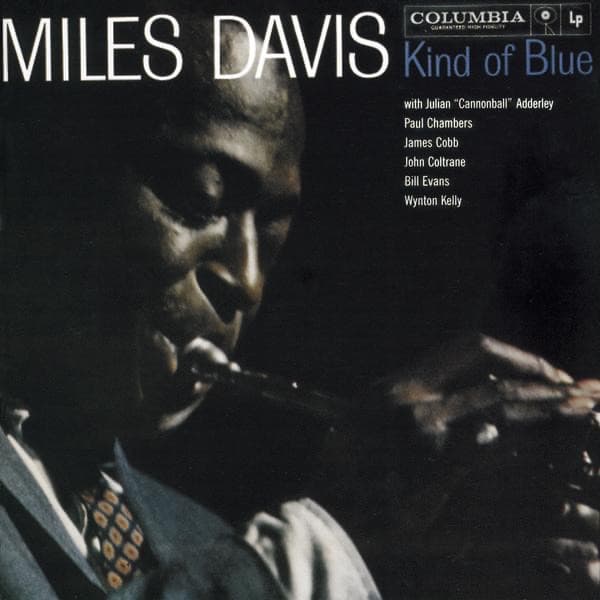
Miles Davis
Kind of Blue
Recorded in two sessions with almost no rehearsal, built on modes rather than chord changes, and still the record most people mean when they say "jazz." It sounds calm because everyone on it, Coltrane, Adderley, Bill Evans, is listening harder than they have ever listened. Put it on late at night and you will understand why it has never gone out of print.

Miles Davis
Birth of the Cool
Twelve sides cut by a nine-piece band in 1949 and 1950, with French horn and tuba, arranged by Gil Evans, Gerry Mulligan and John Lewis, and only collected onto an LP in 1957. It is bebop with the temperature turned down: soft, blended, written more than blown. West Coast jazz and the whole idea of "cool" as a sound start here.

John Coltrane
Giant Steps
Recorded in May and December 1959 and released in early 1960, Coltrane’s first album entirely of his own tunes. The title track is a harmonic obstacle course that saxophonists still treat as an exam; "Naima," for his wife, is the quiet proof that he could also write a melody you could hum. Play it after "Kind of Blue" to hear the same man take the opposite road.

Thelonious Monk
Brilliant Corners
The title tune was so hard that the band could not get through a complete take, and the version on the record is spliced together from several. That is the point: Monk’s music is full of corners, and the players, including Sonny Rollins and Max Roach, are audibly figuring it out. This is the album that finally made critics admit he was not an eccentric but a composer.
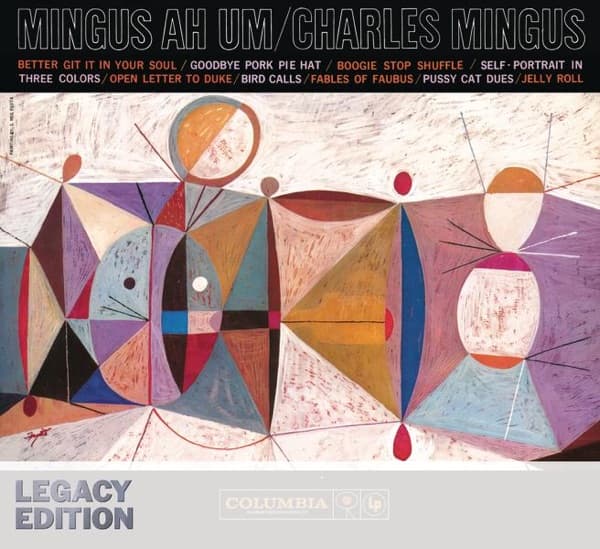
Charles Mingus
Mingus Ah Um
A tour of everything Mingus loved: a hymn for Lester Young ("Goodbye Pork Pie Hat"), a church shout ("Better Git It in Your Soul"), a protest against the governor of Arkansas ("Fables of Faubus," with the words removed at Columbia’s insistence), and nods to Ellington, Parker and Jelly Roll Morton. Loud, funny, furious and swinging, all inside forty-five minutes.

The Dave Brubeck Quartet
Time Out
An album of jazz in time signatures other than four, which Columbia thought would not sell and which became one of the best-selling jazz records ever made. "Take Five," in 5/4, written by saxophonist Paul Desmond, was the single; "Blue Rondo à la Turk," in 9/8, is the show-off piece. It is how a generation of college students learned that jazz could be a puzzle you could dance to.

Sonny Rollins
Saxophone Colossus
One afternoon in Rudy Van Gelder’s studio in New Jersey, with Tommy Flanagan, Doug Watkins and Max Roach. "St. Thomas" is a calypso that made the whole world smile; "Blue 7" is a twelve-bar blues that Rollins takes apart and rebuilds for eleven minutes. It is the hard-bop record for people who think they do not like saxophone solos.
Art Blakey and the Jazz Messengers
Moanin’
Recorded in October 1958 and released the following year, with Lee Morgan on trumpet, Benny Golson on tenor and Bobby Timmons’s title tune, a call-and-response gospel riff that a whole bar could sing back. Blakey’s drums drive like a locomotive. If hard bop has one album, this is it, and the Jazz Messengers went on being the finishing school for jazz musicians for another thirty years.

Ornette Coleman
The Shape of Jazz to Come
No piano, no fixed chords, a plastic saxophone and a pocket trumpet playing the melody together and then wandering. "Lonely Woman" opens it with the saddest tune in jazz over a bass and drums running at a different speed. Some listeners heard chaos; others heard the blues with the furniture taken out. The title was a boast, and it turned out to be true.

Duke Ellington
Ellington at Newport
Ellington’s band was thought finished until the night of July 7, 1956, when tenor player Paul Gonsalves blew twenty-seven blues choruses between "Diminuendo and Crescendo in Blue," a platinum blonde started dancing in the aisle and the crowd nearly rioted. The album put Ellington on the cover of Time and gave him another twenty years. Columbia sweetened the live tape with studio parts; the full unfaked concert came out in 1999.
Clifford Brown and Max Roach
Clifford Brown & Max Roach
Trumpeter Clifford Brown was twenty-four, did not drink or use drugs, and played with a warm, fat tone and endless ideas; drummer Max Roach had invented bebop drumming. Their quintet was the finest small band of the mid-1950s, and "Joy Spring," "Daahoud" and "Delilah" here are why. Brown died in a car crash in June 1956 at twenty-five, and jazz has been mourning him ever since.

Ella Fitzgerald
Ella Fitzgerald Sings the Cole Porter Song Book
Thirty-two Cole Porter songs on two LPs, with Buddy Bregman’s orchestra, the first release on Norman Granz’s new label and the start of the songbook series. Fitzgerald sings the verses everyone else skipped, keeps the tempos honest and makes "Ev’ry Time We Say Goodbye" sound like the best thing anyone ever wrote. It is the record that turned the pop songs of the 1930s into a canon.

Frank Sinatra
In the Wee Small Hours
Sixteen songs about being awake and alone, arranged by Nelson Riddle for strings and a small band that never rises above a murmur, and sung by a man in the middle of losing Ava Gardner. It is usually called the first concept album, and it is certainly the first one that people put on to feel worse on purpose. Play it at 3 a.m. and it will still be true.

Frank Sinatra
Songs for Swingin’ Lovers!
The other half of Sinatra: Riddle’s brass punching, the rhythm section loping, and a singer at the absolute top of his game turning "I’ve Got You Under My Skin" into a slow-building thing with a trombone solo in the middle that still makes rooms cheer. This is the sound of grown-up confidence, and it charted alongside Elvis, which tells you the decade had room for both.

Billie Holiday
Lady in Satin
Holiday’s voice was nearly gone, and she insisted on strings. What came out is one of the hardest records to listen to and one of the most necessary: a great singer at the end, using what she had left to tell you exactly what the songs mean. She died sixteen months later, under arrest in a hospital bed. "I’m a Fool to Want You" is the place to start, if you can take it.

Elvis Presley
Elvis Presley
His first LP, half Sun leftovers and half new RCA sides, was the first rock and roll album to top the album chart. "Blue Suede Shoes" opens it, and "I Got a Woman," "Tutti Frutti" and "Money Honey" tell you exactly what records he had been buying. The cover, Elvis with mouth open and guitar up in pink and green letters, was borrowed by the Clash in 1979 for "London Calling."

Chuck Berry
After School Session
Chess’s first Chuck Berry LP is a singles collection with the singles mostly left off: "School Days" and "Too Much Monkey Business" are here, "Maybellene" is not. It is still the best introduction to Berry the writer: songs about school bells, work, cars and "Havana Moon," a calypso, all in a voice that sounds delighted with itself. Johnnie Johnson’s piano rolls under everything.

Little Richard
Here’s Little Richard
Twelve songs, twenty-eight minutes, and nearly every one a hit: "Tutti Frutti," "Long Tall Sally," "Rip It Up," "Slippin’ and Slidin’," "Jenny, Jenny." The New Orleans band, with Earl Palmer on drums and Lee Allen on tenor, plays a shuffle so fast it turns into a straight eight, which is the exact moment R&B became rock and roll. It is the loudest, happiest record of the decade.

The Crickets
The "Chirping" Crickets
The only album Buddy Holly released with the Crickets in his lifetime, and the model for every self-contained rock band that followed: four young men on the cover holding their own instruments, playing their own songs. "That’ll Be the Day," "Oh, Boy!," "Not Fade Away" and "Maybe Baby" are all here. Paul McCartney bought the publishing decades later, which tells you what he thought of it.

Bo Diddley
Bo Diddley
His first LP, gathering the Checker singles from 1955 to 1958: "Bo Diddley," "I’m a Man," "Who Do You Love?," "Hey! Bo Diddley," "Pretty Thing." One rhythm, endlessly varied, with maracas, tremolo guitar and the man’s own bragging. It is the most rhythmically single-minded record in early rock, and the one the Rolling Stones and the Yardbirds wore out.
Fats Domino
Rock and Rollin’ with Fats Domino
Domino’s first LP collects singles going back to "The Fat Man" (1949), the record some people count as the first rock and roll hit, and it sounds like a New Orleans party that has been going on since before you arrived. Rolling piano triplets, Dave Bartholomew’s horns and that unbothered voice. Nothing here is trying to shock you, and it still sold in the millions.

Ray Charles
Ray Charles
Later reissued as "Hallelujah I Love Her So," this is the singles from the years when he was building soul music one 45 at a time: "I Got a Woman," "Drown in My Own Tears," "Mess Around," "Lonely Avenue." Every one is a church service that has wandered into a bar, and the horn charts, which he wrote himself, are as tight as anything in jazz.

Ray Charles
The Genius of Ray Charles
Half of it is Ray in front of a big band drawn from the Basie and Ellington orchestras, with Quincy Jones arranging; the other half is Ray with strings, singing "Come Rain or Come Shine." It is his argument that a soul singer could sing anything, and it is the blueprint for the country and pop albums he made in the 1960s. "Let the Good Times Roll" is the one to start with.

Sam Cooke
Sam Cooke
His first pop album, made for a tiny label in a hurry after "You Send Me," is mostly standards and a few originals sung so lightly that you barely notice how much control it takes. The "yodel" is everywhere. It sold to white adults and Black teenagers at once, which was the whole plan, and it is the first soul album that could be played at a dinner party.

Johnny Cash
Johnny Cash with His Hot and Blue Guitar
Sun’s first LP by anybody, and a portrait of Cash before Columbia and before the pills: "Folsom Prison Blues," "I Walk the Line," "Cry! Cry! Cry!," a Hank Williams cover and a couple of hymns. The Tennessee Two play boom-chicka-boom because that is all Luther Perkins could play, and it turned out to be all the song needed.

Muddy Waters
The Best of Muddy Waters
Chess did not think blues fans bought LPs, so Muddy’s first album was a singles collection: "Hoochie Coochie Man," "I Just Want to Make Love to You," "Rollin’ Stone," "Louisiana Blues," "I Can’t Be Satisfied." It is the record British teenagers found in import bins, and the one Keith Richards and Brian Jones bonded over on a train platform. Every song on it is a standard.

Howlin’ Wolf
Moanin’ in the Moonlight
The Wolf’s first LP gathers the Memphis and Chicago singles: "Moanin’ at Midnight," "How Many More Years," "Smokestack Lightnin’," "Evil," "I Asked for Water." Hubert Sumlin’s guitar stabs, Willie Dixon’s songs, and a voice that Sam Phillips said was where the soul of man never dies. If Muddy is the king of Chicago blues, this is the record from the dark side of the throne.

Hank Williams
Moanin’ the Blues
A ten-inch LP, eight songs, issued while he was alive: "Lovesick Blues," "Long Gone Lonesome Blues," "Honky Tonk Blues," "I’m So Lonesome I Could Cry." It is the closest thing to a Hank Williams album that Hank Williams saw, and it makes his case in twenty-two minutes: the songs are simple, the voice breaks where it should, and nothing about it has aged.
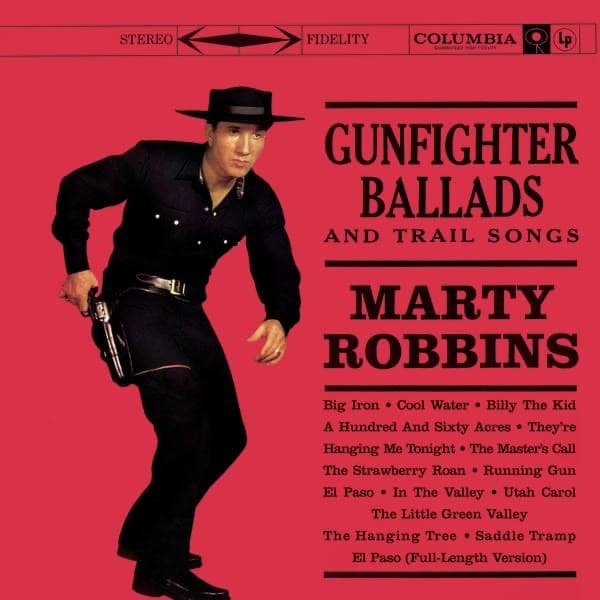
Marty Robbins
Gunfighter Ballads and Trail Songs
Twelve cowboy songs, some old and some Robbins wrote, cut in a day with two acoustic guitars, bass and harmony singers. "El Paso" and "Big Iron" are stories with beginnings, middles and dead men at the end, sung like a campfire storyteller who has all night. It sold a million, and the whole idea of the Western as an album comes from it.

The Louvin Brothers
Satan Is Real
Ira and Charlie Louvin sang gospel in a close harmony so tight it hurt, and this album of warnings about hellfire, with a cover showing the brothers in white suits in front of a twelve-foot plywood devil in a quarry that caught fire during the shoot, is the most intense thing in 1950s country. Ira, who wrote most of it, drank and raged; the songs are him arguing with himself. Emmylou Harris and Gram Parsons built a whole style on it.

Harry Belafonte
Calypso
Eleven Jamaican and Trinidadian songs, folk material dressed in Broadway arrangements with a jazz clarinetist’s band, sung by a man who had never been a calypsonian and said so. It was number one for thirty-one weeks and was the first LP by a solo artist to sell a million. "Day-O," "Jamaica Farewell" and "Man Smart (Woman Smarter)" are on it. It made the album, not the single, a place a folk singer could live.

The Kingston Trio
The Kingston Trio
Their debut, released in February 1958, was a tidy nightclub act on record: sea shanties, calypsos, a Spanish song, jokes. Track nine was "Tom Dooley." Once the single hit, the album followed it up the chart and stayed there for nearly four years. It is the sound of the folk revival at the exact moment it became a business, and it is more fun than its reputation.
Various artists, edited by Harry Smith
Anthology of American Folk Music
Eighty-four records from the late 1920s and early 1930s, chosen by an eccentric collector and sequenced by feel, with liner notes that summarize each song like a newspaper headline. Blind Lemon Jefferson, the Carter Family, Dock Boggs, Mississippi John Hurt and Uncle Dave Macon sit together with no note of race. It is the record the 1960s learned from, and it is where this whole project’s argument about roots comes from.
Odetta
Odetta Sings Ballads and Blues
A Los Angeles-raised singer trained for opera, with a voice that went from a whisper to a wall, singing prison songs, spirituals and Lead Belly with a single guitar. Bob Dylan said that hearing this record was what made him trade his electric guitar for an acoustic one. "Water Boy" and "Muleskinner Blues" are the ones that stop rooms.
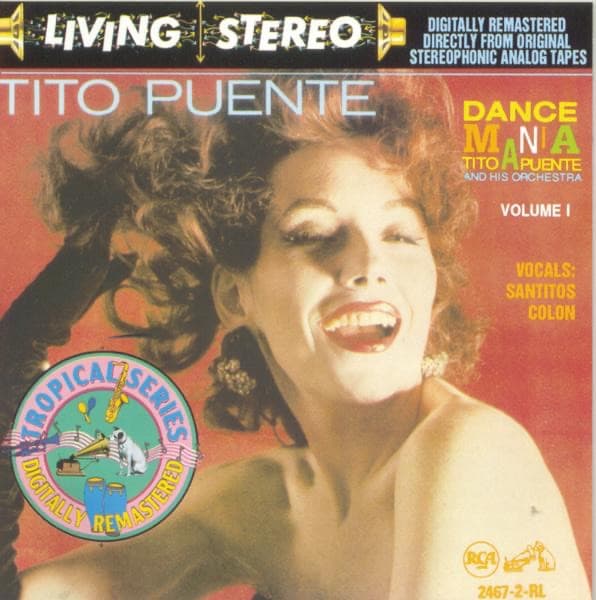
Tito Puente
Dance Mania
The Palladium on a record: timbales up front, a brass section that punches on the off-beats, Santitos Colón singing, and arrangements that came from a man who had studied at Juilliard and watched dancers for a living. "El Cayuco," "Hong Kong Mambo" and "Complicación" are the standouts. The New York Times put it on a list of the twenty-five most significant albums of the century, and every salsa band since has used it as a textbook.

Pérez Prado
Havana, 3 A.M.
Prado at the height of the mambo craze, with a big band playing his instrumentals as show tunes: brass in unison, a rhythm section on rails, and the leader’s grunts and shouts cueing the breaks. It is mambo as Hollywood heard it, glossy and thrilling. Purists preferred Machito. Dance floors did not.
Cachao
Cuban Jam Sessions in Miniature ("Descargas")
Bassist Israel "Cachao" López, who had helped invent the mambo in the 1930s, gathered Havana’s best players at four in the morning after their club gigs and recorded them jamming on Cuban dance rhythms the way jazz musicians jammed on the blues. The descarga, the Cuban jam session, was born, and so was the idea of Cuban music as something you could stretch. Salsa’s instrumental language comes from these sides.
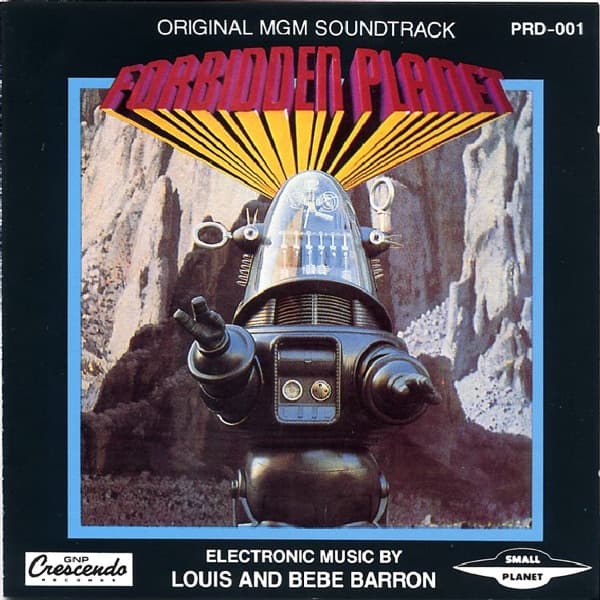
Louis and Bebe Barron
Forbidden Planet
The score was never released as a record in the 1950s; it existed only in theaters, over a Shakespeare plot set on another planet. Heard on its own, it is a set of moods built from circuits dying: the monster’s roar, the ship’s hum, Robby the Robot’s footsteps. Nothing on it is an instrument. It is the earliest thing in this chapter that sounds like it was made on a computer.
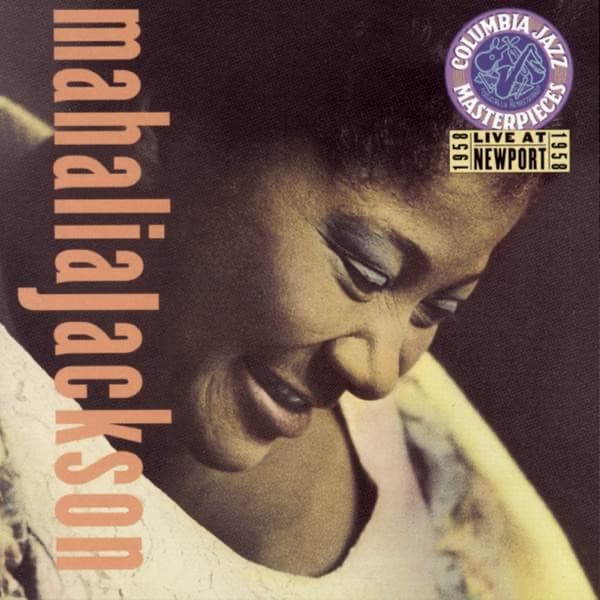
Mahalia Jackson
Newport 1958
The Sunday morning of the 1958 Newport Jazz Festival was given to gospel, and Jackson sang in the rain to a crowd that had come for Ellington. "Didn’t It Rain," "An Evening Prayer," "The Lord’s Prayer." Columbia had been polishing her records with orchestras; here she is with her own pianist and organist, singing the way she sang in church, and it is the best record she made for them.

The Staple Singers
Uncloudy Day
Vee-Jay collected the family’s singles from 1956 onward into their first LP: the title song, "Will the Circle Be Unbroken," "Help Me Jesus," "Uncloudy Day" itself. Pops Staples’s tremolo guitar drips like something from the Delta, Mavis sings from the floor, and the harmonies are so lonesome that it is easy to forget these are hymns. Dylan heard it as a teenager and never got over it.
Les Paul
The New Sound!
The album that announced sound-on-sound recording: Les Paul playing eight guitars at once, at double speed, in harmony with himself, on standards like "Brazil" and "Lover." Listeners in 1950 could not work out how it had been done. It is the first pop record where the studio, not the stage, is the instrument, and the idea runs from here to Pet Sounds and to every bedroom producer since. Mary Ford, whose stacked vocals made the duo famous, joins from the second volume in 1951.
Lonnie Donegan
Lonnie Donegan Showcase
A ten-inch LP of Lead Belly, Woody Guthrie and Lonnie Johnson songs played faster than anyone in America would have dared, with a washboard for percussion. It was a top-thirty hit in Britain, a country where LPs by anybody but Sinatra did not chart. The Quarrymen learned their first set from records like this, and George Harrison later said Donegan was where it all started for him.
The Mixtape
The decade in tracks, in the order that tells its story. Press Listen on any of them.
Rocket 88
Jackie Brenston and His Delta CatsStart with the fuzz. A damaged amplifier, a boogie piano and a song about a car: the argument about where rock and roll begins usually begins here.
It Wasn’t God Who Made Honky Tonk Angels
Kitty WellsThe first number one by a woman on the country chart, and an answer record that turned a whole genre’s blame around. Listen for how plainly she sings it.
Hound Dog
Big Mama ThorntonThe original, with the growl and the barking. Hear it before the Elvis version and the Elvis version never sounds the same again.
Your Cheatin’ Heart
Hank WilliamsReleased weeks after he died. Steel guitar, a fiddle, a voice that cracks on "weep," and not one wasted word. This is what every country song since has been trying to do.
Hoochie Coochie Man
Muddy WatersThe stop-time riff, the silence, the boast. Count the four beats of nothing before each line and you will hear the space every hard rock band has been filling since.
That’s All Right
Elvis PresleyThree instruments, slapback echo and a nineteen-year-old who does not yet know what he is doing. Play it loud and notice that there is no drummer. Nobody needed one.
I Got a Woman
Ray CharlesA gospel song with the words changed. That sounds small. It is where soul music comes from, and you can hear the church in every shout.
Earth Angel (Will You Be Mine)
The PenguinsThe slow dance. Piano triplets, a bass singer holding the floor and a lead who sounds like he means every word. Every doo-wop ballad is a variation on this one.
Bo Diddley
Bo DiddleyOne chord, maracas and a rhythm with a man’s name on it. Clap along; you already know the pattern from a hundred later records.
Maybellene
Chuck BerryA country fiddle tune rewritten as a car chase. The guitar solo is where lead guitar in rock begins, and the words are the first great rock and roll lyric.
Tutti Frutti
Little RichardThe opening line is a drum fill made of syllables. Nothing on the radio had sounded this loud, this fast or this happy about it.
Cherry Pink and Apple Blossom White
Pérez PradoTen weeks at number one in the year of "Rock Around the Clock." The trumpet slide and the grunt are the sound of the mambo craze, and half of America learned to dance to it.
Blue Suede Shoes
Carl PerkinsThe rockabilly record, by the man who wrote it. Listen to the guitar breaks: bent notes, ringing open strings, the sound George Harrison spent his teens copying.
Please, Please, Please
James Brown and the Famous FlamesOne word, begged. It is gospel with the object changed, and the whole of funk is folded up inside it waiting for the 1960s.
Day-O (The Banana Boat Song)
Harry BelafonteA Jamaican work song that became a schoolyard chant. The call and response is the same device as in the church and on the plantation; here it sold a million albums.
Uncloudy Day
The Staple SingersA hymn that sounds like the blues: Pops Staples’s shivering guitar and teenage Mavis singing from somewhere underneath the floor. Gospel and soul are one thing here.
Smokestack Lightnin’
Howlin’ WolfOne chord, a howl and a train. This is the record every British blues band tried to play and none could, because none of them had that voice.
Forbidden Planet: Main Titles (Overture)
Louis and Bebe BarronNo instruments. Circuits recorded as they burned out, slowed and layered. It is the sound of the future as 1956 imagined it, and it still sounds like nothing else.
Rock Island Line
Lonnie DoneganA Lead Belly song played by an English banjo player at twice the speed. This one record put guitars in the hands of the Beatles, the Stones and the Who.
That’ll Be the Day
Buddy Holly and the CricketsGuitar, bass, drums, a singer who writes his own songs and wears glasses. The rock band as we know it starts here, and so does the road to Liverpool.
You Send Me
Sam CookeThe prettiest voice in gospel goes pop and takes the whole church technique with it. Listen for the little run of notes on "you," the yodel that became soul singing.
Johnny B. Goode
Chuck BerryThe intro is a 1946 Louis Jordan lick doubled and sped up. It is the first thing every rock guitarist learns, and it is on a spacecraft leaving the solar system.
Tom Dooley
The Kingston TrioTwo chords and a hanging. It sold millions and put a banjo in every coffeehouse; the 1960s folk boom, Baez and Dylan included, starts with this unlikely number one.
La Bamba
Ritchie ValensA Veracruz wedding song with a rock and roll rhythm, sung in Spanish by a seventeen-year-old from the San Fernando Valley. The first Latin rock record, and still the happiest.
What’d I Say
Ray CharlesAn electric piano, a Latin beat and the Raelettes moaning back. The lyric says almost nothing; the groove says everything. Soul music is fully built by the end of this record.
So What
Miles DavisTwo chords, nine minutes, and the most famous bass line in jazz. Listen to how much space there is and how nobody rushes to fill it. That patience is the whole record.
Lonely Woman
Ornette ColemanEnd the decade at the edge. A melody that sounds like weeping, over a rhythm section running at a different speed, with no chords to hold it. The 1960s begin here, in every music.
What Came Next
By the end of 1959 Buddy Holly was dead, Elvis was in the Army, Little Richard was in the church, Jerry Lee Lewis was in disgrace, Alan Freed was out of a job and Chuck Berry was under arrest. The major labels were manufacturing polite teen idols from Philadelphia, and the newspapers said rock and roll was a fad that had run its course. In Liverpool, Lubbock, London and Detroit, teenagers who had bought every record in this chapter disagreed.
The seeds of the 1960s were all in the ground. Berry Gordy had his $800 and a house on West Grand Boulevard. Sam Cooke and Ray Charles had shown that the church could run the pop chart. Muddy Waters had toured England and left behind a generation of art students with harmonicas. The Kingston Trio had put a banjo in every dorm, and a kid in Minnesota named Zimmerman was listening to Odetta. Miles, Coltrane, Ornette and Mingus had, in twelve months, laid out every direction jazz would take for the next twenty years. And in a Cologne radio studio and a Greenwich Village apartment, people had proved that a record did not need a musician in the room at all.
What the 1960s added was scale, self-consciousness and a war. The music in this chapter was made by people who mostly did not know they were making history. The next decade would know, and would say so, loudly. Turn the page.