100 Years of Music / Chapter 5 of 11
1960s: Revolution on Wax
When rock grew long hair and a conscience, and everything around it grew with it.
Opening
The leather jacket has been traded for bell bottoms, and the jukebox just got psychedelic. Welcome to the decade that cracked rock wide open, plugged in the fuzz pedal, and let the revolution spill into the streets.
Start in Detroit, January 1959. Berry Gordy borrows eight hundred dollars from his family and puts a sign on a house on West Grand Boulevard: Hitsville U.S.A. In the garage out back, a band of jazz players nobody has heard of will cut the rhythm tracks for a decade of hits. Now jump to New York, February 1964. Four kids from Liverpool step onto Ed Sullivan's stage and seventy-three million people watch. Then Newport, Rhode Island, July 1965. A folk singer straps on a Stratocaster and the audience boos.
If the 1950s were the birth of rock and roll, the 1960s were its coming-of-age story. This decade was not just about songs. It was about movements. Civil rights. The war in Vietnam. Free love. Drug culture. The space race. Youth stopped consuming culture and became the culture, and the soundtrack was louder, stranger and more defiant than anything before it.
This was the decade rock splintered. Blues purists went electric. Folkies picked up distortion pedals. Soul singers joined marches. Garage bands became stadium acts. The Beatles rewrote the rulebook and then tore it up. The Stones got dirty. Dylan went electric. Hendrix landed from another galaxy.
And the story was bigger than rock. In Kingston the beat flipped over and reggae got its name. In New York a Dominican flute player started a label out of a car trunk and salsa followed. In Englewood Cliffs a saxophonist recorded a prayer. In a bedroom studio in Manhattan a synthesizer played Bach and sold a million copies. Nothing here started from nothing, and nothing here stayed put.
The World
The civil rights movement
On August 28, 1963, a quarter of a million people stood on the Mall in Washington while Mahalia Jackson sang and Martin Luther King Jr. spoke. The Civil Rights Act followed in 1964 and the Voting Rights Act in 1965, but the marches in Birmingham, Selma and Memphis were met with dogs, clubs and murder. The music did not stand outside this. Sam Cooke wrote a hymn about it, Nina Simone wrote a curse about it, and James Brown told a whole country to say it loud.
Vietnam and the draft
American combat troops went into Vietnam in 1965 and the draft grew with them. By 1968, the year of the Tet Offensive, half a million Americans were there and every teenager with a record player had a number coming. That is why a folk song about a hard rain, a country song from a prison, and a guitar solo that sounded like bombs falling on a wet field in upstate New York all felt like the same conversation.
Four assassinations
John F. Kennedy in Dallas, November 1963. Malcolm X in Harlem, February 1965. Martin Luther King Jr. in Memphis, April 1968. Robert Kennedy in Los Angeles, June 1968. Each one landed on the radio between the records. King was shot a couple of miles from the Stax studio, and the label that had been an integrated island in a segregated city was never quite the same.
The cassette, the 8-track and FM radio
Philips introduced the compact cassette in August 1963 and let anyone build machines for it. The 8-track cartridge, pushed by Lear and the car makers from 1965, put whole albums on the dashboard. And in 1967 a San Francisco disc jockey named Tom Donahue started playing entire album sides on KMPX-FM, no jingles, no Top 40. The single had ruled the 1950s. The album now had a delivery system.
Louder: the Marshall stack, the fuzz box, the wah pedal
Jim Marshall, a drummer with a music shop in west London, started building amplifiers in 1962 because the Who and their friends wanted more than a Fender could give. Gibson shipped the Maestro Fuzz-Tone the same year; Keith Richards used one on "Satisfaction" in 1965 and a sound that had been an accident on "Rocket 88" became a product. The Vox wah arrived in 1967 and Hendrix made it talk. Every one of these was a way of making a guitar do something a guitar was not supposed to do.
The studio becomes an instrument
At the start of the decade a pop record was a band playing in a room. By the end it was tape loops run backwards, orchestras dropped in a week later, and songs that could not be played live at all. Brian Wilson built "Pet Sounds" in layers while the rest of the band was on tour. The Beatles made "Sgt. Pepper" on four-track machines by bouncing tracks together until the hiss showed. Eight-track recorders arrived mid-decade and multiplied the possibilities.
Music on television
Ed Sullivan booked the Beatles in February 1964 and the country watched. "Top of the Pops" started on the BBC on January 1 that same year; "Shindig!" followed on ABC that autumn and "Hullabaloo" on NBC in January 1965. Motown drilled its acts in choreography and etiquette because Berry Gordy knew the Supremes would be judged on a black-and-white screen in a white living room. The Billboard Hot 100, born in 1958, became the scoreboard everyone watched.
The Summer of Love and the moon
In 1967 as many as a hundred thousand young people drifted into Haight-Ashbury in San Francisco, and the bands who played their free shows in the park, the Grateful Dead and Jefferson Airplane, turned a neighborhood into a sound. Two years later, on July 20, 1969, Neil Armstrong stepped onto the moon, and that same summer Woodstock happened, the Harlem Cultural Festival happened, and in December, Altamont. The decade ended looking up and looking over its shoulder at once.
The Sounds
Rock splinters: the British Invasion, psychedelia, the garage and the blues boom
Rock and roll looked finished in 1960. Elvis was in the army, Buddy Holly was dead, Little Richard was in the church and Chuck Berry was in court. What saved it was a bunch of British teenagers who had bought every one of those records, plus the Chess and Stax singles that never got played on American pop radio, and who re-exported the whole lot with a new swagger. The Beatles landed in New York in February 1964. The Rolling Stones, the Animals, the Kinks, the Who and the Yardbirds followed. Gritty, catchy and cool as hell, the British Invasion gave America its own music back and made rock a global business.
Then it got weird. LSD, Vietnam and civil unrest shook the culture, and the music followed. In San Francisco the Grateful Dead and Jefferson Airplane played the ballrooms and the park; in Los Angeles the Byrds, the Doors and Love; in London Pink Floyd under Syd Barrett, all kaleidoscope and abstraction. Jimi Hendrix set fire to everything, literally and figuratively. Psychedelic rock was colorful, experimental and built to sound like an altered state: wah pedals, backwards tape, extended solos, surreal lyrics, sitars and studio tricks.
Underneath the charts a grittier thing was happening in basements and garages. The Kingsmen cut "Louie Louie" in Portland in 1963 and nobody could understand the words. The Sonics in Tacoma played like their amps were on fire. The Standells, the 13th Floor Elevators, the Seeds and a thousand bands with one single each made stripped-down, shouted, attitude-first rock. It sold little at the time. It became the direct ancestor of punk.
Meanwhile the surf bands gave the early decade its sunshine. Dick Dale bent Middle Eastern melody through a drenched-in-reverb Fender and called it "Misirlou". The Ventures made the guitar instrumental a chart genre. The Beach Boys took car songs and beach songs and, under Brian Wilson, grew into the most ambitious studio band in America.
As rock expanded, a lot of players doubled down on the blues, but with volume and virtuosity. John Mayall's Bluesbreakers were a finishing school; Clapton, Peter Green and Mick Taylor all passed through. Cream turned the 12-bar into a power trio's excuse for a ten-minute jam. Fleetwood Mac under Green played it straight and beautiful. Led Zeppelin's first record, January 1969, and Blue Cheer's cover of "Summertime Blues" the year before, pointed straight at heavy metal, and Steppenwolf put the words "heavy metal thunder" into a lyric about a motorcycle in 1968. The name stuck.
The Brill Building, the Wall of Sound and the pocket symphony
Pop at the start of the 1960s was written on a schedule. In the Brill Building and the offices at 1650 Broadway, songwriting teams like Carole King and Gerry Goffin, Barry Mann and Cynthia Weil, and Jeff Barry and Ellie Greenwich turned out three-minute records for teenagers, and the Shirelles, the Crystals, the Chiffons and the Shangri-Las sang them. The girl groups were the sound of American radio between Elvis and the Beatles, and they were the sound the Beatles were copying.
Phil Spector took those songs into Gold Star Studios in Los Angeles and built a wall around them. Three pianos, four guitars, a room full of percussion, everything recorded through an echo chamber until it sounded like weather. "Be My Baby" by the Ronettes, August 1963, is the record every producer since has been trying to make. Brian Wilson has told the story of hearing it in his car and having to pull over.
What Wilson did with that lesson changed what pop could be. "Pet Sounds" in May 1966 was a sad, gorgeous album built from harpsichords, bicycle bells, a theremin and the Wrecking Crew, and it sold poorly in America and blew the Beatles' minds in London. "Good Vibrations", the single that followed in October, was cut in four studios over six months and promoted as a pocket symphony. By 1967 pop meant the studio, and the studio meant anything you could imagine.
Motown, Stax and the Queen: soul becomes the emotional backbone
As rock got white and psychedelic, soul stayed grounded, funky and full of heart. Two cities made it. In Detroit, Berry Gordy ran Motown like the car plants he had worked in: a songwriting staff (Smokey Robinson, Holland-Dozier-Holland, Norman Whitfield), a house band called the Funk Brothers in a basement studio called the Snakepit, a charm school, a quality-control meeting every Friday. Out of it came the Supremes, the Temptations, Marvin Gaye, Stevie Wonder, the Four Tops and Martha and the Vandellas, and Gordy called it the Sound of Young America because it was.
In Memphis, Stax did the opposite on purpose. A converted movie theater on East McLemore Avenue, an integrated house band (Booker T. and the M.G.'s, with Steve Cropper and Duck Dunn), horns from the Mar-Keys, no strings, no charm school. Otis Redding walked in as somebody's driver in 1962 and walked out the label's star. Sam and Dave, Carla Thomas, Rufus Thomas and Eddie Floyd made records that sounded like the room they were cut in. Down the road in Muscle Shoals, Alabama, Rick Hall's FAME studio gave Wilson Pickett and Aretha Franklin the same kind of grit.
Aretha is the hinge. Columbia had spent six years trying to make her a supper-club singer. Jerry Wexler signed her to Atlantic, flew her to Muscle Shoals in January 1967, sat her at the piano and let her lead. "I Never Loved a Man" and "Respect" came out within months and she was the Queen of Soul by summer. Sam Cooke had already shown where this could go: a gospel star who crossed over, owned his own label, and in "A Change Is Gonna Come", recorded in January 1964, wrote the movement's most beautiful song. It came out as a single eleven days after he was shot dead that December.
James Brown moves the whole band onto the one
Funk was not a genre in 1960. It was a word musicians used for a smell, a feel, something earthy. James Brown made it a way of arranging a band. On "Papa's Got a Brand New Bag" in 1965 he pushed the emphasis onto the first beat of the bar, turned the horns into a percussion section and the guitar into a scratch, and cut the chord changes down to almost nothing. "Cold Sweat", recorded in May 1967 with bandleader Pee Wee Ellis, went further: one chord for minutes at a time, and the drummer, Clyde Stubblefield, playing a pattern that would be sampled for the next fifty years.
Brown had already made the loudest live record anyone had heard, "Live at the Apollo", cut in Harlem in October 1962 with his own money because King Records did not believe in it. And in 1968, four months after King was killed, he released "Say It Loud, I'm Black and I'm Proud", a funk record with a message that landed harder than any speech.
Sly Stone took the same rhythm and integrated it, in every sense. Sly and the Family Stone were Black and white, men and women, and their records from "Dance to the Music" in 1968 through "Stand!" in 1969 sounded like the utopia the Summer of Love had promised and mostly failed to deliver. Everything in the 1970s, from Parliament to disco to hip-hop's breakbeats, starts on the one with Brown and gets its harmony from Sly.
The voice of protest, then the sound of an electric guitar at Newport
Folk was not new, but the 1960s politicized it. The revival that had started in Greenwich Village coffeehouses and at the Newport Folk Festival took Woody Guthrie, Pete Seeger and the Anthology of American Folk Music as scripture. Joan Baez, Peter, Paul and Mary, Phil Ochs and Odetta sang at rallies and on the Mall in Washington in August 1963. That same summer Peter, Paul and Mary took "Blowin' in the Wind" into the Top 5 and made a twenty-two-year-old from Minnesota the most important songwriter in America.
Bob Dylan changed songwriting and then changed it again. "The Freewheelin' Bob Dylan" in 1963 had the protest songs. "Bringing It All Back Home" in early 1965 had an electric side. Then on July 25, 1965, at Newport, he walked out with a Stratocaster and a Chicago blues band and played three songs, and part of the audience booed. "Like a Rolling Stone", released five days earlier, was six minutes long and went to number two. "Highway 61 Revisited" and "Blonde on Blonde" followed within a year. Poet, prophet, provocateur: he had decided the folk song could be anything.
Folk rock was the fallout. The Byrds took "Mr. Tambourine Man", added a twelve-string Rickenbacker and Beatles harmonies, and had a number one in June 1965. Simon and Garfunkel's producer overdubbed drums and electric guitar onto "The Sound of Silence" without telling them and made it number one in January 1966. Buffalo Springfield wrote "For What It's Worth" about a curfew riot on Sunset Strip. By 1969 Crosby, Stills and Nash were singing three-part harmony about peace, and the singer-songwriters of the next decade, Joni Mitchell, Leonard Cohen, James Taylor, were already making their first records.
The blues goes to college, then to London, then comes back louder
In 1960 the blues was a Black working-class music in Chicago, Memphis and the Delta, and its audience was aging. Two things changed that. The folk revival rediscovered the old country players: Mississippi John Hurt, Son House and Skip James were found, sometimes literally, and put on stage at Newport in front of white college kids. And in England, a generation of art students bought every Muddy Waters and Howlin' Wolf record they could find and started bands to play them.
The British blues boom is the story of one room, John Mayall's Bluesbreakers, and the players who left it. Eric Clapton left the Yardbirds because they were getting too pop, made the "Beano" album with Mayall in 1966, and somebody wrote "Clapton is God" on a London wall. He left to form Cream. Peter Green replaced him and left to form Fleetwood Mac. Mick Taylor replaced Green and left to join the Rolling Stones. The Stones themselves had named the band after a Muddy Waters song and cut their early records at Chess.
The originals were listening. Muddy Waters played Newport in 1960 and cut an album called "Electric Mud" in 1968 to chase the kids who were copying him. B.B. King crossed over to the rock audience once Bill Graham started booking him at the Fillmore, and "The Thrill Is Gone" at the very end of 1969 made it official. And when Jimi Hendrix played "Red House" or the Stones played "Little Red Rooster", a whole generation heard where rock had come from for the first time.
Modal, free, spiritual, electric: jazz takes every exit at once
Jazz entered the decade at a fork. "Kind of Blue" in 1959 had shown that you could improvise on scales instead of chord changes and make something calm and enormous. John Coltrane took the idea into "My Favorite Things" in 1960, a Broadway waltz stretched to fourteen minutes on soprano saxophone, and then into "A Love Supreme", recorded in one evening in December 1964 with McCoy Tyner, Jimmy Garrison and Elvin Jones. It is a prayer in four parts. He wrote the poem in the liner notes and then played it, syllable by syllable, on the tenor.
Ornette Coleman had already taken the other road. "Free Jazz", recorded in December 1960 with two quartets playing at once, put a name on music that abandoned chord changes altogether. Albert Ayler's "Spiritual Unity" in 1964 sounded like a New Orleans brass band having a religious experience. Sun Ra dressed his Arkestra in robes and said he was from Saturn, and "The Heliocentric Worlds" proved he had at least been somewhere. Coltrane went there too before he died in July 1967, and a lot of listeners could not follow.
Miles Davis did what Miles always did: built a new band. The second quintet, with Herbie Hancock, Wayne Shorter, Ron Carter and a seventeen-year-old drummer named Tony Williams, played standards so loosely they became new compositions. Then in February 1969 he brought electric pianos and a guitarist into the studio and made "In a Silent Way", and in August he cut the sessions that became "Bitches Brew". Hancock's "Maiden Voyage" and Wes Montgomery's "Smokin' at the Half Note" showed there was still plenty of room in the middle.
And there was bossa nova, which arrived from Rio via a saxophonist from Philadelphia. "Getz/Gilberto", released in March 1964, put Stan Getz with João Gilberto and Antônio Carlos Jobim, and the version of "The Girl from Ipanema" sung in halting English by Gilberto's wife Astrud became a worldwide hit and won Record of the Year. For a couple of years every lounge in America wanted to sound like Ipanema.
Nashville polishes it, Bakersfield roughs it up, and Cash takes it to prison
The Nashville Sound was at its peak: strings, background choirs, no fiddle, records built by Chet Atkins and Owen Bradley to sell to people who did not think they liked country. Patsy Cline was its greatest voice. "Crazy", written by a young Willie Nelson, came out in 1961; she died in a plane crash near Camden, Tennessee, on March 5, 1963, at thirty. Jim Reeves, Eddy Arnold and Glen Campbell, whose "Gentle on My Mind" and "Wichita Lineman" made him a television star, carried the polished version to the end of the decade.
Bakersfield, California, was the answer to all that. Buck Owens and his Buckaroos, with Don Rich on a Telecaster, played country like a rock band: sharp, loud, danceable, "Act Naturally" in 1963. Merle Haggard, born near Bakersfield to Dust Bowl Okies and paroled from San Quentin in 1960, wrote about himself when nobody else did. "Mama Tried" in 1968 put his own prison record in a three-minute song and only softened the sentence. "Okie from Muskogee" the next year started a fight that has not ended.
The women told the truth first. Loretta Lynn, a coal miner's daughter married at fifteen, wrote "Don't Come Home A-Drinkin' (With Lovin' on Your Mind)" in 1966 and it went to number one. Tammy Wynette recorded "Stand by Your Man" with Billy Sherrill in 1968 and it has been argued about ever since. Dolly Parton put out "Hello, I'm Dolly" in 1967 and joined Porter Wagoner's television show the same year; she was already the best songwriter in the room.
Then the rock kids came to Nashville. The Byrds, pushed by Gram Parsons, made "Sweetheart of the Rodeo" in 1968. Dylan went to Nashville for "Blonde on Blonde" and stayed for "Nashville Skyline" in 1969, singing duets with Johnny Cash. And Cash, whose career had been sunk by pills, walked into Folsom Prison on January 13, 1968, with a small band and a tape machine and came out the biggest star in the genre. Country and rock have been trading songs across that line ever since.
The church lends the movement its voice, and a youth choir crosses over
Gospel was the sound of the civil rights movement before it was anything else. The freedom songs sung in Albany, Birmingham and Selma were church songs with the words changed. Mahalia Jackson sang "How I Got Over" at the March on Washington in 1963 and, by the accounts of people who were there, called out to King during his speech to tell them about the dream. The Staple Singers, Pops and his children out of Chicago, sang "Why (Am I Treated So Bad)" for the movement and by 1968 had signed to Stax.
And gospel kept sending its children into soul. Sam Cooke came out of the Soul Stirrers. Aretha Franklin grew up in her father's New Bethel Baptist Church in Detroit and never really left it; the "sock it to me" on "Respect" is a church move. Every Motown and Stax singer had learned to phrase on a Sunday morning.
Then in 1968 a youth choir in Oakland recorded an old hymn to raise money for a trip. Edwin Hawkins rearranged "Oh Happy Day" on a two-track machine at the Ephesians Church of God in Christ, Dorothy Combs Morrison sang the lead, and a rock disc jockey at KSAN started playing it in early 1969. It went to number four on the pop chart. Contemporary gospel starts there, and George Harrison said "My Sweet Lord" was his attempt to write another one.
Ska, rocksteady, and the record that gave reggae its name
Jamaica became independent in August 1962, and the music of that summer was ska: American R&B played by Kingston jazz musicians with the accent flipped onto the offbeat. Clement "Coxsone" Dodd opened Studio One on Brentford Road in 1963, the first Black-owned studio on the island, and the house band he assembled became the Skatalites in 1964. "Guns of Navarone" and "Simmer Down" are what they sounded like. That second one was the first hit for a teenage vocal group called the Wailers, who would go on to be Bob Marley's band.
By 1966 the tempo dropped. Rocksteady was slower, sweeter, with the bass out front and vocal groups like the Paragons and the Techniques singing American soul harmonies over it. It lasted about two years. In 1968 the beat changed again, choppier and more driven, and Toots Hibbert of the Maytals wrote a song called "Do the Reggay" that named it. Lee "Scratch" Perry, who had worked for Dodd, put out "People Funny Boy" the same year with a crying baby on it, one of the first records with the new feel and a producer already treating the studio as a toy.
None of this was heard much outside Jamaica and the West Indian neighborhoods of London, where Trojan Records started in 1968. But the machinery was in place: sound systems, versions, producers as auteurs, a bass-first way of hearing. The next decade would send it around the world.
Boogaloo in the Bronx, Fania in a car trunk, and Tropicália under a dictatorship
New York Latin music in the early 1960s was the mambo generation getting older. Then the kids who had grown up on both Tito Puente and Motown made boogaloo: Cuban rhythm, English lyrics, a soul backbeat and handclaps. Joe Cuba's "Bang! Bang!" in 1966 and Pete Rodríguez's "I Like It Like That" in 1967 were the hits. It ran for a few years, and most of the established bandleaders ended up cutting boogaloo records themselves to keep up. It proved there was a Latin audience that also bought R&B.
In 1964 a Dominican flautist named Johnny Pacheco and a lawyer named Jerry Masucci started a label and called it Fania, after an old Cuban song. They sold records from the trunk of a car in Spanish Harlem. By 1967 they had signed a teenage trombonist from the Bronx called Willie Colón, and by 1968 they had a house orchestra, the Fania All-Stars. Eddie Palmieri, working across town with two trombones and a rougher sound, cut "Azúcar Pa' Ti" in 1965. Nobody was calling it salsa yet. They would.
Brazil had bossa nova, which went global through Getz and Gilberto, and then Sérgio Mendes made it pop with "Mas Que Nada" in 1966. Under the military dictatorship that took power in 1964, Caetano Veloso, Gilberto Gil, Gal Costa, Tom Zé and Os Mutantes made Tropicália: Brazilian song swallowing the Beatles, Hendrix and the avant-garde whole. The collective album "Tropicália ou Panis et Circencis" came out in 1968. By the end of that year Veloso and Gil were in jail, and then in exile in London. And at Woodstock in August 1969, a young Mexican-American guitarist from San Francisco named Carlos Santana played "Soul Sacrifice" with a conga player and a timbalero and told rock what it had been missing.
Oscillators, tape loops and the Moog: the machines learn to sing
Electronic music in 1960 lived in university studios and radio workshops, and it was mostly unlistenable on purpose. The BBC Radiophonic Workshop changed that by accident. In 1963 Delia Derbyshire realized Ron Grainer's theme for a new children's science fiction show called "Doctor Who" by cutting and splicing tape of oscillators and a single plucked string, note by note, and it became the first electronic signature tune on television. Millions of British children heard the future every Saturday and did not know it.
Terry Riley's "In C", premiered in San Francisco in November 1964 with Steve Reich in the band, was written for acoustic instruments but thought like a machine: fifty-three short patterns, a pulse, and players who move through them at their own speed. It is the founding document of minimalism and the reason a lot of electronic music since has been built on loops. The Beatles, meanwhile, made "Tomorrow Never Knows" in April 1966 from tape loops running on five machines at once, with the engineers holding pencils to keep them taut.
Robert Moog showed his modular synthesizer at an audio engineering convention in 1964. Wendy Carlos, who had met him there, built a studio in a Manhattan apartment and in late 1968 released "Switched-On Bach" on Columbia Masterworks: Bach played one line at a time on a monophonic Moog and stacked on an eight-track. It sold over a million copies and made the synthesizer a real instrument. Silver Apples, a New York duo with a home-built stack of oscillators, put out one of the first electronic rock records the same year. The Monkees, Simon and Garfunkel and the Byrds all bought Moogs. The 1970s were going to be loud in a new way.
Raw power before it had a name
Punk did not exist in 1969. Everything it would need did. The garage bands of the mid-decade had already stripped rock back to three chords and a shout. The Velvet Underground, managed by Andy Warhol and ignored by everyone else, had put out a record in March 1967 about heroin and sadomasochism with a viola droning through it, and sold almost nothing. Brian Eno later said everybody who bought it started a band.
Detroit finished the job. The MC5 recorded "Kick Out the Jams" live at the Grande Ballroom over two nights in October 1968, with a manager who ran a political party and an opening line that got the record pulled from a Detroit department store chain. Down the road in Ann Arbor, the Stooges, with a singer who called himself Iggy and treated the stage as a contact sport, released their first album in August 1969: "I Wanna Be Your Dog" is three chords, a sleigh bell and one piano note hammered for three minutes. In 1976 the kids at CBGB and the 100 Club would know every word.
Timeline
Coltrane stretches "My Favorite Things" to fourteen minutes
John Coltrane had just left Miles Davis and formed his own quartet with McCoy Tyner and Elvin Jones. In October 1960 he recorded a Broadway waltz from "The Sound of Music" on soprano saxophone, an instrument almost nobody in jazz played, and let it circle for a quarter of an hour on two chords. Released in March 1961, it was a hit by jazz standards and the template for the modal, hypnotic music of the next seven years.
Motown gets its first million-seller with "Shop Around"
Berry Gordy had started Tamla with an eight-hundred-dollar family loan in January 1959 and bought a house on West Grand Boulevard with a photo studio out back. Smokey Robinson and the Miracles' "Shop Around", recut in the middle of the night because Gordy did not like the first version, went to number one on the R&B chart and number two pop in early 1961. The assembly line was working.
Ornette Coleman records "Free Jazz" with two quartets at once
On December 21, 1960, Ornette Coleman put two quartets in a New York studio, one in each stereo channel, and recorded thirty-seven minutes of collective improvisation with no chord changes and no set melody. Atlantic released it in 1961 with a Jackson Pollock painting on the cover. The title became the name of a movement, and Lou Reed, Albert Ayler and a generation of rock and jazz musicians took it as permission.
Patsy Cline records "Crazy", written by a young Willie Nelson
Cline had a hit with "I Fall to Pieces" that spring and broke both her wrists in a car crash in June. On crutches, she cut "Crazy" at Owen Bradley's Nashville studio in one take of the vocal, over a track built with piano, the Jordanaires and a shimmer of strings. It is the Nashville Sound at its most complete: country feeling in a pop dress. The Country Music Hall of Fame calls it the most-played jukebox record ever.
Ray Charles cuts "Modern Sounds in Country and Western Music"
Charles had already fused gospel and R&B in the 1950s. In 1962 he took Hank Williams, Don Gibson and the Everly Brothers and sang them with strings and a big band. "I Can't Stop Loving You" was number one for five weeks. A Black artist had made the biggest country-derived record of the year at the height of the civil rights struggle, and he had shown country and soul that they were cousins.
"Green Onions" gives Stax a house band and a sound
Booker T. Jones, Steve Cropper, Lewie Steinberg and Al Jackson Jr. were killing time in the Stax studio on East McLemore Avenue when they hit on a twelve-bar organ groove. It went out in the summer of 1962 as Volt 102, sold fast enough regionally that Stax told the plant to change the stampers and press it on the parent label, entered the Hot 100 in August and reached number three. An integrated band in segregated Memphis had just become the M.G.'s, and every Otis Redding, Sam and Dave and Wilson Pickett record for the rest of the decade was built on that room and those players.
James Brown pays for his own "Live at the Apollo"
King Records did not think a live album would sell, so Brown paid the recording costs himself and taped his show at the Apollo Theater in Harlem on October 24, 1962. The record, released in May 1963, is a document of the hardest-working band in show business at full stretch: screams, false endings, a ten-minute "Lost Someone" and an audience so loud it sounds like another instrument. It went to number two on the album chart and made him a national star.
Otis Redding arrives at Stax as a guitarist's driver
Redding drove Johnny Jenkins to Memphis for a session that went nowhere. With studio time left over, he asked to sing. "These Arms of Mine", cut that afternoon, was a small hit in early 1963 and the beginning of the partnership between Redding, Steve Cropper and the M.G.'s that defined Southern soul. Nobody had a bigger range than his emotion, and nobody at the label worked harder.
Coxsone Dodd opens Studio One in Kingston
Clement "Coxsone" Dodd had run a sound system since the 1950s and cut records for it in rented rooms. In 1963 he opened his own studio on Brentford Road, the first Black-owned recording studio in Jamaica. Its house band would become the Skatalites, its Sunday auditions would find the Wailers, Toots and the Maytals, Alton Ellis and Burning Spear, and its rhythm tracks would be versioned for the next fifty years. Reggae's Motown, one year after independence.
Patsy Cline dies in a plane crash at thirty
Flying home from a benefit in Kansas City, Cline's small plane went down in bad weather near Camden, Tennessee, on March 5, 1963, killing her, Cowboy Copas and Hawkshaw Hawkins. She had been the biggest female singer in country and had already broken the genre's rules by headlining over men and singing pop material. She was the first solo woman elected to the Country Music Hall of Fame, in 1973.
"The Freewheelin' Bob Dylan" turns a folk singer into a songwriter
Dylan's first album had two originals. His second, released May 27, 1963, had eleven, including "Blowin' in the Wind", "Masters of War", "A Hard Rain's a-Gonna Fall" and "Don't Think Twice, It's All Right". He was twenty-two. The record made the topical song a form for poets and made a Columbia contract worth having; within two years everybody with a guitar was writing their own material because he had.
The March on Washington puts the movement's music on television
On August 28, 1963, Mahalia Jackson sang "How I Got Over" on the steps of the Lincoln Memorial, Marian Anderson sang, and Joan Baez, Odetta, Peter, Paul and Mary, and Bob Dylan performed before Martin Luther King Jr. spoke. Peter, Paul and Mary's version of "Blowin' in the Wind" was at number two on the pop chart that week. Sam Cooke watched on a hotel television and decided that a Black man should write a song like that too.
Phil Spector builds the Wall of Sound around "Be My Baby"
Ronnie Spector sang it; Hal Blaine's drum intro and a Gold Star Studios echo chamber packed with pianos, guitars, castanets and strings did the rest. Released in August 1963 on Philles, the Ronettes' debut single went to number two. Spector called his records little symphonies for the kids. Brian Wilson said hearing this one in his car changed his life, and "Pet Sounds" three years later was his answer to it.
Thirteen-year-old Stevie Wonder tops the Hot 100 with a live recording
"Fingertips, Part 2" was cut on stage at Chicago's Regal Theater during a Motortown Revue: a harmonica jam, a false ending, and a bass player audibly asking what key they were in. In August 1963 it went to number one on the Hot 100, and Motown's second pop chart-topper after the Marvelettes' "Please Mr. Postman" in 1961. It is usually called the first live recording to top that chart, a claim that turns on what anyone counts as a live single. Little Stevie Wonder, blind since infancy, was the youngest artist ever to top the chart.
Nina Simone releases "Mississippi Goddam"
Simone wrote it in under an hour in September 1963, after the Birmingham church bombing killed four girls and Medgar Evers was murdered in Mississippi. She called it a show tune for a show that had not been written yet. Recorded live at Carnegie Hall in front of a mostly white audience and released on "Nina Simone in Concert" in 1964, it was banned in several Southern states, and Simone changed the second line at every march she played for the rest of the decade.
Johnny Pacheco and Jerry Masucci found Fania Records
A Dominican flautist and a Brooklyn divorce lawyer named the label after an old Cuban song and released Pacheco's "Cañonazo". They delivered the records to Spanish Harlem shops from the trunk of a car. Within four years Fania had signed Willie Colón, Larry Harlow and Bobby Valentín and formed the Fania All-Stars, and the word for what they were doing, salsa, was on its way.
The Beatles play "The Ed Sullivan Show"
They landed at the newly renamed Kennedy Airport on February 7, 1964 with "I Want to Hold Your Hand" already at number one. Two nights later, seventy-three million people, close to forty percent of the country, watched them play five songs on CBS. The British Invasion starts here: within months the Dave Clark Five, the Animals, the Kinks, the Rolling Stones and the Who were on American radio, and every garage in the country had a band in it.
The Wailers' "Simmer Down" is number one in Jamaica
Bob Marley was eighteen, Peter Tosh and Bunny Wailer were teenagers, and the song was a warning to the rude boys of Trench Town to cool it, cut at Studio One with the players who were about to become the Skatalites. It sold tens of thousands of copies on the island and topped the Jamaican chart in February 1964. Ska at full speed, with the horns riffing on the offbeat and a vocal group that would carry Jamaican music around the world within a decade.
The Supremes start a run of five straight number ones
Holland-Dozier-Holland wrote "Where Did Our Love Go" for the Marvelettes, who turned it down. The Supremes, who had gone three years at Motown without a hit, cut it with foot stomps for a beat and Diana Ross singing low and cool, and it topped the Hot 100 on August 22, 1964. "Baby Love", "Come See About Me", "Stop! In the Name of Love" and "Back in My Arms Again" followed, each one number one. No American group had done that. Berry Gordy had a product that could beat the Beatles.
The Kinks cut "You Really Got Me" through a slashed speaker
Dave Davies has always told it the same way: he took a razor blade to the cone of a small green Elpico amplifier to get a sound rougher than any fuzz box. His brother Ray wrote a riff that moves in two-chord jumps like a fist. Released in August 1964, it went to number one in Britain and the Top 10 in America. Heavy metal and punk both claim it as an ancestor, and both are right.
Terry Riley premieres "In C" in San Francisco
Riley heard the whole thing on a night bus home from a piano-bar job: fifty-three short phrases, all in C, that any number of players move through at their own pace over a pulsing high C. It was first performed at the San Francisco Tape Music Center in November 1964 with Steve Reich, Pauline Oliveros and Morton Subotnick in the ensemble. Columbia recorded it in 1968 and printed the score inside the sleeve. Minimalism, and a good deal of later electronic music, begins with this piece.
John Coltrane records "A Love Supreme" in one evening
On December 9, 1964, at Rudy Van Gelder's studio in Englewood Cliffs, New Jersey, Coltrane, McCoy Tyner, Jimmy Garrison and Elvin Jones cut a four-part suite in a single session. The opening bass figure turns out, at the end of the first movement, to be the words of the title, which Coltrane chants. In the last movement he plays the poem printed on the sleeve, one note per syllable. Released early in 1965, it is the record that made a jazz album a spiritual object for people who did not otherwise listen to jazz.
"A Change Is Gonna Come" comes out eleven days after Sam Cooke is shot
Cooke wrote it after hearing "Blowin' in the Wind" and after being turned away from a whites-only motel in Shreveport, Louisiana. He recorded it on January 30, 1964 with a full orchestra, and it appeared on an album that spring. On December 11, 1964 he was shot dead by a motel manager in Los Angeles. The single, released December 22, became the civil rights movement's hymn and the song every soul singer since has had to measure themselves against.
Smokey Robinson gives the Temptations "My Girl"
Robinson wrote it about his wife Claudette, taught it to the group in a dressing room at the Apollo, and gave the lead to David Ruffin, whose voice was, in Otis Williams' words, sandpaper and honey. James Jamerson's bass line and Robert White's climbing guitar figure open it. Released December 21, 1964 on the Gordy label, it was number one by March 1965, the Temptations' first, and the template for every Motown ballad after it.
James Brown moves the beat to the one: "Papa's Got a Brand New Bag"
Recorded in February 1965 in Charlotte, North Carolina, and released that summer, "Papa's Got a Brand New Bag" put the weight of the whole band on the first beat of the bar, chopped the guitar into a rhythm instrument and used the horns as punctuation. It was a Top 10 pop hit and eight weeks at number one R&B, and it won Brown his first Grammy. Musicians heard it as a different way of counting. It is the first funk record, or close enough that the argument does not matter.
Keith Richards plugs in a fuzz box for "Satisfaction"
Richards has always said the riff came to him in his sleep in a Florida motel, and that he got it onto a cassette machine and went back to bed. In the studio he ran it through a Gibson Maestro Fuzz-Tone as a placeholder for a horn part that never got recorded. Released in America in June 1965, it was the Rolling Stones' first US number one and the moment the band stopped being a blues cover act and became the anti-Beatles: raw, bored, dangerous.
The Byrds invent folk rock with "Mr. Tambourine Man"
Roger McGuinn played a twelve-string Rickenbacker he had bought after seeing "A Hard Day's Night", the Wrecking Crew played everything else, and the Byrds sang a Dylan song in Beatles harmony. It was number one on June 26, 1965, the first Dylan composition to top the American chart. Dylan came to hear them at Ciro's on the Sunset Strip and saw where his songs could go with a drummer.
Dylan goes electric at Newport
"Like a Rolling Stone" came out on July 20, 1965: six minutes long, an organ part played by a guitarist who had never played organ, and a chorus that was a question. Five days later at the Newport Folk Festival Dylan walked out with the Paul Butterfield Blues Band, played three electric songs, and part of the crowd booed. Sources still argue about whether it was the sound, the volume or the short set. What is not in dispute is that the folk revival's biggest star had just left it.
"Highway 61 Revisited" makes the rock album a literary form
Released August 30, 1965, five weeks after Newport, and named for the road that runs from Dylan's Minnesota to the Mississippi Delta. Mike Bloomfield's guitar, Al Kooper's organ, a police whistle, and nine songs that read like Beat poetry set to Chicago blues, ending with the eleven-minute "Desolation Row". The Beatles heard it and started writing differently. So did everyone else.
The Who stutter through "My Generation"
Pete Townshend wrote it as a mod anthem and Roger Daltrey sang it with a stammer that the BBC worried was mocking people who stuttered. John Entwistle took a bass solo, which was not done. The song rose through several keys and ended in feedback. Released in Britain in October 1965, it reached number two there. The line about hoping to die before getting old became the decade's most quoted and least followed piece of advice.
"Rubber Soul" starts the album race
Released December 3, 1965, and made in about a month, "Rubber Soul" had a sitar on "Norwegian Wood", a fuzz bass on "Think for Yourself", a harmonium, and no filler. Capitol issued it in America with no singles pulled from it, so people had to buy the whole record. Brian Wilson heard it, decided the Beach Boys had to answer it, and made "Pet Sounds". The Beatles heard "Pet Sounds" and made "Sgt. Pepper". The album, not the single, was now the unit of ambition.
Boogaloo: Joe Cuba's "Bang! Bang!" puts a backbeat under the clave
Puerto Rican and Cuban kids in East Harlem and the Bronx had grown up on mambo and on Motown, and boogaloo was what happened when they stopped choosing. Joe Cuba's sextet cut "Bang! Bang!" with an English chorus, a shuffle beat, piano montuno and a crowd whooping in the studio, and it sold to kids who bought R&B singles as well as mambo records. Boogaloo ran a few years, and rather than sneer at it most of the established salsa bandleaders cut boogaloo sides of their own to keep up. Fania, founded two years earlier, had its evidence that a young bilingual audience existed.
"Pet Sounds": Brian Wilson composes with the studio
Wilson stopped touring in 1964 and stayed in Los Angeles writing. With lyricist Tony Asher and the Wrecking Crew he built tracks out of harpsichord, bass harmonica, bicycle bells, a theremin and dogs barking, and had the band add their harmonies when they got home. Released May 16, 1966, it disappointed Capitol and confused American fans. In London, Paul McCartney called "God Only Knows" the greatest song ever written. The album was the response to "Rubber Soul" that inspired "Sgt. Pepper".
"Clapton is God": the British blues boom produces Cream
Eric Clapton left the Yardbirds because they wanted hits, joined John Mayall's Bluesbreakers, and made an album in 1966 with a Les Paul turned up so loud the engineer complained. Someone painted "Clapton is God" on a London wall. In July 1966 he formed Cream with Jack Bruce and Ginger Baker, the first supergroup and the first power trio, and blues rock became a genre with a ten-minute solo in the middle of it. Jimi Hendrix arrived in London that autumn and sat in with them.
"Revolver" and the tape loops of "Tomorrow Never Knows"
The first song recorded for "Revolver", in April 1966, was its last track: one chord, a drum pattern that sounds like a machine, John Lennon's voice run through a rotating Leslie speaker, and five tape loops the band had made at home, played on machines around Abbey Road with engineers holding pencils to keep the tape taut. "Eleanor Rigby" had a string octet and no Beatles playing. Released August 5, 1966, "Revolver" is the point at which the studio became the band's main instrument. They played their last concert three weeks later.
Aretha Franklin sits down at the piano in Muscle Shoals
Columbia had spent six years and nine albums trying to make Franklin a jazz-pop singer. Jerry Wexler signed her to Atlantic and on January 24, 1967 took her to Rick Hall's FAME studio in Muscle Shoals, Alabama, where the plan was to let her play piano and lead the white Southern rhythm section herself. They cut "I Never Loved a Man (The Way I Love You)" in an afternoon before the session collapsed in a fight. The single was out within weeks. She was twenty-four and she had found her sound.
The Doors release their debut with a seven-minute "Light My Fire"
Released January 4, 1967 on Elektra, "The Doors" mixed Ray Manzarek's organ bass lines, Robby Krieger's flamenco-inflected guitar, John Densmore's jazz drumming and Jim Morrison's baritone reading of Blake and Céline. "Light My Fire" ran seven minutes on the album; the single, cut to three, was number one that July. "The End" closed the record with an eleven-minute Oedipal drama that got them fired from the Whisky a Go Go. Los Angeles psychedelia had its dark side.
"The Velvet Underground & Nico" sells almost nothing
Andy Warhol paid for it, put a peelable banana on the cover and added a German model named Nico as singer. Lou Reed wrote about heroin, amphetamines and whips; John Cale played a viola drone under it; Moe Tucker stood up at the drums. It came out on Verve in March 1967; the exact day is not documented, and March 12 is the date convention has settled on. Verve barely promoted it, a lawsuit over the back cover forced a recall, and it never charted above 171. Everybody who bought one, the story goes, started a band. Punk, art rock and indie all start here.
Aretha spells it out: "Respect"
Otis Redding's 1965 original was a man asking for his due when he got home. Franklin and her sister Carolyn rearranged it at the piano, added the spelled-out chorus and the "sock it to me" refrain, and cut it in New York on Valentine's Day 1967 with King Curtis on saxophone. Released in April, it was number one on the pop chart by June and the Queen of Soul had a crown. Women heard one thing in it, the movement heard another, and Redding said the girl had taken his song.
The Jimi Hendrix Experience releases "Are You Experienced"
Chas Chandler of the Animals found Hendrix playing in a Greenwich Village club in 1966, took him to London, and paired him with Noel Redding and Mitch Mitchell. The album, released in Britain on May 12, 1967 and in America in August with a different track list, had "Purple Haze", "Hey Joe", "The Wind Cries Mary", "Foxy Lady" and a title track that ran the guitar backwards. He played feedback like a melody. Nobody had done this, and the guitar has not recovered.
"Sgt. Pepper's Lonely Hearts Club Band"
Released in Britain on May 26, 1967 and in America the following week (some sources give June 1, others June 2), it was the Beatles' answer to "Pet Sounds": a fictional band, a gatefold sleeve with the lyrics printed, a crowd of cardboard celebrities, and songs that ran into one another. "A Day in the Life" ended with a forty-piece orchestra climbing to a chord that hangs for forty seconds. It was recorded on four-track machines over five months. For a summer it was the record everybody on earth was listening to at once.
The Monterey International Pop Festival
June 16 to 18, 1967, at the county fairgrounds, organized by Lou Adler and John Phillips of the Mamas and the Papas with the acts playing for free. Otis Redding won over the hippies with the Stax band behind him. Janis Joplin with Big Brother stopped the show. The Who smashed their gear, and then Jimi Hendrix, unknown in America, set his Stratocaster on fire. Ravi Shankar played a four-hour set. D.A. Pennebaker filmed it, and the first great rock festival became the template for Woodstock.
James Brown and Pee Wee Ellis cut "Cold Sweat"
Recorded in Cincinnati in May 1967 and released as a two-part single in July, "Cold Sweat" is one chord for most of seven minutes. Bandleader Alfred "Pee Wee" Ellis wrote the horn line from a Miles Davis lick; Clyde Stubblefield played a drum pattern so loose and exact that it became one of the most sampled bars in hip-hop. Brown shouts for a drum break and gets one. Funk, which "Papa's Got a Brand New Bag" had started, is finished here.
John Coltrane dies at forty
Coltrane died of liver cancer on July 17, 1967, in Huntington, New York. In the two and a half years since "A Love Supreme" he had pushed further out: "Ascension" with eleven players, "Meditations", "Interstellar Space" as a duo with drummer Rashied Ali. Some listeners followed him and some could not. Albert Ayler played at the funeral. Jazz lost its center of gravity, and the spiritual and free strands he had held together went their own ways.
Otis Redding dies; "(Sittin' On) The Dock of the Bay" is a posthumous number one
Three days after finishing the vocal, Redding's plane went into a Wisconsin lake on December 10, 1967, killing him and four of the Bar-Kays. He had written the song on a houseboat in Sausalito after Monterey, and Steve Cropper finished it with a whistled outro where a verse should have been. Released January 8, 1968, it was number one in March, the first posthumous number one on the Hot 100. He was twenty-six.
Toots and the Maytals name the music: "Do the Reggay"
By 1968 the slow rocksteady beat had sped up and started to chop, and nobody had a word for it. "Reggay" was a passing Kingston dance; Toots Hibbert put it in a song title, produced by Leslie Kong, and the name stuck to the music. The same year Lee "Scratch" Perry cut "People Funny Boy" with a crying baby on it, one of the first records in the new rhythm and the first sign of a producer who would treat the studio as an instrument in itself.
Johnny Cash records "At Folsom Prison"
Cash had been asking Columbia to let him record in a prison for years; new producer Bob Johnston said yes. On January 13, 1968, with the Tennessee Three, Carl Perkins, June Carter and the Statler Brothers, he played two shows for the inmates of Folsom State Prison in California and opened with "Folsom Prison Blues". Released in May, the album went gold before the year was out, put him on FM rock radio, got him a network television show and made him the country singer the counterculture trusted.
Merle Haggard releases "Mama Tried"
Haggard was born near Bakersfield to Oklahoma migrants, did time in San Quentin, and saw Johnny Cash play there in 1958. "Mama Tried" is that life in three minutes with the facts softened: he was not serving life without parole, but the rest is true. It was number one on the country chart for four weeks in the summer of 1968. Bakersfield had a poet, and country music had a new way of telling the truth about its singers.
Tropicália: Caetano Veloso and Gilberto Gil swallow the world
Brazil had been under military rule since 1964. Veloso and Gil, with Gal Costa, Tom Zé, Os Mutantes and the arranger Rogério Duprat, put out the collective album "Tropicália ou Panis et Circencis" in July 1968: bossa nova, Beatles, Hendrix, tango, twelve-tone music and military marches at once. Veloso's own song "Tropicália" opened his solo album the same year. Purists booed them at festivals for using electric guitars. In December the regime jailed both men, and in 1969 sent them into exile in London.
"Say It Loud, I'm Black and I'm Proud"
Martin Luther King Jr. was killed in Memphis on April 4, 1968. The next night James Brown played a scheduled show at Boston Garden that the city put out live on television to keep people at home. Boston stayed quieter that week than most American cities, and how much of that was the broadcast is argued: Mayor Kevin White holding the police back and community leaders working the streets are credited alongside it. In August he recorded "Say It Loud" in Los Angeles with a chorus of children shouting the response, and it was number one R&B for six weeks. Some white radio stations dropped him. He said later it cost him part of his audience and that he would do it again.
Tammy Wynette records "Stand by Your Man"
Written with producer Billy Sherrill in a quarter of an hour at the end of a session, sung with a catch in the voice that gives the title away, and number one on the country chart in the autumn of 1968. Wynette always insisted the key line was "after all, he's just a man". Feminists heard a surrender; she heard a promise. The argument has outlasted everybody who started it, which is one definition of a standard.
"Switched-On Bach" makes the Moog an instrument
Robert Moog had first shown his modular synthesizer at an audio engineering convention in 1964. Wendy Carlos, who met him there, assembled one in a Manhattan apartment along with a home-built eight-track recorder and, with producer Rachel Elkind, played Bach on it one line at a time, retuning between takes because the oscillators drifted with the temperature. Columbia Masterworks released it in late 1968. It sold over a million copies, won three Grammys, and every rock band with money went out and bought a Moog.
Marvin Gaye's "I Heard It Through the Grapevine"
Norman Whitfield and Barrett Strong wrote it in 1966. Gaye cut it in 1967 and Berry Gordy shelved it; Gladys Knight and the Pips had the hit instead. Whitfield slipped Gaye's slower, darker version onto an album, disc jockeys found it, and Motown put it out as a single on October 30, 1968. It was number one for seven weeks, the label's biggest seller to that point. The tambourine, the electric piano and the dread in Gaye's voice point straight at "What's Going On".
"Led Zeppelin": the blues, heavier than it has ever been
Jimmy Page built the band out of the ashes of the Yardbirds with Robert Plant, John Paul Jones and John Bonham, recorded the album in about thirty-six hours of studio time, and released it in America on January 12, 1969 before Britain had heard of them. "Dazed and Confused", "Communication Breakdown" and a cover of "You Shook Me" defined the template: blues form, a drummer who hit like a heavyweight, and a volume that needed stadiums. "Led Zeppelin II" and "Whole Lotta Love" followed in October. Heavy metal now had a business model.
Sly and the Family Stone: "Everyday People" and "Stand!"
Sly Stone's band was Black and white, men and women, a trumpet player and a drummer who could both sing, and "Everyday People", number one on the pop chart in February 1969, was the mission statement. "Stand!", released in May, had "I Want to Take You Higher", "Sing a Simple Song" and a thirteen-minute jam. They played both Woodstock and the Harlem Cultural Festival that summer. Funk with harmony, psychedelia with a groove, and the last optimistic record of the decade.
Miles Davis goes electric: "In a Silent Way" and the "Bitches Brew" sessions
On February 18, 1969, Miles brought three electric keyboard players, including Herbie Hancock and Chick Corea, and the guitarist John McLaughlin into a New York studio and recorded a few long takes that producer Teo Macero spliced into two side-long pieces. "In a Silent Way" came out in July. In August, over three days, he cut the sessions for "Bitches Brew", released the following March, louder, longer and built like a rock record. Fusion, and the argument about it, start here.
An Oakland youth choir takes "Oh Happy Day" into the Top 5
Edwin Hawkins rearranged an eighteenth-century hymn for the Northern California State Youth Choir and recorded it on two tracks at the Ephesians Church of God in Christ in Oakland to raise money for a trip. Five hundred copies were pressed. A rock disc jockey at KSAN started playing it early in 1969, Buddah Records won a bidding war, and with Dorothy Combs Morrison's lead it went to number four on the pop chart and number two in Britain. Contemporary gospel dates from this record.
The Harlem Cultural Festival
Six free Sunday concerts in Mount Morris Park from June 29 to August 24, 1969, drew close to three hundred thousand people. Stevie Wonder, Sly and the Family Stone, Nina Simone, B.B. King, Mahalia Jackson, the Staple Singers, Gladys Knight and the Pips, Mongo Santamaría and the 5th Dimension played; the Black Panthers handled security after the police declined. Forty hours of film sat in a basement for fifty years until Questlove cut it into "Summer of Soul" in 2021. It was Woodstock's equal and hardly anyone outside Harlem knew.
Woodstock
August 15 to 18, 1969, on Max Yasgur's dairy farm in Bethel, New York. The organizers expected fifty thousand; more than four hundred thousand came, the fences came down, and it became a free festival in the rain. Richie Havens opened, Santana's "Soul Sacrifice" on the Saturday made an unknown band famous, Sly played at three in the morning, and Jimi Hendrix closed on Monday morning to a thinned crowd with a "Star-Spangled Banner" full of feedback bombs and sirens. The film made it a myth. For three days the counterculture looked like a country.
Detroit: "Kick Out the Jams" and "The Stooges"
The MC5 recorded "Kick Out the Jams" live at the Grande Ballroom on October 30 and 31, 1968, and Elektra released it in February 1969 with the opening obscenity intact; a department store refused to stock it and the label dropped the band. In Ann Arbor, the MC5's little brothers the Stooges, with Iggy Pop on vocals and Ron Asheton on a wah pedal, released their first album on August 5, 1969. "I Wanna Be Your Dog" is three chords, a sleigh bell and one piano note. Punk had its Detroit chapter written seven years early.
"Abbey Road"
Released September 26, 1969, and the last album the Beatles recorded together, though "Let It Be" came out later. George Harrison wrote "Something" and "Here Comes the Sun"; the second side was a suite of song fragments stitched into one piece, ending with a drum solo, three guitar solos traded in turn, and a line about the love you take. It was recorded on an eight-track console, the first the band had used for a whole album, and mixed to sound like the future. By April 1970 the band was over.
Altamont
The Rolling Stones ended their American tour with a free concert at Altamont Speedway east of San Francisco on December 6, 1969, with the Hells Angels hired as security and paid in beer. Fights broke out through Santana, Jefferson Airplane and the Flying Burrito Brothers; the Grateful Dead refused to play. During the Stones' set an eighteen-year-old named Meredith Hunter drew a gun and was stabbed to death in front of the stage. "Let It Bleed", with "Gimme Shelter", had come out the day before. Four months after Woodstock, the decade got its other ending.
Artists
The Beatles
They matter because they kept changing and took the audience with them. In 1963 they were a beat group with matching suits and a Motown record collection. By 1966 they had stopped touring and were building records out of tape loops and string quartets. By 1969 they had made the album the unit of pop ambition and were done. Every band that followed had to decide how much of that path to walk.
- A Hard Day's Night
- Rubber Soul
- Revolver
- Sgt. Pepper's Lonely Hearts Club Band
- Abbey Road
The Rolling Stones
The anti-Beatles by design: named after a Muddy Waters song, managed to look like trouble, and for the first two years a Chess Records cover band with better cheekbones. Once Jagger and Richards started writing, they made the riff the center of rock, and by "Beggars Banquet" and "Let It Bleed" they were the band that sounded like the decade was ending.
- (I Can't Get No) Satisfaction
- Paint It Black
- Beggars Banquet
- Let It Bleed
The Who
Youth rebellion in windmill form. Pete Townshend smashed guitars as art, Keith Moon played drums as if the kit were on fire, and the songs were about being young, mod and furious. They pushed Jim Marshall to build bigger amplifiers, invented the rock opera with "Tommy" in 1969, and gave punk a template it never admitted borrowing.
- My Generation
- Substitute
- I Can See for Miles
- Tommy
The Kinks
Ray Davies wrote the sharpest British storytelling of the decade, and his brother Dave played the dirtiest riffs. Banned from touring America for most of the boom years, they turned inward and made records about tea, village greens and men in decline while everyone else was singing about the cosmos.
- You Really Got Me
- Waterloo Sunset
- The Kinks Are the Village Green Preservation Society
The Animals
Blues revivalists with haunting intensity. Eric Burdon sang like a man twice his age and Alan Price's organ turned an old folk ballad about a New Orleans brothel into the first British Invasion hit that was not a love song. Bassist Chas Chandler later found Jimi Hendrix in a New York club and took him to London.
- The House of the Rising Sun
- We Gotta Get Out of This Place
- Don't Let Me Be Misunderstood
Cream
Clapton, Bruce and Baker: the first supergroup and the power trio that made the guitar solo the main event. They took Robert Johnson and Skip James songs and stretched them past ten minutes on stage, and on "Disraeli Gears" they wrote riffs that heavy metal has been rewriting ever since. They lasted two years and four albums.
- Fresh Cream
- Disraeli Gears
- Wheels of Fire
Led Zeppelin
Jimmy Page built the band from the last Yardbirds lineup, hired a drummer who hit harder than anyone alive and a singer who could be heard over him, and released two albums in 1969. Blues roots, heavy future: they sold out arenas without singles and proved the album and the tour could carry a band. Heavy metal, arena rock and a thousand imitators follow.
- Led Zeppelin
- Led Zeppelin II
Jimi Hendrix
Guitar god, psychedelic prophet, and a working R&B sideman who had backed Little Richard and the Isley Brothers before London made him a star. He played feedback and the whammy bar as musical material, produced his own records with backwards tape and stereo panning, and at Woodstock turned the national anthem into a war report. Nobody has extended the instrument further since.
- Are You Experienced
- Axis: Bold as Love
- Electric Ladyland
The Doors
Dark, poetic and dangerous: a film-school singer who read Rimbaud, an organist who played the bass lines with his left hand, and a drummer from jazz. They were the Sunset Strip house band that became the decade's most theatrical act, and Jim Morrison's baritone gave psychedelia its shadow.
- The Doors
- Strange Days
- Morrison Hotel
Jefferson Airplane
They sounded like Haight-Ashbury felt. Grace Slick arrived in 1966 with "White Rabbit" and "Somebody to Love" and the band became the first San Francisco act to break nationally. Three lead singers, a folk-club past and a taste for volume made "Surrealistic Pillow" the Summer of Love's house record.
- Surrealistic Pillow
- After Bathing at Baxter's
- Volunteers
Grateful Dead
Jam-based cosmic travelers who started as a jug band, became the house band for Ken Kesey's Acid Tests, and treated a song as a place to leave from. Their studio albums of the 1960s barely mattered; the live tapes did, and "Live/Dead" in 1969 caught a twenty-three-minute "Dark Star" that explained why. They built a touring economy that lasted thirty years.
- Anthem of the Sun
- Live/Dead
Pink Floyd
The early Syd Barrett era was all kaleidoscope and abstraction: fairy-tale singles, a light show, and "Interstellar Overdrive", a ten-minute instrumental built from noise. Barrett was gone by 1968, and the band that replaced him with David Gilmour spent the rest of the decade learning to be the one that made "The Dark Side of the Moon".
- The Piper at the Gates of Dawn
- A Saucerful of Secrets
Janis Joplin
A blues and soul singer who happened to front a San Francisco psychedelic band, Big Brother and the Holding Company. She sang like Bessie Smith and Otis Redding at once, tore through Monterey in 1967, and with "Cheap Thrills" in 1968 had the biggest album in the country. She died in October 1970, sixteen days after Hendrix.
- Cheap Thrills
- I Got Dem Ol' Kozmic Blues Again Mama!
- Pearl
The Velvet Underground
Lou Reed wanted to change what a rock song could be about; John Cale wanted to change what it could sound like. Together, with Andy Warhol's money and Moe Tucker's standing-up drums, they made records about the worst parts of the city with drones and distortion that nobody bought at the time. Punk, art rock and indie rock are all their children.
- The Velvet Underground & Nico
- White Light/White Heat
- The Velvet Underground
The Byrds
They took Dylan and gave it a twelve-string jangle, then took Coltrane and gave it a rock rhythm section on "Eight Miles High", then took Gram Parsons to Nashville and made "Sweetheart of the Rodeo". Folk rock, raga rock and country rock all pass through this one band. R.E.M. and Tom Petty spent careers on the sound of that Rickenbacker.
- Mr. Tambourine Man
- Eight Miles High
- Sweetheart of the Rodeo
Bob Dylan
Poet, prophet, provocateur. He changed songwriting forever by proving a pop lyric could carry as much as a poem, then changed it again by plugging in. Between 1963 and 1966 he made the protest anthem, the surreal put-down and the six-minute single, and by 1969 he was singing country duets with Johnny Cash. Everyone who writes their own songs is downstream.
- The Freewheelin' Bob Dylan
- Highway 61 Revisited
- Blonde on Blonde
- John Wesley Harding
- Nashville Skyline
Joan Baez
A protest singer with an angelic voice and an iron will. She was the folk revival's biggest star before Dylan, brought him on stage when nobody knew his name, sang at the March on Washington and in the middle of the Vietnam years, and turned down money and airplay to keep singing the songs she believed. Woodstock closed its first night with her.
- Joan Baez
- Joan Baez in Concert
- Farewell, Angelina
Simon & Garfunkel
Harmony and introspection for urban poets. Their acoustic debut flopped, a producer overdubbed electric guitar and drums on "The Sound of Silence" without asking, and by January 1966 they were number one. Paul Simon wrote the decade's most literate pop and Art Garfunkel sang it like a choirboy; "The Graduate" in 1967 made them the voice of the disillusioned kid.
- Sounds of Silence
- Parsley, Sage, Rosemary and Thyme
- Bookends
The Beach Boys
Genius-level harmonies with growing ambition. They started as the sound of surf, cars and summer, three brothers, a cousin and a friend singing Four Freshmen chords over Chuck Berry. Then Brian Wilson quit the road, took over the studio, and made "Pet Sounds" and "Good Vibrations", the records that forced the Beatles to raise their game. The fall that followed was as steep as the climb.
- Surfin' U.S.A.
- Pet Sounds
- Good Vibrations
James Brown
The Godfather of Soul, and of funk, and, through the breakbeats, of hip-hop. He ran his band like a drill sergeant, fined players for missed cues, and in 1965 moved the whole thing onto the first beat of the bar. "Live at the Apollo", "Papa's Got a Brand New Bag", "Cold Sweat" and "Say It Loud" are four different revolutions from one man in six years.
- Live at the Apollo
- Papa's Got a Brand New Bag
- Cold Sweat
- Say It Loud, I'm Black and I'm Proud
Sly and the Family Stone
A Black and white, male and female band led by a San Francisco disc jockey and producer, playing James Brown rhythm with Beatles harmony and a psychedelic edge. "Dance to the Music", "Everyday People" and "Stand!" were the sound of integration as a party. When the party ended, "There's a Riot Goin' On" in 1971 was the sound of that too.
- Dance to the Music
- Stand!
- There's a Riot Goin' On
Aretha Franklin
The Queen. Gospel power, feminist fire, and a piano player good enough to lead the best rhythm section in the South. Columbia wasted six years trying to make her tasteful. Atlantic let her be herself, and in 1967 alone she released "Respect", "Chain of Fools" and "(You Make Me Feel Like) A Natural Woman". Nobody has sung with more authority since.
- I Never Loved a Man the Way I Love You
- Aretha Arrives
- Lady Soul
- Aretha Now
Otis Redding
Soul's Southern heart. He sang ballads like pleading and up-tempo numbers like a man chasing a train, wrote "Respect" and most of his own hits, and at Monterey in 1967 won the hippies in twenty minutes. He was writing something new and quieter when the plane went down in December 1967, and "Dock of the Bay" was the only piece of it we got.
- Otis Blue: Otis Redding Sings Soul
- Try a Little Tenderness
- (Sittin' On) The Dock of the Bay
Sam Cooke
From gospel to soul royalty. He was the Soul Stirrers' star tenor at nineteen, crossed to pop with "You Send Me" in 1957, and then did what no Black singer had done: owned his label, his publishing and his masters. His voice was the smoothest instrument in American music and "A Change Is Gonna Come" was the proof it could carry weight. He was killed in December 1964 at thirty-three.
- Live at the Harlem Square Club, 1963
- Ain't That Good News
- A Change Is Gonna Come
Nina Simone
A classically trained pianist who was refused a conservatory place and became the High Priestess of Soul instead. She sang Bach-inflected jazz, folk, show tunes and gospel, and after the Birmingham church bombing she made her music a weapon: "Mississippi Goddam", "Four Women", "To Be Young, Gifted and Black". Nobody else in the decade sounded this angry and this precise at once.
- Nina Simone in Concert
- I Put a Spell on You
- Wild Is the Wind
The Supremes
Diana Ross fronted the pop face of Motown. Three girls from the Brewster projects went from no-hit Supremes to five straight number ones in 1964 and 1965 and twelve overall, more than any American group of the decade. They wore gowns, sang on Ed Sullivan, and put a Black female group on the same footing as the Beatles in white living rooms. Motown's whole argument, in one act.
- Where Did Our Love Go
- Stop! In the Name of Love
- You Can't Hurry Love
The Temptations
Five voices, choreography by Cholly Atkins, and two great lead singers in David Ruffin and Eddie Kendricks. With Smokey Robinson they made "My Girl"; with Norman Whitfield from 1968 they made psychedelic soul, "Cloud Nine" and "I Can't Get Next to You", wah pedals and social realism. The best vocal group in a decade full of them.
- My Girl
- Ain't Too Proud to Beg
- Cloud Nine
Marvin Gaye
Romantic and revolutionary. He started at Motown as a session drummer and a would-be crooner, became the label's leading man on "How Sweet It Is" and the duets with Tammi Terrell, and with "Grapevine" in 1968 found the darker voice that would make "What's Going On" three years later. Terrell collapsed in his arms on stage in 1967 and died in 1970; the decade ends with him in mourning.
- How Sweet It Is (To Be Loved by You)
- Ain't No Mountain High Enough
- I Heard It Through the Grapevine
Stevie Wonder
Signed to Motown at eleven, number one at thirteen, and by the end of the decade writing and co-producing his own hits, "Uptight", "I Was Made to Love Her", "My Cherie Amour". The harmonica, the clavinet and the synthesizers of the 1970s were all still ahead of him. He was the first Motown act to demand, and get, control of his own records.
- Fingertips
- Uptight (Everything's Alright)
- For Once in My Life
Smokey Robinson and the Miracles
Motown's poet. Robinson wrote and produced the label's first million-seller, "Shop Around", its first great ballad, "My Girl", and its most quietly devastating single, "The Tracks of My Tears". He was also a vice president of the company. His trick was the extended metaphor: a smile stretched over the tracks of tears, a clown crying in the wings, a whole song built on one image and finished inside three minutes.
- Shop Around
- The Tracks of My Tears
- The Tears of a Clown
John Coltrane
He practiced more than anyone, played more notes than anyone, and turned jazz into a spiritual discipline. The classic quartet with McCoy Tyner, Jimmy Garrison and Elvin Jones made modal jazz a religion on "A Love Supreme"; the later groups went past harmony altogether. He died at forty in 1967 and jazz has been arguing about what to do next ever since.
- My Favorite Things
- A Love Supreme
- Ascension
Miles Davis
He had already changed jazz twice by 1960. In this decade he did it twice more: the second great quintet with Wayne Shorter, Herbie Hancock, Ron Carter and Tony Williams turned the standard inside out, and then in 1969 he plugged in and made "In a Silent Way" and "Bitches Brew". He listened to Hendrix and Sly and did not pretend otherwise.
- E.S.P.
- Miles Smiles
- In a Silent Way
- Bitches Brew
Stan Getz and João Gilberto
Gilberto had invented bossa nova in Rio in the late 1950s: a whispered voice and a guitar that played the samba as if it were a secret. Getz, a cool-school tenor player with a tone like warm air, brought it to America. Their 1964 album with Jobim at the piano and Astrud Gilberto singing "The Girl from Ipanema" in English sold like a pop record and won Album of the Year. Every lounge on earth still runs on it.
- Jazz Samba
- Getz/Gilberto
Johnny Cash
The Man in Black spent the early 1960s making concept albums about the West, the railroads and Native America that Nashville did not want, and the middle of the decade lost to pills. "At Folsom Prison" in 1968 brought him back as the country singer rock fans trusted, and his ABC television show put Dylan, Joni Mitchell and Louis Armstrong on the same stage. He stood with the prisoner and the poor and meant it.
- Ring of Fire
- At Folsom Prison
- At San Quentin
Patsy Cline
The voice of the Nashville Sound and the first woman to headline in country on her own terms. She hated the strings at first and then sang over them like nobody else could, with a catch in the phrase that made "Crazy" and "I Fall to Pieces" sound lived rather than performed. She died at thirty in March 1963 and every female country singer since has cited her.
- I Fall to Pieces
- Crazy
- Sweet Dreams (Of You)
Merle Haggard
Born in a converted boxcar to Dust Bowl migrants, paroled from San Quentin in 1960, and the most influential singer-songwriter in country after Hank Williams. He wrote about work, prison, drink and his mother without sentiment, played jazz-tinged guitar, and led the Strangers, the best band in the genre. "Okie from Muskogee" in 1969 made him a culture-war symbol he spent decades complicating.
- I'm a Lonesome Fugitive
- Mama Tried
- Okie from Muskogee
Buck Owens
The king of the Bakersfield Sound: Telecasters, a drummer who played on the beat, and a clear, twangy, danceable record every few months. With Don Rich and the Buckaroos he ran a streak of consecutive number ones on the country chart starting with "Act Naturally" in 1963. How long the streak was is counted differently: the Library of Congress makes it sixteen, other tallies fifteen. He played Carnegie Hall in 1966 and got covered by the Beatles. Nashville had strings; Bakersfield had volume.
- Act Naturally
- I've Got a Tiger by the Tail
- Carnegie Hall Concert
Loretta Lynn
A coal miner's daughter, married at fifteen, four children by twenty-two, and the first woman in country to write her own number ones about her own life. "Don't Come Home A-Drinkin'" in 1966 told a husband exactly what would happen if he did. She sang for women who had never heard themselves on a record, and by 1970 she had "Coal Miner's Daughter" to prove it.
- Don't Come Home A-Drinkin' (With Lovin' on Your Mind)
- Fist City
- Coal Miner's Daughter
Dolly Parton
She arrived in Nashville the day after high school graduation in 1964, released "Hello, I'm Dolly" in 1967, and joined Porter Wagoner's syndicated television show the same year. By the end of the decade she was writing songs, "Coat of Many Colors" was two years off, and it was already clear that the best songwriter on the show was the girl singer. She died in 2026.
- Hello, I'm Dolly
- Just Because I'm a Woman
- Jolene
The Staple Singers
Pops Staples played a tremolo guitar he had learned from Delta bluesmen and his children, Mavis above all, sang harmony learned in church. In the 1960s they became the movement's family band, singing at rallies with King, recording Dylan, and moving from gospel to message songs. They signed to Stax in 1968, and the funky hits were next.
- Uncloudy Day
- Why (Am I Treated So Bad)
- Soul Folk in Action
Toots and the Maytals
Toots Hibbert sang like Otis Redding raised in a Jamaican church, and the Maytals were the biggest group on the island through ska, rocksteady and the new beat they named. "54-46 That's My Number" was written about a prison sentence, "Pressure Drop" and "Monkey Man" followed, and by 1972 they were in "The Harder They Come" and on the way to the world.
- Do the Reggay
- 54-46 That's My Number
- Pressure Drop
The Wailers
Bob Marley, Peter Tosh and Bunny Wailer were teenagers from Trench Town singing Impressions harmonies over ska at Studio One. "Simmer Down" was number one in Jamaica in 1964. Through the decade they tried rocksteady, American soul, a spell with Lee Perry and Marley's own label, and got almost nothing for it. Everything the next decade knew as reggae would come through this group.
- Simmer Down
- The Wailing Wailers
- Soul Rebels
Santana
Carlos Santana came from Tijuana blues bars to the Fillmore, and his band put congas and timbales next to a Hammond organ and a guitar tone like a singing voice. Woodstock made them famous before their first album was in shops. Latin rock as a genre begins with "Soul Sacrifice" in front of four hundred thousand people in the mud.
- Santana
- Abraxas
The Stooges
Iggy Pop's unhinged energy was punk before punk. Two brothers on guitar and drums, a bassist, and a singer who had drummed in a blues band and watched the Doors and decided rock needed to be more dangerous. Their debut sold almost nothing in 1969. The Sex Pistols, the Ramones and every band since who wanted to sound stupid on purpose learned from it.
- The Stooges
- Fun House
MC5
Detroit firebrand rebels with political fury: two guitars played like machine tools, a manager who ran the White Panther Party, and a live album that opened with an obscenity. They played outside the Democratic convention in Chicago in 1968 while the police rioted. "Kick Out the Jams" is the sound of a garage band that thought it could start a revolution and nearly got itself arrested trying.
- Kick Out the Jams
- Back in the USA
Wendy Carlos
A Columbia-trained composer who was bored by the academic electronic music of the day, met Robert Moog in 1964, and spent 1968 proving his machine could play Bach. "Switched-On Bach" sold over a million copies and made the synthesizer a serious instrument overnight. The scores for "A Clockwork Orange" and "Tron" and the whole idea of a synthesizer record came after.
- Switched-On Bach
- The Well-Tempered Synthesizer
Records

Muddy Waters
Muddy Waters at Newport 1960
Chicago blues in front of a jazz festival crowd in July 1960, with Otis Spann on piano and James Cotton on harmonica, and "Got My Mojo Working" played twice because the audience would not let it end. This is the record the English art students learned from. Put it on and you hear where the Stones, the Yardbirds and half of Led Zeppelin came from.

John Coltrane
My Favorite Things
A Rodgers and Hammerstein waltz on soprano saxophone, circling two chords for nearly fourteen minutes while McCoy Tyner hammers and Elvin Jones rolls underneath. It is where modal jazz became something you could get lost in, and the sound the Byrds, the Doors and a generation of psychedelic bands were trying to reach with guitars.
Ornette Coleman
Free Jazz: A Collective Improvisation
Two quartets, one in each speaker, improvising together for thirty-seven minutes with no chord changes to follow. It sounds like an argument and then, on the third listen, like a conversation. The title named a movement, and the Velvet Underground, Sonic Youth and everyone else who ever wanted noise to mean something started here.

Ray Charles
Modern Sounds in Country and Western Music
Hank Williams, Don Gibson and the Everly Brothers sung by a Black R&B star with strings and a big band, number one on the pop album chart for fourteen weeks in the year of the Freedom Rides. Play it and the wall between country and soul, which was always a wall between audiences and not between songs, falls over.

James Brown
Live at the Apollo
Thirty-one minutes taped in Harlem in October 1962, paid for by Brown because his label would not. The crowd noise is so loud it becomes part of the arrangement. "Lost Someone" runs ten minutes of pleading and false endings. It went to number two on the pop album chart and taught every soul act that a live record could be the main event.
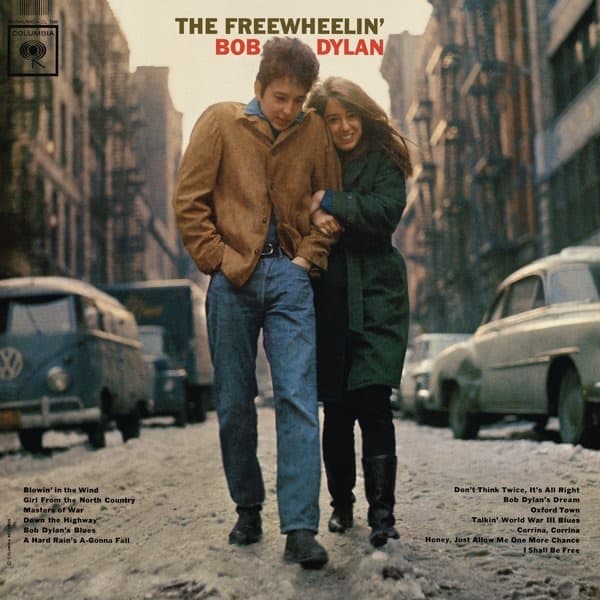
Bob Dylan
The Freewheelin' Bob Dylan
"Blowin' in the Wind", "Masters of War", "A Hard Rain's a-Gonna Fall", "Don't Think Twice", and a twenty-two-year-old on the cover walking down a Greenwich Village street with his girlfriend. Play it and you hear the protest song become literature and a folk singer decide he is going to write everything himself.
Stan Getz and João Gilberto
Getz/Gilberto
Stan Getz, João Gilberto, Antônio Carlos Jobim at the piano, and Astrud Gilberto singing "The Girl from Ipanema" in English because somebody had to. It won Album of the Year and the single won Record of the Year, the first jazz record to do so. It sounds like a warm evening in Rio, which is exactly what it was engineered to sound like in a New York studio in March 1963.

Nina Simone
Nina Simone in Concert
Three Carnegie Hall shows in the spring of 1964, edited into her first record for Philips and her first as a civil rights artist. "Mississippi Goddam" and "Old Jim Crow" sit beside "I Loves You, Porgy" and a Brecht song. You can hear the white audience laugh at the jokes and go quiet when they realize she is not joking.

John Coltrane
A Love Supreme
One December evening in 1964, four men, four movements, and a bass line that turns out to be a prayer. It is the jazz album most people who do not listen to jazz own, and the one rock musicians from Carlos Santana to the Byrds have named as the record that changed what they thought music was for. Play it in one sitting, with the lights low, the way Van Gelder had them.

Bob Dylan
Highway 61 Revisited
Recorded in six days with a Chicago blues guitarist and a session player who bluffed his way onto the organ, and named for the road from Minnesota to the Delta. "Like a Rolling Stone" opens it and "Desolation Row" closes it, and in between Dylan sings about the Bible, Times Square and the end of the world with a police whistle. Rock and roll had never been written this well.

The Beatles
Rubber Soul
Made in a month at the end of 1965 to meet a Christmas deadline, and the first Beatles album that sounds like a record rather than a collection of singles. A sitar, a fuzz bass, French lyrics, and songs about jealousy and losing your nerve. Brian Wilson heard it as a challenge. So did everybody else with a studio.

Otis Redding
Otis Blue: Otis Redding Sings Soul
Cut in twenty-four hours at Stax with the M.G.'s and the Memphis horns: three Sam Cooke songs recorded weeks after Cooke's death, the original "Respect", "I've Been Loving You Too Long" and a version of "Satisfaction" that the Stones later said was what they had meant. A day's work, and Stax spent the rest of the decade answering it.

The Sonics
Here Are the Sonics
Recorded in Tacoma on a two-track with the engineer told to turn everything up until it distorted. "The Witch", "Psycho" and "Strychnine" are the loudest, ugliest rock records of 1965 and the reason garage rock is called what it is. Nirvana, the White Stripes and the Hives all point at this.

The Beach Boys
Pet Sounds
A twenty-three-year-old who had stopped touring, the best session players in Los Angeles, and a set of songs about growing up that did not fit the band's image. "Wouldn't It Be Nice" opens with hope and "Caroline, No" closes with a train and barking dogs. It sold poorly in America and changed pop everywhere. Listen in mono, the way Brian mixed it.

The Beatles
Revolver
A string octet, a tape-loop collage, a children's song about a submarine, a song about the taxman and a song about a lonely woman's funeral, all in thirty-five minutes. This is the Beatles as a studio band with nothing to prove on stage, and the record most musicians pick when they are asked for the best one.

Bob Dylan
Blonde on Blonde
Rock's first double album, cut mostly in Nashville with session players who had never heard anything like the songs. Sources disagree on the release date, May or June 1966. "Visions of Johanna", "Just Like a Woman" and the side-long "Sad Eyed Lady of the Lowlands" are Dylan at his most surreal and his most tender, and then he crashed his motorcycle and went quiet for a year and a half.
John Mayall with Eric Clapton
Blues Breakers with Eric Clapton
A Gibson Les Paul through an overdriven Marshall combo, recorded with the amp in the room rather than isolated, and a young guitarist reading a comic on the cover. The "Beano" album is where the British blues guitar tone was invented, and it is the sound Clapton, Peter Green and Jimmy Page spent the rest of the decade chasing.

The Doors
The Doors
The debut opens with "Break On Through" and closes with "The End", eleven minutes of Oedipus on the Sunset Strip, and has "Light My Fire" in the middle of it. Organ where the bass should be, flamenco guitar, jazz drums and a baritone reading poetry. It is the sound of Los Angeles after dark in 1967, and it still is.

The Velvet Underground
The Velvet Underground & Nico
A banana on the cover, Andy Warhol's name as producer, and songs about heroin, waiting for the dealer and being whipped, sung flat over a viola drone by a band that could barely play and did not care. "Sunday Morning" and "I'll Be Your Mirror" are as pretty as anything from 1967. It sold nothing. The bands who did buy it, from Roxy Music to Joy Division to R.E.M., spent the next twenty years working out what it meant.

The Jimi Hendrix Experience
Are You Experienced
The British version has "Red House"; the American one has "Purple Haze" and "Hey Joe". Either way, it is the debut that changed the electric guitar from an instrument into a weather system. Play "Third Stone from the Sun" or the backwards title track and you hear a man who had already thought of everything the next fifty years of guitarists would try.

The Beatles
Sgt. Pepper's Lonely Hearts Club Band
A pretend band, a gatefold sleeve with the lyrics printed, a forty-piece orchestra, and the summer of 1967 in one record. It is not the best Beatles album, but it is the one that made the album an event, and "A Day in the Life" is the one track that everybody still agrees about. Some records are important because of what they did to the people who heard them. This is one.

Aretha Franklin
I Never Loved a Man the Way I Love You
Started in Muscle Shoals, finished in New York, out on March 10, 1967, and the moment the Queen of Soul was crowned. "Respect", the title track, "Do Right Woman, Do Right Man" and "Dr. Feelgood", with Franklin on piano leading the band. She is not being produced on side one; she is running the room.

Jefferson Airplane
Surrealistic Pillow
Grace Slick brought "White Rabbit" and "Somebody to Love" from her old band, Jerry Garcia sat in as spiritual adviser, and the Airplane made the record that carried the San Francisco sound to the national charts in the Summer of Love. Play "Today" for the folk band they had been and "White Rabbit" for the one they became.

Pink Floyd
The Piper at the Gates of Dawn
Made at Abbey Road while the Beatles were down the hall finishing "Sgt. Pepper", and the purest document of English psychedelia: Syd Barrett's nursery-rhyme songs about gnomes and scarecrows next to "Interstellar Overdrive" and "Astronomy Domine", where the band leaves the song behind. Barrett was gone within a year.

Cream
Disraeli Gears
"Sunshine of Your Love", "Strange Brew", "Tales of Brave Ulysses" with a wah pedal, and a day-glo sleeve. Recorded in New York in five days and released in November 1967, it is where the British blues boom turned into hard rock: riffs first, solos long, and a rhythm section that played like two soloists. Sabbath and Zeppelin took notes.

Love
Forever Changes
Arthur Lee's Los Angeles band with mariachi trumpets, strings, acoustic guitars and lyrics about the Summer of Love that read like a hangover from it. It flopped in America and became a cult record in Britain. It is the album people who think they have heard all of 1967 have usually not heard.

Johnny Cash
At Folsom Prison
Two shows in a prison cafeteria on January 13, 1968, with the inmates cheering the wrong lines and a song by one of them, "Greystone Chapel", closing the set. The applause after "just to watch him die" was added in the studio; everything else is real. It went gold and made Cash the country star the rock audience claimed as its own.

Blue Cheer
Vincebus Eruptum
A San Francisco power trio named after a brand of LSD, with a wall of Marshall stacks and an Eddie Cochran cover so loud and slow that it is regularly called the first heavy metal record. Released in January 1968, it went Top 20. It sounds like the end of the Summer of Love, which it was.

The Byrds
Sweetheart of the Rodeo
Gram Parsons joined the Byrds and talked them into going to Nashville to make a real country record with pedal steel and Louvin Brothers songs. The Opry crowd hated their hair; the rock audience did not know what to make of it. Released August 30, 1968, it is where country rock, and later Americana, starts.

The Jimi Hendrix Experience
Electric Ladyland
A double album Hendrix produced himself, with Steve Winwood and Jack Casady sitting in, a fifteen-minute slow blues, "Voodoo Child (Slight Return)", and a version of Dylan's "All Along the Watchtower" that Dylan later performed the way Hendrix had. It is the guitar record of the decade and the one where the studio became his second instrument.
Big Brother and the Holding Company
Cheap Thrills
Janis Joplin's breakthrough, with an R. Crumb cartoon on the cover and "Piece of My Heart" and "Ball and Chain" inside. The band was ragged and the label wanted her solo; the singing is why it was number one for eight weeks. It is the closest a record came to catching what she did on stage at Monterey.

The Band
Music from Big Pink
Dylan's backing band, four Canadians and an Arkansan, moved into a pink house in upstate New York and made a record that sounded a hundred years old in the year of "Sgt. Pepper". "The Weight" and "I Shall Be Released" and three voices that trade lines like a family. Clapton heard it and broke up Cream. Americana starts here as much as anywhere.

Van Morrison
Astral Weeks
Recorded in two days in New York with jazz players who were told to follow the singer, and a singer from Belfast who did not explain the songs. Acoustic bass, flute, vibraphone and strings under stream-of-consciousness lyrics about childhood streets and a girl in a ballerina dress. It sold nothing and became one of the most loved records of the century.
Wendy Carlos
Switched-On Bach
Bach on a Moog, one line at a time, tuned by hand between takes and stacked on an eight-track machine in a Manhattan apartment. It went to the top of the classical chart and sold over a million copies, won three Grammys, and put a synthesizer in the hands of the Beatles, the Monkees, Stevie Wonder and eventually everyone.
Various
Tropicália ou Panis et Circencis
Caetano Veloso, Gilberto Gil, Gal Costa, Tom Zé, Os Mutantes and Nara Leão on one manifesto: bossa nova and the Beatles, samba and Stockhausen, a mock family portrait on the sleeve. It came out in July 1968 in a country under military rule. By the end of the year its two leaders were in prison. Brazilian music has been arguing with it ever since.

MC5
Kick Out the Jams
Recorded live at Detroit's Grande Ballroom over Halloween 1968 and released in February 1969 with the obscene intro left on. Two guitars at full volume, a free-jazz cover of Sun Ra, and a band that believed the revolution was a rock show. Elektra dropped them within months. It is the loudest album of the decade and the first punk record in everything but date.

Led Zeppelin
Led Zeppelin
Thirty-six hours of studio time, a photograph of the Hindenburg on the cover, and "Dazed and Confused", "Communication Breakdown", "Babe I'm Gonna Leave You". Released in January 1969, before the band had played most of the cities that would buy it. Blues, folk and a drummer who changed what loud meant. Everything called hard rock or heavy metal since has a copy.

The Stooges
The Stooges
Produced by John Cale of the Velvet Underground, released August 5, 1969, and made of three chords, a wah pedal, a sleigh bell and a singer who sounds bored and dangerous at once. "I Wanna Be Your Dog", "1969" and "No Fun". It peaked at 106. Seven years later the Sex Pistols were playing "No Fun" as an encore.
Sly and the Family Stone
Stand!
"Everyday People", "I Want to Take You Higher", "Sing a Simple Song", "Don't Call Me Nigger, Whitey" and a thirteen-minute jam, all on one record from a mixed-race band in the year of Woodstock. It is funk with a message and a pop chorus, and the last time Sly Stone sounded like he believed it. Released in May 1969, it sold three million copies.

Miles Davis
In a Silent Way
One February day in 1969, three electric pianos, John McLaughlin on guitar, and a trumpet floating over it all, edited by Teo Macero into two side-long pieces that loop back to their own beginnings. It is the quietest revolution in the decade's jazz and the one that made fusion, ambient and a good deal of electronic music possible.

Bob Dylan
Nashville Skyline
Twenty-seven minutes of country songs in a new, smooth voice he said came from quitting cigarettes, with a duet with Johnny Cash on "Girl from the North Country" and "Lay Lady Lay" as the hit. The folk crowd was baffled again. Released April 9, 1969, it is Dylan telling the rock audience that Nashville was not the enemy.

The Beatles
Abbey Road
The last one they made, on the first eight-track console they had used for a whole album. George Harrison's two best songs, a Moog on four tracks, and a second side stitched from fragments into a sixteen-minute suite that ends with a drum solo, three guitar solos in turn, and one line about love. If you want to hear what the studio had learned in ten years, start here.

The Rolling Stones
Let It Bleed
Out in Britain on November 28, 1969 and in America on December 5, the day before Altamont, and opening with "Gimme Shelter", Merry Clayton's voice cracking on the word murder. Brian Jones is on two tracks; he had drowned in July. Country blues, gospel choirs and a song about the end of the decade called "You Can't Always Get What You Want". It is the record that closed the 1960s and knew it.

Grateful Dead
Live/Dead
Recorded at the Fillmore West and the Avalon in early 1969 and released in November, with a twenty-three-minute "Dark Star" that starts as a song and ends somewhere else. The Dead never made a studio record that explained them; this one does. It is the founding document of the jam band, and the reason people followed them for thirty years.
The Mixtape
The decade in tracks, in the order that tells its story. Press Listen on any of them.
A Change Is Gonna Come
Sam CookeStart here because the decade did. A gospel singer, an orchestra, and the most patient statement of hope in American music, released eleven days after he was killed.
Misirlou
Dick Dale and His Del-TonesA Greek melody Dale learned from his Lebanese uncle, played on one string as fast as a human hand can pick, through a reverb tank soaked in salt air. Surf rock at its loudest and the sound of California before it got complicated.
Be My Baby
The RonettesFour drum hits, then the Wall of Sound. Everything Phil Spector knew in two minutes and forty seconds, and the record Brian Wilson said he had to pull the car over for.
Louie Louie
The KingsmenRecorded for fifty dollars in Portland, mumbled so badly the FBI spent two years trying to work out whether it was obscene. It is not. It is three chords and the beginning of garage rock.
Fingertips, Pt. 2
Little Stevie WonderA thirteen-year-old with a harmonica, a false ending, and a bass player shouting "what key?" It was number one, and it was live. Motown could do that too.
Blowin' in the Wind
Peter, Paul and MaryThe version that made Dylan's song a hit and the one the crowd at the March on Washington heard. Three voices, two guitars, and the question the decade kept asking.
Where Did Our Love Go
The SupremesFoot stomps, a baritone sax, and Diana Ross singing under her breath. The first of five straight number ones and the sound of Motown deciding it could beat the Beatles at pop.
Mississippi Goddam
Nina SimoneA show tune, she says, for a show that has not been written. Then she names the states. Listen for the moment the Carnegie Hall audience stops laughing.
The Girl from Ipanema
Stan Getz and João Gilberto with Astrud GilbertoBossa nova arrives in America in a voice that had never sung professionally. Getz's tenor solo is the sound of an entire genre of cocktail lounges being invented.
Acknowledgement
John ColtraneThe first movement of "A Love Supreme". Four notes on the bass, a solo that visits all twelve keys, and then the chant. Jazz as prayer.
Like a Rolling Stone
Bob DylanSix minutes, an organ played by a man who did not play organ, and a question nobody in pop had asked before. The single that ended the folk revival and started something else.
(I Can't Get No) Satisfaction
The Rolling StonesRichards has always said the riff came in his sleep. It went through a fuzz box as a placeholder. Nobody replaced it. Boredom as a rock and roll subject, and the Stones become the anti-Beatles.
Papa's Got a Brand New Bag
James BrownCount it. The weight is on the one, the guitar is a drum, the horns are punctuation. Funk starts here, and so, eventually, does hip-hop.
God Only Knows
The Beach BoysFrench horn, harpsichord, sleigh bells, and Carl Wilson singing a love song that starts with the words "I may not always love you". Paul McCartney called it the greatest song ever written and was not being polite.
Tomorrow Never Knows
The BeatlesOne chord, a drum loop, seagull noises made from a laughing guitar, and a vocal through a spinning speaker. The Beatles find out what a studio is for. Electronic music, sampling and psychedelia all have a claim on it.
For What It's Worth
Buffalo SpringfieldStephen Stills wrote it about a curfew riot on the Sunset Strip, not the war, but the war took it anyway. Two harmonics on a guitar and the sound of a generation looking over its shoulder.
Respect
Aretha FranklinOtis Redding wrote it as a man's demand. Aretha and her sisters spelled it out and it became everyone's. King Curtis on saxophone, and a woman at the piano in complete control.
Purple Haze
The Jimi Hendrix ExperienceAn interval called the devil's chord, a guitar octave effect nobody had heard, and a man asking to be excused while he kisses the sky. Two minutes fifty and the guitar is a different instrument.
(Sittin' On) The Dock of the Bay
Otis ReddingWritten on a houseboat after Monterey, finished with a whistle because he never got to write the last verse. The gentlest thing he made and the biggest hit he never heard.
Folsom Prison Blues (Live)
Johnny Cash"Hello, I'm Johnny Cash," and then the boom-chicka-boom in a prison cafeteria. The applause after the Reno line was added later; the rest is the realest thing on country radio that year.
Mama Tried
Merle HaggardA Telecaster lick, a train, and a man telling you exactly how he ended up in San Quentin without asking for your pity. Bakersfield answers Nashville.
Do the Reggay
Toots and the MaytalsThe record that named the music. Listen to the guitar chop on the offbeat and the bass sitting low and slow: the whole next decade of Jamaica is in the groove already.
Everyday People
Sly and the Family StoneOne bass note for the whole song, a nursery-rhyme chorus, and a mixed-race band singing that different strokes work for different folks. The utopia the decade promised, for two minutes and twenty seconds.
Oh Happy Day
The Edwin Hawkins SingersAn Oakland youth choir, an eighteenth-century hymn, a piano groove, and Dorothy Combs Morrison's lead. It was recorded to raise bus fare. It went to number four. Contemporary gospel starts here.
I Wanna Be Your Dog
The StoogesThree chords, a sleigh bell, and one piano note hit by John Cale for three minutes. Punk, seven years early, from a basement in Ann Arbor.
The Star-Spangled Banner (Live at Woodstock)
Jimi HendrixMonday morning, August 18, 1969, to a field that was mostly mud and leftover people. The anthem with the bombs and sirens left in. The decade's argument with itself, on one guitar.
Gimme Shelter
The Rolling StonesReleased the day before Altamont. Merry Clayton's voice cracks on the word "murder" and they kept the take. End the mixtape here, because the decade did.
What Came Next
By the end of the 1960s the Beatles had gone from mop tops to mystics and were about to split. Hendrix had redefined the guitar and had a year to live. Dylan had gone electric and back again. Woodstock had happened. Altamont had, too. And a generation had changed for good.
What the 1960s built, the 1970s spent. The album became the unit and the tour became the business, and Led Zeppelin, the Who and the Stones filled stadiums with it. In Birmingham, England, a band that had formed in 1968 as Earth renamed itself Black Sabbath and, in February 1970, made the record that turned the blues boom into heavy metal. James Brown's beat became funk, then P-Funk, then disco. In Kingston the Wailers signed to Island. In the Bronx, a Jamaican kid named Clive Campbell was about to plug two turntables into one amplifier.
The 1960s did not end rock's story. They made it infinite.